
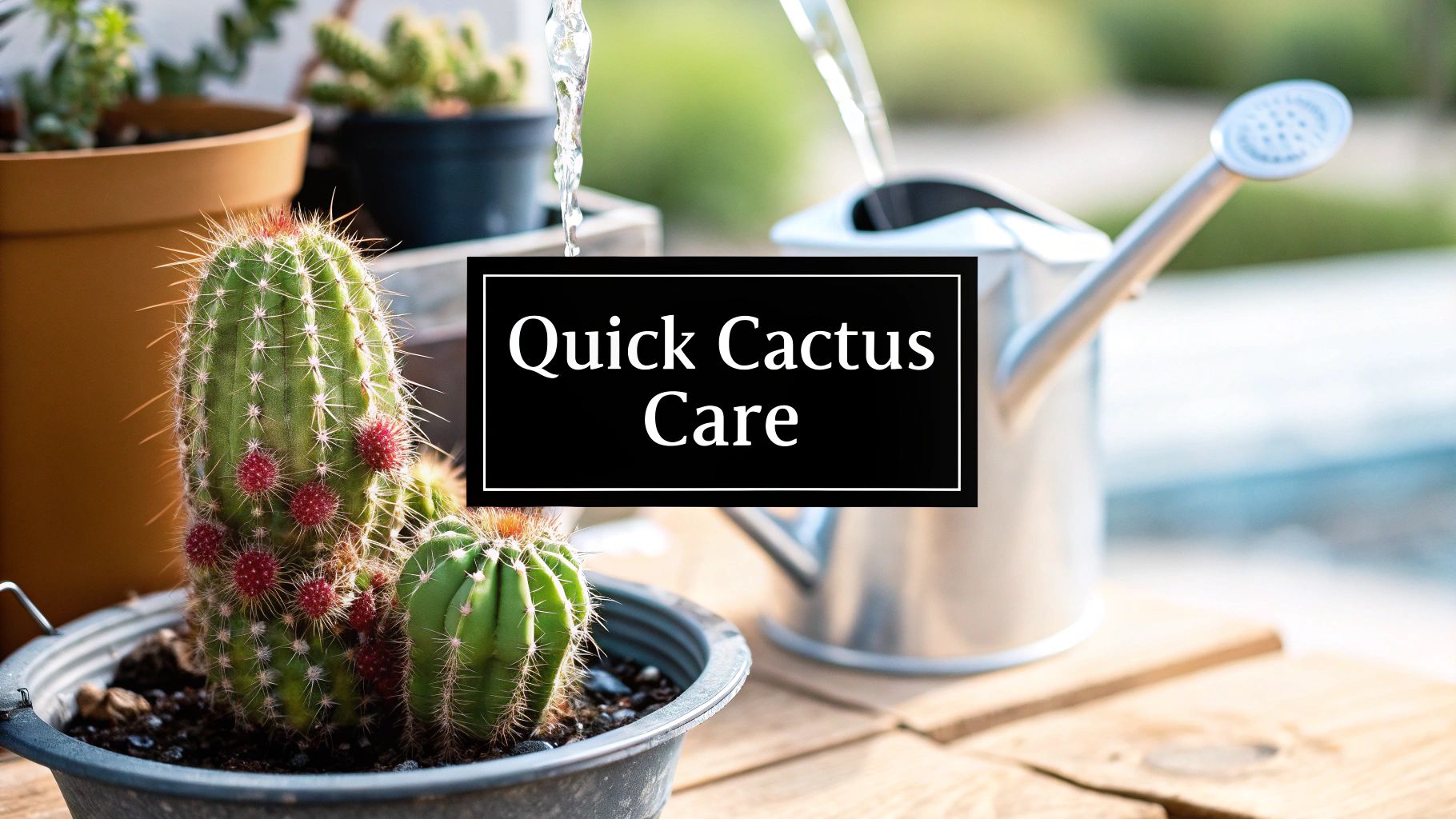

When it comes to watering a cactus, the best advice I can give is to fight your instincts. The impulse to nurture our plants often leads us to overdo it, but with cacti, a little benign neglect goes a long way. The real secret is to water thoroughly but infrequently.
Honestly, forgetting about your cactus for a couple of weeks is almost always better than sticking to a rigid, frequent schedule. The most common killer of these tough plants isn't neglect—it's too much love in the form of water.
Getting Cactus Watering Right From the Start
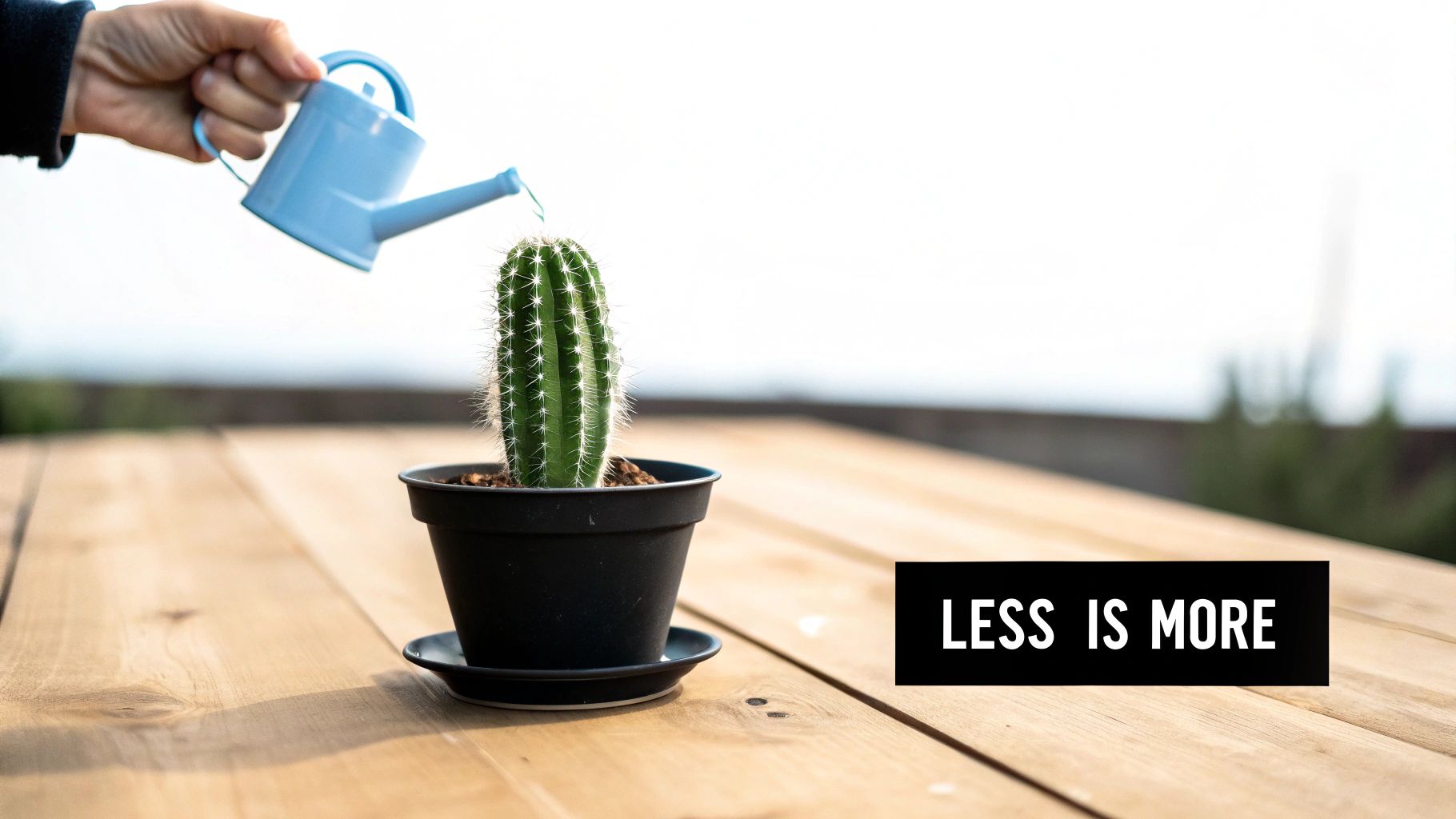
If there’s one golden rule for watering cacti, it's this: when in doubt, don't. I've seen it time and time again—the single biggest mistake people make, from beginners to seasoned collectors, is giving too much water, too often.
Cacti are desert natives, brilliantly designed to handle long stretches of drought, not to sit in soggy soil. Their entire structure is a masterclass in water storage, which makes them incredibly resilient to being forgotten but extremely vulnerable to being overwatered.
Getting this one principle right is the first step. Forget what you know about tropical houseplants. Your cactus needs its soil to become completely bone-dry between waterings. This "soak and dry" method mimics the rare but heavy downpours of their natural home.
The Anatomy of a Drought-Adapted Plant
To really get the hang of watering, it helps to understand why these plants are so different. Their unique bodies are built for survival in some of the world's driest places.
- Fleshy Stems and Pads: A cactus stores water in its thick, waxy stems or pads (think of a Prickly Pear). This built-in reservoir can sustain it for weeks, sometimes months, without a drop of rain.
- Shallow Root Systems: Many cacti have fine, shallow roots that spread out wide to quickly soak up any moisture from a sudden storm. These delicate roots are the first to suffer from rot if they stay wet for too long.
- Spines Are Modified Leaves: Those sharp spines aren't just for protection; they're actually modified leaves. This clever adaptation dramatically cuts down on water loss, a huge problem for plants with big, flat leaves.
Why Overwatering Is So Deadly
The term "overwatering" can be a bit confusing. It’s not about how much water you give at once, but how often you give it. Dribbling a little water on your cactus every few days is a recipe for disaster.
When the soil is constantly damp, it suffocates the roots. They can't absorb oxygen, creating the perfect environment for the fungal diseases that cause root rot. Once rot sets in, it’s often too late.
Here's a sobering thought: overwatering is the culprit in an estimated 50-70% of all cactus deaths in home environments. A typical indoor cactus is happiest when watered just once every 2-4 weeks, and even less during its winter rest period. The popularity of these unique plants and their care has even driven a niche market, as detailed in this market analysis by IMARC Group.
By adopting a "less is more" mindset from day one, you’re giving your cactus the best possible chance at a long, healthy life. This foundation is all you need to start watering with confidence and avoid the most common mistakes right from the get-go.
Why Soil and Pot Choice Are Critical for Watering
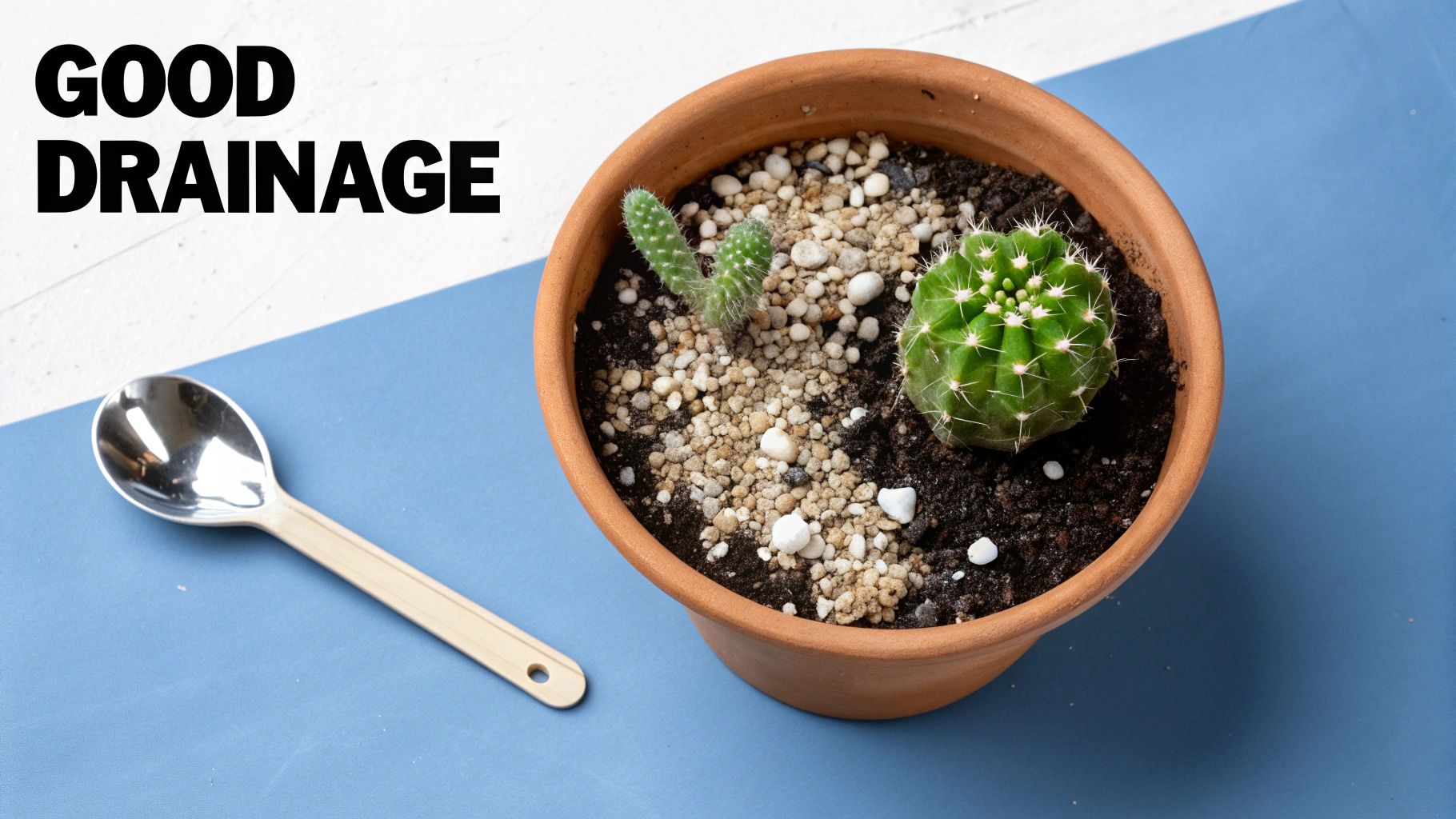
Before you even start thinking about a watering schedule, we need to talk about the foundation. Getting the soil and pot right from the beginning is the single most important thing you can do for your cactus. Honestly, it does most of the work for you, creating an environment where it’s actually hard to overwater.
Think of it this way: the right setup isn't just a container for your plant. It’s an active moisture-management system. It’s designed to let excess water escape fast while giving the roots the airflow they need to breathe. This isn’t just a nice-to-have—it’s the key to preventing root rot before it ever gets a chance to start.
Decoding the Ideal Cactus Soil
You’ve seen those bags of "Cactus & Succulent Mix" at the garden center. But what makes them so different? Standard potting soil is designed to hold onto water for moisture-loving plants. For a cactus, that’s a recipe for disaster.
The magic words for cactus soil are aeration and fast drainage. You're aiming for a gritty, porous blend that lets water rush right through it, not a dense sponge that stays soggy for days. This mimics the rocky, arid soil where these plants evolved.
A great mix usually has a couple of key ingredients:
- Inorganic Grit: This is your drainage engine. Things like perlite (those little white Styrofoam-like balls), pumice, or coarse sand create air pockets. These pockets are crucial for letting water drain away quickly and allowing oxygen to reach the roots.
- Organic Matter: A little bit of compost or coco coir provides nutrients, but it should be a minor player in the mix.
Cactus roots are incredibly sensitive and will quickly rot if they sit in wet soil. That's why a gritty, well-draining mix isn't negotiable. I always aim for a mix that is at least 50-70% inorganic material.
The Unforgiving Rule of Drainage Holes
Let me be crystal clear on this one: your cactus pot must have drainage holes. There's no way around it. A pot without a hole is just a bathtub waiting to drown your plant's roots. No matter how perfectly you water, excess liquid gets trapped at the bottom, creating a swampy, oxygen-deprived zone that leads straight to rot.
I know how tempting those beautiful decorative pots without holes can be, but they are a leading cause of cactus death. If you find one you absolutely love, don't despair! Just use it as a "cachepot." Keep your cactus in its simple nursery pot (with holes!) and just slip it inside the decorative one. When it's time to water, take the inner pot out, give it a good soak, let it drain completely, and then put it back.
Choosing a pot is about more than just aesthetics; it's a functional decision that directly impacts your watering frequency. The material itself can either help or hinder your efforts to keep the soil dry.
How Pot Material Changes Everything
The type of pot you use has a massive impact on how often you'll need to water. Different materials dry out at wildly different rates, so you’ll need to adjust your routine based on what your cactus is living in.
Here’s a quick breakdown:
| Pot Material | Watering Impact | Best For |
|---|---|---|
| Terracotta | Porous clay breathes, wicking moisture from the soil and helping it dry out fast. | Beginners and anyone who tends to overwater. It’s incredibly forgiving. |
| Glazed Ceramic | Non-porous, so it holds moisture much longer. The soil only dries from the top surface. | Experienced growers in very dry climates. Requires a careful, less-frequent watering hand. |
| Plastic | Lightweight and holds moisture even longer than ceramic. The least breathable option. | Not my first choice for cacti, unless the soil is exceptionally gritty and you’re a watering pro. |
For most people, especially if you're just starting out, unglazed terracotta is the champion. Its natural porosity creates a safety net, helping to prevent the soggy soil that cacti hate. If you want to get your hands dirty and create the perfect home for your plant, check out our guide to making your own cactus and succulent soil mix. It’s a simple recipe that will keep your cactus roots happy and healthy.
Proven Watering Techniques for a Healthy Cactus
Knowing how to water your cactus is just as important as knowing when. After years of growing these plants, I can tell you that the right technique makes all the difference. It’s about moving past random splashes of water and adopting a method that mirrors how these plants thrive in their natural, arid homes.
The gold standard is what we call the ‘soak and dry’ method. Forget giving your cactus little sips every few days. Instead, the goal is to completely drench the soil until water runs freely from the drainage holes. Then, you let it get completely bone-dry before you even consider watering again.
This cycle of flood and drought is exactly what desert plants are adapted for. The ‘soak and dry’ approach mimics the rare but heavy downpours of their native habitats, which encourages the roots to grow deep and strong as they search for moisture. It builds a much more resilient plant than shallow watering, which often creates a weak, needy root system right at the surface. For a deeper dive into the commercial side of cactus hydration, you can check out market reports from sources like IMARC Group.
Top-Watering: The Classic Approach
Top-watering is probably what you picture first: you pour water over the top of the soil until it drains out the bottom. It’s simple and it works, but there are a few nuances to getting it right.
- Aim for the Soil, Not the Plant: Make sure you’re directing the water stream onto the soil around the base. Letting water pool on the cactus itself, especially in the folds and crevices, is an invitation for rot and fungal problems.
- Be Thorough: Don't just water one spot. Pour water slowly and evenly around the entire pot to make sure all the roots get a drink. Otherwise, you can end up with dry pockets in the soil.
- Flush It Out: One of the biggest perks of top-watering is that it flushes out excess mineral salts from fertilizers and tap water that can build up over time and harm the roots.
This is my go-to for most of my plants, especially those in classic terracotta pots that breathe well and help the soil dry out faster.
Bottom-Watering: An Alternative Technique
Bottom-watering is another fantastic method, and I find it especially useful for plants with compacted soil or for those species you just don't want to get wet. You simply set the pot in a dish of water and let the soil wick up moisture from the bottom.
Just fill a saucer or tray with an inch or two of water and place your pot inside. Let it sit for about 10-20 minutes. You'll know it's done when the soil surface feels slightly damp to the touch. Once it’s had its fill, take it out of the water and let any excess drain away completely.
Pro-Tip: Bottom-watering is my secret weapon for fuzzy cacti like the Old Man Cactus (Cephalocereus senilis) or any species prone to rot if its base stays wet. This technique keeps the plant's body perfectly dry while giving the roots the deep soak they need.
Still not sure which one is for you? Here’s a quick breakdown:
| Feature | Top-Watering | Bottom-Watering |
|---|---|---|
| Best For | General use, flushing soil salts. | Delicate plants, compacted soil. |
| Pros | Simple, fast, cleans soil. | Keeps plant body dry, ensures even saturation. |
| Cons | Can wet the cactus, may cause soil compaction. | Slower, doesn't flush mineral buildup. |
Honestly, I often alternate between the two methods to get the best of both worlds. While these techniques are a must-know for cacti, they also work wonders for other arid plants. You can see how these principles overlap in our guide on how to water succulent plants.
Does Water Quality Really Matter?
So, what kind of water should you use? Straight from the tap? For most tough, common cacti, tap water is usually fine.
But if you want to give your plants the absolute best, rainwater or distilled water is the way to go. These sources are free of the chlorine and minerals found in most tap water, which can build up in the soil over time and look like a white crust. Eventually, this buildup can interfere with nutrient absorption.
If tap water is your only option, here's an easy trick: just let it sit out in an open container for 24 hours before using it. This lets most of the chlorine evaporate, making it a little kinder to your cactus’s roots.
How To Read The Signs Of Watering Problems
Your cactus is always telling you what it needs. You just have to learn its language. Figuring out whether it's thirsty or drowning is probably the most important skill you can develop as a cactus owner, and it's easier than you think once you know what to look for.
A lot of beginners get tripped up because, at first glance, the signs of over- and under-watering can look confusingly similar. But with a little practice, the differences become crystal clear. Think of yourself as a plant detective—spot the trouble early, and you'll know exactly what to do.
This little flowchart breaks down the basic logic.
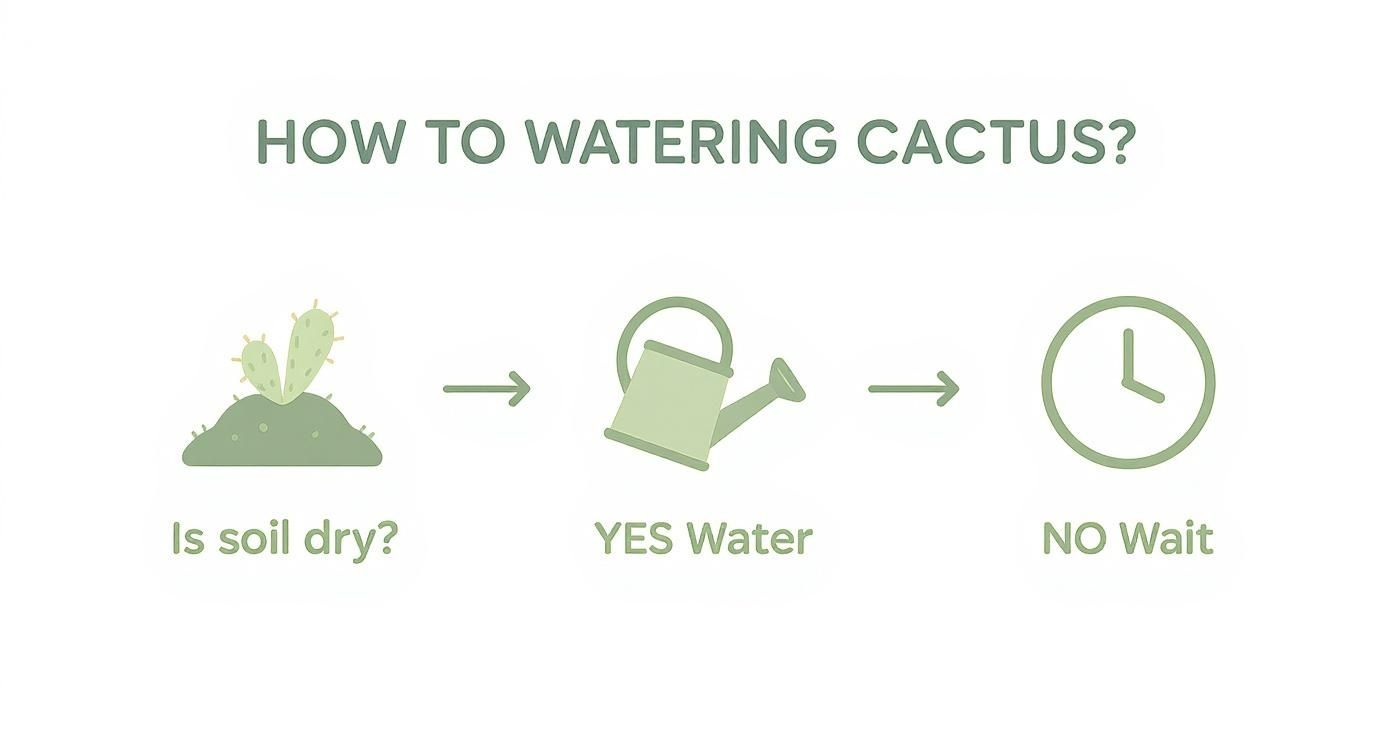
The biggest takeaway? Always, always check the soil first. It’s the single step that prevents nearly every common watering mistake.
Is My Cactus Overwatered?
Let's be blunt: overwatering is the #1 killer of cacti. The real damage happens underground where the roots, suffocating in soggy soil, start to rot. The mushy, yellow signs you see above the soil are your plant's desperate cry for help.
An overwatered cactus will often look sickly yellow, feel soft to the touch, and might even get translucent spots. The base is usually the first place to go mushy. These are all classic signs that the plant's cells are breaking down from too much water.
Here are the key clues that you've been too generous with the watering can:
- Soft, Mushy Base: Gently squeeze the cactus near the soil line. If it feels squishy or unstable, you've almost certainly got root rot.
- Yellowing or Browning: A healthy cactus has a vibrant green color. If yours is turning a sickly yellow or brown, especially starting from the bottom up, it's in serious trouble.
- Translucent Skin: In really bad cases, the skin can look almost see-through as the internal tissue just turns to mush.
- A Funky Smell: If you get a whiff of a swampy, rotten odor coming from the pot, that’s a sure sign of decay in the root system.
If you suspect overwatering, you need to act fast. If it’s a mild case, just stop watering and move the plant somewhere with good airflow to help the soil dry out. For more serious situations, it's time for emergency surgery. Take the cactus out of its pot, cut off any black, mushy roots, and repot it in fresh, completely dry cactus mix. Give it at least a week before you even think about watering again.
A yellowing cactus is often the first warning sign. You can learn more about what this means and how to fix it in our detailed guide on why your cactus is turning yellow.
Is My Cactus Underwatered?
While not nearly as deadly as overwatering, letting your cactus get too thirsty still causes stress. A dehydrated cactus starts dipping into its internal water reserves, and you'll see the physical changes pretty quickly. The good news? These plants are built for drought, and saving a thirsty cactus is usually very simple.
Unlike the squishy feel of an overwatered plant, an underwatered one will look deflated and wrinkly. It’s literally shrinking as it uses up the water stored in its tissues.
Be on the lookout for these signs of thirst:
- Shriveling or Wrinkling: The surface loses its plump, smooth look and starts to pucker, a bit like a raisin.
- Pronounced Ribs: For columnar cacti, the ribs will look sharper and more defined as the fleshy parts between them shrink.
- Leaning or Drooping: A very thirsty cactus might lose its rigid posture and start to look limp or even lean over.
- Dull, Faded Color: That bright green can fade to a dull, grayish tone. Sometimes you'll even see reddish or purplish tints, which are stress colors.
Identifying Watering Issues: A Symptom Checker
It can be tough to distinguish between too much and too little water. This table breaks down the most common symptoms side-by-side to help you make the right call.
| Symptom | Likely Cause: Overwatering | Likely Cause: Underwatering |
|---|---|---|
| Texture | Soft, mushy, squishy base | Shriveling, wrinkled, deflated |
| Color | Sickly yellow or brown | Dull, faded green, sometimes with stress colors |
| Stability | May feel unstable or wobbly at the base | Can become limp and start to lean or droop |
| Soil Condition | Soil is damp or wet to the touch | Soil is bone dry and may pull away from the pot's edges |
| Smell | A distinct, unpleasant rotten or swampy odor | No particular smell, just dry earth |
Seeing the signs laid out like this makes it much easier to diagnose the problem correctly and take immediate, effective action.
Reviving an underwatered cactus is straightforward: just give it a thorough drink. Use the "soak and dry" method to completely rehydrate the soil. But don't go overboard! If the plant is severely shriveled, resist the urge to water it again the next day. One deep watering is enough. Let the soil dry out completely before you water it again to avoid shocking the fragile roots.
Tailoring Your Schedule to Different Cacti and Seasons
One of the biggest mistakes I see people make is putting their cactus on a strict, calendar-based watering schedule. A healthy plant care routine needs to be fluid and responsive, not rigid. To really get it right, you have to learn to adapt your watering based on two key things: the specific type of cactus you have and the time of year.
It's a common misconception that all cacti are the same. Their need for water is deeply ingrained in their DNA, shaped by the native environments they come from—which can be anything from a scorching desert to a humid, tropical rainforest. This programming dictates how they handle water and when they're thirstiest.
Not All Cacti Are Desert Dwellers
When you hear "cactus," you probably picture something like a Saguaro, built to withstand the harshest desert conditions. These classic types, like Opuntia (Prickly Pear) or Ferocactus (Barrel Cactus), are true masters of drought tolerance. They’re adapted for long dry spells followed by a massive downpour, making them incredibly sensitive to being watered too often.
But then there's a whole other world of cacti that grow in jungle environments. We call them epiphytic cacti, and they include some of the most popular houseplants out there, like the Christmas Cactus (Schlumbergera) and Rhipsalis. These guys grow on trees in humid forests, not in sand, so their needs are worlds apart from their desert cousins.
Here’s a quick breakdown of the difference:
- Desert Cacti: These are your "soak and dry" plants. You need to let their soil become completely bone-dry between waterings. They also require a distinct dry period during their winter dormancy to thrive.
- Jungle Cacti: These plants prefer more consistent moisture, particularly when they're getting ready to bloom. You should let their soil dry out just a little bit on top, but never let them go completely dry for long stretches.
Trying to care for a Christmas Cactus the same way you would a Barrel Cactus is a surefire way to kill it. Knowing where your plant comes from is the first, most crucial step in giving it the right amount of water.
Adjusting for the Seasons
A cactus's entire life is governed by the seasons. Its need for water shifts dramatically from its active growing period in spring and summer to its essential rest period in fall and winter. This cycle of growth and dormancy is absolutely critical for its health and for encouraging it to flower.
During the active growing season (spring and summer), your cactus is hard at work pushing out new growth, forming buds, and strengthening its roots. This is when its thirst is at its peak. You’ll naturally find yourself watering more often as the days get longer and the temperature climbs.
On the flip side, the dormant period (fall and winter) is for rest. As daylight fades and things cool down, the cactus's metabolism slows to a crawl. It stops growing and uses very little water, which makes this the most dangerous time for overwatering.
For most desert cacti, you should cut back watering by at least 50-75% in the winter. For many, this means watering only once every 4-8 weeks, or sometimes even less. The goal is simply to keep the plant from shriveling up, not to push new growth.
Environmental Factors Matter
Of course, the specific environment inside your home plays a huge role. A cactus sitting in a warm, sunny, south-facing window is going to dry out way faster than one in a cooler, darker corner. Likewise, plants in dry, centrally heated homes need more water than those in more humid conditions.
This all comes back to their growth cycle. During spring and summer, they’re actively using water to grow. In the fall and winter, their metabolism grinds to a halt, and their water needs plummet. You have to adjust accordingly.
Thinking about creating a more controlled environment can make your watering routine much more predictable. A small greenhouse, for instance, lets you manage temperature, light, and humidity. If you're looking for inspiration, there are some great ideas for creating a greenhouse environment with sustainable and reclaimed materials.
By combining what you know about your specific cactus with an awareness of the seasons and your home's unique environment, you can finally move beyond guesswork. You start building an intuitive, customized watering plan that will set your plant up for a long and healthy life.
Your Top Cactus Watering Questions, Answered
Even when you've got the basics down, certain situations can still make you second-guess your watering routine. Don't worry, we've all been there. Let's dig into some of the most common questions that pop up for new and experienced cactus owners alike.
Should I Be Misting My Cactus?
I see this question all the time, and for almost every cactus, the answer is a hard no. Cacti are desert survivors, built for dry air. Misting them doesn't do any good and, more often than not, causes serious problems.
When water droplets sit on the skin of a cactus, especially in a home with average air circulation, it’s like an open invitation for fungal diseases and rot. You’ll start to see ugly spots, and in a worst-case scenario, you could lose the entire plant.
The only real exceptions are the "jungle cacti" like Christmas Cactus (Schlumbergera) or Rhipsalis. These guys come from humid rainforests and do like a bit more moisture in the air. But even for them, a small room humidifier is a much better and safer bet than misting directly onto the plant.
How Do I Know for Sure if the Soil Is Dry?
You can't just trust your eyes on this one. The top of the soil can look and feel dry while the root zone is still damp. Thankfully, there are a few foolproof ways to check what's really going on in the pot.
- The Finger Test: The classic method. Just stick your index finger about 2 inches into the soil. If you feel any coolness or moisture at all, hold off on watering.
- The Skewer Method: For deeper pots, a simple wooden chopstick or bamboo skewer is perfect. Push it down to the bottom of the pot, leave it for a minute, then pull it out. If it comes out with damp soil stuck to it, wait longer. If it's totally clean and dry, it's time to water.
- The Weight Test: This one takes a bit of practice but soon becomes second nature. Simply pick up your pot and get a feel for its weight right after you've watered it. Then, check it again in a week or two. You'll be surprised how much lighter a bone-dry pot feels.
The skewer method is my personal go-to. It tells you exactly what’s happening deep down in the pot, which is where root rot gets its start. It’s a simple trick that takes all the guesswork out of the equation.
Does the Type of Water I Use Matter?
Surprisingly, yes, it can make a big difference over time. If you want the absolute best for your plants, rainwater or distilled water are the gold standards. They're pure and free from the minerals and chemicals found in most tap water.
Hard tap water, which is common in many areas, is often loaded with calcium and magnesium. As you water, these minerals build up in the soil, which can mess with the pH and eventually make it harder for the cactus to soak up nutrients.
If tap water is your only option, no problem. Just fill up your watering can and let it sit out for at least 24 hours before you use it. This simple step allows most of the chlorine to evaporate, making the water much gentler on your cactus's roots.
I’m Going on Vacation. Should I Water My Cactus Before I Go?
Ah, the classic pre-vacation dilemma! The answer is almost always to leave it dry. A healthy, established cactus can easily go three weeks or more without a drop of water, especially during its dormant period in fall and winter.
Watering it heavily "just in case" right before you walk out the door is a huge gamble. If your trip gets extended, the plant will be sitting in soggy soil for way too long—a perfect recipe for rot. A thirsty cactus will just look a bit shriveled, and it'll perk right back up after a good drink when you get home. An overwatered cactus, on the other hand, might not be there to greet you.
At The Cactus Outlet, we believe that confident care starts with a healthy plant. Explore our curated collection of beautiful, thriving cacti and find the perfect addition to your home today. https://www.cactusoutlet.com