

You bought a sempervivum hens and chicks plant, tucked it into a pot or rock bed, and for a while it looked perfect. Then one rosette suddenly stretched up, bloomed, and started to fade. Or maybe a center rosette collapsed and you assumed the whole planting was failing.
That moment worries a lot of gardeners. It feels like the plant betrayed its reputation for being easy.
It didn't. In fact, that odd cycle is the whole story of hens and chicks. Once you understand that a sempervivum planting is really a renewing colony, not a single forever-rosette, the plant gets much easier to grow well and keep looking attractive.
What Are Sempervivum Hens and Chicks
A sempervivum planting makes more sense once you stop viewing it as one permanent rosette. What you usually have is a colony with a built-in cycle of growth, offsetting, flowering, and replacement. That is why a healthy planting can still include one rosette that suddenly declines.
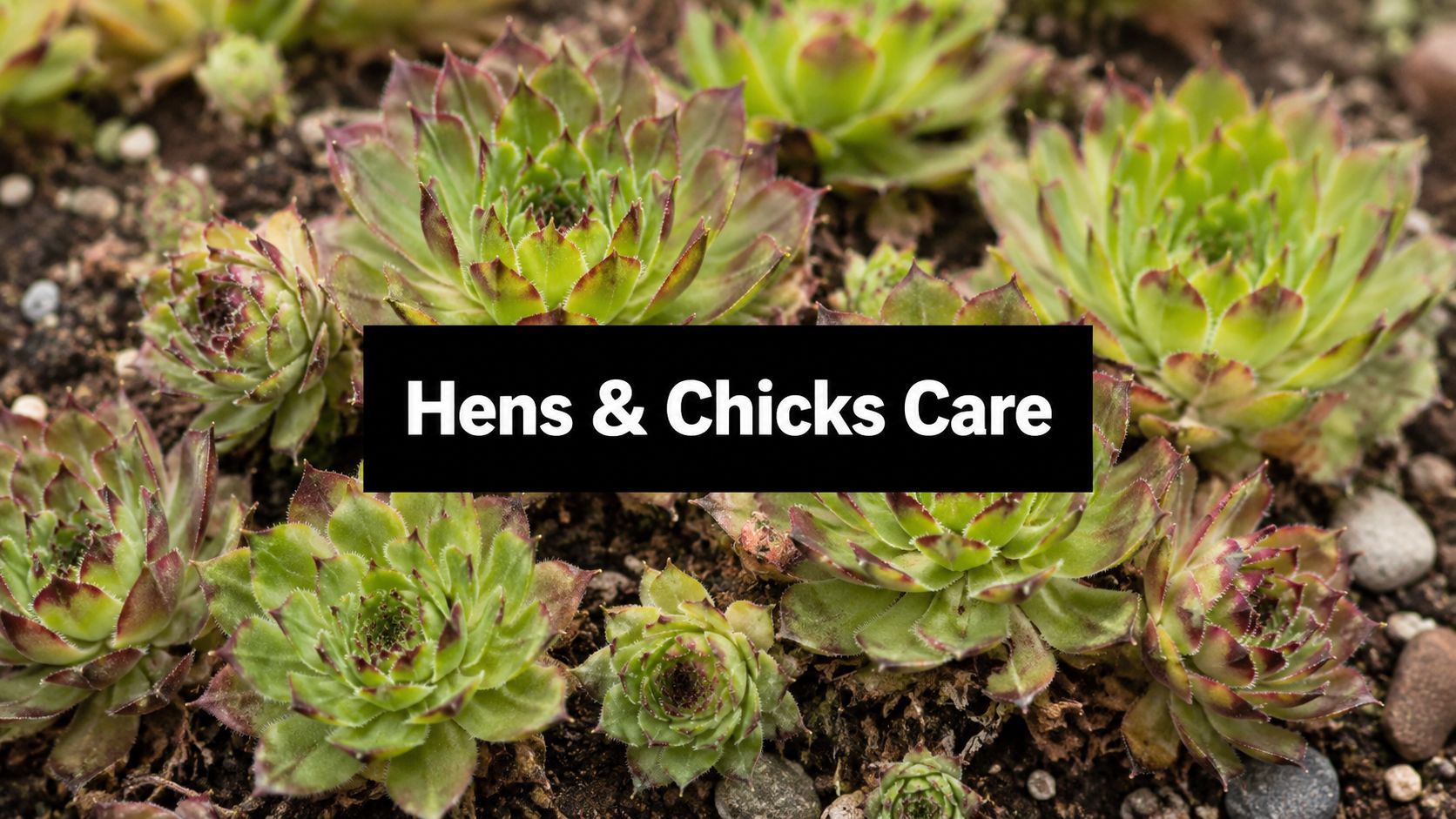
The nickname hens and chicks describes that colony form in plain language. The larger central rosette is the hen. The smaller rosettes that form around it are the chicks. When those chicks root in nearby soil and fill the space, the planting gradually renews itself.
That renewal habit is the feature to remember from the start. Instead of caring for one isolated succulent, you are caring for a small, self-renewing group.
The plant behind the nickname
Sempervivum is the genus behind hens and chicks, and it includes multiple species of flowering succulents. One of the best known is Sempervivum tectorum, often called houseleek, according to NC State Extension's Sempervivum tectorum profile.
The botanical name also explains part of the plant's long reputation. Sempervivum means “always living,” and tectorum means “of roofs.” The old roof connection came from a long tradition of growing these rosettes on buildings, where they handled exposure, thin soil, and neglect better than many other plants.
That background still matches how the plant behaves in a garden.
Why gardeners keep growing it
Sempervivum is a cold-hardy, drought-tolerant succulent that prefers lean soil and sharp drainage. That combination makes it a natural fit for rock gardens, troughs, gravel beds, wall crevices, and shallow containers where richer plants often struggle.
A simple way to read the plant is this. Tight, low rosettes usually mean it is getting what it wants. A spreading colony means it is settling in. A flowering stalk from one mature rosette means that rosette has reached the final stage of its life cycle.
That last point causes the most confusion for beginners. A common misconception is that all succulents behave like warm-climate houseplants that stay in one form for years. Sempervivum behaves more like a hardy outdoor colony. Individual rosettes are temporary, but the planting can persist for a very long time because new offsets take over.
So if a hen flowers and then dies, that is not usually a sign that you failed. It is the plant doing exactly what it was built to do. The primary goal with hens and chicks is not preserving each rosette forever. It is keeping the colony healthy, balanced, and attractive as older hens give way to new chicks.
Essential Care for Thriving Sempervivum
You plant a tidy rosette in a sunny spot, admire it for a few weeks, then worry because it seems to need so little. That reaction is common. Sempervivum stays healthy by living lean, and the care routine makes more sense once you treat it less like a thirsty bedding plant and more like a hardy colony that dislikes interference.
Three conditions matter most. Strong light, fast drainage, and restrained watering. Get those right, and you are not just keeping one rosette alive. You are setting up the whole colony to renew itself cleanly as older hens age out and younger chicks fill in.
Light
Sempervivum performs best with full sun, and most species and cultivars are hardy across USDA Zone 4a to 8, according to Portland Nursery's Sempervivum guide. In practical terms, it wants an open, bright place where the rosettes can stay compact instead of stretching.
Sun also affects how the colony looks over time. In bright exposure, rosettes usually stay tighter, color develops better, and offsets form a neater carpet around the mother plant. In too much shade, the growth gets looser. That makes the planting look tired sooner, especially after an older hen finishes its life cycle and leaves a gap.
A quick site check helps. If the spot gets several hours of direct sun and does not stay damp long after rain, it is usually a good match.
Here's a quick visual summary of the care basics:

Soil
Soil is the part many beginners underestimate.
A sempervivum crown works best in a gritty, airy mix that dries quickly. If the base of the rosette sits in heavy, wet soil, the plant cannot do the simple job it evolved to do. It should root, hold tight, produce offsets, and dry out between soakings. Dense soil interrupts that cycle and often shortens the life of both hens and chicks.
Use a gritty succulent or cactus mix in containers. In the ground, improve drainage with coarse mineral material if your native soil stays sticky after watering. Raised pockets, crevice gardens, rock berms, and sloped beds usually outperform flat low areas because water escapes faster.
A useful way to judge the soil is to ask three plain questions:
- Does water drain quickly?
- Does air still reach the crown after watering?
- Will the mix stay open instead of packing down?
If you want a broader refresher on how drainage and watering work across succulents, this succulent plant care guide gives helpful background.
Water
Watering causes more trouble than drought.
Sempervivum handles dry spells well, but it struggles when gardeners keep the soil lightly wet all the time. Small frequent drinks encourage the exact conditions that lead to crown problems. A thorough watering followed by real drying time suits the plant much better.
That pattern also supports the colony's long-term rhythm. Healthy roots and dry crowns help offsets establish around the hen, and they reduce the odds that an aging mother rosette collapses into mush before the surrounding chicks are ready to take over. If a hen later flowers and dies, you want that to happen as a normal stage of renewal, not because excess moisture weakened the plant first.
Outdoor plantings often need less water than expected once established. During rainy periods, you may not need to do anything at all.
This video gives a useful visual sense of how succulent care habits translate in practice:
A simple success checklist
When a beginner asks me how to keep hens and chicks looking good year after year, I keep it simple:
- Give them the sunniest spot available.
- Plant them in sharply draining soil.
- Water thoroughly, then let the mix dry well.
- Keep the crown clear instead of buried under damp soil or mulch.
One last reminder helps calm a lot of unnecessary worry. In sempervivum, a single rosette is temporary. The planting succeeds when the colony stays healthy enough to replace each mature hen with the next round of chicks.
Exploring Popular Hens and Chicks Varieties
Once you start growing sempervivum, you notice quickly that “hens and chicks” covers a whole range of looks. Some stay green and cool-toned. Some flush red or burgundy. Some have a webbed, fuzzy look that makes them stand out even from across the patio.
Grouping them by appearance is often more useful than trying to memorize cultivar lists.
Color-rich types
These are the plants collectors usually notice first. Many develop red, wine, bronze, or purple tones, especially in bright conditions. They're excellent when you want a planting to read as a mosaic rather than a flat patch of green.
Look for forms labeled with words such as red, burgundy, ruby, or bronze. Even if you don't know the exact cultivar, color is a practical buying clue.
Cobweb types
The cobweb forms, often associated with Sempervivum arachnoideum, have fine white threads stretched across the rosette tips. They look almost spun from silk. In mixed bowls or trough gardens, they create texture that contrasts beautifully with smoother rosettes.
These are especially useful when a planting needs visual detail at close range.
A good mixed sempervivum planting usually needs contrast in both color and surface texture, not just different sizes.
Large and architectural forms
Some varieties produce bolder rosettes that anchor a composition. These are useful in containers where you want one or two standout plants surrounded by smaller offsets or companion stones.
They also help if you're designing a shallow planter that needs structure without height.
Sempervivum variety snapshot
| Variety Name | Primary Color | Texture | Rosette Size |
|---|---|---|---|
| Sempervivum tectorum | Green to reddish tones | Smooth | Medium |
| Sempervivum arachnoideum | Green to red tones | Cobwebbed | Small |
| Red-toned cultivars | Burgundy to deep red | Smooth | Medium |
| Large rosette cultivars | Green, bronze, or mixed | Smooth to lightly textured | Large |
A practical way to shop is to ask yourself what role the plant needs to play.
- For a tight alpine look: Choose smaller rosettes and cobweb forms.
- For stronger color blocks: Pick red or burgundy selections.
- For a focal point in a pot: Use one larger rosette type, then let smaller chicks gather around it.
That approach makes variety choice feel manageable. You don't need to become a collector overnight. You just need to know what visual job each plant can do.
How Hens and Chicks Multiply and Renew
This is the part most care guides treat like a footnote. It should be the headline.
A sempervivum hens and chicks plant is valuable because it renews itself through offsets. The mother rosette blooms once after about 4–6 years and then dies back, while the surrounding chicks carry the colony forward, as explained in this Sempervivum care article from Talking of Plants.
If your hen suddenly flowered and then declined, that is not failure. That is the normal rhythm of the plant.

What flowering really means
The flower stalk emerges from the center of the rosette. Once that happens, the hen has committed to blooming. After flowering, that rosette won't return to its old compact form.
People often panic when they observe the center change shape, the leaves lose their symmetry, and later the rosette begins to fade. Many assume they overwatered or damaged it.
Sometimes that's true. But often the plant is finishing its natural cycle.
The right question isn't “How do I save this exact rosette forever?” It's “How do I keep the colony looking good as it renews itself?”
How to manage the colony
Think like a gardener maintaining a clump, not a collector guarding one rosette.
Use this simple approach:
-
Watch for offsets
Chicks form around the hen and gradually build the next generation. Let them size up before disturbing them. -
Leave attached chicks alone at first
Young offsets often root and establish better when they've had time to connect and strengthen beside the mother. -
Remove the spent hen when it turns unattractive
After flowering and dieback, gently lift or trim out the fading rosette. This opens space and improves the look of the planting. -
Reposition gaps if needed
If the colony now has an empty center, nearby chicks often fill in over time. In a formal container, you can replant rooted offsets to rebalance the composition. -
Propagate extras
Rooted chicks can be moved to another pot, slipped into rock crevices, or grouped into a new tray.
If you want a broader look at propagation techniques, this guide on how to propagate succulents is a useful companion.
When to separate chicks
Not every chick needs immediate separation. In fact, beginners often divide too soon.
A good rule is to wait until the offset is large enough to handle easily and has started to establish on its own. Then you can gently detach it, set it into gritty soil, and keep it lightly protected while it settles.
That patience pays off. Instead of one stressed transplant, you get a stronger young rosette that can start the cycle again.
Designing with Hens and Chicks Plants
Sempervivum works best when you use its natural habits as a design advantage. It stays low, spreads through offsets, and handles shallow planting areas well. According to Gardenia's Sempervivum overview, many types suit USDA Zones 3-8, and the plant is especially effective for rock gardens, green roofs, and border edges where shallow soil and freeze tolerance matter.
That combination opens up some very satisfying design uses.
Rock gardens and stone crevices
In a rock garden, sempervivum looks like it belongs there rather than like it was placed there. Tuck rosettes into cracks between stones, along gravelly ledges, or near the edges of boulders where water runs off quickly.
The best effect comes from repetition. Instead of scattering single plants widely, group several compatible rosettes so they read as a colony. Over time, the chicks soften the hard lines of stone without overwhelming the space.
Containers and planter boxes
Containers are where many gardeners first fall in love with hens and chicks. A shallow bowl, trough, or weathered planter lets the rosettes show off their geometric shapes at eye level.
This kind of look is especially appealing:

A practical container recipe is simple. Use one larger rosette as an anchor, surround it with smaller varieties, and top-dress with gravel to keep the crowns clean and dry. If you enjoy building combinations, these succulent garden design ideas can help you think through layout and contrast.
Green roofs and dry borders
Sempervivum's history and structure make it a natural fit for rooftops and other shallow, exposed spaces. It also works beautifully along border edges where taller perennials would flop or demand more water.
In dry environments, it pairs well with gravel mulch, stone paths, and other lean plantings. If you're planning a broader drought-friendly yard, these low-maintenance garden ideas offer useful context for building around plants that don't need constant fussing.
A simple design principle makes all three uses better:
- Repeat forms: Similar rosette shapes create calm.
- Mix color carefully: Too many dramatic tones can look busy in a small space.
- Leave room for renewal: Colonies need space to shift as hens age out and chicks take over.
That last point is easy to miss. A sempervivum planting should look a little alive and changeable. If you design it with that in mind, the lifecycle becomes part of the beauty.
Solving Common Hens and Chicks Issues
The most common advice for sempervivum is “give it well-draining soil.” That's true, but it's incomplete. In real gardens, rot often shows up because the plant has too much moisture plus poor air circulation, especially in rainy or irrigated settings. Martin Nursery specifically notes that success in wetter environments may require gravel top-dressing or sheltered placement to prevent rot in its hens and chicks care guidance.
That's the detail many gardeners need.
Root rot and soft crowns
If the rosette turns mushy, translucent, or collapses at the base, suspect excess moisture first. This is especially common in heavy soil, low pockets, decorative pots without drainage, or beds that receive automatic irrigation meant for thirstier plants.
Don't just water less and hope. Change the conditions.
- Improve the root zone: Replant into a grittier mix or a raised pocket.
- Top-dress with gravel: This helps keep the crown drier after rain.
- Adjust placement: A semi-sheltered spot can outperform full exposure in wet climates.

Stretching and weak growth
A stretched sempervivum usually isn't asking for fertilizer. It's asking for more sun. Rosettes lose their tight shape when light is too low, and the plant begins to look open, tall, or pale.
If that happens, move container plants gradually into a brighter location. For in-ground plants, consider whether nearby shrubs, fences, or seasonal shade are changing the light more than you realized.
If a sempervivum looks loose and elongated, check the sun before you blame the soil.
Pests and cosmetic decline
Mealybugs and aphids sometimes show up, especially where plants are crowded or airflow is poor. Treat early and isolate container plants if needed.
Also remember the lifecycle question from earlier. A rosette that is declining after flowering is not a pest problem by default. Check whether it bloomed before you start treating the whole colony for the wrong issue.
Good troubleshooting starts with one habit: look at the crown, not just the leaves. That usually tells you whether you're dealing with moisture, light, pests, or normal aging.
How to Choose and Buy Healthy Sempervivum
A good start saves a lot of trouble later. When you shop for a sempervivum hens and chicks plant, look for a rosette that already shows the traits you want to keep: compact form, firm leaves, and clean growth.
In person, pick up the pot if you can. A healthy plant should feel solid in the soil, not loose and wobbly. The rosette should be symmetrical unless it's a variety with naturally irregular texture. Avoid plants with mushy bases, obvious rot, or leaves packed with cottony pest residue.
What a strong plant looks like
A good specimen usually shows these signs:
- Firm rosettes: Leaves should feel plump, not soft or collapsing.
- Tight shape: Compact growth is better than stretched growth.
- Clean crowns: The center should look dry and healthy, not blackened or soggy.
- Visible offsets: Chicks are a good sign that the colony is active and establishing well.
What to avoid online or in stores
Be cautious with plants that look overly lush and wet. That can mean they were pushed in conditions that won't transition well to your garden. Pale, elongated rosettes also tell you the plant was grown with insufficient light.
When shopping online, specialists usually give you better odds than general merchandisers because they understand shipping, soil choice, and how succulents should be grown before sale. Clear photos, cultivar names when available, and realistic care information all matter.
If you want to start with well-grown succulent and cactus plants from a dedicated specialist, The Cactus Outlet is a solid place to browse. Their selection makes it easier to find healthy specimens for containers, rock gardens, and collector plantings, whether you're adding your first hens and chicks or expanding a larger succulent collection.