

A shipped barrel cactus usually arrives with one big question attached to it. Where should it go, and what should you do first so you don't ruin a plant that took years to grow? That moment matters more than is generally perceived.
Planting barrel cactus isn't difficult, but it does punish rushed decisions. I've seen more problems come from good intentions than neglect. People unbox the plant, set it in the first sunny spot they see, water it immediately, and then wonder why it turns pale, scorches, or starts to soften at the base. A barrel cactus wants a dry, stable start and a planting setup that respects how it was grown before it reached your door.
Shipped plants need one extra layer of care. They've been handled, boxed, and moved through changing light and temperature conditions. If you take your time with placement, orientation, and drainage, they usually settle in well. If you skip those basics, the damage can show up fast and sometimes it's permanent.
Gathering Supplies and Choosing the Right Spot
Before you dig, clear the work area and gather everything first. A barrel cactus isn't a plant you want to carry around while you hunt for gloves or go looking for a bag of soil.

Tools that make the job easier
At minimum, keep these on hand:
- Heavy gloves: Not thin fabric gloves. Use thick leather or another heavy-duty option that protects against stiff spines.
- A shovel and hand trowel: The shovel handles the planting hole. The trowel helps with backfilling and adjusting soil around the root zone.
- Old towels, carpet scraps, or folded cardboard: These help you grip and rotate the cactus without grabbing the body directly.
- A gritty cactus mix or mineral-heavy planting medium: For containers especially, drainage is the whole game.
- Gravel mulch: Useful around the base, especially where you want cleaner drainage at the crown.
If you're planting in a pot, drainage holes are not optional. If you're planting in the ground, the soil needs to shed water quickly enough that the root zone doesn't stay wet after irrigation or rain.
A pre-blended cactus medium can save time if you don't want to build a mix from scratch. The Cactus Outlet also carries cactus soil options for growers who want a ready-made medium matched to desert plants.
Practical rule: If the soil holds moisture like regular potting soil, don't use it for a newly planted barrel cactus.
Pick the site for the mature plant
Barrel cactus is typically hardy in USDA zones 9–11, can reach 2 to 10 feet tall, and tolerates brief cold down to about 20°F (-6°C) according to Gardenia's California barrel cactus profile. That range tells you two things. First, warm, low-frost placement gives you the best chance of success. Second, this isn't a plant to wedge into a tight corner and “figure out later.”
Some forms stay compact. Others become large enough to crowd walkways, press into walls, or make maintenance awkward. Give the plant visual and physical breathing room from the start.
Read the sun and drainage before planting
For a shipped cactus, “sunny spot” isn't enough detail. Look for a place with strong light, but also pay attention to reflected heat from block walls, paving, or stone. Those spots can work well once the plant is established and acclimated, but they're harsher during the settling-in period.
Drainage matters just as much as sun. Avoid low pockets where water collects. If you're designing a larger dry garden around the plant, these innovative drought-tolerant designs offer useful ways to think about structure, hardscape, and spacing. For a closer look at how much direct exposure your plant can handle in different settings, review this guide on how much sunlight a cactus needs.
Preparing Your Cactus and Planting Site
A shipped barrel cactus should be handled like a heavy object covered in needles. Slow is safe. Fast usually ends with broken spines, damaged skin, or a cactus dropped on its side.
Unbox and handle it without fighting the spines
Set the box flat and open it carefully. Don't drag the cactus out by the top. Support the body with folded towels, carpet scraps, or thick cardboard wrapped around the ribs so you can lift and turn it with control.
If the plant arrived bare-root or slightly dry, that's usually preferable to a wet root ball after shipping. What you want to avoid is bruising the body while rushing to get it planted.
Use this short checklist during handling:
- Check firmness: The body should feel solid, not collapsing at the base.
- Look for cosmetic marks: Minor spine scuffs can happen in transit and usually aren't the actual issue.
- Find the original sun side: If possible, note the side that appears more weathered or more shaded. This matters later.
- Keep it out of harsh afternoon exposure while you work: A shipped plant doesn't need extra stress on planting day.
Container or in-ground
The right choice depends on your climate, drainage, and how permanent you want the planting to be.
| Factor | Container Planting | In-Ground Planting |
|---|---|---|
| Drainage control | Easier to control with a gritty mix and drainage holes | Depends on native soil and grade |
| Cold flexibility | Easier to move or protect | Best in reliably warm sites |
| Size management | Better for patios and smaller spaces | Better for long-term landscape use |
| Stability | Large plants may need a heavier pot | Rooted plants become more stable over time |
| Soil correction | Simple because you control the full mix | Harder in clay or poorly draining soil |
Container planting is often the safer route in colder or wetter conditions. In-ground planting makes more sense when your site already has the heat and drainage a desert plant wants.
Prepare the root zone correctly
If you're using a pot, choose one with a drainage hole and enough width to stabilize the plant without burying it in a large mass of slow-drying soil. Skip decorative cachepots unless the planting pot inside drains freely.
If you're planting in the garden, the root zone should be prepared to drain, not pampered with rich amendments. Clay-heavy ground is where many failures begin. In that situation, raising the planting area is often smarter than digging a basin that holds water. If you need help selecting the right medium, this overview of cactus and succulent soil mix gives a useful baseline for what the texture should feel like.
A barrel cactus doesn't want a cozy hole full of moisture-retentive soil. It wants air, grit, and a path for water to move away from the roots.
The Correct Way to Plant Your Barrel Cactus
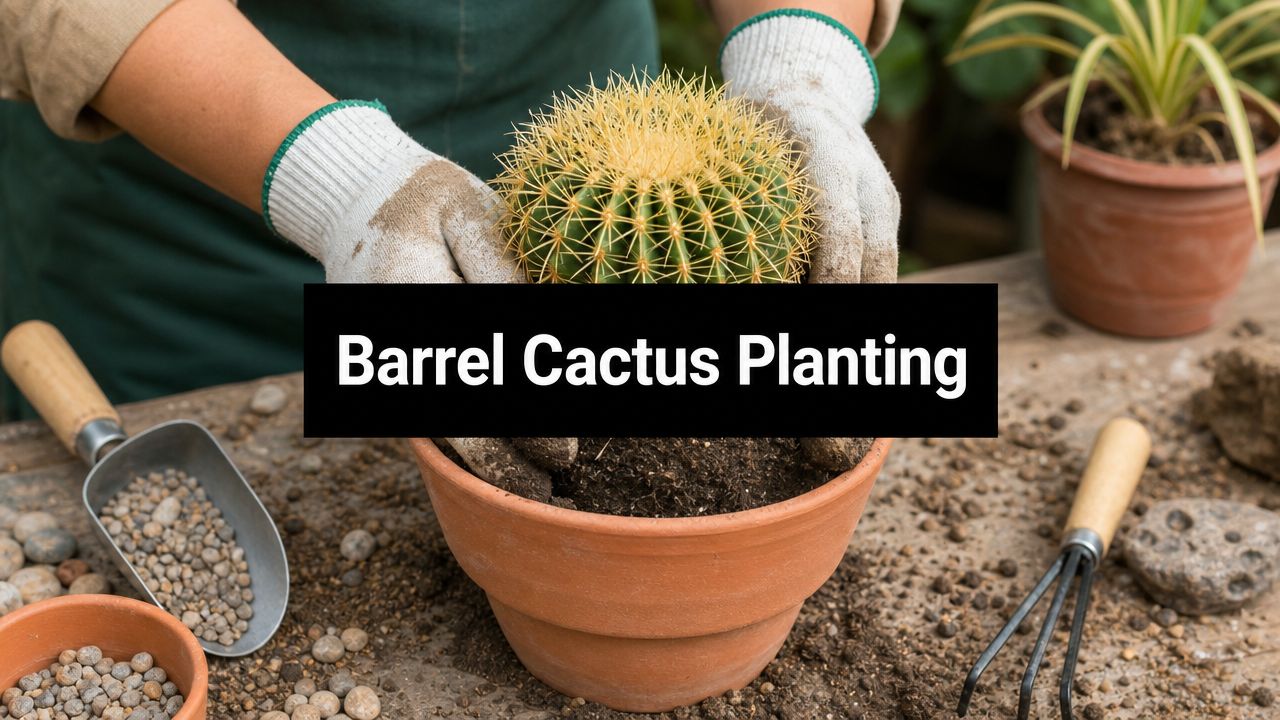
This is the part where restraint matters. The goal is not to “settle it in” with extra water, compost, or a deep hole. The goal is to place it at the right height, stabilize it, and leave the roots alone long enough to recover.
Set the hole and plant height
Arizona Cooperative Extension recommends a shallow, wide hole that matches the root spread and is no deeper than the root zone, with the cactus planted at the same height it was growing before. If soil drains poorly, they advise planting on a raised mound and using gravel mulch to improve drainage. They also recommend leaving the cactus dry for about one week before first irrigation so damaged roots can callus and heal, as explained in this Arizona Cooperative Extension transplanting guide.

That means no deep burial. If the cactus sits too low, moisture lingers around the base and rot starts where you may not notice it right away.
Backfill without packing it tight
Once the cactus is positioned, backfill gradually. Use your hands or trowel to work soil around the roots and remove big air gaps, but don't stomp the area hard or compact it into a dense mass.
A clean finish looks like this:
- Plant at previous depth: The crown should not be buried.
- Firm lightly: Enough to support the plant, not enough to compress the mix.
- Top-dress with gravel if needed: Especially useful where you want the crown to stay dry.
- Stake only if the plant is unstable: Remove support once it has rooted in.
The step most people get wrong
Don't water right after planting. That feels backward, but it's the right move.
Any root damage from shipping, unpacking, or transplanting creates fresh wounds. If you soak the plant immediately, those damaged roots sit in moisture before they've sealed. That's how rot gets started. Letting the root area stay dry for about a week is often the difference between a plant that settles in and one that declines for no obvious reason.
If you're planting in a pot rather than a bed, this companion guide on how to plant cactus in pots is a helpful reference for container technique and setup.
Watering and Aftercare for a Thriving Plant
The first weeks after planting decide a lot. A barrel cactus can live a very long time, but it needs a calm start after shipping and transplanting.

First watering and what to watch
Once the dry waiting period has passed, water the root zone thoroughly, then let the soil dry again before repeating. Don't turn that first watering into a daily rescue routine. A newly planted cactus needs oxygen around the roots as much as it needs moisture.
What matters most is the pattern. Deep, occasional watering works. Frequent light watering usually doesn't.
Watch the plant more than the calendar:
- Firm body and stable color: Usually a good sign the plant is settling in.
- Softness at the base: A warning sign that points to excess moisture or poor drainage.
- Surface shriveling after planting: Not always a crisis. Shipped cacti can look slightly stressed before they resume normal uptake.
- Pale patches on one side: Often a light-acclimation problem, not a watering problem.
If you're still learning how to judge dryness and avoid overdoing irrigation, these succulent watering tips for beginners are useful because the same caution applies here.
Sun acclimation matters more than people expect
A transplanted barrel cactus should keep the same compass orientation it had before planting to reduce the risk of sunburn on the previously shaded side. An experienced grower source also recommends temporary shade for about one week, then partial removal for another week, while delaying watering for 7 to 10 days after transplanting, as described in this barrel cactus transplanting article from Succulents and More.
That one detail is missed all the time with shipped plants. People rotate the cactus for symmetry, or they place the “prettier” side forward, and the newly exposed side scorches.
Keep the cactus facing the same direction it faced before. The skin is already acclimated to that light pattern.
Use temporary shade cloth, a patio chair, lattice, or another light screen if the new site gets intense afternoon sun. The point isn't to move the cactus into deep shade. It's to soften the transition while the plant adjusts.
A visual walkthrough can help if you prefer to see the process in action.
Think in decades, not weekends
Golden barrel cactus can live for 100 years or more, with some specimens reaching 150 years, and flowering may take up to 15 years according to Planet Desert's golden barrel cactus profile. That changes how you should think about aftercare.
This isn't a plant that rewards fussing. It rewards correct placement, patience, and consistency. If the first few weeks are handled well, you're not just helping it survive the move. You're setting up a structural plant that can hold its place in its surroundings for a very long time.
Troubleshooting Common Planting Problems
When a newly planted barrel cactus starts looking off, the initial reaction is often to reach for water first. That's often the wrong response.
Pale, scorched, or stalled growth
A common but overlooked reason for decline after planting is sunburn caused by rotation. The cactus skin acclimates to a specific sun orientation, and exposing a previously shaded side to intense sun can cause permanent scorching, as discussed by Debra Lee Baldwin in her article on golden barrels.
If one side turns pale, bleached, or tan after planting, think about light exposure before you think about thirst. This is especially common with shipped plants that were boxed, turned during unpacking, and then planted with a different face toward the sun.
Soft base versus simple stress
Use touch and location to read the problem.
- Soft at the base: This points toward excess moisture, poor drainage, or rot risk.
- Firm body with mild wrinkling: Often transplant stress or temporary dryness, not an emergency.
- Scarring on one exposed side: More likely sun damage than disease.
- Cottony pest patches: Check for mealybugs tucked around ribs or near the base.
If the cactus is discolored but the base is still firm, don't assume more water will fix it.
Correct the cause, not the symptom
If drainage is the issue, improve the planting situation rather than watering around the problem. In containers, that may mean repotting into a grittier mix. In the ground, it may mean lifting and resetting the plant higher once conditions are dry enough to work safely.
For sunburn, the damage won't reverse. What you can do is prevent more of it by restoring shade temporarily and keeping the orientation stable. For pests, isolate the problem early and clean affected areas before the infestation spreads.
Frequently Asked Questions About Planting Barrel Cactus
How do I know if my barrel cactus has established?
Look for stability and steady appearance. A newly planted cactus that stays firm, doesn't wobble easily, and holds a healthy, even look over time is usually settling in well. Establishment is slow, so don't expect obvious top growth right away.
Should I fertilize right after planting?
No. A freshly planted barrel cactus needs root recovery and stable conditions first. Fertilizer pushes growth at the wrong moment and doesn't solve transplant stress.
My cactus looks slightly shriveled after planting. Should I panic?
Usually not. A shipped plant may show mild stress before normal uptake resumes. Check the base first. If it's firm, stay patient and stick with a dry-down watering rhythm.
How long do I need to think ahead with placement?
A long time. Golden barrel cactus can live for 100 years or more, and flowering may not happen for up to 15 years, which is why it's better treated as a long-term structural plant than a quick ornamental accent.
Can I move it again if I don't like the spot?
You can, but repeated moving increases stress and raises the chance of handling damage or sun issues. It's better to get the first placement right than to keep adjusting it.
If you're ready to bring one home or need a cactus suited to your space, The Cactus Outlet offers barrel cacti and other desert plants with care guidance that helps you plant them correctly from day one.