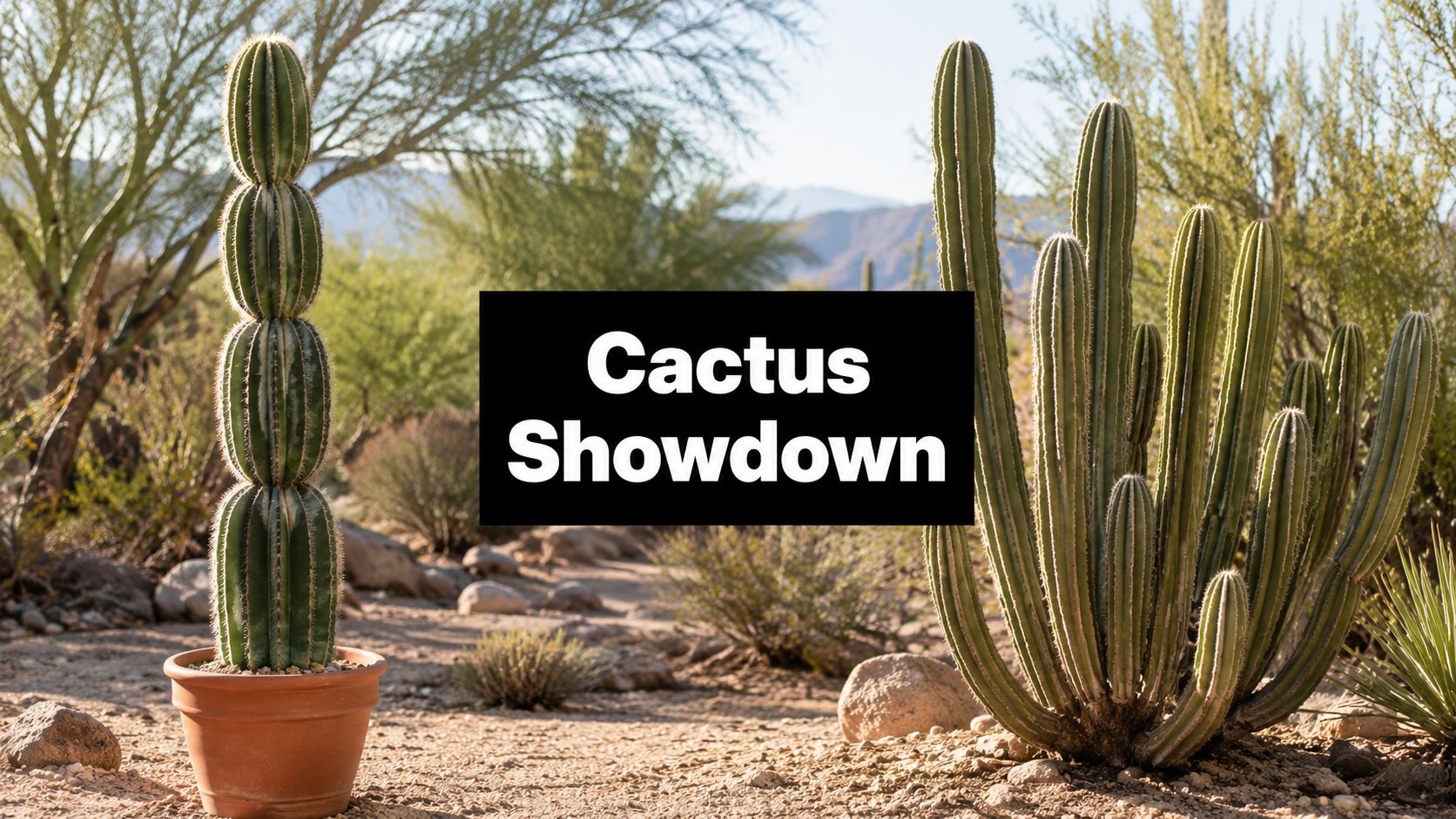


You're probably here because you saw a tall, dramatic plant labeled milk plant cactus, added it to your cart, or already brought one home, and then realized the advice online doesn't line up. One guide calls it a cactus. Another calls it a succulent. A third warns about sap but never explains what that means for everyday care.
That confusion is common, and it's understandable. This plant looks like a cactus at first glance. It grows upright, has ridged stems, and brings that sculptural desert look people love in bright rooms, patios, and modern outdoor settings. But if you treat it exactly like a true cactus, you can run into problems fast.
I've watched this happen many times in nursery life. A customer picks out a striking Euphorbia trigona, puts it next to their barrel cactus, waters both the same way, and then wonders why one looks unhappy. The plant didn't fail them. The label failed them.
An Introduction to This Misunderstood Marvel
A shopper walks into a nursery, spots a bold green plant with sharp angles and tidy little thorns, and says, “That's the cactus I want.” A week later, they search for care tips and find three different names: milk plant cactus, African milk tree, and Euphorbia trigona. That's usually the moment the confusion starts.
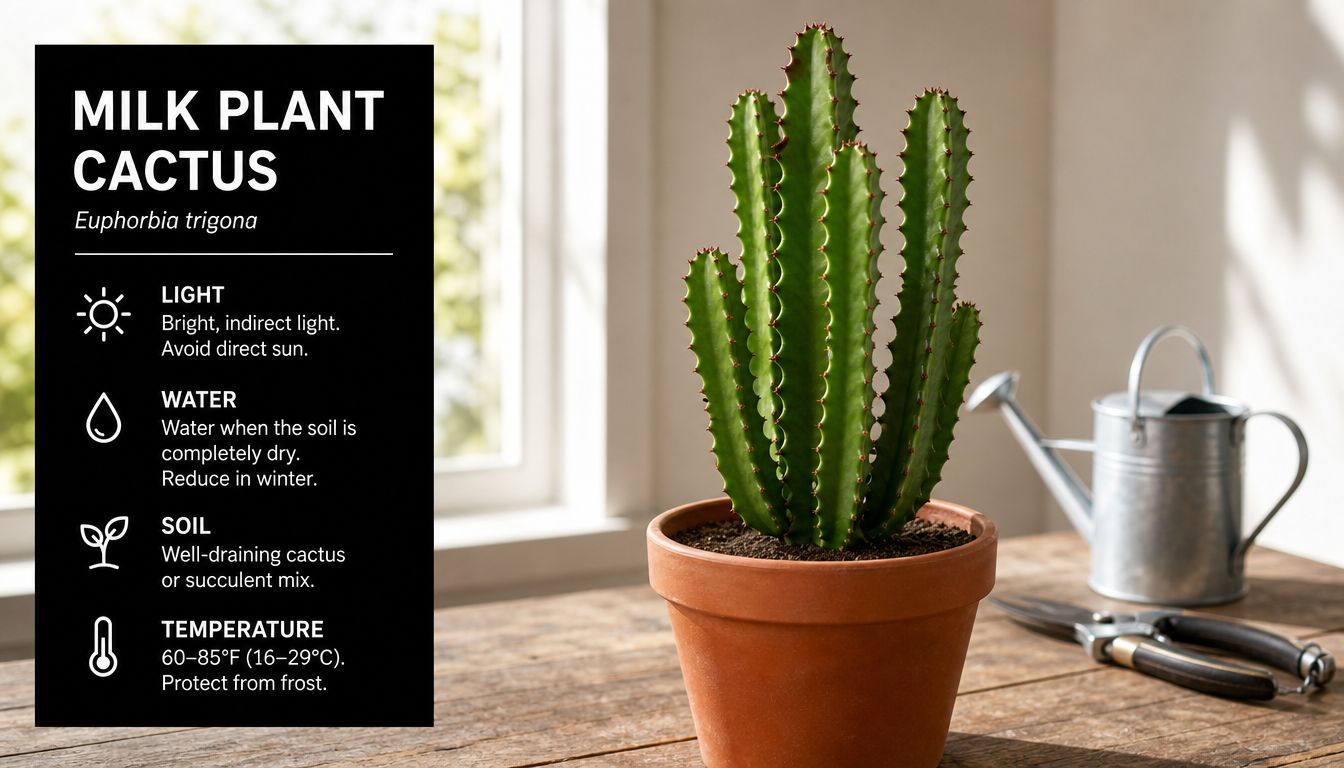
The common name sounds simple, but it hides the most important thing about this plant. The milk plant cactus is usually Euphorbia trigona, often called the African milk tree. It's a striking succulent with a candelabra shape that makes it look dramatic even when it's still young.
What makes it so appealing also makes it easy to misunderstand. It has the upright presence people want from a cactus collection, but it behaves a little differently in a home or garden. If you know those differences early, care gets much easier.
Imagine buying a plant that looks like a cowboy boot, then learning it's a dress shoe. It still looks great. It still has a clear style. But you wouldn't care for leather and suede the same way, and you shouldn't care for this plant the same way you'd care for every true cactus.
By the end of this guide, you'll know how to identify it correctly, where to place it, how to water it without guessing, and how to handle it safely. You'll also know what to look for if you're ordering one online, so you can unpack it confidently instead of nervously poking at the box with one hand and your phone in the other.
The Great Imposter Unmasked
The first thing to clear up is the name. Milk plant cactus isn't a true cactus. It's Euphorbia trigona, a succulent in the Euphorbiaceae family, not the cactus family. A lot of people get this wrong. One summary of search behavior noted that 40% of queries incorrectly label it a cactus in this discussion of milk plant cactus confusion and safety.

Cousins, not twins
The easiest way to understand this plant is to stop thinking in terms of “cactus or not cactus” and start thinking in terms of relatives. Succulents and cacti are like lions and tigers. They share a look and some survival strategies, but they aren't the same animal.
A true cactus belongs to Cactaceae. Euphorbia trigona belongs to Euphorbiaceae. Both store water. Both can handle dry conditions. Both can look architectural and spiny. But their structures and sap are different, and that matters when you care for them.
What to look for up close
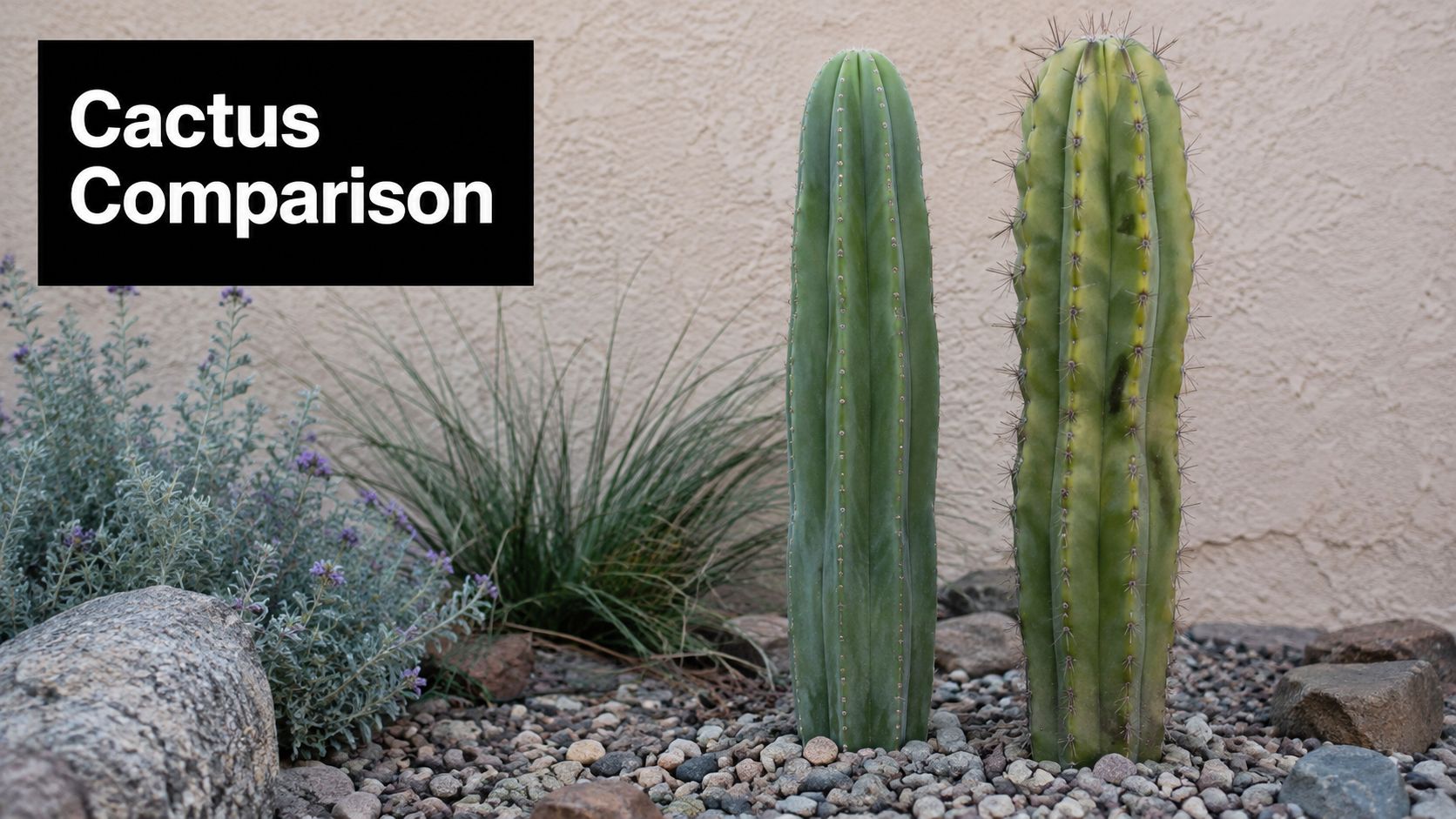
If you put a true cactus and an African milk tree side by side, the differences become easier to see.
| Feature | True cacti | Milk plant cactus |
|---|---|---|
| Plant family | Cactaceae | Euphorbiaceae |
| Native range | Mostly the Americas | Central Africa |
| Spine origin | From areoles | From the stem edges |
| Sap | Not the same toxic latex associated with Euphorbia | Milky white latex |
| Flowers | True cactus flowers | Small, less showy euphorbia flowers |
The big clue is the sap. Break or cut a stem and a milky white latex appears. That's one of the strongest signs that you're dealing with a euphorbia, not a true cactus.
Quick ID rule: If a “cactus” bleeds white latex, pause and recheck the label. You may be holding a euphorbia.
Another clue is the growth form. Euphorbia trigona often grows in upright, branching columns that look almost like a candelabra or cathedral silhouette. That's part of why people love it indoors. It has presence without needing a huge footprint.
Why this distinction matters in real life
The label affects more than plant trivia. It affects your hands, your watering habits, and where you place the plant in your home.
The milky sap is the biggest practical difference. It can irritate skin and eyes, and that changes how you prune, repot, and even unbox the plant. Care guides that blur cactus and euphorbia together often miss that point.
If you enjoy comparing forms and learning how euphorbias differ from cactus look-alikes, this guide to different Euphorbia types often sold as cactus-like plants is a helpful next read.
Creating the Perfect Home Environment
This plant comes from Central Africa and thrives in USDA zones 9 to 11, with a preference for well-drained sandy or loamy soil, acidic to neutral pH, bright indirect to full sun, and temperatures around 65–85°F (18–29°C). It can tolerate 27°F (-3°C) only briefly, according to this Euphorbia trigona growing profile.
Light that helps, not harms
Indoors, the best light is bright and steady. A spot near a sunny window works well, especially if the plant gets strong light without being shoved from deep shade straight into harsh afternoon sun. If you move it too suddenly, the stems can stress.
Outdoors, acclimation matters. A plant grown under nursery shade or indoors shouldn't go directly into intense all-day exposure. Give it time to adjust. Morning sun is usually easier than a hard afternoon blast.
A simple way to judge the spot is this: if the room feels cheerful and bright for much of the day, that's promising. If you'd need a lamp to read there by midday, it's too dim.
Soil that dries correctly
Most trouble starts below the soil line. Standard moisture-retentive potting mix can stay wet too long around the roots, especially indoors.
Use a gritty, fast-draining mix sold for cacti or succulents, or build your own blend with ingredients that keep air around the roots. You want water to move through the pot, not settle and linger.
A good container setup includes:
- Drainage holes: Non-negotiable for this plant.
- Mineral content: Grit, coarse material, or a cactus-style mix helps prevent soggy roots.
- A pot that matches the root ball: Too much extra soil can stay wet longer than the plant needs.
The easiest way to think about soil is this. The roots want a drink, not a swamp.
Temperature and placement
This plant likes warmth. A bright room with stable indoor temperatures is much better than a drafty entryway, a cold garage, or a patio that swings sharply between warm days and cold nights.
Keep it away from frost. Brief chill is one thing. Repeated cold stress is another. If you live outside warm-zone conditions and grow it outdoors seasonally, bring it in before cold weather settles in.
If you're designing around succulents rather than just caring for one container plant, these succulent garden design inspiration ideas can help you think about placement, contrast, and how upright forms like Euphorbia trigona fit into a wider planting scheme.
The Art of Watering and Feeding
The internet loves giving plant owners a schedule. That's where things go wrong with the milk plant cactus. Some guides say water sparingly. Others suggest watering once or twice a week. That contradiction was specifically noted in this discussion of conflicting African milk tree watering advice, along with the problem of overwatering in dim winter conditions.

Stop asking how often
The better question is, “What conditions is my plant in right now?”
A milk plant cactus in a warm, bright room with active growth will dry faster than one sitting in a cool room in winter. A terra cotta pot dries faster than a glazed pot. A small rooted plant behaves differently than a large specimen. That's why fixed schedules disappoint so many people.
Use observation instead of a calendar.
Two simple ways to check before watering
You don't need fancy equipment. Use methods that tell you what the root zone is doing.
- The chopstick test: Insert a plain wooden chopstick into the soil, then pull it out. If it comes out with damp soil sticking to it, wait.
- The pot-weight test: Lift the pot right after watering and again several days later. Over time, you'll learn the difference between heavy-wet and light-dry.
Those two habits can save more plants than any rigid “every Sunday” routine.
A practical watering pattern
When the mix has dried sufficiently, water thoroughly so excess runs out the bottom. Then let the plant return toward dryness before watering again. Don't leave it standing in a saucer full of runoff.
Signs that your approach may need adjusting:
- Soft lower stem or a mushy base: Too much moisture is the first suspect.
- Wrinkling or stalled growth in strong light during warm weather: The plant may be using water faster than you expect.
- No drying progress in winter: Light levels may be too low for the amount of water you're giving.
Practical rule: Water by soil condition and season, not by habit.
Feeding without overdoing it
This isn't a hungry, lush tropical houseplant. During active growth, a diluted balanced fertilizer can be used lightly. During slower periods, especially in cooler and darker conditions, back off.
Think of fertilizer as a supplement, not a rescue treatment. If the plant is struggling because of poor drainage, weak light, or overwatering, feeding it more won't fix the actual problem.
A healthy milk plant cactus usually responds best to restraint. Bright light, fast drainage, and sensible watering do most of the heavy lifting.
Propagation Pruning and Safety Precautions
Before talking about cuttings or shaping the plant, one fact matters most. The sap of Euphorbia trigona is highly toxic and can lead to serious consequences, including blindness if it gets into the eyes and isn't treated, as noted in Britannica's cactus reference.

Safety comes before the cutting
If you prune or propagate this plant, gear up first.
- Wear gloves: The latex can irritate skin.
- Use eye protection: This is not optional.
- Keep children and pets away: Fresh cuts increase the chance of sap exposure.
- Have water ready: You'll want to rinse tools or the cutting end promptly if sap is flowing heavily.
This isn't meant to scare you away from the plant. It's meant to help you handle it with respect.
How to take a cutting cleanly
Choose a healthy stem section and make a clean cut with a sharp, sterilized blade. Once cut, you'll see the white latex appear.
Rinse the cut end under cool water to help stop the flow, then set the cutting aside somewhere dry and airy. The cut end needs time to form a callus before it touches soil. Planting too soon invites rot.
When the cut end is dry and sealed, place it into a small pot of well-draining succulent mix. Keep the light bright but not harsh while it settles in.
For a deeper walk-through focused on home growers, this guide on African milk tree propagation from cuttings is worth bookmarking.
A visual walkthrough can also help when you're deciding where and how to cut:
Pruning for shape
Pruning is often less about fixing damage and more about managing size or balance. If one arm is leaning or the plant is getting top-heavy, selective cuts can restore proportion.
Keep your cuts deliberate. Don't keep snipping randomly. Each cut creates a wound, and each wound exposes sap. Clean up tools and surfaces after you finish, and wash thoroughly even if you think you avoided contact.
Respect the sap, and the job stays simple.
Troubleshooting Common Pests and Diseases
When a milk plant cactus declines, people often blame the wrong thing first. They assume pests, fertilizer deficiency, or bad luck. Most of the time, the plant is reacting to water, light, or a stressful environment.
Symptom checker for common problems
| Symptom | Likely cause | What to do |
|---|---|---|
| Soft or mushy base | Soil staying wet too long | Remove from soggy conditions, inspect roots, improve drainage and watering habits |
| Pale, stretched growth | Not enough light | Move gradually to a brighter location |
| Yellowing sections | Stress from moisture imbalance or environmental change | Check soil dryness, drainage, and recent placement changes |
| Brown, corky lower stem | Age or normal hardening in some cases | Monitor texture and spread before assuming disease |
A mushy base is the one that deserves fast action. That usually points to excess moisture around the roots or stem. If the tissue feels soft instead of firm, pause watering and inspect the plant closely.
Stretching looks different. The stems may become thinner, more widely spaced, or less sturdy. That usually means the plant wants stronger light, not more water.
What pests tend to look like
The usual houseplant pests can still show up. Mealybugs often hide in creases and branch points. Spider mites may leave faint webbing and a dull, tired look on the plant.
Check with a slow visual pass instead of a quick glance. Look where stems meet, along ridges, and in protected corners near the thorns.
If you find pests:
- Isolate the plant: Keep it away from the rest of your collection.
- Wipe visible insects away: Use a careful hand and avoid breaking tissue.
- Improve air movement and monitoring: Crowded shelves make infestations easier to miss.
- Recheck weekly: One treatment is rarely the end of the story.
When to leave it alone
Not every rough patch is a crisis. Older tissue can look tougher or more weathered than newer growth. A plant that just moved from shipping, a nursery bench, or an outdoor patio into your home may pause while it adjusts.
A plant under stress often needs steadier conditions, not a flurry of fixes.
If you change light, soil, watering, and fertilizer all at once, you make diagnosis harder. Adjust one variable, watch the plant, and let it respond.
Buying and Shipping From The Cactus Outlet
Ordering a milk plant cactus online makes some shoppers nervous, especially if they've only bought leafy houseplants in person. That hesitation makes sense. A tall, rigid succulent with thorns and irritant sap doesn't seem like an obvious mail-order plant at first.
Still, these plants are commonly sold as ornamentals, not food crops, and retail pricing reflects that ornamental value. One cited market example lists about $45 for a 5-gallon plant and $150 for a 15-gallon specimen in this discussion comparing African milk tree to feed-use cactus varieties. In other words, buyers usually expect a specimen plant, not a throwaway impulse purchase.

What to look for before you order
Read the product page closely. For a plant like this, useful listings usually tell you the size class, growth habit, and whether the plant is rooted and established. Photos should show the stem form clearly enough that you can judge shape and branching.
If you buy plants online often, it's also worth understanding how secure packaging affects arrival quality. Even simple resources on postal box styles used for shipped goods can help you picture why sturdy outer packaging and interior bracing matter for upright plants.
If you're comparing sellers, this article on the best place to buy cactus online gives a practical overview of what serious plant buyers usually evaluate.
Safe unboxing and first-day handling
When the box arrives, don't rush.
- Open slowly: Use a blade carefully so you don't nick the plant.
- Wear gloves: If a stem was bumped in transit, sap could be present.
- Inspect the base and stems: Check for firmness and obvious breakage.
- Expect some dry soil or minor shifting: Shipping jostles plants. That alone doesn't mean the plant is unhealthy.
Once unpacked, give it time to settle. Don't repot immediately unless there's a clear reason, such as severe damage or soaked soil. Let it rest in bright, indirect light and get used to its new setting.
What healthy acclimation looks like
A shipped milk plant cactus may need a short adjustment period. It might look a bit travel-weary, especially after time in a dark box, but firmness matters more than perfection on day one.
Place it in a bright spot, avoid overwatering, and resist the urge to “help” with too many changes at once. Most online plant disappointments come from panic care after arrival, not from shipping itself.
A calm first week usually beats a dramatic first day.
If you're ready to add this bold, misunderstood succulent to your space, browse the selection at The Cactus Outlet. You'll find cactus and succulent favorites, detailed plant listings, and online shopping that makes it easier to choose the right specimen for your home, patio, or project.