

You're probably here because you saw a spiral cactus online, stopped scrolling, and thought: is that a real plant? Then the second thought hit. Can I keep it alive when it arrives?
That reaction makes sense. Cereus Forbesii Spiralis doesn't look like a typical houseplant, and it doesn't even look like a typical cactus. It looks sculpted. Twisted ribs, a strong vertical silhouette, and that odd balance of wild and architectural form make it one of those plants people buy with their heart first and their care questions second.
The good news is that it's not mysterious once you understand what the plant is trying to do. Most care mistakes happen when people follow generic cactus advice instead of reading this plant's shape and growth pattern. A spiral cactus can be forgiving, but only if the pot, soil, water, and light all make sense together.
Introduction The Living Sculpture in Your Home
A healthy spiral cactus changes the feel of a room before it gets large enough to dominate it. Put one on a bright floor stand or near a sunny window, and it works like a piece of natural design. People notice it immediately. They usually ask whether it's rare, whether the twist is real, and whether it's hard to grow.
What makes this plant so satisfying is that its care becomes easier once you understand the reason behind the instructions. Fast drainage isn't just a nice idea. It protects a stem form that can be slow to show trouble until damage has already started below the soil line. A heavy pot isn't just about looks. It keeps a tall, narrow cactus from becoming top-heavy as it grows.
If you're buying one online, those practical details matter even more. You're not choosing a generic succulent from a shelf. You're choosing a specimen with structure, age, and personality. The more you know before it arrives, the easier it is to unpack it, pot it, place it, and avoid the common mistakes that stress a newly shipped cactus.
A spiral cactus rewards patient growers. Give it the right setup early, and much of the work later becomes simple observation.
What Is a Cereus Forbesii Spiralis
Cereus Forbesii Spiralis is a cultivated spiral form of Cereus forbesii, a South American columnar cactus. The key word is cultivated. This isn't a naturally widespread wild population of twisted cacti. According to PlantstoGrow's note on Cereus forbesii 'Spiralis', the twisted form was introduced to European markets when a few branches from the original mutation were imported around 1980, and the spiral form does not exist naturally in the wild populations of the parent species.

Why the spiral matters botanically
That origin story explains a lot. When growers call it rare or special, they're not just talking about looks. They're talking about a mutation selected for cultivation, not a standard field-grown form you'd expect to find across the species' native range.
That also explains why collectors often value the plant as much for its form as for its species name. With many cacti, you're mainly buying species identity. With this one, you're buying a growth habit.
How to recognize it
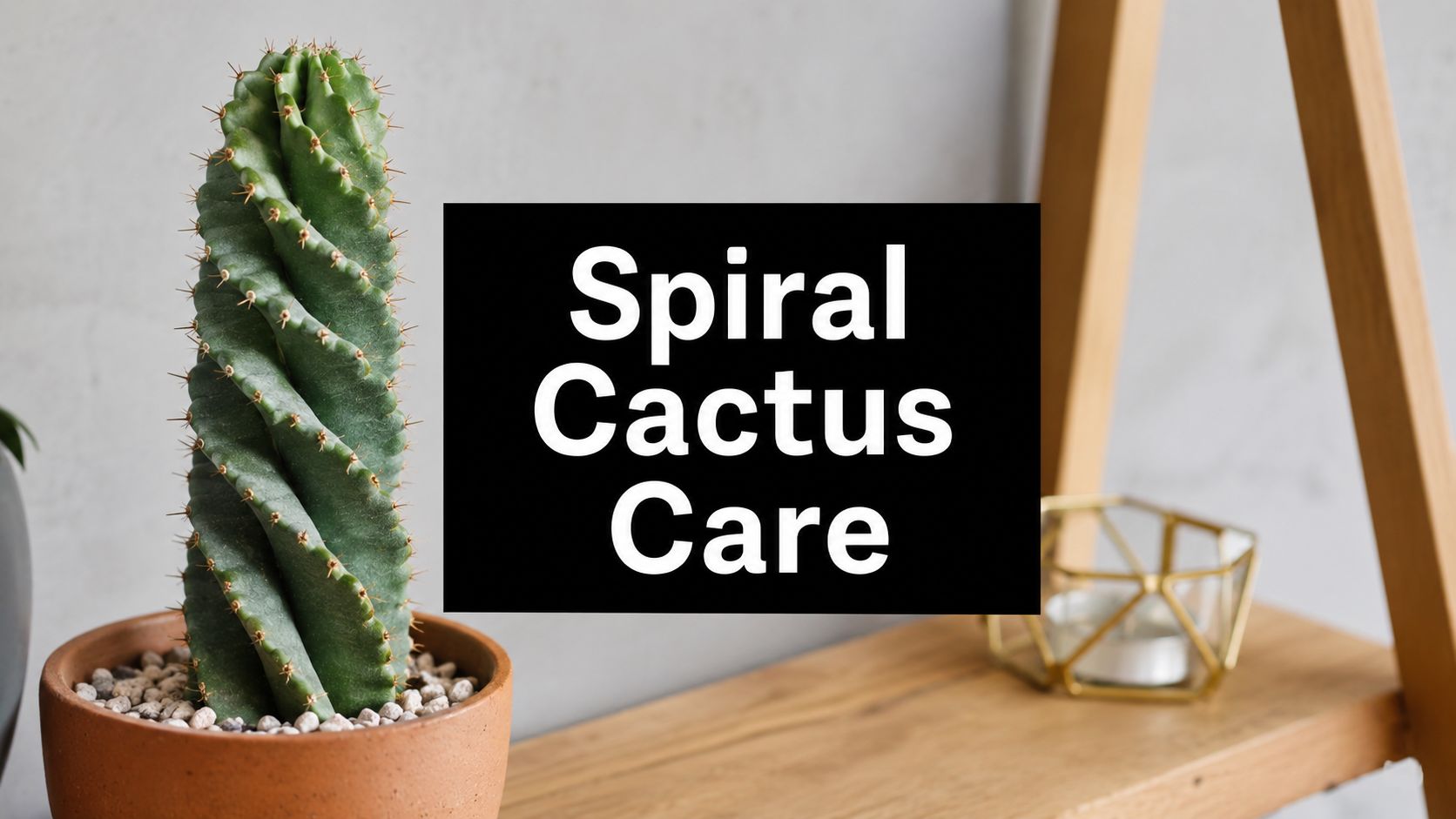
The easiest way to identify it is by the ribs. Instead of growing in straight vertical columns, the stem appears to rotate as it rises. The effect can be tight or loose depending on the specimen, but the overall look is unmistakable.
A healthy plant often shows:
- Twisting ribs: The whole stem reads like a corkscrew rather than a straight pillar.
- Blue-green skin: Strong light often brings out that cool-toned surface color.
- A narrow upright profile: Even when it has presence, it usually stays more vertical than wide.
- A sculptural silhouette: It looks designed, even though the shape comes from plant growth.
How it differs from ordinary columnar cacti
Beginners sometimes confuse it with any ribbed upright cactus. The difference is rhythm. A standard columnar cactus has vertical order. A spiral cactus has movement. Even from across a room, the eye follows the ribs upward in a turning pattern.
That distinction matters when you shop online. In photos, look past the pot and decorative staging. Focus on the actual line of the stem. If the ribs don't clearly twist, you may be looking at a young specimen whose form hasn't developed strongly yet, or a plant with a looser expression of the trait.
Here's the useful takeaway: Cereus Forbesii Spiralis is not special because it's fussy. It's special because its form is unusual, stable in cultivation through cuttings, and instantly recognizable.
Ideal Growing Conditions for a Healthy Spiral
Getting this plant right starts with environment, not fertilizer. If the light, pot, and soil are wrong, feeding and watering become guesswork. If the environment is right, the plant becomes much easier to read.

Light and placement
This cactus wants strong light. Indoors, that usually means your brightest window or a spot with long periods of sun and good airflow. If a space only feels “bright” to you but casts soft shadows most of the day, it may be too dim for compact, attractive growth.
The reason is simple. A twisting column still follows the same basic rule as other cacti. Low light leads to weak, stretched growth. That doesn't make the spiral prettier. It makes the form look thinner and less defined.
Practical rule: Put the plant where the room feels brightest for the longest part of the day, then watch the new growth. Strong form tells you the placement is working.
Temperature and outdoor potential
This is one of the more useful facts for buyers in warm climates. Plant care notes shared in a grower post describe Cereus forbesii 'Spiralis' as suited to USDA hardiness zones 10 and 11, able to tolerate 27°F to 28°F (-2.8°C to -3.3°C), and capable of reaching up to 16.5 feet. The same source notes that the species grows naturally at elevations between 1,640 and 6,560 feet.
That tells you two things. First, it isn't a delicate terrarium plant. Second, “cactus” doesn't mean “leave it out in any cold snap and hope for the best.” A brief chill is different from repeated frost exposure.
For many growers, the best approach is:
- Indoors year-round if winters are cold.
- Outdoors in warm months if you want stronger growth and better color.
- Protected from freezing conditions even if your climate is usually mild.
A newly shipped plant should also be eased into stronger sun instead of being thrown straight into harsh exposure.
Later in the section, this care video gives a helpful visual overview of cactus handling and setup:
Soil and pot choice
Under these circumstances, beginners often lose a good plant. A decorative pot with dense standard potting soil can hold moisture far too long for a cactus with a substantial stem and sensitive roots.
A practical setup needs two things working together:
| Setup factor | What to aim for | Why it matters |
|---|---|---|
| Soil texture | Gritty and fast draining | Prevents water from sitting around roots |
| Pot shape | Deep enough for stability | Supports an upright column |
| Pot weight | Heavier is better | Reduces tipping as the plant gets taller |
| Drainage hole | Non-negotiable | Lets excess water escape |
A tall spiral cactus in a light plastic pot can become unstable faster than many people expect. If you buy a larger specimen online, plan the container before the box arrives. A deep, heavy pot often makes the difference between a plant that feels secure and one that always looks like it might lean off balance.
Seasonal rhythm
This cactus grows more actively in warm months and slows down in winter. That rhythm should guide every care choice. More growth means the plant can use more water and nutrients. Less growth means extra moisture sits longer in the pot and raises the risk of rot.
If you remember only one idea from this section, remember this: match your care to the season, not to your enthusiasm.
Mastering Watering and Fertilizing Techniques
A spiral cactus often gets into trouble after it arrives, not because the plant was weak, but because the first few waterings were handled like those of an ordinary houseplant. Online buyers run into this all the time. The cactus looks dry after shipping, so it gets a small sip every few days. That pattern is exactly what a rot-prone cactus dislikes.

How soak and dry works
San Pedro Source's spiral cactus care guide describes the right pattern clearly. Water thoroughly only after the soil has dried fully, reduce watering sharply in winter, and use a fast-draining mix that includes mineral material such as perlite, pumice, or sharp horticultural sand.
This method works like a desert storm followed by a long dry spell. The roots drink well, then the pot needs to empty and breathe. If the mix stays damp around the roots, the plant cannot use that moisture safely for long.
That is why light, frequent watering causes so many losses. It wets part of the root zone, keeps the soil unevenly moist, and trains the grower to water by anxiety instead of by need.
Before you water, check the plant from more than one angle:
- Finger test: Go below the surface, not just the top crust. If it still feels cool or slightly damp, wait.
- Weight test: Lift the pot right after a full watering, then again several days later. That difference teaches your hands what dry soil feels like.
- Stem check: Mild wrinkling can signal thirst, but softness is a warning sign, not a cue to add more water.
- Season check: During winter rest, dry soil for longer periods is usually normal.
If you want a broader refresher on reading a cactus's water needs, this guide on watering cactus plants is a helpful reference.
A fixed calendar is less useful than a dry pot.
What overwatering looks like
Overwatering rarely announces itself dramatically at first. A spiral cactus may still look tall and striking while the lower stem and roots are already under stress. Early clues include a duller color, softening tissue, or a base that starts to look tired, yellowed, or slightly translucent.
New owners should pay special attention after delivery. Shipping can leave a cactus stressed, slightly dehydrated, or sitting in a nursery mix that dries more slowly than expected in your home. Give the plant time to settle, check the root zone carefully, and avoid treating every sign of stress as a request for water.
Fertilizer and flowering
For fertilizing, the goal is to support healthy growth without overdoing it. Growers often assume more feed will produce faster growth and better blooms. With Cereus forbesii spiralis, that usually leads to soft, stretched growth that is less attractive and sometimes less stable.
A better approach is modest feeding during the active season only. If your plant was recently delivered, repotted, or looks stressed, hold off. Fresh roots and stressed roots are easy to irritate.
Use these guidelines:
- Feed only in warm months when the cactus is actively growing.
- Start at a diluted strength rather than the full label rate.
- Skip fertilizer for a newly repotted plant until it shows signs of settling in.
- Use a low-nitrogen cactus fertilizer if your goal is compact, sturdy growth.
- If flowering matters to you, choose a bloom-support formula rather than a general high-nitrogen plant food.
The practical reason behind all of this is simple. Water and fertilizer are both growth signals. If you send those signals too often, especially after an online purchase, the plant grows in a way that looks fast at first and weak later. Restraint gives you the tight, sculptural spiral you paid for.
Propagation How to Create New Spiral Cacti
Propagation gets exciting once your plant is established, because this is one of those cacti that invites cloning. If you own a good spiral form, you naturally want more of it.
The main point is that seeds aren't the reliable route. According to Valley Succulents on Cereus forbesii cv. 'Spiralis', the spiral mutation is not reliably transmitted by seed, and cuttings taken in spring are the way to preserve the spiral form. Seed-grown plants can revert to the ordinary straight-columnar habit of Cereus forbesii.
Why cuttings are the right choice
That point saves you time and disappointment. If you sow seed expecting a tray of baby spirals, you may end up with standard plants. A cutting, by contrast, copies the parent's form.
That makes propagation less like breeding and more like preserving.
A practical cutting routine
Start with a healthy stem segment from a strong plant. Use a clean blade and make a decisive cut rather than crushing tissue. Then pause. New growers often rush the next part, and that's where rot starts.
Follow this order:
- Take the cutting in spring when the plant is ready for active growth.
- Let the cut end dry and callous in a bright, dry place out of intense direct exposure.
- Plant into a very fast-draining mix once the cut has sealed.
- Wait before watering heavily so the fresh cut isn't sitting in wet soil.
- Watch for firmness and new growth as signs that rooting is underway.
For a more general walkthrough, this guide on how to propagate cactus from cuttings gives a useful overview of the process.
If a cutting fails, the cause is usually impatience. Most often the cutting was watered too soon, potted too densely, or handled before the wound had fully calloused.
What to expect
Rooting asks for patience. The cutting may look unchanged for a while. That doesn't mean it has failed. As long as the stem stays firm and clean, it's often just taking its time to establish roots before pushing obvious top growth.
Troubleshooting Common Pests and Problems
Your spiral cactus rarely declines without warning. It usually starts with a small change. A softer base, a faded section, a wrinkle that does not plump back up, or a bit of white fluff tucked into a rib. If you bought your plant online, this matters even more, because shipping stress can blur the line between a harmless adjustment period and a real problem.
The goal is to read the clues in the right order. Start with firmness. Then check color. Then inspect the hidden creases where pests like to hide. That simple sequence keeps you from treating the wrong issue.
Pests you might see
Mealybugs and scale are the usual troublemakers. On a spiral cactus, they get an advantage from the plant's shape. The twists and rib folds create little protected pockets, almost like sheltered corners on a roof, where insects can stay unnoticed until the colony is larger than you expect.
A quick inspection is more useful than a rushed treatment. Look closely at:
- Around areoles: Pests often gather where spines emerge.
- Inside rib folds: The spiral form gives them cover from casual view.
- At the soil line: Problems that start low can spread before the stem shows obvious decline.
- On newer growth: Fresh tissue is easier for sucking insects to feed on.
If you spot a few pests, isolate the plant first. Then remove what you can by hand or with a cotton swab and recheck every few days. A beginner's mistake is spraying once, seeing clean surfaces, and assuming the problem is gone. On a spiral cactus, the second inspection is often the one that finds what the first missed.
Problems that aren't pests
Marks on cactus skin do not always mean infestation or disease. Online buyers often receive a plant with minor scuffs, old corking, or a slightly thirsty look from transit. Those signs can be cosmetic. What matters is whether the tissue is firm, stable, and improving after the plant settles in.
Use this table like a first-pass diagnosis, not a final verdict:
| Symptom | Likely cause | What to do |
|---|---|---|
| Soft base or black, mushy roots | Excess moisture and rot | Unpot the plant, inspect the roots, remove damaged tissue if possible, and correct the soil and watering routine |
| Pale, stretched growth | Too little light | Move it gradually to a brighter spot so the plant can adjust without scorching |
| Bleached or scorched patches | Sudden increase in sun | Give bright light, then increase direct sun slowly over time |
| Wrinkling with firm tissue | Thirst | Water thoroughly, then let the mix dry before watering again |
One point confuses many new growers. Wrinkles are not automatically a crisis. A thirsty cactus can wrinkle and still be healthy. Rot is different. Rot usually brings softness, discoloration, or a base that feels unstable.
Flowering frustration
A healthy spiral cactus may still refuse to bloom for years. That is normal. Flowering depends on maturity, strong light, and a consistent yearly rhythm much more than many care tags suggest.
As noted earlier, feeding choices can influence flowering. Too much nitrogen often pushes softer green growth instead of blooms. If your plant looks acceptable but never flowers, review the full picture. Is it getting enough light? Has it been kept on a steady routine? Was it recently shipped, repotted, or moved several times? A cactus that is busy recovering or adjusting will usually focus on survival before flowering.
This is especially useful for online buyers to remember. A plant from a retailer may arrive healthy but still need weeks or months to settle into your home's light and temperature pattern.
When to intervene fast
Rot needs immediate action.
If the base feels soft, smells off, or shows blackened tissue, unpot the plant and inspect the roots right away. Pests usually give you some time to respond. Rot can move quickly through a cactus, especially if the plant stayed wet after shipping, sat in a decorative pot without drainage, or was watered before it had time to adjust.
The reassuring part is simple. Trouble does not mean you failed. It means the plant is giving feedback. Once you learn how to read those signals, caring for a spiral cactus gets much less mysterious.
Buying and Styling Your Spiral Cactus
Buying a spiral cactus online is different from buying a pothos or a tray of succulents. You're choosing form, not just species. The exact twist, the spacing of the ribs, the straightness of the base, and the overall balance of the plant all affect how the specimen will look in your home.

How to judge an online listing
When you look at product photos, ignore the excitement for a minute and inspect the plant like a grower.
Look for these signals:
- Clear spiral definition: You want to see the twist in the ribs, not just a ribbed column shot from one flattering angle.
- Healthy color: Blue-green or steady green tissue usually looks stronger than a plant with widespread dulling or suspicious dark sections.
- Stable structure: A little character is fine. A badly compromised base is different.
- Honest scarring: Minor cosmetic marks can be normal on cacti. Damage that suggests active decline is another matter.
Size descriptions matter too, especially with columnar plants. A shorter specimen may already show a tighter, more dramatic twist, while a taller one may have stronger presence in a room but need repotting support sooner.
What happens after delivery
A shipped cactus can arrive slightly thirsty, dusty, or in need of settling. That's normal. Shipping asks the plant to tolerate darkness, movement, and temperature shifts. What matters most is how you respond in the first few days.
Do this instead of fussing over it:
- Unbox carefully and check the stem and root area.
- Let it rest in bright conditions, but not harsh immediate exposure if it has been boxed for days.
- Don't rush to water unless the plant and soil conditions clearly call for it.
- Repot only when needed rather than out of reflex.
Many people lose confidence because a shipped cactus doesn't look “freshly watered and glossy” on day one. That's not the standard to use. Firmness, stability, and clean tissue matter more.
Styling the plant in a room
This cactus works best when the pot and placement support its natural architecture. It doesn't need clutter around it. In fact, too many nearby plants can weaken its effect.
A few styling ideas work especially well:
| Room setup | Why it works |
|---|---|
| Near a bright window with open floor space | Emphasizes the vertical silhouette |
| In a simple ceramic or concrete pot | Keeps attention on the spiral form |
| As a single specimen beside wood or leather furniture | Highlights the cactus as a sculptural element |
| In a warm-climate patio grouping | Pairs well with other drought-tolerant plants |
If you're thinking about interiors more broadly, this piece on styling new furniture with plants has useful ideas for matching plant form to room design. A spiral cactus fits best where furniture lines are simple and the plant gets room to read as sculpture.
For more inspiration on placing cacti indoors, this guide to cactus for the home can help you think through scale and placement.
The biggest buying mistake isn't choosing a small plant or a large one. It's buying without a prepared spot. If you know the window, the pot, and the visual role the cactus will play before it arrives, you'll make a better choice and enjoy it more from the first day.
If you're ready to add a spiral cactus to your space, browse the curated selection at The Cactus Outlet. It's a strong place to shop when you want unusual cacti, detailed listings, and the convenience of ordering a specimen plant from home.