

Imagine a vibrant, beautiful garden that thrives with minimal effort, freeing up your weekends and reducing your water bill. A low-maintenance landscape isn't a myth; it's a smart design choice centered on strategic planting and sustainable practices. Creating an outdoor space that practically looks after itself is the ultimate modern convenience. This guide delves into ten practical and stylish low maintenance garden ideas that prove you can have a stunning yard without the constant toil of traditional gardening.
We move beyond generic advice to offer actionable steps and specific plant recommendations. You'll find a strong focus on resilient cacti and succulents, like those from specialists such as The Cactus Outlet, to help you design a garden that works for you, not the other way around. Whether you're interested in dramatic xeriscaping, charming container gardens, or efficient irrigation, the following sections provide a clear blueprint.
This article is your roadmap to a self-sufficient outdoor oasis. You will learn how to:
- Design water-wise landscapes with xeriscaping and native plants.
- Use hardscaping elements like rocks and gravel to suppress weeds and add texture.
- Create dynamic container arrangements and vertical gardens for any space.
- Implement smart watering systems that deliver moisture exactly where it's needed.
Get ready to transform your outdoor area into a showcase of effortless beauty, giving you back your valuable time to simply enjoy it. The journey to a gorgeous, low-effort garden starts now.
1. Xeriscaping: Water-Wise Landscape Design
Xeriscaping is a sustainable landscaping philosophy centered on minimizing water use without sacrificing beauty. Born out of the water-conscious climate of Denver, Colorado, in the 1980s, this approach has become a gold standard for creating resilient, low-maintenance gardens, particularly in arid regions. It involves a thoughtful combination of strategic plant selection, efficient irrigation, and smart soil management to create a self-sufficient ecosystem in your yard.

Key Principles of Xeriscaping
The success of a xeriscape garden lies in a few core practices that work together to conserve water and reduce upkeep. These principles are not just for desert climates; they can be adapted anywhere to create a more efficient garden.
-
Smart Plant Selection: Choose plants native to your region or those adapted to low-water conditions. Cacti and succulents, like the iconic Saguaro (Carnegiea gigantea) or the striking Golden Barrel Cactus (Echinocactus grusonii) from The Cactus Outlet, are perfect anchors for a xeriscape design.
-
Group by Water Needs: This practice, known as hydrozoning, involves placing plants with similar water requirements together. This prevents overwatering thirsty plants or underwatering drought-tolerant ones, making your irrigation far more effective.
-
Efficient Irrigation: Move away from broadcast sprinklers, which lose significant water to evaporation. Instead, install a drip irrigation system to deliver water directly to the plant's root zone. To promote deep, strong roots, water deeply but infrequently.
-
Soil and Mulch: Amend your soil with compost to improve both water retention and drainage. Apply a 2-3 inch layer of inorganic mulch, such as gravel or decomposed granite, to suppress weeds and drastically reduce soil moisture evaporation.
Pro Tip: A well-planned xeriscape doesn't just save water; it also reduces your time spent on weeding, fertilizing, and mowing. To achieve truly effortless and eco-friendly results, understanding how to apply integrating erosion control and water management solutions is key for sustainable landscaping in your xeriscape.
By adopting these xeriscaping methods, you can build a stunning, modern garden that thrives with minimal intervention. This approach is a fantastic example of low-maintenance garden ideas that are both environmentally friendly and visually compelling. For a deeper dive into plant choices, explore these additional drought-tolerant landscaping ideas to get started.
2. Raised Desert Garden Beds with Strategic Cactus Placement
Raised desert garden beds offer a practical solution for cultivating cacti and succulents, providing superior drainage, easier accessibility, and complete control over soil composition. By elevating plants above ground level, these beds create defined garden zones that are simpler to manage. This approach allows for precise, artful arrangements of different species according to their unique water, soil, and sunlight requirements, making it one of the most effective low-maintenance garden ideas.

Key Principles of Raised Bed Cactus Gardening
The success of a raised desert garden hinges on a few core practices that prevent root rot and promote healthy growth with minimal effort. These methods are especially useful in regions with heavy clay soil or poor natural drainage.
-
Perfecting the Soil and Drainage: The most critical factor is drainage. Use a specialized cactus soil mix, typically a blend of 50% potting soil and 50% inorganic material like perlite, pumice, or coarse sand. Before adding soil, line the bottom of the bed with 2-3 inches of gravel to create an extra drainage layer.
-
Strategic Plant Grouping: Thoughtful placement is key to reducing maintenance. Position tall, columnar species like the Mexican Fence Post Cactus (Pachycereus marginatus) toward the back to create a dramatic backdrop without shading smaller plants. Group succulents with similar water needs, such as various Agave and Aloe species, together for efficient watering.
-
Smart Watering Practices: Raised beds dry out faster than in-ground gardens, but this is an advantage for desert plants. Water deeply but much less frequently, allowing the soil to dry completely between sessions. This encourages deep root growth and prevents the rot that plagues cacti in overly moist environments.
-
Durable Bed Construction: Choose your raised bed materials wisely. Wood is a classic choice, but modern composite materials or corten steel offer a longer lifespan and require less upkeep over the years, contributing to a truly low-maintenance setup.
Pro Tip: Raised beds warm up faster in the spring, which can give your desert plants a head start on the growing season. This elevation also makes weeding and general maintenance much easier on your back, turning garden chores into a more enjoyable activity.
By designing raised beds specifically for desert flora, you can create a stunning, architectural garden feature that thrives with very little intervention. This method is a perfect example of low-maintenance garden ideas that combine form and function beautifully.
3. Rock and Gravel Mulching for Cacti Gardens
Using decorative rocks, gravel, and stone is a foundational technique for creating authentic, low-maintenance cactus gardens. Unlike organic mulches like wood chips that retain moisture and can lead to rot, inorganic mulches like stone provide a clean aesthetic while improving drainage, regulating soil temperature, and preventing soil from splashing onto plants during watering. This method is fundamental to desert garden design and a cornerstone of successful low-maintenance garden ideas.

Key Principles of Rock and Gravel Mulching
The success of a gravel-mulched garden comes from a few core practices that protect plants and reduce your workload. These principles are especially important for succulents and cacti, which demand excellent drainage to thrive.
-
Prevent Root and Crown Rot: A layer of stone mulch keeps the base of your cacti, like the Parodia magnifica, dry. This is critical, as direct contact with damp soil can cause rot, one of the most common issues for succulent growers.
-
Regulate Soil Temperature: Light-colored gravel reflects sunlight, keeping the soil and plant roots cooler in hot climates. Conversely, darker rocks absorb heat, which can be beneficial in cooler regions to keep plants warm overnight.
-
Suppress Weeds Naturally: A thick layer of rock mulch, ideally 2-3 inches deep, blocks sunlight from reaching weed seeds, significantly reducing the amount of weeding you need to do.
-
Improve Aesthetics and Drainage: Gravel provides a finished, professional look that complements the structural forms of cacti. It also allows water to pass through quickly to the soil below, preventing water from pooling around the plant's base.
Pro Tip: When applying gravel mulch, leave a small, 1-2 inch gap directly around the base of each cactus. This "breathing room" ensures optimal air circulation right where the plant is most vulnerable to moisture buildup.
By implementing rock and gravel mulching, you create a garden that is not only visually striking but also incredibly resilient and self-sufficient. For more inspiration on designing with stone, explore these rock garden landscape ideas to see how you can apply these techniques.
4. Succulent and Cactus Container Gardens
Container gardening with cacti and succulents offers exceptional flexibility and control, making it one of the most accessible low maintenance garden ideas. This approach allows you to create vibrant, self-contained displays, manage growing conditions with precision, and easily move plants to suit changing light or weather. It's an ideal solution for renters, apartment dwellers with balconies, or anyone looking to add a touch of desert drama to patios, decks, or even indoor spaces.
Key Principles of Container Gardening
Creating a thriving container garden hinges on a few essential practices that ensure your plants stay healthy with minimal effort. These tips are crucial for preventing common issues like root rot and promoting strong, resilient growth.
-
Prioritize Drainage: This is non-negotiable for succulents and cacti. Always choose containers with drainage holes. Materials like terra cotta are excellent as they are porous and allow soil to breathe and dry out more evenly.
-
Use the Right Soil Mix: Standard potting soil retains too much moisture. Use a specialized cactus and succulent soil mix designed for sharp drainage. You can create your own by mixing potting soil with inorganic materials like perlite or pumice.
-
Master the Watering Technique: Water thoroughly until it runs out of the drainage holes, but then allow the soil to dry out completely before watering again. This deep-but-infrequent watering method mimics their natural desert environment and encourages strong root development.
-
Create Visual Interest: Arrange containers of varying heights, shapes, and textures to create a dynamic display. Grouping plants like a tall San Pedro Cactus (Echinopsis pachanoi) with a low-growing Echeveria can produce a stunning visual composition.
Pro Tip: When grouping plants in a single large container, ensure they have similar light and water needs. This "mini-hydrozoning" prevents one plant from being overwatered while another is left thirsty, simplifying care and ensuring the whole arrangement flourishes.
Container gardens are the perfect way to showcase unique specimens from The Cactus Outlet or create a portable, low-effort garden that can move with you. To get started, exploring the best practices for keeping succulents in a pot is an excellent first step.
5. Vertical Succulent Walls and Living Art
Vertical succulent walls transform gardening from a horizontal plane to a vertical masterpiece, creating living art installations that are perfect for modern spaces. Pioneered by botanists like Patrick Blanc, this approach maximizes visual impact in small areas by growing plants on a vertical surface. It's an exceptional method for adding a lush, green feature to patios, balconies, or even interior walls, all while maintaining the low-water, minimal-care benefits of succulents.

Key Principles of Vertical Succulent Gardens
A successful vertical garden relies on smart construction and careful plant selection to create a self-sustaining display. These principles ensure your living wall thrives with very little intervention.
-
Choose Appropriate Succulents: Opt for succulents with shallow root systems that are well-suited for tight spaces. Trailing varieties and compact rosettes are ideal. Consider species like Sempervivum (Hens and Chicks) for their tight-clustering habit or thin Aloe varieties that won't overwhelm the structure.
-
Plan the Structure and Irrigation: Use a lightweight soil mixture specifically for succulents to reduce the overall weight on your wall. Incorporating a drip irrigation system at the top is a key element of these low maintenance garden ideas, as it allows water to trickle down evenly and efficiently to all plants.
-
Ensure Proper Drainage and Light: Good drainage is critical. The vertical frame must have a system to allow excess water to escape, preventing root rot. Position your wall where it will receive bright, indirect sunlight, which is ideal for most succulent species, especially when grown indoors.
By applying these techniques, you can design a stunning piece of living art that doubles as a low-maintenance garden. This method is a fantastic way to introduce greenery into urban environments or homes where traditional garden space is limited.
6. Native Cactus Landscaping for Regional Climate Adaptation
Adopting a native plant-first approach is one of the most effective strategies for creating a truly effortless garden. Native cactus landscaping involves designing with species that are indigenous to your specific region, ensuring they are perfectly suited to the local climate. These plants have evolved over millennia to thrive in your area's unique rainfall patterns, soil types, and temperature swings, which means they require significantly less supplemental water, fertilizer, and pest control once established.
Key Principles of Native Cactus Landscaping
Focusing on native species creates a garden that is not only low maintenance but also ecologically responsible. This method builds a resilient landscape that supports local wildlife and reflects the natural beauty of your region.
-
Regional Plant Research: The first step is to identify cacti and succulents native to your specific area. A Saguaro landscape is iconic for Arizona, while gardens in Texas might feature plants from the Chihuahuan Desert. Local botanical gardens and native plant societies are excellent resources for this research.
-
Thoughtful Sourcing and Planting: Source your plants from reputable nurseries like The Cactus Outlet that specialize in regional species. Planting should occur during the appropriate season, typically in the fall or spring, to allow the plants to establish strong root systems before the stress of summer heat or winter cold.
-
Mimic Natural Habitats: Group plants according to their native habitat zones. For example, place species that naturally grow on rocky slopes together to ensure their soil and drainage needs are met. This mimics natural ecosystems and promotes healthier growth.
-
Water Wisely: While native plants are drought-tolerant, they do need regular water during their first year to get established. After that, you can drastically reduce or even eliminate supplemental watering, relying mostly on natural rainfall.
Pro Tip: Integrating native plants is a cornerstone of sustainable, low-maintenance garden ideas. By choosing species already adapted to your environment, you work with nature, not against it. This reduces your workload and conserves resources, creating a garden that practically takes care of itself.
By prioritizing native cacti and succulents, you create a garden that is deeply connected to its surroundings. This approach results in a stunning, authentic landscape that thrives with minimal human intervention, making it a superior choice for gardeners seeking both beauty and simplicity.
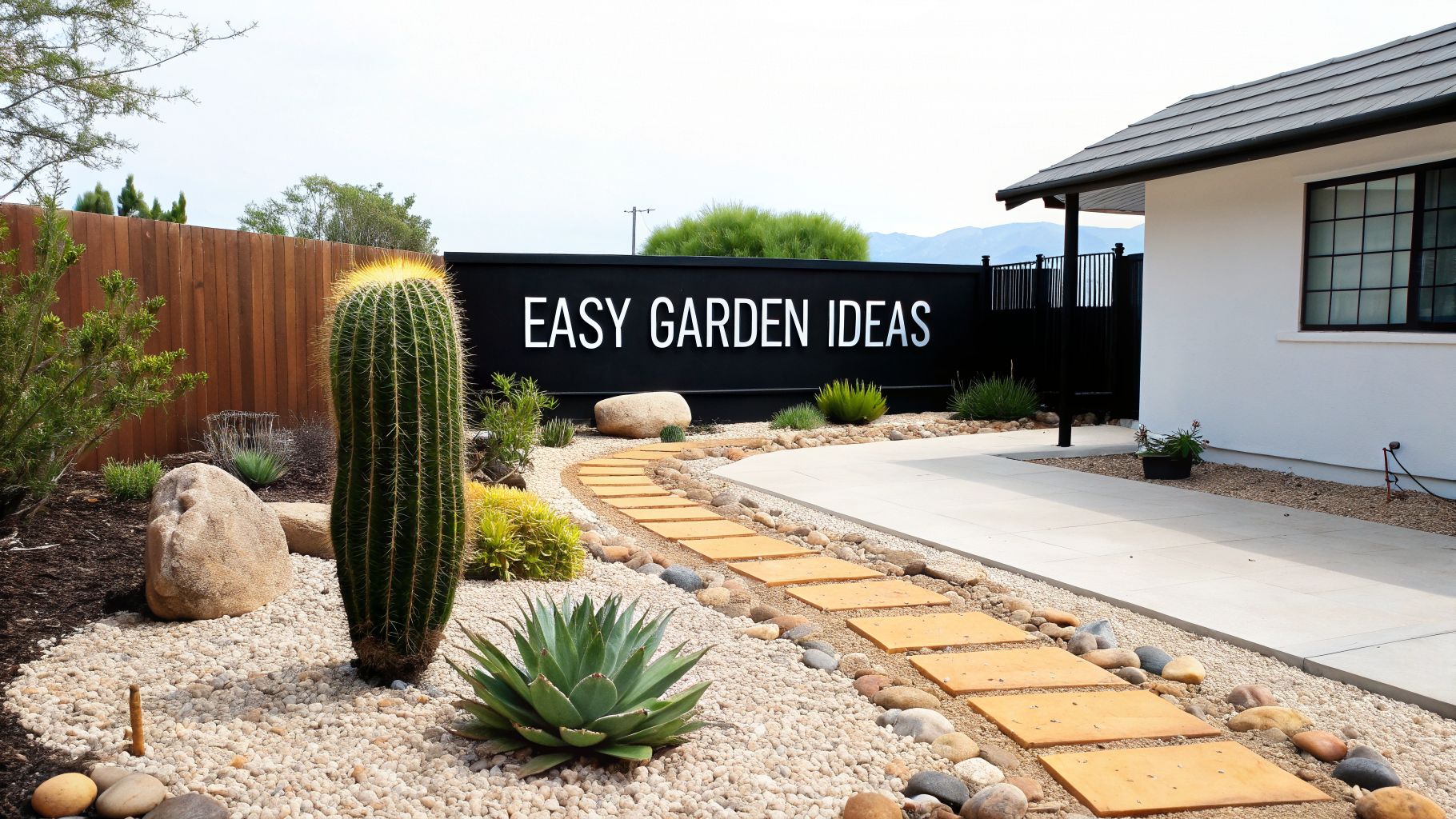
7. Permeable Hardscape Design with Strategic Planting
Balancing hard surfaces with soft greenery is key to many garden designs, but traditional concrete or non-porous pavers can create water runoff and heat islands. A permeable hardscape design solves this by integrating materials like gravel, decomposed granite, and permeable pavers with strategic plant placement. This approach creates a functional, modern aesthetic that is one of the best low maintenance garden ideas, allowing water to drain naturally while providing stable pathways and patios.
This design philosophy is visible in many contemporary desert landscapes, from residential gardens in Phoenix to commercial properties in Las Vegas. The core idea is to create a landscape that is both accessible and ecologically sound, reducing water waste and maintenance chores by letting nature do the work. It’s about building a garden that accommodates human activity without compromising the health of the plant life.
Key Principles of Permeable Design
A successful permeable garden hinges on creating distinct, functional zones that work in concert. This method smartly separates high-traffic areas from delicate planting beds, ensuring both durability and beauty.
-
Zone Separation: Clearly define walking paths from garden beds. Use metal or stone edging to keep materials like gravel and soil from mixing, which maintains a clean look and prevents weeds from creeping into pathways.
-
Material Selection: Choose hardscape materials that allow water to pass through. Decomposed granite offers a soft, natural look for patios, while gravel pathways provide excellent drainage and a satisfying crunch underfoot. Permeable pavers are ideal for driveways or high-use areas, combining durability with water-wise function.
-
Strategic Planting: Place larger, architectural specimens like a Saguaro (Carnegiea gigantea) or Argentine Saguaro (Trichocereus terscheckii) away from main pathways to give them space and prevent accidental contact. Use smaller, more robust plants like the low-growing Golden Barrel Cactus (Echinocactus grusonii) or clumps of succulents along the edges of pathways.
-
Path Planning: Design walkways to guide foot traffic logically through the garden while keeping people a safe distance from spiny or delicate plants. Curved paths can create a more natural, flowing feel compared to rigid, straight lines.
Pro Tip: When using gravel or decomposed granite as a mulch in planting areas, install a high-quality landscape fabric underneath. This will drastically reduce weed growth and keep the stone layer from mixing with the soil, saving you countless hours of weeding.
By combining permeable hardscapes with thoughtful planting, you create a visually striking garden that is exceptionally easy to manage. This approach minimizes water runoff, suppresses weeds, and provides a durable framework for your drought-tolerant plants to shine, making it a cornerstone of smart, low maintenance garden ideas.
8. Automatic Drip Irrigation Systems for Precision Watering
An automatic drip irrigation system is a cornerstone of modern, low-maintenance gardening. It delivers water directly to the base of each plant, minimizing waste from evaporation and runoff. This precision method ensures that plants receive a consistent and controlled amount of moisture right at the root zone, eliminating the guesswork and physical effort of hand-watering. For anyone serious about creating a self-sufficient garden, especially with cacti and succulents, this is a game-changing setup.
Key Principles of Drip Irrigation
Setting up an efficient drip system involves more than just laying tubing. Its success depends on proper planning and regular, simple maintenance to keep it functioning optimally for years.
-
Zoning by Water Needs: Group plants with similar water requirements onto separate irrigation lines or "zones." This allows you to provide more water to a thirsty groundcover without over-saturating a nearby drought-hardy Organ Pipe Cactus (Stenocereus thurberi) from The Cactus Outlet.
-
Choosing the Right Emitters: Use point-source drip emitters for individual plants like cacti or container specimens. For densely planted beds or groundcovers, soaker hoses or tubing with built-in emitters provide broader, more even coverage.
-
Automated Scheduling: Connect your system to a programmable timer. This allows you to set a "set it and forget it" watering schedule that adapts to the seasons, watering less in the cool winter months and more during the hot, dry summer.
-
System Maintenance: To prevent mineral buildup and clogging, flush the lines monthly by opening the end caps and letting water run through for a few minutes. A quick annual check of all emitters and connections before the growing season starts is also a good practice.
Pro Tip: Overwatering is the number one cause of failure for succulents and cacti. An automated drip system removes this risk by delivering a precise, measured amount of water, preventing root rot and promoting healthy, resilient growth. It's a key component of truly low-maintenance garden ideas.
By installing a drip irrigation system, you not only save time and conserve water but also create a healthier environment for your plants to thrive. This approach provides the consistency that drought-tolerant species need without the daily chore of watering.
9. Mixed Succulent Beds with Complementary Ground Covers
Creating a mixed succulent bed is an artistic approach to gardening that layers different plant forms, textures, and colors to build a visually dynamic and cohesive landscape. This design strategy involves combining tall specimen cacti with mid-sized succulents and low-growing ground covers to create a multi-level garden that is full of interest. The result is a thriving, self-sufficient planting that minimizes open soil, suppresses weeds, and requires very little maintenance once established.
Key Principles of Mixed Succulent Beds
The beauty of a mixed succulent bed comes from the thoughtful arrangement and selection of plants that work together. By following a few design principles, you can create a stunning garden that looks professionally designed and is one of the most effective low-maintenance garden ideas available.
-
Create Vertical Layers: Start with a tall, architectural focal point like a Peruvian Apple Cactus (Cereus repandus) or a majestic Saguaro (Carnegiea gigantea). Add mid-height plants such as the rosette-forming Agave or branching Euphorbia to provide a supporting structural layer.
-
Fill in with Ground Covers: Use low-growing, spreading succulents to fill the gaps. Varieties like Sedum (stonecrop) or Sempervivum (hens and chicks) create a living mulch that helps retain soil moisture and prevents weeds from taking hold.
-
Harmonize Plant Needs: The most crucial step is to select plants with identical water and sunlight requirements. Grouping species that thrive in the same conditions ensures that your entire bed can be cared for with a single, simple routine.
-
Plan for Growth: Give each plant enough room to reach its mature size without overcrowding. This prevents future competition for resources and reduces the need to transplant or prune down the line. Use gravel or decorative rocks between younger plants to maintain a clean look as they grow.
Pro Tip: Arrange plants based on color and texture to create visual flow. Place contrasting forms next to each other, like the spiky leaves of an agave next to the soft, rounded pads of an Opuntia cactus, to make each plant stand out. A dense planting is your best defense against weeds.
10. Seasonal Cactus and Succulent Collections for Year-Round Interest
A truly dynamic low-maintenance garden offers visual appeal throughout the year, not just during one peak season. Curating a collection of cacti and succulents based on their seasonal behaviors, such as bloom times and foliage color changes, creates an ever-evolving landscape. This approach focuses on selecting diverse species that showcase their unique characteristics at different times, ensuring your garden remains engaging from spring through winter.
Key Principles for Seasonal Collections
Building a garden with year-round interest requires a bit of planning, but the payoff is a stunning, low-effort display that changes with the seasons. By understanding the life cycles of different plants, you can orchestrate a continuous show of color and texture.
-
Plan for Sequential Blooms: Research the flowering periods of different cacti and succulents. Combine species that bloom in spring, summer, and even fall to ensure there's always something in flower. For example, pair a spring-blooming Texas Rainbow Cactus (Echinocereus dasyacanthus) with a summer-flowering Prickly Pear (Opuntia).
-
Embrace Foliage Color Changes: Many succulents change color in response to temperature, sunlight, and water. "Sticks on Fire" (Euphorbia tirucalli) turns a brilliant red in cooler weather, while certain Sedum and Sempervivum varieties develop deep burgundy or purple hues, adding winter interest when most other plants are dormant.
-
Strategic Grouping: Arrange plants with similar bloom times together to create concentrated bursts of color. This "vignette" approach makes a stronger visual impact than scattering individual flowering plants throughout the garden.
-
Source Diverse Specimens: To achieve a varied seasonal display, it's important to source a wide range of plants. The Cactus Outlet offers a diverse selection, allowing you to find species that will provide color and texture for every season, making it a great resource for building these types of low maintenance garden ideas.
Pro Tip: Keep a simple garden journal to track when each plant blooms or changes color. This record will become an invaluable tool for future planting decisions, helping you fill any seasonal gaps in your garden's display and refine your design over time.
By curating a collection with seasonal highlights in mind, your garden becomes a living calendar. This thoughtful selection process ensures that your low-maintenance space provides continuous beauty and interest, rewarding you with something new to appreciate no matter the time of year.
10 Low-Maintenance Garden Ideas Comparison
| Item | Implementation Complexity 🔄 | Resource Requirements ⚡ | Expected Outcomes 📊 | Ideal Use Cases 💡 | Key Advantages ⭐ |
|---|---|---|---|---|---|
| Xeriscaping: Water-Wise Landscape Design | Moderate — design + installation planning | Moderate upfront (plants, irrigation, hardscape) | Significant water reduction; long-term low maintenance | Arid regions and water-restricted properties | Water-efficient, sustainable, low upkeep |
| Raised Desert Garden Beds with Strategic Cactus Placement | Moderate — construction and soil prep | Moderate (materials, quality drainage mix) | Improved drainage and accessibility; controlled soil conditions | Gardeners wanting precision and easy maintenance | Excellent drainage, easier access, soil control |
| Rock and Gravel Mulching for Cacti Gardens | Low — simple installation | Low–moderate (stone materials; one-time cost) | Permanent mulch, improved drainage and reduced splash | Hot/dry climates and drainage-sensitive plantings | Long-lasting, authentic desert aesthetic, low maintenance |
| Succulent and Cactus Container Gardens | Low — potting and arrangement | Low (pots, soil); higher ongoing watering attention | Portable displays; precise micro-environments | Urban gardeners, renters, collectors | Portable, space-efficient, easy to control conditions |
| Vertical Succulent Walls and Living Art | High — structural support + irrigation | High (frames, irrigation, installation expertise) | Dramatic visual focal point; maximizes vertical space | Modern interiors/exteriors with limited ground area | High-impact aesthetics; space-efficient living art |
| Native Cactus Landscaping for Regional Climate Adaptation | Low–Moderate — species research & planting | Low long-term (sourcing natives; minimal inputs) | Very low maintenance once established; climate resilience | Environmentally conscious, region-specific designs | Climate-adapted, supports local ecosystem, cost-effective |
| Permeable Hardscape Design with Strategic Planting | Moderate–High — design + proper installation | Moderate–High (permeable materials, skilled labor) | Functional outdoor areas with improved infiltration | Those wanting usable, low-maintenance outdoor spaces | Better water management, reduced compaction, organized look |
| Automatic Drip Irrigation Systems for Precision Watering | Moderate–High — install + periodic maintenance | Moderate–High upfront (lines, controllers, sensors) | Precise, consistent watering; reduced water waste | Large gardens, busy owners, water-conscious properties | Automation reduces labor, prevents overwatering, efficient use |
| Mixed Succulent Beds with Complementary Ground Covers | Moderate — planning for compatibility | Moderate (diverse plants, initial planting labor) | Visually dynamic beds; weed suppression once established | Gardeners seeking sophisticated, low-maintenance designs | High visual interest, efficient space use, low long-term care |
| Seasonal Cactus and Succulent Collections for Year-Round Interest | Moderate–High — species selection and timing | Moderate (diverse species, occasional special care) | Ongoing seasonal interest; varied blooms and foliage | Enthusiast collectors, public displays, rotating exhibitions | Year-round variety, educational and aesthetic value |
Start Building Your Effortless Oasis Today
You've just explored a full spectrum of low maintenance garden ideas, each one a testament to the fact that a stunning garden does not have to be a demanding one. The journey from a high-effort yard to a personal oasis is paved with smart choices, not endless labor. The core principle weaving through all these concepts is simple: work with nature, not against it. This means selecting plants suited for your climate, designing layouts that conserve resources, and building a foundation that supports self-sufficiency.
Reviewing the key strategies, several powerful takeaways emerge. First, the foundation of any successful low maintenance garden is intelligent plant selection. Focusing on drought-tolerant species like cacti and succulents immediately reduces watering and care demands. Secondly, thoughtful design is paramount. Whether it's the water-wise principles of xeriscaping, the efficiency of raised desert garden beds, or the soil-protecting layer of rock and gravel mulch, the structure of your garden dictates its upkeep. Finally, strategic use of hardscape and technology provides a framework for beauty and ease. Permeable pavers prevent runoff, while a simple drip irrigation system delivers water precisely where it's needed, eliminating waste and guesswork.
Turning Inspiration into Action
The true value of these low maintenance garden ideas lies in their adaptability. You don't need to implement every single one; instead, view them as a menu of options to create a personalized solution.
- Start Small: Begin with a single project, like a succulent container garden or a small rockery. This allows you to gain confidence and see immediate results without feeling overwhelmed.
- Assess Your Space: Consider your climate, sun exposure, and existing landscape. A native cactus garden might be perfect for an arid region, while a collection of seasonal containers could bring life to a temperate patio.
- Blend Elements: Combine different ideas for a richer, more dynamic space. Imagine integrating a permeable patio with container gardens, or placing a vertical succulent wall as a focal point within a larger xeriscaped area.
This approach empowers you to create a garden that is not only beautiful but also a genuine extension of your home and lifestyle. It becomes a place for relaxation and enjoyment, not a source of stress or a constant to-do list. For a real-world example of how these principles come together to form a cohesive and beautiful outdoor living area, explore the stunning Lower Saucon Outdoor Oasis project that embodies effortless living.
Ultimately, mastering these low maintenance concepts frees up your most valuable resource: your time. It allows you to shift from being a garden laborer to a garden admirer. By choosing resilient plants and designing with efficiency in mind, you are investing in a sustainable landscape that provides year-round beauty with minimal intervention. Your effortless oasis is not a distant dream; it's a practical, achievable goal that begins with the first well-chosen plant and the first thoughtfully laid stone.
Ready to bring these low maintenance garden ideas to life? Start your project with the highest quality cacti and succulents from The Cactus Outlet. We provide a diverse selection of healthy, beautiful plants that are the cornerstone of any effortless, water-wise garden design. Explore our collection today and find the perfect specimens to begin building your stunning outdoor retreat.