
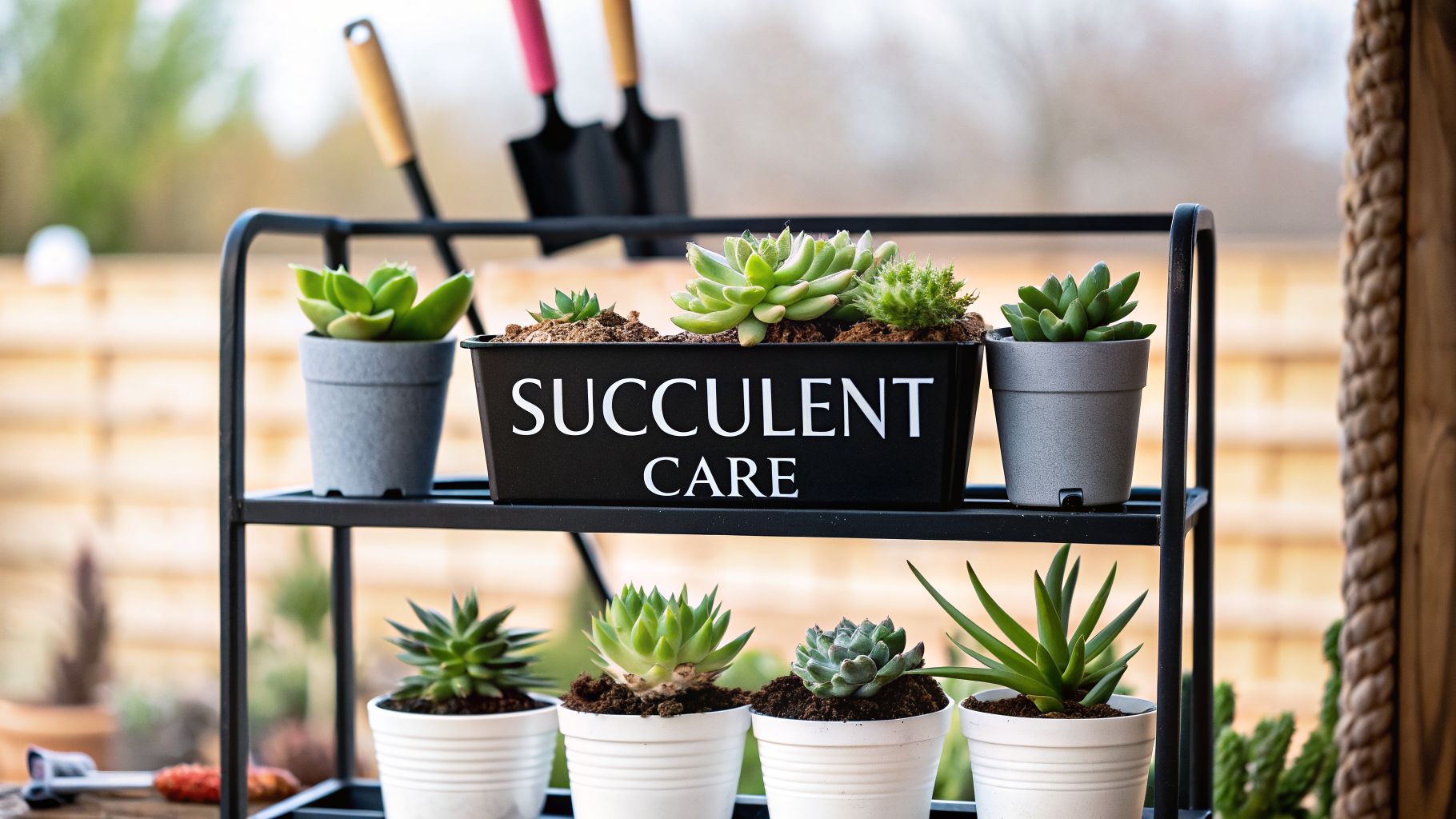

When it comes to keeping succulents happy, it’s not about having a "green thumb"—it's about understanding what they really need. If you get just three things right, you're more than halfway there: give them plenty of bright, indirect light, master the "soak and dry" watering technique, and plant them in the right kind of soil. Nail these, and you'll sidestep common frustrations like root rot and sad, stretched-out plants.
The Three Pillars of Succulent Care

Welcome to the wonderful world of succulents! These plants are tough, beautiful, and surprisingly easy once you get the hang of them. The secret isn't complicated; it's all about mimicking the dry, sunny places they come from. Your adventure in learning how to take care of succulent plants begins with a simple foundation: light, water, and soil.
Think of these as the non-negotiable building blocks for success. Get them right, and you’ll avoid nearly all the common pitfalls that new succulent parents encounter. Remember, these plants have spent thousands of years adapting to drought and intense sun, so your main job is to create a little slice of that desert environment right in your home.
Why Overwatering Is The #1 Mistake
If there's one thing that kills succulents, it's kindness—specifically, too much water. We've all been there. Succulents are basically living water tanks, storing moisture in their plump leaves and stems. When their soil is constantly soggy, their roots can't get any air and they begin to rot. Once root rot sets in, it’s often too late.
The fix is simple: use the “soak and dry” method. Water your plant thoroughly until you see water run out of the drainage hole. Then, and this is the important part, let the soil dry out completely before you even think about watering it again. For most indoor succulents, this might mean watering every 2 to 4 weeks. But forget the calendar—always check the soil first. Stick a finger an inch or two deep; if it feels damp, wait.
Succulents have become incredibly popular, with the global market expected to hit USD 36.48 billion by 2035. Yet, experts in horticulture believe that up to 80% of succulent deaths in our homes are caused by overwatering. It’s a stark reminder of how critical proper watering really is. You can learn more about the growing succulent market on businessresearchinsights.com.
Light And Soil: The Other Two Essentials
Sunlight is food for your succulent. To keep those beautiful colors and tight, compact shapes, most varieties need at least six hours of bright, indirect light every day. A south-facing window is usually the sweet spot. If they don't get enough light, they'll start to stretch and look "leggy" as they reach for the sun—a process called etiolation.
Finally, the soil. Standard potting mix is a death sentence for most succulents because it holds on to way too much water. You absolutely need a gritty, fast-draining cactus or succulent mix. This type of soil ensures that excess water flows away quickly, letting the roots dry out properly and preventing that dreaded rot.
For a quick summary, here are the absolute basics you need to know.
Succulent Care Quick Reference
This table breaks down the most critical care aspects, giving you a quick-glance guide to keep your succulents thriving.
| Care Aspect | Beginner Guideline | Why It Matters |
|---|---|---|
| Light | 6+ hours of bright, indirect sunlight daily. | Prevents stretching (etiolation) and keeps colors vibrant. |
| Water | Use the "soak and dry" method. Water deeply, then wait for soil to be 100% dry before watering again. | The #1 way to prevent fatal root rot from waterlogged soil. |
| Soil | Use a fast-draining cactus or succulent mix. | Ensures roots don't sit in water, allowing them to breathe and stay healthy. |
Getting these three elements in sync—light, water, and soil—is the key. They work together to create a stable, healthy environment where your succulent can truly flourish.
Finding the Perfect Light for Your Succulents

If there's one thing I've learned over the years, it's that sunlight is a succulent's best friend. It’s what fuels their growth, brings out those incredible vibrant colors, and keeps them looking tight and compact. Honestly, if you nail the lighting, you’ve won half the battle.
Most succulents are total sun-lovers, but that doesn't mean you can just stick them in the scorching afternoon sun and walk away. A good rule of thumb for most varieties is about six to eight hours of bright, indirect light every day. This gives them all the energy they need without roasting their leaves.
Reading Your Plant’s Light Signals
The great thing about succulents is that they'll tell you what they need—you just have to know how to listen.
If your plant isn't getting enough light, it will start to etiolate, which is a fancy word for stretching. You’ll see the stem getting long and spindly as the leaves spread farther apart. It’s literally reaching for more light. This is your cue to find a brighter home for it, and fast.
On the flip side, too much direct sun will cause sunburn. Look for white, brown, or even black patches that feel dry and crispy. Unfortunately, that damage is permanent, so catching it early or preventing it altogether is your best bet.
Finding the Right Spot Indoors
Growing indoors? A south-facing window is usually prime real estate, offering the brightest and most consistent light. But even that can be a bit much during the peak of summer.
A simple sheer curtain is a game-changer. It diffuses that intense light, giving your succulent a bright glow without the burn. An east-facing window is another fantastic choice, as it catches that gentle morning sun. West-facing windows can work too, but you'll want to keep an eye on your plants during those hot afternoon hours.
Lighting is truly the unsung hero of succulent care. A staggering 90% of leggy, etiolated growth stems directly from insufficient light, a problem impacting over 70% of indoor plants. Most succulents need those 6-8 hours of daily sun, but if your space is dim, grow lights delivering 2,000-5,000 lux for 12-14 hours can boost chlorophyll production by 150%, bringing out those brilliant colors. Discover more insights about the thriving succulent plant market on verifiedmarketresearch.com.
What About Grow Lights?
If you're short on sunny windows, don't sweat it. Grow lights are an amazing solution for keeping succulents happy just about anywhere.
When you're shopping for one, go for a full-spectrum LED light. They do the best job of mimicking natural sunlight and are super energy-efficient.
Here are a few quick tips to get you started:
- Positioning: Hang the light about 6 to 12 inches above your plants. Any closer and you risk burning them; any farther and they won't get enough juice.
- Duration: I recommend putting your lights on a timer for 12 to 14 hours a day. Consistency is key, and this schedule mimics a perfect summer day.
- Observation: Pay attention to your plants. If they start stretching, inch the light a bit closer. If you notice any scorching, back it off.
Acclimating Your Plants to New Light
Whether you're moving an indoor plant outside for the summer or bringing a new one home, always introduce it to brighter light slowly. A sudden blast of intense sun is a recipe for sunburn.
Even true sun-worshippers like Agaves and many cacti need time to adjust. To learn more about which varieties can handle the heat, check out our guide on succulent plants for full sun conditions.
Start by giving the plant just an hour or two in its new sunny spot on the first day. Over the next one to two weeks, gradually increase its sun exposure by an hour each day. This slow-and-steady approach gives the plant time to build up its tolerance and avoid any shocking setbacks.
Building the Right Foundation with Soil and Pots

Once you’ve got a handle on light and water, the next big piece of the puzzle is giving your succulents the right home for their roots. The soil and pot you choose aren't just minor details—they're the very foundation for a healthy plant.
Honestly, using regular old potting mix is probably the fastest way to kill a succulent. That stuff is designed to act like a sponge, holding onto moisture for far too long. Succulents come from gritty, arid places where rain drains away almost instantly. Our goal is to mimic that environment right in the pot.
That means using a soil that’s airy, coarse, and dries out fast. This ensures the roots get plenty of oxygen and are never left sitting in a puddle, which is a one-way ticket to root rot.
Choosing the Ideal Succulent Soil
The secret to great succulent soil comes down to two words: aeration and drainage. A quality mix should feel gritty and light, not dense and heavy like soil from your garden bed. You can definitely buy pre-made cactus and succulent mixes, but making your own is surprisingly easy and lets you tweak the recipe for your own home's conditions.
A solid mix is really a team effort between a few key ingredients:
- Base Material: You can start with a standard potting mix or coir, but it should only make up about a third of the total. This just provides a little organic matter and structure.
- Aeration Amendments: This is the gritty stuff that creates air pockets for roots and lets water flow right through. Perlite, pumice, and coarse sand are the MVPs here.
- Nutrient Sources: Succulents are light feeders, but a little compost or a sprinkle of worm castings can offer a gentle nutrient boost without messing up the drainage.
If you really want to nerd out on the science behind the perfect blend, we’ve put together a complete guide all about the best soil for succulent plants.
A Simple DIY Succulent Soil Recipe
Mixing your own soil is one of the most rewarding things you can do. It gives you total control over drainage, which is a huge win for your plants.
Here’s a tried-and-true recipe that works for almost any succulent:
- Start with one part regular potting soil. Just make sure it doesn't have any of those moisture-retaining crystals in it.
- Next, add one part coarse sand. You want the gritty stuff with larger particles, not fine play sand, which can actually compact and make drainage worse.
- Finally, mix in one part perlite or pumice. Both are fantastic for creating an airy mix, though pumice is a bit heavier and won't float to the top when you water.
Just toss these three ingredients together in a bucket or on a tarp until they're well combined. The final mix should feel loose and fall apart easily in your hand, not clump up like traditional soil.
The Importance of the Right Pot
The container your succulent lives in is just as crucial as the soil. When picking a pot, the two things that matter most are material and drainage.
Terracotta and unglazed ceramic pots are the gold standard for a reason. They’re porous, meaning air and moisture can pass right through the walls of the pot. This helps the soil dry out much more quickly, giving you a buffer against overwatering. Glazed ceramic and plastic pots work too, but they hold moisture longer, so you’ll need to be extra careful with your watering can.
No matter what material you choose, a drainage hole is non-negotiable. If excess water has no way to escape, your succulent’s roots will be stuck in a swamp, leading to the dreaded root rot. Found a gorgeous decorative pot with no hole? Use it as a "cachepot"—just slip the succulent (in its plain nursery pot with drainage) inside the decorative one.
Knowing When and How to Repot
Your succulent will eventually need a bigger place. Repotting gives the roots more room to grow and refreshes the soil. But how do you know when it’s time?
Keep an eye out for these tell-tale signs:
- Roots are starting to poke out of the drainage hole.
- The plant looks top-heavy and keeps tipping over.
- The soil is drying out way faster than it used to.
- Growth has stalled during the spring or summer.
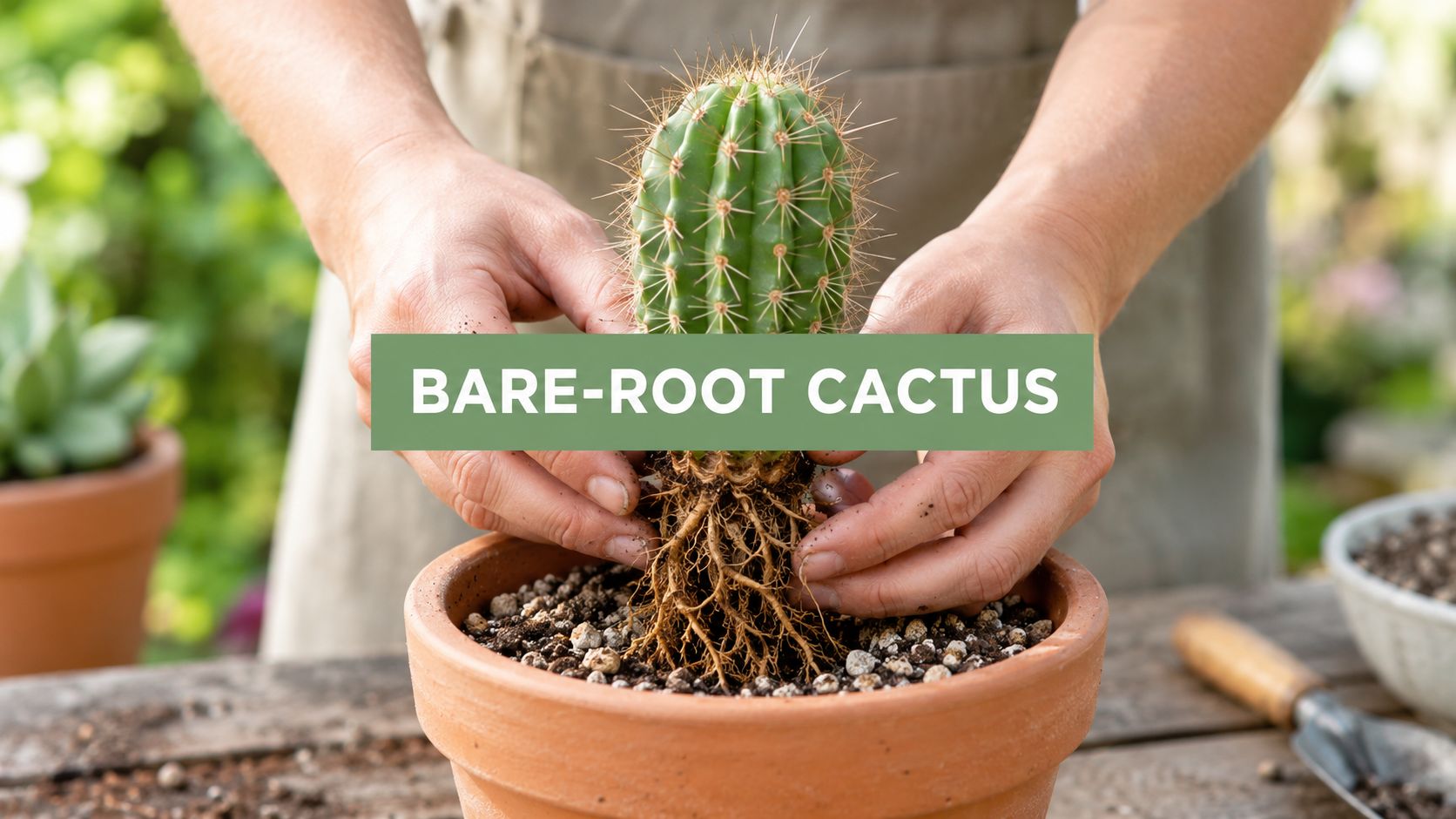
When it's time to repot, pick a new pot that’s only one to two inches wider than the current one. A pot that’s too big holds onto too much soil and moisture, which again, raises the risk of rot. Gently loosen the old soil from the roots, settle the plant in its new home, and backfill with your fresh succulent mix. Give it about a week before you water again—this lets any bruised roots heal up first.
Adjusting Your Care Routine Through the Seasons
One of the biggest lessons I learned when I first started growing succulents is that they don't operate on a human schedule. Their needs shift dramatically with the seasons, and treating a succulent the same way in January as you do in July is a recipe for disaster. It’s a classic rookie mistake, and one that causes a lot of headaches.
You see, most succulents have two distinct phases each year: a growing season and a dormant, or resting, period. For the vast majority of the succulents you'll find, they're most active from spring through summer. During these warm, sunny months, they're focused on pushing out new leaves, growing taller, and maybe even flowering. This is when they're hungriest and thirstiest.
Spring and Summer: The Growing Season
When spring arrives and the days get longer, it's time to ramp up your care routine. More sunlight means more photosynthesis, and your plants will be using up water much more quickly than they did over the winter.
This is your cue to water more often. The "soak and dry" method is still your best friend, but you'll notice that soil dries out a lot faster. A plant that needed a drink every three weeks might now be thirsty every 10 to 14 days. But remember, this is a guideline, not a rule. Always, always check the soil with your finger before reaching for the watering can.
Summer is also prime time for a little extra nutrition. A light feeding with a diluted succulent-specific fertilizer about once a month gives them the boost they need to support all that new growth.
Fall and Winter: Time to Rest
Once fall sets in and the days shorten, your succulents get the signal to slow down and enter dormancy. Think of it as their version of hibernation. Growth will pretty much stop, and they won't be actively making new leaves.
This is when you need to pull back on your care—dramatically.
Since the plant is just chilling out, its water needs drop off a cliff. Watering too much during dormancy is probably the number one way to kill a succulent with kindness, leading straight to root rot. For most of my indoor plants, I find myself watering only once every 4 to 8 weeks through the winter, just enough to keep their roots from drying out completely.
You should also put the fertilizer away entirely in the fall. Trying to feed a dormant plant is pointless and can actually harm it, burning the roots when they can't absorb the nutrients.
Keeping Your Indoor Climate in Check
Our homes can create tricky microclimates that don't always align with the seasons outside. The biggest challenges are often temperature swings and humidity. Getting this right can prevent an estimated 75% of common problems like rot and pests. These desert plants are happiest with daytime temperatures between 65-85°F (18-29°C). In fact, over 50% of plant failures can be traced back to poor placement, like an AC vent blowing air below 60°F or a spot near a radiator that pushes temperatures over 90°F. You can dig deeper into the data on the growing succulent plant market on econmarketresearch.com.
Here’s how to keep your plants comfortable:
- Dodge the Drafts: Keep your succulents away from drafty windows, heaters, and air conditioning vents. Those sudden blasts of hot or cold air are incredibly stressful for them.
- Keep Humidity Stable: Aim for a humidity level between 40-60%. A lot of people think misting helps, but it’s one of the worst things you can do.
- Never Mist Your Succulents: Seriously, don't do it. Wetting the leaves and stems is an open invitation for fungal diseases and rot, especially in the still air of a home. It’s a complete myth that this helps. Proper watering at the roots is all they need.
By simply paying attention to your succulent’s natural yearly rhythm, you go from just owning a plant to truly caring for it. This seasonal awareness is the real secret to helping your collection thrive, year after year.
Troubleshooting Common Succulent Problems
Even the most seasoned succulent lovers run into trouble now and then. Don't worry—most issues are an easy fix if you know what to look for. Think of your plant's leaves and stems as its way of telling you what it needs.
Learning to read the signs is the most important skill you can develop. Let's walk through a few common scenarios I see all the time.
The Case of the Mushy, Yellow Leaves
You glance over at your Echeveria and notice its lower leaves are turning a sickly, translucent yellow. When you touch them, they feel soft and squishy. This is the classic, tell-tale sign of overwatering.
When a succulent gets too much water, its roots can't breathe and begin to rot. The plant’s cells take on so much water they literally burst, leading to that mushy texture. If you catch it when only a few leaves are yellow, you’re in good shape. But if the stem itself is turning black and soft, the rot might be too far gone.
Here's your rescue plan:
- Step away from the watering can. Seriously, don't give it another drop.
- Move the plant somewhere with better airflow to help that soil dry out faster.
- If the soil is still soggy after a few days, it’s time for an intervention. Gently slide the plant out of its pot and take a look at the roots. Trim off any that are black, slimy, or have a foul smell using clean scissors.
- Let the plant and its remaining healthy roots air-dry for a day or two before repotting into fresh, bone-dry succulent mix.
Dropping leaves is another big worry for plant parents. If that's what you're dealing with, our guide on what to do when succulent leaves are falling off has some deeper insights.
The Shriveling, Wrinkled Plant
What if the leaves are the opposite of mushy? Maybe your once-plump succulent looks deflated and wrinkly, like a raisin. This is a much simpler problem: your plant is thirsty. It’s a clear sign of underwatering, and the plant is using up its internal water reserves.
While not as immediately dangerous as root rot, chronic thirst will stress your plant and stop it from growing. Luckily, the fix is straightforward.
Give the plant a really good, deep soak. I mean, drench it until water pours freely from the drainage hole. Let it sit for a few minutes, then drench it again. The leaves should plump right back up within a day or two.
This decision tree can be a huge help in figuring out your plant's needs as the seasons change.

The main thing to remember is that succulents have active and dormant periods. You water and feed more during their growing season and pull way back when they're resting.
The Stretched-Out Succulent
Is your succulent suddenly shooting up, looking tall and leggy with big gaps between the leaves? This is called etiolation, and it's your plant's desperate attempt to stretch toward a light source. The new growth might also look pale and weak.
Etiolation isn't just a cosmetic problem; that stretched-out growth is fragile and won't ever revert to its original compact shape.
Your best bet:
- Give it more light. Gradually move the plant to a brighter spot where it gets at least six hours of bright, indirect sun. Don't just throw it into direct sun, or it could get sunburned.
- "Behead" it. For a fresh start, you can chop off the stretched top part of the succulent with a clean knife. Let the cut end callous over for a few days, then stick it in some fresh soil. It will grow new roots and become a new, compact plant.
Uninvited Pests
You look closely at your plant and spot tiny, white, cottony masses tucked into the crevices. You’ve got mealybugs, one of the most common pests. Other culprits to watch for are spider mites, which spin fine webbing, and aphids that cluster on tender new growth.
Pests suck the life out of your plant, weakening it and making it vulnerable to disease. You need to act fast.
Your pest control strategy:
- Quarantine! The first thing you should always do is move the infected plant far away from your other plants.
- For a small infestation of mealybugs, grab a cotton swab, dip it in 70% isopropyl alcohol, and touch each bug. It kills them on contact.
- For a bigger problem, mix a 50/50 solution of 70% isopropyl alcohol and water in a spray bottle with a tiny drop of dish soap. Thoroughly spray the entire plant, getting into every nook and cranny.
- Pests lay eggs, so you’ll likely need to repeat the treatment every few days for a week or two to make sure you’ve gotten rid of them for good.
Diagnosing Common Succulent Issues
Sometimes it’s hard to tell what’s going on. This quick-reference table can help you play plant detective.
| Symptom (What You See) | Likely Cause | How to Fix It |
|---|---|---|
| Soft, mushy, translucent leaves | Overwatering / Root Rot | Stop watering, improve airflow, check roots, and repot in dry soil. |
| Wrinkled, deflated leaves | Underwatering | Give the plant a deep, thorough watering until water drains freely. |
| Stretching, pale, leggy growth | Not enough light (Etiolation) | Gradually move to a much brighter location; consider beheading. |
| Brown, crispy spots or patches | Sunburn | Move to a spot with bright, indirect light or provide afternoon shade. |
| White, cottony fluff on plant | Mealybugs | Isolate plant; remove pests with rubbing alcohol on a cotton swab. |
| Fine webbing on leaves/stems | Spider Mites | Isolate plant; spray with an insecticidal soap or neem oil solution. |
| Leaves dropping easily | Overwatering OR Underwatering | Check soil moisture. If soggy, it's overwatering. If bone dry, it's underwatering. |
By paying close attention to these signs, you can catch problems early and keep your succulents happy and thriving for years to come.
Answering Your Top Succulent Care Questions
It doesn't matter if you're a first-time plant parent or have a house full of greenery—questions are always going to come up. It's just part of the journey! We hear a lot of the same ones from succulent lovers, so we've gathered them here to clear up the confusion.
Think of this as your personal troubleshooting guide for those little moments of doubt. Getting these fundamentals right is what helps your collection go from just surviving to truly thriving.
How Often Should I Really Water My Succulents?
This is the big one, the question we get asked more than any other. The truth is, there's no magic schedule. How often you water depends completely on your unique environment—light, temperature, humidity, and the time of year all come into play.
The golden rule is simple: water thoroughly, but only when the soil is 100% bone dry. In the summer, a small pot on a sunny windowsill might need a drink every 10 days. That same plant in the winter, when it's dormant, might go four to six weeks without water.
Forget the calendar. Your best tool is your finger. Stick it a couple of inches into the soil. If you feel even a hint of moisture, back away and check again in a few days. This physical check is a thousand times more reliable than watering on a fixed schedule.
When it's time, give it a good soak. Water the soil until it streams out of the drainage hole. This "soak and dry" method mimics the infrequent, heavy rains succulents get in their natural habitat and is the key to happy roots.
Can I Use a Pot with No Drainage Hole?
We've all been there. You find the perfect decorative pot, but it's missing that crucial hole in the bottom. While an expert might be able to make it work, we strongly advise against it, especially if you're new to succulents. It's a recipe for disaster.
Without a drainage hole, excess water pools at the bottom, creating a swampy mess that suffocates the roots. This is the fast track to root rot, the number one killer of succulents. They need oxygen around their roots just as much as they need water.
- The Easy Workaround: Use that beautiful pot as a cachepot (a decorative outer pot). Plant your succulent in a cheap plastic nursery pot with plenty of drainage, then simply drop it inside the decorative one. When it's time to water, just lift the inner pot out, take it to the sink, let it drain completely, and pop it back in. Problem solved.
Why Are the Bottom Leaves on My Succulent Drying Up?
Seeing shriveled leaves can be scary, but most of the time, this is completely normal. As a succulent grows, it pushes out new, healthy leaves from its center. To get the energy for that new growth, it pulls resources and water from its oldest leaves at the very bottom.
These lower leaves will turn yellow, get papery thin, and eventually fall off. As long as the new growth at the top looks plump and healthy, you have nothing to worry about. Your plant is just recycling!
The key is to notice where the shriveling is happening. If it's just the lowest leaves, you're fine. If leaves all over the plant start to look wrinkly and deflated, that's a cry for water. Learning the difference is a skill you'll pick up over time.
Do My Succulents Need Fertilizer?
Succulents are used to toughing it out in nutrient-poor soil, so they aren't heavy feeders. That said, giving them a little snack during their growing season can really kick things into high gear, promoting stronger growth and even encouraging them to bloom.
The secret is to go easy. Always use a fertilizer made for cacti and succulents, and dilute it to half or even quarter strength. Less is definitely more.
Only feed them during their active growing season in the spring and summer—once a month is plenty. Never fertilize in the fall or winter when they're dormant. They can't use the nutrients, which will just build up in the soil and can burn their delicate roots.
Ready to start or expand your own stunning collection? At The Cactus Outlet, we offer a wide variety of healthy, beautiful succulents and cacti that are ready for their new home. Explore our collection and find your next favorite plant today at https://www.cactusoutlet.com.