


When you think of a statement piece for a home or garden, what comes to mind? A bold painting? A unique sculpture? What if I told you the ultimate statement piece is alive, requires minimal fuss, and brings a powerful, architectural vibe to any space? That's the magic of a large cactus.
From the iconic, multi-armed Saguaro to the fast-growing Peruvian Apple Cactus, these giants are living sculptures. They can completely transform a bland corner or a sparse yard into an extraordinary showcase of natural art.
Why Giant Cacti Make the Ultimate Statement Plants
Ever walk into a room and feel instantly captivated? Chances are, your eye was drawn to a single, powerful element that anchored the entire space. This is exactly what large cacti do. They aren't just another plant; they're a centerpiece, a conversation starter, and a testament to nature's resilience.
Think of them as the perfect focal point for our busy lives. Top designers and landscape artists are increasingly turning to these giants to add bold, structural forms to their work. A single towering cactus can frame a beautiful view, add a touch of desert grandeur to a minimalist apartment, or stand as a dramatic sentinel in a garden. The best part? They thrive on what seems like neglect, making them a perfect fit for modern lifestyles.
Living Art with Architectural Appeal
The real appeal of large cacti is their incredible variety of striking shapes. Each form creates a different mood and visual impact, allowing you to curate your space like a gallery. Getting to know these basic silhouettes is the first step in picking the perfect specimen to elevate your environment.
You’ll generally find them in a few distinct forms:
- Columnar Forms: These are the classic, single-stem giants that shoot straight up like majestic pillars. They’re fantastic for creating a sense of height and drama, drawing the eye upward.
- Branching Candelabras: Species like the famous Saguaro eventually grow arms, creating that iconic, multi-branched silhouette. It’s a look that feels both perfectly balanced and wonderfully wild.
- Sculptural Clusters: Some cacti grow in dense clumps, forming a powerful, textured mass. These can work as a natural, impenetrable screen or simply as a complex and fascinating focal point.
These aren't just plants; they're architectural elements. A single large cactus has the same design impact as a major piece of furniture or a significant work of art, but with the added dimension of being alive and slowly evolving.
This diversity means there's a cactus for any aesthetic. Whether you want a stark, modern look with a solitary column or a more complex, natural feel with a branching giant, the right cactus is out there, ready to become the soul of your design. The key is to see them not just as plants, but for the incredible atmosphere they create.
The Most Iconic Large Cactus Species You Can Grow
Stepping into the world of large cacti is like meeting the titans of the plant kingdom. These aren't just plants; they're living sculptures, each with a personality and a presence that can define a space. Getting to know the key players will help you pick a giant that won't just survive but will become a breathtaking centerpiece for years to come.
Let's walk through some of the most celebrated species, starting with the undisputed symbol of the American West. Think of this as your field guide to identifying and understanding these gentle giants.
Large Cactus Types At a Glance
Use this quick comparison of the most popular large cactus species to find the perfect architectural plant for your home or garden.
| Cactus Type | Mature Height | Growth Rate | Unique Feature |
|---|---|---|---|
| Saguaro | 40-50 ft | Extremely Slow | Iconic, upward-curving arms (after 50+ years) |
| Mexican Cardon | 60+ ft | Very Slow | World's largest cactus; branches start low |
| Peruvian Apple | 15-30 ft | Fast (1-2 ft/yr) | Produces huge night-blooming flowers and edible fruit |
This table gives you a snapshot, but the real story of each cactus is in its details and growth habits.
Saguaro: The Legendary Desert Icon
When you picture a classic desert landscape, the Saguaro (Carnegiea gigantea) is almost certainly the star of the show. Its famous, branching silhouette is recognized worldwide, making it one of the most beloved large cacti out there. Deciding to grow a Saguaro is a long-term commitment—a true exercise in patience that rewards you with a piece of living history.
The Saguaro's life story is one of slow, deliberate growth. As the largest cactus in the United States, it reigns supreme in the Sonoran Desert. A mature Saguaro averages 40 feet tall but can push past 50, with the record-holder soaring over 78 feet. Its growth is incredibly slow; it can take a full 10 years to reach just 1 inch in height. It won’t even produce its first flower until it’s around 70 years old and about 6.5 feet tall, finally hitting full maturity at 45 feet after nearly 200 years.
Identifying a Saguaro is pretty straightforward. Look for a thick, columnar main stem with prominent, well-defined ribs. The most telling feature—its arms—won't even begin to show up until the cactus is 50 to 75 years old. These arms curve upwards, creating that iconic, friendly wave shape.
Mexican Cardon: The World Record Holder
While the Saguaro gets most of the fame, the Mexican Cardon (Pachycereus pringlei) quietly holds the title for the world's largest cactus. It's often mistaken for a Saguaro, but a few key differences set this true heavyweight apart.
The most obvious tell is its branching pattern. A Saguaro's arms tend to emerge high up on the main trunk. The Cardon, on the other hand, sprouts its massive branches much closer to the ground. This gives it a denser, more tree-like look and a powerful, stable presence.
A mature Cardon can weigh up to an incredible 25 tons, a testament to its sheer size and water-storing abilities. This makes it not only the tallest but also the heaviest cactus species on the planet.
This giant comes from the Baja California peninsula and parts of Sonora, Mexico. It has a fascinating survival trick up its sleeve: it forms a symbiotic relationship with bacteria on its roots, which allows it to pull nutrients directly from bare rock. This helps it thrive in places other plants wouldn't dare to grow.
To get a better sense of how these cacti are categorized by their overall shape, the chart below illustrates the three main forms you'll encounter.

This visual helps clarify that while both the Saguaro and Cardon are branching types, their distinct structures create very different impacts in a landscape.
Peruvian Apple: The Fast-Growing Giant
For those who love the look of a big columnar cactus but don't have a century to wait, the Peruvian Apple Cactus (Cereus repandus) is a fantastic choice. This species gives you that impressive height but at a much faster pace, often shooting up one to two feet per year in the right conditions.
Its look is striking, with blue-green stems that have deep ribs and small, sharp spines. It often grows into a clustered, candelabra shape but can also stand as a single, towering column for many years, giving you some real design flexibility.
What really makes the Peruvian Apple Cactus special are two standout features:
- Night-Blooming Flowers: It produces enormous, breathtakingly beautiful white or pinkish flowers that only open at night. These fragrant blooms can be six inches across, putting on a spectacular show after the sun goes down.
- Edible Fruit: After the flowers fade, the cactus develops a round, red, apple-like fruit called "pitaya." The fruit is thornless and has a sweet, white pulp inside—a delicious bonus for your gardening efforts.
This mix of rapid growth, stunning flowers, and tasty fruit makes it one of the most popular and rewarding large cacti to grow, both indoors and out. While it shares a tall, ribbed look with other giants, its speed and bounty truly set it apart. Of course, not all cacti are tall and skinny. Other species, like the stout and spherical barrel cactus, offer a completely different shape for your garden. To see how they compare, check out our guide on the mighty barrel cactus.
Discovering Other Architectural Succulents
When you picture a bold, structural plant, it's easy to think only of classic, tall cacti. But the world of dramatic succulents is much bigger than that. Plenty of other plants deliver that same architectural punch, creating incredible focal points with their own unique shapes.
You'll often see these mistaken for cacti, but knowing what makes them different is the secret to giving them the right care—and handling them safely. Exploring these "cactus look-alikes" opens up a whole new world of textures and forms for your garden or indoor jungle. From towering, tree-like Euphorbias to sweeping Agave rosettes, these gentle giants might just be the living sculpture you've been searching for. They’re proof you don't need spines to make a serious statement.
The Great Pretenders: Euphorbia
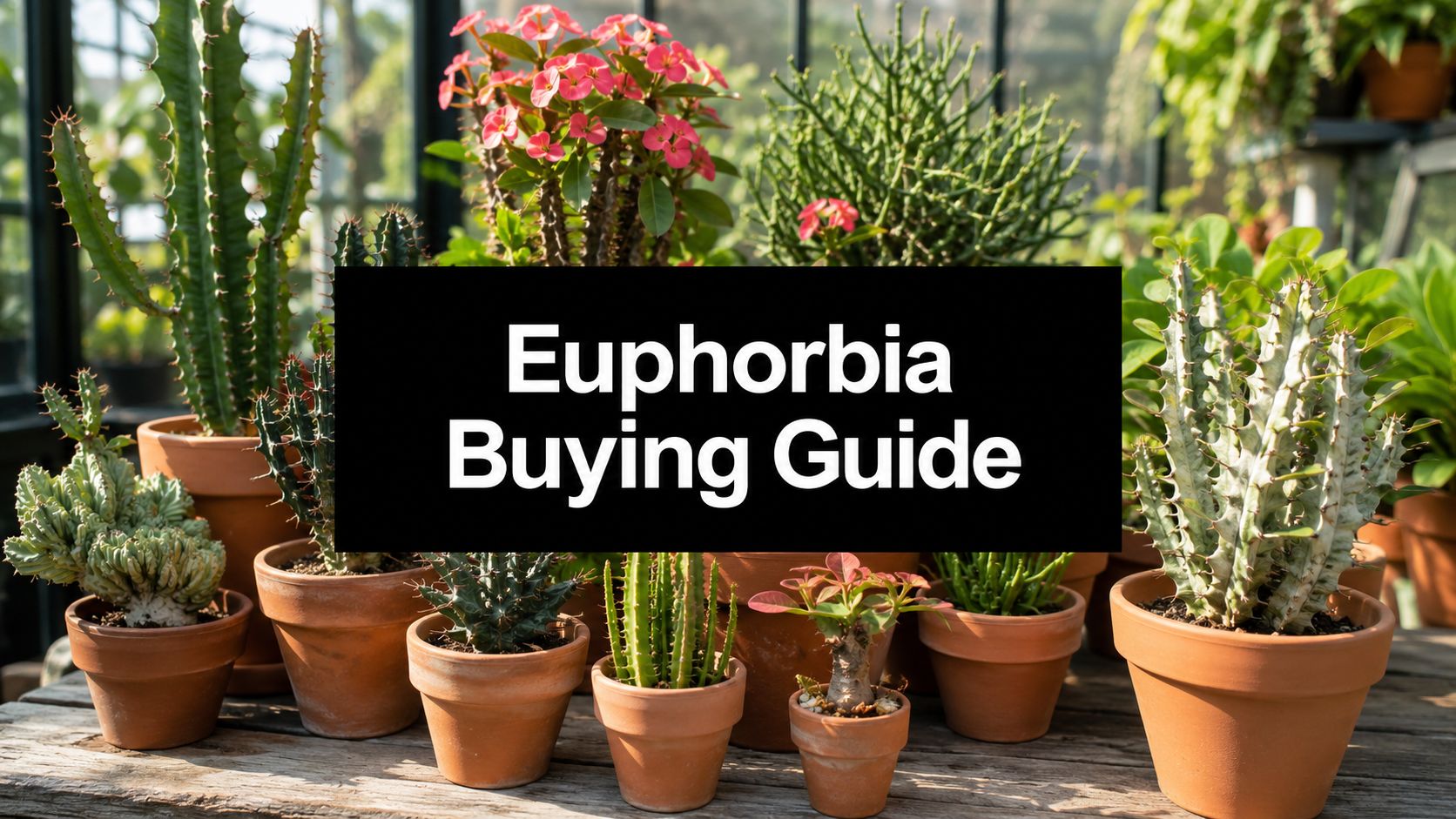
At a quick glance, you’d swear many large Euphorbia species were cacti. They grow in similar columnar or branching shapes, they’re incredibly drought-tolerant, and they have an undeniable architectural vibe. Two fantastic examples are the Candelabra Tree (Euphorbia ingens) and the African Milk Tree (Euphorbia trigona), both of which perfectly mimic that classic cactus look.
But here’s the twist: they're from a completely different plant family. The dead giveaway is what’s inside. If you nick a true cactus, it oozes a clear, watery fluid. Euphorbias, on the other hand, bleed a thick, milky-white latex sap.
This sap isn't just a quirky detail; it’s a major safety warning. The milky latex from most Euphorbias is a toxic irritant. It can cause nasty skin rashes and is genuinely dangerous if you get it in your eyes or mouth. Always, always wear gloves and eye protection when you’re pruning or handling them.
This key difference also tells a story about their origins. Cacti are native to the Americas, but the vast majority of succulent Euphorbias come from Africa and Asia. It's a textbook case of convergent evolution, where two unrelated plants in similar harsh environments evolved to look and act alike to survive.
Bold Rosettes: Agave and Aloe
Let's shift gears from the tall, vertical growers. Large Agave and Aloe species bring a totally different kind of architectural drama to the table. Instead of reaching for the sky, they command attention from the ground up with powerful, rosette shapes. Their thick, fleshy leaves radiate out from a central core, creating a stunning symmetry that feels both beautiful and a little bit intimidating.
- Agave Americana (Century Plant): This one is a true showstopper for any landscape. Its massive rosette of blue-gray leaves can easily spread over 10 feet wide. With sharp spines tipping every leaf, it demands respect and works brilliantly as a barrier plant or a standalone feature in a big garden.
- Aloe Barberae (Tree Aloe): As one of the few tree-like Aloes, this species is in a class of its own. It grows a thick, branching trunk with rosettes of deep green leaves at the top, eventually reaching heights of 30 feet or more. The sculptural silhouette it creates is unlike any other succulent.
These rosette-forming giants play a different role in design than their columnar cousins. A tall cactus or Euphorbia draws your eye upward, but a massive Agave or Aloe acts as a strong, low anchor in the landscape. They’re perfect for framing an entryway, adding visual weight to a garden corner, or just standing alone as a piece of living art in a spacious yard. Their bold forms and ridiculously low water needs make them stars in modern, drought-tolerant gardens, proving that some of the most impressive "large cactus types" aren't actually cacti at all.
Essential Care for Thriving Large Cacti
Caring for a large cactus isn't like looking after your other houseplants. These incredible desert plants follow a completely different set of rules, ones shaped by intense sun, minimal water, and gritty soil. Success isn't about constant fussing; it’s about creating the right environment and then, more importantly, leaving them alone.
Think of your cactus as a living sculpture, perfectly engineered to store water and wait out long, dry spells—kind of like a camel. Your main job is to copy the desert's natural cycle: a rare, heavy downpour followed by a long period of complete dryness. Get that rhythm down, and your cactus won't just survive; it will thrive for decades.
Let's break down the three pillars of cactus care—light, soil, and water—into simple, practical steps.

Mastering Sunlight and Placement
Big cacti are basically solar-powered. They absolutely crave sunlight, and giving them enough is non-negotiable. For a truly happy cactus, aim for at least six to eight hours of direct, bright sunlight every day. If your plant is outdoors, a south- or west-facing spot is perfect for soaking up that intense afternoon sun.
Bringing one of these giants inside is a bit trickier. The best possible spot is right in front of an unobstructed, south-facing window. If you don't have one, you might need to bring in a powerful grow light to prevent etiolation—that's when a cactus gets pale and stretched out, desperately reaching for a light source.
The Foundation of Good Health: Soil and Drainage
If sunlight is the engine, the right soil is the chassis. The number one job of cactus soil is to get water away from the roots as fast as possible. Using standard potting mix is a death sentence; it holds way too much moisture and is the fastest path to root rot, the ultimate cactus killer.
You need a soil mix that's gritty and lets air and water move freely. Don't think rich, dark garden soil; think desert gravel. You can buy pre-made cactus and succulent mixes, but honestly, making your own is simple and usually works better.
Here’s a great DIY recipe for cactus soil:
- One part standard potting soil: Just enough for a few nutrients.
- One part pumice or perlite: These create air pockets and ensure water drains right through.
- One part coarse sand or small gravel: This adds weight and stops the soil from becoming compacted.
The goal is to create a home for the roots where water rushes through and never lingers. A cactus sitting in soggy soil is like a person trying to breathe underwater—it just can't happen.
Of the roughly 1,750 known cactus varieties on Earth, the giant columnar types like the Mexican Giant Cardon and the Saguaro are true marvels. A Cardon can weigh up to 25 tons, and a Saguaro can hit 7 tons, which tells you just how much water they can store. Their roots often spread out as wide as the plant is tall to catch every last drop of rain.
The Art of Proper Watering
Overwatering is, without a doubt, the most common mistake people make with cacti. To avoid this fatal error, just follow the "soak and dry" method. It’s the perfect way to mimic the natural conditions your cactus is built for.
Here’s how it works:
- Check the Soil First: Before you even pick up the watering can, make sure the soil is completely dry all the way through. You can stick a wooden dowel or a moisture meter deep into the pot to be sure.
- Soak it Good: When it’s finally time to water, don't be shy. Drench the soil until water pours out of the drainage holes at the bottom. This deep soak encourages the roots to grow deep and strong.
- Let It Dry Out Completely: This is the most important part. After watering, do not water it again until the soil has gone completely bone-dry. This drying-out phase is just as critical as the watering itself.
How often you do this will change with the seasons. During the spring and summer growing season, you might water every few weeks. But in the winter, when the cactus is dormant, you might only water it once a month or two—if at all.
When it comes to cactus care, just remember this: when in doubt, wait it out. For a deeper dive, you can check out our complete cactus care guide for tips to keep your plant happy all year long.
Integrating Large Cacti in Your Design
A large cactus is so much more than a plant—it’s a piece of living architecture. Whether it’s standing as a solitary sentinel in your garden or anchoring a bright corner of your living room, its powerful silhouette can completely redefine a space. Bringing one of these giants into your design is all about using its sculptural form to create a breathtaking visual impact.
Think of a large cactus less like an accessory and more like the main event. In landscape design, this means using it as a central anchor point. A towering Peruvian Apple Cactus or a branching Cardon can easily become the focal point of a stunning desert-scape, drawing the eye and giving the entire garden a sense of scale and purpose. This is where you really get to play with texture and form.

Creating Outdoor Desert-Scapes
When designing an outdoor space, the goal is to create a layered, textured look that feels both intentional and natural. Don't just stick a single cactus in the middle of a lawn and call it a day. Instead, build a world around it.
Start by establishing your giant as the garden's star player. From there, you can introduce companion plants that complement its shape without competing for the spotlight. For a dynamic, professional-looking landscape, try some of these pairings:
- Low-Lying Agaves: The sharp, radiating rosettes of an Agave provide a beautiful contrast to the vertical lines of a columnar cactus.
- Mounding Succulents: Soft, clumping succulents like Echeveria or Sedum work perfectly as ground cover, softening the base of the cactus and filling in empty space.
- Ornamental Grasses: The fine, wispy texture of desert grasses adds a bit of movement and a different dimension to the static, bold forms of succulents.
By mixing heights, shapes, and textures, you create a rich visual tapestry that makes the unique character of your large cactus truly pop.
Maximizing Indoor Impact
Bringing one of these structural plants indoors instantly elevates your home's decor. The secret to getting it right is thoughtful placement and choosing the right container. A large cactus has enough presence to command an entire room, but its placement determines whether it feels like a masterpiece or just an afterthought.
Think of indoor placement like framing a work of art. The goal is to position your cactus where it can be appreciated from multiple angles without overwhelming the space. It’s all about balance and creating a moment of natural beauty.
To find the perfect spot, look for areas with abundant natural light that could use a touch of life. A tall, slender cactus looks incredible framing a sunny window, creating a dramatic silhouette against the glass. Another great option is placing one in an empty, minimalist corner to add organic warmth and prevent the space from feeling sterile or cold.
The pot you choose is just as important as the plant itself—it’s the pedestal for your living sculpture. For a modern, clean look, a simple geometric pot in a neutral color like white, grey, or terracotta lets the cactus be the star. Just make sure the pot is proportionate to the plant. It shouldn't be so large that it dwarfs the cactus, but it needs to be substantial enough to provide a stable base and prevent it from becoming top-heavy. This combination of smart placement and a complementary pot is what turns a simple houseplant into an unforgettable design statement.
Buying and Shipping Your Large Cactus
Deciding to get a giant cactus is the fun part. Figuring out how to actually get it home? That can feel a little daunting. How do you pick a winner online without seeing it in person? And how on earth does someone ship a heavy, spiky plant across the country?
Don't worry, we've got this down to a science. Specialized nurseries have turned a complex puzzle into a surprisingly smooth process.
When you're browsing online, your eyes should be looking for more than just size. A healthy cactus has deep, consistent color. If you see pale, stretched-out growth, that's a classic sign it wasn't getting enough light. Zoom in on those high-resolution photos and play detective—look for scars, signs of pests, or any mushy spots, especially around the base. You're looking for a plant that looks firm, robust, and ready to thrive.
The Specialized Shipping Process
Shipping a large cactus isn't like mailing a book. It's a careful, multi-step operation designed to keep the plant (and the mail carriers) safe. First, we gently unearth the cactus and let it air-dry for several days. This callusing step is absolutely vital, as it seals the roots and prevents rot while it's boxed up.
Next comes the wrapping. We're talking a custom suit of armor made of soft padding, sturdy cardboard, and sometimes even a custom-built wooden crate. Every inch is cushioned and secured to immobilize the spines and make sure it arrives looking just as perfect as it did when it left our nursery.
This level of care is non-negotiable, especially for the true giants. Take the Mexican Giant Cardon (Pachycereus pringlei), for instance. It's the largest cactus species on the planet, growing over 60 feet tall and weighing up to 25 tons. You can imagine that shipping even a smaller, juvenile version requires some serious expertise.
Your First Steps After Unboxing
Once your new giant arrives, it’s over to you. The first rule is to grab a pair of thick, heavy-duty gloves before you even think about unwrapping it. Once it's free, give it a good once-over to check for any bumps or bruises from its trip.
The most crucial step after unboxing is patience. Your cactus has been in a dark box and needs time to adjust. Don't rush to pot it or place it in direct sun immediately.
Let your new plant chill out for a few days in a bright, shaded area. This little rest period helps it acclimate without the shock of a sudden change. After it's had a chance to settle in, you can pot it up in a well-draining cactus mix and get ready to enjoy the new centerpiece of your garden or home.
For more helpful pointers on choosing the perfect specimen, check out our guide on the best places to buy cacti online.
Your Top Questions About Large Cacti Answered
Bringing a giant cactus into your life is exciting, but it’s a whole different ballgame than caring for a typical houseplant. These architectural wonders have their own set of rules. We get a lot of questions from new and aspiring owners, so we’ve put together some straightforward answers to help you feel confident from day one.
Let's clear up some of the most common uncertainties so you can avoid the usual mistakes and give your new statement piece the best possible care.
How Fast Do These Things Actually Grow?
This is a big one, and the answer really depends on the species you choose. A Saguaro, for instance, is the definition of a legacy plant—it grows at a glacial pace, sometimes taking 10 years just to grow a single inch. It operates on its own unique timescale.
On the flip side, something like a Peruvian Apple Cactus is a speed demon in the cactus world. In a nice, sunny spot, you can expect it to shoot up 1 to 2 feet per year. So, the right cactus for you really comes down to patience. Are you in it for the long haul to grow a historic specimen, or do you want that dramatic vertical look sooner rather than later?
Can I Really Keep a Giant Cactus Inside My House?
You absolutely can! Many of the large columnars, especially the Peruvian Apple Cactus, do surprisingly well indoors. But they have one non-negotiable demand: a ton of light. The ideal spot is right in front of a big, south-facing window that gets blasted with direct sun for most of the day.
The secret to success indoors is giving it enough direct sunlight to prevent etiolation. That's when a plant gets all pale, skinny, and stretched out because it's desperately reaching for more light. Good drainage is just as critical to avoid root rot.
A simple pro-tip is to give the pot a quarter turn every couple of months. This little bit of effort ensures all sides of the cactus get their time in the sun, which helps it grow straight and strong instead of leaning toward the window.
What's the Number One Mistake People Make?
Without a doubt, the most common and deadliest mistake we see is overwatering. It is the quickest way to kill a cactus, bar none. You have to remember, these plants are hardwired for drought and have spent millennia evolving to survive in arid deserts, not sit in damp soil.
When their roots stay wet, they can't get oxygen and they begin to rot. That rot will creep up the base of the cactus, and by the time you notice the plant feels soft or looks discolored, it's usually too far gone to save.
- The Cardinal Rule: Let the soil become bone dry all the way through the pot before you even think about watering again.
- The Trusty Test: Stick your finger or a dry wooden dowel a few inches into the soil. If it comes out with any moisture on it, walk away.
- The Golden Mantra: When in doubt, wait. It is always, always safer to underwater than to overwater.
Are Big Cacti Dangerous for My Pets or Kids?
The obvious hazard with any cactus is the spines. They can be incredibly sharp and are no fun to run into. If you have curious kids or pets, placement is everything. Find a spot in a low-traffic corner or a room they rarely use to keep everyone safe and happy.
It’s also really important to know exactly what kind of plant you have. True cacti generally aren't toxic if a piece gets nibbled on (though the spines are still a major issue). However, some plants that look like cacti, like the large tree-forming Euphorbias, are impostors. These succulents produce a milky white sap that is a toxic irritant and can be quite harmful if it gets on skin or is ingested by pets or people.
Ready to find the perfect living sculpture for your space? The Cactus Outlet has a hand-picked selection of stunning, healthy large cacti, all packed with incredible care and shipped right to you. Check out our collection and find your new giant friend today!