
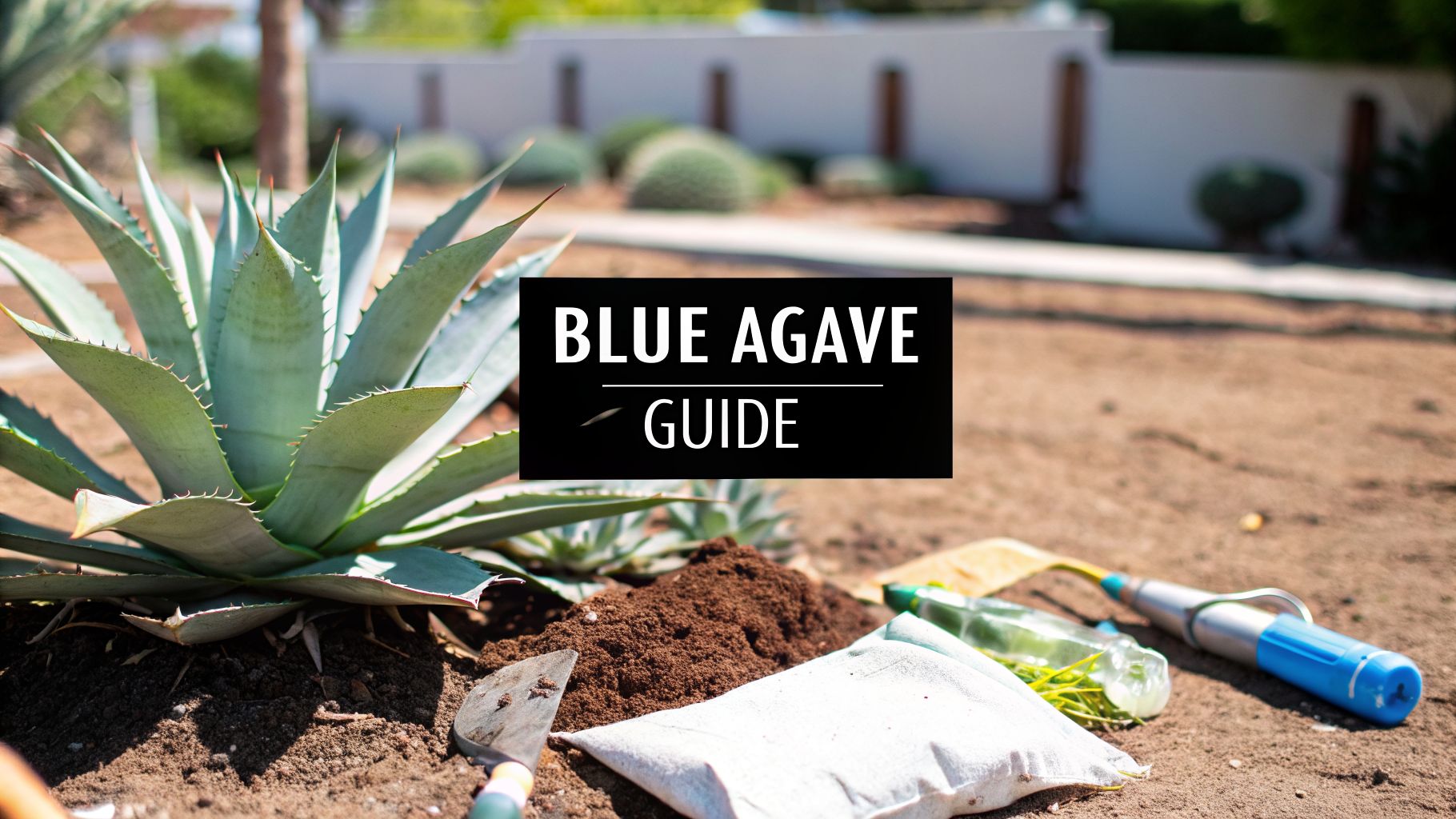

When most people hear "blue agave," they immediately think of tequila. And while that’s its most famous claim to fame, this incredible plant is so much more than just the spirit it produces. It's a living sculpture, an architectural marvel that brings a dramatic, silvery-blue presence to any garden.
Discovering the Iconic Blue Agave

Picture those vast, sun-baked fields in Jalisco, Mexico, stretching to the horizon. What you're seeing are rows upon rows of the iconic blue agave, scientifically known as Agave tequilana. This plant is the heart and soul of the region, deeply woven into its cultural and economic identity as the one and only source for true tequila.
But for those of us with a passion for plants, the blue agave is a masterpiece of natural design. Its rigid, spear-like leaves shoot out from a central core, creating a powerful silhouette that adds structure and an exotic flair to any landscape. It’s not a soft, subtle succulent; it’s a statement piece that commands attention with its bold form and cool, almost ethereal color.
From Ancient Crop to Modern Marvel
The story of the blue agave goes back thousands of years. Long before tequila was ever distilled, indigenous peoples in Mexico cultivated this plant for food, fiber, and traditional fermented drinks. Today, that ancient legacy continues to evolve as the agave finds new roles in modern life, proving it’s as comfortable in an agricultural field as it is in a decorative pot on a patio.
This dual identity has sent its popularity soaring worldwide. The market for blue agave products—everything from natural sweeteners to premium spirits—was valued at USD 3.97 billion and is expected to climb to USD 6.02 billion by 2030. This incredible growth is fueled by both its commercial value and a growing appreciation among gardeners who love its toughness and low-maintenance attitude.
More Than Just One Look
While Agave tequilana is the star of the show, it's just one player in a huge and diverse family. The agave genus boasts hundreds of species, each with its own unique personality. Getting to know this variety helps you appreciate what makes the classic blue agave so special. To get a better feel for the whole family, you can explore https://www.cactusoutlet.com/blogs/blog/the-wonderful-world-of-agaves.
The true beauty of the blue agave lies in its resilience. It thrives where other plants struggle, turning harsh sunlight and dry soil into a breathtaking display of form and color.
Think of this guide as your complete roadmap to growing this magnificent plant. We'll walk you through everything, from creating the perfect desert-like environment to using its stunning shape in your garden design. By the end, you'll have all the confidence you need to make the blue agave the star of your collection.
Giving Your Agave the Perfect Home

To really get your blue agave to flourish, you have to think like the desert. Your job is to mimic the sun-drenched, arid conditions of its native Mexican highlands. This isn't just about survival; it's about coaxing out that stunning silvery-blue color and bold, architectural shape that makes these plants so famous.
Getting this habitat right comes down to three things: sunlight, soil, and water. Nail these fundamentals, and you're well on your way to an agave that doesn't just live, but truly becomes a showstopper in your garden or on your patio.
Chasing the Sun
Sunlight is, without a doubt, the most important part of the equation. Blue agaves are total sun-worshippers, demanding a solid 6 to 8 hours of direct, unfiltered sun every single day. This intense light is what fuels the production of the waxy coating, or cuticle, that gives the leaves their iconic blue-gray sheen.
When an agave is starved for light, it starts to "stretch" out, a process called etiolation. The leaves get long and weak, the classic compact rosette shape is lost, and that vibrant blue color fades to a dull, sad green. For the best results, find the sunniest, most exposed spot you've got and plant it there.
The Secret to Perfect Soil Drainage
If there’s one surefire way to kill a blue agave, it’s letting it get "wet feet." These desert plants are incredibly prone to root rot when their roots are stuck in soggy soil. The only way to prevent this is to give them a soil mix with exceptional drainage.
The perfect soil should be loose and gritty, something water can flow right through instead of hanging around. Standard garden or potting soil is a definite no-go—it’s far too dense and holds moisture for way too long.
Thankfully, mixing your own perfect agave soil is easy. Just grab a few key ingredients:
- Cactus & Succulent Mix: Start with this as your base. It's already designed for better drainage than all-purpose soils.
- Perlite or Pumice: Be generous here. These lightweight volcanic rocks create air pockets, stopping the soil from compacting and massively boosting drainage. A good starting point is a 2:1 ratio of cactus mix to perlite.
- Coarse Sand: Tossing in a bit of coarse sand adds even more grit, doing a great job of recreating the agave's natural, rocky soil.
As succulents, blue agaves have a lot in common with other desert dwellers. You can pick up some great tips from this ultimate guide to growing an aloe vera plant, as many of the principles overlap.
Mastering the Art of Watering
When it comes to watering a blue agave, you need to forget everything you know about thirsty houseplants. The golden rule here is the "soak and dry" method. Drench the soil completely until you see water running out of the drainage holes. Then, and this is the important part, let it dry out entirely before you even think about watering it again.
How often you do this depends on a few things:
- Climate: If you're in a hot, dry region, you'll naturally water more often in the summer.
- Container vs. Ground: Agaves in pots dry out way faster than those in the ground and will need a closer eye.
- Season: During the cool winter months, the plant goes dormant and its water needs plummet. You might only need to water it once a month, if at all.
The number one mistake people make is overwatering. Before you reach for the hose, stick your finger an inch or two into the soil. If you feel any moisture at all, walk away. It is always, always better to underwater a blue agave than to overwater it.
The economic story behind this plant is just as dramatic as its looks. Mexico, which provides 90% of the world's blue agave, has seen a wild ride. A few years back, a tequila boom sent prices soaring to nearly $1.60 USD per kilogram, causing massive shortages. This just goes to show how tough and in-demand this plant is—and why getting a healthy one from a trusted grower is a must.
For a quick cheat sheet, here are the key care points all in one place.
Blue Agave Care At a Glance
This table provides a snapshot of the ideal conditions to help your Blue Agave thrive.
| Care Factor | Ideal Condition | Common Mistakes to Avoid |
|---|---|---|
| Sunlight | Full, direct sun for 6-8 hours daily. | Placing it in shade, which causes stretching and color loss. |
| Soil | Fast-draining cactus mix amended with perlite or pumice. | Using standard potting soil that retains too much water. |
| Watering | "Soak and dry" method; allow soil to dry out completely. | Watering on a fixed schedule or when the soil is still damp. |
| Location | The sunniest, hottest spot in your garden or patio. | Planting near sprinklers or in low-lying, soggy areas. |
Keep these basics in mind, and you'll have a happy, healthy plant for years to come.
Planting and Propagating Like a Pro
Alright, let's get our hands dirty. Bringing a new Blue Agave into your garden—or creating new plants from one you already love—is one of the most rewarding parts of growing these succulents. It’s a direct connection to the life cycle of this incredible plant.
Whether you're planting a mature specimen you just brought home or carefully separating a tiny pup, the process is pretty straightforward. Getting these first steps right lays the groundwork for years of stunning growth. Think of this as your roadmap to success.
Step-By-Step Planting Guide
Planting a Blue Agave isn't rocket science, but doing it correctly from the start saves you a world of headaches later. Success really boils down to three things: the right spot, the right soil, and setting the plant at the right depth.
First, scout your location. This plant is a sun-worshipper and needs a solid 6-8 hours of direct sunlight every day to truly thrive. Pick the sunniest, most open area you've got. And don't forget to think ahead! A full-grown Blue Agave can easily spread 10 feet wide, so give it plenty of elbow room to grow without overwhelming its neighbors or creeping into a walkway.
Once you’ve found the perfect spot, here’s how to get it in the ground:
- Dig a Smart Hole: The hole should be roughly twice as wide as the root ball but no deeper than the pot it came in. A wide hole encourages the roots to spread out, while a shallow depth prevents the crown from sitting too low, which is a common cause of rot.
- Prep the Soil: Backfill the hole with a gritty, fast-draining mix. I find a 50/50 blend of your native garden soil and a good quality cactus mix works wonders. If you’re dealing with heavy clay, be more generous with amendments like pumice or perlite to really boost that drainage.
- Position the Plant: Gently slide the agave out of its nursery pot and set it right in the middle of the hole. You want the top of its root ball to sit just slightly above the surrounding ground level. This subtle mound is your best defense against water pooling at the plant's base.
- Backfill and Finish: Fill in the soil around the roots, lightly tamping it down to get rid of any major air pockets. Don’t pack it in too tight. A top dressing of gravel or small stones not only looks sharp but also helps keep the base of the leaves dry.
Give it a good, deep watering right after planting to help the soil settle. After that, leave it alone and don't water again until the soil is bone dry.
Multiplying Your Agave Through Propagation
One of the real joys of growing a healthy Blue Agave is watching it produce offsets, which we affectionately call "pups." These little clones pop up from the base of the mother plant and are, by far, the easiest way to make new agaves.
Harvesting these pups is a simple weekend project that lets you expand your own collection or share with other plant lovers. For a more detailed look at making new plants, you can learn more about propagating succulents from cuttings.
When you see pups emerging, take it as a great sign—you have a happy, healthy plant. It’s nature’s insurance policy, ensuring the agave’s lineage carries on, since the main plant is monocarpic and will die after its one, magnificent bloom.
Harvesting and Planting Agave Pups
The best time to remove pups is when they've grown to a respectable size, say at least 4-5 inches tall, and have begun to form their own little root systems. Letting them get established first gives them a much better shot at survival once they're on their own.
Here's the game plan:
- Separate the Pup: Use a clean, sharp trowel or a soil knife to slice through the underground runner that connects the pup to its mother. Wiggle it around and try to get as much of the pup’s own root system as you can with it.
- Let it Callus: This is the most important step, so don't skip it! Place the separated pup in a dry, shady spot for a few days. This allows the cut to dry over and form a protective callus, which is crucial for preventing rot when it's planted.
- Pot it Up: Once the cut end is dry to the touch, plant your pup in a small pot with a fast-draining cactus mix. Bury it just deep enough so it can stand up on its own.
- Hold the Water: Resist the urge to water it right away. Let it sit dry for at least a week. This encourages the pup to push out new roots in search of moisture. After that first week, you can start watering it lightly, always letting the soil dry out completely between drinks.
With a little patience, that tiny offset will root and start growing into a magnificent Blue Agave of its own. It's an amazing process, turning one plant into an entire family.
How to Design with Blue Agave
The Blue Agave isn't just another plant; it's a piece of living sculpture. Its dramatic form, sharp lines, and that unmistakable silvery-blue color make it a seriously powerful tool for any garden designer or homeowner wanting to create a space with real impact. Forget just sticking it in the ground—we're talking about using its architectural presence to define the entire personality of a landscape.
Whether you're working with a big backyard or a tiny balcony, the secret is to treat the Blue Agave as your main focal point. Its bold, symmetrical shape naturally pulls the eye, making it the perfect anchor for your design. Think of it like the centerpiece on a dining table—everything else should be arranged to complement it, not fight it for attention.
Creating a Stunning Outdoor Landscape
Outdoors, the Blue Agave really comes into its own in minimalist and water-wise gardens. Its clean lines and structural form are a natural fit for xeriscaping, where the whole point is to create a beautiful, low-water garden that can handle dry conditions with style.
A single, well-placed Blue Agave can command an entire garden bed. The trick is to surround it with contrasting textures and forms to really make its features pop. Here are a few design strategies that I've seen work time and again:
- Soften with Grasses: The rigid, sharp leaves of the agave look fantastic when paired with the soft, flowing movement of ornamental grasses like Blue Fescue or Mexican Feather Grass. That contrast creates a dynamic and visually interesting partnership.
- Create a Succulent Tapestry: Group your Blue Agave with other succulents that enjoy the same sun-drenched, dry conditions. Lower-growing varieties like Echeveria or Sedum can form a colorful "living carpet" around its base, which looks incredible.
- Embrace the Rock Garden: Nothing looks more natural than placing your agave in a rockery, surrounded by boulders and gravel. This setup mimics its native habitat and highlights its rugged, sculptural beauty.
Just remember the golden rule: always choose companion plants with similar needs. Sticking a thirsty flower next to a drought-loving agave is just asking for trouble for one of them. Stick with fellow sun-lovers that thrive in soil that drains quickly.
Making a Statement with Containers
You don't need a huge yard to enjoy the drama of a Blue Agave. In a container, it becomes a portable work of art, perfect for elevating a patio, framing an entryway, or adding a touch of desert modernism to a balcony.
Choosing the right pot here is critical. You want a container that shows off the plant's form without overpowering it. Simple, modern pots in neutral colors like charcoal, white, or terracotta really let the agave's blue foliage be the star. And of course, make sure the pot has plenty of drainage holes and is big enough to give the root system room to grow for a few years.
If you want more of them for your containers, this visual guide shows the simple but crucial steps for propagating new agave pups, or "hijuelos."

The process really just comes down to patience. Giving the pup time to callus over before planting is the key to preventing rot and getting it to root successfully.
Looking at the bigger picture, the Blue Agave's popularity is a source of great inspiration. North America dominates the global market, holding a 35% share thanks to huge demand in the U.S. As a designer, I see its architectural form rivaling that of other statement plants like the Peruvian Apple cactus or even some of the more dramatic Aloe varieties. With demand continuing to outpace supply by 12% each year, this plant isn't just a stylish choice—it's a smart investment for a sustainable and beautiful collection. You can dig into more of these market trends on Fortune Business Insights.
A pro tip: placing two identical potted Blue Agaves on either side of a doorway creates a powerful, symmetrical look. It adds instant curb appeal and a touch of formal grandeur to your home's entrance.
Whether it's in the ground or in a pot, designing with Blue Agave is all about celebrating its unique structure. Give it some breathing room, surround it with textures that make it shine, and let its natural architectural beauty become the defining feature of your landscape.
Troubleshooting Common Problems
Even a plant as tough as blue agave can hit a rough patch. Don't sweat it—most issues are pretty straightforward to diagnose and fix once you know what to look for. Think of it as your agave's way of telling you what it needs. A little detective work is usually all it takes to get it back in top form.
Most of the time, agave troubles boil down to one of two culprits: too much water or a nasty little bug. Get a handle on these two, and you’ll be ready for almost anything your plant throws at you.
The Dangers of Overwatering
If there's one thing that will take down a blue agave, it's too much water. These are desert plants, through and through. They're built for drought, not for sitting around in soggy, waterlogged soil. When their roots stay wet for too long, they can't breathe and will quickly start to rot.
Root rot is the silent killer. It starts underground, completely out of sight, and by the time you see the signs above the soil, the damage can be pretty severe.
Keep an eye out for these tell-tale symptoms:
- A Mushy Base: If the part of the plant right at the soil line feels soft or squishy, that's a huge red flag.
- Yellowing Lower Leaves: The oldest leaves at the bottom of the plant will turn yellow or brown and go limp.
- A Funky Smell: A distinct rotten-egg or sulfur smell coming from the soil is a dead giveaway for decay.
If you even suspect root rot, you have to act fast. Gently take the plant out of its pot or the ground and look at the roots. Healthy roots are firm and whitish. Rotted roots will be black, mushy, and might even fall apart in your hands. Use a clean, sharp knife to cut away every last bit of the dead or dying roots. Then, let the plant sit in a shady, dry spot for a few days so the cuts can form a callus before repotting it in completely fresh, dry cactus mix.
Always remember the golden rule for agaves: when in doubt, don't water. It’s a thousand times easier for a blue agave to bounce back from being too dry than from being too wet.
Battling the Agave Snout Weevil
While root rot attacks from below, the agave snout weevil is a destructive pest that hollows out the plant from the inside. This small, black beetle is the arch-nemesis of agaves, and an infestation is often a death sentence. The adult weevil isn't the main problem—it's the larvae that do the real damage.
The female weevil drills into the base of the agave with her long snout to lay her eggs. Once those eggs hatch, the grubs go to town, chewing their way through the heart of the plant and turning its core into a disgusting, rotting mush.
The terrifying part is that an infested plant often looks perfectly healthy until it's too late. The first symptom you'll likely see is the entire agave suddenly tilting over or collapsing on itself because its internal structure has been completely eaten away. At that point, there’s almost nothing you can do to save it.
This makes prevention the only real defense. Here's how you can protect your blue agave:
- Systemic Insecticides: In the spring, apply a systemic insecticide that the plant absorbs. This protects it from the inside out, killing any larvae that hatch and start feeding.
- Inspect New Plants: Before you bring a new agave home, give it a thorough once-over. Check the base for any suspicious holes or damage.
- Keep Your Plant Healthy: A strong, vigorous plant is always better at fending off pests. Make sure your agave gets plenty of sun and isn't stressed by things like overwatering.
Dealing with pests and rot is just part of the gardening game. By keeping a close eye on your blue agave and understanding what these common problems look like, you can tackle them with confidence and keep your plant thriving.
Your Blue Agave Buying Guide
Bringing home a new blue agave is an exciting moment. But honestly, choosing the right plant from the get-go is the most critical step you'll take. Think of it like picking out a puppy; you want one that's healthy, strong, and comes from a great environment. A few simple checks can be the difference between a plant that thrives and one that struggles right out of the gate.
When you're eyeing a potential plant, whether it's online or in a nursery, start by looking at the leaves. You want to see leaves that are firm, plump, and have that beautiful, even, silvery-blue color. Steer clear of any with soft or mushy spots, major scarring, or withered brown tips—these are all red flags for stress, disease, or pests. The central rosette, the very heart of the plant, should be tight and compact, not splayed open and loose.
Inspecting What Lies Beneath
Great-looking leaves are one thing, but the true foundation of a healthy agave is its root system. A strong network of roots is what anchors the plant and pulls in all the water and nutrients it needs to grow. If you're buying in person, you can sometimes gently peek at the drainage holes. Seeing a few healthy, white roots is a fantastic sign.
This is where buying from a specialist like The Cactus Outlet really pays off. They live and breathe these plants and understand that a healthy agave starts with a killer root system.
The biggest advantage of buying from a dedicated succulent grower is their expertise in shipping. A large, spiky blue agave requires careful packaging to prevent damage to its leaves and ensure it arrives at your door healthy and ready to plant.
From Box to Backyard
Once your new agave arrives, the journey isn't quite over. Those first few days are crucial for helping it get used to its new surroundings. Whatever you do, resist the temptation to immediately plant it in its final, full-sun spot. That's a recipe for shock.
Instead, follow these simple steps for a smooth transition:
- Unbox Carefully: Gently slide the plant out of its packaging. Remember, those leaf tips are sharp!
- Give It Some Shade: For about a week, place the plant somewhere it gets bright, indirect light. This "hardening off" process is key to preventing sunburn.
- Inspect and Wait: Hold off on watering for a few days to let any disturbed roots settle and heal. This is also your last chance to give it a good look-over before planting.
By picking a quality plant and giving it a proper welcome, you’re setting it up for years of stunning growth. To see what a healthy, well-cared-for plant looks like, explore the agave available at The Cactus Outlet.
Your Blue Agave Questions, Answered
Let's dive into some of the questions that pop up most often when you're growing Blue Agave. Think of this as a quick chat with a seasoned grower, getting you the practical answers you need to help your plant thrive.
We'll clear up any lingering doubts you might have, from how fast these beauties grow to whether they're safe around your furry friends.
How Fast Does a Blue Agave Grow?
Blue Agave isn't a speed demon, but it has a satisfyingly steady growth rate for such a massive succulent. When it's happy—meaning loads of sun, great drainage, and the right amount of water—you'll see it unfurl several new spear-like leaves each year. It’s a rewarding plant to watch develop over time.
It takes its time getting to its full, impressive size, which can be up to 6 feet tall and 10 feet across. You can generally expect it to reach this mature state in about 5 to 8 years. Of course, if you keep it in a pot or in a spot with less-than-perfect light, it will grow much slower, which is actually a great way to keep it manageable for smaller gardens or patios.
Is Blue Agave Safe for Pets?
This is a big one for pet owners, and unfortunately, the answer is no. Blue Agave is considered toxic to both cats and dogs if they chew on it or ingest it. The sap is loaded with sharp little calcium oxalate crystals that can cause some serious pain and irritation to their mouth, tongue, and throat.
On top of that, you have the sharp terminal spine on each leaf, which is a physical hazard in itself. The best course of action is to plant your Blue Agave in a part of the yard your pets can't get to. It's all about creating a safe space for everyone to enjoy the garden.
Can I Grow Blue Agave Indoors?
You absolutely can, but there's one non-negotiable rule: you have to give it a ton of light. And I mean a ton. To keep a Blue Agave happy indoors, it needs to live in the sunniest, brightest spot you have. Think a south-facing window where it can soak up at least 6-8 hours of direct, unfiltered sun every day.
Without that intense light, the plant will start to "stretch" (a process called etiolation), losing its beautiful, tight rosette form and its famous silvery-blue color. Make sure it's in a pot with fantastic drainage, use a gritty cactus soil, and be extra careful not to overwater. Indoor soil just doesn't dry out as quickly as it does outside.
The most spectacular moment in a Blue Agave's life is its "death bloom." As a monocarpic plant, it flowers only once, shooting a massive stalk skyward—sometimes over 20 feet tall! After this grand finale, the main plant dies, but not before leaving behind pups to carry on its legacy.
When Will My Blue Agave Bloom?
The bloom of a Blue Agave is truly a once-in-a-lifetime event for the plant. It's monocarpic, which is a fancy way of saying it flowers just one time, right at the end of its life. This spectacular farewell party usually happens when the plant is fully mature, which can be anywhere from 8 to 25 years old.
You can't miss it. The plant will send up a gigantic flower stalk covered in thousands of yellow-green blossoms. After the show is over, the main plant fades away, but it almost always leaves a gift behind: a cluster of baby plants, or "pups," around its base to start the cycle all over again.
Ready to bring this architectural wonder into your own garden? At The Cactus Outlet, we're passionate about growing healthy, high-quality succulents and shipping them with care. Find your perfect Blue Agave and get your desert garden started by visiting our online shop.