
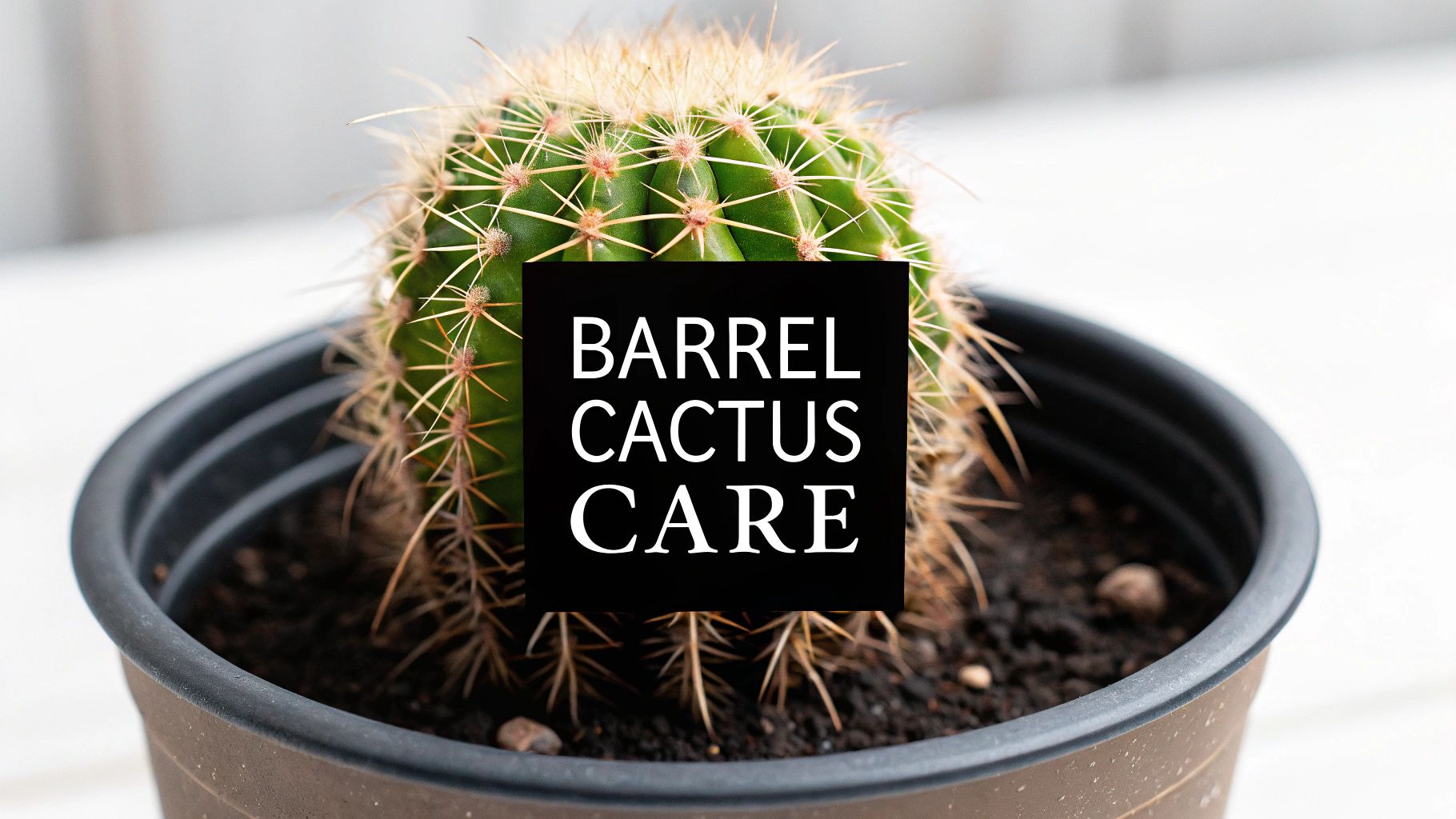

The barrel cactus is one of those plants that just commands attention. With its iconic, ribbed, and rounded shape, it’s like a living piece of desert sculpture, bringing a tough, architectural beauty to any space it occupies. It's the kind of plant that makes a statement without needing much fuss in return.
Why the Barrel Cactus Is a Resilient Icon
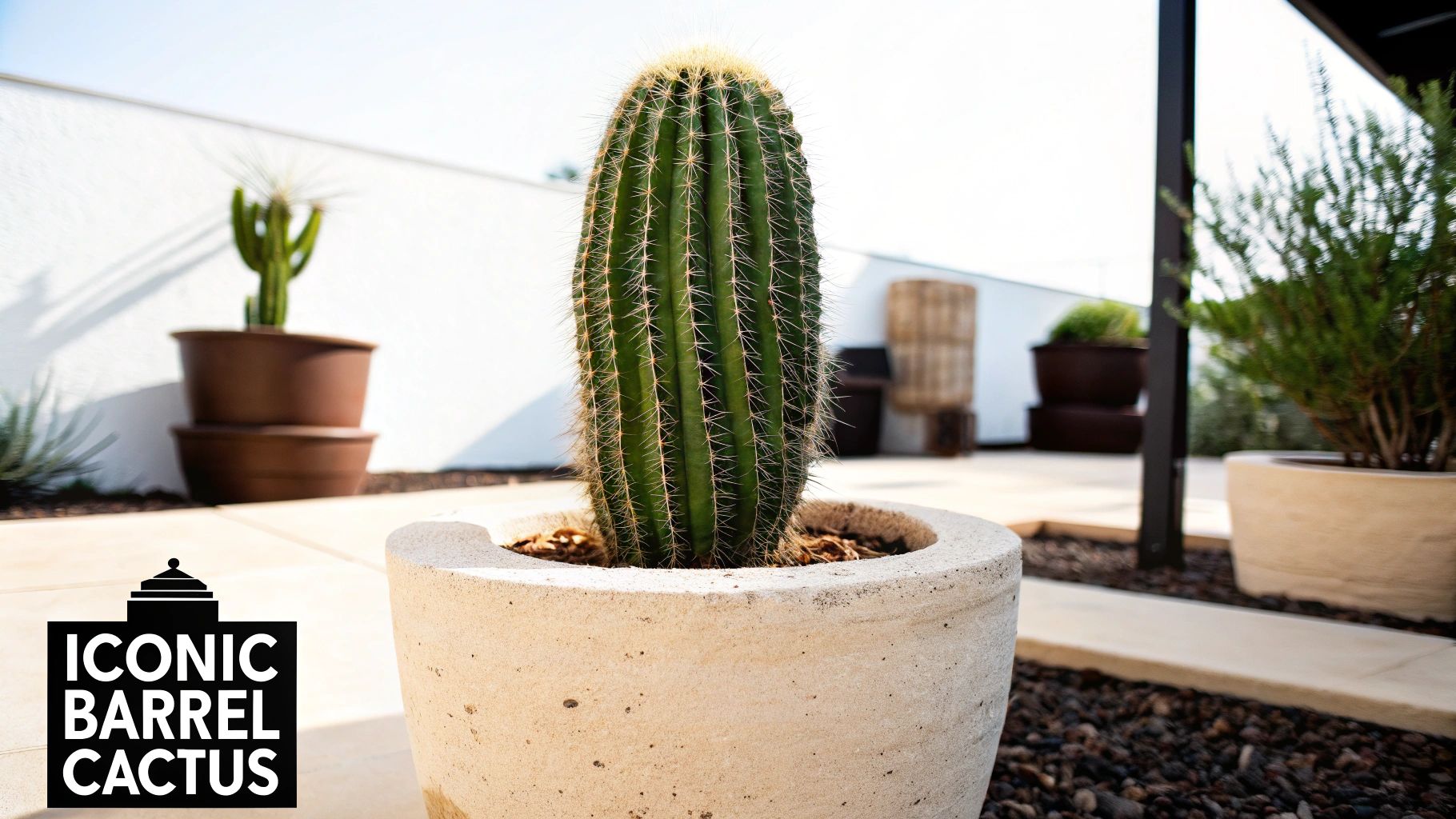
Think about a plant that asks for so little but delivers such a powerful visual punch. That's the barrel cactus in a nutshell. It's more than just a spiky ball; it's a marvel of desert adaptation, built to thrive in conditions that would spell disaster for most other plants. Its bold form draws in everyone from rookie plant parents to seasoned succulent collectors.
This isn't just a plant; it's a self-sufficient powerhouse. The secret is in its fleshy, ribbed stem, which is designed to store water for long stretches. This makes it the perfect choice for anyone interested in water-wise gardening or for those of us who might forget to water now and then. It’s the ultimate drought-tolerant anchor for a striking, modern landscape.
A Symbol of Enduring Beauty
The barrel cactus is a living lesson in endurance. Take the California Barrel Cactus (Ferocactus cylindraceus), for example—it's been admired for centuries. First documented by botanist George Engelmann way back in 1853, this species is a classic showcase of the rugged flora found across the American Southwest and Mexico. You can dive deeper into its history and discovery at southwestdesertflora.com.
This rich history adds another layer of appeal, connecting your own garden to a long line of natural survivors. Because it grows slowly and steadily, it truly becomes a permanent, living sculpture in your yard or home.
The Perfect Plant for Modern Living
Let’s be honest, life is busy. The barrel cactus gets it. Its incredibly simple needs make it the perfect gateway into the world of growing things, even if you don't have a lot of time to spare.
- Low Maintenance: It’s incredibly forgiving. Forget to water it? No problem.
- Aesthetic Appeal: It adds unique texture, shape, and an exotic feel wherever you put it.
- Versatile Design: It looks just as good in a pot on a sunny patio as it does holding its own as a focal point in a rock garden.
In this guide, we'll cover everything you need to know to grow one of these stunning desert natives, from picking the right one to mastering its straightforward care routine.
Identifying Popular Barrel Cactus Varieties
Diving into the world of barrel cacti is a bit like meeting a family of fascinating characters. They all share that classic, robust, rounded shape, but it's the little details—the spines, the ribs, the flowers—that give each one its unique personality.
Learning to spot these differences is the key to picking the perfect living sculpture for your home or garden. It’s not just about looks; it’s about finding the cactus that will truly thrive in your specific spot. Let's get to know some of the most popular varieties you'll find.
The Dazzling Golden Barrel Cactus
The Golden Barrel (Echinocactus grusonii) is, without a doubt, the rockstar of the barrel cactus world. You can't miss it. Its fame comes from the dense crown of brilliant, golden-yellow spines that practically glow against its bright lime-green body.
When they’re young, these cacti are almost perfectly round, like a little green orb caught in a golden cage. This stunning symmetry makes them a showstopper in modern landscapes or as a minimalist indoor feature. As they mature, they'll eventually grace you with a crown of delicate yellow flowers right at the top, adding even more to their appeal.
Key Takeaway: If you want a cactus that makes a bold, sunny statement with its perfect form and vibrant color, the Golden Barrel is your plant. It’s a true conversation starter.
The Fierce Fishhook Barrel Cactus
Now, meet the Fishhook Barrel (Ferocactus wislizeni), a cactus with a tougher, more rugged attitude. Its name gives away its most famous feature: the long, thick central spines that curve sharply at the end, looking just like a classic fishhook. These spines are often a deep red or gray, standing out dramatically against the cactus’s green skin.
Also known as the Arizona Barrel or Candy Barrel, Ferocactus wislizeni is a powerhouse native to the southwestern US and northwestern Mexico. This beast can grow to 2.25 feet across and reach 3 to 6 feet in height, with some old-timers towering at an incredible 10 feet. Its flowers are just as bold, appearing in a fiery ring of orange, red, or yellow around the top. For more on this impressive species, see its Wikipedia page.
The Resilient California Barrel Cactus
The California Barrel (Ferocactus cylindraceus) is a true survivor, and its appearance tells that story. What’s really cool about this one is the way its spine color can change over time. Young plants often sport bright red or yellow spines, but as they age and soak up more sun, the spines can fade to a more distinguished, grayish tone.
Unlike the perfectly round Golden Barrel, this species tends to grow into a more columnar, cylindrical shape, often leaning toward the sun. It's a testament to its toughness, often found clinging to rocky, sun-drenched slopes in the wild. Its bright yellow flowers provide a beautiful pop of color against its rugged form. For a closer look, be sure to check out our complete guide on exploring different types of barrel cacti.
Comparing Popular Barrel Cactus Species
To make it even easier to see the differences at a glance, we've put together a quick comparison of these popular varieties. This should help you zero in on the exact features you're looking for in your next cactus.
| Species Name | Common Name | Spine Characteristics | Flower Color | Mature Size |
|---|---|---|---|---|
| Echinocactus grusonii | Golden Barrel | Dense, sharp, bright yellow-to-gold spines | Yellow | Up to 3 ft tall and 3 ft wide |
| Ferocactus wislizeni | Fishhook Barrel | Long, thick central spines with a dramatic hook | Orange, Red, or Yellow | 3-6 ft tall, up to 10 ft in some cases |
| Ferocactus cylindraceus | California Barrel | Variable; red or yellow when young, grayish with age | Yellow | Up to 8 ft tall |
Picking the right barrel cactus is all about appreciating these unique traits. Whether you’re drawn to the golden glow of one or the fierce hooks of another, there's a perfect barrel cactus out there waiting to become the new centerpiece of your collection.
Your Barrel Cactus Care Blueprint
Taking care of a barrel cactus isn't about having a green thumb or knowing complicated horticultural secrets. It's really just about understanding where they come from and giving them a little slice of that desert home, whether it's in your garden or on your windowsill. If you can get the hang of a few key things—sunlight, water, soil, and temperature—your living sculpture won't just survive, it'll truly thrive.
Honestly, the process is pretty straightforward. The biggest mistake most people make is loving their cactus a little too much. We'll break down the essentials into simple, repeatable steps that just make sense, so you can feel confident you're giving your barrel cactus exactly what it needs.
This visual guide helps simplify the identification process for three of the most popular barrel cactus varieties.
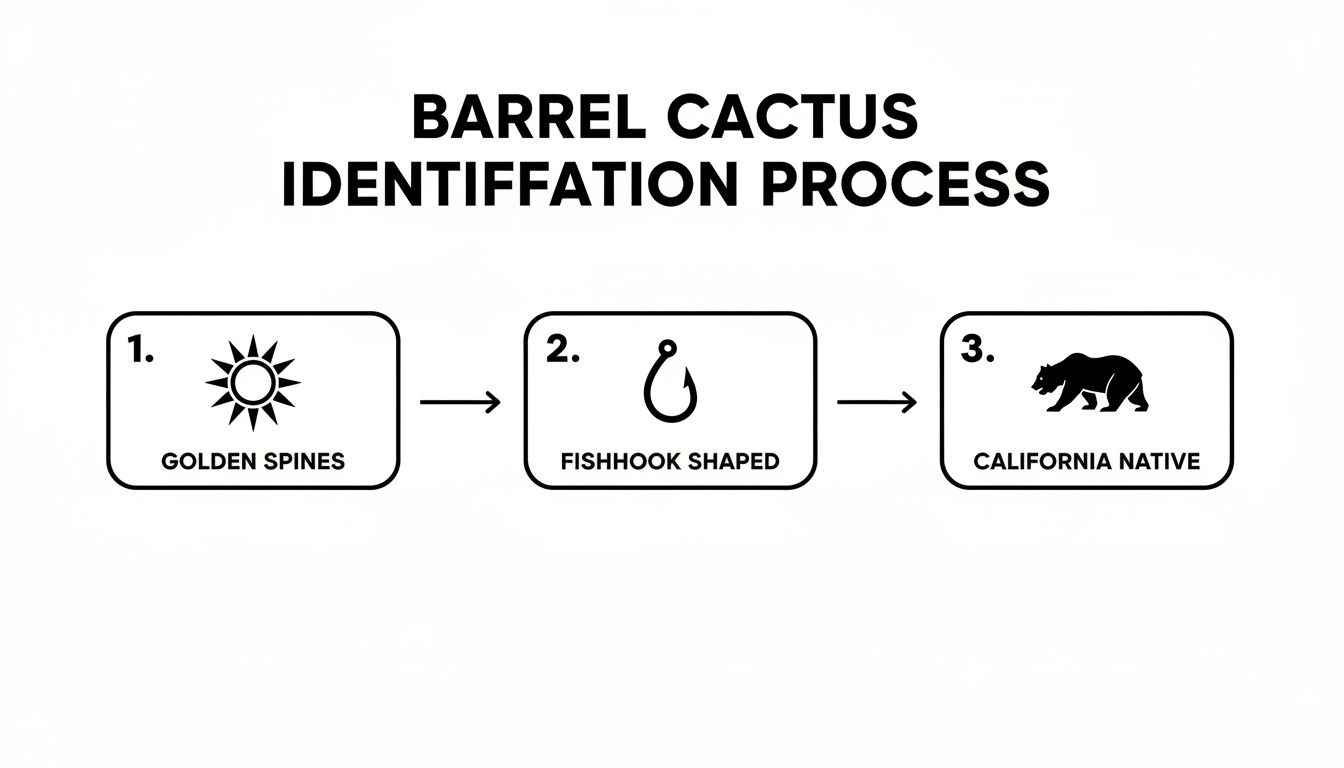
Each type has its own distinct spine and color patterns, which makes telling them apart pretty easy once you know what you’re looking for.
The Right Amount of Sunlight
Barrel cacti are absolute sun worshippers, born and bred in bright, arid landscapes. To keep one happy, you've got to mimic that environment. Think of sunlight as its main food group—the fuel that powers its slow, steady growth and keeps it looking sharp.
For an outdoor barrel cactus, find a spot that gets at least six hours of direct sun every day. They're tough enough to handle intense afternoon heat, but if you're in an extremely hot climate like the desert Southwest, a little shade in the late afternoon can prevent scorching, especially on younger plants.
If your barrel is indoors, your mission is to find the sunniest window in your house. A south-facing window is the gold standard, giving it strong, direct light for most of the day. A west-facing window is a solid second choice. If it doesn't get enough light, the cactus will start to stretch and lose that iconic round shape.
Mastering the Art of Watering
This is where so many new cactus owners get into trouble. You have to forget everything you know about watering regular houseplants. The real key is to mimic a desert rainstorm followed by a long, dry spell. We call this the "drench and dry" method.
The Golden Rule of Watering: Water deeply and thoroughly, but only when the soil is completely bone-dry. Overwatering is the single fastest way to kill a cactus, as it leads directly to root rot.
Not sure if it's time? Just stick your finger or a wooden skewer a couple of inches into the soil. If you feel even a hint of moisture, hold off. During the growing season (spring and summer), this might mean watering every two to four weeks. In the winter, when the cactus goes dormant, you can scale way back to once every six to eight weeks, or maybe even less.
When you do water, give it a good soak until water flows freely out of the drainage holes. For a deeper dive, check out our complete guide to watering cactus plants.
The Perfect Soil Foundation
The right soil is completely non-negotiable for a healthy barrel cactus. Standard potting mix from the store is basically a death sentence—it holds way too much water and will suffocate the roots. You need a soil that drains faster than a sieve.
The perfect cactus soil should feel loose, gritty, and airy. It lets water rush through quickly but still gives the roots something to grab onto. You've got a couple of great options:
- Pre-made Cactus/Succulent Mix: This is the easiest route. Just grab a bag of potting mix specifically made for cacti and you're good to go.
- DIY Cactus Mix: For the best possible results, mix your own. A fantastic recipe is one part potting soil, one part coarse sand (not fine play sand), and one part perlite or pumice. This blend provides flawless drainage.
The pot you choose is just as important as the soil. Always, always use a container with plenty of drainage holes. Terracotta pots are a wonderful choice because the porous clay naturally helps pull extra moisture out of the soil.
Ideal Temperature and Climate
Barrel cacti are tough, but they do have their comfort zones. They thrive in hot, dry weather and are happiest when temperatures are between 70°F and 90°F (21°C to 32°C) during their growing season. They can handle serious heat, easily taking temperatures well over 100°F.
That said, they aren't all invincible when it comes to cold. While many types can shrug off a light frost, a hard freeze can cause permanent damage or even kill the plant. If you live somewhere with cold winters, your best bet is to plant your barrel cactus in a pot. That way, you can bring it indoors or into a garage when the temperature is set to drop below freezing.
A cool, dry rest period in the winter is actually good for them. It mimics their natural cycle and can even encourage them to produce those beautiful flowers in the spring.
Planting and Propagating Your Cactus
Getting a new barrel cactus home is always exciting, and planting it right is your first big step toward ensuring it has a long, healthy life. This isn't just about digging a hole and dropping it in—it's about setting your new plant up for success from day one. The same is true for propagation, which is an incredibly rewarding project if you have a bit of patience.
So, whether you're moving your cactus into a beautiful new pot for the patio or finding it a permanent spot in the landscape, the core principles are the same. Let's walk through how to get it done right, and safely.
Safely Handling and Planting Your Barrel Cactus
Okay, let's get the obvious out of the way: those spines are serious. Handling a barrel cactus takes some forethought to protect yourself and the plant. Thin gardening gloves just won't cut it here.
Your best tools are probably already in your garage or closet. A thick, rolled-up towel, an old strip of carpet, or even a stack of folded newspaper works perfectly. Just wrap it around the cactus body, and you'll have a secure, safe way to lift and move it without turning your hands into a pincushion.
Step-by-Step Planting Guide:
- Pick the Perfect Spot: Whether it’s in a container or in the ground, your cactus needs at least six hours of direct sunlight every day. If you're using a pot, choose one that’s only 1-2 inches wider than the cactus itself—and make sure it has a drainage hole.
- Get the Soil Right: Always use a soil mix designed specifically for cacti and succulents. If you're planting in your garden, you'll need to amend the native soil with lots of pumice or coarse sand to guarantee good drainage, especially if you have heavy clay.
- Dig the Hole: Make the hole slightly wider than the root ball but no deeper. You want the cactus to sit at the same depth it was in its nursery pot, not buried any further down.
- Place and Backfill: Using your towel or carpet wrap, gently lower the cactus into its new home. Fill in the surrounding space with your soil mix, tamping it down lightly to get rid of any air pockets and make sure the plant is stable.
- Wait to Water: This is the most important step. Do not water your newly planted cactus right away. Give it a week to settle in. This allows any roots that might have been bumped or broken during planting to heal over, which is your best defense against root rot.
Propagating a Barrel Cactus from Seed
While you can propagate many cacti from cuttings, barrel cacti are best grown from seed. This is not a fast process; think of it as a long-term journey. You get to watch a tiny seed slowly, year after year, become a magnificent, spiny specimen. It’s the ultimate test of a gardener's patience.
Propagating a barrel cactus from seed is a commitment. It’s the definition of slow gardening, where the real prize isn’t a quick result but the deep satisfaction of nurturing a plant from its absolute beginning.
First, you'll need viable seeds. You can harvest them from the yellow, fleshy fruit that appears on top of the cactus after it flowers. When the fruit is ripe, it will twist off easily, revealing hundreds of tiny black seeds inside.
From Seed to Seedling: A Patient Process
With seeds in hand, you're ready to start the germination process. The goal is to create a warm, humid environment that coaxes these tiny desert seeds to life.
- Prep Your Container: Fill a shallow seed tray or small pots with a sterile, fine-textured seed-starting mix. A 50/50 blend of sifted cactus soil and sand works great.
- Sow the Seeds: Lightly mist the soil so it's damp, then sprinkle the seeds over the surface. Don’t bury them—they need light to germinate. Just press them gently into the soil.
- Lock in Humidity: Cover the tray with a clear plastic dome or a piece of plastic wrap. This traps moisture and creates a mini-greenhouse, keeping the soil from drying out.
- Add Warmth and Light: Put the tray somewhere warm that gets bright, but indirect, light. A spot on top of the fridge often works, or you can use a seedling heat mat to maintain a steady temperature around 70-80°F (21-27°C).
Now, we wait. Germination can take a few weeks or even a few months. Once you see tiny green seedlings pop up, you can start acclimating them to drier air by propping the lid open a little more each day for a couple of weeks. From here on out, their growth will be slow and steady, but every bit of progress is a win.
Troubleshooting Common Pests and Problems
Even a tough-as-nails barrel cactus can run into trouble now and then. The real secret to success isn't avoiding problems altogether—it's spotting them early and knowing how to step in. Think of it like being a plant detective; if you can recognize the clues, you can solve most issues before they ever become a real threat.
Most of the time, problems with a barrel cactus boil down to just a couple of things: watering mistakes or a few common pests. The good news is that the fixes are usually straightforward. Let's walk through what you might see and exactly what to do about it.
Diagnosing and Treating Root Rot
If there’s one "kryptonite" for a barrel cactus, it’s too much water. These plants are desert survivors, hardwired for drought, not for sitting in a puddle. When their roots stay wet for too long, they can't get any oxygen and start to decay. This is root rot, and it's the number one killer of these cacti.
Often, the first hint you'll get is a soft, mushy base. The top of the cactus might look perfectly fine, but the part near the soil will feel spongy or look discolored. If you catch it at this stage, you've got a great shot at saving your plant.
- Step 1: Assess the Damage. Carefully slide the cactus out of its pot to get a good look at the roots. Healthy roots are firm and whitish, while rotten ones will be dark, mushy, and might even smell bad.
- Step 2: Prune and Treat. With a clean, sharp knife, trim away every bit of the rotten roots and any soft tissue you find on the cactus itself. Then, just let the cactus sit out in a dry, shady spot for a few days so all the cut areas can dry out and form a callus.
- Step 3: Repot and Recover. Place the cactus in a clean pot with fresh, completely dry cactus mix. This is critical—don't water it for at least a week! This gives the roots time to settle in and heal before they have to deal with moisture again.
Managing Common Cactus Pests
Barrel cacti are pretty resistant, but sometimes tiny pests decide to move in and feed on their sap. You can usually spot these unwelcome guests easily if you know what you’re looking for. The two you’ll see most often are mealybugs and scale.
Mealybugs look like little bits of white cotton, often tucked into the nooks and crannies between the cactus ribs. Scale insects are a bit sneakier, appearing as small, hard bumps—usually brown or tan—stuck right onto the skin of the plant.
Pro Tip: My go-to fix for a small outbreak is simple: grab a cotton swab, dip it in 70% isopropyl alcohol, and dab it directly on the pests. The alcohol dissolves their waxy protective layer and takes care of them instantly without hurting the cactus.
If you're dealing with a bigger infestation, an insecticidal soap or a neem oil solution works great. Just spray the whole plant down, following the directions on the bottle. You'll probably need to repeat the treatment once a week until you don't see any more pests.
Dealing with Outdoor Threats
When your barrel cactus is planted out in the garden, you might face some bigger critters. Rodents, especially gophers, have been known to chew on the roots from below, which can cause a lot of damage before you even realize what's happening.
If an outdoor cactus suddenly looks weak or unstable and you know you've been caring for it properly, it's worth suspecting an underground pest. For those growing barrel cacti in the ground, understanding methods for gopher control can be crucial to protect your landscape from root damage. Keeping your garden free of these burrowing animals helps ensure the long-term health of your prized specimens.
Designing with Barrel Cacti Indoors and Out
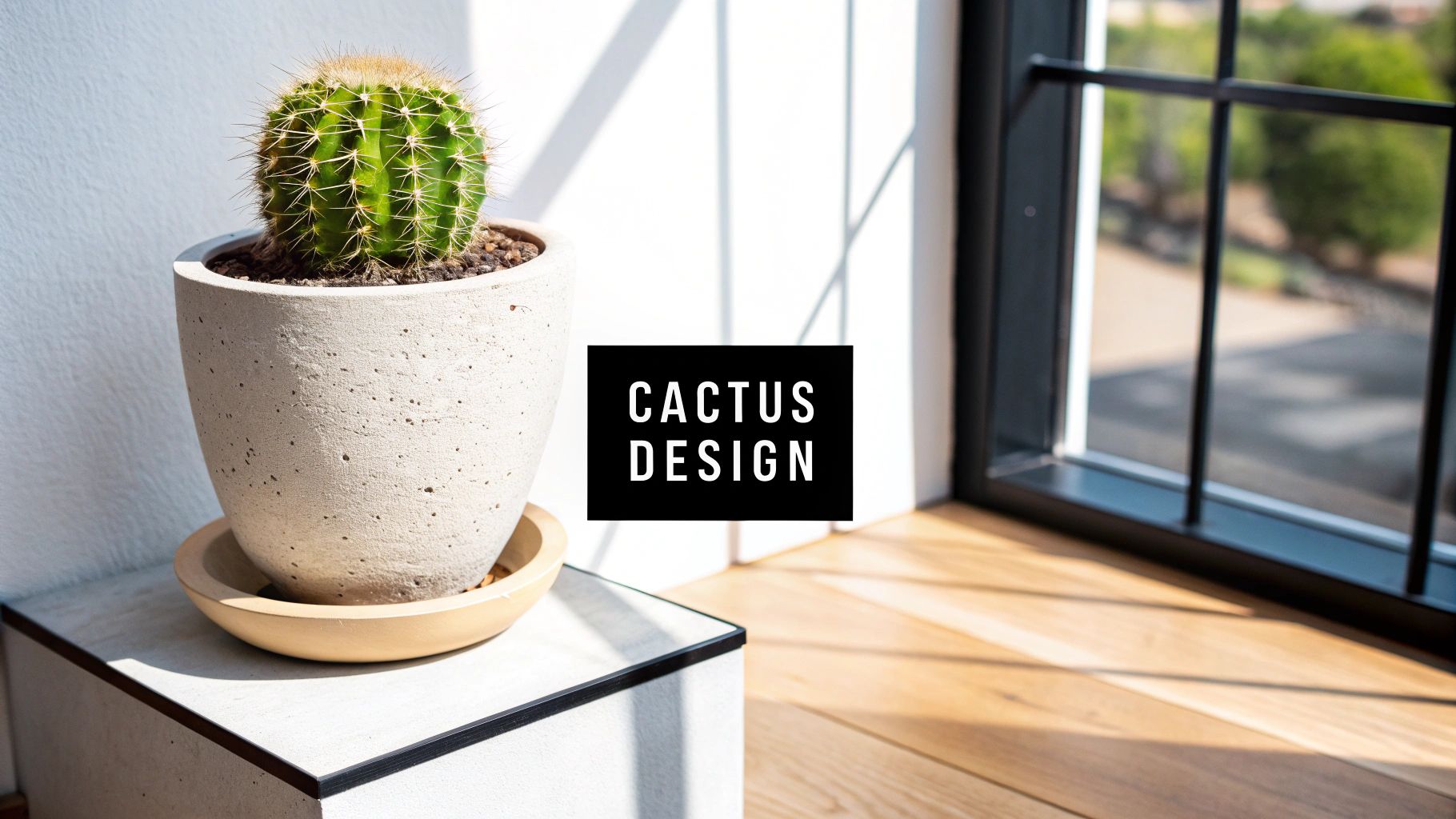
Once you've mastered the basics of care, you get to the best part: using your barrel cactus as a living work of art. With its bold, sculptural form, this isn't just another houseplant. It's a statement piece that can completely define a space, whether you’re working with a sprawling backyard or a sunny apartment window.
The trick is to play up its unique shape and texture. Don't relegate your barrel cactus to the background. Make it the main event—a natural focal point that adds a touch of architectural drama wherever it sits.
Creating a Stunning Outdoor Landscape
Outdoors is where the barrel cactus really comes into its own, especially as an anchor for xeriscaping and water-wise gardens. Its strong, solid silhouette creates a fantastic contrast against softer, feathery grasses or the fine texture of a gravel path. It just feels right in modern, minimalist, or classic desert landscapes.
Here are a few ways I’ve seen them used to great effect:
- Rock Garden Star: Plant a single, large barrel cactus right in the middle of a rock garden. Add some smaller stones and a few low-growing succulents around it, and you've instantly created a beautiful, self-contained desert scene.
- Modern Repetition: For a clean, contemporary feel, try lining a driveway or walkway with a series of evenly spaced barrel cacti. This kind of repetition creates a powerful visual rhythm that naturally guides the eye.
- Textural Groupings: Don't be afraid to mix and match. Placing different barrel cactus varieties together, like a golden-spined Echinocactus grusonii next to a rugged Ferocactus wislizeni, adds incredible depth and interest through the contrast in spine color and form.
By thoughtfully placing these plants, you can craft a landscape that is not only beautiful but also incredibly low-maintenance and sustainable. You can find more inspiration for your water-wise yard by exploring other succulent garden design ideas.
Bringing the Barrel Cactus Indoors
When you bring a barrel cactus inside, it transforms into living sculpture. The smaller varieties are perfect for this, giving you that iconic shape in a much more manageable size. The key is pairing your cactus with the right container—one that complements both the plant and your home's style.
If you're going for a calm, nature-inspired vibe, checking out some earthy apartment decor ideas can spark some great ways to incorporate your plant. A simple terracotta pot gives off a rustic, warm feel, while a sleek ceramic planter will really make its modern form pop.
Indoor Styling Tips:
- Choose the Right Pot: Pick a container that’s only 1-2 inches wider than the cactus itself. This is crucial for preventing root rot from overwatering and helps keep the visual focus squarely on the plant.
- Create a Simple Vignette: Place your potted barrel cactus on a minimalist wooden stool or even a stack of art books in a sunny corner. This simple act elevates the plant, turning it from just a pot into an intentional design feature.
- Use it as a Centerpiece: A small, beautifully potted barrel cactus can be a striking and surprisingly long-lasting centerpiece for a coffee or dining table, as long as it gets enough light in that spot.
Got Questions About Barrel Cacti? We've Got Answers.
Even after reading a comprehensive guide, there are always a few specific questions that come to mind. Let's tackle some of the most common ones we hear from fellow cactus enthusiasts. This is your quick-reference spot for those practical, "what-if" scenarios.
Are Barrel Cacti Safe Around Pets and Kids?
This is probably the number one question for anyone with a busy household, and for good reason. The good news is that a barrel cactus isn't toxic if a piece is accidentally eaten. The real issue, of course, is the spines. Those things are sharp and can easily cause a painful surprise for curious kids or pets who get too close.
The solution is all about smart placement. Find a spot for your cactus that's out of reach or well away from high-traffic play areas. If you're planting a barrel outdoors, a great trick is to create a natural-looking barrier with some larger rocks or a gravel bed around it. It looks great and sends a clear "hands-off" signal.
As a simple rule of thumb, try to leave at least a foot of open space around the cactus. This little buffer zone really helps prevent accidental bumps and protects both your family and your plant.
Can You Actually Drink Water from a Barrel Cactus?
We can thank old Westerns for this popular survival myth. The image of a desperate traveler slicing open a barrel cactus for life-saving water is iconic, but it's a dangerous fantasy. The liquid inside isn't water at all.
It's actually a thick, sludgy fluid full of acids and alkaloids—compounds the plant creates to survive. Drinking this stuff will likely make you sick with an upset stomach or worse, which is the last thing you need in an emergency. So, to be perfectly clear, it's not a safe source of drinking water.
When Is It Time to Repot My Barrel Cactus?
Barrel cacti are slow-growers and they genuinely don't mind being a little root-bound. Unlike your leafy tropicals that need constant upsizing, these guys thrive on a bit of neglect. In fact, repotting them too often can do more harm than good by stressing them out.
So, how do you know when it's time? Watch for these tell-tale signs:
- The Clock: A good general schedule is to think about repotting every 3-4 years.
- The Squeeze: The cactus has physically grown to within an inch of the pot's rim.
- The Soil: When you water, it zips straight through the pot. This means the soil is exhausted and compacted, and the roots aren't getting a good drink.
How Fast Do Barrel Cacti Grow?
If you're looking for instant gratification, a barrel cactus might test your patience! Their growth rate is famously slow, which is actually a huge part of their charm for a low-maintenance landscape. A small, young barrel might only put on about an inch of height in a whole year.
This gradual pace means the cactus you bring home will hold its size and shape for a very long time. While things like the exact species, the amount of sunlight it gets, and how well you care for it can nudge the growth rate a bit, it will always be a slow and steady journey.
Ready to bring one of these timeless desert icons home? At The Cactus Outlet, we've got a fantastic selection of healthy, stunning barrel cacti that are just waiting to become the new star of your garden or living room.
Find your perfect plant today at https://www.cactusoutlet.com.