
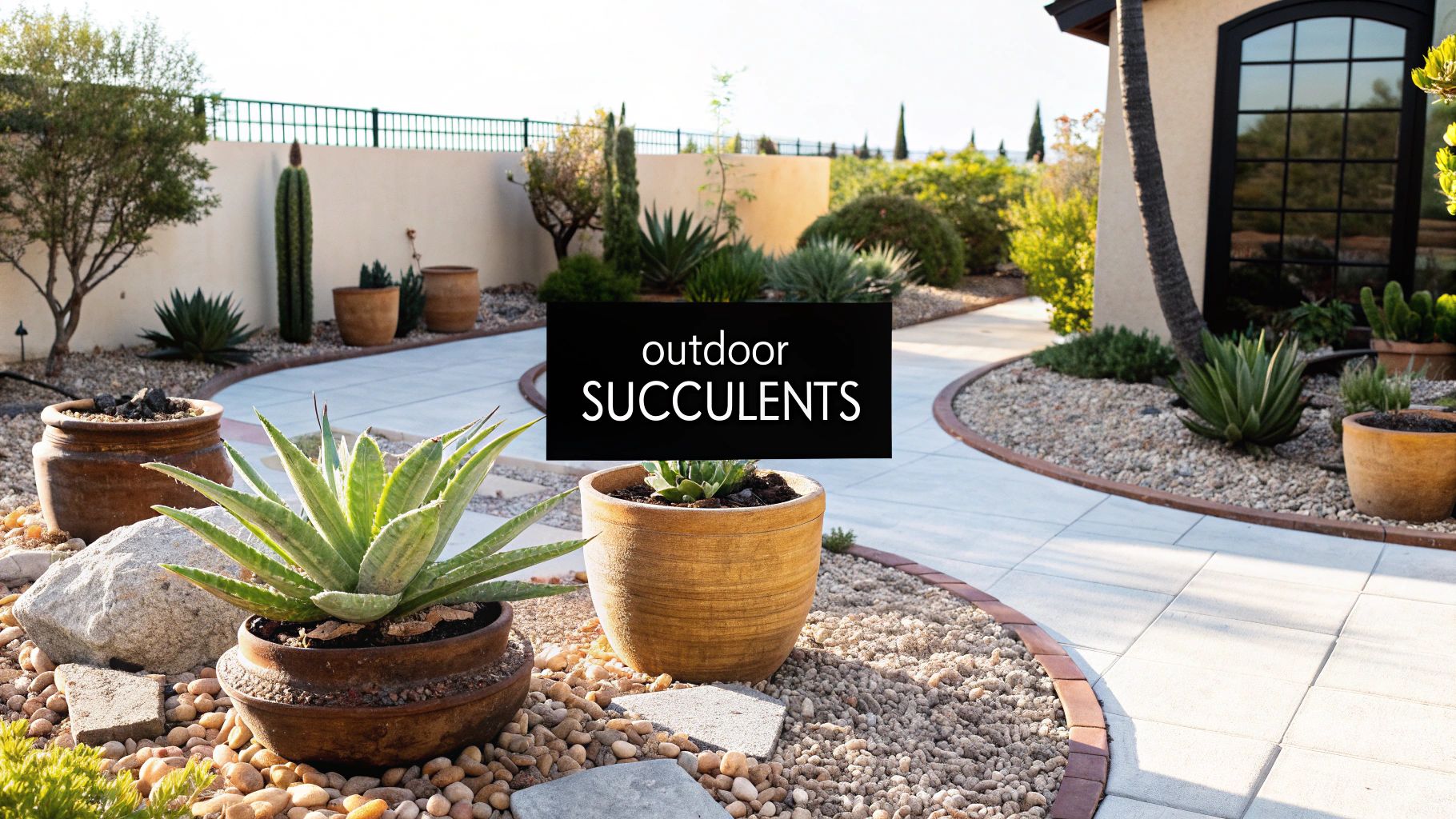

If you've ever admired a stunning succulent garden and wondered if you could create one yourself, the answer is a resounding yes. Succulents are incredible plants, offering an almost endless variety of shapes and colors while demanding far less water than your typical garden flowers. This guide is all about cutting through the noise and giving you the real-world advice you need for growing succulents outdoors successfully. We'll cover everything from picking the right spot to getting the soil just right, so you can build a garden that truly thrives.
Building Your Outdoor Succulent Oasis From the Ground Up
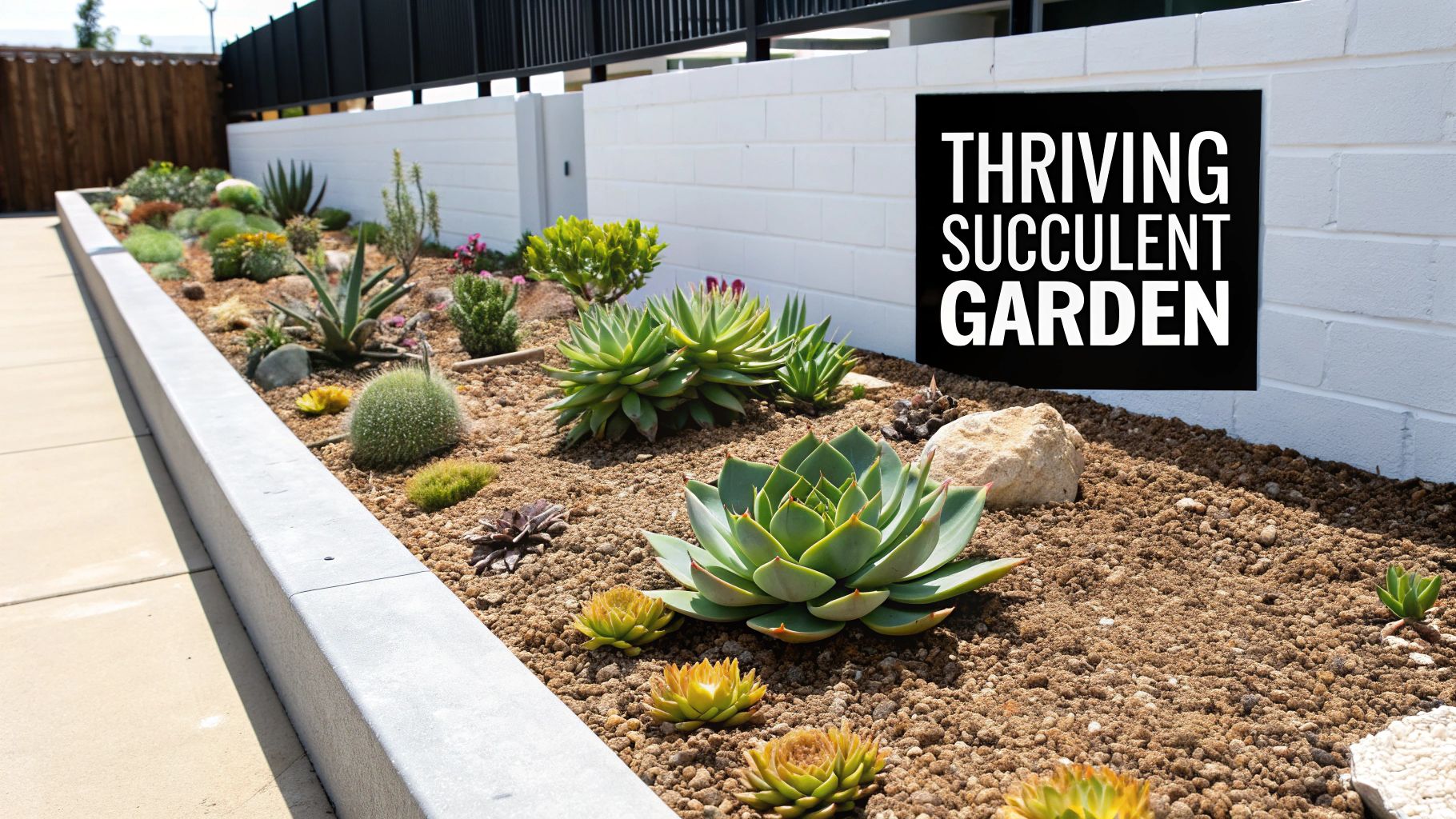
Creating a jaw-dropping outdoor space filled with succulents is much more achievable than you might imagine. These tough, beautiful plants are a go-to for landscapers everywhere, especially in places where water is precious. They bring so much visual interest with very little fuss.
The secret to success isn't complicated: it's all about getting the foundation right before you even think about planting. If you can master their basic needs—sun, soil, and water—you'll be well on your way. Think of it like learning a new language. Once you understand what your succulents are trying to tell you, you can easily solve any problems that pop up.
Why Outdoor Spaces and Succulents Are a Perfect Match
There's a reason succulents have become so popular in gardens. They provide an incredible palette of colors, textures, and forms that can elevate anything from a simple rock garden to a collection of patio pots. But their appeal goes beyond just looks; their minimal water needs make them a smart, eco-friendly choice for modern gardening.
This isn't just some passing trend. It’s a practical shift in how we approach landscaping. The global market for succulents is surging as more people seek out low-maintenance and drought-tolerant plants. In fact, over 50% of global succulent sales are for home and garden use. If you're curious, you can dive deeper into the succulent market trends to see just how big this movement has become.
What You'll Learn in This Guide
I've designed this guide to be your go-to resource, helping you build skills and confidence from square one. We're going to walk through the essentials together:
- Picking the Right Plants for Your Climate: Not all succulents are the same. I'll show you how to choose varieties that will actually thrive where you live, whether you're in a hot, dry desert or a cooler, wetter region.
- Whipping Up the Perfect Soil: This is a big one. You'll learn the recipe for a fast-draining soil mix that succulents love and that keeps deadly root rot at bay.
- Planting Like a Pro: We’ll cover the nitty-gritty of how to get your plants in the ground correctly, from spacing them out to planting them at the right depth.
- Smart Watering Habits: It’s less about a schedule and more about knowing when your plants are thirsty. I’ll teach you how to read the signs.
- Year-Round Care and Protection: Learn what to do when the seasons change to protect your garden from frost, extreme heat, and everything in between.
Getting these core principles right from the start is the key. It sets you up for a resilient, beautiful succulent garden you can enjoy for years with minimal effort.
Choosing The Right Succulents For Your Climate
The first, most crucial step to a successful outdoor succulent garden is picking plants that can actually live where you do. It’s a classic rookie mistake to think all succulents are heat-loving desert dwellers. In reality, tons of varieties prefer milder weather, and some are tough enough to shrug off a snowy winter. The real secret is simple: match the plant to the place.
You'll quickly learn that succulents fall into two main camps: hardy and tender. Hardy types are the tough guys, built to handle freezing temperatures. They usually go dormant when it gets cold and pop right back to life in the spring. Tender succulents are the opposite—they can't stand frost and will turn into a sad, mushy mess if a freeze hits.
Hardy Succulents For Colder Climates
If you get real winters with snow and ice, hardy succulents are going to be your go-to. These are the plants you can put in the ground and trust to make it through the year without needing to be carted inside.
A couple of the most reliable choices are:
- Sempervivum (Hens and Chicks): These are the undisputed champions of cold climates. They form those classic tight rosettes and spread happily on their own. Plus, they come in a ton of colors and are ridiculously easy to care for.
- Sedum (Stonecrop): This is a massive group of plants, from low-growing groundcovers to taller, more dramatic varieties. Many are exceptionally frost-tolerant and bring great texture and color to the garden, especially in the fall.
These resilient plants have become staples in rock gardens and green roofs all over Europe. The sheer variety is staggering; in fact, the Aizoaceae family (which includes popular ice plants) accounts for over 30% of the global market. It just goes to show how adaptable these plants are.
Tender Succulents For Warmer Regions
Live somewhere that never sees a frost? Your options just exploded. Tender succulents include some of the most eye-catching and colorful varieties, but they need that year-round warmth to survive.
Some favorites for warm-climate gardens include:
- Echeveria: Famous for their stunning, rose-shaped rosettes, Echeverias are garden darlings but are incredibly sensitive to the cold.
- Aeonium: These grow in dramatic, tree-like shapes with rosettes perched on the ends of their branches. They absolutely love mild, coastal weather but will die back in a freeze.
- Agave: For a bold, architectural statement, nothing beats an Agave. To get the best results, learning about cultivating specific succulents like Agave will help you pick the right one for your space.
To make this a little easier, here's a quick comparison of some common choices to help you figure out what might work in your yard.
Hardy vs Tender Succulents For Outdoor Growing
| Succulent Type | Common Examples | Climate Suitability | Key Care Tip |
|---|---|---|---|
| Hardy | Sempervivum, Sedum, Rosularia, Jovibarba | Best for zones 4-9; can tolerate frost and snow. | Ensure excellent drainage, especially in winter, to prevent root rot from melting snow. |
| Tender | Echeveria, Aeonium, Crassula (most), Kalanchoe | Best for zones 9-11; must be protected from all frost. | Plant in pots to easily move indoors or cover with frost cloth during cold snaps. |
Ultimately, choosing plants suited to your climate is the foundation for a garden that thrives instead of just survives.
My Pro Tip: Always, always check the plant's hardiness zone rating before you buy it. You’ll find it on the tag. That little number tells you the absolute coldest temperature the plant can handle. Knowing this simple fact will save you a world of heartache when an unexpected cold front rolls through.
Picking the right succulent from the start is half the battle won. If you want to dive deeper and see what else is out there, check out our guide covering many more types of succulents and cacti to find your perfect match.
Creating The Perfect Soil and Planting Foundation
If there's one mistake that I see kill more outdoor succulents than any other, it's getting the soil wrong. It's a fatal flaw. These plants come from arid places where water vanishes almost instantly. They absolutely hate having "wet feet," and leaving them in dense, soggy soil is a fast track to root rot.
The secret to perfect succulent soil isn't complicated—it all comes down to drainage. Your mission is to create a gritty, porous blend that lets water rush right through, so the roots never sit in a puddle. Your average garden soil or potting mix just won't cut it; they hold onto way too much moisture.
Amending Garden Beds for Succulents
When you're planting straight into a garden bed, you’ve got to seriously overhaul the native soil. This means mixing in a healthy dose of inorganic, gritty materials to create air pockets and boost that all-important drainage.
- Pumice or Perlite: These lightweight volcanic rocks are my go-to for aeration. A good starting point is a mix of about 50% native soil and 50% pumice or perlite.
- Coarse Sand: Make sure it's builder's sand, not the fine play sand you see in sandboxes, which can compact and do more harm than good.
- Small Gravel: A little pea gravel or even chicken grit can work wonders to break up heavy, clay-like soils.
What you're aiming for is a loose, gritty texture. Grab a handful and give it a squeeze. It should crumble apart immediately, not clump together like a ball of brownie dough.
Crafting The Ideal Container Mix
For succulents in pots, you call all the shots, which is a huge advantage. You can find pre-made cactus and succulent mixes at most garden centers, but I find that making my own is cheaper and gives me better results.
A simple, bulletproof recipe is one part potting soil, one part coarse sand, and one part perlite or pumice. For a much deeper look at getting the components just right, our guide on cactus and succulent soil breaks down more advanced recipes.
The key takeaway is this: When in doubt, add more grit. It's almost impossible to have too much drainage for succulents, but it's incredibly easy to have too little.
This infographic breaks down the essential first steps for choosing the right succulent for your environment.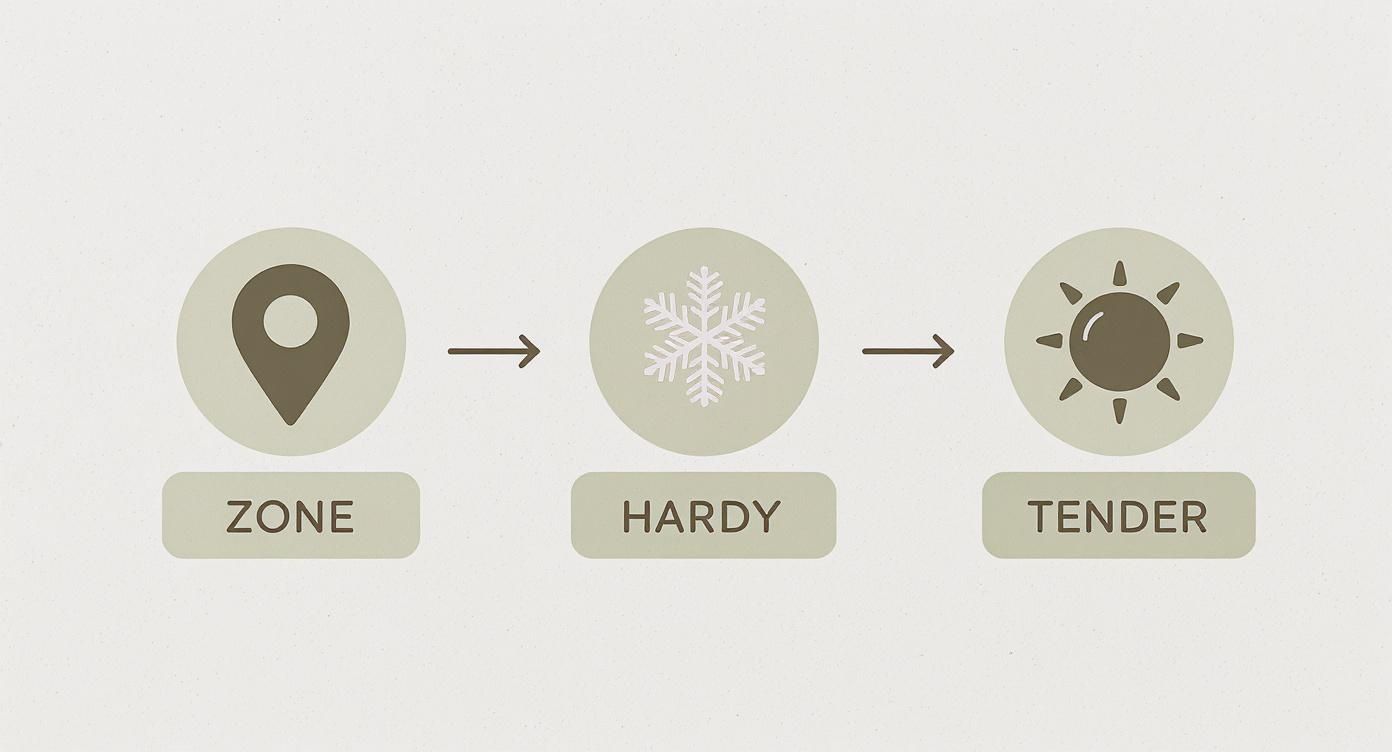
As you can see, successful growing starts before you even touch the soil. It begins with picking plants that are a good match for your local climate.
Proven Planting Techniques
With your soil mix ready to go, the right planting technique will give your succulents the head start they need.
First, gently ease the plant out of its nursery pot and take a moment to loosen any tightly bound roots. You don't have to be aggressive, just tease them apart a bit.
Next, set the succulent in its new home so the base of the plant is sitting just slightly above the soil line. If you plant it too deep, you risk trapping moisture right up against the stem and lower leaves, which is an open invitation for rot. Backfill around the plant with your gritty soil mix, patting it down lightly to get rid of any big air pockets.
The final touch? Add a top dressing of gravel, small pebbles, or decorative rock. This isn't just for looks—it's a game-changer. It lifts the succulent's leaves off the damp soil, improves air circulation around the base, and helps discourage pests from making a home there.
Mastering The Art Of Watering Outdoor Succulents
When it comes to keeping succulents happy outdoors, nothing trips people up more than watering. The biggest mistake I see is watering on a strict schedule. Forget the calendar—these plants don’t live by it, and neither should you. It’s all about learning to observe.
The best approach, hands down, is the “soak and dry” method. This strategy is designed to imitate the way these plants get water in their natural, arid environments: a rare, heavy downpour followed by a long dry spell.
So, when you do water, don't be shy. Give them a deep, thorough soaking until the entire root zone is saturated.
After that good drenching, the most important part begins: waiting. You need to let the soil dry out completely before you even consider watering again. This dry period is absolutely critical. It encourages the roots to grow deep and strong as they search for moisture, which builds a much more resilient plant that can handle heat and drought.
Reading The Signs From Your Plants and Soil
Your succulents will absolutely tell you when they’re thirsty; you just have to learn their language. The simplest trick is the finger test. Stick your finger an inch or two into the soil near the base of the plant. If you feel any dampness at all, hold off. It needs to be bone dry.
Another tell-tale sign is in the leaves. A thirsty succulent’s leaves will start to look a little deflated or shriveled. They might feel soft and bendy instead of firm. This is your cue—the plant has used up the water stored in its leaves and is ready for more.
Overwatering is the number one killer of succulents, no question. If you see mushy stems or leaves turning yellow and translucent, you’re likely dealing with root rot. When in doubt, it’s always better to wait another day or two. You can save an under-watered plant, but a rotted one is usually a goner.
To really nail this, check out our complete guide on how to water succulents for an even deeper dive.
Adapting to Climate and Seasons
Where you live and what the weather is doing are huge factors. A succulent garden baking in the Arizona summer will need water far more often than one in a mild, coastal area. And always, always factor in the rain. A good storm is a free watering session from mother nature.
- Summer Heat: When temperatures soar, the soil dries out much faster. You'll likely need to water more often, but try to do it in the early morning. Watering in the midday heat just leads to evaporation and can even scald the roots.
- Winter Dormancy: As things cool down, most outdoor succulents take a break and go dormant. Their growth grinds to a halt, and so does their need for water. You’ll want to cut back watering dramatically—sometimes to just once a month—to keep the roots from rotting in cold, wet soil.
Managing Sunlight And Seasonal Care Routines
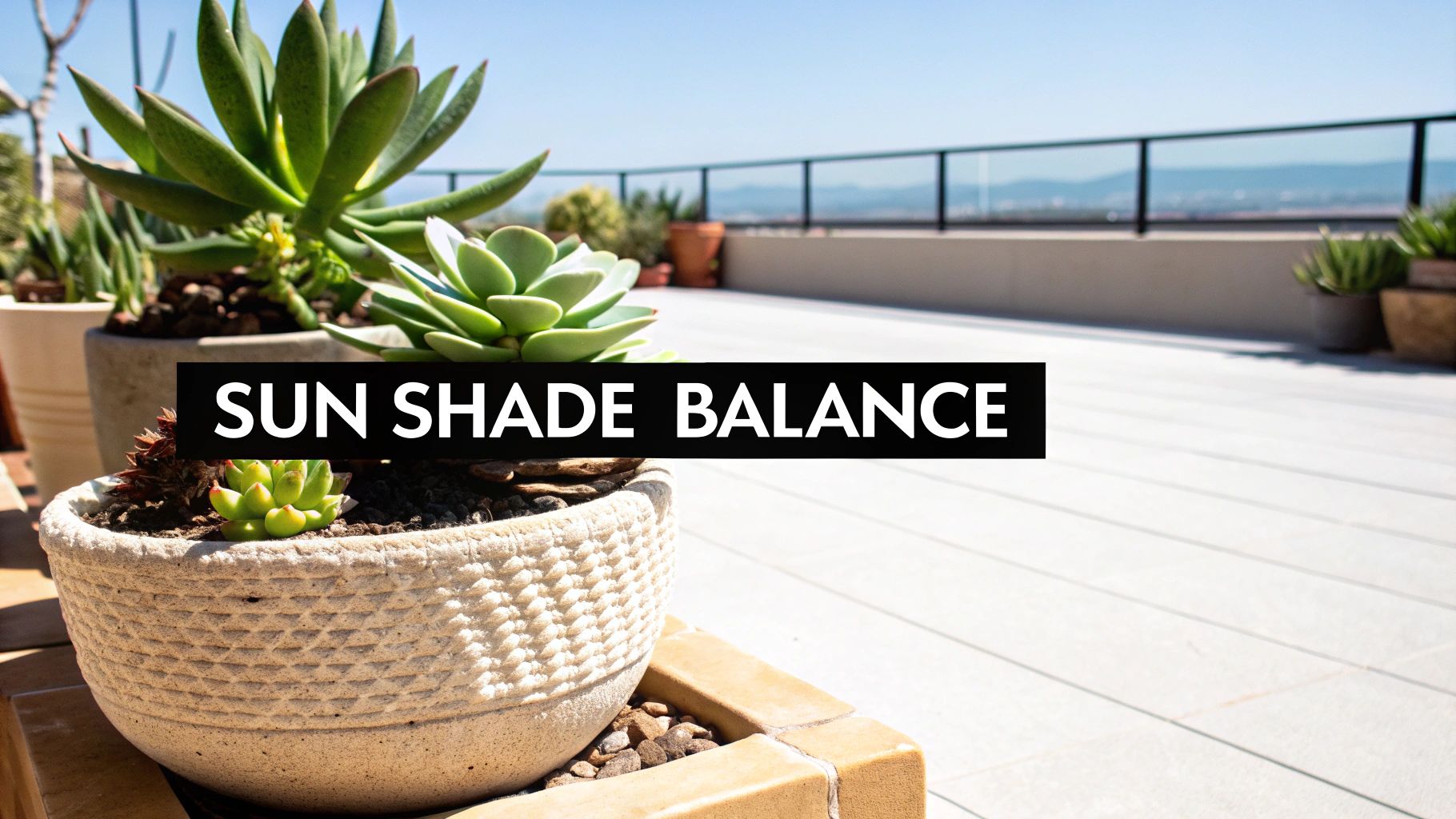
Sunlight is the fuel for your succulents, but when you're growing them outdoors, it's all about finding that perfect balance. These plants are famous sun-worshippers, but too much direct, scorching heat can cause nasty sunburn—permanent pale or brown scars on their leaves. Your goal is to give them enough light to keep their shapes compact and their colors brilliant, without totally frying them.
A classic mistake I see all the time is taking a plant from a sheltered nursery and plopping it straight into the intense afternoon sun. You have to ease them into it. It’s like getting your first tan of the summer; you wouldn't lay out for eight hours on the very first day.
Start by setting your new succulent in a spot that only gets morning sun for the first week or so. That early light is much gentler. After that, you can slowly introduce it to more direct light, adding an hour or two of midday sun every few days until it's settled into its new home.
Finding The Sweet Spot For Sunlight
Not all succulents are created equal when it comes to sun exposure. Knowing what your specific plant craves will make a world of difference in how it looks and grows.
- Full-Sun Lovers: Plants like most Agaves, many cacti, and some Sedum varieties are true sunbathers. They need six or more hours of direct sunlight to show off their best colors and maintain a strong, tight form.
- Partial-Shade Seekers: On the other hand, varieties like Echeveria, Haworthia, and Gasteria prefer bright but indirect light. For them, a spot that gets full morning sun followed by dappled shade in the hot afternoon is ideal. That harsh afternoon sun can easily scorch their more delicate leaves.
Here's a pro tip: the "perfect spot" isn't static. A location that's just right in May might become a blistering furnace by mid-July. Keep an eye on your plants and be ready to move them as the seasons change.
Seasonal Care For A Resilient Garden
Your care routine has to evolve with the calendar. A succulent's needs during a summer heatwave are completely different from its needs when the first frost is looming. A little seasonal planning is the secret to long-term success.
In the peak of summer, even the most sun-loving succulents can get scorched. A simple piece of shade cloth strung up during the hottest part of the day can be a real lifesaver. Also, try to water in the morning or evening—droplets on the leaves in direct sun can act like tiny magnifying glasses and cause burn spots.
As autumn rolls in, it’s time to start thinking about the cold. Your most critical job is protecting your plants from frost, which can easily kill tender succulents overnight.
- Know Your Plants: Figure out which of your succulents are hardy (can handle a frost) and which are tender (definitely can't).
- Bring Tender Ones Inside: If your tender succulents are in pots, just move them to a protected spot like a garage or indoors near a bright window before the first frost is in the forecast.
- Cover In-Ground Plants: For tender succulents planted in the garden, you can cover them with a frost cloth or even an old bedsheet overnight. Just remember to take it off in the morning so they can get some sun!
These little adjustments are what gardening is all about. For a broader look at getting your garden ready, this general spring planting guidance has some great tips that can complement your succulent care. Staying one step ahead of the weather ensures your garden stays vibrant and healthy all year long.
Answering Your Top Outdoor Succulent Questions
Even the most carefully planned succulent garden can throw you a curveball. It’s totally normal to run into questions as you figure out what your plants need out in the wild, so to speak. Let's dig into some of the most common hurdles gardeners face and get you some quick, practical answers to keep your succulents happy.
From pesky bugs showing up uninvited to that first winter weather forecast, a little know-how makes all the difference. Getting ahead of these common issues will help you solve problems before they get serious, keeping your garden vibrant and healthy.
Can My Succulents Stay Outside All Winter?
This is probably the most critical question, and the answer really boils down to two things: your local climate and the specific type of succulent you're growing. Succulents are generally sorted into two camps: hardy (they can take the cold) or tender (they can't handle frost). You absolutely need to know which kind you have.
- Hardy Succulents: Think of plants like Sempervivum (you might know them as 'Hens and Chicks') and many varieties of Sedum. These guys are built for tough weather. They can often shrug off freezing temperatures and even a blanket of snow, but only if their soil drainage is perfect. Cold, wet feet are their enemy, leading to rot.
- Tender Succulents: Your Echeverias, Aeoniums, and most Crassulas fall into this category. A frost will be a death sentence for them. The water stored in their plump leaves will freeze, expand, and turn the plant into a pile of mush. They need to be protected.
If your tender succulents are in pots, the fix is easy: just bring them inside to a sunny spot before the first frost hits. For those planted in the ground, you'll need to be ready to cover them with a frost cloth on cold nights.
What Do I Do About Pests on My Outdoor Succulents?
Gardening outdoors means you might occasionally get unwanted guests like mealybugs or aphids. Your best strategy is to spot them early. Get into the habit of giving your plants a quick once-over, checking under the leaves and deep inside the rosettes where pests love to hide.
Spotted some bugs? Don't freak out. If it's just a small group, a strong spray of water from the hose can knock them right off. For more stubborn squatters, you can dip a cotton swab in 70% isopropyl alcohol and dab them directly. The alcohol dissolves their waxy, protective coating.
If you're dealing with a bigger infestation, an insecticidal soap or neem oil spray can be a great help. Just be sure to apply these treatments in the evening or on a cloudy day, as the sun can scorch leaves that have been freshly sprayed.
An ounce of prevention is worth a pound of cure. A healthy, well-cared-for succulent is far less likely to attract pests than a stressed one. A thriving garden is its own best defense.
Why Are My Succulents Turning Yellow and Mushy?
Ah, the classic sign of too much love. If your succulent's leaves are looking yellow, almost translucent, and feel soft or squishy, you're overwatering. This is, without a doubt, the number one way people accidentally kill their succulents. It means the roots are suffocating and starting to rot because the soil is staying wet for too long.
The moment you see this, stop watering. Feel the soil. If it's still soggy days after you last watered, you need to intervene. Gently dig up the plant and take a look at the roots. If they're brown and slimy, you've got root rot. Trim off any rotted sections with clean shears and let the plant air-dry for a day or two. Then, repot it in completely new, dry, gritty soil mix. Going forward, always let the soil dry out completely before you even think about watering again.
Here at The Cactus Outlet, we've got a massive selection of healthy, gorgeous cacti and succulents ready to help you create the outdoor garden you've been dreaming of. Check out our collection and find the perfect additions for your landscape.