
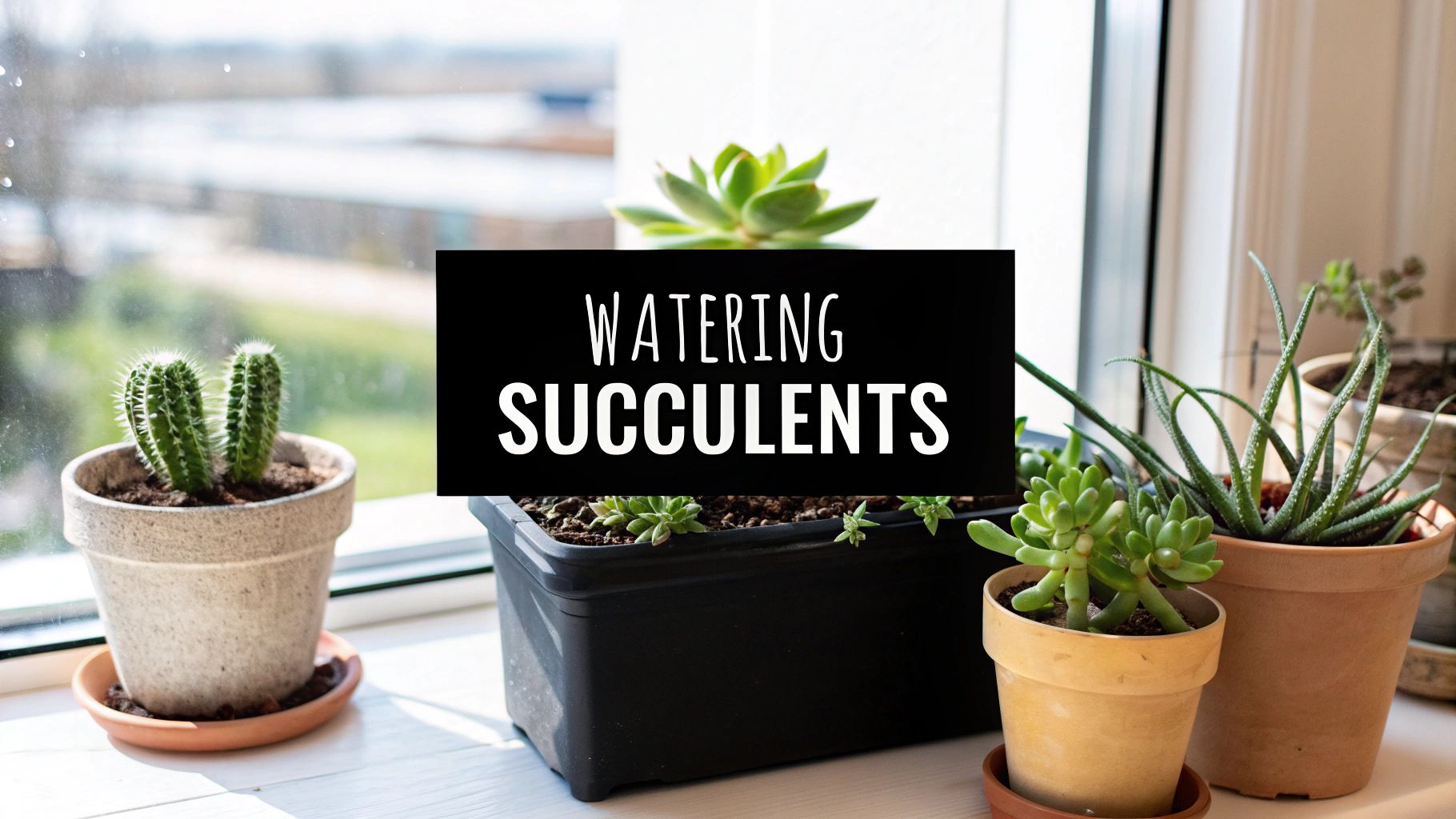

When someone asks me how often to water succulents, my answer is always the same: it depends. The real question isn't how often, but when. The trick is to only water when the soil is bone dry. Getting this one concept right is the first, most important step you'll take toward becoming a succulent pro.
The Golden Rule of Watering Succulents
Before we talk about schedules or calendars, let’s get one thing straight. The single most important principle for keeping succulents happy is what we call the "drench and dry" method. This isn't just a tip; it's the entire philosophy. Forget watering every Saturday. It's time to start listening to your plants.
Think about where these plants come from. In their natural desert homes, they don't get a polite little sprinkle every few days. They go through long, dry spells, then get absolutely hammered by a sudden, torrential downpour that soaks the ground. The drench and dry method is our way of recreating that natural cycle right in your living room.
Mastering Drench and Dry
The technique itself is beautifully simple and breaks down into two key actions:
-
Drench: When it's watering day, don't be shy. Give that plant a deep, thorough soak. Keep pouring water until it runs freely from the drainage hole at the bottom of the pot. This makes sure every last root gets a chance to drink, which encourages a strong, deep root system.
-
Dry: This part is just as important. After the big soak, you have to let the soil dry out completely. I don't mean just the top layer—I mean all the way to the bottom of the pot. This dry period is absolutely vital for preventing root rot, which is hands-down the number one killer of succulents.
If the soil stays constantly damp, the roots can't breathe. They're literally suffocating, which leads to rot. Letting the soil get completely dry gives the roots the oxygen they need to stay healthy and tough, just like they would be in the wild.
Why Schedules Fail
I see so many beginners make the same mistake: they put their succulents on a rigid schedule, like watering every Sunday no matter what. This is a recipe for disaster because it completely ignores all the things that affect how fast soil dries out—like humidity, sunlight, and airflow. A major 2022 horticultural study even found that a shocking 62% of succulents watered on a fixed bi-weekly schedule failed to thrive. You can read more about why flexible watering is key in those study results.
Succulent care is less about a calendar and more about observation. Your goal is to replicate a desert downpour, not a leaky faucet. A deep soak followed by a complete dry spell is the foundation of a healthy plant.
So, how do you know when it's time? It's simple: use the soil as your guide. The most reliable method is to stick your finger or a dry wooden skewer deep into the soil. If it comes out with any moisture on it, wait. This hands-on check is the best way to shift your mindset from a rigid schedule to one based on your plant’s real, immediate needs.
Ready to start observing? This quick table will help you spot the signs that it's time to grab the watering can.
Quick Guide When Is It Time to Water
| Indicator | What It Looks/Feels Like | Watering Action |
|---|---|---|
| Soil Moisture | Soil is completely dry to the touch, all the way to the bottom. A skewer comes out clean and dry. | Time to water! |
| Pot Weight | The pot feels noticeably lighter than it does after a fresh watering. | Time to water! |
| Leaf Appearance | Leaves look slightly wrinkled, soft, or less plump. They may feel a bit rubbery. | Time to water! |
| Soil Is Damp | Soil feels cool or moist to the touch. A skewer comes out with damp soil clinging to it. | Wait! Check again in a few days. |
| Leaves Are Plump | Leaves are firm, full, and show no signs of wrinkling or wilting. | Wait! The plant has enough water stored. |
| Leaves Are Yellow/Mushy | Leaves at the base look translucent, feel soft and mushy, or are turning yellow. | Do NOT water! This is a sign of overwatering. |
Ultimately, combining these visual cues with the "feel test" of the soil will give you the most accurate picture of what your plant needs. Before long, you'll be able to tell at a glance.
Learning to Read Your Succulent's Cues
Your succulents are always talking to you about what they need; you just have to learn their language. Forget the rigid calendar schedule. The real secret to mastering how often to water succulents is understanding their visual cues. This simple shift in mindset turns you from a plant owner into a plant partner, responding to what your plant actually needs, right when it needs it.
Think of your succulent's leaves as little water tanks. When they're full, the leaves are firm, plump, and full of color. But when the plant gets thirsty, it starts dipping into those reserves. The signs are pretty obvious once you know what to look for.
This decision tree is a great visual for the first and most important step to take before you even pick up the watering can.
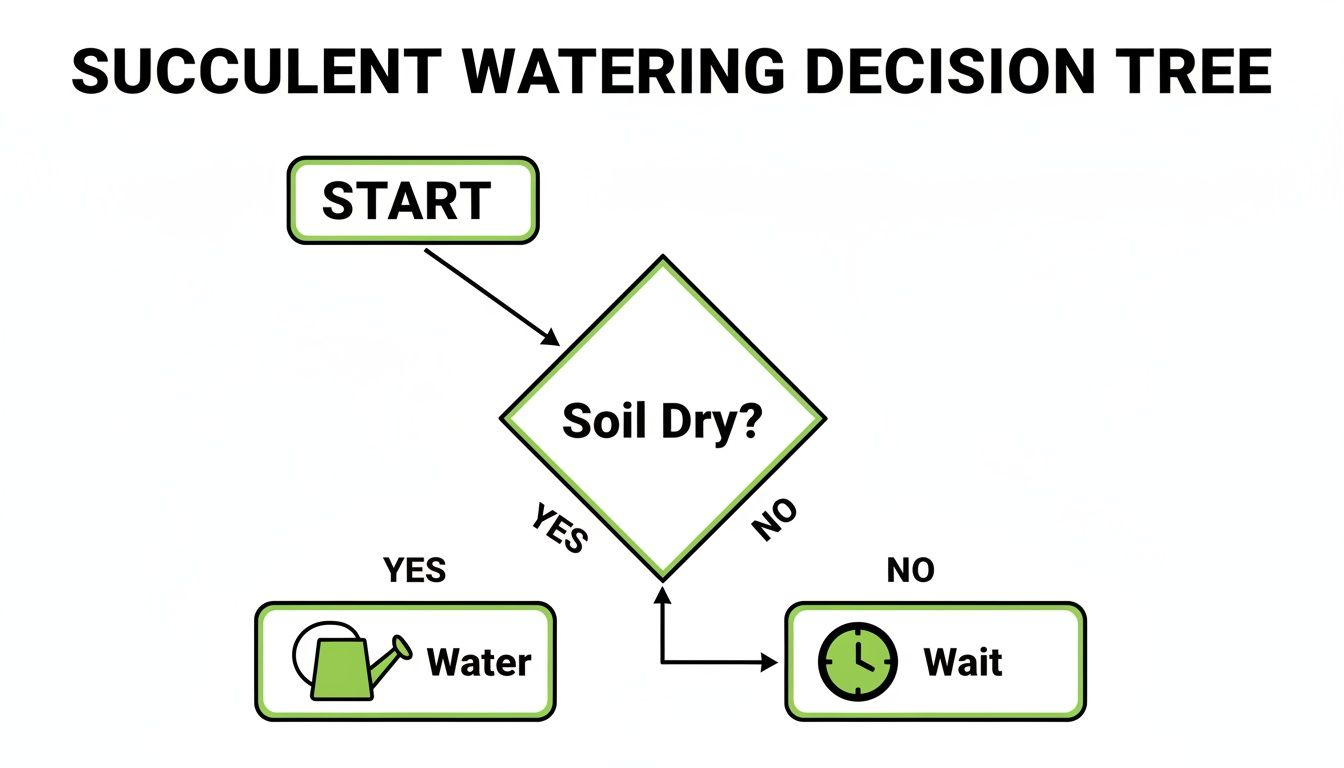
As you can see, the process always starts with checking the soil. If it isn't bone dry, the answer is always the same: wait.
Signs of an Under-Watered Succulent
An under-watered succulent is just a thirsty plant. It's not a crisis. In fact, it's a much better problem to have than the alternative. When your succulent needs a drink, it will show you through some very clear changes in its leaves.
-
Wrinkled or Puckered Leaves: This is the most common sign. The once-smooth, plump surface of the leaves will start to look a bit deflated and wrinkled, especially on the lower ones, as the plant uses its stored moisture.
-
Limp or Droopy Appearance: Leaves that were once firm and perky might begin to feel soft, almost rubbery. They may start to droop or hang down, losing that strong, healthy structure.
-
Dry, Crispy Lower Leaves: If a succulent is really thirsty, the oldest leaves at the very bottom might dry out completely, becoming thin and crispy. This is a natural part of the plant's life cycle, but if it starts happening more often, it’s a clear sign your plant needs more water.
Spotting these signs simply means it's time to water thoroughly using the "drench and dry" method. Your plant will usually plump right back up within a day or two, looking good as new.
The Dangers of an Over-Watered Succulent
Over-watering, on the other hand, is the number one killer of succulents. It’s far more dangerous than letting them get a little thirsty. Constantly wet soil creates the perfect breeding ground for root rot, a fungal disease that suffocates and destroys the root system. Unlike a thirsty plant, the damage from over-watering can be permanent.
The single biggest mistake a new succulent owner can make is watering a plant when the soil is still damp. Chronic moisture is the enemy, leading to root rot from which very few succulents ever recover. When in doubt, don't water.
Be on the lookout for these critical warning signs, which almost always show up on the lowest leaves first:
-
Mushy, Soft Leaves: This is a big one. Over-watered leaves won't just feel soft—they’ll feel squishy and waterlogged. If you gently squeeze one, it might even burst or feel like it’s filled with jelly.
-
Translucent or Yellowing Leaves: The leaves will lose their vibrant, opaque color and start to look yellowish and almost see-through. This happens because the cells have literally ruptured from taking in too much water.
-
Leaf Drop: A sure sign of distress is when leaves fall off the stem with just a gentle touch. This is a major red flag that the plant is in trouble.
These symptoms mean the root system is likely in danger. If you spot them, you need to act fast by stopping all watering and checking for root rot. While succulents are famously tough, they have subtle differences from their cactus cousins. To get a better handle on this, you can learn more about the difference between a cactus and a succulent in our detailed guide. Recognizing these cues early is the key to preventing a minor watering mistake from becoming a fatal problem.
How Seasons Change Your Watering Routine
If you water your succulents the same way in January as you do in July, you're setting them up for failure. It's one of the most common mistakes I see. These plants live by the sun and seasons, and their need for water changes dramatically throughout the year. The real secret to getting your watering right is to sync up with their natural cycles of growth and rest.
Think of your succulent’s year in two simple phases: a busy, energetic summer and a long, quiet winter nap. We call these the active growing season and the dormant season. Getting a feel for this rhythm is everything.
The Active Growing Season: Spring and Summer
When the days get longer and the air gets warmer, succulents wake up and kick into high gear. This is their prime time for growth—they're busy pushing out new leaves, getting taller, and strengthening their root systems.
All that work requires a lot of fuel, and their fuel is water. You'll probably notice their soil dries out much faster now. More sun, higher temperatures, and a revved-up metabolism mean they're drinking water at their fastest rate all year.
-
What to do: You'll need to water more often. The golden rule still applies—wait until the soil is completely dry—but you’ll find that happens much faster. For indoor plants, this could be every 10-14 days. For succulents living outside in the heat, it might be even more frequent.
-
Why it works: You're giving the plant the resources it needs to support all that new growth. It's like how an athlete needs more water during a workout; your succulent is working hard and needs to stay hydrated.
The Dormant Season: Fall and Winter
As the days shorten and cool off, it’s a signal for your succulents to slow way down. They enter a state of dormancy, which is basically a deep rest. Their growth grinds to a halt, and they stop using much energy at all.
During this nap, your plant isn’t using much water. Its only job is to conserve resources and wait for spring. This is where so many well-intentioned owners go wrong—they keep watering on a summer schedule.
The most dangerous time for a succulent isn't the peak of summer heat, but the cool, dormant months of winter. Overwatering during this rest period is the #1 cause of root rot and plant death.
Giving a dormant succulent a full drink is like trying to force-feed someone who’s sound asleep. The plant can't use the water, so it just sits there in the pot. This creates a cold, soggy environment that literally suffocates the roots and rolls out the red carpet for rot.
-
What to do: Back off the watering can. A lot. You might only need to water once every 4-6 weeks, maybe even less. The trick is to let the soil go bone-dry and stay that way for a while before offering a small drink.
-
Why it works: You're respecting the plant's natural need for rest. Keeping the soil on the dry side prevents the roots from sitting in cold, wet dirt—the perfect storm for rot.
A Common Misconception Debunked
Many gardeners think the biggest threat to their succulents is a summer heatwave. But the data tells a different story. Research from UC Davis reveals a surprising fact: a whopping 73% of succulent failures occur in the a year, but these are overwhelmingly caused by overwatering during the cool, dormant seasons when the plants need very little moisture. This is why learning to adapt your routine for winter is so crucial. You can discover more insights about succulent care on gardening.alibaba.com.
Keeping track of this seasonal shift can be tricky. As the seasons dictate changes in your succulent watering, managing this evolving routine can be simplified; consider exploring some of the best recurring task app options to set seasonal reminders for yourself. When you work with your plant's natural rhythm instead of against it, you give it exactly what it needs to thrive year after year.
The Four Factors That Impact Watering Frequency
Knowing the "drench and dry" method is a great start, but becoming a truly skilled succulent owner means learning to read your plant's environment. Think of it less as a strict schedule and more like a unique equation for thirst.
Four key variables determine how quickly your succulent’s soil dries out. Once you get a feel for these, you'll be able to ditch the calendar and give your plants a drink exactly when they need it.
1. Pot Type and Drainage
The pot your succulent calls home plays a huge role in its watering needs—it’s not just about aesthetics. The material itself dictates how long moisture sticks around in the soil.
A classic, unglazed terracotta pot is your best friend, especially if you're just starting out. It's porous, meaning it breathes. It actively pulls water out of the soil and lets it evaporate right through the walls, creating a much more forgiving environment if you happen to overwater.
On the flip side, glazed ceramic or plastic pots are non-porous. They lock moisture in, so the soil stays wet for much longer. They look great, but they demand a more careful hand with the watering can.
The Non-Negotiable Rule: No matter what material you choose, the pot must have a drainage hole. Without one, you're essentially forcing your succulent to sit in a puddle, and root rot is almost guaranteed.
2. Soil Composition
This might be the most critical factor of all. Standard potting mix is designed to hold moisture for thirsty houseplants, which is basically a death sentence for a succulent. It’s too dense, too heavy, and stays soggy for far too long.
Succulents evolved in gritty, arid soils, and that’s what we need to replicate. The goal is a mix that water flushes through quickly, letting the roots grab a drink on the way down without ever getting waterlogged.
- Key Ingredients: Look for mixes that contain gritty materials like perlite, pumice, or coarse sand.
- Function: These elements create tiny air pockets throughout the soil, which is vital for quick drainage and getting oxygen to the roots.
Using the right soil is the easiest way to prevent overwatering from the very beginning. To really get this right, you can learn more about choosing the best soil for succulent plants in our complete overview.
3. Light Exposure
Sunlight is fuel for your succulent, and just like an engine, the harder it works, the more it drinks. The amount of light your plant gets directly speeds up or slows down its water usage.
A succulent soaking up six or more hours of direct sun in a south-facing window is in high gear. It’s busy with photosynthesis, turning all that light into energy, and that process uses up water. Its soil will dry out much, much faster.
In contrast, a plant tucked away in a dimmer corner or a north-facing window is in a low-power mode. It’s not photosynthesizing as much, so it sips water slowly. If you watered this plant as often as its sun-drenched cousin, you’d be on the fast track to rot.
4. Airflow and Temperature
Finally, let's talk about the climate right around the pot. A warm room with good air circulation will dry out soil way faster than a cool, still room.
It’s just like drying laundry. Clothes dry in a flash on a warm, breezy day, right? But on a cool, humid day, they can stay damp forever. The exact same principle applies to the soil in your pot.
Good airflow helps moisture evaporate from the soil’s surface and from the pot itself, especially if it's terracotta. Higher temperatures speed this up even more. This is why a succulent that’s perfectly happy inside might suddenly need more frequent watering if you move it to a hot patio for the summer.
A Step-by-Step Guide to Watering Correctly
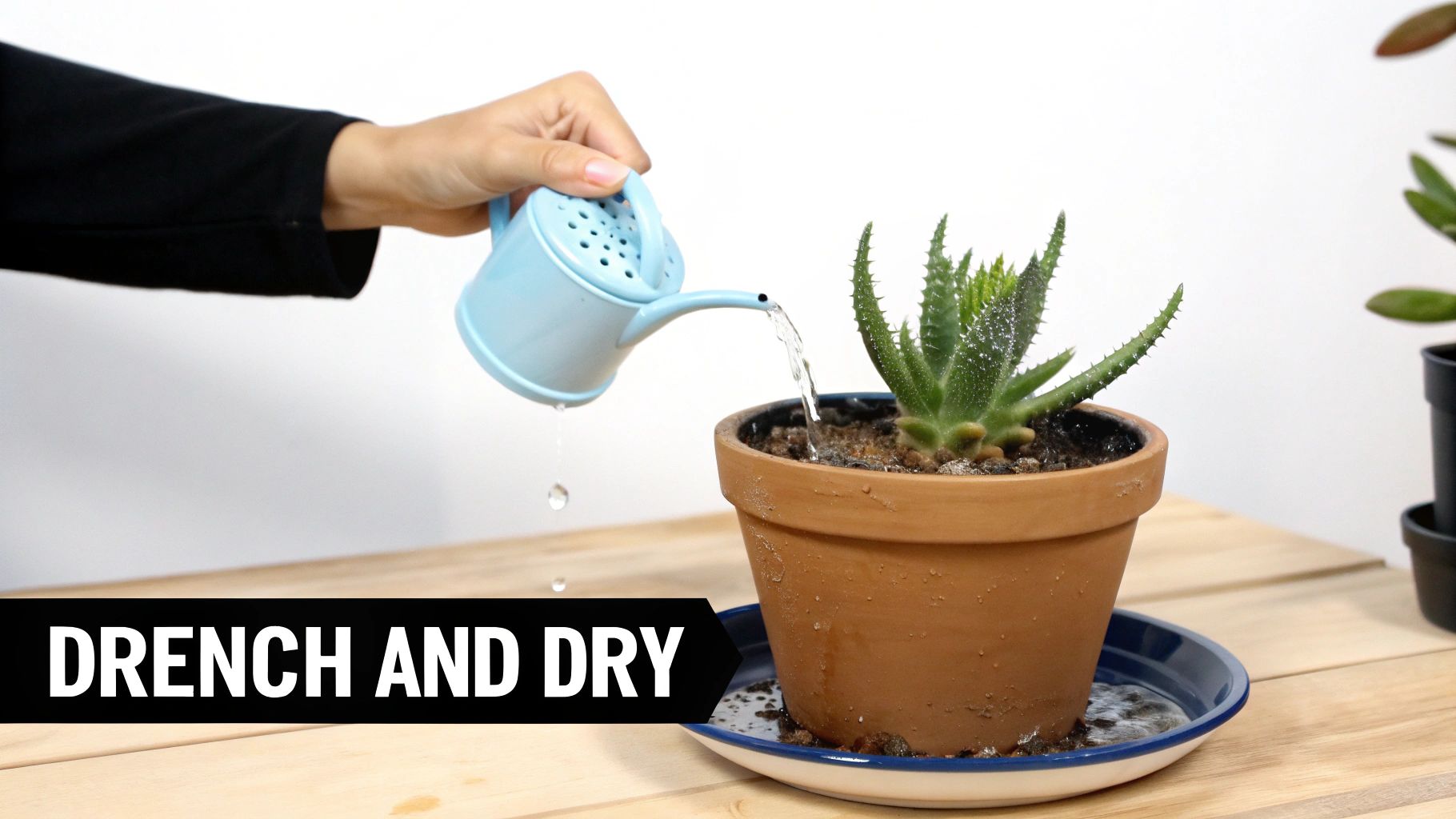
Knowing when to water your succulent is only half the battle. The other, equally important part is knowing how to do it. Just splashing a little water on the surface won’t work—in fact, it does more harm than good. Succulents thrive with a specific technique that mimics a desert downpour, encouraging deep, strong roots.
This is what we call the “drench and dry” method. Once you get the hang of it, it removes all the guesswork and gives your plants exactly what they need to flourish.
The Correct Watering Method in Four Steps
This whole process is surprisingly simple. It’s designed to make sure the entire root ball gets fully hydrated, which is critical for absorbing nutrients and staying healthy.
-
Check If the Soil Is Bone-Dry: Before you even think about watering, check the soil. Poke your finger or a dry wooden skewer about two inches deep. If you feel any moisture or see damp soil clinging to the stick, put the watering can down and wait a few more days. The soil must be completely dry all the way through.
-
Drench the Soil Thoroughly: Now for the fun part. Slowly pour water over the entire soil surface, moving the spout around to cover every spot. Keep going until you see water streaming out of the pot’s drainage hole. This deep soak ensures every single root gets a chance to drink.
-
Let It Drain Completely: After drenching, let the pot sit for several minutes so all the excess water can escape. A good soak is crucial, but letting a plant sit in a puddle is the quickest way to cause root rot. Good drainage is everything. For a deeper dive, check out our guide on why succulents need drainage.
-
Empty the Saucer: This step is non-negotiable. Never, ever let your succulent sit in a saucer full of water. Once the pot has finished draining, immediately dump out any water that has collected in the tray. Leaving it there completely defeats the purpose of having a drainage hole.
Watering Dos and Don'ts
Even with the best intentions, a few common mistakes can set you back. Knowing what to avoid is just as important as knowing what to do. The single biggest mistake I see beginners make? Misting.
Misting succulents is a surprisingly common but terrible idea. It only dampens the leaves, which can lead to fungal growth and rot, while leaving the roots thirsty. Always aim for the soil, never the plant itself.
Misting creates a humid, damp environment around the leaves that succulents simply aren't built for. Instead of a spray bottle, use a watering can with a long, narrow spout to direct the water right where it needs to go: the soil.
To make it even clearer, here’s a quick summary of what to do—and what to avoid.
| Do | Don't |
|---|---|
| Water the soil directly, avoiding the leaves as much as you can. | Mist the leaves. This encourages rot and fungal problems. |
| Use a pot with a drainage hole. This is absolutely essential. | Use a pot without drainage, like a decorative glass bowl or terrarium. |
| Water deeply until you see it run out the bottom. | Give small, frequent sips of water. This creates weak, shallow roots. |
| Empty the saucer of all standing water right after you're finished. | Let the pot sit in a tray full of water. This will suffocate the roots. |
By following this straightforward process and steering clear of these common pitfalls, you put yourself in complete control of your plant’s health. You’ll not only know how often to water your succulents but will master the art of doing it perfectly every single time.
Got Questions About Watering Succulents? We've Got Answers.
Even after you’ve mastered the basics, some situations can still be a bit tricky. It happens to everyone! Think of this as your go-to guide for those "what if...?" moments that pop up along the way.
We'll tackle some of the most common questions succulent growers ask. The core principles never change—check the soil, watch your plant, and respect the seasons—but here’s how to apply them to specific scenarios you're bound to run into.
Should I Water My Succulents from the Top or Bottom?
This is a classic debate, but the truth is, both methods are great when you do them right. It really comes down to your personal preference and what works best for your specific plants.
Top watering is the most straightforward approach. You just pour water over the soil until it runs out the bottom, much like a natural rain shower. A nice bonus to this method is that it helps flush away any mineral salts that can build up in the soil over time. Simple and effective.
Bottom watering is a little different. You set the pot in a dish of water and let the soil wick up moisture through the drainage hole. This is a fantastic way to encourage roots to grow deep and strong as they stretch down toward the water source. It's also a lifesaver for succulents with super dense rosettes (like some Echeverias), where it’s nearly impossible to water the soil without soaking the leaves.
Whichever way you go, the goal is the same: completely soak the soil. Then, let the pot drain fully and don't even think about watering again until that soil is bone dry.
How Soon Should I Water a Succulent After Repotting?
Hold your horses on this one! It feels wrong, I know, but you absolutely must wait at least a week to water a freshly repotted succulent. This is one of the most important rules for preventing root rot.
When you repot a plant, you inevitably break some of its tiny, fragile root hairs. If you water right away, those little wounds become open doors for fungus and rot to set in. Giving the plant a week or so in its new, dry home allows those breaks to callous over and heal.
Think of it as letting a scab form before getting it wet. Once that healing period is over, you can give it a good, deep drink and get back to your normal watering schedule. Rushing this step is a super common mistake that can cost you a perfectly good plant.
Can I Use Tap Water for My Succulents?
For most of us, the answer is a big, resounding "yes!" Succulents are tough cookies, and regular tap water is usually perfectly fine. The convenience is just unbeatable.
The only time you might run into trouble is if you have very "hard water," which just means it's high in dissolved minerals. Over time, you might see a whitish, crusty film build up on the soil or the rim of the pot. These are just leftover mineral deposits, like calcium and magnesium.
While this isn't an emergency, it can eventually change the soil's pH. If you start seeing this crust, you've got a couple of easy options:
- Flush the soil: Every time you water, make sure you drench it thoroughly so water flows freely out the bottom, washing some of the excess minerals with it.
- Switch your water: Using rainwater, distilled water, or filtered water will solve the problem completely.
Honestly, though, unless your plants look unhappy, don't overthink it. Tap water gets the job done for the vast majority of succulents.
What Is the Best Time of Day to Water Succulents?
Believe it or not, when you water actually matters. For the happiest, healthiest plants, the best time of day to water is hands-down the morning.
Watering in the morning gives the soil and any stray droplets on the leaves the entire day to dry out, thanks to warmer air and better circulation. This is your best defense against pesky problems like mildew or fungus, which thrive in cool, damp conditions.
Watering at night is a bad idea because the water just sits there in the cool, still air—an open invitation for rot. And watering in the scorching midday sun isn't great either; the water can evaporate before the roots get a good drink, and any water on the leaves can act like a magnifying glass and cause little sunburn spots. Morning is the sweet spot that avoids all these issues.
Ready to start or expand your collection with healthy, beautiful plants? At The Cactus Outlet, we offer a vast selection of premium cacti and succulents delivered right to your door. Find your next perfect plant today!