

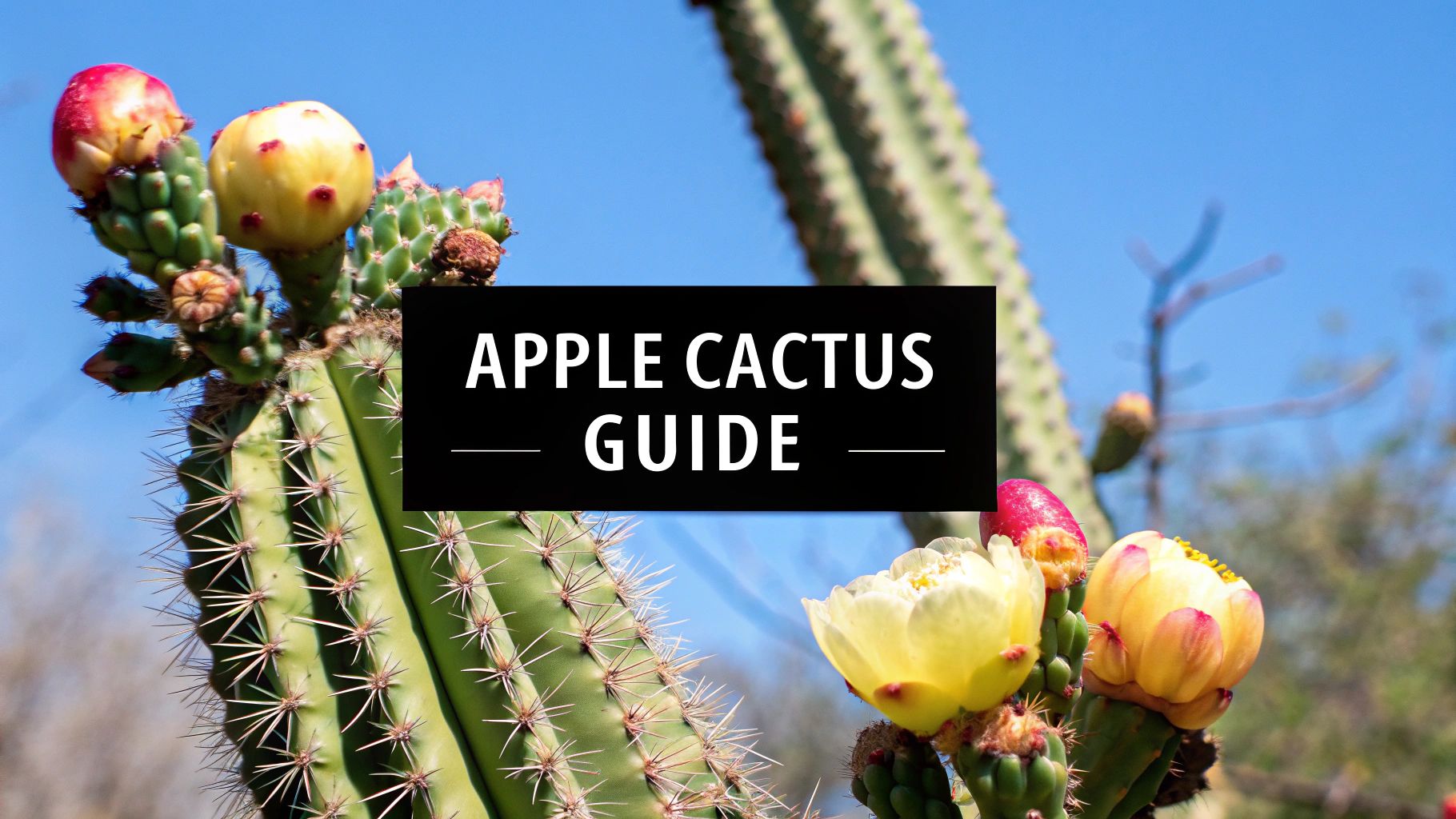

Meet the Apple Cactus, known to botanists as Cereus repandus. This isn't your average slow-growing cactus. It's a magnificent, tree-like columnar species that's loved for its shockingly fast growth, dramatic look, and surprisingly tasty fruit.
Often called the Peruvian Apple Cactus (even though that's technically a misnomer), it's a fantastic pick if you want to add a bold, architectural statement to your garden or even a large indoor space. And the best part? It's surprisingly easy to care for, making it a great entry point for new cactus enthusiasts.
The Cactus That Breaks the Mold
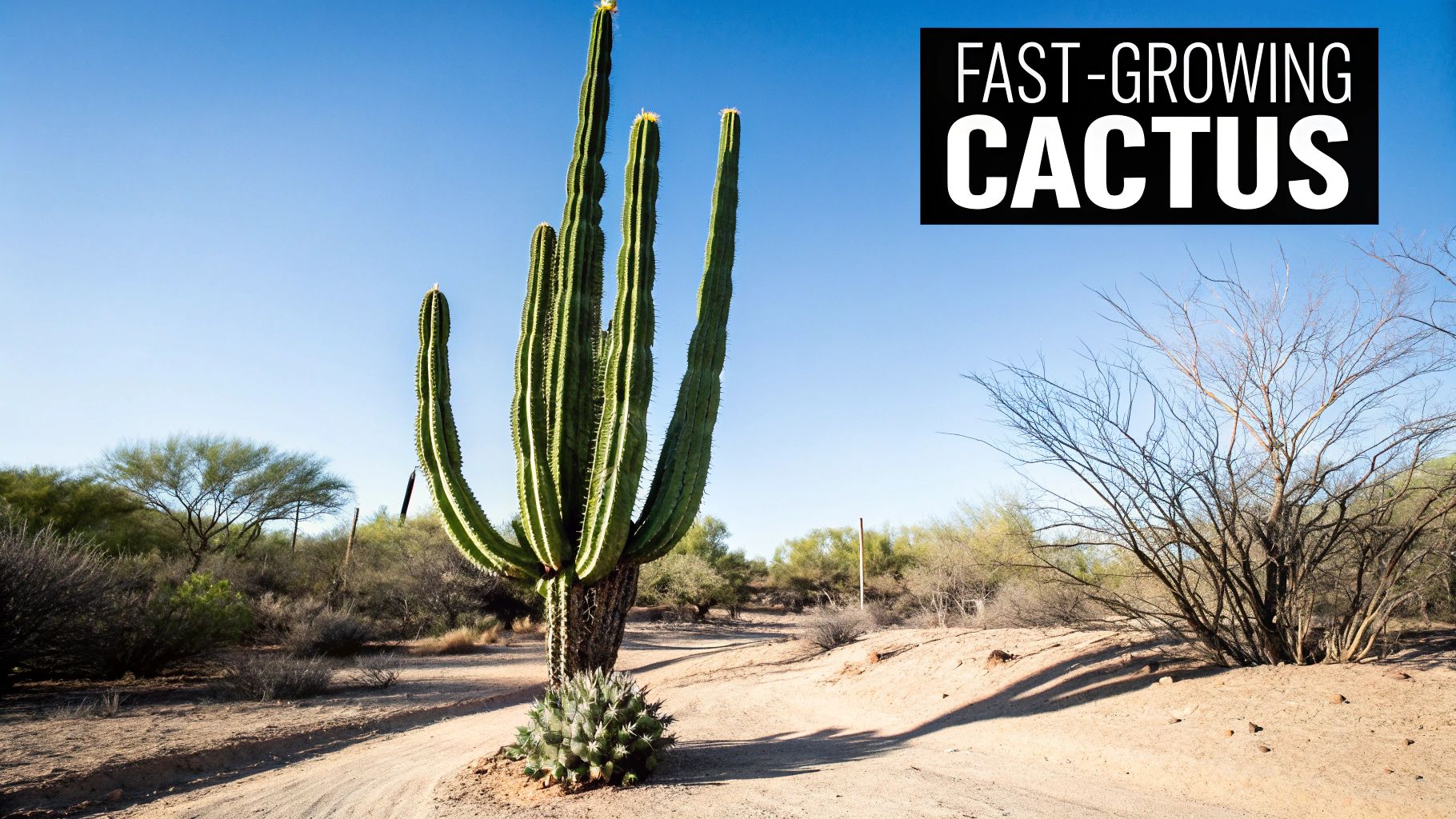
When you think "cactus," you probably picture something that grows at a snail's pace. The apple cactus completely shatters that expectation. This plant is a true showstopper, celebrated for both its impressive growth spurt and its dual role as a stunning ornamental piece and a source of delicious fruit.
Think of it less as a plant and more as a living sculpture. Its tall, ribbed, blue-green stems shoot upwards, creating a powerful vertical line that immediately captures attention. This quality makes it a go-to for landscape designers and homeowners who want an exotic focal point without the fuss.
More Than Just Good Looks
The "apple" in its name isn't just for show. After putting out enormous, beautiful flowers that bloom only at night, the cactus develops a completely thornless fruit that looks a bit like an apple. This edible treat, also called a pitaya, has a taste that people often say is a mix between kiwi and dragon fruit. It’s a pretty incredible reward for giving your plant the right care.
This unique combination of traits makes the apple cactus incredibly versatile:
- Fast Grower: In the right conditions, it can shoot up by as much as one foot per year, quickly becoming a major feature in your collection.
- Architectural Stunner: Its upright, tree-like form brings dramatic height and structure to any space.
- Edible Fruit: It produces sweet, nutritious fruit—a delightful bonus for any plant owner.
- Beginner-Friendly: Despite its grand size, its basic needs for light, water, and soil are simple to manage.
The real beauty of the apple cactus is how much it gives back for relatively little effort. It delivers architectural drama, a unique harvest, and a taste of its native desert habitat, all while being forgiving enough for a total beginner.
This cactus is also incredibly adaptable. In warmer climates like USDA Zones 9-11, it's a perfect permanent, low-water addition to an outdoor landscape. If you're thinking about adding one to a larger project, looking at professional backyard makeover ideas can spark some great inspiration. For those of us in cooler climates, it makes a breathtaking potted plant that can be brought inside for the winter.
This guide will cover everything you need to know to help your own apple cactus thrive.
How to Identify the Apple Cactus and Its Varieties
Spotting an apple cactus, or Cereus repandus, is pretty easy once you know what you’re looking for. This isn't just another plant; it's a living sculpture, defined by its towering, tree-like shape and distinctive blue-green skin. Knowing how to identify it helps you really appreciate what makes it special and pick the right one for your space.
The most obvious giveaway is its classic columnar shape. The apple cactus grows in thick, ribbed stems that shoot straight up, creating a powerful vertical accent wherever you plant it. These stems have a striking gray-green to almost bluish hue, giving the cactus an ethereal, desert-like glow, especially in the right light.
Look a little closer and you’ll see each stem has between nine and ten prominent, rounded ribs running from top to bottom. Along these ribs are small, fuzzy bumps called areoles, which are where you'll find clusters of gray, needle-like spines sprouting out.
A True Giant of the Cactus World
The sheer size of the apple cactus is one of its most impressive traits. In its native South American habitat, this thing is a true titan. This columnar giant typically grows to an incredible 25 meters (82 feet) on its own, with stems clocking in at 10-20 cm in diameter.
Even more amazing, with a little man-made support, it has been known to reach even greater heights. One record-holding specimen in India has stretched to a staggering 34 meters (110 feet) tall! While the cactus in your living room probably won't get that big, its potential for fast, impressive growth is a core part of its personality. It's this mix of color, structure, and massive scale that makes the apple cactus so easy to recognize.
The Classic Form vs. The Artistic Cultivar
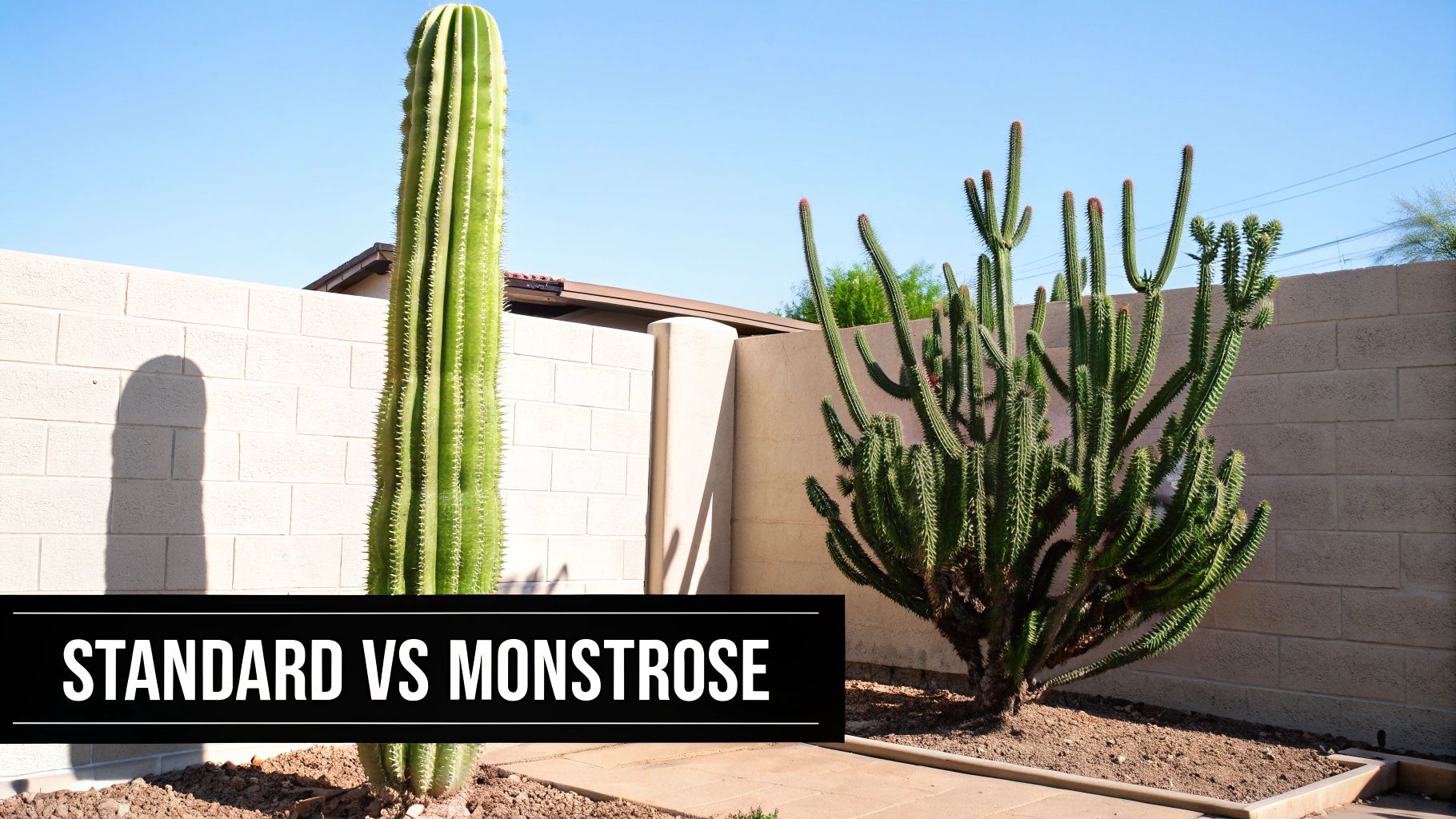
When you're shopping for an apple cactus, you'll usually find two main options: the standard Cereus repandus and its funky relative, the 'Monstrose' variety. They're technically the same species, but they couldn't look more different. Their growth habits are worlds apart, making them suited for very different styles and spaces.
The standard apple cactus is your classic, upright grower. It pours all its energy into growing tall, producing straight, uniform columns that give it a clean, architectural feel. This is the one you want for a bold, vertical statement in your landscape or a big indoor space with high ceilings. If you're looking for that kind of showstopper, our Peruvian Apple Cactus selection is the perfect place to start.
On the other hand, the 'Monstrose' apple cactus is the wild, artistic cousin. Its name comes from its "monstrous" or mutated growth pattern. Instead of neat, straight columns, it grows in a chaotic, lumpy, and sculptural way. Its knobby stems twist and turn in totally unpredictable directions.
The 'Monstrose' variety is like a natural work of art. Each one grows into a completely unique shape, making it a highly sought-after centerpiece for pots and smaller gardens where you can really admire its intricate form up close.
This quirky growth also means the 'Monstrose' variety is much slower and stays more compact than the standard form. This makes it a fantastic choice for container gardening or for any spot where a towering cactus just isn't practical.
Apple Cactus Varieties at a Glance
To help you figure out which one is the right fit for you, here’s a quick side-by-side comparison.
| Feature | Standard Apple Cactus (Cereus repandus) | Monstrose Apple Cactus (Cereus repandus 'Monstrosus') |
|---|---|---|
| Growth Habit | Tall, straight, and columnar. A classic look. | Bumpy, twisting, and sculptural. Very abstract. |
| Growth Speed | Fast. Can grow up to 1 foot per year in ideal conditions. | Slow and compact. Stays manageable for years. |
| Overall Shape | Symmetrical and uniform, creating a clean silhouette. | Asymmetrical and unpredictable. Every plant is unique. |
| Best Use | Landscape focal points, large indoor spaces with high ceilings. | Container gardens, unique specimens, succulent arrangements. |
| Appearance | Clean and architectural, very structured. | Artistic and organic, like a piece of living sculpture. |
Knowing these differences is the key to picking the perfect apple cactus. Whether you're drawn to the classic, towering form or the quirky, sculptural 'Monstrose', you'll be able to bring home a plant that perfectly matches your vision and your space.
Your Essential Apple Cactus Care Routine
Taking care of an Apple Cactus is really about understanding where it comes from. We’re just trying to mimic the sunny, dry environment of its South American homeland. It’s a wonderfully forgiving plant, but getting the fundamentals right from day one is the secret to a happy, thriving cactus.
Think of it like setting the stage for a great performance. If you nail the lighting, soil, and watering, your cactus will grow beautifully with very little fuss. Let's break down exactly what it needs.
Mastering Light and Location
Sunlight is, without a doubt, the most critical ingredient for a healthy Apple Cactus. These plants are solar-powered giants, needing tons of bright, direct light to fuel their growth and produce those incredible night-blooming flowers.
You should aim for at least six hours of direct sun every day. The quality of that light matters, too. Morning sun is the sweet spot—it’s bright and energizing without being overly harsh.
- Outdoor Placement: An east-facing spot is perfect. It will soak up all the morning sun and be shielded from the most intense afternoon heat, which can sometimes scorch the plant in very hot climates.
- Indoor Placement: If you're growing your Apple Cactus indoors, a big, unobstructed south-facing window is your best friend. It offers the most powerful and consistent light. A west-facing window is a decent runner-up, but you might need to move the plant back a foot or two during a summer heatwave.
If your cactus isn't getting enough light, it'll tell you. Watch for it to stretch and look thin or pale as it reaches for the sun. This process is called etiolation.
The Perfect Soil Foundation
Overwatering is the number one killer of cacti, and dense, soggy soil is its partner in crime. The roots of an Apple Cactus are incredibly prone to rot, so a gritty, fast-draining soil mix isn't just a suggestion—it's a requirement. Standard potting soil is out; it holds onto way too much water for this desert native.
You need a mix that lets water rush right through, giving the roots a quick drink without letting them sit in a puddle. Think more like a sieve than a sponge. You can find pre-made cactus soil, but I always recommend adding extra grit like pumice or perlite for even better drainage. For a really deep dive, check out our complete guide to creating the ideal cactus and succulent soil mix.
Pro Tip: Here's a quick test. A good cactus soil should feel gritty and fall apart easily. If you can squeeze a handful and it forms a clump, it's too dense and needs more aeration.
Watering With the Soak and Dry Method
Ditch the calendar. The absolute best way to water your Apple Cactus is to use the "soak and dry" method. It perfectly imitates the rare but heavy downpours these plants get in the wild.
The technique couldn't be simpler:
- Check the Soil First: Before you even pick up the watering can, check if the soil is totally dry. Your finger is the best tool for this—stick it a couple of inches deep. If you feel even a hint of moisture, walk away and check again in a few days.
- Soak it Good: When it's finally bone-dry, it's time to water. Pour water slowly and evenly over the soil until it gushes out of the drainage holes. This deep soaking encourages the roots to grow down deep and strong.
- Let it Dry Out Completely: This is the most important part. Let the pot drain completely and do not water again until the soil is 100% dry all the way through. This "dry" period is what prevents root rot from ever getting a foothold.
Temperature and Cold Hardiness
The Apple Cactus is a heat-lover, thriving in temperatures between 65°F and 85°F (18°C to 29°C). It can handle scorching summer days without breaking a sweat, but the cold is its kryptonite.
While it's tougher than you might think, it is not frost-proof. It can survive a very brief dip down to about 20°F (-6°C), but any prolonged freeze will cause serious, often fatal, damage. This hardiness means it can be planted in the ground in USDA zones 9a through 11. If you live in a colder region, just plant it in a large container you can haul into a garage or protected patio for the winter.
A Gentle Approach to Fertilizing
Your Apple Cactus is not a greedy plant, but a little food during its growing season (spring and summer) will encourage strong, healthy growth. Stick to a fertilizer made specifically for cacti and succulents, which will be low in nitrogen.
A good rule of thumb is to dilute the fertilizer to half the strength recommended on the bottle. Feed it just once every 4-6 weeks during the spring and summer months, then stop entirely in the fall and winter when the plant goes dormant. And never, ever fertilize dry soil—always water first to avoid burning the roots.
The Night-Blooming Flowers and Delicious Fruit
One of the biggest payoffs of growing an Apple Cactus is getting to see its incredible flowering and fruiting cycle. It's a real spectacle. Watching the plant transform from a stately column into a living, blooming wonder is a powerful reminder of nature's hidden rhythms.
The real show starts as the sun goes down. The Apple Cactus is a night-bloomer, and its massive, fragrant flowers only open after dark. It's a fleeting display that lasts for a single night, making it a major event for any plant enthusiast lucky enough to witness it.
A Midnight Spectacle
The flowers are simply magnificent. We're talking blooms that can reach 6 inches (15 cm) across, usually a creamy white with subtle hints of pink or mauve. As they open, they release a sweet, intoxicating scent into the night air. This whole performance isn't just for show; it's a brilliant evolutionary trick designed to attract a very specific crowd of nighttime pollinators.
Forget the usual bees and butterflies. The Apple Cactus relies on the night shift.
- Moths: Large hawk-moths are the primary guests, drawn in by the flower’s pale color and strong fragrance, which stand out in the darkness.
- Bats: Nectar-feeding bats also get in on the action, visiting the wide-open blossoms for a sugary drink and carrying pollen from flower to flower.
But by morning, the party's over. The flowers wilt as the sun rises, their one-night mission complete. This brief, beautiful display makes catching it in the act a truly special moment.
From Flower to Fruit
If pollination was a success, you'll see the base of the flower begin to swell—that's your first sign of a developing fruit. It’s fascinating to watch this little green nub slowly mature into a smooth, round fruit over the next several weeks.
One of the best things about Apple Cactus fruit is that it's completely thornless, unlike many of its prickly cousins. This makes harvesting a breeze. You'll know it's ripe and ready when the skin turns a vivid violet-red or sometimes a bright, sunny yellow. A ripe fruit will give slightly when you gently squeeze it and should twist off the stem with just a little effort.
Want to guarantee fruit? If your plant lives indoors, it won't have access to its natural moth and bat pollinators. The solution is simple: play matchmaker yourself. Just take a small, soft paintbrush and gently transfer pollen from the anthers of one open flower to the stigma of another on the same night they bloom.
The "Peruvian Apple": Your Sweet Reward
The fruit itself, often called a "Peruvian apple" or "pitaya," is a delicious and refreshing treat. Most people compare the taste to a cross between a kiwi and a dragon fruit—it's mildly sweet, subtly tangy, and incredibly hydrating. The flesh is usually white and firm with a texture like a crisp melon, and it's full of tiny, crunchy black seeds that are perfectly edible.
This cactus is a true multi-tasker. Its giant flowers bloom from late spring to early fall, putting on a one-night show that draws in pollinators. Those fragrant blossoms give way to thornless fruits with sweet, white flesh, ripening even in dry conditions. Plus, each fruit is packed with Vitamin C, beta-carotene, and fiber, making it a healthy delicacy in its native regions. You can dig deeper into its life cycle and nutritional profile at the University of Arizona's Campus Arboretum.
This whole cycle—from the dramatic midnight bloom to the delicious homegrown fruit—is what makes the Apple Cactus so much more than a decorative plant. It's a living, productive part of your home or garden, offering both incredible beauty and a unique, edible harvest.
Simple Ways to Propagate Your Apple Cactus
One of the best things about owning an apple cactus is realizing just how easy it is to make more. Propagating your cactus lets you fill out your collection, gift plants to friends, or just have a few backups of a specimen you really love. It's a simple, rewarding process that takes you from just owning a plant to actively growing it.
The go-to method for most growers is taking stem cuttings. It’s essentially cloning, so you know the new plant will be a perfect copy of the parent. This technique is straightforward and mirrors how these cacti often spread in the wild.
Propagating with Stem Cuttings
Chopping off a piece of your prized Cereus repandus might feel a bit drastic at first, but trust me, these plants are tough. The real secret to success isn't the cut itself—it's having the patience to prep the cutting properly afterward.
You’ll want to do this during the active growing season, spring or summer, when the plant is full of energy and ready to heal and sprout new roots.
Here’s how to do it, step-by-step:
- Pick a Healthy Arm: Look for a mature, healthy stem that’s at least a few inches long. Steer clear of any parts that look mushy, discolored, or otherwise unhappy.
- Make a Clean Cut: Grab a sharp, sterilized knife or saw and make one clean cut to remove the arm. Wiping your tool down with rubbing alcohol is a non-negotiable step—it prevents nasty bacteria from infecting the parent plant or your new cutting.
- Let It Callus Over: This is the most crucial part of the whole process. Set the cutting aside in a dry, well-ventilated spot out of direct sun for one to two weeks. You need the cut end to completely dry out and form a hard, protective scab. This is called a callus.
Rushing this callusing step is the number one mistake people make. If you plant a cutting while the wound is still fresh and moist, it’s almost guaranteed to rot at the base before it ever gets a chance to grow roots.
Once you have a solid callus, you're ready to plant. Just stick the callused end an inch or two deep into a pot of dry, well-draining cactus mix. If your cutting is a bit tall and wobbly, you can use a few stakes or small rocks to help hold it upright. For more tips and tricks, check out our complete guide on how to propagate cactus from cuttings.
Don't even think about watering it for at least two weeks. This forces the cutting to send out roots in search of moisture. After a few weeks, you can give it a very gentle tug. If you feel resistance, you've got roots!
Growing from Seed
Taking cuttings is definitely faster, but growing an apple cactus from seed is a really cool experience, too. It takes a lot more patience, but you get to see the entire life cycle unfold right before your eyes.
The journey starts with those amazing night-blooming flowers, which get pollinated and eventually turn into the edible fruits full of seeds.
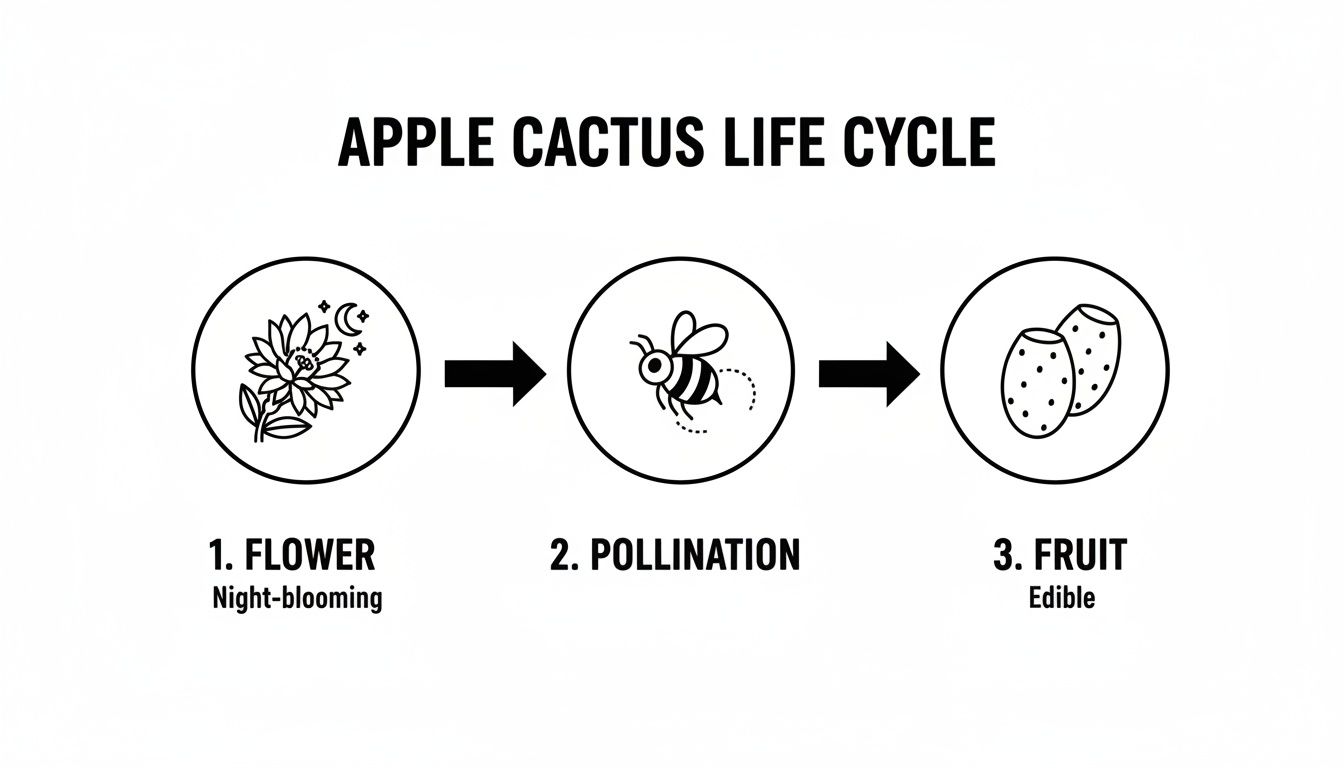
As you can see, pollinators are key to getting viable seeds. Once you have them, just sow the seeds in a shallow tray filled with cactus soil, keep it lightly moist (not wet!), and find a warm spot with bright, indirect light until they start to sprout.
Troubleshooting Common Cactus Problems
Even a cactus as tough as the Peruvian Apple can hit a rough patch now and then. But don't panic—most problems are just your plant's way of asking for a little tweak in its care. When you learn to read the signs, you can catch issues early before they become real trouble.
Think of it like being a plant detective. A yellow patch, a soft base, or a skinny, leaning arm are all clues. Once you learn what your cactus is trying to tell you, you'll be able to confidently solve just about anything that comes its way, keeping your Cereus repandus happy and healthy for years.
Spotting and Treating Common Pests
While the Apple Cactus isn't a pest magnet, it can attract sap-suckers like mealybugs and scale, especially when it's already stressed. If you don't step in, these bugs will slowly weaken your plant, so it’s best to act as soon as you spot them.
Mealybugs are pretty obvious; they look like little bits of white cotton fluff, usually hiding in the crevices between the cactus ribs. Scale is a bit more sneaky, appearing as small, hard brown bumps that clamp onto the stems. The good news is, you don't need to reach for harsh chemicals.
- For a few pests: Grab a cotton swab, dip it in 70% isopropyl alcohol, and just touch it directly to each bug. The alcohol breaks down their waxy coating, and you can just wipe them off.
- For a bigger problem: Mix a 50/50 solution of isopropyl alcohol and water in a spray bottle. Add just one drop of mild dish soap (this helps the mixture stick), give it a good shake, and spray the whole plant down. Just be sure to keep it out of direct sunlight until the alcohol has completely evaporated to avoid any leaf burn.
The Number One Threat: Root Rot
If there’s one thing that can take down an otherwise healthy Apple Cactus, it’s root rot. This isn’t some mysterious disease—it’s almost always a direct result of overwatering. When the soil stays waterlogged, the roots can't get any oxygen and start to decay into a smelly, mushy mess.
The first signs you'll see above ground are subtle. The base might start to look a little yellow, or the stem might feel soft to the touch. If you suspect root rot, you have to move quickly.
Emergency Action Plan: Carefully slide the cactus out of its pot and take a look at the roots. Healthy roots are firm and whitish, but rotted ones will be brown, slimy, and might fall apart in your hands. Using a clean, sharp knife, you need to cut away every last bit of mushy root and soft stem tissue until you only see clean, healthy, green flesh.
After the surgery, let the cactus sit in a shady, dry place for a few days so the cuts can form a hard callus. Once it’s callused over, you can repot it in fresh, bone-dry cactus soil. Hold off on watering for at least another week to give it time to settle in.
Decoding Visual Cues from Your Cactus
Your Apple Cactus will show you what it needs—you just have to learn its language. Paying attention to these visual signals is the key to dialing in its care.
| Symptom | Potential Cause | How to Fix It |
|---|---|---|
| Yellow or Bleached Spots | Sunburn | The sun is too intense. Move it somewhere it gets plenty of bright morning light but is shielded from the harsh afternoon sun. |
| Stretching and Leaning | Etiolation (low light) | It’s literally reaching for more light. Slowly acclimate it to a sunnier spot where it can get at least six hours of direct sun each day. |
| Wrinkled or Shriveling Stems | Thirst | The plant is dehydrated and using up its water reserves. It’s time for a deep drink. Water thoroughly until it runs out the drainage holes. |
A Few Common Questions About the Apple Cactus
When you start growing a cactus this impressive, a few questions are bound to pop up. I get asked about these all the time, from its surprisingly quick growth to whether you can actually eat the fruit. Let's clear up some of the most common curiosities.
Think of this as your quick-start guide to understanding what makes the Apple Cactus so special.
How Fast Does an Apple Cactus Grow?
Of all the large columnar cacti, the Apple Cactus is one of the fastest growers you'll find. When it's happy—meaning plenty of direct sun and warmth—it can easily put on 1 foot (30 cm) of new growth in a single year.
This is great news if you're looking for a dramatic statement piece without waiting a decade for it to take shape, unlike a Saguaro. Just remember, if you bring it indoors or live in a cooler climate with a short growing season, you can expect its growth to slow down quite a bit.
Is the Apple Cactus Fruit Edible?
Yes, and it's delicious! The fruit from a Cereus repandus is a real treat. People often say it tastes like a mix between a dragon fruit and a kiwi, with a mildly sweet white pulp dotted with tiny, crunchy black seeds.
The best part? The fruit is completely spineless. You can just pluck it right off the cactus without worrying about getting pricked. You'll know it's ready to eat when the skin turns a rich violet-red or bright yellow and gives a little when you gently squeeze it.
Can I Grow an Apple Cactus Indoors?
Absolutely. While these cacti are happiest growing outdoors in warm climates (think USDA zones 9a-11), they make fantastic indoor plants. The non-negotiable for growing one inside is light, and lots of it.
Your best bet is to place it directly in a south-facing window where it can soak up as much direct sun as possible. You'll also want a heavy, sturdy pot to prevent it from toppling over as it gets taller. Keep in mind that an indoor Apple Cactus will grow much slower and rarely gets enough light to produce its famous flowers and fruit.
What Is a Monstrose Apple Cactus?
Ah, the Monstrose! This is a really cool one. The 'Monstrose' Apple Cactus (Cereus repandus 'Monstrosus') is a natural mutation that grows in a wild, sculptural way. Instead of a smooth, straight column, its stems are lumpy, bumpy, and twist into all sorts of unpredictable shapes.
This quirky growth habit makes each plant a totally unique living sculpture. It's also much slower-growing and stays more compact than the standard form, which makes it an amazing choice for pots and smaller spaces where you can really admire its strange beauty up close.
Ready to bring one of these magnificent, fast-growing cacti into your life? We have a fantastic selection of Apple Cactus varieties at The Cactus Outlet. Come find the perfect living sculpture for your home or garden today! Check us out at https://www.cactusoutlet.com.