
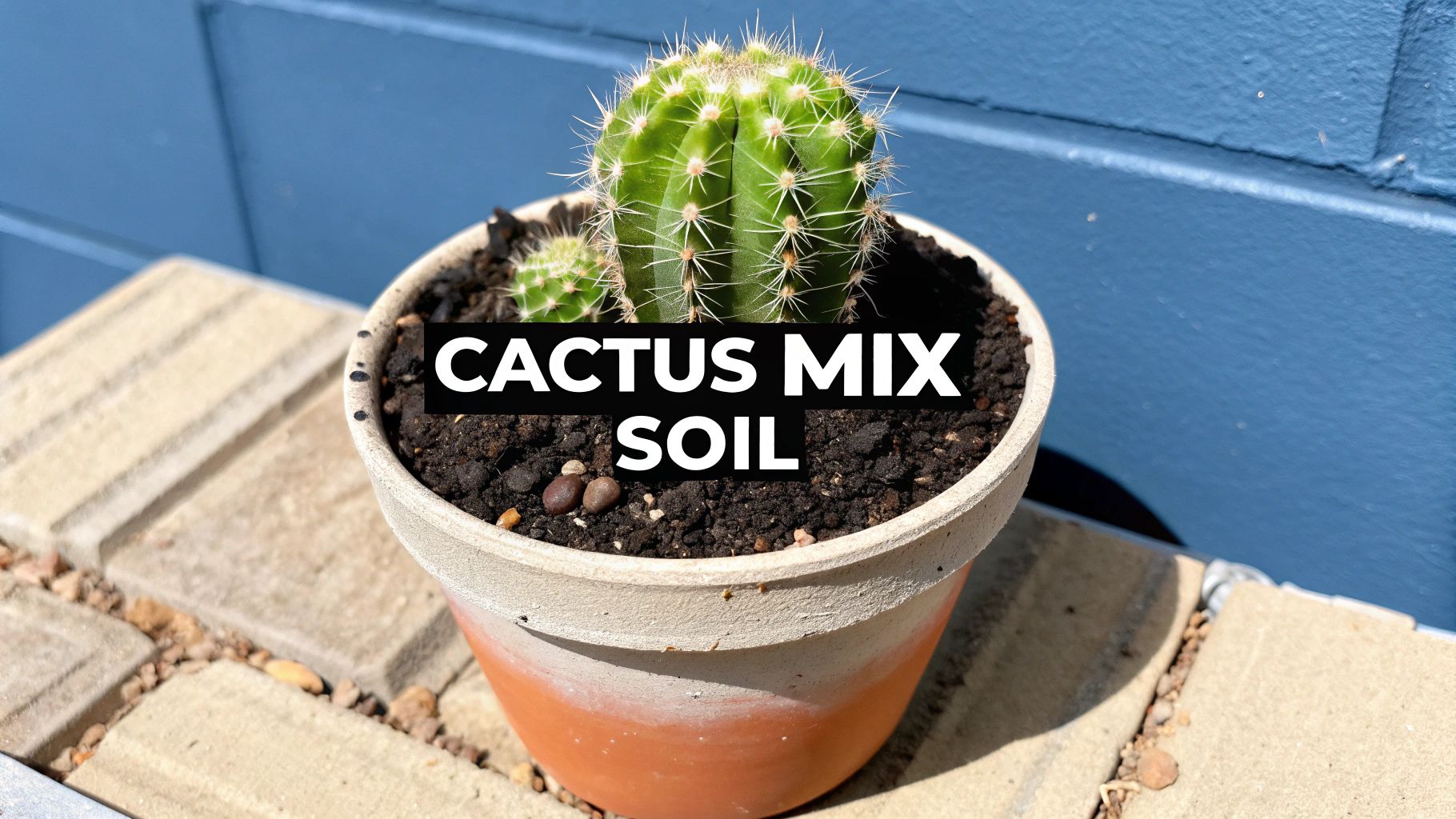

So, what exactly is cactus soil mix? Think of it as a custom-designed growing environment that recreates the dry, gritty, and airy conditions cacti love in their native deserts. It’s a special blend that focuses on inorganic materials like pumice or perlite, with just a pinch of organic matter, to prevent waterlogging and keep roots healthy.
Why Your Cactus Needs More Than Just Dirt
Let's bust a common myth right now. Grabbing a handful of soil from your garden or using a standard bag of all-purpose potting mix is one of the fastest ways to kill a cactus.
Imagine you're building a house on a swamp. It doesn't matter how well-built the house is; the foundation will inevitably sink, rot, and fail. For a cactus, regular potting soil is that swampy ground.
Standard mixes are made to hold onto moisture for thirsty plants like ferns or tropical flowers. For a cactus, that constant dampness is a death sentence. It literally suffocates the roots, cutting off their oxygen supply and creating the perfect breeding ground for root rot—the undisputed number one killer of potted cacti. This is precisely why a specialized cactus mix soil isn't just a suggestion; it's a must.
The Foundation for Healthy Roots
The right cactus soil is like an engineered foundation, carefully formulated to give the plant stability without holding onto excess water. Its main job isn't even to provide nutrients; it's to create a physical structure that anchors the plant while letting water drain away almost instantly. This structure is built on two simple but crucial principles:
- Rapid Drainage: Water has to flow through the soil quickly, so the roots are never left sitting in a puddle. Without this, your cactus is extremely vulnerable to fungal diseases. We go into more detail on this in our post explaining why drainage is essential for succulents.
- Excellent Aeration: All those gritty components create tiny air pockets throughout the mix. These pockets are lifelines, delivering the oxygen roots need to breathe and function properly. It's just as important as water for the plant's overall health.
A cactus planted in the wrong soil is like a person trying to breathe underwater. The environment is simply incompatible with its basic survival needs, and failure is almost guaranteed without a change.
A Growing Market for Specialized Care
This need for specific soil isn't just a quirky detail for enthusiasts; it reflects a major trend in gardening. As more of us bring these incredible plants into our homes, the demand for the right care products has exploded.
The market for succulents and cacti was valued at around USD 12.2 billion and is expected to climb to USD 18.2 billion by 2034. This growth shows that gardeners everywhere are realizing that starting with the right soil is fundamental to success.
Ultimately, getting the soil right is the single most important thing you can do for your cactus. It lays the groundwork for everything else, from your watering routine to the plant's long-term health, and is the true secret to helping a desert plant thrive.
What Goes Into the Perfect Cactus Soil Mix?
Think of mixing the perfect cactus soil like being a master chef. Each ingredient has a specific purpose, and getting the proportions right is everything. We're not trying to create a rich, loamy garden bed here. Instead, the goal is to replicate the sparse, gritty, and fast-draining environment where cacti thrive in their natural habitat.
The recipe boils down to two key ingredient groups that need to work in perfect harmony: the inorganic "framework" and the organic "binder." Getting the balance right between these two is the secret to a happy, healthy cactus.
The Inorganic Framework: Your Key to Drainage and Airflow
The real backbone of any good cactus mix is its inorganic material. This stuff makes up the vast majority of the blend, typically anywhere from 60% to 80% of the total volume. Think of these ingredients as the structural support—the skeleton of your soil.
Their main job is to create space. They form countless tiny air pockets and channels that let water drain away almost instantly and allow oxygen to reach the roots. Because these materials don't break down, they provide long-term stability and prevent the mix from compacting into a solid brick over time. A solid understanding of basic soil stabilization techniques can offer great insight into why this structural integrity is so important for container plants.
Some of the most common inorganic all-stars are:
- Pumice: A feather-light volcanic rock that looks like a sponge. It’s fantastic for creating air pockets and holds just a tiny bit of moisture to release later.
- Perlite: Those little white styrofoam-like balls you see in potting mixes. It's incredibly light and great for aeration, but it does have a tendency to float to the top when you water.
- Coarse Sand: This is a big one—and you have to get the right kind. Fine play sand will turn to concrete in your pot. You need horticultural sand with large, chunky grains that create space rather than filling it.
- Grit or Gravel: Small bits of crushed rock, like poultry grit or decomposed granite, add weight to the pot for stability and create large channels for water to escape.
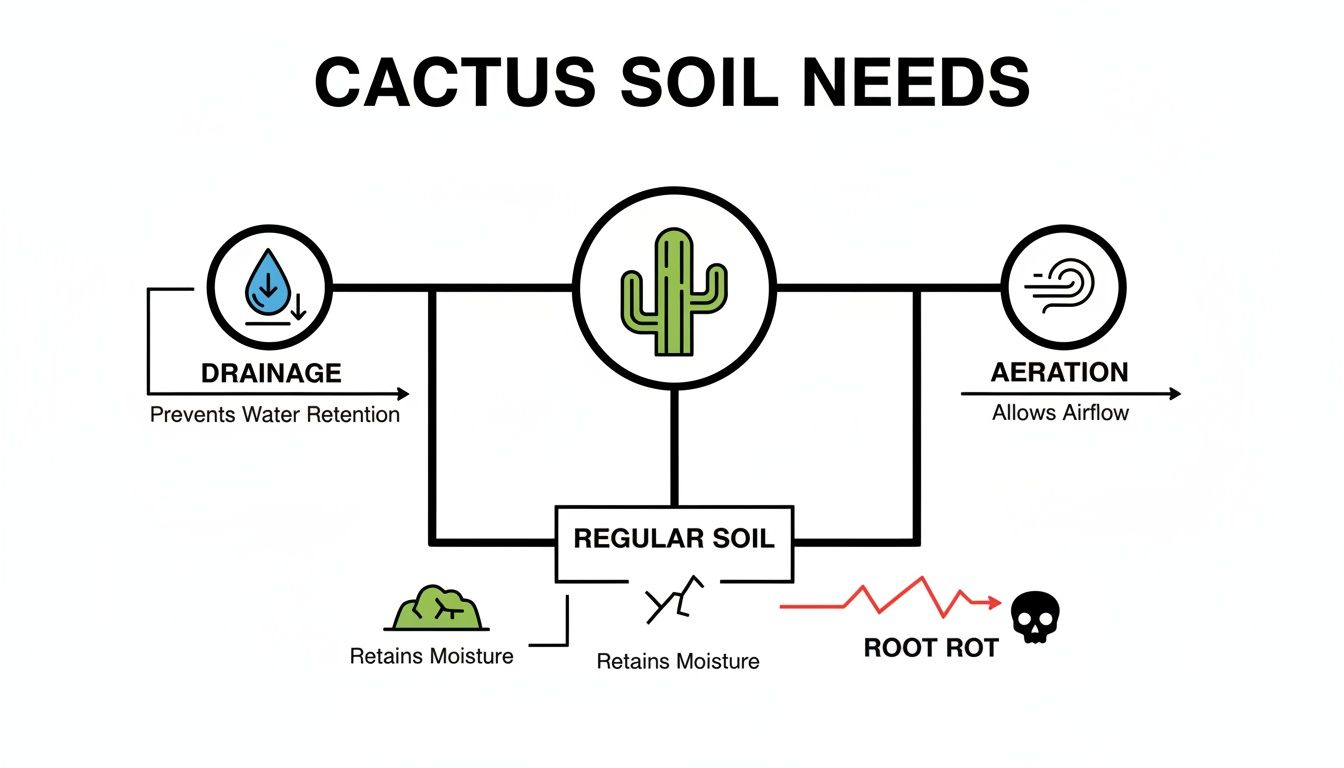
As you can see, a dense, standard soil just holds too much water, leading to the dreaded root rot. A properly structured mix, however, gives the roots exactly what they need: quick drainage and plenty of air.
The Organic Binder: For Structure and a Touch of Nutrition
While the inorganic bits provide the structure, a small amount of organic matter is the glue that holds it all together. It gives the roots something to grab onto and provides a very slow, subtle release of nutrients.
The secret is using just enough organic material to support the plant without turning the soil into a waterlogged sponge. It’s a delicate balance where less is almost always more.
You'll want to choose organic components that are slow to decompose and don't get mushy when wet.
- Coco Coir: Made from coconut husks, this is a great alternative to peat moss. It resists compaction and re-wets easily if it dries out completely.
- Compost or Worm Castings: A small handful of well-sifted, mature compost can add a gentle dose of micronutrients without overwhelming the plant. For more on this, check out our guide on the best fertilizer for succulents.
- Fine Bark or Wood Chips: Often used in orchid mixes, these little pieces of bark add structure and break down very slowly, contributing to a healthy soil environment over the long haul.
To make this clearer, here’s a simple breakdown of the most common ingredients and what they do for your cactus.
Core Components of Cactus Soil and Their Functions
| Component | Primary Function | Analogy |
|---|---|---|
| Pumice | Aeration and light moisture retention | The "sponge" that provides air pockets. |
| Perlite | Prevents compaction, adds loft | The "popcorn" that keeps the mix light. |
| Coarse Sand | Creates drainage channels | The "gravel" that lets water rush through. |
| Grit/Gravel | Adds weight and large air pockets | The "boulders" that anchor the soil. |
| Coco Coir | Binds mix, retains minimal moisture | The "glue" that holds everything together. |
| Compost | Provides a hint of slow-release nutrients | The "seasoning" for a touch of flavor. |
By combining the right inorganic framework with just a touch of organic binder, you create the perfect home for your cactus. You get a mix that drains in a flash, lets the roots breathe, and prevents the moisture-related problems that are the number one killer of these incredible plants.
Store-Bought vs. DIY Cactus Mix: What's the Right Call for You?
So, you're ready to give your cactus the perfect soil. This is where you hit a fork in the road: do you grab a pre-made bag of cactus mix soil from the store, or do you roll up your sleeves and blend your own? Honestly, there’s no single right answer here. The best choice really boils down to your collection size, how much time you have, and your personal approach to plant care.
If you're just starting out or only have a few cacti to look after, the sheer convenience of a store-bought mix is hard to beat. It saves you from having to track down individual ingredients like pumice, coarse sand, and pine bark. It's a simple, get-it-done solution.
The Appeal of Commercial Mixes
The biggest selling point for commercial cactus soil is its simplicity. You can walk into a store, grab a bag, and have your cactus repotted in no time. This takes all the guesswork out of the equation, which is a huge relief when you're new to the world of cacti. The market for these specialized soils has exploded, which is no surprise given the growing interest in home gardening.
This trend is part of a much bigger picture. The global potting soil market, currently valued at around USD 2.5 billion, is expected to climb to USD 3.6 billion by 2033. You can find more insights on this growing market on imarcgroup.com. Plant-specific blends like cactus soil are a huge part of this growth as more and more people bring greenery into their homes.
But convenience can have its downsides. Many commercial mixes, especially the cheaper ones, tend to be heavy on organic matter like peat moss. That's fine for your average houseplant, but for a cactus, it can hold too much moisture. Over time, this can lead to compacted soil and the dreaded root rot. A good quality mix should look and feel gritty right out of the bag.
Taking Control With a DIY Blend
On the flip side, you have the do-it-yourself approach. Mixing your own cactus soil gives you absolute control over every single ingredient and its proportions. For serious collectors or anyone growing picky or rare species, this is a total game-changer.
Here’s why so many dedicated growers go the DIY route:
- Customization: You can fine-tune your recipe for each plant. An arid desert cactus can get an extra-gritty, fast-draining blend, while a tropical jungle cactus might appreciate a little more organic material to hold a bit of moisture.
- Cost-Effectiveness: If you have a lot of plants, buying ingredients in bulk is way cheaper than buying dozens of small bags of pre-made soil.
- Quality Assurance: You know exactly what's going into your mix. There are no mystery fillers or low-quality components. You get to choose top-tier ingredients to give your plants the best possible foundation.
Of course, the trade-off is the upfront effort. Finding all the components can sometimes feel like a bit of a scavenger hunt, and you’ll need some space to store your supplies and do the mixing.
The Best of Both Worlds: A Simple Upgrade You don't have to go all-or-nothing. A fantastic middle-ground approach is to simply beef up a store-bought cactus mix. This little hack gives you the convenience of a pre-made base with the performance of a custom blend.
How to Easily Improve a Store-Bought Mix
This hybrid method is incredibly practical and effective. Just start with a decent bag of commercial cactus mix. Then, all you have to do is improve its drainage and aeration by mixing in more gritty, inorganic material.
A great place to start is a ratio of 2 parts commercial cactus soil to 1 part pumice or perlite.
This one small step makes a huge difference. It immediately improves the soil’s structure, helping it drain much faster and creating the air pockets that cactus roots need to thrive. It directly tackles the most common weakness of pre-made mixes—holding too much water—without forcing you to build a recipe from scratch. It’s the perfect compromise for just about any cactus grower.
Simple DIY Cactus Soil Recipes for Any Collection
Alright, now that you know what goes into a great cactus mix, it's time to get your hands dirty. Blending your own soil is one of the most satisfying parts of cactus care. You get total control over your plant's environment, and frankly, it's easier than you think. You don't need a science degree—just a few key ingredients and a good recipe.
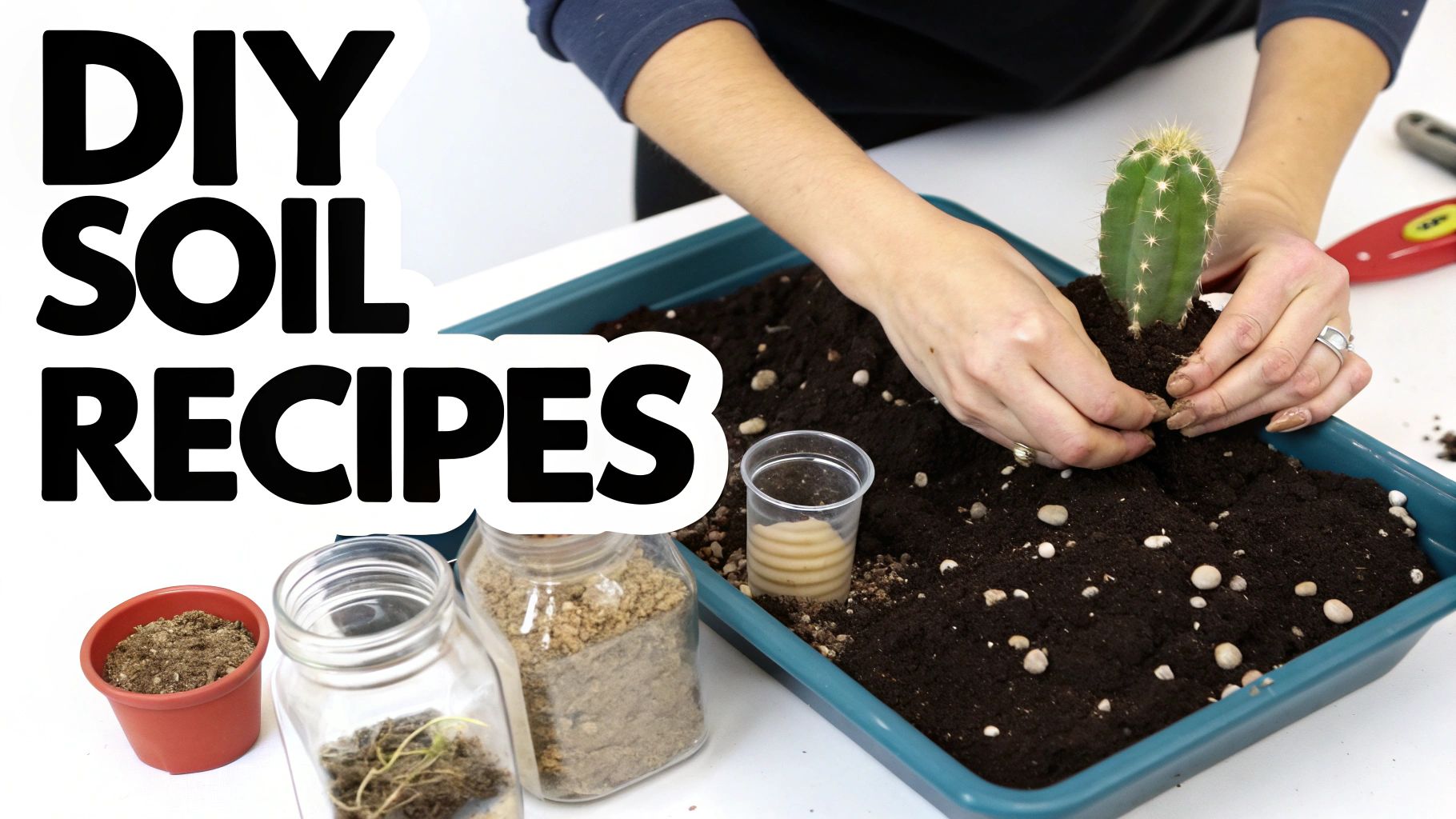
We'll keep things simple by using a "parts" system. A "part" can be whatever you want it to be—a cup, a garden scoop, even a small bucket. The key is to use the same measuring tool for every ingredient in a recipe to keep the ratios right.
The All-Purpose Cactus Recipe
This is my go-to blend, and it's perfect for the vast majority of cacti and succulents you'll encounter. It hits that sweet spot between excellent drainage and just enough organic material to give the roots something to hold onto. Think of it as your reliable, jack-of-all-trades cactus mix soil.
Ingredients:
- 3 parts pumice or perlite: This is the foundation of your drainage, creating air pockets and letting water flow right through.
- 3 parts coarse horticultural sand: This fills in the smaller gaps, preventing compaction and keeping the mix loose.
- 2 parts standard potting soil (peat-free is best): This is the binder that holds everything together and offers a touch of nutrients.
- 1 part coco coir or fine orchid bark: This adds some wonderful, long-lasting structure that won't break down quickly like peat moss does.
Just dump everything into a big bucket or onto a tarp and mix it thoroughly. You're looking for a consistent, uniform blend. When you're done, it should feel light and gritty—more like gravel than typical garden soil.
The Gritty Desert Mix for Arid Species
If you're growing true desert specialists—think Ariocarpus, Astrophytum, or other finicky species from bone-dry climates—you need to step up your drainage game. These types are incredibly prone to rot and demand a mix that's almost entirely mineral. This recipe is lean, mean, and built for survival.
Ingredients:
- 4 parts pumice: Pumice is the MVP here, providing maximum aeration without being so light that your pots tip over.
- 2 parts coarse sand or poultry grit: This adds some heft and helps create larger channels for water to escape immediately.
- 1 part lava rock or crushed granite: These bigger chunks guarantee the mix will never compact, keeping it airy for years.
- 1 part sifted potting soil or worm castings: You only need a tiny amount of organic matter, just enough for the roots to anchor themselves.
This gritty blend is engineered to be watered heavily and then dry out completely in just a day or two. It’s the closest you can get to mimicking the harsh, flash-flood cycles of a true desert.
For this one, I like to mix all the mineral components first to get an even distribution of particle sizes. Then, I'll sprinkle in the small amount of organic material at the very end.
The Jungle Cactus Mix for Tropical Epiphytes
It's easy to forget that not all cacti are desert plants. Epiphytic species like the Christmas Cactus (Schlumbergera), Rhipsalis, and Orchid Cacti actually grow on trees in humid, tropical forests. Their soil needs are the polar opposite of a desert cactus. They need more moisture and organic matter but still can't tolerate sitting in soggy soil.
These plants are fascinating—they are true cacti but have adapted to live more like orchids or bromeliads, growing in the organic debris that collects in the crooks of tree branches.
Here’s how to create their ideal home:
- Start with 2 parts coco coir or fine orchid bark. This creates a chunky, airy base that’s very similar to the decomposing bark and leaves they’d find in nature.
- Add 1 part pumice or perlite. Even moisture-loving plants need air around their roots. Great aeration is still non-negotiable.
- Mix in 1 part standard potting soil. This gives the mix a bit more substance and provides the nutrients they need to grow and produce those beautiful flowers.
You'll notice this blend feels much richer and spongier, but it should still be loose and light in your hands. It’s designed to hold a nice level of humidity around the roots without ever becoming a waterlogged mess—a common pitfall for these popular holiday plants.
Mastering Repotting and Watering with Your New Soil
Getting the perfect cactus mix soil is a huge first step, but it’s only half the battle. Think of it like putting a race car engine in your daily driver; you won't get far without the right fuel and maintenance know-how. To really see your cactus thrive, you need to match that excellent soil with smart repotting and watering habits.
When your soil, pot, and care routine are all in sync, you create the perfect environment for your plant. It’s this harmony that prevents the most common problems and lets your cactus truly flourish from the roots up.
Repotting Your Cactus with Confidence
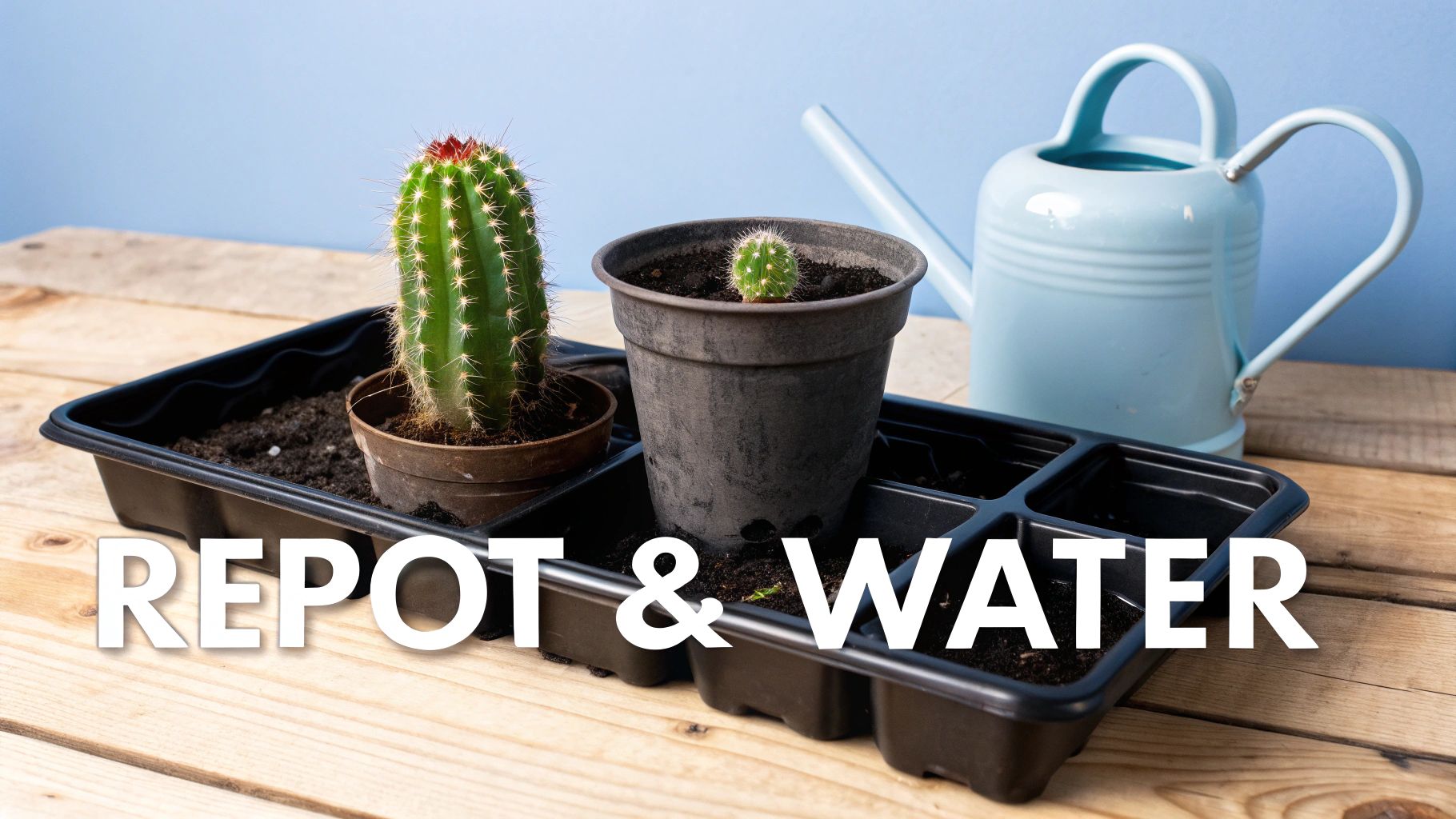
I get it—repotting can seem a little scary, especially with a spiny plant. But it's essential for long-term health, particularly when you're upgrading to a much better soil mix. The idea is simple: give the roots fresh, airy soil to explore without stressing the plant out.
For a complete walkthrough, our guide on how to repot cacti breaks down every single step.
When you're ready to repot, remember the container is just as important as the soil inside it. The golden rule is drainage. Your pot must have at least one drainage hole. This is non-negotiable. Terracotta pots are a fantastic choice because the clay is porous and breathes, helping the soil dry out more evenly and quickly.
As for size, don't go too big. Pick a new pot that’s only about 1-2 inches wider than the old one. A pot that's too spacious holds way too much soil, which stays wet for too long and completely negates the benefits of your fast-draining mix.
The Art of Watering in Gritty Soil
Watering a cactus planted in a gritty mix is a whole different ball game than watering a leafy houseplant. You have to forget everything you know about giving little "sips" of water every few days. That method only dampens the topsoil, encouraging weak, shallow roots that never reach their full potential.
Instead, the key is the "soak and dry" method. This technique is the perfect partner for a fast-draining cactus mix because it mimics the rare, heavy downpours these plants get in the desert.
The "soak and dry" method is exactly what it sounds like: you completely drench the soil until water runs freely out the bottom, then you let it dry out entirely before even thinking about watering again. This gives all the roots a deep drink while avoiding the constant sogginess that causes rot.
So, how do you know when it’s time? Forget the calendar. The only way to know for sure is to check the soil. Stick a wooden chopstick or even your finger a few inches deep. If it comes out with any hint of moisture or cool soil clinging to it, wait longer. It should feel bone-dry.
A few things will affect how fast your soil dries out:
- Season: Cacti are basically dormant in the winter and need very little water.
- Light: A plant basking in a sunny window will get thirsty much faster than one in a shadier spot.
- Pot Material: Terracotta dries out way faster than a plastic or glazed ceramic pot.
- Humidity: Cacti in a dry, air-conditioned room will need water more often than those in a humid bathroom.
By mastering this watering style, you’re unlocking the full potential of your cactus soil. You’re not just giving your plant water; you're recreating the natural cycles that have helped these amazing plants survive for millennia. That holistic approach is the real secret to success.
Choosing the Right Pre-Made Cactus Mix
For many of us, grabbing a ready-to-use cactus mix soil is just plain easier. But when you walk into a garden center, the sheer number of options can feel a bit overwhelming. To make sure you’re taking home a bag that will actually help your plants, you have to learn how to read the label like a pro.
The real secret to a great commercial mix is all in the feel and the ingredients list. A good one will feel gritty and light in your hands, not heavy and spongy like the potting soil you’d use for a fern.
What to Look for on the Label
Scan the bag for ingredients like pumice, perlite, lava rock, or coarse sand. If those are listed near the top, you're on the right track. These are the workhorses that create the drainage and airflow your cactus craves.
Pay close attention to the ratios, if the bag lists them. A mix that’s at least 50-60% pumice or perlite is a solid choice for most common cacti. If the first ingredient you see is peat moss or something vague like "forest products," proceed with caution. Those blends tend to hold way too much water and will likely need some extra grit mixed in to be truly cactus-friendly.
You might also notice more brands are swapping peat moss for sustainable options like coconut coir. This is part of a larger shift toward eco-friendly gardening, which makes sense as more people grow drought-tolerant plants. You can actually read more about these market shifts and see how the industry is adapting.
Think of it this way: you’re not just buying dirt. You’re buying a carefully engineered environment designed to keep cactus roots happy, dry, and healthy.
Ultimately, picking the right pre-made mix is all about prioritizing drainage. A quick check of the ingredients and a feel of the bag’s contents will tell you everything you need to know, saving you time and giving your cactus the perfect foundation to thrive.
Common Questions About Cactus Mix Soil
Even after you've mixed the perfect soil, a few questions always seem to pop up. Let's tackle some of the most common ones I hear from fellow cactus growers to help you avoid any rookie mistakes.
Can I Use Regular Potting Soil for My Cactus?
In a word, no. Using straight-from-the-bag potting soil for a cactus is one of the fastest ways to kill it with kindness. That stuff is designed to act like a sponge, holding onto water for thirsty tropicals—which is the exact opposite of what a desert plant needs.
If you're in a real bind and it’s all you have, you must cut it with something gritty. A good starting point is a 1-to-1 ratio of potting soil to pumice or perlite. This is the absolute minimum to give your cactus a fighting chance by introducing the airflow and drainage its roots crave.
How Often Should I Change My Cactus Soil?
Don't worry, this isn't an annual chore. Most cacti grow slowly and are perfectly happy in the same pot for years. A good rule of thumb is to repot with fresh soil every 2 to 4 years.
Look for these signs that it's time for a change:
- The cactus looks like it's trying to escape its pot (it's root-bound).
- The soil has become hard and compacted, pulling away from the sides of the pot.
- Water pools on top or takes forever to drain out the bottom.
Fresh soil isn't just about a bigger home; it's about restoring that light, airy structure that keeps roots healthy.
Is Sand from a Playground or Beach Okay to Use?
This is a huge, and surprisingly common, mistake. Please don't do it! Sand from a beach, a kid's sandbox, or your backyard is extremely fine. When it gets wet, it packs down as hard as concrete.
Fine, play-style sand is the enemy of good drainage. It clogs up all the precious air pockets in your soil mix, choking the roots and locking in moisture. It creates a dense, soggy mess that will quickly lead to rot.
You always want to use coarse horticultural sand or builder's sand. The particles are larger and more angular, creating tiny gaps that allow water to flow freely and roots to breathe. It’s a small detail that makes a world of difference for your cactus's long-term health.
Ready to give your cactus the perfect foundation without the guesswork? The Cactus Outlet offers a premium selection of healthy, established cacti that are ready for their new home. Explore our collection and find the perfect desert gem for your space.