
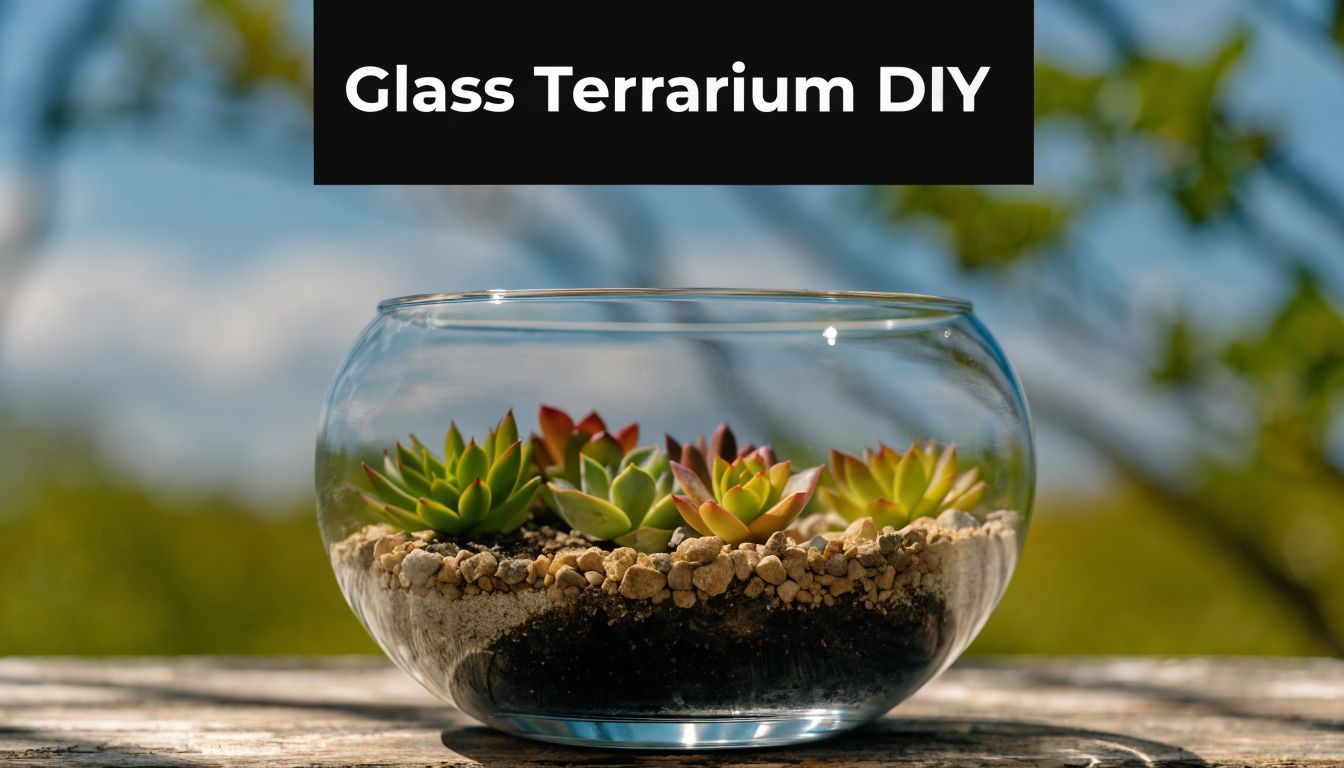

You've probably seen one already. A clean glass terrarium bowl on a shelf, a few sculptural succulents inside, a layer of pale gravel on top, and just enough sand and stone to make it look like a tiny desert scene. It looks simple. Then you try to build one, and a few weeks later the leaves soften, the base stays damp, and the whole thing starts looking less like living art and more like a slow-motion rescue mission.
That gap between beautiful and sustainable is where most succulent terrarium advice falls apart. A glass bowl can work, but it only works when you respect what the container is doing to water, airflow, and heat. Cacti and succulents aren't hard to grow. They're hard to grow in the wrong setup.
Creating Your Miniature Desert Oasis
The appeal of a glass terrarium bowl is easy to understand. It gives you the clarity of glass, the drama of stone and soil layers, and the chance to build something that feels designed rather than merely potted. For many people, that first attraction comes from a store display or a photo online that makes the whole thing look effortless.
It isn't effortless. It's controlled.
That's what makes terrariums so interesting. The modern glass terrarium bowl traces back to the Wardian case, an 1829 invention by Dr. Nathaniel Bagshaw Ward that helped prove a sealed glass container could function as a self-contained plant ecosystem, as noted in this history of terrariums and Wardian cases. That history matters because a bowl isn't just decor. It changes humidity, light behavior, evaporation, and planting access.
A terrarium succeeds when the container matches the plant, not when the container simply matches the room.
That's the part many stylish tutorials skip. They focus on colors, pebbles, and arrangement. They don't spend enough time on why so many succulent bowls decline within months. In practice, most failures come from a short list of avoidable mistakes: heavy soil, no real drainage zone, too much water, poor airflow, and placing the bowl where the glass traps more heat than the plants can handle.
A healthy miniature desert scene is possible. It just needs to be built like a plant system first and a centerpiece second.
Choosing the Right Bowl and Materials
The bowl itself decides a lot before you ever add a plant. Shape controls airflow. Opening size controls whether you can plant without crushing roots. Depth influences how much layering you can build before the planting area becomes too shallow.

Pick a bowl that helps you plant well
A bowl with a wide mouth is easier to work with and easier to maintain. Verified product examples show how much access can vary, from a slant-cut pod bowl 6.25 inches high with a 6.75 inch opening to a lidded bowl with an 8 cm mouth opening, detailed in these glass terrarium bowl size examples. In real use, a narrower opening makes layering messier and plant placement more awkward.
Slant-cut bowls deserve extra thought. They look sharp, but they aren't neutral containers. Bowl shape affects plant health, and slant-cut designs can encourage water to pool toward one side while giving roots less even depth. That makes them better for shallow-rooted display plants than for larger cacti that need more stability and more balanced moisture, as described on this slanted glass terrarium bowl product guide.
Gather materials that solve real problems
Don't use regular potting soil. It holds too much moisture for this kind of setup, especially in a bowl without a drainage hole. Use a cactus and succulent mix that dries faster and keeps air around the roots.
Your materials list should look like this:
- Glass bowl with workable access: Wide enough for your hand, tweezers, or chopsticks.
- Drainage material: Gravel or leca for the base.
- Barrier layer: A cut piece of mesh or window screen.
- Activated charcoal: Most useful when you want a more contained environment.
- Cactus or succulent soil mix: If you're unsure what makes that different, this guide on whether succulents need drainage gives useful context for why fast drying matters.
- Top dressing: Fine gravel, sand, or small stone for the finished surface.
- Tools: Spoon, funnel, chopsticks, long tweezers, and a soft brush for cleanup.
Selection rule: If a bowl is hard to plant into, it'll also be hard to correct later.
A beautiful vessel that fights you at every step usually leads to root damage, crooked planting, or accidental overwatering while trying to settle the soil.
Mastering the Art of Terrarium Layering
The layered base is where a glass terrarium bowl either earns its keep or starts storing problems. This isn't decorative filler. It's the working foundation that separates excess moisture from the roots as much as possible in a container with no drain hole.

Build the layers in the right order
A proper terrarium for a closed or semi-closed system requires a strict sequence: a 1 to 2 inch drainage layer, a substrate barrier, activated charcoal, and then the soil layer sized to the plant's root ball, according to this terrarium layering tutorial.
Critical sequence
- Drainage layer
- Barrier layer
- Activated charcoal
- Soil layer
Each part has a job:
- Drainage layer: Use gravel or leca at the bottom. Leca is often easier to work with because it's lighter and porous.
- Barrier layer: Cut mesh or window screen slightly oversized so it sits flat and reaches the edges.
- Activated charcoal: Helps with odor and gas control in more enclosed builds.
- Soil layer: Add only what the roots need. Too much soil means too much moisture held in reserve.
The layer people skip, and regret
Most beginners understand gravel. Fewer understand the barrier.
Without that separator, the soil fines migrate downward over time. The clean distinction between root zone and drainage zone starts to collapse, and the bowl becomes a denser, muddier mass than it appeared on build day. That's one reason a new arrangement can look tidy for weeks and then decline even though you haven't changed anything obvious.
For succulents and cacti, the soil itself matters as much as the order of layers. A heavy mix defeats the purpose of careful layering. If you're mixing or choosing substrate, this guide to cactus and succulent soil mix is a practical place to compare what drains fast enough for desert plants.
How to layer without making a mess
Planting into glass magnifies every mistake because you can see all of it. A few habits keep the bowl cleaner and the root zone more stable:
- Pour the drainage material slowly: A scoop or folded paper funnel helps keep the glass clear.
- Flatten each layer gently: Don't compact it hard. You want separation, not compression.
- Trim the barrier to fit: Too small and soil slips around the edges. Too large and it buckles upward.
- Keep the soil shallow: The roots should sit comfortably, but the bowl shouldn't become mostly soil.
The best layered bowls look intentional because the build underneath is intentional.
Selecting and Planting Your Cacti and Succulents
A bowl can look finished in 20 minutes and still fail by the end of the season. The usual reason is not bad luck. It is a poor plant match for a container that holds heat, limits airflow, and offers no drainage hole.

Choose plants that can tolerate those conditions without needing constant correction. In open glass bowls, I get the most reliable results from slow growers with compact roots and leaves that do not collapse after one heavy watering. Haworthia and Gasteria are usually safer than small cacti that need stronger sun and faster drying than a bowl can provide indoors.
Succulent Selection Guide for Glass Bowl Terrariums
| Succulent Type | Light Needs | Growth Habit | Terrarium Suitability |
|---|---|---|---|
| Haworthia | Bright light, avoid harsh prolonged direct sun in glass | Compact, slow-growing | Very good for open bowls |
| Gasteria | Bright indirect to bright light | Thick leaves, tidy rosette or fan form | Very good for open bowls |
| Small Echeveria | Bright light | Rosette, can stretch if underlit | Good if bowl gets strong light without overheating |
| Small Aloe | Bright light | Upright, eventually wider and heavier | Fair in larger open bowls |
| Zebra-type Haworthia | Bright light | Compact clustering | Very good for shallow compositions |
| Small cactus offsets | Bright light with strong airflow | Slow but often less forgiving of trapped moisture | Better in very open, dry setups |
One rule saves a lot of trouble. If a plant already struggles with damp soil in a regular pot, it is a poor candidate for a glass bowl.
Crowding is the next mistake. Plants packed tightly may look lush at first, but they block airflow at the base, hold moisture between leaves, and leave no room for growth. A bowl with two or three well-spaced plants usually stays healthier than one stuffed edge to edge. If you want layout inspiration before you place anything, browse these succulent terrarium design ideas for open bowls.
Plant with a high crown and open spacing
Set the largest plant first, then work outward with lower growers. Keep enough bare surface visible to make watering easier and to let the composition breathe. Leaves pressed against the glass often stay damp longer and collect dust, which hurts both appearance and plant health.
Handle the roots with restraint. Remove each plant from its nursery pot, brush away only the loose excess soil, and loosen tight circling roots with your fingers. Do not rip the root ball apart unless it is severely compacted. Succulents recover faster when they are disturbed less.
Use tools that keep the base clean
A spoon is fine for adding mix, but precise planting is easier with long tweezers, chopsticks, and a soft brush. Those tools help place small plants without snapping leaves or smearing soil across the inside of the bowl.
Make a shallow depression for each root ball and set the plant so the crown sits slightly above the surrounding soil line. Then tuck mix around the roots with a chopstick instead of pushing the plant down by force. Burying the base too low is one of the fastest ways to create hidden rot in a glass container.
The Cactus Outlet is one source growers use for indoor container plants. Whatever source you choose, buy plants that fit the bowl now. A terrarium is easier to keep healthy when the scale is right from the start.
Designing Your Personal Desert Scene
A bowl can be planted correctly and still look flat, crowded, or temporary. Good design fixes that, but in a succulent terrarium, looks cannot come at the expense of airflow, exposed soil surface, and room around the plants to dry between waterings.
The strongest desert-style bowls use restraint. One main plant draws the eye, a second form supports it, and the rest of the space stays quiet. That open ground is not empty filler. It helps the composition read clearly, keeps the glass from feeling cluttered, and reduces the damp, packed-in look that often leads to trouble later.
Create depth with contrast and spacing
Depth comes from contrast you can see from across the room and from practical spacing you will appreciate when the bowl needs care.
- Height: Place one upright or slightly taller specimen off-center, then support it with lower rosettes or trailing forms kept well back from the rim.
- Texture: Pair smooth foliage with rough mineral surfaces such as pumice, lava rock, or coarse gravel.
- Color: Use muted greens, blue-greens, and warm stone tones so the plants stay the focus instead of competing with loud toppings.
Top dressing does more than improve appearance. A thin layer of fine gravel keeps leaves from sitting on loose soil and gives the bowl a cleaner finish. Sand is trickier in a glass bowl. Too much can crust over the surface, slow drying, and trap moisture where cacti and succulents need the soil to breathe.
Use stone with intention
Rocks should look settled, not sprinkled on at the end. Press a larger stone slightly into the surface, angle it a bit, and group smaller pieces near it so they read as one formation. That usually looks more convincing than scattering matching pebbles evenly across the bowl.
For visual references, these succulent terrarium design ideas for open bowls can help you compare different arrangements while keeping a dry, desert character.
A good miniature scene leaves room for shadow, surface, and shape. Bare areas give the planted sections more presence.
Skip decorations that hold attention longer than the plants do. Moss, shells, bright dyed gravel, and figurines can make the bowl feel busy fast, and some choices work against the dry conditions succulents prefer. Simple stone, clean lines, and visible negative space age better and are easier to maintain.
Ensuring Your Terrarium Thrives for Years
Long-term success comes down to disciplined care. A glass terrarium bowl doesn't forgive casual watering, and it doesn't buffer environmental mistakes the way a standard clay pot can.

Water less than you think
This is the main rule. In a bowl with no drain hole, every drop stays in the system until the plants use it or it evaporates.
Water at the soil line, not over the whole display. A small squeeze bottle or narrow-spout bottle helps you place moisture exactly where it's needed. Then stop. The goal is to moisten the root area, not saturate every layer.
Watch the plants and soil, not a rigid calendar. Leaves that become soft, translucent, or mushy point to excess moisture. Wrinkling and thinning usually mean the plant has gone too dry for too long.
Light must be bright, not punishing
Succulents need good light, but glass changes the equation. A common mistake is placing a succulent terrarium in a very sunny window, where the enclosed glass can trap heat and quickly overheat or scorch the plants, as shown in this succulent terrarium care video.
That's why bright light near a window is often safer than intense direct sun through hot afternoon glass. If the bowl feels hot to the touch or the leaves start bleaching, reddening harshly, or collapsing on the sun-facing side, move it.
Fix problems early
Most trouble in a glass terrarium bowl can be corrected if you respond quickly.
- Mushy lower leaves: Reduce watering immediately. Check whether soil is staying wet too long.
- Stretching or leaning: The bowl needs better light. Rotate carefully if growth is one-sided.
- Scorched patches: Pull the bowl back from direct sun exposure.
- Crowding: Remove offsets or replace overgrown plants before airflow disappears.
- Pests like mealybugs: Isolate the bowl and treat the affected plant directly. Don't let pests hide in tight leaf joints.
Keep the bowl edited
A thriving arrangement still needs occasional intervention. Remove dried leaves, wipe the inside glass if mineral marks build up, and trim any plant that starts pressing too hard into its neighbors. A bowl that looked balanced at planting can become congested long before it looks large.
The healthiest long-term bowls are rarely the most crowded, the most colorful, or the most heavily accessorized. They're the ones where the builder understood the trade-offs from the start: limited drainage, reduced airflow, and amplified heat. Once you work with those constraints instead of against them, a glass terrarium bowl becomes far more than a pretty project.
If you're choosing plants for your own glass terrarium bowl, The Cactus Outlet carries cacti and succulents that can fit indoor container projects, along with care information that can help you match the plant to the setup rather than forcing a poor fit.