
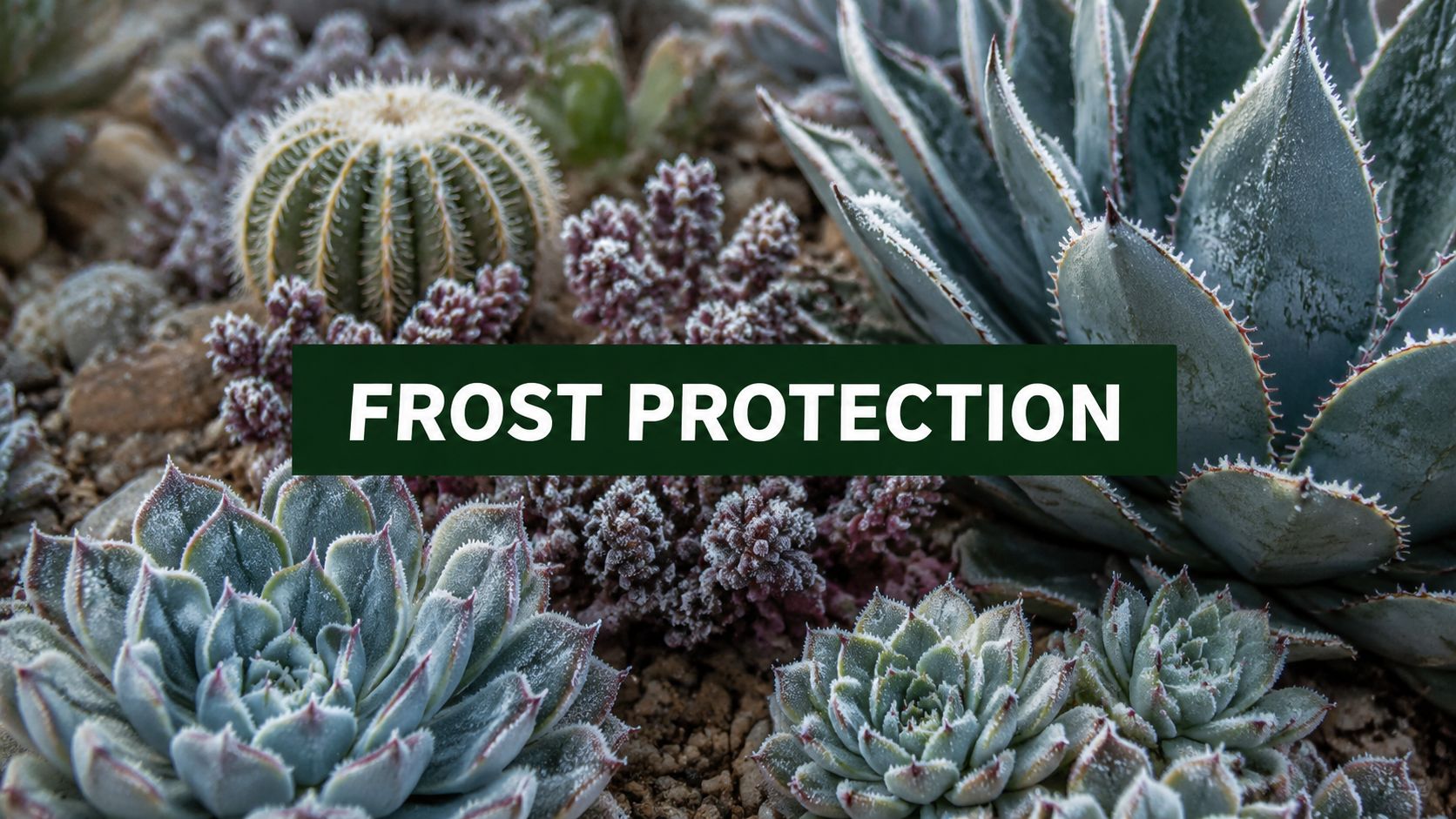

That first crisp autumn night can put any gardener on edge, but winter doesn't have to be a season of constant worry. Creating a frost-resilient garden is really about a two-pronged attack: choosing plants that are naturally tough enough to handle the cold (frost protection plants) and designing your landscape to create little pockets of warmth, or microclimates. With the right approach, winter becomes just another beautiful, dormant part of the year.
This guide will help you trade that cold-weather anxiety for a solid plan. We’ll get into the specifics of how to keep your garden safe, especially those water-filled cacti and succulents that are so easily damaged by a freeze. By the end, you'll know exactly how to build a landscape that doesn't just survive the chill, but actually thrives.

Smart Design and Plant Choice Are Your First Line of Defense
The best protection you can give your garden happens long before you hear the first frost advisory on the news. A truly resilient garden comes from smart, proactive choices. This is about much more than just tossing a blanket over a plant at the last minute; it's about building a fundamentally robust ecosystem from the ground up.
You can get there by focusing on a few key things:
- Strategic Plant Placement: Knowing how to plant succulents outdoors the right way can make a world of difference. Placing them near heat-retaining walls or sheltered spots vastly improves their chances.
- Creating Microclimates: You can use existing structures like walls and boulders—or even other, larger plants—to create pockets of warmer, still air that buffer against the cold.
- Choosing Cold-Hardy Species: The easiest win is to start with plants that are already genetically built to handle your area's winter lows.
For the ultimate climate control, a more permanent structure might be the answer. If you're ready for that kind of project, learning about step-by-step greenhouse building can give you complete command over your garden's environment, no matter what winter throws at you.
The idea of actively protecting plants from the cold is hardly new. Farmers have been doing it for over 2,000 years, with ancient civilizations using small heaters to save valuable crops from a killer frost. Today's best practices are really just a modern take on that same basic principle: find a way to trap and hold onto heat.
Understanding How Frost Actually Harms Your Plants
To get the upper hand on frost in your garden, you have to know what you're up against. It’s easy to think the cold itself is the enemy, but the real damage happens on a microscopic level. The culprit isn't just the chilly air; it's the ice that forms inside the plant.
Picture the water flowing through your plant's leaves and stems. When the temperature plummets, that water freezes and forms sharp, jagged ice crystals. Think of them as millions of tiny daggers puncturing the plant’s delicate cell walls from the inside out.
Once those cells are ruptured, the plant can't move water or nutrients effectively. The internal structure collapses, which is why frost-damaged leaves often look dark, wilted, or water-soaked. They've essentially been shredded from within.
Light Frost Versus Hard Freeze
It’s also crucial to know that not all cold snaps are the same. Recognizing the difference between a light frost and a hard freeze will help you decide how—and when—to act.
A light frost is what we see when temperatures dip to around 32°F (0°C).
- This usually only nips the most tender parts of a plant, like new growth, flower buds, or the very tips of leaves.
- The damage is often just cosmetic, showing up as a bit of discoloration or "burn."
- Most established, healthy plants can shrug off a light frost without any lasting problems.
A hard freeze is the real danger. This occurs when the thermometer drops below 28°F (-2°C) and stays there for a few hours.
- At these temperatures, ice can form deep inside a plant's tissues, including its stems and sometimes even its roots.
- This causes widespread cell death, turning entire sections of the plant black and mushy.
- For plants with high water content, like succulents, a hard freeze can easily be fatal.
The real killer is the ice itself. When water inside a plant cell freezes, it expands by about 9%. This expansion exerts immense pressure, physically shredding the cell membranes and causing the plant to effectively bleed out internally.
This is why our protection strategies are all about trapping heat and, more importantly, preventing those destructive ice crystals from forming in the first place. When you throw a frost cloth over a plant or nestle it against a warm wall, you’re creating a shield against the cold air, but you're also fighting a battle against ice.
Choosing Naturally Cold-Hardy Cacti and Succulents
Your best line of defense against winter's bite isn't a frost cloth or a frantic last-minute scramble. It’s smart planning. The most resilient gardens are built by choosing plants that are already tough enough to handle the cold.
Many people think all cacti and succulents are delicate desert plants that will turn to mush at the first sign of frost. That's a myth I hear all the time. In reality, a surprising number of species come from high-altitude deserts where temperatures can swing wildly. These plants aren't just surviving the cold; they're genetically wired for it. They are the ultimate frost protection plants because their hardiness is built right in.
What Makes a Succulent Cold-Hardy?
So how do they do it? Certain cacti and succulents have some incredible biological tricks that work as a natural defense against freezing. Instead of needing a blanket, they have their own internal systems to stop deadly ice crystals from forming inside their cells.
These amazing adaptations include:
- Less Water, Less Risk: As fall approaches, many hardy succulents naturally dehydrate themselves a bit. With less water in their leaves and pads, their internal fluids become more concentrated and much less likely to freeze solid.
- Natural "Antifreeze": Some species produce sugars and other compounds that literally act like antifreeze, lowering the freezing point of the water still in their cells.
- Tougher Cell Walls: The very structure of their cells is more flexible and robust. This allows them to withstand some minor ice formation without rupturing, which is what typically kills a plant.
The infographic below really drives home why preventing that internal ice is so important.

As you can see, there’s a world of difference between a little surface damage and the complete cell collapse from a hard freeze. The right plant can handle it. The wrong one can’t.
Top Choices for Your Frost-Resilient Garden
When you pick plants that are actually suited for your climate zone, you’re setting your garden up for success from day one. This means less work, less worry, and a landscape that is both beautiful and fundamentally stronger.
By choosing a plant rated for your USDA Hardiness Zone or a colder one, you're essentially getting a guarantee of survival. A plant rated for Zone 5, for instance, has proven it can withstand winter temperatures down to -20°F.
To help you get started, here's a quick guide to some of the most reliable and popular frost-hardy succulents. Choosing the right one for your zone is the first step toward a thriving, year-round garden.
Comparing Frost-Hardy Succulents for Your Zone
| Plant Type | Popular Species | Minimum USDA Zone | Key Feature |
|---|---|---|---|
| Prickly Pear | Opuntia humifusa | Zone 4 (-30°F) | Incredibly tough and native to many cold U.S. climates. |
| Hens and Chicks | Sempervivum tectorum | Zone 3 (-40°F) | Forms dense, colorful mats that shrug off snow and ice. |
| Stonecrop | Sedum spurium | Zone 3 (-40°F) | Excellent groundcover that provides vibrant winter color. |
| Mountain Agave | Agave parryi | Zone 5 (-20°F) | A stunning, architectural choice that is surprisingly hardy. |
| Utah Agave | Agave utahensis | Zone 5 (-20°F) | Smaller, spiky rosettes that thrive in cold, dry conditions. |
This table is just a starting point, but it shows the incredible range of options available. Don't be afraid to plant a stunning succulent garden, even if you get snow!
By selecting species like these, you can build a garden that works with nature instead of fighting against it. For a closer look at specific varieties and their winter care, you may want to check out our guide on cactus varieties that can survive winter.
Designing a Landscape That Defeats Frost
Choosing the right plants is a great start, but the real secret to beating the cold lies in your garden's layout. By learning to "hunt" for microclimates, you can design a landscape that provides its own natural defense against frost. This kind of strategic design is the ultimate passive frost protection plants can have.
The trick is to identify and improve the warmest, most sheltered spots on your property. This isn't about a massive garden overhaul; it's about seeing the potential in what’s already there. That simple brick wall or a large boulder? They can be your best friends when a cold snap hits.
These structures are like thermal batteries. During the day, they soak up the sun's energy. As the temperature plummets overnight, they slowly release that stored heat back into the air around them. This creates a small pocket of warmth that can raise the temperature by several degrees—often just enough to save a plant. Placing your more sensitive succulents and cacti near a south-facing wall is one of the easiest and most effective ways to give them a fighting chance.

Leveraging Elevation and Windbreaks
Beyond using walls, you can turn your landscape's natural features into powerful allies. It's easy to forget, but the simple topography of your yard plays a huge role in where frost decides to settle.
Cold air is denser than warm air, so it naturally sinks and flows downhill. It eventually pools in the lowest-lying areas of a garden, creating what gardeners call "frost pockets." These are the most dangerous spots for vulnerable plants.
With this in mind, never place your most prized specimens at the bottom of a slope or in a natural dip in your yard. Instead, plant them on higher ground or on gentle slopes where cold air can continue flowing past. This simple shift in placement can be the difference between a thriving plant and a pile of frost-bitten mush. For an architectural option that also thrives in the cold, take a look at our favorite cold-hardy Agaves.
Creating windbreaks is another fantastic strategy. A biting winter wind can suck the heat right out of your plants far faster than still air. Planting a row of hardy evergreen shrubs or a small tree on the windward side of your garden (usually the north or northwest) creates a wonderfully calm, sheltered zone behind it.
This is the art of microclimate management. By combining southern sun exposure with heat-retaining structures and protective plantings, you can effectively trap warmth and shield your garden from the worst of the cold. As gardening experts often advise, this layered approach is the key to successful frost protection. You can learn more about microclimate strategies at Extension.Missouri.edu.
- Plant Windbreaks: Use dense, tough evergreens to block those prevailing winter winds.
- Utilize Slopes: Keep your delicate plants on higher ground, away from low-lying frost pockets.
- Harness Thermal Mass: Group plants near stone walls, patios, or boulders that absorb and radiate heat.
By thoughtfully combining these elements, you can create a landscape that actively works to defeat frost and build a safer haven for your entire plant collection.
Your Seasonal Playbook for Plant Protection
When a cold snap shows up on the forecast, long-term strategy goes out the window. It’s time for immediate action. Having a clear plan is what turns last-minute panic into a calm, effective response to plunging temperatures.
Think of it this way: protecting your garden isn’t just about what you do, but when you do it. The entire goal is to trap the day's warmth before it vanishes into the cold night air. Timing is everything.
The Art of Covering and Uncovering
Grabbing a frost cloth, an old sheet, or a burlap sack is probably the most common way to provide active frost protection for plants. But just throwing a blanket on at midnight won’t accomplish much.
- Cover Before Sunset: The most important step is to get your plants covered in the late afternoon or early evening. This traps the radiant heat the ground absorbed all day, creating a pocket of warmer air that can last through the night.
- Create a Tent, Not a Straightjacket: Let the cover drape over the plant and touch the ground, but don't let it rest directly on the leaves. Anywhere the fabric touches the foliage, it can transfer cold and cause frost burn. Use stakes, tomato cages, or any simple frame to create that crucial air gap.
- Uncover in the Morning: As soon as the sun is up and temperatures climb back above freezing, take the covers off. If you leave them on, you risk trapping too much heat and humidity, essentially steaming the very plant you just saved.
Timing your frost protection is a game of probabilities. Weather services typically predict first-frost dates based on 30 years of historical data. The Iowa State Extension, for instance, advises growers to act when temperatures dip into the mid-30s Fahrenheit, noting that the effectiveness of covers drops significantly below 28°F. For a nursery like The Cactus Outlet, these numbers are mission-critical for keeping their inventory safe. You can learn more about how to plan your frost protection strategies on GardenCityHarvest.org.
Smart Watering and Container Strategies
Beyond covering, your watering habits and the placement of your pots play a huge role in getting your garden ready for the cold.
Watering is a bit of a double-edged sword. On one hand, a well-hydrated plant is a stronger plant. Moist soil also retains much more heat than dry soil, radiating it upward through the night. The best approach is to water your plants thoroughly one or two days before a predicted frost. Just be sure to avoid watering on the night of a freeze, as any lingering moisture on the leaves will make them more susceptible to damage.
If you have plants in containers, you have the ultimate advantage: mobility. Your emergency playbook is simple: just move them.
Container Plant Frost Checklist:
- Know Your Vulnerable Plants: First, identify which of your potted plants are the least cold-hardy.
- Find a Shelter: A garage, a shed, or even a covered porch right up against the house can offer more than enough protection from a light frost.
- Group Them Together: If you can't bring everything inside, huddle the pots together in a sheltered spot. This creates a shared microclimate that reduces heat loss for every plant in the group.
- Cover if Necessary: When moving them isn't an option, use the same tenting and covering techniques described above.
For a complete look at safeguarding your garden from those sudden temperature drops, exploring a detailed guide on how to protect plants from frost can be a lifesaver. Taking these seasonal steps will help ensure your garden remains a source of joy, not a source of anxiety, when winter comes knocking.
Frequently Asked Questions About Plant Frost Protection
Gardening always throws a few curveballs, and trying to outsmart Mother Nature is a big one. When it comes to protecting your plants from frost, a few questions seem to pop up every season. Let's clear them up so you can feel confident when the temperature plummets.
Practical Frost Protection Tips
Will watering my plants before a frost really help?
Absolutely. This is one of the oldest tricks in the book, and for good reason. When you water the soil thoroughly a day or two before a freeze, it acts like a battery, soaking up the sun's warmth. As the temperature drops overnight, that stored heat radiates back up, creating a slightly warmer zone right at the base of your plants. Remember, moist soil holds significantly more heat than dry soil. Just be sure to water the soil, not the leaves—wet foliage is an open invitation for ice damage.
Can I use plastic sheeting to cover my plants?
I'd strongly advise against it. While it seems like a good idea, plastic is a terrible insulator and it can’t breathe. Even worse, it traps moisture against the leaves. When that moisture freezes, it causes a severe "contact burn" that can be more damaging than the frost itself. If you're in a pinch and plastic is your only choice, create a tent or frame with stakes to hold the sheeting completely off the plant.
Expert Tip: Frost blankets are a gardener's best friend in winter. They're specifically designed to be lightweight enough not to crush your plants, while their breathable fabric traps heat radiating from the ground without trapping damaging moisture.
What is the difference between a frost blanket and a regular blanket?
A regular blanket from the closet is definitely better than nothing, but it comes with risks. A heavy quilt can easily crush delicate stems, and if it gets wet from dew or rain, it can freeze solid—doing more harm than good. Specially made frost blankets (often called row covers) are your best bet because they provide insulation without the weight or the risk of freezing to your plants.
Is my plant a lost cause if it already has frost damage?
Don't grab the pruners just yet! It's so tempting to cut away those blackened, mushy leaves right away, but you have to resist. That damaged foliage actually provides a surprising layer of insulation, shielding the healthier tissue below from the next cold snap. The best thing you can do is wait. Once all danger of frost has passed in the spring, then you can trim off the dead parts and look for new signs of life.
Here at The Cactus Outlet, we're passionate about helping you create a beautiful garden, no matter your climate. Check out our collection of stunning, hardy cacti and succulents to build your own frost-resilient landscape. Find your perfect plant at The Cactus Outlet today!