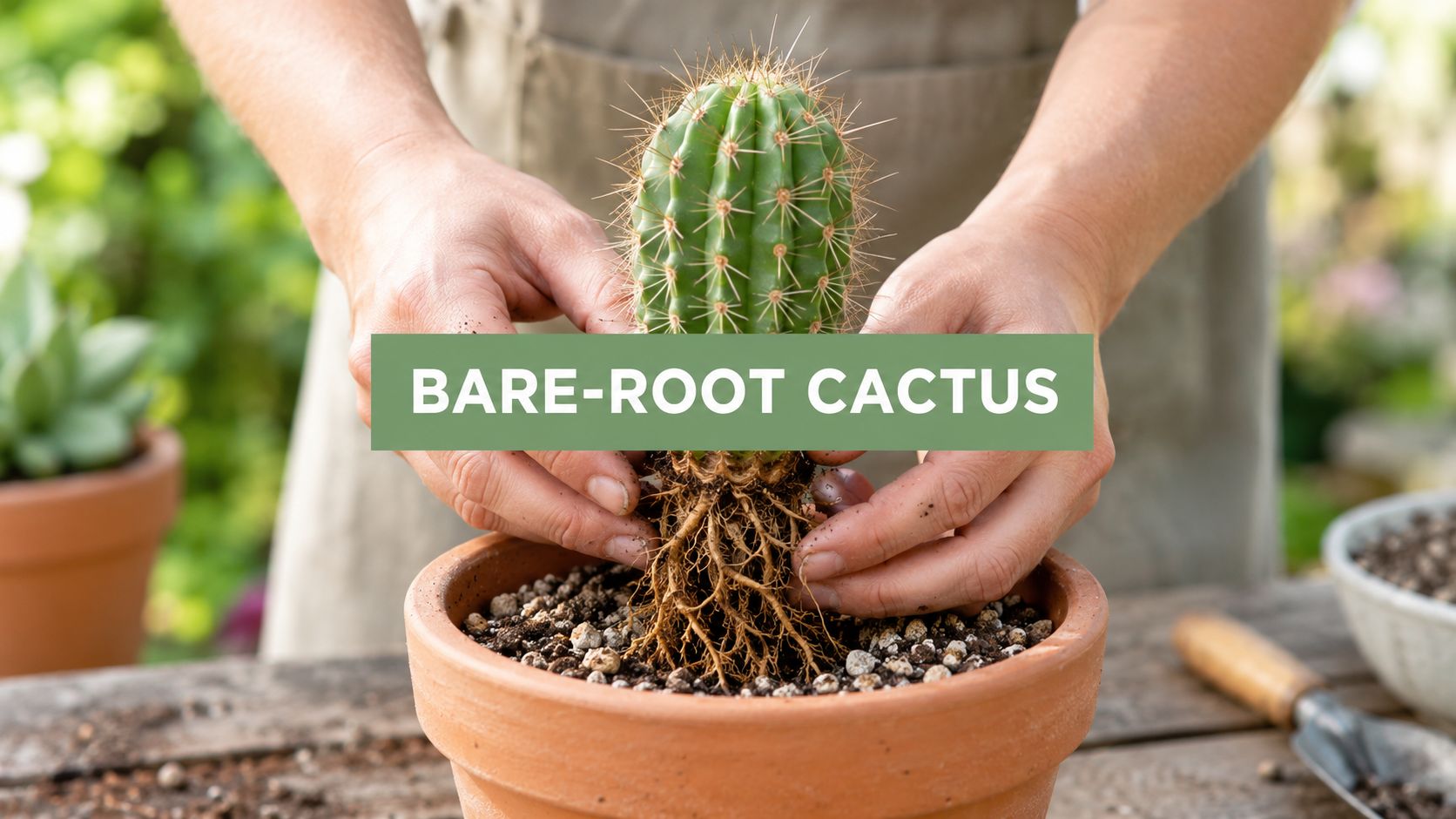



You unwrap a fire barrel cactus, set it on the patio or by the brightest window in the house, and then the important questions begin. How much sun is too much on day one? How dry is dry enough before watering again? And if you bought a larger specimen, how are you supposed to move a spiny plant that feels more like a bundled weapon than a houseplant?
That’s where most care guides get thin. They’ll tell you to use cactus soil and avoid overwatering, but they won’t tell you what changes when your plant stops being a cute little barrel and starts becoming a serious specimen with weight, bulk, and enough spine reach to punish sloppy handling. Fire barrel cactus care gets easier once you stop treating it like a generic succulent and start treating it like a long-term piece of living desert structure.
A well-grown fire barrel rewards patience. It isn’t a fast filler plant. It’s a permanent accent, the kind of cactus that looks better with age and asks for fewer interventions when you set it up right from the start. Small plants are easy to buy. Mature ones are where mistakes get expensive.
Introducing the Magnificent Fire Barrel Cactus
A fire barrel gets your attention before you know anything about its care. The body stays dense and formal. The ribs read clean from across the yard. In low evening light, the red spines can make an ordinary patio pot look like a collector’s piece.

That appeal fools some buyers. A small nursery plant looks simple enough to own, right up until it starts putting on age, weight, and spine length. Then the job changes. The same cactus that once fit in one hand may need gloves, tongs, a second person, and a clear route before you move it six feet.
That long arc is what makes fire barrel worth growing. It is not a filler plant for one season. It is a specimen you can raise for years, then decades, if you set it up with its mature size and handling in mind from the start.
Why serious growers hang onto them
Fire barrel earns space slowly, which is part of its value. A well-grown plant keeps its place in a design for a long time instead of outgrowing the pot or swallowing a small bed after two good summers. I like that restraint. In a nursery, the fast growers pay the bills. In a personal collection, the slow ones often become the plants you care about most.
Its native background explains the look. This cactus comes from dry country in north central Mexico, and it carries itself like a desert plant should. Tight form. Heavy spine coverage. A shape that gets more commanding with age.
For container growers, that means planning for the whole run of the plant, not just the first year. Use a gritty cactus and succulent soil mix, leave room around the spines, and place the pot where you will still want a larger, heavier cactus later. I have seen plenty of nice young plants end up scarred because they were parked in a walkway where nobody respected their reach.
Practical rule: Buy a fire barrel for the job you want it to do in a few years, not for the empty corner you need to fill today.
What changes as the plant matures
A young fire barrel is rounded and manageable. A mature one has more presence and less forgiveness. The body can lengthen, the spine spread gets wider, and every routine task becomes more physical.
That affects real decisions:
- Small plants are easier to place. Large specimens are harder to rotate, repot, and protect from accidental bumps.
- Young plants are cheaper to replace. Mature plants make mistakes expensive, especially root damage or sunburn on a show specimen.
- Offsets are simple when they are thumb-sized. Heavy pups can tear awkwardly, leave a broad wound, and need more drying time before rooting.
- A mature plant has more impact. It also needs more clearance from doors, paths, pets, and curious hands.
This is also where generic cactus advice starts to fail. A mature fire barrel is not just a bigger version of a small one. Weight changes how you repot it. Spine length changes how you handle it. Offsets large enough to propagate are not delicate little cuttings. They are dense, armed pieces of plant tissue that can rot if you rush the job or injure yourself if you grip them carelessly.
Good fire barrel cactus care keeps the plant attractive at every stage. The goal is a tight body, strong spine color, sound roots, and a setup that still works when the cactus becomes a serious specimen instead of a new purchase on a patio table.
Creating the Perfect Home Light and Soil
Set a fire barrel in the wrong spot and it tells on you slowly. The plant stays alive, but it goes soft in character. The body loses that tight, hard look, the spines dull out, and the base sits in soil that never quite dries. By the time the owner notices, the root system is usually the primary problem.

Light that keeps the plant compact
Fire barrel cactus grows best with long hours of direct sun. Outdoors, give it the brightest position you have. Indoors, a bright room is rarely enough. The sun needs to hit the plant itself for several hours, ideally from a south or west exposure if your climate and season allow it.
Light affects structure as much as color. Good sun keeps the ribs firm, the body dense, and the spine growth stronger. Weak light produces a plant that survives but never develops into a handsome specimen. That matters even more if you plan to keep it for years. A stretched young plant does not mature into a better-shaped old one.
Large specimens need more thought than small ones. A one-gallon plant can be moved around chasing sun. A heavy barrel in a wide clay pot often ends up staying where you first commit it. Pick the long-term location early, especially if the goal is a mature show plant rather than a temporary patio filler.
How to acclimate without burning it
New fire barrels, especially greenhouse-grown ones, can scorch fast in hard afternoon sun. I have seen clean green skin turn patchy in two days after a rushed move outdoors.
Use a gradual transition:
- Start with morning sun. It is bright but less punishing.
- Add exposure in steps. Increase direct sun over a week or two.
- Check the sun-facing side daily. Pale, bleached, or corky patches mean the move was too fast.
- Use temporary shade cloth if needed. This helps after planting out or after a major repot, when the roots are not working at full strength.
If you need a more detailed reference for building a gritty mix, this guide to cactus and succulent soil mix is useful to keep beside you while you blend materials.
Soil that dries fast and stays open
Standard potting soil is where a lot of fire barrels start going backward. It may look fine for a while, especially in a small nursery pot, but organic mixes settle, pack in around the roots, and hold too much moisture in the lower half of the container.
Use a coarse, mineral-heavy mix that drains fast and keeps air around the roots. Pumice, lava rock, coarse sand, decomposed granite, and a restrained amount of organic matter all work. The exact recipe matters less than the result. Water should pass through quickly, and the mix should not stay cold and damp deep in the pot for days.
For small plants, a slightly finer mix is acceptable because the root ball is light and easier to monitor. For older, heavier plants, I go grittier. Big barrels are harder to repot, slower to dry after a mistake, and more expensive to lose. A mature specimen sitting in dense soil can decline for months before the top shows any warning.
A practical blend for many growers includes:
- Pumice, lava, or coarse sand: Keeps the mix open
- A modest amount of compost or bark-free organic matter: Holds a little moisture without turning soggy
- Mineral garden soil or decomposed granite: Adds weight and structure if it stays loose
The best fire barrel mix is plain-looking, fast-draining, and predictable. Pretty bagged soil is often the wrong tool.
Here’s a quick comparison:
| Setup | What happens |
|---|---|
| Mineral-heavy gritty mix | Roots get air, excess water drains fast, the body stays firmer |
| Peaty bagged potting soil | The lower root zone stays wet too long and compacts over time |
| Decorative pot with poor drainage | The cactus can look fine up top while roots fail underneath |
| Fast-draining mix in a proper pot | Growth stays steadier and large plants are easier to manage long term |
A short visual demonstration helps if you’re setting up your first specimen or correcting a bad mix:
What works and what doesn’t
Some choices pay off for years. Others create work later.
- Full sun works once the plant is acclimated.
- Light afternoon protection works in extreme heat, or after transplanting.
- Dense organic soil fails slowly and then all at once.
- Cachepots work only as outer covers if you remove the nursery pot to water and let it drain fully.
- Heavy containers help with mature plants because they are less likely to tip once the barrel gains size and weight.
- Tight corners near walkways fail in practice because a mature fire barrel needs clearance from people, pets, and door swings.
Get these two pieces right, light and soil, and a fire barrel has the foundation it needs to grow from a neat young plant into a broad, imposing specimen without losing shape along the way.
Mastering Watering and Feeding Schedules
A young fire barrel forgives a sloppy watering habit longer than a big old specimen does. That is why growers get surprised. The small plant looks fine for months, then the mature one in a heavier pot stays wet too long, softens at the base, and declines fast. Watering has to change as the plant gains size and mass.
Fire barrel cactus wants a full drink, then a real dry period. Water until the entire root ball is soaked and excess runs out freely. After that, wait until the mix is dry all the way down, not just on the surface.

Surface checks mislead people. A barrel in a deep pot can look bone dry on top while the lower root zone is still damp. I check with a wooden skewer, a moisture meter, or simple pot weight. After a season or two, you can feel the difference the moment you lift it.
Large plants need more patience than small ones. A mature fire barrel in a broad ceramic pot may take far longer to dry than a juvenile plant in terracotta, even during warm weather. That is one of the trade-offs with growing a specimen on to impressive size. You get presence and stability, but you also get a slower drying root zone and less room for watering mistakes.
How to read the season
Ignore fixed weekly schedules. Temperature, light, airflow, pot size, and plant size matter more than the page on the calendar.
During warm active growth, water thoroughly only after the mix has gone fully dry. Outdoor plants in heat and moving air dry much faster than indoor plants in still rooms. Small nursery plants may be ready again fairly soon. A large old barrel may not be.
In cool weather, reduce watering sharply. If the plant is overwintering cool and growth has slowed, keep it on the dry side. Dry roots handle cool conditions much better than damp roots do. I would rather see a slight wrinkle in January than any softness near the base.
Signs the plant is asking for water, or warning you to stop
People often misread a firm, lightly wrinkled barrel as a crisis and then overcorrect. True thirst and root trouble look different once you know where to look.
| Symptom | Likely issue | What to do |
|---|---|---|
| Softness near the base | Overwatering or poor drainage | Unpot and inspect roots immediately |
| Mushy tissue | Advanced rot | Remove from wet soil and assess salvage potential |
| Light shriveling with firm tissue | Needs water | Water deeply if soil is fully dry |
| Persistent wrinkling after watering | Root trouble, not thirst | Check the root system |
| Yellowing plus softness | Often excess moisture | Stop watering and improve drainage |
For a broader baseline, this guide on watering cactus plants matches the same soak-then-dry approach.
Feeding for dense growth, not fast growth
Fire barrel cactus does not reward heavy feeding. Too much fertilizer pushes weak, puffy growth, and that spoils the tight, solid form that makes an old specimen worth growing.
Feed once in spring if the plant is healthy and rooted well. A low-dose cactus fertilizer is enough. Some growers use a balanced formula, others use one with lower nitrogen. Either can work if the dose stays modest. The main point is restraint.
Keep these rules simple:
- Feed once in spring after growth resumes.
- Skip fertilizer on stressed plants until roots, light, and temperature are back in order.
- Do not feed in winter when the plant is resting.
- Do not chase speed if your goal is a handsome mature barrel.
That same restraint helps later if you plan to propagate offsets from an older plant. Pups taken from a compact, well-grown specimen root and establish better than offsets pushed by rich feeding and frequent water.
A schedule that works in real life
Use a seasonal rhythm, then adjust for pot size and plant age.
- Spring: Start watering thoroughly again once warmth and light pick up. Feed once if the plant is healthy.
- Summer: Water thoroughly, then let the mix dry completely.
- Fall: Stretch the interval between waterings as nights cool.
- Winter: Keep the plant much drier, especially in low light or cool rooms.
That routine is plain, but it holds up year after year. The best fire barrels I have grown were never kept on a strict weekly timer. They were watered with patience, fed lightly, and allowed to grow into their size without soft, rushed growth.
A Practical Guide to Potting and Overwintering
A young fire barrel is simple to shift from pot to pot. A mature one can weigh enough to bruise your shin, tear gloves, and leave a permanent scar if it slips. Potting choices that seem minor at 4 inches across become very important once the plant is broad, heavy, and armed on all sides.
Pick a pot that supports the plant
Use a shallow, wide container with drainage. Fire barrels do better in a pot that matches their low, spreading root run, and that wider footprint helps keep an older specimen from toppling after a watering or in a hard wind.

Pot material changes how fast the mix dries. Terracotta is forgiving and usually my first choice for smaller plants because it sheds moisture faster. Glazed ceramic works too, but only if the pot has a real drain hole and the soil is extra coarse. Cachepots and containers without drainage cause more losses than cold ever did in my nursery.
Size matters in both directions. An undersized pot makes a large plant unstable. An oversized pot leaves too much wet mix around a modest root ball. I usually move up one pot size at a time unless a specimen is badly rootbound or the old container has become unsafe.
How to repot without getting shredded
For small plants, a towel is often enough. For large plants, set up the whole job before you touch a spine.
These tools make the work safer and cleaner:
- Thick towels or folded carpet remnants: They give you grip without pressing spines into your palms.
- Dense foam or styrofoam blocks: Useful for bracing the plant on its side while you work.
- Long gloves and long sleeves: They help, though they will not stop every spine.
- A second person: Smart once the plant is heavy enough to twist while being lifted.
I repot mature barrels on the ground, not on a bench. Floor space gives you room to turn the plant slowly and lower it without panic. That one change prevents a lot of cracked pots and gouged stems.
Follow a simple sequence:
- Prepare the new pot first. Add dry gritty mix and check the final planting height.
- Wrap the body securely. Build solid handholds with towels, carpet, or folded cardboard.
- Tip and slide the plant out. Pulling straight up usually ends with a dropped cactus or torn roots.
- Check the root ball. Remove only dead, broken, or obviously rotted roots with a clean blade.
- Replant at the same depth. Do not cover healthy stem tissue that was previously above the soil line.
- Wait before watering if roots were cut or disturbed. Give damaged areas time to dry and seal.
A rushed repot leaves marks for years.
If you expect to remove offsets from an older plant later, handle the body with that in mind. Good repotting keeps pups intact, avoids accidental snaps, and makes later propagation easier. If you want to review safe cutting technique after the plant is established, this guide on how to propagate cactus from cuttings covers the basics well.
What changes once the plant is large
The care is still simple. The handling is not.
| Small plant | Large specimen |
|---|---|
| Easy to rotate for even growth | Heavy enough to shift suddenly while lifting |
| Minor root disturbance is easy to correct | Root damage slows recovery and raises rot risk |
| Quick bench repot is usually fine | Floor workspace is safer and more controlled |
| Pot choice affects growth | Pot choice affects growth, stability, and how you will move it next year |
That last point gets overlooked. A handsome pot that cannot be gripped, cleaned out, or moved safely becomes a problem once the cactus reaches specimen size. I have seen growers keep an old fire barrel in the wrong container for years because they dreaded the move. The plant survives, but every season becomes harder than it needs to be.
The mention of The Cactus Outlet here is practical, not decorative. They carry large cacti and succulents, including specimen-scale plants, which matters if you are buying beyond starter size and need to plan for weight, balance, and transport from the start.
Overwintering without accidental damage
Winter losses usually come from a bad combination, not a single mistake. Cool roots, damp soil, and weak light are the trio that causes trouble.
For plants grown outdoors in mild climates, leave them in place if cold is brief and the soil drains fast. In areas with frost risk, protect the plant before the cold night arrives. Burlap or frost cloth works better than plastic pressed against the skin, and dry soil handles cold better than wet soil.
For potted plants brought indoors, keep the routine plain:
- Water far less often. The mix should stay dry much longer than it does in summer.
- Use the brightest spot available. South or west exposure is usually best indoors.
- Keep the plant away from heat vents and radiators. Hot air dries the skin while the roots are still resting.
- Skip fertilizer until active growth returns.
Indoor wintering has one common trap. People move the plant inside, keep it in a dim room, and water on the old summer rhythm. The cactus does not use that moisture, so the lower root zone stays wet and cold for too long.
For in-ground plants near the edge of their comfort range, pay attention to weather swings. A dry, cool winter is easier on a fire barrel than a wet one. If a hard freeze is forecast, cover the plant early in the day and uncover it once temperatures recover. If winter rain is frequent, improving runoff around the crown often matters more than adding another layer of cloth.
A well-overwintered fire barrel should look almost boring in spring. Firm body, clean base, no fresh scars, no soft spots. That is how a small plant becomes a handsome old specimen instead of a rescue project.
Propagating Pups and Growing from Seed
A small offset is easy. A heavy fire barrel pup the size of a bowling ball is a different job entirely. If you want a plant that grows from a young specimen into an old, commanding barrel, propagation technique has to match the plant’s size and weight.
Large offsets fail for familiar reasons. The cut gets contaminated. The pup tears as it comes free. The wound stays damp too long. I see fewer losses when the offset is cut cleanly, left alone long enough to harden, and rooted in a dry, mineral medium instead of regular potting soil, as noted earlier.
Why offset propagation goes wrong
The weak point is rarely the knife. It is the handling afterward.
Growers often cut a pup correctly, then ruin the job by setting it on a dusty bench, shifting it around to inspect it, or planting it the same day because the wound “looks dry enough.” Fire barrel pups are especially unforgiving once they get some size. Thick tissue holds moisture inside the cut longer than people expect, and a heavy offset can split its own base if it is propped badly.
The answer is patience and support.
How to remove a heavy pup safely
Treat a mature offset like a real piece of stock, not a trimming.
Use:
- A sterilized blade that makes one clean pass
- A second hand or support under the pup so it does not drop and twist
- Folded cardboard, carpet scraps, or thick towels to grip around spines
- A clean, dry resting surface with airflow and no old soil on it
My method is simple:
- Study the attachment point first. Find the narrowest place where you can separate the pup without gouging the mother plant.
- Support the offset before cutting. Heavy pups tear tissue when they swing loose.
- Make one deliberate cut. Repeated sawing bruises the base.
- Set the pup down gently on its side or upright in a stable cradle. Do not wedge it into soil yet.
- Leave it dry until the cut is hard and corky. If the surface still looks fresh, it is too soon.
If you want a broader primer on detached pieces, this guide on how to propagate cactus from cuttings pairs well with fire barrel work.
Callusing decides the outcome
The waiting period matters more than beginners want to hear. A fresh cut pup should sit in bright shade with moving air until the wound has sealed fully. On small offsets, that may be fairly quick. On large, heavy pups, it can take weeks.
Do not rush this stage.
Once the cut is dry and firm, set the pup on pumice, perlite, or another clean mineral mix. Keep it stable so the base does not wobble. I prefer shallow rooting containers at first because they let me check for movement and early root hold without burying the plant too much.
Use this workflow:
| Stage | What to do |
|---|---|
| Fresh cut | Keep dry, shaded, and clean |
| Callusing | Leave the wound exposed to air and check for soft spots |
| Rooting | Set on a dry mineral medium with light support |
| Early growth | Wait for roots, then water lightly and infrequently |
Any softness, odor, or discoloration at the cut means stop and inspect. If the body also starts showing stress color, this resource on why your cactus might be turning yellow can help you separate light stress from root trouble.
Growing from seed
Seed growing is the slow route, but it teaches you the whole plant. You see the spine pattern develop, the body shape tighten up, and the early seedlings sort themselves into stronger and weaker growers. That matters if your goal is not just to keep a fire barrel alive, but to raise one into a mature specimen with good form.
The trade-off is time. A pup gives you size now. Seed gives you control from the beginning.
For seed, keep conditions clean and steady:
- Use a gritty, sterile sowing mix
- Give bright light without hard afternoon scorch
- Keep warmth consistent
- Avoid stale, wet air around crowded seedlings
Collectors who want a full bench of handsome fire barrels often do both. They root offsets to get size faster, then sow seed for the long run. That combination is how you build from a few young plants to a group that includes true mature specimens, not just small barrels in nice pots.
Troubleshooting Common Fire Barrel Issues
A fire barrel usually tells you what’s wrong if you read the symptoms in the right order. The mistake is jumping to treatment before diagnosing the pattern. Start with where the symptom is showing, how firm the tissue feels, and what changed recently.
Yellowing or paling
If the body starts turning yellow or washed out, check light exposure first. A patchy yellow area on the sun-facing side often points to sun stress after a fast move into stronger light. More uniform yellowing can come from root stress, lingering moisture, or a plant that’s been kept too dim and then pushed.
This outside resource on why your cactus might be turning yellow is useful if you want a broader symptom overview beyond fire barrels specifically.
Use this quick diagnostic:
- One-sided bleaching: likely sunburn from sudden exposure
- Overall pale growth: often weak light
- Yellowing plus softness: suspect root trouble first
- Yellowing after a cold event: inspect for cold damage over the next several days
Soft or mushy areas
Soft spots are urgent. A firm fire barrel should feel hard and stable. If the base softens, the root zone needs inspection.
Likely causes and responses:
| Symptom | Most likely cause | Best response |
|---|---|---|
| Soft base | Wet roots, poor drainage | Unpot and inspect immediately |
| Mushy body section | Rot moving upward | Remove from soil and assess salvage |
| Softness after winter | Cold plus moisture | Dry out and inspect tissue carefully |
Don’t compensate by adding fertilizer. That never fixes rot.
Shriveling and collapse in shape
A little draw-in between ribs can mean thirst. Deep collapse after watering usually means the roots aren’t functioning well.
Look at the sequence:
- Shriveled and dry soil: water may be needed
- Shriveled but soil still damp: root failure is more likely
- Wrinkled after repotting: disturbed roots may need time, not extra water
Leaning or stretched growth
If the plant starts reaching or leaning, the problem is almost always directional light. Fire barrels grown with inadequate light lose the dense geometry that makes them attractive.
Correct it by:
- moving to stronger light gradually
- rotating a potted plant carefully if one side dominates
- avoiding sudden extreme sun on a shade-grown specimen
Pests that hide in the ribs
This cactus is generally pest resistant, but not pest proof. Mealybugs and spider mites are the ones I’d check for first if a plant looks dusty, stalled, or oddly weak without obvious watering mistakes.
Watch for:
- Mealybugs: white cottony clusters tucked near areoles
- Spider mites: fine stippling or dull surface texture
Treat early. Isolate the plant, clean affected areas carefully, and keep checking. One missed pocket turns into a repeat problem fast.
Fire Barrel Cactus Care FAQs
Is fire barrel cactus toxic to pets?
Verified care notes describe it as mildly toxic, so it’s smart to keep it away from pets and children. The spines are the more immediate risk anyway. Even a curious nose can have a bad encounter.
How old does a fire barrel need to be before it flowers?
There isn’t a useful fixed age I’d promise. What matters most is maturity, strong light, and stable long-term growing conditions. Small or indoor-kept plants often stay attractive for years without blooming.
Can I plant it near a walkway?
You can, but I usually wouldn’t unless there’s generous clearance. A mature fire barrel is not a soft-edged plant. Leave enough room so nobody brushes the spines when turning a corner, carrying groceries, or working nearby.
Should I grow it in the ground or in a pot?
That depends on your climate and your goals. In the ground makes sense in suitable warm, arid conditions where you want a permanent specimen. A pot gives you control over soil, placement, and winter protection.
What’s the biggest mistake beginners make?
They water before the lower root zone has dried, usually because the surface looks dry. The second mistake is choosing rich soil that holds moisture longer than the plant can tolerate.
Can I propagate every pup I see?
Only if the offset is large enough and you can remove it cleanly. Small, weakly attached pups are easy to damage. With mature plants, patience during the cut and even more patience during callusing usually decides the outcome.
If you want a well-grown specimen or need a source for larger cactus stock, The Cactus Outlet offers a wide range of cacti and succulents, including larger plants suited to collectors, home gardeners, and exterior design projects.