
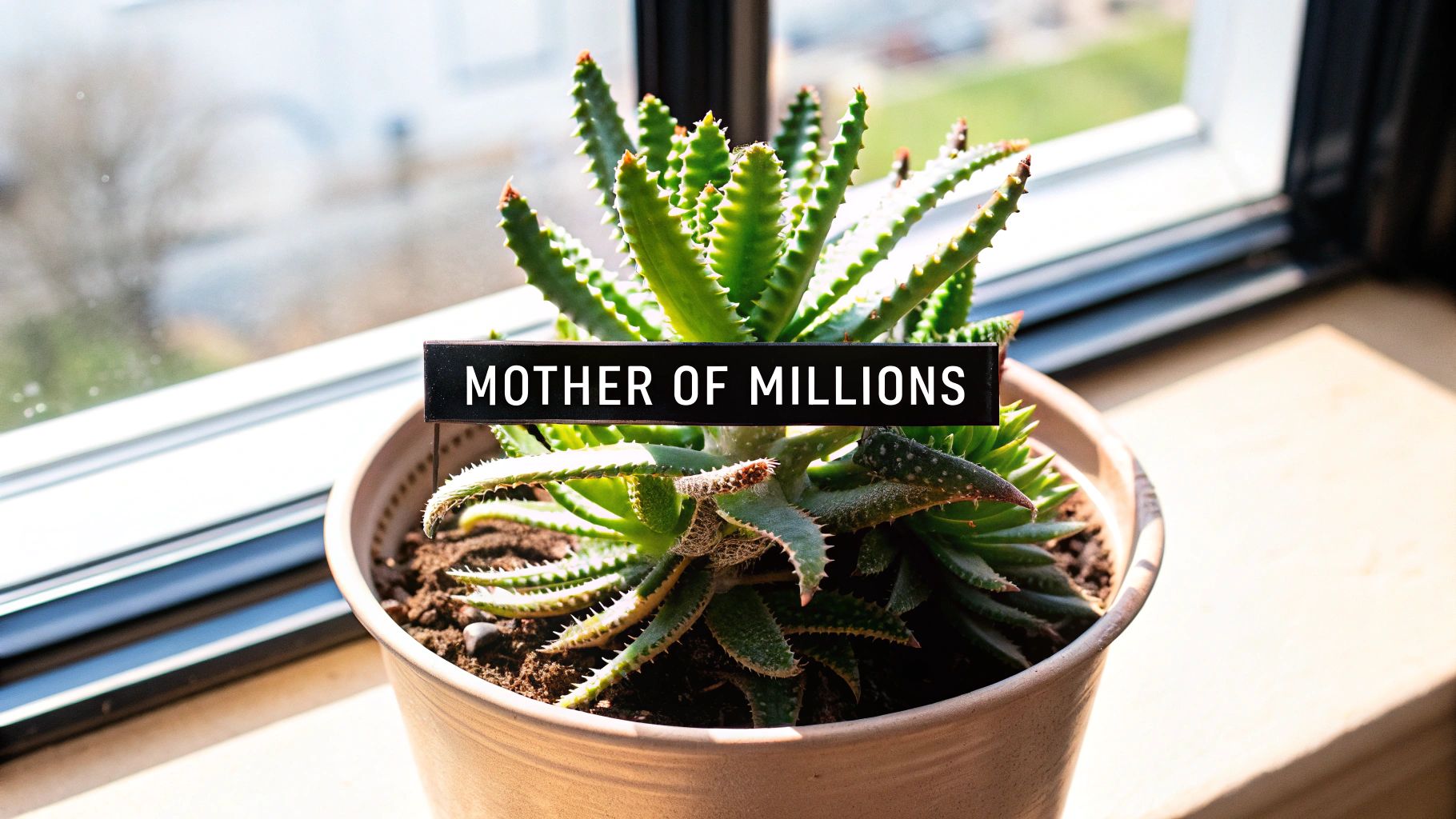

Caring for a Mother of Millions is a unique experience. The key is giving it plenty of bright, indirect sunlight and a well-draining soil mix designed for succulents. You'll only want to water it when the soil has completely dried out. But the most important part of its care? Keeping its prolific nature in check.
The Fascinating (and Fierce) Mother of Millions
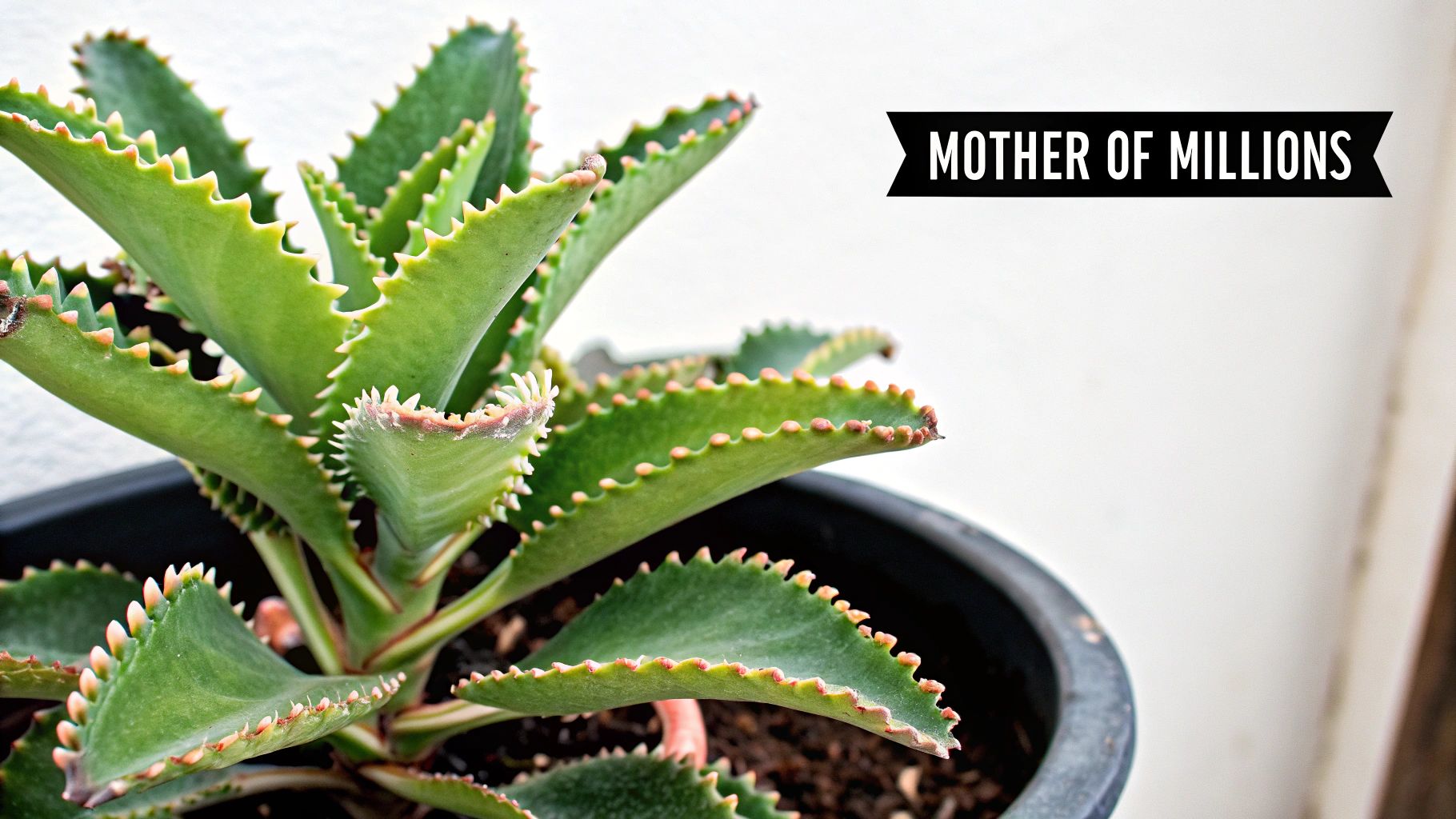
The Mother of Millions, or Kalanchoe daigremontiana, absolutely earns its name. Just look at its most famous feature: the hundreds of tiny plantlets that line the edges of its leaves. Each one is a perfect little clone of the parent plant, roots and all, just waiting to drop and start a new plant wherever it lands.
This unbelievable survival skill is exactly what makes it a must-have for some succulent lovers and a plant to handle with extreme care for others. It’s a striking plant, no doubt, with its tall, slender stems and distinctly mottled, V-shaped leaves that give it a very dramatic look.
A World Traveler with an Invasive Side
Hailing from the dry regions of Madagascar, this plant’s method of reproduction has made it a wildly successful traveler. Its knack for spreading means it can quickly become an invasive weed if you plant it outside in the wrong climate.
It's incredible how fast this plant has spread. After leaving Madagascar, different Mother of Millions species have popped up on every continent except Antarctica in about 80 years. They just love subtropical and warm-temperate areas. You can learn more about its global journey and ecological impact.
Because of this tendency, caring for a Mother of Millions isn't just about keeping it healthy—it's about keeping it contained. This guide is all about how to enjoy its wild beauty as an indoor plant while making sure it doesn't escape into your yard.
Understanding this balance is the first step. It's both a captivating houseplant and a potential pest. Once you learn to manage its non-stop propagation, you can appreciate what makes it so special without accidentally causing a problem. This is the heart of successfully growing this fascinating, but fierce, succulent.
Creating The Ideal Indoor Habitat
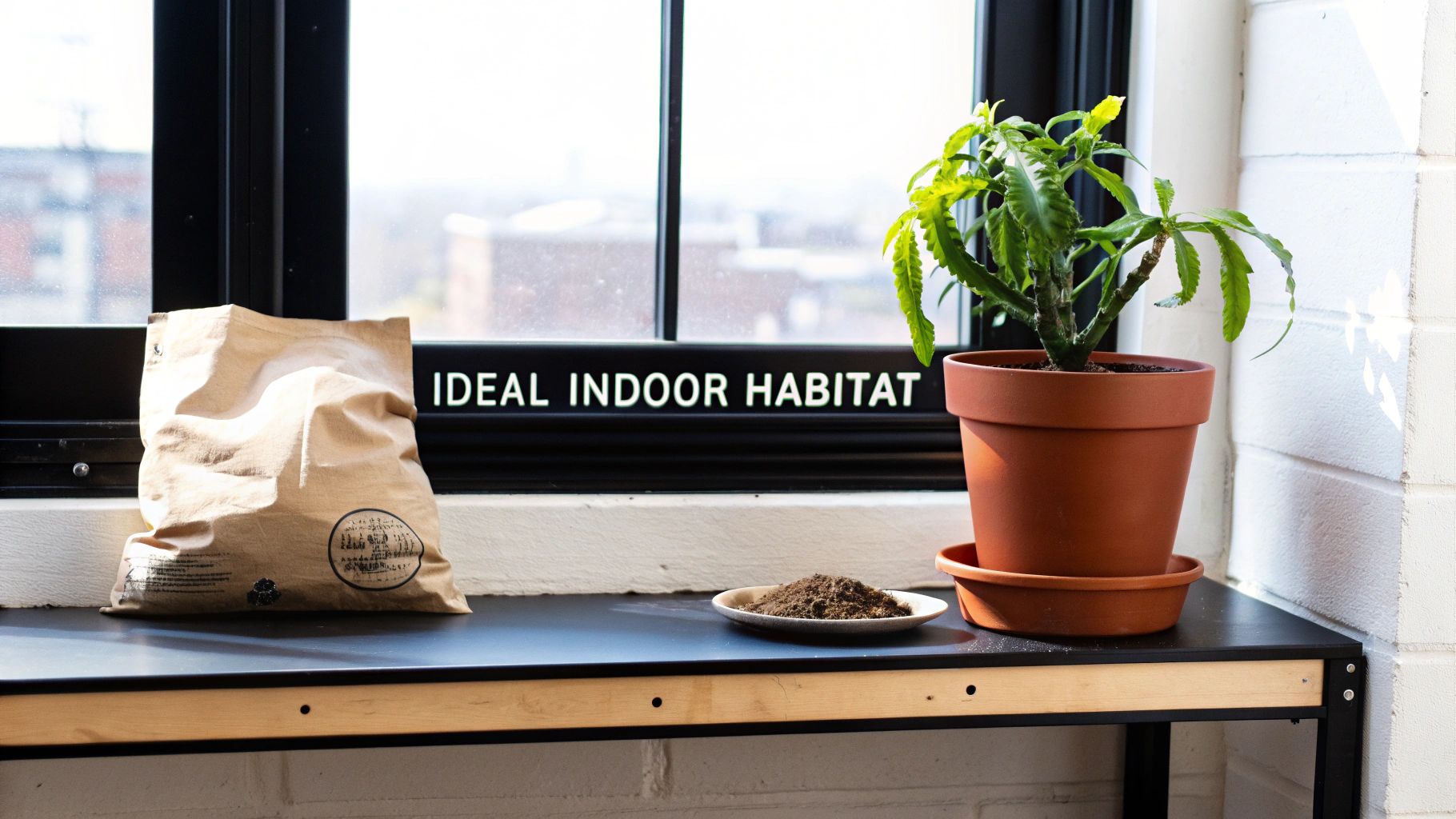
If you want your Mother of Millions to truly flourish inside, your main goal is to replicate the conditions of its native home. That journey begins with getting the lighting and soil just right.
These plants are succulents at heart, and they absolutely crave bright, indirect sunlight. Vague instructions won't cut it, so think about placing your plant near an east-facing window where it can soak up the gentle morning sun. A spot a few feet away from a sun-drenched south-facing window also works beautifully, giving it the brightness it needs without the harsh, direct rays that can burn its leaves.
Getting The Light Just Right
Don't worry, your plant will give you signals if the lighting is off. If it starts looking "leggy"—stretching its stem out awkwardly—it's desperately searching for more sun. On the other hand, if you notice brown, crispy spots on the leaves, it's getting sunburned from too much direct light.
You're looking for that perfect balance. Aim for about 4–6 hours of bright light each day. It’s a bit of a dance; too much direct sun, especially in hot climates, will scorch the leaves, but too little light will slow down the growth of those iconic baby plantlets and cause that stretched-out appearance. Finding the sweet spot can take some trial and error, much like figuring out the best place to put a cactus in the house.
For a quick reference, here's a little cheat sheet to help you dial in the perfect setup.
Mother of Millions Light and Soil Cheat Sheet
| Factor | Ideal Setup | Warning Signs |
|---|---|---|
| Light | 4–6 hours of bright, indirect sunlight daily. East-facing windows are often perfect. | Too Little: "Leggy" growth, sparse plantlets. Too Much: Scorched, brown spots on leaves. |
| Soil | A gritty, well-draining mix. Think 1:1:1 ratio of potting mix, perlite, and coarse sand. | Wrong Soil: Dense, wet soil; yellowing leaves at the base; signs of root rot. |
Getting these two elements right from the start sets the stage for a healthy, happy plant that will reward you with tons of new babies.
Building The Perfect Potting Mix
The second critical piece of the puzzle is the soil. As a succulent, the biggest threat to your Mother of Millions is root rot, which is almost always caused by soil that stays wet for too long. Your standard, all-purpose potting soil from the bag is a no-go; it holds far too much moisture.
You need a gritty mix that lets water drain away quickly, giving the roots a chance to breathe. I've found that mixing your own is not only easy but also far more effective than most pre-made cactus soils.
Here’s my go-to recipe:
- One part standard potting mix (for a nutrient base)
- One part perlite (to create air pockets and boost drainage)
- One part coarse sand (to keep the soil from compacting)
This blend creates the perfect environment, preventing water from lingering and drowning the roots. Of course, a good habitat also means keeping an eye out for pests; it's always wise to be prepared by mastering organic aphid control for your garden before they become a problem.
The Right Pot is a Non-Negotiable
Never underestimate the power of your pot. I almost always recommend terracotta for succulents like this one. Its porous clay material actually helps pull excess moisture out of the soil, acting as a great backup defense against overwatering. But no matter what pot you choose, it absolutely must have a drainage hole. This isn't just a suggestion—it's essential for your plant's survival.
Getting The Watering And Feeding Just Right
When you're figuring out how to care for a Mother of Millions, the biggest mistake people make is loving it to death—specifically with the watering can. These plants are tough succulents from arid regions, and their roots are not designed to sit around in soggy soil. In fact, overwatering is the express lane to root rot, which is almost always a death sentence.
The secret? Forget little sips and instead embrace the "soak and dry" method. This strategy closely copies the drenching, infrequent rains these plants would get back home in Madagascar.
Perfecting The "Soak and Dry" Technique
When it's time to water, don't be shy. Give the soil a complete and total soaking. Keep watering until you see it pouring freely from the drainage hole at the bottom of the pot. This makes sure every last root gets a chance to drink.
After that good, long drink, the "dry" part of the equation is non-negotiable. You have to let the soil become completely dry all the way through before you even consider watering it again.
The easiest way to check is to just stick your finger about two inches down into the soil. If you feel even a hint of moisture, walk away. If it’s dusty and bone-dry, you're good to go. For a deeper dive, our guide on how to water succulent plants covers this method in detail and works perfectly for these guys.
Remember, your watering routine isn't set in stone; it will change drastically depending on the time of year.
- Summer (Growing Season): With long, warm days, your plant is in full growth mode and will be much thirstier. You'll likely find yourself watering it every 10 to 14 days.
- Winter (Dormant Season): As the days get shorter and cooler, the plant hits the pause button. Its water needs drop significantly, and you might only need to water it once a month, if that.
My Personal Rule: When in doubt, don't water. A thirsty Mother of Millions might get a little droopy, but it will perk right back up after a good soak. An overwatered one with rotted roots is often a goner.
A "Less Is More" Approach to Fertilizer
Just like with water, you need a light hand with fertilizer. Mother of Millions are not hungry plants; they pull most of the nutrients they need right from the soil. Bombarding them with fertilizer will only result in weak, lanky growth and can seriously damage the roots.
During the spring and summer growing season, you can give it a little boost once or twice, but that’s it. Grab a fertilizer made for cacti and succulents and—this is critical—dilute it to half or even quarter strength of what the package recommends.
Never, ever fertilize in the fall and winter. The plant is resting and simply can't use the nutrients, so they'll just build up in the soil and cause harm. This hands-off approach is the key to a healthy plant that grows strong, not just fast.
Managing Its Prolific Propagation Responsibly
The most captivating—and challenging—thing about the Mother of Millions is right there in its name. This plant has a fascinating and relentless drive to reproduce, and it doesn't wait for your help.
Along the edges of its leaves, it forms dozens of tiny plantlets, which are scientifically known as bulbils. These aren't seeds; they're perfect, miniature clones of the parent plant, often with their own little roots already dangling, just waiting for a chance to grow.
A slight breeze, a gentle bump, or even the vibrations from walking by can be enough to send these plantlets tumbling. Wherever they land, they’ll try to take root. This brilliant survival tactic makes the plant a joy for enthusiasts but also a serious responsibility for the owner.
How To Propagate New Plants (The Easy Way)
If you want more of these plants to share with friends or to fill out your collection, the process couldn't be simpler. Forget about rooting hormones or complicated cuttings; this plant does 99% of the work for you.
- Gather the Plantlets: Gently brush your finger along the edge of a leaf. The most mature plantlets will fall right off into your hand. Look for the ones that seem plump and may already have small, wiry roots showing.
- Prepare Their New Home: Get a small pot ready with the same fast-draining succulent soil you use for the adult plant.
- Just Drop Them In: Simply place the tiny plantlets on the surface of the soil. Don't bother burying them. Their roots are designed to find their own way down into the potting mix.
For the first few weeks, keep the soil just slightly moist to give them a good start. Once they've clearly rooted and are showing new growth, you can treat them like any other succulent. If you're new to this whole process, checking out a general guide on how to propagate succulents can give you some great foundational knowledge.
Once your new plants are established, you'll switch to the classic "soak and dry" watering method that succulents love. This approach is key to preventing root rot.

The cycle is simple: give the soil a thorough drenching, let it dry out completely, and only then water it again.
The Critical Importance of Containment
While easy propagation sounds like a great perk, responsible ownership is all about containment. There's a reason this plant is considered an invasive species in many parts of the world. Its ability to spread is almost unmatched, and if it escapes, it can easily overwhelm and displace native flora.
This is non-negotiable: Unless you live in its native habitat of Madagascar, your Mother of Millions must be treated as a strictly indoor houseplant. Never plant it in an outdoor garden bed. Doing so is irresponsible and can cause real, lasting damage to your local ecosystem.
To keep your plant from taking over your home (and the world), make these practices a habit:
- Catch the Escapees: Place your pot in a wide, deep saucer. This will act as a moat to catch the majority of falling plantlets. Check it weekly and dispose of them.
- Keep It Isolated: Be mindful of where you place it. A plantlet can easily fall into a neighboring pot and quickly become a weed you have to pull from your prized fiddle-leaf fig.
- Dispose of Debris Properly: When you prune the plant or clean out the saucer, never toss the clippings or plantlets into your compost or yard. Seal them securely in a bag and put them in the trash. This ensures they don't find a new patch of soil to call home.
A Word of Warning: This Plant Is Toxic
Let's get one thing straight right away: Mother of Millions is a stunning plant, but it's also highly toxic. This isn't one of those "might cause a mild tummy ache" situations. Every part of this plant—leaves, stem, roots, and especially the little plantlets—is poisonous if eaten.
This is a serious consideration for anyone with pets or small children. A curious cat, a nibbling puppy, or a toddler could get very sick from ingesting even a small amount. Owning this plant responsibly means putting safety first.
Protecting Pets and Children
The best defense is a good offense. Keep this plant somewhere completely inaccessible. Think high shelves, hanging baskets well out of reach, or a room that your pets and kids can't get into.
Don't even think about putting it on a low coffee table or an easily-reached windowsill. I've seen cats that can get just about anywhere, so you might need to be creative. A narrow mantelpiece where a cat can't get a solid footing can work, but a hanging planter is often the safest bet.
The danger here is very real. Mother of Millions belongs to the Kalanchoe genus, which contains toxins known as cardiotoxic bufadienolide glycosides. In plain English, these compounds can severely affect heart function in animals, leading to dangerous arrhythmias. For a deeper dive into the science, you can read up on the plant's specific toxic properties on Wikipedia.
How to Handle Your Plant Safely
The plant's toxicity can affect you, too. The sap can cause skin irritation in some people, so it's smart to be careful whenever you're handling it. A little precaution goes a long way.
Here’s what I always do:
- Wear gloves. Seriously, just do it. When you're repotting, pruning, or cleaning up the hundreds of babies it drops, a simple pair of gardening gloves will protect your skin from the sap.
- Wash your hands. As soon as you're done touching the plant, give your hands a good wash with soap and water. This simple step prevents you from accidentally rubbing the sap into your eyes or mouth.
Knowing about and respecting the plant's toxic nature is just part of being a good plant parent. By taking these simple steps, you can easily enjoy this fascinating succulent without putting your loved ones at risk.
Troubleshooting Your Mother of Millions
Even the most straightforward plants can throw you a curveball now and then. If you've run into a snag with your Mother of Millions, don't worry. Let's walk through some of the most common issues growers face and figure out what your plant is trying to tell you.
This is your quick-reference guide for those head-scratching moments, designed to get your plant back on track and thriving.
Why Are My Plant’s Leaves Turning Yellow and Mushy?
This is the number one classic sign of overwatering—I’ve seen it a hundred times. When the soil stays soggy, the roots can't breathe and they begin to rot. That root rot quickly works its way up the plant, and the first casualties are usually the lower leaves, which turn a sickly yellow, feel soft to the touch, and drop off.
The fix? Stop watering immediately. Check the soil moisture deep in the pot. If it’s waterlogged, you might need to perform a little plant surgery. Gently slide the plant out of its pot, snip off any roots that are black, brown, and mushy, and repot it in a fresh, dry batch of succulent mix. Going forward, your new mantra is "dry is good."
Is My Plant Getting Enough Light?
Your Mother of Millions will be very vocal if it's craving more light. The most tell-tale sign is "legginess." You'll see the main stem stretching out, looking long and spindly, with wide, unnatural gaps between the leaves. The plant is literally reaching for the sun.
Another clue is that the leaves lose their rich, vibrant color and you'll notice it’s producing far fewer of its signature plantlets. If you spot these symptoms, it's time to move it. Gradually introduce it to a brighter spot, like near an east-facing window where it can get plenty of gentle morning sun.
One of the biggest mistakes I see people make is moving a plant from a dark corner straight into intense, direct sun. This shocks the plant and will scorch the leaves. Always give your Mother of Millions a week or two to acclimate to its new, brighter home.
Why Are Plantlets Falling Off Before They Have Roots?
It's completely normal for a few plantlets to drop off before they're fully mature. Sometimes, just bumping into the plant or a gust of wind from an open window is enough to dislodge them. But if you're seeing them fall off in droves, it's likely a sign of environmental stress.
- Sudden Temperature Swings: Is your plant near a drafty window or a heating vent? Those abrupt changes in temperature can stress it out, causing it to shed its plantlets as a survival tactic.
- Watering Woes: Both extremes—soggy soil or bone-dry soil—put the plant under duress, and its response can be to drop its babies.
Try to provide a stable, consistent environment. A happy plant is much more likely to hold onto its plantlets until they're ready to grow on their own. Sometimes, stepping back and looking at the bigger picture can help. Applying some general gardening tips often solves more specific problems than you'd think.
Can I Stop My Plant From Making So Many Babies?
You can't really switch off its incredible ability to reproduce, but you can definitely manage it. The key is to be proactive.
Every week or so, just gently run your fingers along the edges of the leaves. This will knock off the mature plantlets into a small container you can hold underneath. Discard them properly (in the trash, not the compost!) to prevent them from taking over your house and garden. This simple, regular task is the single most effective way to keep its prolific nature in check.
At The Cactus Outlet, we provide healthy, high-quality succulents and cacti to help you build the collection of your dreams. Explore our extensive selection of unique plants today!