


Your agave americana variegata may have just arrived at your door, wrapped tightly, looking a little dramatic and a little dangerous. That’s normal. New owners usually have the same mix of reactions. They love the bold cream-striped leaves, then immediately wonder where to put it, how to touch it, and whether it’s going to outgrow the patio.
That caution is healthy. This is one of the most architectural succulents you can grow, but it isn’t a windowsill toy. It’s a large, spiny, long-lived plant that rewards good placement and punishes careless handling. If you treat it like a living sculpture instead of a soft houseplant, you’ll make better decisions from day one.
Decoding the Agave Americana Variegata
You open the box, spot those cream-striped leaves, and the first question is usually simple. What exactly did I buy?
Agave americana variegata is a variegated form of Agave americana, and you will often see it sold under the name marginata. In practical terms, that means the plant keeps the bold, heavy structure of the species but adds pale edging that makes each leaf stand out from across the yard. The result is a plant that behaves like a large agave and reads visually like a piece of garden architecture.
On a healthy specimen, the center of each leaf is green to blue-green, while the margins are cream to yellowish cream. The leaves rise from the base in a broad rosette, a shape that works like a frozen fountain or a starburst made of thick blades. That form matters because it explains both its appeal and its risks. The same leaves that make it dramatic also claim real physical space.

What variegata and marginata mean
These names confuse new buyers, so it helps to sort them out early.
Variegata refers to leaf patterning. The leaf has more than one color because some tissue produces less chlorophyll.
Marginata is more specific. It usually describes a plant whose lighter color sits along the leaf edges. That edge-striped pattern is what many buyers expect when shopping for this agave. If the pale band runs down the middle instead, you are likely looking at another form, such as Mediopicta.
Use this quick check when identifying your plant:
- Leaf center: green to bluish-green
- Leaf edges: cream, pale yellow, or cream-white
- Leaf feel: thick, rigid, and armored rather than soft
- Growth habit: a single bold rosette, not a branching shrub
For a broader look at where this species sits within the genus, The Cactus Outlet’s guide to the wonderful world of agaves gives helpful background.
Why this plant outgrows people’s expectations
A young plant in a nursery pot can look easy to place. That early impression causes many of the mistakes owners make.
This agave matures into a large specimen with a wide rosette and long, heavy leaves. La Pascalinette’s plant profile notes that it can reach about 2 meters tall, spread roughly 1.8 to 3 meters wide, produce leaves around 0.9 to 1.5 meters long, and eventually flower after many years on a tall stalk before the main rosette dies. In a residential setting, that means the plant you carry with one hand can become the plant that dictates the layout of a bed, a path, or a patio.
A good mental model helps here. Buy it for the future footprint, not the current pot.
The beauty comes with built-in armor
Every leaf ends in a sharp terminal spine, and the leaf margins also carry small teeth. Those details are easy to admire from a distance and easy to underestimate up close.
The hazard is usually not at the center of the rosette. It sits at the outer reach of the leaves, where a stiff tip can extend into a walkway or poke into the space where someone bends, weeds, lifts a pot, or steps off a path. In other words, this is not just a pretty succulent. It is a large spiny object that happens to be alive.
That is why placement starts here, with plant identity, not later with care. If you know from the beginning that this agave grows wide, stays armed, and holds its shape for years, you make smarter decisions about children, pets, foot traffic, and container placement before the plant settles in.
The truth behind the “century plant” nickname
The nickname sounds dramatic, but it gives the wrong timeline. This agave does not usually wait a hundred years to bloom.
Its life cycle is monocarpic. The mother rosette grows for years, flowers once, and then declines afterward. New owners sometimes hear that last part and assume the plant is a poor long-term choice. In practice, mature plants often produce offsets, so the planting can continue through the next generation even after the original rosette finishes its bloom cycle.
That pattern is worth understanding from the start because this is a long-term plant, but not a permanent single rosette. You are often growing both a specimen and, eventually, its successors.
Crafting the Perfect Growing Environment
You bring the plant home, set it in a charming corner by the walkway, water it like a favorite patio flower, and a few months later it looks stressed, off-center, or worse, soft at the base. Agave americana variegata usually fails for simple reasons, not mysterious ones. Give it sun, fast drainage, and enough space to live without brushing people as it expands.

Light that keeps the plant compact
Strong light shapes this agave from the start. In bright exposure, the rosette stays tighter, the striping looks cleaner, and growth develops more evenly. In dimmer conditions, the plant often loses that firm, sculptural posture that makes it so striking.
For online buyers, light changes deserve special attention. A plant that arrives from a greenhouse, shade cloth, or a dark shipping box should not go straight into punishing afternoon sun on day one. Acclimate it in stages. Start with bright shade or gentle morning sun, then increase exposure over several days so the leaves can adjust without scorching.
One helpful care summary from Happy Valley Plants notes that this agave suits USDA zones 8 to 12, prefers gritty well-draining soil, handles a restrained watering schedule, and can be protected indoors in moderate room temperatures during cold periods. That package tells you what kind of setting the plant expects. Bright, dry, and open.
Container growers should rotate the pot from time to time if light comes mainly from one direction. That small habit keeps the rosette from slowly listing like a boat pulled toward one dock.
Soil that drains like a colander
Roots need oxygen as much as water. With agave, soggy soil shuts off that oxygen and invites rot.
A good mix works like a colander for the root zone. Water passes through, air returns quickly, and the roots do not sit in a wet pocket for days. Standard potting soil often stays damp too long, especially in decorative pots with limited drainage or in cool weather.
Use a gritty cactus or succulent mix, and improve it with extra mineral material if it still feels spongy after watering. In the ground, raised beds, slopes, and naturally rocky spots usually outperform low areas where water settles. If you are unsure, run a simple test. Water the soil thoroughly and check it the next day. If it still feels heavy, cold, and swampy, the mix needs to drain faster.
| Soil behavior | What it means |
|---|---|
| Water moves through quickly and the mix dries at a steady pace | Good for agave |
| Soil stays dense and cool for too long | Too moisture-retentive |
| Water lingers at the bottom of the pot | Higher risk of root problems |
Watering without loving it to death
The leaves look lush, but they are storage tanks. That is why this plant suffers more from generosity than from a missed watering.
Water thoroughly, then let the soil dry before you water again. That pattern encourages roots to use the whole pot or planting area instead of hovering near the surface. Frequent light watering does the opposite. It keeps the top layer damp and trains the plant into a weak routine that does not match its desert ancestry.
New owners often ask for a strict calendar. A fixed schedule sounds reassuring, but agaves do not live by the same clock in every yard or container. Heat, wind, pot size, and soil texture all change the drying speed. Check the root zone first, then decide.
A simple rhythm works well:
- During active warm weather, water thoroughly after the mix has dried.
- During cool or slow-growth periods, wait longer between waterings.
- After unboxing or transplanting, watch the plant closely and avoid drenching a stressed root system too often.
- Indoors, reduce frequency because lower light and slower drying change the plant's pace.
For a broader reference on seasonal care, see The Cactus Outlet’s guide to agave americana care.
Temperature and placement choices
Heat is rarely the problem. Cold combined with wet soil is the troublemaker.
If your climate regularly drops below what this agave handles outdoors, grow it in a container and treat mobility as part of the plan from the beginning. A movable plant is easier to protect than a mature specimen rooted beside a path where every sharp leaf has already claimed its territory. This matters even more with a variegated agave, because stress can show up quickly in damaged leaf tissue.
Placement should solve two problems at once. It must meet the plant’s need for light and drainage, and it must keep those armed leaf tips out of daily traffic. Give it room near patios, gates, driveways, and play areas. A site can be horticulturally perfect and still be a poor choice if someone has to squeeze past it with groceries, a leash, or a watering can.
Use this quick placement guide:
- Warm, dry gardens usually suit in-ground planting if drainage is excellent.
- Cold-winter regions are better for containers that can be moved before frost.
- Coastal sites can work well if the soil drains fast.
- Indoor overwintering spots need the brightest light available and enough clearance that people do not brush against the spines.
Set up the environment well early, and this plant becomes much easier to live with for the many years between purchase and maturity.
Your Guide to Planting Repotting and Propagation
Your agave arrives looking tidy in a pot or box. Then you go to move it and realize you are handling a bundle of stiff blades with fishhook tips. That moment surprises many first-time owners, and it matters because good technique prevents torn leaves, damaged roots, and scratched arms.
Treat handling as part of growing the plant, not as an afterthought. Thick gloves help, but they are only part of the system. Long sleeves, eye protection, and a clear work area matter just as much. Hold from low on the plant, near the base or root ball, and keep your face out of the leaf line.

Planting in the ground or in a container
Planting starts with one question. Will this agave stay put for years, or do you need the option to move it as weather and size change?
For in-ground planting, dig wider than the root mass but resist the urge to plant deep. The crown should sit slightly high, like the top of a muffin above the pan, so water sheds away from the base instead of settling there. If your native soil holds water, blend in mineral material or create a raised planting area. Drainage works like a colander for roots. Water should pass through, not linger around them.
For containers, choose a pot that acts like ballast. A variegated agave becomes top-heavy as the rosette widens, so a broad terracotta or other weighty container usually performs better than a tall, narrow decorative pot. Use a gritty mix rather than standard potting soil, and leave enough room around the rim that you can water without reaching through spines.
A few planting rules prevent common mistakes:
- Keep the crown above the soil line so the base stays drier.
- Use a fast-draining mix with mineral content, not moisture-retentive garden soil.
- Set the plant with its future spread in mind so leaves will not block steps, doors, or seating.
- Water lightly after planting to settle the mix, then let it begin drying as usual.
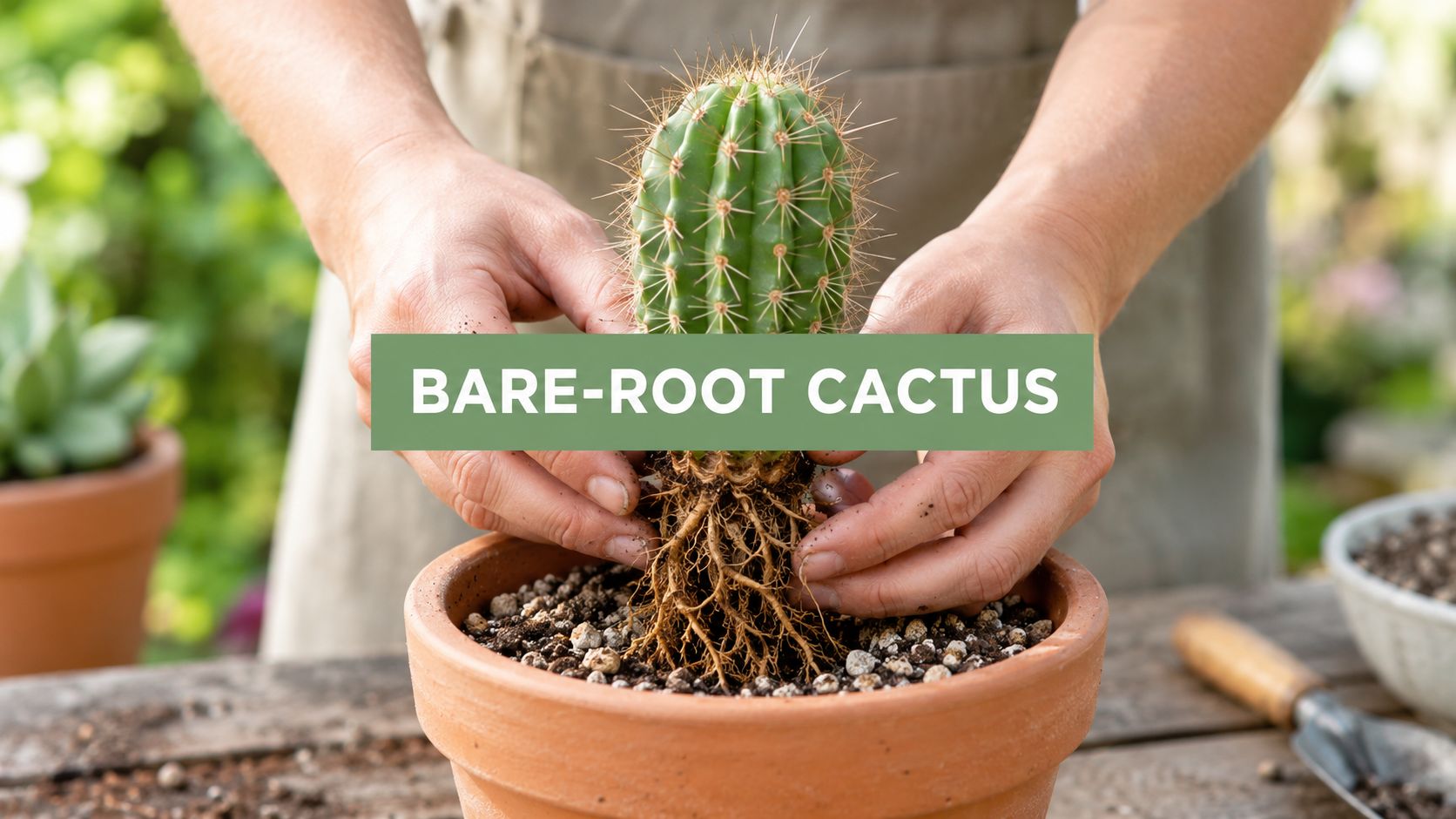
If your plant arrived bare-root from an online order, expect a short adjustment period. It may sit a little loose at first and show less immediate vigor than a nursery specimen that never left its pot. That is normal. Give it bright conditions, sharp drainage, and time to knit new roots into place.
Repotting without turning it into a wrestling match
Repotting is usually about control, not speed. You repot when the container has become unstable, the roots have filled the pot, or the plant has outgrown the space in a way that makes watering and handling awkward.
Start with dry soil. A dry root ball is lighter, cleaner, and less likely to break apart in your hands. Before you lift anything, wrap the outer leaves with folded cardboard, newspaper, or a thick towel. This creates a temporary grip zone and keeps the sharp margins from catching your arms every time the plant shifts.
Then follow a calm sequence:
- Lay the pot on its side and slide the plant out. Do not pull straight up by the rosette.
- Check the roots and trim away anything dead, mushy, or foul-smelling with a clean blade.
- Keep the planting depth the same in the new container.
- Backfill with gritty mix and firm it gently so the plant sits steady.
- Wait before soaking if roots were cut or disturbed, giving wounds time to dry.
A good rule is simple. Repot because the plant needs more stability or root room, not because every larger pot looks like an automatic upgrade.
Propagation from pups
This plant gives you its own replacement plan. Agave americana produces offsets, often called pups or suckers, around the base. Over time, those offsets can form a colony, and after the main rosette flowers and dies, the younger offsets carry the plant forward. A research review from the NIH also notes the species' long history of fiber use and its agricultural potential in dry regions with low inputs (PMC review of Agave americana).
For a home grower, the useful part is practical. You usually do not need seed. You wait for a pup large enough to handle and separate it cleanly.
The best pups have some size and, ideally, a few roots of their own. Once you see one that looks established, use this method:
- Brush soil away from the base so you can see where the pup joins the parent.
- Cut it free with a clean knife or pruner and keep as much root attached as possible.
- Let the cut dry and callus before potting.
- Place it in a small, fast-draining pot rather than a large container that stays wet too long.
If you want a broader look at offsetting and leaf, stem, and division methods in succulents, see our guide on how to propagate succulents for endless plants.
A short visual can make the handling process easier to understand before you try it:
One final point helps new owners avoid trouble. A pup removed too early is like a cutting taken before it has enough stored energy. It can survive, but it struggles more. Waiting for a sturdier offset usually gives you a cleaner separation, a faster start, and a much better chance of success.
A healthy agave rewards restraint. Give it space, fast drainage, and careful hands, and it will do the rest.
Designing with a Living Sculpture
Agave americana variegata works best when you design around its shape instead of trying to squeeze it into a leftover opening. The plant has presence before it has size. Even a younger specimen reads as bold because every leaf points outward with intent.
That’s why the right placement does two jobs at once. It shows off the rosette and reduces the chance that someone gets stabbed while carrying groceries.

Where the plant looks best
This agave pairs naturally with gravel, stone, decomposed granite, and other materials that echo dry settings. It also looks strong in a plain container where the rosette shape stays the star.
Three design settings tend to work especially well:
| Setting | Why it works | What to watch |
|---|---|---|
| Rock or xeriscape bed | The plant becomes a focal point among lower textures | Keep clear circulation around it |
| Large patio container | The form is elevated and easy to appreciate | Don’t place beside seating edges |
| Entry statement planting | The symmetry has formal impact | Only works if people won’t brush past it |
The contrast between the pale margins and darker center gives the plant visual punch even from a distance. That means it doesn’t need crowding from companion plants. In fact, crowding often weakens the composition.
The safety problem most guides gloss over
Many care guides say the leaves are sharp, then move on. That’s not enough. Existing content often warns about “sharp toothed margins and terminal spines” but misses practical safety guidance, even though the plant reaches 4 to 6 feet high, spreads 6 to 10 feet wide, and can carry leaves up to 6 feet long, making placement away from walkways critical, as summarized by Planet Desert’s product page.
That mature spread changes how you should think about home use. Don’t place it based on the nursery pot. Place it based on the future leaf line.
Family-safe design choices
If you have children, dogs, frequent guests, or tight side yards, placement becomes a design discipline rather than a casual decision.
Use practical barriers instead of hoping people will notice the spines:
- Create a buffer zone with rock mulch or a dry stream bed around the plant.
- Keep it out of direct traffic paths near gates, paths, mailboxes, and play areas.
- Use containers strategically to lift the plant into a visible, intentional position.
- Avoid blind corners where a leaf tip could meet someone turning quickly.
- Don’t flank narrow steps or small landings with it, even if the symmetry seems attractive.
For pet households, the main issue is curiosity. Young dogs and outdoor cats investigate with noses and shoulders, not caution. For child-heavy gardens, low eye-level spines are the concern.
If a person can forget the plant is there for one second, the placement is too close to traffic.
Good design is also maintenance planning
A mature agave needs room for cleanup, pup removal, and possible future extraction. If you cram it against a fence or wall, every task becomes harder and less safe.
Think ahead about access:
- Can you reach the base without stepping into the leaves?
- Can you remove offsets safely?
- If the plant flowers years from now, can you manage the aftermath?
That future-minded approach makes the planting more successful and more responsible. The best agave placement feels deliberate, calm, and slightly untouchable. That’s exactly right for this species.
Troubleshooting Common Agave Ailments
Agave americana variegata is tough, but tough doesn’t mean trouble-free. Gardeners’ World notes that mature plants can reach leaves up to 6 feet long with a spread of 6 to 10 feet, and that while the plant is resilient, owners still need to watch for pests and rot in addition to getting the light right for strong growth, especially with over 6 hours of daily sun helping performance, according to their plant profile.
Most problems come from one of two causes. Either the plant is staying too wet, or something has attacked stressed tissue. When you troubleshoot, look at the base first, then the leaves, then the growing conditions.
Soft base and collapsing leaves
This is the red-flag problem. If the center feels unstable, the lower leaves go mushy, or the plant starts leaning in wet soil, suspect rot.
Common causes include poor drainage, too-frequent watering, or a container that stays cold and wet too long.
Try this response plan:
- Stop watering immediately until you understand what’s happening.
- Check the drainage path in the pot or planting area.
- Remove obviously rotted tissue with a clean tool if salvage is possible.
- Shift to drier, faster-draining conditions before watering again.
If the crown is badly compromised, recovery can be difficult. That’s why prevention matters more than treatment.
Cosmetic leaf damage
Not every blemish is a crisis. Agaves often pick up scars from handling, brushing, or weather stress. Those marks usually stay visible because succulent leaves don’t heal like soft foliage on fast-growing houseplants.
Watch for these patterns:
| Symptom | Likely issue | First adjustment |
|---|---|---|
| Pale or scorched patches | Light stress after a sudden move | Acclimate more gradually |
| Stretching or open weak form | Too little light | Move to brighter conditions |
| Wrinkling | Soil staying dry too long | Water deeply, then let dry again |
| Yellowing lower leaves | Age or stress signal | Check roots and watering habits |
A single old leaf declining at the base can be normal. A general pattern across the plant usually points to environment.
Pests to inspect for
Because the leaves are stiff and the rosette can be dense, pests sometimes hide in folds, near the base, or under older foliage. Scale and similar sap-feeding pests can go unnoticed until the plant looks dull or weakened.
A simple inspection routine works well:
- Look at the leaf bases where pests can shelter.
- Check both leaf surfaces under good light.
- Inspect around the crown for anything clustered or crusty.
- Remove badly affected tissue if needed and isolate container plants.
For minor infestations, physical cleaning and better airflow often help. For more stubborn issues, many growers use treatments labeled for succulent-safe pest control, always following the product directions.
Problems caused by good intentions
New owners often create stress by trying to optimize too aggressively. They fertilize too often, repot too soon, water on a schedule without checking the mix, or move the plant repeatedly.
That kind of care feels attentive, but agaves prefer steadiness.
A calm routine beats a heroic rescue plan. Check the roots, the light, and the drainage before you blame the plant.
If your agave looks off, ask three plain questions. Is it getting enough light? Is the root zone drying properly? Was anything changed recently? Those answers solve most problems faster than any spray bottle.
Your Cactus Outlet Plant From Box to Backyard
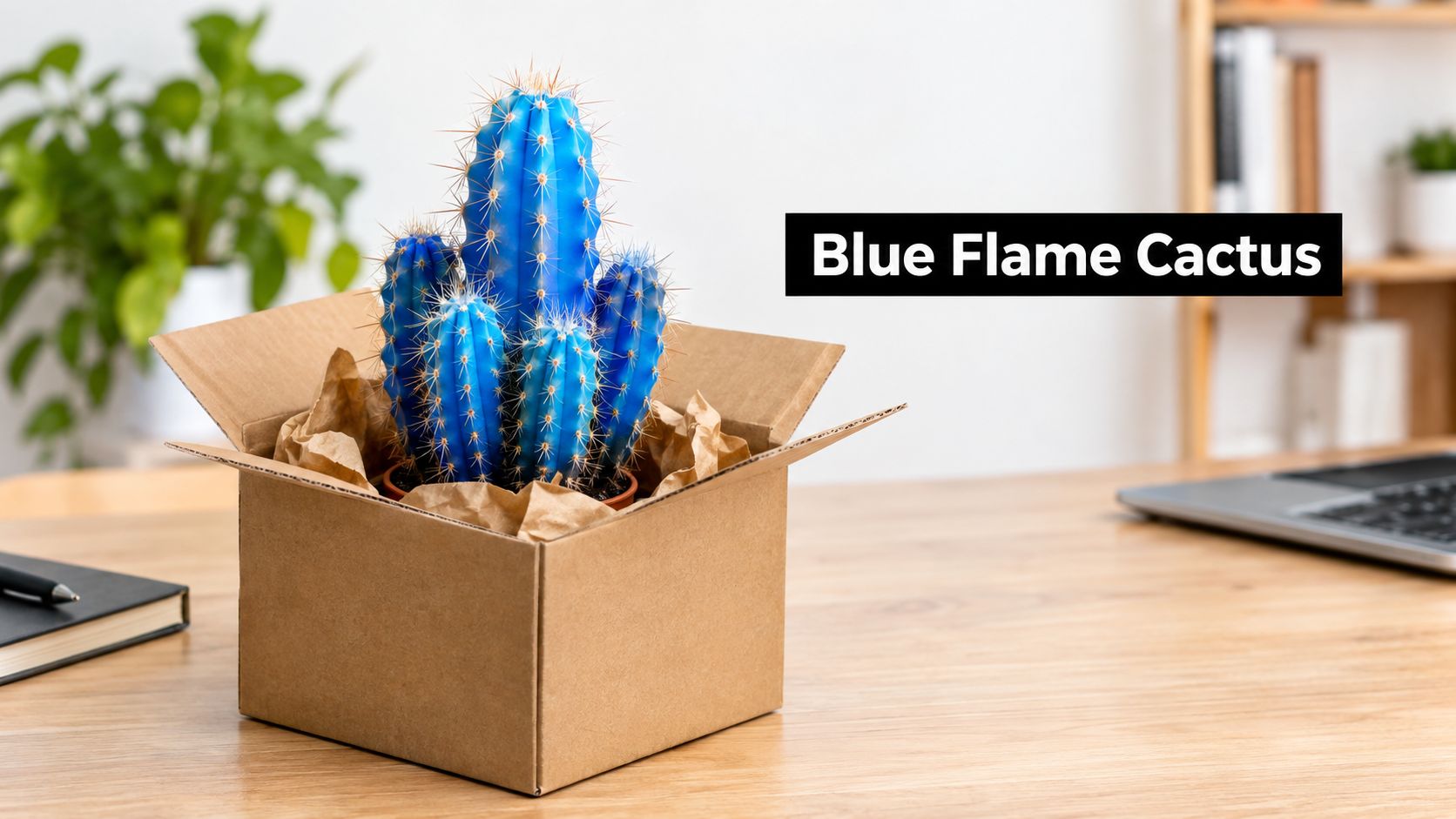
Buying a large spiny succulent online feels risky until you understand what a healthy arrival looks like. Many new owners expect a showroom-perfect plant the moment the box opens. Agaves don’t work that way. Shipping is a temporary condition, not the plant’s final presentation.
A shipped agave may arrive with older outer leaves marked, a slightly compressed shape, or roots that need time to reestablish. None of that means the plant is failing. It means the plant has been packed for transit and now needs a steady reset into light, air, and fast-draining media.
Unboxing without getting jabbed
Open the box in a clear area with room to work. Don’t do it in a narrow hallway, near children, or while balancing the plant on a kitchen chair.
Use a simple method:
- Wear protective gloves and long sleeves before opening inner wrapping.
- Cut packing material away gradually rather than pulling hard on the plant.
- Support the base or root area instead of grabbing the leaf tips.
- Inspect for broken or bent outer leaves and leave them alone unless they’re fully dead.
If your plant arrives bare-root, that’s often a practical shipping choice for succulents. It reduces excess moisture during transit and makes packaging safer and cleaner.
The first few days after arrival
Don’t rush straight from box to blazing afternoon sun. A shipped plant has already been through handling, darkness, and temperature changes. It needs a short acclimation period.
A steady approach works better than a dramatic one:
- Place it in bright sheltered conditions first.
- Pot it into gritty, fast-draining soil if it arrived bare-root.
- Wait before resuming a normal watering rhythm.
- Watch for firmness and visual stability, not instant growth.
Some owners panic because the plant doesn’t “perk up” like a leafy tropical. Agaves don’t give that kind of feedback. Their progress is quieter. You’re looking for a plant that remains firm, upright, and settled.
Reading normal shipping stress correctly
Outer leaf scuffs are common. Minor cosmetic marks are common. A rosette that needs time to relax into its natural posture is common. Serious warning signs are softness, foul-smelling rot, or a plant that continues declining after proper potting and dry recovery time.
One practical advantage of ordering from a specialist is that the plant is usually packed by people who understand how awkward and spiny these forms are. The Cactus Outlet is one option that sells large cacti and succulents online and provides care information to help buyers handle post-arrival setup.
Moving from patio plant to long-term specimen
Once the agave has settled, think in phases instead of days.
The arrival phase is about inspection, potting, and calm acclimation.
The establishment phase is about rooting and stable care.
The maturity phase is about space, safety, and design.
That long view changes your decisions. You stop asking, “Where can I fit this today?” and start asking, “Where can this plant live well for years?”
For online buyers, that’s the biggest mental shift. The box isn’t the finish line. It’s chapter one. If you handle that chapter well, agave americana variegata becomes one of the most durable and memorable plants in your collection.
If you’re ready to add agave americana variegata or compare it with other large statement succulents, browse the curated selection at The Cactus Outlet. You’ll find specimen plants suited to collectors, home gardeners, and outdoor design projects, along with practical care information to help you start well.