

A small aloe vera plant can cost as little as $9.99 to about $14, while larger and more mature plants move into premium pricing, with related aloe items reaching $1,399.30 in nursery catalogs and large specimen plants sold as premium stock. If you're staring at a cheap aloe in one listing and a much pricier one in another, the difference usually isn't just the plant. It's size, maturity, container, and the cost of getting it to you alive.
Most buyers hit the same moment of confusion. They see a compact aloe on a store shelf, then find a much larger one online and wonder whether the expensive one is overpriced or the cheap one is a gamble.
In practice, aloe vera plant cost only makes sense when you look at the full purchase. A starter plant may be perfectly fine for a patient grower. A mature specimen may be the better buy for someone who wants immediate visual impact, usable outer leaves, or a gift that already looks finished. The smart question isn't “What does aloe cost?” It's “What does the right aloe cost once it's delivered, potted, and established?”
How Much Does an Aloe Vera Plant Cost?
If you want the short nursery-owner answer, aloe pricing starts low and spreads out fast.
A standard aloe vera plant can be listed at $9.99 on a nursery page, while a small 4-inch aloe listing sits at $13.97 on a big-box retail page. At the other end, aloe-related catalog pricing can stretch from $12.99 through $1,399.30, which shows how much size, form, and sales channel change the number a buyer sees. The broader commercial context matters too. The global aloe vera market was valued at USD 724.20 million in 2024 and is projected to reach USD 1,485.92 million by 2032, according to Data Bridge Market Research's aloe vera market report.
That range surprises people because they assume aloe is one simple houseplant. It isn't. Aloe sits in multiple markets at once. It sells as a houseplant, a decorative specimen, a medicinal and cosmetic raw material, and a fresh leaf crop.
What the shelf price doesn't tell you
A cheap aloe can still be a poor purchase if it's undersized for your purpose. If you want a kitchen windowsill plant to grow over time, a starter plant is fine. If you want a plant that fills a room now, or you want thick outer leaves sooner, a tiny plant often costs less upfront but more in waiting.
Practical rule: Buy for the job. Don't buy a starter plant when you need a finished plant.
Why buyers see such wide price swings
Aloe pricing usually changes because of a few real-world factors:
- Plant age: Older plants represent more growing time and more nursery space.
- Pot size: Bigger containers mean more media, labor, bench space, and freight.
- Condition: A full, rooted, undamaged plant is worth more than a stressed one.
- Selling channel: Local pickup and shipped e-commerce plants don't carry the same handling costs.
If you understand those four levers, the price tags stop looking random.
Understanding Typical Aloe Vera Price Ranges
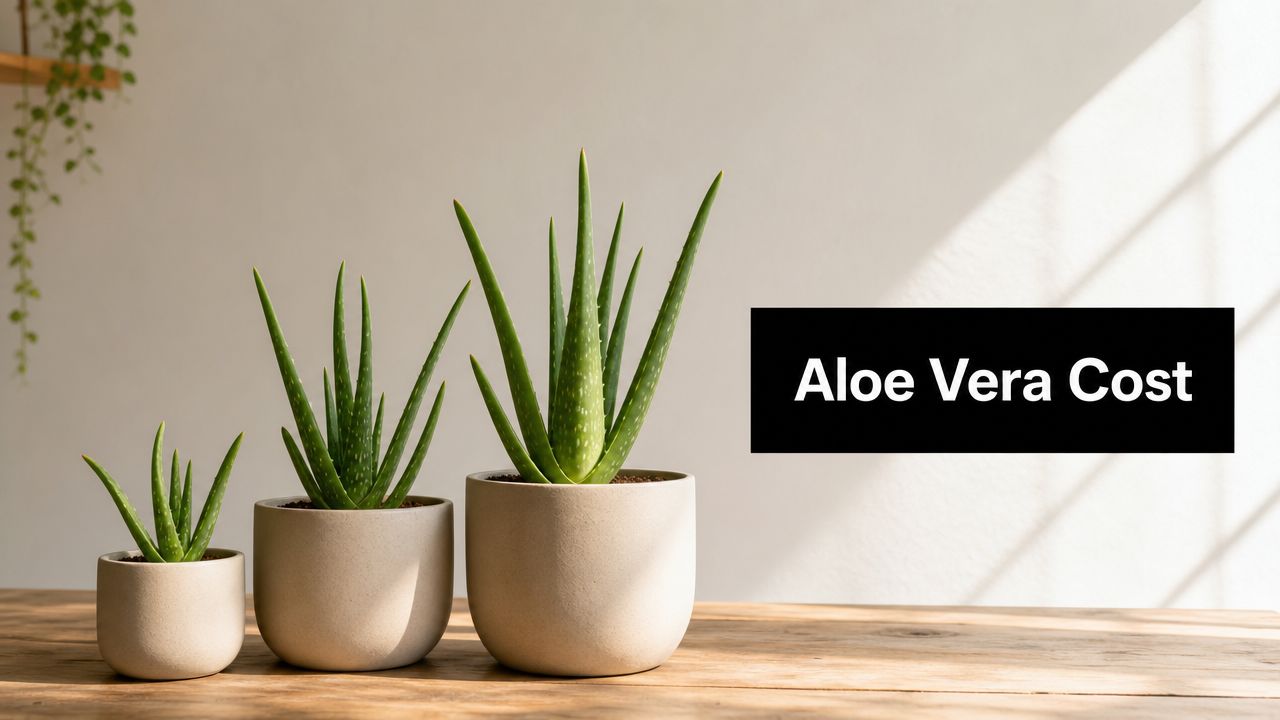
The easiest way to read the market is by tier, not by species name alone. Most buyers aren't comparing botanical nuance. They're comparing a small starter, a decorative mid-size plant, and a mature specimen.
Retail pricing shows a very wide spread. A standard aloe may list at $9.99, while the same nursery's broader aloe catalog can run as high as $1,399.30, showing how dramatically size and form affect price, as reflected in this aloe market overview reference.
Typical Aloe Vera Plant Cost by Size 2026
| Plant Tier | Common Pot Size | Estimated Price Range | Ideal Use Case |
|---|---|---|---|
| Starter aloe | 4-inch grower pot | $9.99 to $13.97 | First houseplant, budget buy, propagation starter |
| Mid-size aloe | Larger nursery pot | Higher than starter pricing, varies by seller and presentation | Home décor, gifting, faster time-to-value |
| Mature specimen | Large container, including premium specimen sizes | Premium pricing | Interior styling, immediate impact, thicker established growth |
That table is intentionally simple because the market isn't cleanly standardized. Nurseries price by form, fullness, and condition as much as by pot diameter.
Potted plant versus raw leaf
There's also a format question. A potted aloe isn't the same purchase as aloe for immediate use. A single large leaf can sell for 2.00€ farm-direct, which makes it far cheaper than a live potted plant if your only goal is short-term gel access. A potted plant is a living asset. A leaf is a consumable.
For buyers used to service pricing in other industries, it helps to think in the same framework you would use when comparing how much AUSFF charges for services. The headline number matters, but the scope of what's included matters more. A rooted plant, container, production time, packing, and survivability all sit inside the price in a way a cut leaf does not.
A low shelf price tells you very little if the plant is undersized, unstable in transit, or not yet useful for your purpose.
Who each tier fits
- Starter plants: Good for hobbyists who enjoy growing on and don't mind waiting.
- Mid-size plants: Better for most households because they look intentional right away.
- Mature plants: Best for decorators, collectors, and buyers who want presence now.
The mistake I see most often is buying the cheapest tier for a premium-use situation.
What Determines an Aloe Plant's Price Tag?
Aloe pricing isn't mysterious once you break it into operational factors. The plant itself matters, but so do the years behind it and the risk involved in selling it.

A live aloe's price scales sharply with maturity and handling complexity. A small 4-inch potted aloe can sell for $13.97, while a 6 to 8 ft specimen in a 12 to 14 inch pot is a premium item because it represents years of growth and more difficult freight handling, as shown in this Home Depot aloe listing.
Size and maturity
This is the biggest driver.
A small aloe is cheap because it hasn't consumed much bench space, labor, or time. A large aloe has tied up nursery resources for much longer. It also has more biomass to protect and more roots to keep stable in transit.
If you're curious why larger succulents jump in price so quickly, this explanation of why large cacti and succulents are so expensive applies directly to mature aloe as well.
Variety and form
Common aloe vera is usually more accessible than unusual aloe types or especially sculptural specimens. Even within common aloe, two plants of the same species can price very differently if one is fuller, better shaped, or offsetting nicely.
In nursery work, buyers often pay for form without realizing it. A symmetrical rosette with clean leaves always reads as more valuable than a stretched or scarred plant.
Source and cultivation
Big-box stores, local nurseries, specialty succulent growers, and online sellers aren't offering the same product standard. One may sell a fast-turn starter in plastic. Another may sell a slower-grown, better-rooted plant that was handled specifically for shipment.
That doesn't mean the pricier source is always the smarter source. It means you need to judge what is included. Root quality, pest management, packing skill, and acclimation all affect value.
Health and condition
Aloe should look firm, stable, and well-colored for its growing environment. A damaged crown, soft base, or weak root system lowers value fast, even if the sticker looks attractive.
Healthy tissue is part of the price. So is the absence of problems you can't easily fix later.
Calculating the True Delivered Cost of Your Aloe
Sticker price gets too much attention. Landed cost is what counts.

Many buyers miss that shipping fees for live plants can exceed the plant's cost, and the setup cost also includes a proper pot and well-draining soil because aloe is sensitive to root rot, as explained in Gardenia's Aloe barbadensis profile.
What belongs in the landed cost
If you're buying online, count all of this before you compare two offers:
- Plant price: The visible base price.
- Packing and shipping: Often the biggest variable, especially as size increases.
- Container upgrade: Many nursery pots are temporary, not decorative.
- Soil or gritty mix: Aloe needs fast drainage, not dense potting soil.
- Replacement risk: A bargain plant that arrives damaged isn't a bargain.
The freight side is what catches people. Larger succulents need stabilization, internal padding, stronger cartons, and more dimensional shipping space. Buyers who want a better feel for the logistics side can look at these tips to lower freight costs. The same basic freight logic applies to plant deliveries even though live plants add extra handling constraints.
Why cheap can become expensive
A very cheap aloe often arrives with less room for packing tolerance. Small or lightly rooted plants can shift in the box. Large heavy plants can snap or bruise if they aren't braced well. Either way, the replacement cycle is what drives the actual cost up.
This video gives useful visual context for how aloe is handled and understood as a living product, not just a commodity item.
The cheapest checkout total isn't the lowest-cost purchase if you need to repot immediately, replace bad soil, or deal with transit damage.
A good aloe purchase lands in usable condition and settles in quickly. That's the benchmark.
Buying Smart How to Find the Best Value
Value starts with matching the plant to the job. If you want an aloe for décor today or for harvesting thick outer leaves sooner, maturity matters. Healthline notes that fresh gel is typically taken from thick outer leaves, which is one reason established plants carry more practical value than undersized starters in the right use case, as discussed in this guide on how to use an aloe vera plant.

What to inspect first
Don't start with the price tag. Start with the body of the plant.
- Leaf firmness: Leaves should feel plump, not deflated.
- Base condition: Avoid mushy or unstable crowns.
- Color and shape: Look for even growth rather than stretched, weak foliage.
- Root confidence: A plant that rocks loosely in the pot may not be established.
- Surface cleanliness: Watch for pests, residue, or hidden damage where leaves meet.
Aloe is forgiving, but not forgiving enough to make every rescue worth buying.
When paying more makes sense
A slightly more expensive aloe can be the better value if it saves you time, reduces failure risk, and arrives ready to live where you want it. That's especially true for gifts, styled interiors, office installs, and client-facing spaces.
For buyers comparing sources, where to buy aloe vera plants is a useful reference point because seller type changes the experience as much as price does. Local nurseries may win on pickup and immediate inspection. Online specialty sellers may make more sense if you're after a specific size or form.
Match the plant to your real goal
Here's the practical way to decide:
- Choose small if you enjoy growing plants on and don't mind waiting.
- Choose established if you want a finished look right away.
- Choose local pickup if you want to avoid freight risk.
- Choose shipped nursery stock carefully if size, condition, and packing quality are clearly shown.
Buy the healthiest plant that fits your actual purpose, not the cheapest plant that fits your search filter.
That's how you get better value in the aloe market.
Frequently Asked Questions About Aloe Vera Cost
Is it cheaper to buy a leaf or a whole plant
Yes, if your only goal is immediate gel use. A single large leaf can be bought for 2.00€ farm-direct, while a potted plant is a longer-term purchase that provides décor value and ongoing growth, as shown in this farm-direct aloe leaf listing.
Should landscapers or designers buy in bulk
Usually, yes, if the project needs visual consistency. Bulk buying can simplify sizing and presentation, but the right choice depends on whether the plants are for grow-in, staging, or immediate install. Shipping and handling become a bigger piece of the decision at that point.
What's the minimum long-term ownership cost
After purchase, ongoing cost is usually modest if the plant is in the right container and draining mix. Most problems come from poor setup, overwatering, and weak placement rather than from expensive maintenance. Good basic care matters more than frequent spending. For that part, this guide on aloe vera plant care covers the essentials.
If you're comparing aloe options and want a plant that's sized for the way you'll use it, The Cactus Outlet is one source to review alongside local nurseries and big-box listings. Look closely at plant size, condition, and shipping details, then buy the aloe that delivers value after it arrives, not just the one with the smallest sticker price.