
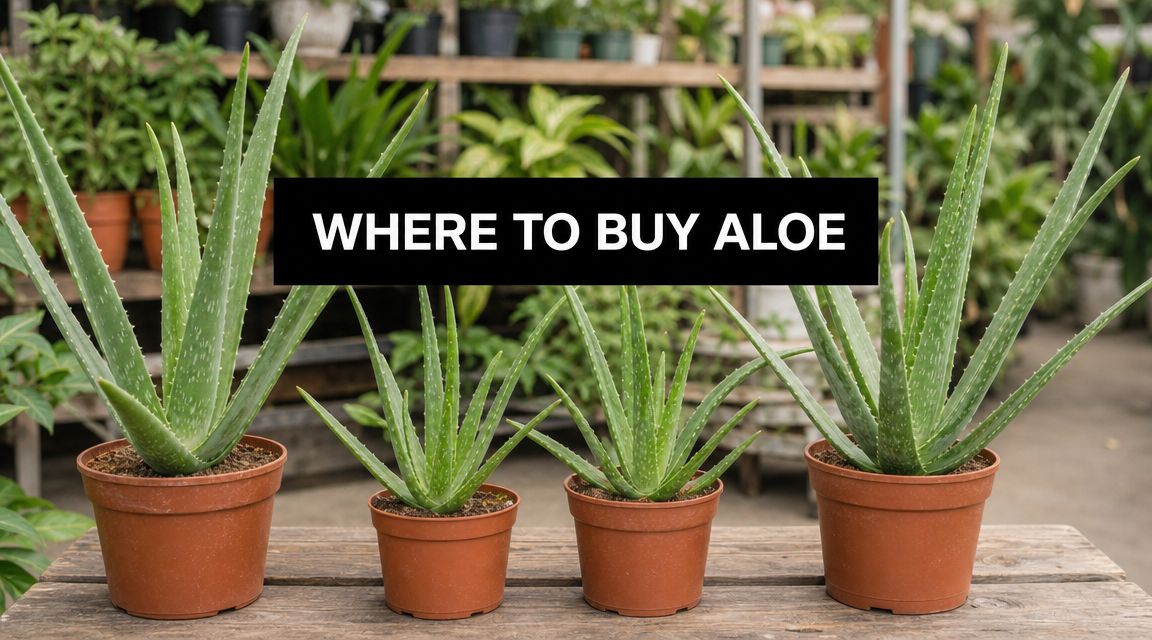

You're probably looking at aloe in one of two places right now. It's either sitting on a big-box shelf in a plastic pot with soggy soil, or it's on your screen with a clean product photo and almost no clue how that plant will survive shipping.
That's why aloe vera plants where to buy isn't a simple list-post question. Aloe is common, but a good purchase still depends on the seller, the plant's condition, and what you want from it. A kitchen windowsill plant, a giftable specimen, a landscaping aloe, and a leaf-producing utility plant are not the same shopping job.
Aloe vera has been used for centuries for health, beauty, medicinal, and skin-care purposes, and modern guidance makes an important distinction between topical gel use and oral products that need more caution, as noted in this PubMed Central review of aloe vera use and safety. That history is part of why aloe shows up almost everywhere plants are sold. Retailers know people recognize it instantly.
Still, buying the first aloe you see is how people end up with rot, pests, or a stretched-out plant that never settles in. If you want a useful primer on home aloe vera cultivation, it helps to read one before you buy, because good care starts with choosing the right plant. If you're also comparing what different sizes and retail formats usually look like, this aloe vera plant price guide gives helpful context.
Why Buying an Aloe Vera Plant Deserves a Plan
Aloe gets treated like an impulse plant. That's the first mistake.
Someone sees a tray of aloes by the checkout lane, notices one with thick leaves, and assumes thicker means healthier. Then they bring home a plant that has been overwatered for weeks, packed in peat-heavy soil, and kept in dim store lighting. Two weeks later the center softens, the bottom leaves collapse, and aloe gets blamed for being “surprisingly hard.”
Common plant doesn't mean foolproof
Aloe is easy to find because it's widely grown, widely recognized, and easy to merchandise. But availability is not the same as quality. The same plant species can be a durable, long-lived houseplant from one seller and a slow-motion failure from another.
What changes the outcome is usually hidden at purchase time:
- How it was propagated
- How long it sat in retail conditions
- Whether the root zone is staying wet
- Whether it was grown for indoor adaptation or greenhouse speed
- Whether you need standard Aloe vera or a different aloe entirely
Practical rule: Buy aloe based on root-zone risk, leaf condition, and seller handling. Don't buy based on pot diameter alone.
Match the plant to the job
Aloe often gets bought for two reasons at once. People want something that looks good and something that feels useful. That's reasonable, but it creates bad buying choices when the buyer doesn't define the priority.
If your goal is a simple tabletop plant, almost any healthy standard aloe can work. If your goal is regular leaf harvest for topical gel, you'll care more about vigor, maturity, and stress-free growth after purchase. If your goal is design, you may not want common Aloe vera at all.
A little planning saves time because it changes the shopping question from “Where can I grab one today?” to “Which seller is most likely to deliver the right plant in the right condition?”
Your Aloe Vera Marketplace Options
Aloe vera is one of the most widely distributed succulents globally, originating on the Arabian Peninsula and now common in tropical and arid regions. Its hardiness and adaptability explain why it's stocked across mainstream channels, from online stores to local garden centers, as described by Kew's aloe vera profile.
That broad availability is helpful, but it also creates noise. Differences between channels are not just price. They're handling, variety, accuracy, and risk.
For a quick side-by-side view, this chart helps frame the buying channels.

Specialized online retailers
I'd consider specialty succulent sellers when the plant itself matters more than immediate convenience. Specialty succulent sellers usually offer clearer plant identity, better photos, and better odds that the staff knows what stress damage looks like.
You're also more likely to find size options and non-standard aloe types. If you're shopping broadly for succulents and comparing seller styles, this guide on the best place to buy succulents is useful for understanding how specialty vendors differ.
Pros
- Better plant identity: You're less likely to get a mislabeled “aloe” that turns out to be something else.
- Wider selection: Standard Aloe vera, larger specimens, and collector-friendly aloes are easier to find.
- More relevant support: Good specialist shops usually explain soil, light, and shipping expectations.
Cons
- Shipping risk: Weather and transit delays matter.
- No hands-on inspection: You can't squeeze leaves or inspect the crown before buying.
- Return friction: Resolving issues is slower than putting a plant back on a local shelf.
Local nurseries and independent garden centers
Local nurseries are usually the best middle ground. You can inspect the actual plant and often get better cultural conditions than at chain stores. The difference shows up in root health and leaf firmness.
Some independent nurseries also source from growers who don't treat aloe like disposable décor. That alone improves your odds.
What usually works well
- In-person quality check: You can reject damaged or pesty plants immediately.
- Faster recovery: No shipping shock.
- Staff knowledge: At a good nursery, someone can tell you whether the aloe has been kept indoors, outdoors, dry, or freshly watered.
What doesn't
- Selection may be narrow: Often just the standard aloe in a few pot sizes.
- Supply is inconsistent: Great one month, weak the next.
- Care practices vary: One nursery may keep aloe bone dry. Another may drench everything on the same hose schedule.
Big-box stores
Big-box stores are convenient. They are not automatically bad. But they require the most careful inspection.
Aloe from a chain store often suffers from retail watering habits, poor airflow, and low-light holding areas. The plant may have arrived fine and declined on the shelf.
The biggest risk at a chain store isn't usually the species. It's the number of hands and watering cycles between the grower and your cart.
Why people still buy there
- Easy access: You can often find aloe year-round.
- Immediate pickup: Useful if you need a plant today.
- Low commitment: Fine for buyers who don't mind walking away from imperfect stock.
Why experienced buyers hesitate
- Overwatered soil is common
- Pest problems can spread across shared benches
- Labels are often generic
- Plants may be stretched from dim display conditions
Peer-to-peer marketplaces
Etsy, Facebook Marketplace, neighborhood swaps, and hobby growers can be excellent or terrible. This channel depends almost entirely on the individual seller.
I'd consider peer-to-peer sellers when I want a division from a healthy mother plant, a local pickup, or a less common aloe from someone who grows them. I'd avoid it when the listing uses borrowed photos, vague names, or no mention of current growing conditions.
If you've ever compared plant sourcing to seed sourcing, the same principle applies. Buyer success depends on seller specificity, which is why resources on niche sourcing, like heirloom seed options at Seed Cellar, are useful as a mindset even outside succulents.
A short video can also help you get a visual feel for what healthy aloe stock should look like before you buy.
How to Inspect an Aloe Vera Plant Before You Buy
If you only remember one thing, remember this. Aloe quality is a plant health question, not a size question.
Reliable guidance recommends looking for firm, upright leaves and rejecting plants with water-soaked spots or translucent patches, which point to overwatering and possible rot. Good seller guidance also notes that aloe should be watered only after the top 3 to 4 inches of soil dry out, as explained in this aloe buying and care reference.

Start with the leaves
Healthy aloe leaves should feel firm, full, and structurally confident. They don't need to be perfectly symmetrical, but they shouldn't look waterlogged or half-collapsed.
Check for these warning signs:
- Translucent patches: This usually means tissue breakdown from excess moisture.
- Water-soaked spots: Walk away. These often precede rot.
- Bent, creased leaves near the base: Could be old physical damage, but paired with softness it's a bad sign.
- Pale, weak growth: Often means poor light conditions over time.
Aloe can show minor cosmetic scars and still be fine. Structural softness is the issue, not superficial blemishes.
Inspect the crown and base
A lot of buyers inspect only the leaf tips. The crown and base matter more.
Look down into the center where new leaves emerge. Then check around the base where leaves meet the soil line. You're watching for hidden trouble:
| Check point | What you want | What to avoid |
|---|---|---|
| Crown | Clean, dry center | Sticky residue, fuzz, rot smell |
| Leaf bases | Tight attachment | Mushiness, blackened tissue |
| Soil surface | Dry or nearly dry top layer | Green algae, soggy mix, fungus gnats |
| Pot rim and drainage area | Clean and stable | Salt crust plus constantly wet media |
If you want a deeper care baseline after purchase, this aloe vera plant care guide is a practical follow-up.
Don't be impressed by a huge aloe in a wet decorative pot. A smaller plant in fast-draining mix is usually the safer buy.
Check for pests without overcomplicating it
You don't need a magnifier. Just slow down.
Mealybug residue often shows up as white cottony bits tucked near the crown or lower leaf bases. If I see that on aloe, I usually pass unless I'm buying from a grower I trust and can isolate the plant immediately.
Use this quick scan:
- Look at leaf joints for white debris or webby residue.
- Lift the pot slightly and see whether the plant wobbles loosely in soggy mix.
- Smell the soil if you can. Sour or swampy is enough reason to skip it.
Ask one or two useful questions
When buying in person, ask something specific. “How often do you water this?” isn't always useful because staff may not know.
Better questions are:
- Was this grown indoors or in a greenhouse?
- Has it been watered recently?
- Is this a pup-propagated plant or seed-grown stock?
A seller who can answer those cleanly is usually more reliable than one who only says, “They're super easy.”
The Online vs Local Buying Decision
The online-versus-local decision isn't convenience versus effort. It's logistics versus inspection.
Buying locally gives you immediate visual control. Buying online can give you better selection and cleaner sourcing. The smarter option depends on where the risk is lower for your situation.

Why online buying works for some aloe purchases
Online buying is strongest when you care about variety, seller specialization, and cleaner inventory flow. Plants from direct-shipping growers often spend less time languishing on public retail benches.
That matters with aloe because shelf deterioration is common. A plant can leave a grower in strong condition and slowly decline after repeated watering and low-light storage. Direct shipping can avoid that stage.
Shipping quality is the hidden variable most buying guides ignore. Aloe is sensitive to cold and overwatering, and reputable sellers emphasize packaging, drainage, and post-shipping acclimation. Guidance for shipped aloe also stresses letting the plant settle and the root area dry before watering after transplanting, as discussed in this shipping-focused aloe product reference.
What separates a good online seller from a risky one
A clean product photo doesn't tell you much. What matters is the seller's shipping behavior.
Look for signs the seller understands succulent logistics:
- Protective packaging: The plant should be stabilized so leaves don't snap in transit.
- Weather awareness: Cold snaps and heat spikes affect delivery outcomes.
- Dry-side shipping: Aloe usually ships better when not freshly watered.
- Acclimation guidance: Good sellers tell you what to do after unboxing.
One body mention is worth making here. The Cactus Outlet is one example of a specialist retailer that sells aloe plants online within a broader cactus and succulent catalog, which makes sense for buyers who want species-specific shopping rather than generic houseplant inventory.
A strong online aloe seller doesn't just ship plants. The seller manages stress before the box ever closes.
Where local buying still wins
Local buying wins when you need to inspect the exact plant and take it home the same day. This is especially useful if you're buying common Aloe vera and don't need rare forms.
You can test firmness, inspect the crown, and avoid shipping shock altogether. If you have a strong local nursery, that's often the lowest-risk route for a basic aloe purchase.
But local buying has weak points too:
- Retail stress can be advanced: The plant may have been declining for days or weeks already.
- Inventory can be shallow: You may have only one standard form to choose from.
- Seasonal inconsistency is real: Chain and nursery inventory changes with region and time of year.
A practical decision table
Here's how I'd make the call.
| Your situation | Better channel | Why |
|---|---|---|
| You want one healthy standard aloe fast | Local nursery | You can inspect it and skip shipping stress |
| You want a larger or more unusual aloe | Specialized online seller | Better selection and more reliable identity |
| You live in harsh weather during transit windows | Local purchase | Shipping exposure may outweigh the benefits |
| Your local stores keep aloe in poor condition | Online specialist | Cleaner handling can beat bad local inventory |
| You're buying a gift | Depends on seller handling | Presentation matters, but shipping reliability matters more |
The hidden acclimation issue
Aloe doesn't love abrupt transitions. A greenhouse-grown plant moved into a dim apartment can sulk even if it was healthy when purchased. That's why plant condition and origin matter together.
A local store plant may already be halfway adjusted to indoor life, or it may be weakened by neglect. An online plant may arrive stronger but need a gentler transition. Neither channel is automatically safer. The better choice is the one that gives you the healthiest plant with the fewest stress points between grower and your home.
Choosing Beyond the Standard Aloe Vera
Most guides act like every aloe on the market is basically the same. They aren't.
Specialty sellers offer over 75 distinct types of aloe, and examples like Aloe arborescens and Aloe aristata show how much size, texture, and visual character can vary, as seen in this types of aloe collection. That changes how you should shop.

Buy by use case, not by name alone
If your goal is classic household aloe, standard Aloe vera is the obvious choice. It's recognizable, practical, and easy to place in a bright room. For many buyers, that's enough.
But once you move beyond “I just want an aloe,” the decision changes:
- For topical-gel interest: Standard Aloe vera makes sense.
- For ornamental texture: A more decorative species may be more satisfying.
- For landscaping presence: Upright or shrubbier aloe forms can do more visually.
- For collecting: Species distinction matters a lot.
Two examples that change the shopping logic
Aloe arborescens has a more architectural, branching presence than common Aloe vera. It makes more sense when the goal is visual structure or a garden statement rather than a small countertop plant.
Aloe aristata fits buyers who want a compact, decorative aloe with more textural charm. It reads differently in a pot, especially indoors, where detail matters more than bulk.
That's why “where to buy aloe vera plants” can be the wrong search when the buyer is really after a particular look. If you only shop broad retail channels, you'll mostly see the same common type repeated.
Some buyers don't need a better seller. They need a different aloe.
When local is fine and when specialty matters
If you want a straightforward windowsill plant, buying standard aloe locally is perfectly reasonable. You don't need a specialty search for every purchase.
But specialty shopping becomes worth it when:
- You care about species identity
- You want a mature specimen
- You're designing around shape and scale
- You're collecting beyond the basics
That's the point where the question shifts. You stop asking where aloe vera plants are sold and start asking which aloe belongs in your space.
Your Guide to the Perfect Aloe Purchase
The right aloe purchase is usually obvious once you define the job.
If you want a beginner-friendly plant for a sunny room
Buy locally if you have a decent nursery nearby. Choose the healthiest standard aloe you can inspect in person, and ignore the biggest plant if the soil is wet or the leaves look translucent.
If you want a gift or a cleaner-looking specimen
Use a specialist seller with clear plant photos, straightforward shipping language, and actual care guidance. The presentation matters, but the seller's handling matters more than the pot cover.
If you want a utility aloe for regular household use
Prioritize plant health over decorative styling. A medium, vigorous Aloe vera with firm upright leaves is a better buy than a stressed oversized plant that looks impressive for one day.
If you want something more decorative than standard aloe
Don't force common Aloe vera into a design role it doesn't suit. Shop by species and growth habit. That's when specialty aloe inventory becomes useful.
If your local stores keep killing aloe before you arrive
Skip them. Bad local inventory is worse than careful shipping from a grower who knows how to pack succulents. On the other hand, if you're in a rough weather window, local pickup may be safer even if the selection is dull.
The simple version is this. Buy the healthiest plant from the seller most suited to your goal. That's the whole game. Not cheapest. Not closest. Not biggest.
If you want to shop aloe from a seller focused on cacti and succulents rather than generic houseplants, browse The Cactus Outlet for live plant options and compare plant types, sizes, and care details before you buy.