

You're probably doing what most new cactus buyers do. You've found a plant online that looks perfect, the photos are clean, the reviews seem fine, and you're hovering over the buy button. The risky part isn't the checkout.
The risky part starts after the box lands on your porch.
Online advice for buying cactus plants typically covers styling tips, species lists, and broad care basics. That's useful, but it skips the phase that decides whether the cactus settles in: shipping conditions, unboxing, and the first two weeks after delivery. A plant can arrive alive and still fail soon after if you handle it like a garden-center purchase instead of a shipped desert plant.
That gap matters more now because online access has pushed the category into a high-growth phase. One market analysis projects the global cactus plant market will reach $7,014.2 million by 2025, driven by aesthetic trends, lifestyle changes, and easier online buying, according to Cognitive Market Research's cactus plants market report.
How to Choose the Right Cactus for Your Space
Excitement helps you buy. Matching the plant to your room helps you keep it.
A lot of first-time buyers choose by silhouette alone. They pick the tallest columnar cactus, the weirdest crested form, or the fluffiest little ball cactus without asking where it will live. That's how people end up with a sun-hungry plant in a dim apartment, or a compact windowsill cactus that quickly outgrows the spot.

Start with light, not looks
Before you buy anything, stand in the exact place where the cactus will live. Check how many hours of strong light that spot gets. South-facing windows usually give you the widest range of options. East and west windows can work well. A low-light interior shelf is where online cactus purchases often go wrong.
If your light is strong for much of the day, columnar cacti like a Peruvian Apple Cactus usually make more sense than delicate, slow collector pieces. If your light is good but not blazing, a Prickly Pear or a compact Golden Barrel type often gives you a better margin for error. If your home runs dim, the better choice may be to wait rather than force a cactus into a bad spot.
Buy for the room you have, not the room you wish you had.
Size descriptions also trip people up. A “3-gallon cactus” describes container volume, not necessarily the visible height. A “2-foot cactus” may be measured from soil line to tip, and that doesn't tell you how thick the stem is or how developed the root mass might be. Pot size, plant height, and actual maturity are three different things.
Beginner Cactus Comparison Chart
| Cactus Species | Light Needs | Watering | Best For |
|---|---|---|---|
| Peruvian Apple Cactus | Very bright light, strong sun preferred | Infrequent, let soil dry well | Sunny rooms, dramatic vertical shape |
| Prickly Pear | Bright light to direct sun | Infrequent | Beginners who want a forgiving grower |
| Golden Barrel | Bright light, some direct sun | Light, careful watering | Decorative focal points |
| Bunny Ear Cactus | Bright light | Moderate caution, avoid overwatering | Small-space growers |
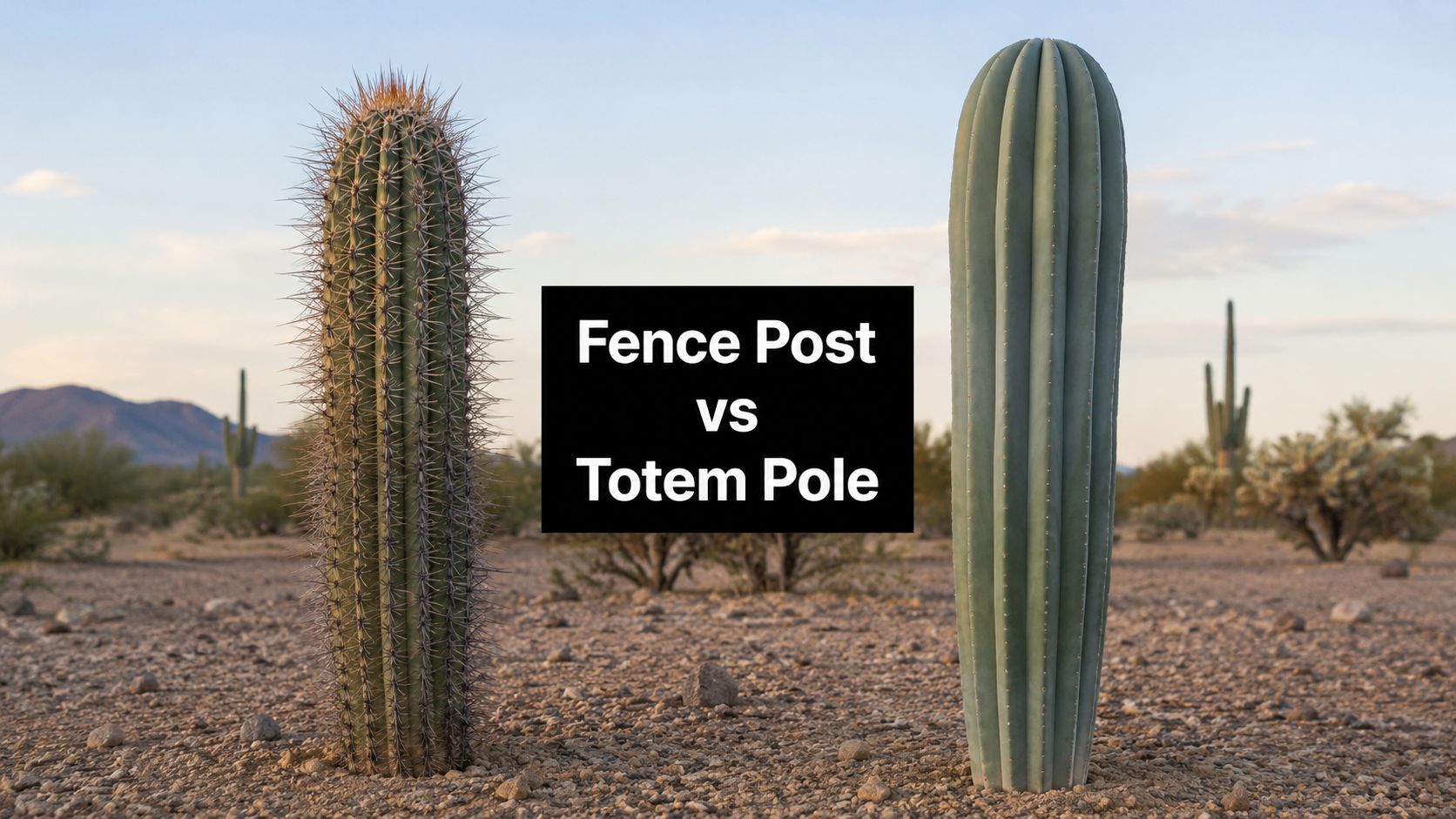
| Totem Pole type cactus | Very bright light | Infrequent | Buyers who want texture without dense spines |
If you want more ideas for home-friendly options, this guide to indoor cactus plants that suit common living spaces is a practical next step.
Pick your difficulty level honestly
New buyers often do better with plants that show stress clearly and recover steadily. Faster, sturdier cacti teach you more because they respond in visible ways to light and watering changes. Slow, rare, or sensitive species can be rewarding, but they punish rushed care.
A good first online cactus should meet three standards:
- It fits your light reality. If you can't give it enough sun, skip it.
- It matches your patience. Some cacti stay compact for a long time. Others put on obvious growth faster.
- It suits your handling comfort. Dense glochids and hooked spines can turn repotting into a miserable job if you're new.
The best online buy usually isn't the most exotic listing. It's the cactus that can arrive, rest, adapt, and start growing without requiring collector-level judgment on day one.
Vetting Online Cactus Sellers Like a Pro
A polished storefront doesn't tell you much. Shipping policy, packaging detail, and how a seller talks about plant recovery tell you far more.
When people buy cactus plants online, they often stop evaluating the seller after checking star ratings. That's too shallow. You need to know whether the seller understands live plant stress or just knows how to move inventory.

Read reviews for shipping clues
Generic praise isn't enough. “Arrived fast” and “looks great” don't tell you whether the seller packed the root zone securely or shipped at the wrong time of year. The useful reviews mention specifics: loose soil, broken spines, soft tissue, pests, crushed boxes, or how the plant looked after a week.
Look for patterns instead of one dramatic complaint. If multiple buyers mention the plant arriving soaked, recently potted, or unstable in the container, that's a warning. If several reviews mention careful wrapping and healthy, dry transit condition, that's a stronger sign.
Know what a guarantee actually covers
Many buyers are often lulled into a false sense of safety. A live arrival guarantee usually means the plant wasn't visibly dead when delivered. It does not mean the cactus was shipped in a way that sets it up for long-term success.
That distinction matters because a documented gap exists between arrival and survival. According to this guide on where to buy cactus plants online, 30 to 45% of shipped succulents develop root rot or pest infestations within 14 days due to improper transit acclimation.
Practical rule: If a seller talks a lot about replacement but says little about post-delivery handling, you're still carrying much of the risk.
A strong seller gives you more than refund language. They give clear handling instructions, realistic shipping windows, and visible evidence that they understand what the plant will go through in a box.
The seller checklist I'd use
- Check policy pages first. Shipping delays, weather holds, and return terms should be easy to find.
- Study product photos carefully. You want current-looking nursery photos, not only styled shots that hide the crown, pot surface, or stem condition.
- Look for packaging examples. Sellers who show how they wrap and brace plants reduce guesswork.
- Test contact access. If customer support is hard to find before the sale, it won't get easier after a problem.
- Watch for care depth. Sellers who explain what to do after delivery usually understand the stress of transit better than those who stop at “unbox and enjoy.”
For buyers comparing specialist shops, this overview of what to look for in an online cactus store is useful because it frames the purchase around plant quality, shipping practice, and buyer support rather than glossy listings.
Understanding the Cactus Shipping Journey
A shipped cactus is not a display-ready plant the moment the box opens. It's a plant that has just spent days in darkness, with limited airflow, vibration, and temperature risk.
Once you understand that, a lot of normal arrival quirks stop feeling alarming.

Bare-root versus potted
Bare-root shipping removes most or all soil. That lowers weight, reduces loose-media mess, and can make transit safer for some species because wet soil around damaged roots is a bad combination. The trade-off is that the buyer has to pot correctly and resist the urge to water too soon.
Potted shipping can be more convenient, especially for larger specimens. The drawback is movement inside the box. A heavy pot and shifting soil can bruise tissue or snap fine roots if the plant wasn't packed tightly.
Neither method is universally better. The right choice depends on plant size, species, transit distance, and how experienced the buyer is once the box arrives.
Timing matters more than people think
The most careful packaging can't fully protect a cactus if the shipping window is wrong. For safe shipment, ambient temperature should stay between 55°F and 85°F (13°C to 29°C) for at least 48 hours before boxing, and the preferred shipping season runs from mid-May through mid-October, according to Alibaba's plant shipping guidance for cacti. That same guidance says winter shipping is strongly discouraged for many regions.
Transit speed matters too. A good seller treats shipping time as a plant-health variable, not a minor logistics detail. The longer the plant sits boxed, the more stress stacks up.
If weather is marginal, waiting is often the smartest part of the purchase.
International buyers have one extra layer to think through. Before ordering from abroad, it helps to review understanding import duties and taxes so you're not surprised by border costs or customs delays that extend transit.
If you want to see the kind of details a seller should publish, a clear shipping and returns policy for live plants is worth reading before checkout.
The Critical 14 Day Acclimation Protocol
This is the part that keeps plants alive.
A shipped cactus shouldn't be treated like a houseplant you grabbed from a local shelf and carried home in ten minutes. The roots, skin, and internal moisture balance have all been stressed. If you water too fast, blast it with harsh sun, or skip inspection, you can turn a healthy arrival into a preventable loss.
Start with the visual guide, then follow the protocol with patience.

Day 0 to Day 2
Unbox the cactus as soon as it arrives. Remove all packing carefully, especially around spines and growth tips. Check the base, areoles, and root zone for soft spots, pests, or broken tissue. If there's a rib fracture, treat the wound promptly and keep the plant dry while it calluses.
Set the plant in bright indirect light, not harsh direct sun on day one. A cactus that has been in a dark box can scorch if you push it straight into strong midday light.
The rule most people break
Do not water immediately.
Post-delivery acclimation requires a strict 7 to 14 day no-watering period for root healing, and the first watering should happen only when the top 2 inches of soil are dry and a soil thermometer reads at least 60°F, according to Alibaba's cactus acclimation guidance.
That rule feels wrong to new buyers because the plant may look thirsty. It may be slightly wrinkled, dull, or less plump than the listing photo. That alone is not your cue to water. Shipping often involves a pre-shipment dry-down period precisely so the cactus can travel with lower rot risk.
Here's a helpful visual reference before you handle your first arrival:
A practical first-two-week routine
- Inspect on arrival. Look at the roots, stem base, and areoles. If you have a magnifier, use it.
- Keep it dry. Even if the soil looks bone dry, give damaged roots time to heal.
- Use bright filtered light first. Strong enough to keep the plant stable, gentle enough to avoid sun shock.
- Increase sun gradually. Over several days, move it toward the brighter conditions you ultimately want.
- Watch for recovery signs. Slight plumping, fresh spine activity, or a subtle greener growing tip are good signs.
New buyers kill more shipped cacti with kindness than neglect.
What works and what doesn't
What works is restraint. Stable temperatures, airflow, dry recovery time, and gradual light changes give the plant a chance to reestablish itself. If the cactus arrived bare-root, secure it in a fast-draining mix and let it sit before giving any water. If it arrived potted, don't assume the soil condition tells the whole story. Check the deeper moisture and the plant's temperature before deciding anything.
What doesn't work is panic care. Don't soak the root ball because the ribs look slightly lean. Don't repot twice in the first week because the plant shifted a little. Don't put it in full outdoor sun the same afternoon it arrives.
If damage occurred during transit, handle it cleanly. For rib fractures, disinfect wounds with 10% hydrogen peroxide, air-dry for 7 days in bright indirect light, then apply cinnamon powder before returning to normal care, as noted in the same acclimation guidance linked above.
Advanced Shopping Strategies for Collectors and Landscapers
Once you've mastered survival, online buying becomes a strategy game. Collectors want cleaner forms, specific species, and better timing. Commercial buyers want consistency, dependable sizing, and freight efficiency. Those are different goals, but they benefit from the same discipline.
North America is the dominant regional market for cactus growth, contributing an estimated 52% of global market expansion in the forecast period cited by Technavio's succulent plant market analysis. That concentration helps explain why online selection is broad and why serious buyers can build sourcing routines instead of relying on one-off finds.
Buy in waves, not randomly
Collectors often waste money by purchasing one plant at a time whenever something catches their eye. Site managers make a similar mistake when they split one project across too many vendors. Both approaches create inconsistency.
A better method is to group purchases by purpose:
- Foundation buys for reliable species you know you can place well.
- Accent buys for unusual forms, cresting, or statement pieces.
- Project buys for matched size and visual rhythm in a design install.
Bundling also makes your inspection and acclimation workflow cleaner. You can prepare staging space, soil, labels, and quarantine habits in one pass instead of improvising repeatedly.
How experienced buyers save without buying junk
The smartest discounts are attached to imperfections you understand. Minor cosmetic scarring, asymmetry, or an awkward lower pad may be irrelevant if the plant is headed for outdoor placement or a collector bench where long-term growth matters more than showroom symmetry.
Look for sellers that publish enough detail to let you judge trade-offs clearly. One example is The Cactus Outlet, which offers individual plants and larger-format inventory with product descriptions that can help buyers compare size and use case before ordering. That's useful when you're sourcing with a project plan rather than impulse.
Rare plants require better questions
If you're chasing uncommon species or distinctive forms, ask sharper questions before buying. Don't just ask whether the plant is available. Ask how established it is, whether the shape in the photo is representative, and whether the timing is right for shipment to your climate.
Collectors also do well when they build relationships with a few nurseries instead of browsing endlessly. Sellers learn what you're after. You get more realistic guidance. Garden designers benefit from the same habit because repeat communication improves sizing consistency and scheduling.
The practical edge isn't secret access. It's knowing what compromises you'll accept and which ones will cost you later.
Your Path to a Thriving Online-Bought Collection
Buying cactus plants online isn't a gamble if you treat it like plant handling instead of simple retail. The cactus itself matters, but the process matters more.
Three actions separate successful buyers from disappointed ones. First, choose a plant that fits your actual light and space. Second, vet the seller for shipping judgment, not just polished photos and replacement promises. Third, follow a patient acclimation routine after delivery, especially the dry recovery period.
That's the difference between a cactus that merely arrives and one that takes root.
The encouraging part is that none of this requires elite collector skills. It requires attention, timing, and a willingness to slow down during the first days after delivery. Once you've done that a couple of times, your eye gets better. You spot risky listings faster. You understand what a transit-stressed cactus looks like. You stop reacting emotionally to temporary wrinkles, minor discoloration, or dry soil.
That's when online buying gets fun instead of nerve-racking.
A thriving collection usually starts with one careful purchase. Then another. Then a clearer sense of which species suit your rooms, your climate, and your habits. You don't need perfect luck. You need a repeatable method.
If you approach every order with that mindset, your next box has a much better chance of becoming a long-term plant instead of a short-lived disappointment.
If you're ready to shop with those standards in mind, The Cactus Outlet is one place to compare cactus and succulent options, review plant details, and buy with shipping considerations already on your checklist.