

You’ve just brought home a tall green column, or you’re staring at a plant listing and wondering if this is the right cactus for your courtyard, project, or collection. The label says San Pedro. The stem looks smooth. The spines are short, maybe almost absent. Now the questions start.
Is it really trichocereus pachanoi cactus. How much sun does it want. Should you treat it like a desert cactus from the hottest lowlands, or something a bit different. And if you’re an outdoor design professional, how do you use a plant like this in quantity without ending up with a layout that feels cramped, unstable, or visually one-note?
I’ve seen beginners overwater it because it “looks thirsty,” and I’ve seen experienced gardeners underestimate how large and architectural it becomes with time. This is one of those plants that rewards close observation. It’s forgiving in some ways, but it also tells on you fast when the soil stays wet too long or the light is too weak.
An Introduction to the San Pedro Cactus
You see its value fastest on a jobsite at half scale. A young San Pedro may arrive as a manageable green column, but its mature habit is what should guide every decision from spacing to sightlines to soil preparation.
San Pedro cactus, or Trichocereus pachanoi, is the Andean columnar species now classified as Echinopsis pachanoi. That mountain origin gives it a different feel from the compact desert cacti many beginners picture first. It grows with more height, more presence, and more architectural weight. In a courtyard, it can read like a living pillar. In a large xeriscape, it works like a repeated vertical marker that helps organize boulders, agaves, low shrubs, and open gravel areas into a design that feels intentional rather than scattered.
That long-term form is the primary attraction.
Growers often fall for the clean ribs and blue-green skin. Designers and contractors usually appreciate something else just as much. San Pedro can be used as a structural plant. One specimen can anchor a small bed. A grouped planting can establish rhythm along entries, pool zones, retaining walls, and broad dry borders where softer plants would disappear visually.
Why people keep coming back to it
This cactus earns its place by doing several jobs well at once.
- It gives strong vertical structure. Even before it flowers, the columnar shape adds height and contrast against mounding or ground-hugging xeric plants.
- It adapts to more than one scale. A collector may grow a single cutting in a pot, while a contractor may order a batch for repeated placement across a multi-zone install.
- It ages into a better feature. With time, it can branch and develop the kind of silhouette that makes a planting look established rather than newly assembled.
- It stays visually calm. That matters in design work. San Pedro adds drama without busy variegation, heavy spination, or a cluttered outline.
A good way to read it is like stone that keeps growing. It has the same steady visual weight, but it also changes with season, light, and age.
Who benefits most from growing or specifying it
Beginners like it because the care principles are learnable and the plant gives clear feedback when conditions are right.
Collectors value the species for its history, variation, and classic profile.
Outdoor design professionals have another reason to pay attention. San Pedro solves a common xeriscape problem. Large dry plantings can look flat if every plant spreads outward and nothing lifts the eye. This cactus introduces height without the heavy canopy, root competition, or irrigation demand of a small tree. For firms buying in quantity, that makes it useful both as a focal specimen and as a repeated design element across phased installations.
The key is to treat every young stem as future mass, not filler. That mindset leads to better spacing, cleaner compositions, and fewer expensive corrections later.
The Story and Identity of Trichocereus Pachanoi
A contractor reviewing a pallet of young columnar cacti has to make a fast call. Are these true San Pedro, a close relative, or a mixed batch that will grow unevenly across the job site? That question matters just as much to a home grower buying one cutting as it does to a designer planning repeated forms across a dry garden.
Trichocereus pachanoi is the name many growers still prefer, even though you will also see it sold under Echinopsis pachanoi. In practice, both names are used for the same Andean columnar cactus. The actual challenge is not the Latin update. It is the loose way the common name "San Pedro" gets applied in trade.

What it looks like when you know what to look for
Good identification works like reading a face. One feature helps, but the full expression gives you confidence.
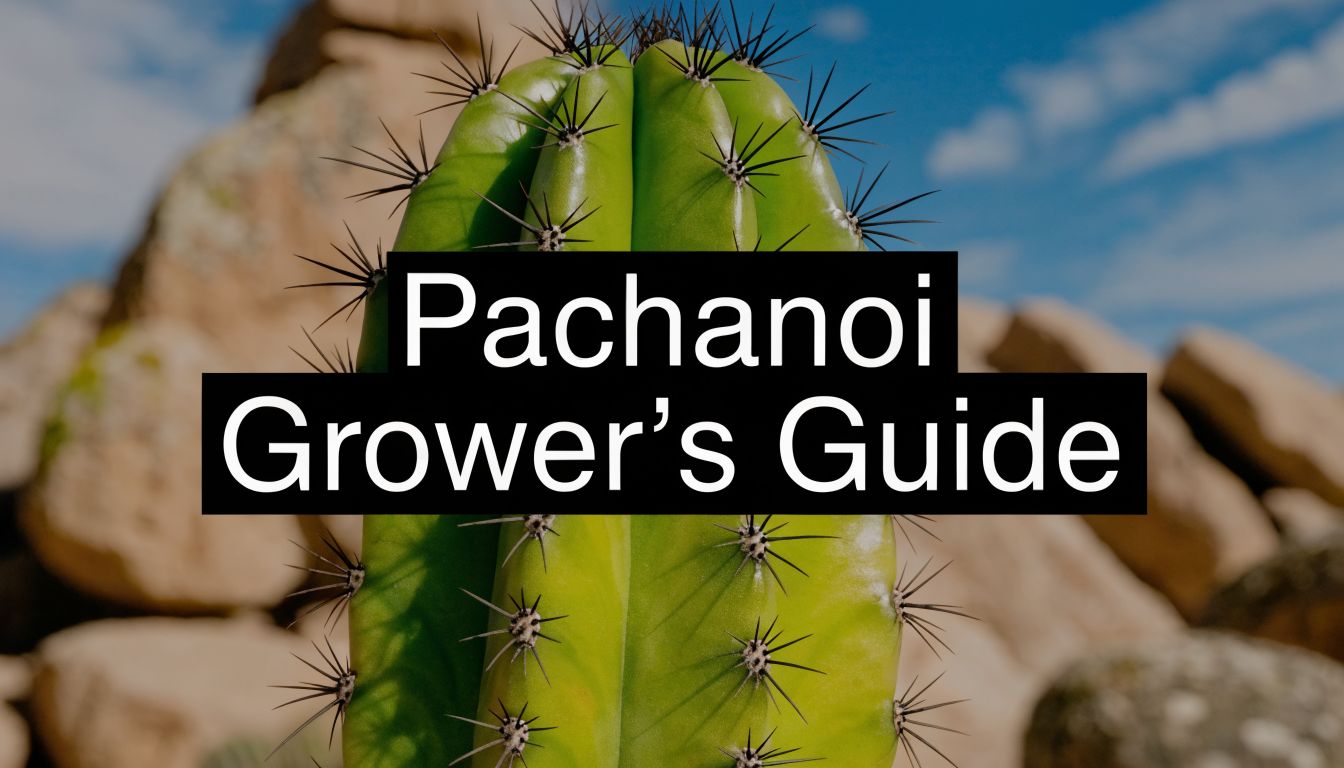
Trichocereus pachanoi usually shows a clear, upright column with a calm surface. The stem is green, often with a slightly soft or dusty cast rather than a harsh glossy finish. The ribs are broad and readable from a distance, which is one reason the plant works so well in larger xeriscape compositions. From twenty feet away, a mass planting still looks orderly instead of visually noisy.
Spines can confuse beginners. Some specimens show short, modest spines. Others appear nearly smooth, especially in cultivated stock. Reduced spination does not automatically mean the plant is weak, damaged, or mislabeled. It is one trait within a wider pattern.
A practical identification checklist
When I sort plants for a collection or review inventory for an outdoor planting project, I look for several traits together:
- Stem color: Medium to light green, sometimes with a muted, slightly glaucous surface
- Ribs: Broad, distinct, and not overly crowded
- Areoles: Spaced with some breathing room rather than packed tightly
- Spines: Usually short to moderate, often sparse on cultivated plants
- Growth habit: Strong vertical columns that can branch and form clumps over time
This matters in bulk orders. A single off-type plant in a pot collection is a curiosity. Fifty off-type plants in a commercial install can disrupt spacing, rhythm, and long-term visual consistency.
Why its history still matters
San Pedro is not just a retail label. It is a plant with a long Andean cultural history, and you will also see the names Huachuma and Wachuma associated with it. That background shapes how many experienced growers talk about the species. Accurate naming is part of respect.
For garden design professionals, this history has a practical side too. Clients often ask where a signature plant comes from and why it looks the way it does. A well-informed answer adds credibility to the design. It also helps set realistic expectations about form, maturity, and care.
How its origin shows up in the plant
This cactus comes from Andean environments, not the flat, furnace-dry desert many beginners picture first. That origin explains a lot. The plant is built for bright light, mineral soils, moving air, and roots that dry at a sensible pace.
If you have ever wondered why San Pedro can look vigorous without looking coarse, this is the reason. Its structure reflects mountain conditions. The columns stay substantial, but the skin and rib pattern still read as clean and refined.
That origin also helps with specification work. A designer choosing plants for repeated use across medians, courtyard beds, or resort entries should treat Trichocereus pachanoi as a columnar cactus that wants drainage and room, not as a generic desert accent that tolerates any site. Soil preparation has a direct effect on how uniform a large planting looks over time, which is why a fast-draining cactus soil mix for columnar cacti matters long before the first irrigation cycle starts.
Respect for this species begins with clear identification. Good plantings follow from that.
Creating the Ideal Growing Environment
A San Pedro that stays thick, even, and clean usually has three things working in its favor. Strong light. Fast drainage. Watering that follows the soil, not the calendar.
That sounds simple, but site planning gets more demanding once you move from one patio specimen to a repeated planting across courtyards, pool decks, medians, or resort entries. In large xeriscape projects, small mistakes repeat at scale. One bed with heavy soil can turn a whole installation patchy within a season, while a well-prepared site keeps a bulk order looking consistent from plant to plant.
Light that keeps columns sturdy
Light shapes the plant as much as water does.
With too little sun, new growth stretches, narrows, and loses the balanced look that makes Trichocereus pachanoi so useful in design work. That thin section does not thicken back up later. It stays as a visual weak point, much like a wall framed with one warped stud.
For home growers, the rule is straightforward. Give the plant as much bright light as your climate and setup allow, then increase exposure gradually if it has been grown under shade cloth, indoors, or in a nursery house.
For contractors and designers, the primary question is uniformity. A row planted on mixed exposures will not mature evenly. The south-facing specimens may stay compact while those near walls, trees, or overhangs can lean or stretch. On commercial jobs, it helps to group plants by light level instead of scattering them as generic accents.
- Outdoor placement: Choose a bright site with long daily sun, then harden plants off before full exposure if they arrived sheltered.
- Indoor or atrium use: Reserve it for the brightest positions. Dim interiors produce weak form over time.
- After shipping or installation: Let plants recover from boxing and handling before pushing them into harsh afternoon sun.
Soil that dries at the right pace
Roots need oxygen as much as moisture.
San Pedro does well in soil that drains quickly but still holds enough structure for anchorage. That balance matters even more with tall columns, because top growth gains weight long before a poor soil profile announces its problems. If the root zone stays wet and dense, the plant often declines from below while the stem still looks acceptable from a distance.
A useful comparison is coarse gravel versus a soaked sponge. Good cactus soil behaves more like the gravel. Water passes through, air returns, and roots can breathe. Heavy organic mixes act more like the sponge. They stay wet in the center, especially in large decorative containers and compacted outdoor planting areas.
If you want to compare ingredients and drainage behavior, this guide to fast-draining cactus soil for columnar cacti is a practical reference.
For large-scale installations, specify the soil profile early. Do not assume the existing site soil will be suitable just because the project is labeled xeriscape. Many commercial beds are backfilled with fine, water-holding material that works against columnar cacti. Raised mounds, mineral amendments, and runoff planning usually matter more than the irrigation schedule alone.
Watering without guesswork
This species responds well to a soak-and-dry rhythm. Wet the root zone thoroughly, then wait until the mix has dried well before watering again.
Beginners often under-water and over-water at the same time. They give frequent small drinks. That leaves the upper soil damp, the deeper root zone inconsistent, and the roots less willing to spread. A full soak followed by real drying builds a stronger root system.
Here is the practical version:
| Growing situation | Better approach | Common mistake |
|---|---|---|
| Warm active season | Water deeply, then let the soil dry well | Small drinks every few days |
| Cool weather | Increase the interval between waterings | Using the same schedule as summer |
| Newly planted cutting or fresh install | Hold back until roots are active | Treating it like an established plant |
For outdoor plantings, irrigation zones deserve special attention. San Pedro often fails because it shares a line with thirstier shrubs or seasonal bedding. If the emitters are set for the companion plants, the cactus pays the price. Separate hydrozones make a big difference in survival and long-term appearance.
Containers and site choices
As the plant gains height, stability starts to matter as much as drainage.
- Terracotta is often a good choice: It helps excess moisture leave the container and adds weight at the base.
- Drainage holes are required: A decorative outer pot is fine only if water cannot collect around the root ball.
- Outdoor beds need runoff: Sloped ground, berms, and raised planting pockets reduce the chance of water sitting at the crown.
- Spacing matters in public-facing designs: Tight spacing may look full on install day, but crowded columns lose definition and become harder to maintain safely.
The roots tolerate dryness better than stagnation. With this cactus, losses usually begin below the soil line, then show up later in the stem.
Propagation Potting and Expansion
One of the pleasures of growing trichocereus pachanoi cactus is that a single healthy plant can become several over time. You don’t have to stay at the “one specimen in one pot” stage for long.
For home growers, that means an affordable way to build a collection. For nurseries, designers, and contractors, it means a species that scales well from stock plants or bulk orders. It also means you need a clean propagation routine, because columnar cacti punish rushed handling.
A visual walkthrough helps here:

Starting from cuttings
Cuttings are the easiest way to expand your stock.
The plant is widely cultivated in part because it roots readily when handled with patience. If you want a practical companion guide, this article on how to propagate cactus from cuttings lays out the process in a beginner-friendly way.
The method itself is straightforward:
- Choose a healthy stem segment. Avoid pieces with soft tissue, active pest issues, or severe damage.
- Make a clean cut. Use a sterile blade so you start with a clean wound.
- Let the cut end callous. This step prevents rot. Don’t rush it.
- Plant in dry, gritty soil. Keep the cutting upright and stable.
- Wait before watering heavily. Roots need time to form.
Why callousing matters so much
Freshly cut cactus tissue is vulnerable. If you plant it straight into moisture, rot can start before roots do.
That’s why experienced growers look almost lazy at this stage. They cut, set the piece aside in a dry place, and leave it alone. That pause is part of the process, not a delay in the process.
A calloused cutting is a prepared cutting. An uncalloused cutting is a gamble.
Growing from seed
Seed growing is slower, but it has its own appeal.
You get variation. You get to watch the plant from the very beginning. You also need more patience and steadier care because seedlings are less forgiving than mature cuttings.
For many collectors, seed is about curiosity and lineage. For people focused on quicker results, cuttings are usually the practical choice.
Potting and repotting larger plants
Repotting a small pachanoi is easy. Repotting a tall, branching one takes planning.
A few habits make the job much simpler:
- Use the next sensible pot size: Going too large leaves too much damp soil around the roots.
- Stabilize the column: A heavy top in a light pot invites tipping.
- Handle with protection: Gloves, folded cardboard, or layers of newspaper help you grip the stem safely.
- Wait briefly after repotting before heavy watering: Disturbed roots benefit from a short settling period.
Signs a cutting has rooted
The cactus rarely sends you a dramatic signal. Instead, it gives you subtle proof.
Look for improved stability, steady color, and renewed tip growth. A piece that keeps wobbling in the soil or softens at the base probably needs inspection.
Later in the process, seeing how another grower handles rooting and aftercare can be helpful:
Scaling up for production or projects
If you’re raising multiple plants for future outdoor display, consistency matters more than speed.
Keep your propagation batches in similar soil, similar containers, and similar light. Label source plants clearly. Separate fresh cuttings from fully rooted stock so you don’t water all plants on the same schedule. That’s where people get into trouble when they expand too fast.
For project work, think in stages. Root first. Establish second. Plant out only when the stems are firm, stable, and clearly growing.
Ensuring Health Blooms and Troubleshooting
A mature San Pedro in the ground can look perfect from across the job site, then reveal its true state up close. The stem tip may be tightening, the color may be fading on one side, or the base may be staying too cool and damp after irrigation. For a home grower, that affects one plant. For a designer or contractor using repeated columns across a xeriscape installation, the same small mistake can repeat across an entire planting.
A healthy pachanoi reads as steady. The stem stays firm, the ribs stay well formed, and new growth matches the older column instead of stretching into a thinner, weaker top. Flowers usually appear only after the plant has enough age, stored energy, and a stable seasonal rhythm. The large white night-blooming flowers are one of the plant’s great rewards, but they are the result of months or years of sound growing conditions.

What supports flowering
Flowering starts long before a bud appears. A mature column needs enough light to build energy, enough root space to feed steady growth, and enough seasonal consistency to recognize when it is time to bloom.
That pattern is easy to miss with this species because pachanoi often looks forgiving. It can stay green for quite a while even when conditions are only mediocre. Blooming is a stricter test. A plant recovering from poor drainage, weak light, or repeated root stress usually puts its effort into survival first.
Three factors matter most:
- Strong seasonal light: Dense, balanced growth stores more energy than pale or stretched growth.
- Healthy roots: Flowers come from a plant that can take up water and nutrients without stress.
- Maturity: Fresh cuttings and small young stems are still building structure, not preparing a flower cycle.
For outdoor arrangements, flowering also depends on placement consistency. A row installed with mixed sun exposure, uneven drainage, or overspray from turf irrigation will not mature evenly. One group may bloom while another stalls, even if all the plants came from the same batch.
Catching trouble early
Pachanoi problems usually announce themselves subtly. New growers often wait for collapse. Experienced growers watch for smaller shifts first.
Check the crown, the shaded side of the ribs, the areoles, and the base. Those areas act like the dashboard lights on a truck. If something is wrong, they often show it before the whole stem does.
A useful inspection routine looks like this:
- Start with the newest growth: Many pest and light issues show there first.
- Check the base after watering cycles: A soft or darkening base points to moisture staying too long.
- Inspect hidden surfaces: Mealybugs and mites favor protected spots with poor airflow.
- Compare plants in groups: On larger installs, one weak plant can reveal a drainage or irrigation pattern affecting the whole zone.
Flowers are a late reward. Good health shows up earlier in stem firmness, color, and balanced growth.
Common Trichocereus Pachanoi Problems and Solutions
| Symptom | Likely Cause | Solution |
|---|---|---|
| Soft base or darkening near soil line | Soil staying wet too long | Unpot the plant, inspect roots, remove damaged tissue if needed, and repot in drier gritty mix |
| Thin stretched new growth | Insufficient light | Move gradually to brighter conditions and expect future growth to improve |
| Yellowed or scorched patches | Sudden sun exposure | Acclimate more slowly and protect from harsh immediate exposure |
| White cottony clusters | Mealybugs | Isolate the plant, remove visible pests manually, and improve airflow |
| Speckled dull skin | Spider mite activity or stress | Inspect closely, clean the plant, and correct dry stagnant conditions around it |
| Leaning stem | Weak rooting, one-sided light, or unstable pot | Rotate if needed, improve support, and repot into a steadier container |
| No flowers on an otherwise healthy plant | Plant not mature enough or conditions not steady | Stay consistent with light, drainage, and seasonal rhythm |
Reading the plant without overreacting
One of the most common errors is confusing thirst with rot. They can both change the plant’s shape, but they do not feel the same.
A thirsty pachanoi may draw in slightly between the ribs while still feeling solid, much like a firm sponge that has dried out. Rot changes the tissue itself. The stem softens, discolors, and often worsens fast around the base or at a wound.
Surface scars also cause unnecessary panic. Older outdoor columns often show corking, healed scratches, wind marks, or minor sun blemishes. Stable scars are part of the plant’s history. Active damage keeps spreading.
For crews maintaining multiple specimens, this distinction saves time and material. Replacing every scarred cactus wastes budget. Missing early rot in a poorly drained bed costs much more later.
A simple health routine that scales
You do not need an elaborate care system. You need repeatable checks that work for one specimen and for fifty.
- Weekly visual pass: Check firmness, color, and pest activity.
- After heat spikes, storms, or cold events: Look for stress on exposed sides and around the base.
- During active growth: Make sure new growth stays proportional to the older stem.
- Across larger projects: Flag any cluster of symptoms by irrigation zone, not just by individual plant.
If you are replacing failed plants in an existing design, buying quality stock matters as much as aftercare. A practical online cactus buying checklist can help teams compare rooted plants, cuttings, and seller photos before new material goes into the ground.
Healthy plants bloom better because they have been given the right pattern over time. With Trichocereus pachanoi, troubleshooting is less about rescue and more about learning to read the column early, before a small warning turns into a site-wide problem.
How to Buy and Integrate Your Cactus
A designer marking out a dry garden for a hotel courtyard and a home grower ordering one potted San Pedro are solving different problems. One plant can be judged by charm and condition. Fifty plants have to work as a group, arrive with consistent form, settle into uneven site soils, and still leave room for crews to weed, prune, and inspect irrigation.
That difference should shape how you buy.

Buying smart online
Start with the listing photos, not the price tag. Good photos let you read the plant the way an experienced grower does. You should be able to see rib count, areoles, spine spacing, color, and whether the stem looks turgid and stable rather than stretched or stressed.
Then read the description slowly. A rooted plant and a fresh cutting may look similar in a product photo, but they behave very differently after arrival. Rooted stock usually establishes faster in finished garden beds. Cuttings can be useful for larger installations where matching height matters, but they require more patience and a staging plan before planting. For a practical buyer checklist, this guide on the best place to buy cactus online helps compare listings, seller photos, and shipping expectations.
When comparing sellers, look for:
- Clear botanical naming: “San Pedro” is often too broad for procurement notes and client records.
- Close stem photos: You need visible ribs, areoles, and spine pattern, not distant overview shots.
- Rooting status: Rooted stock, callused cuttings, and freshly cut pieces each need different scheduling.
- Size consistency: Bulk orders look better on site when the columns are reasonably uniform.
- Packing detail: Tall columnar cacti need stable boxing so ribs and growing tips are not bruised in transit.
The Cactus Outlet is one retailer that offers trichocereus pachanoi cactus plants along with care information and bulk purchase options, which matters if you are comparing single-specimen orders with larger procurement needs.
Using pachanoi in larger xeriscape projects
Trichocereus pachanoi works best as a vertical accent with rhythm, not as filler. In site design, that means you are arranging pauses and sightlines, much like placing punctuation in a sentence. Too many evenly spaced columns can read as a green fence. Well-placed groups give the eye a place to stop and reset.
Soil preparation matters just as much as plant spacing. On poor alkaline soils, especially in arid western sites, pachanoi often benefits from a lean mineral mix rather than a rich planting pocket that stays wet too long. A practical field approach is to keep native soil as the base, then blend in coarse mineral material such as pumice, crushed gravel, or washed sand until drainage improves and water stops sitting around the root zone. If the soil is heavy, many crews use a majority native soil with a smaller share of mineral amendment, then test drainage before installing the full run. The goal is simple. Water should move through the planting area quickly enough to protect the base, but not so fast that the column never settles in.
Companion selection also changes the result. Agave pairs especially well because it brings a low, radial form against pachanoi’s upright columns. That contrast keeps a dry planting from becoming a wall of repeated green stems. Aloe can play a similar role in milder climates. Use these companions with restraint. A few rosettes between columns usually read better than filling every gap.
Placement choices that hold up on real sites
Large installations succeed when crews can still reach the plants after they mature.
- Leave maintenance access: Set columns far enough from walls, walks, and one another for cleanup and inspection.
- Plan for width, not just height: Young stems look narrow. Mature clumps claim more visual and physical space.
- Protect airflow in windy or enclosed sites: Crowded pockets dry unevenly and are harder to monitor.
- Repeat in groups: Small clusters usually look more intentional than a long row of evenly spaced singles.
- Use open mulch thoughtfully: Gravel or other mineral mulch helps keep the silhouette clear and the base drier.
A useful rule for contractors is to judge the bed from across the site, not only from planting distance. If the columns blur into one mass, spacing is probably too tight. If each group reads clearly from a walkway, entry court, or street edge, the composition is usually doing its job.
San Pedro earns attention when its form stays legible. Give it room, pair it with lower companions that do not compete for the same shape, and buy with the full site in mind rather than the individual pot.
Legal Ethical and Responsible Ownership
This plant carries more cultural and legal sensitivity than many ornamental cacti, so ownership should come with a little more thought.
In many places, people grow San Pedro as an ornamental cactus without issue. But legal treatment can vary by location, and the rules around ornamental cultivation aren’t always the same as the rules around compounds associated with the plant. The only reliable approach is to check your local laws directly rather than assume garden-center availability answers every legal question.
Ethical growing starts with respect
The ethical side is just as important as the legal side.
Trichocereus pachanoi has been revered by indigenous Andean peoples for millennia. That history deserves respect in the way we talk about the plant, buy it, label it, and share it. Treating it as nothing more than a novelty strips away the cultural context that gives it much of its meaning.
Responsible ownership in practice
A good standard is simple and practical:
- Know your local regulations: Don’t rely on assumptions.
- Label plants accurately: Correct naming reduces confusion for future growers.
- Handle cuttings responsibly: Don’t discard viable pieces where they may root unintentionally.
- Respect cultural origins: Learn the plant’s history before speaking casually about it.
There’s also a land stewardship side to this. The verified guidance for contractors notes concerns around naturalization risk and proper disposal of cuttings. That applies to home growers too. If you trim or remove sections, manage them deliberately.
Owning this cactus responsibly means growing it well, naming it appropriately, and understanding that its significance goes beyond looks.
Your Journey with Trichocereus Pachanoi
A good grower doesn’t need tricks for this plant. You need steady habits and a clear eye.
Give your trichocereus pachanoi cactus strong light, very fast drainage, and watering that follows the soil instead of the calendar. Learn its shape so you can identify it well. Propagate it patiently. Watch for pests before they spread. If you work in outdoor design, give it room to read as architecture rather than background clutter.
That combination is what makes this cactus so satisfying. It can be approachable for a beginner and still hold the attention of serious collectors and professionals. Few plants bridge those worlds so well.
If yours is small today, don’t underestimate it. This is a plant with height, history, and real long-term presence. Grow it with patience and respect, and it will teach you a lot about observation, timing, and restraint.
If you’re ready to add a trichocereus pachanoi cactus to your collection or compare options for a home garden or larger project, The Cactus Outlet offers cactus plants, care information, and online shopping for both individual buyers and bulk orders.