
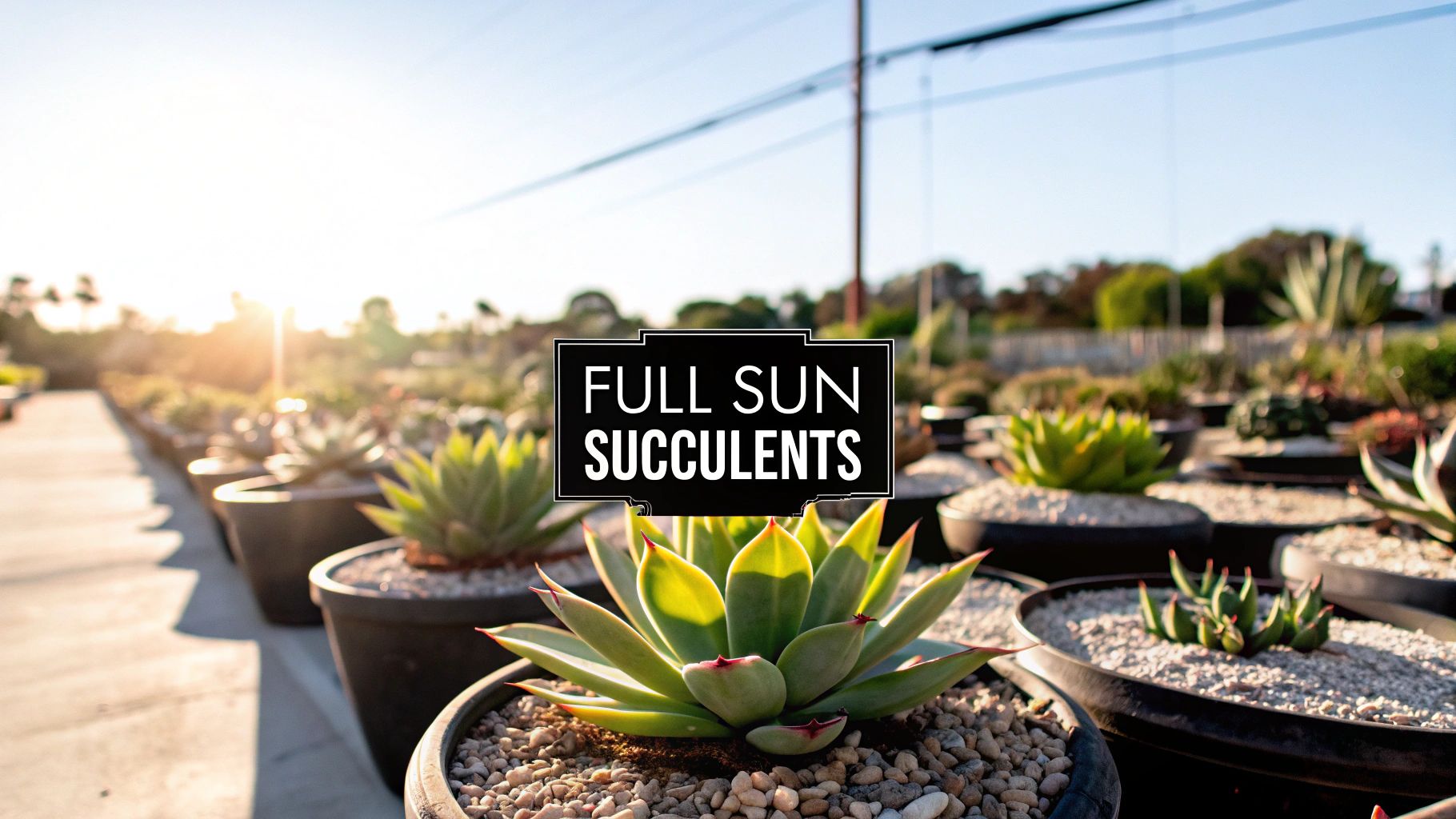

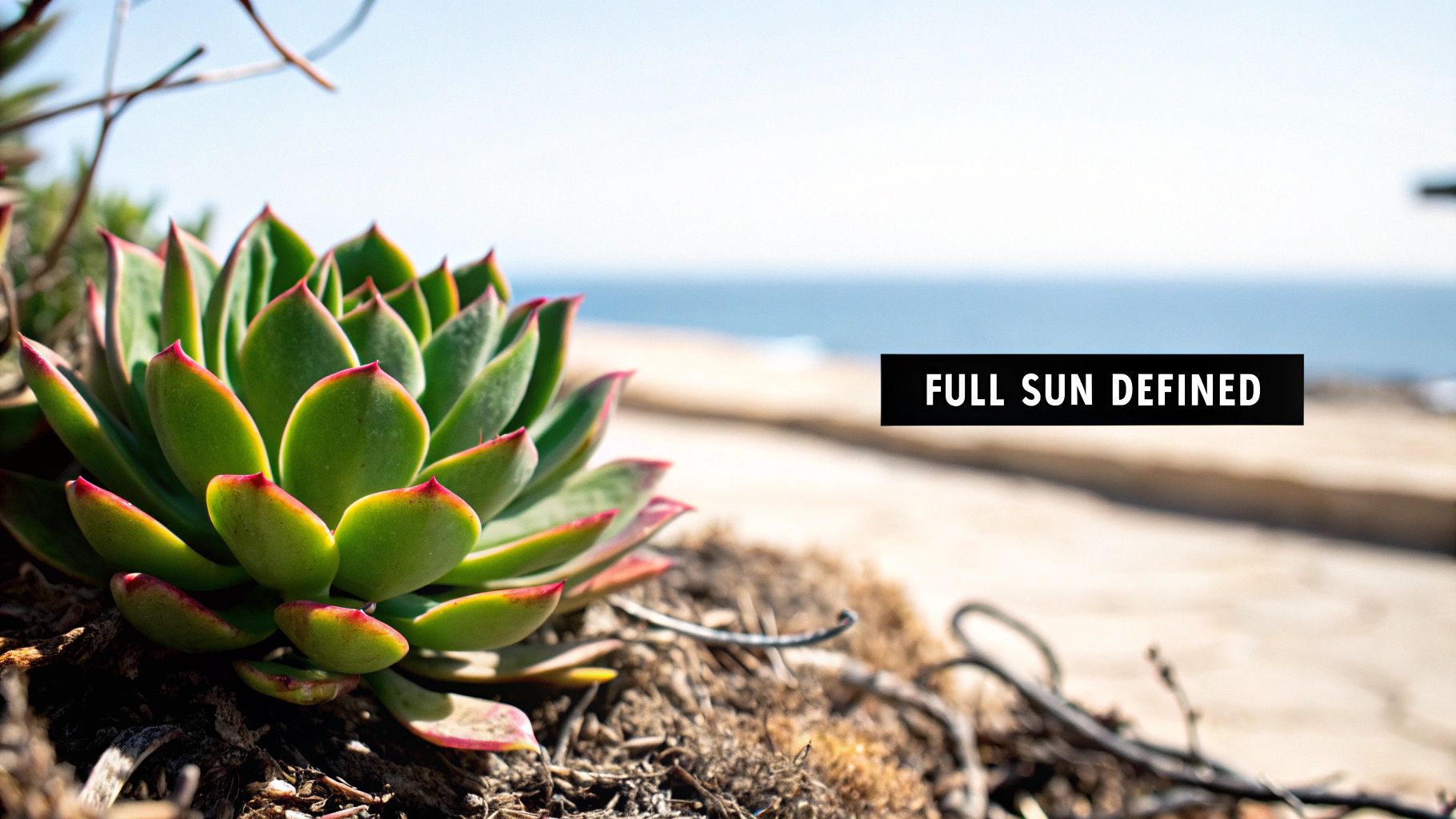
Walk into any garden center, and you'll see tags on succulents that say "full sun." It sounds simple, right? But what does that really mean? In the world of succulents, full sun is generally understood as at least six hours of direct, unfiltered sunlight every day.
This isn't just about finding the brightest spot in your yard, though. It's about giving these plants the fuel they need to thrive.
What Full Sun Actually Means for Succulents
Think of sunlight as food for your succulents. Through photosynthesis, they convert that light into energy. This energy powers their growth, helps them produce those stunning, vibrant colors we all love, and keeps them compact and healthy.
Without enough light, a sun-loving succulent will start to stretch out, desperately reaching for a light source. Its beautiful colors will fade to a dull green, and it will become weak and leggy. Providing succulents full sun exposure is key to helping them live up to their full potential.
Why Location and Climate Matter
Here’s the catch, and it's a big one: "full sun" in coastal California is a completely different beast from "full sun" in the Arizona desert. This is probably the most common mistake new succulent owners make, and it can lead to a lot of frustration.
The intensity of the sun, not just the duration, plays a massive role.
A plant that basks happily all day in the gentle, seaside sun of San Diego might get completely fried in a few hours under the relentless Phoenix sun.
You have to become a student of your own backyard. Understanding your specific climate is non-negotiable for growing happy succulents.
Let’s break it down:
- Mild Climates: Living in a coastal area or a place with moderate summers? Your succulents can probably handle six-plus hours of direct sun, even in the afternoon when it's strongest.
- Hot, Arid Climates: If you're in a desert or a region with scorching summers, you need to redefine "full sun." Aim for six hours of morning sun. That intense afternoon light, especially from noon to 4 PM, is often too much and will lead to sunburn.
- Humid Climates: High humidity can trap heat and slow down soil drying. Even in a sunny spot, this can make succulents more prone to rot, so you'll need to be extra careful with watering and airflow.
Ultimately, growing succulents in full sun successfully comes down to one thing: observation. Watch your plants. They'll tell you if they're happy or stressed. Be ready to move them or provide a little shade if they start showing signs of getting too much of a good thing.
The Best Succulents That Thrive in Full Sun
While a lot of succulents enjoy a good dose of bright light, only a handful are true sun-worshippers, built to handle hours of direct, intense heat. Picking the right plant for your sunniest spot is really the secret to a stunning, low-fuss garden. These tough species have developed some amazing tricks to not just survive, but truly shine in conditions that would fry more delicate plants.
This incredible resilience is a big reason for their explosion in popularity. The global market for succulents has ballooned to somewhere between $5.2 billion and $12.2 billion, and it's still growing. A huge chunk of that—about 40% of global revenue—comes from North America, as more and more of us get hooked on growing these fascinating plants. You can see this trend reflected in just about every recent industry report.
Architectural Champions: Agave and Aloe
When you picture a tough-as-nails succulent, chances are an Agave comes to mind. These guys are basically the armored tanks of the succulent world, and for good reason.
- Agave: Famous for their dramatic, sculptural shapes, Agaves have thick, rigid leaves that are masters of water storage. Many, like the iconic Century Plant (Agave americana), are covered in a waxy coating that acts like natural sunscreen, reflecting harsh rays and locking in moisture.
- Aloe: While many common Aloes prefer a bit of a break from the afternoon sun, some of the larger tree-like varieties, such as the Tree Aloe (Aloidendron barberae), are incredibly sun-hardy once they're established. Their thick, fleshy leaves are perfectly designed for life in arid, sun-baked landscapes.
The bold structure of these plants makes them perfect for creating a dramatic focal point in a garden designed for succulents full sun.
Tough Rosettes: Echeveria and Sempervivum
Not all rosette-forming succulents are cut out for intense heat, but some have evolved clever defenses. The key is to look for varieties with specific traits that help them beat the heat.
Pro Tip: See that powdery, waxy film on a succulent's leaves? That's called 'farina' (or epicuticular wax), and it's a great sign of sun tolerance. This natural coating is like a shield, reflecting UV rays and stopping water from evaporating out of the leaves.
Here are a couple of the best rosette options for sunny spots:
- Echeveria agavoides: People often call this one 'Lipstick Echeveria' for its red-tipped leaves. Its leaves are much thicker and sturdier than many of its cousins, allowing it to handle more direct sun. That beautiful red color is actually a healthy stress response to bright light!
- Sempervivum ('Hens and Chicks'): These incredibly hardy alpine succulents grow in tight, dense clusters. This growth habit naturally protects the delicate center of the plant from getting scorched, making them perfect for sunny rock gardens.
Spiny Wonders: Cacti
Of course, we can't talk about sun-lovers without mentioning cacti. Those spines aren't just for show; they're a brilliant evolutionary adaptation. They create a bit of micro-shade right on the plant's skin, helping to diffuse the intense sunlight and trap a thin layer of insulating air.
Many barrel cacti, like the classic Golden Barrel (Echinocactus grusonii), and the towering columnar types you can find at The Cactus Outlet, like the Peruvian Apple Cactus, are perfectly kitted out for a life in the sun. Choosing one of these sun-hardy champions is a sure way to add incredible texture and form to your landscape without the worry.
How to Acclimate Your Succulents to Direct Sun
You wouldn't go from a dark room straight into the blazing midday sun without squinting, right? It’s a shock to the system. Well, it's the exact same for your succulents. Plucking a plant from a cozy, shaded spot and dropping it into intense, direct sunlight is a recipe for disaster—we’re talking permanent sunburn on those beautiful leaves.
The secret to avoiding this is a process called acclimation, which is just a fancy word for getting your plant used to its new, sunny home gradually. Think of it like a person getting a tan at the start of summer; you start with short bursts of sun and slowly build up. This patient approach gives your succulents in full sun time to produce the protective pigments they need to handle the stronger light without getting stressed.
The Gradual Exposure Method
The best way to do this is by introducing your succulent to direct sun over a period of one to two weeks. The gentle morning sun is your best friend here—it’s much kinder than the harsh, unforgiving rays of the afternoon.
Start with just one hour of direct morning sun on day one. The next day, bump it up to two hours. Keep adding about an hour of sun each day until your plant can comfortably handle at least six hours of direct light without any issues.
The real key here isn't just sticking to a rigid schedule, but actually watching your plant. It will give you little hints if things are moving too fast. Keep an eye out for leaves that look pale, yellow, or have white or brown patches appearing—these are the tell-tale first signs of sunburn.
If you see any of these stress signals, just pull back a bit. Reduce the sun exposure for a couple of days, let it recover, and then you can try slowly increasing the time again.
This visual guide shows some common sun-loving succulents that will need proper acclimation before they can truly thrive in a sunny spot.

As the diagram shows, even famously sun-hardy choices like Agave, Echeveria, and Sempervivum need a slow and steady introduction to full sun to look their best.
Here’s a sample schedule you can follow to help your new succulents adjust. Remember, this is just a guideline—always pay attention to how your specific plant is reacting.
Sample Sun Acclimation Schedule for New Succulents
| Week | Daily Sun Exposure | Time of Day | What to Watch For |
|---|---|---|---|
| Week 1 | 1-3 hours | Morning (before 11 AM) | Fading color, white or yellow spots on leaves. |
| Week 2 | 4-6 hours | Morning and late afternoon | Any signs of stress from the previous week. Check for crisping edges. |
| Week 3 | 6+ hours | Introduce midday sun slowly | Watch for any new sunburn spots. Ensure the soil isn't drying out too fast. |
| Week 4 | Full day exposure | All day | Monitor watering needs. The plant should look healthy and vibrant. |
This gradual process is the best way to ensure your plant adapts successfully without getting damaged.
Protecting Your Plants During Acclimation
Where you place your succulent during this transition makes a huge difference. An east-facing patio or porch is often perfect because it catches that gentle morning light but is naturally shaded from the intense afternoon sun.
If you’re working with an indoor spot near a window, it can be a little trickier to manage the light. A sheer curtain can be a lifesaver, diffusing the strongest rays and preventing scorch. If you need more robust solutions, you can explore methods for blocking sunlight from windows to fine-tune the environment. This same principle applies to many cacti, too. To learn more, check out our guide on whether your cactus needs direct sunlight.
Watering and Soil Care for Sun-Loving Succulents
Plants living in the full, intense sun play by a different set of rules. Their world is hotter and drier, so their care routine—especially when it comes to water and soil—has to be spot-on. If you get this combination right, you'll be rewarded with tough, healthy succulents full sun can be proud of.
The absolute golden rule here is the 'soak and dry' method. Picture it this way: you’re trying to replicate a sudden desert downpour followed by a long, hot dry spell. When it's time to water, be generous. Drench the soil completely until you see water running out of the drainage hole. This encourages the roots to grow deep and strong as they search for moisture.
After that deep soak comes the most crucial part: you wait. Let that soil become bone dry all the way through before you even consider watering again. Yes, succulents in hot, sunny spots will get thirsty more often than their shaded counterparts, but the principle never changes. Soggy, constantly damp soil is the fast track to root rot, which is almost always a death sentence for these desert natives.
Choosing the Right Soil and Pot
Great watering practices are useless without excellent drainage, and that all starts with the right soil. Your average bag of potting soil is a sponge—it holds way too much water for a succulent's liking. What you need is a gritty, airy mix that lets water drain away quickly, giving the roots a good drink without leaving them to drown.
Key Insight: A good succulent mix should feel coarse and gritty to the touch, not like a soft sponge. It’s typically full of ingredients like pumice, perlite, or coarse sand that create air pockets and prevent the soil from packing down. This is what allows the roots to breathe, even right after a thorough watering.
You can grab pre-made cactus and succulent mixes right off the shelf, or you can have fun mixing your own. For anyone wanting to really dial in their potting media, we've got a fantastic guide that breaks down everything you need to know about the best soil for succulent plants.
The pot you choose is just as important as the soil you fill it with.
- Terracotta Pots: These classic clay pots are a sun-worshipper's best friend. Because they're porous, they breathe. This allows moisture and air to move through the walls, which helps the soil dry out much faster.
- Drainage Holes: This is a deal-breaker. If a pot doesn't have at least one drainage hole, it’s not a home for a succulent. Period. Trapped water has nowhere to go and will lead to rot.
- Shade Cloth: Even the most sun-hardy succulents can get fried during an unexpected, blistering heatwave. Having some lightweight shade cloth on hand can be a real plant-saver. Just drape it over them during the hottest part of the day to give them a bit of a break.
If you're into cutting-edge growing techniques, the podcast 'AI Regulated Indoor Gardens and Green Walls' offers a fascinating look at how technology is being used to fine-tune growing conditions, including light and water. But for most of us, simply combining the right watering method, a well-draining soil mix, and a breathable pot is all it takes to create the perfect little ecosystem for your sun-loving succulents to thrive.
How to Read the Signs of Sun Stress in Succulents
Think of your succulents as constantly talking to you. They can't speak, of course, but they show you exactly what they need through their leaves and stems. Learning their visual language is the single most important skill you can develop, especially when you're growing succulents in full sun. Once you can spot the early whispers of stress, you can make simple tweaks to prevent real damage and keep them looking their best.
And this is a language understood by growers worldwide. Succulents have exploded in popularity, with the Asia-Pacific region becoming the fastest-growing market. It now accounts for about 23% of global revenue and is expected to expand at an incredible 19.2% CAGR from 2024 to 2031. It just goes to show that as more people embrace plant parenthood, understanding these basic visual cues is more important than ever.
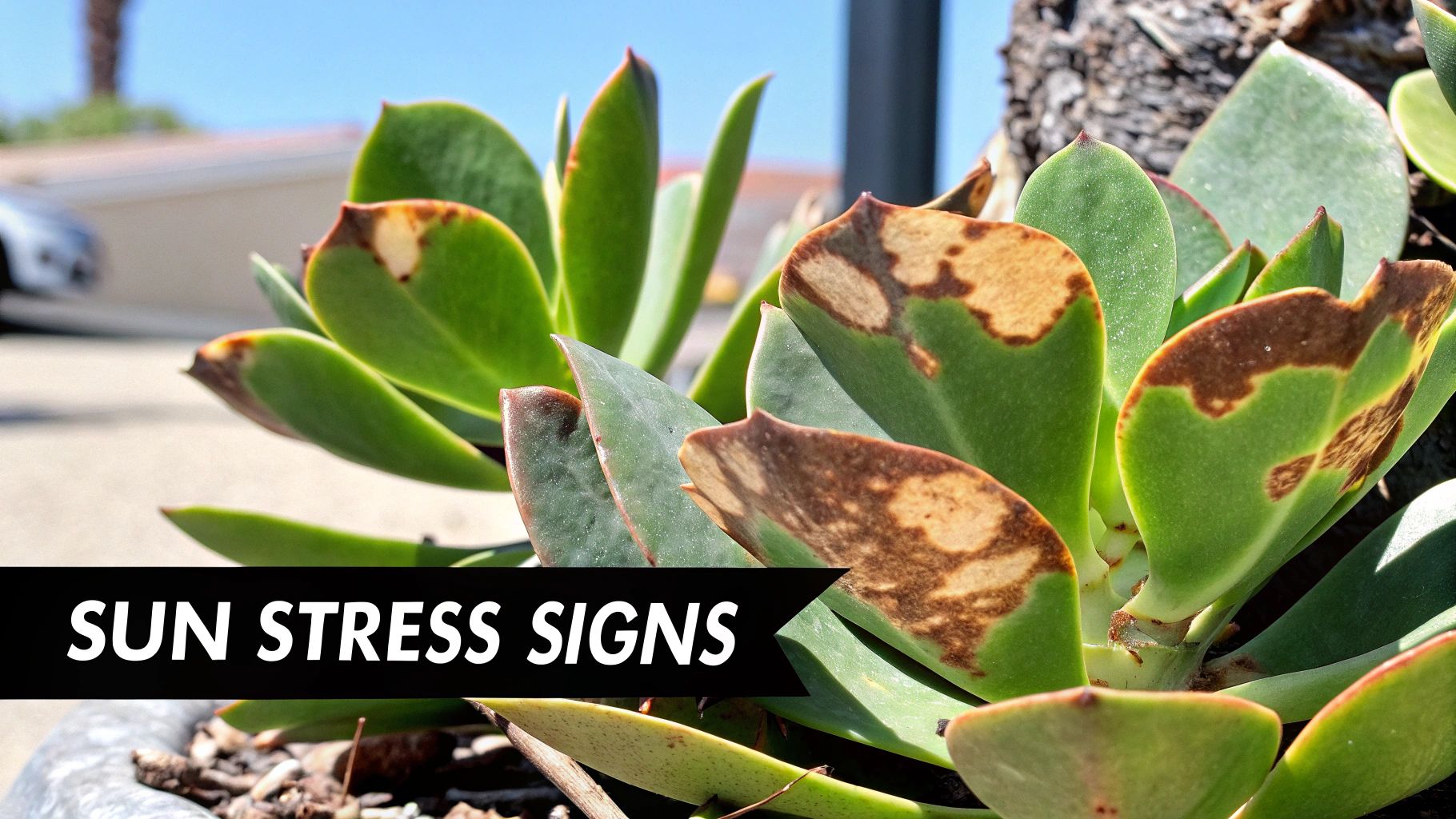
Signs of Too Much Sun
Sunburn is, by far, the most common problem for succulents getting too much intense light. And just like a sunburn on our own skin, the damage to the leaves is permanent. That’s why catching it early is everything.
Keep an eye out for these classic signs of a sun-scorched plant:
- White or Pale Yellow Patches: This is the first red flag. You'll see the plant's color start to look bleached or washed out on the spots getting hit with the most sun.
- Crispy Brown or Black Spots: This is a full-blown sunburn. The plant tissue has been cooked, leaving behind ugly, permanent scars that feel dry and crispy.
- Deep Red or Purple Tones: While a little blush of "stress color" can be beautiful, a dark, angry-looking red or purple—especially if the leaves are also shriveling—is a sign the plant is in distress.
If you see any of these, the solution is simple and immediate: get that plant into some shade! Move it to a location that only gets gentle morning sun or throw a piece of shade cloth over it to filter out those harsh afternoon rays.
Signs of Too Little Sun
The opposite problem is a succulent that’s literally starving for light. This leads to a condition called etiolation, which is the plant's desperate attempt to stretch itself toward the nearest light source.
Think of an etiolated succulent as a plant stretching itself thin, searching for more light to survive. This process makes it weak, floppy, and far more susceptible to pests and rot.
Here’s what to look for when a plant isn't getting enough sun:
- Stretching: The most obvious sign. Your normally compact plant will start to look tall and "leggy," with noticeable gaps between the leaves along the stem.
- Pale Color: A succulent’s vibrant colors will fade to a pale green or even a sickly yellow. A yellowing plant can be tricky, so our guide on why your cactus might be turning yellow can help you pinpoint the cause.
- Downward-Pointing Leaves: Instead of forming a tight, happy rosette, the leaves might flatten out and even point downwards, trying to maximize the surface area exposed to whatever little light is available.
Fixing etiolation is pretty straightforward: gradually introduce your plant to a brighter spot. You can't undo the stretching that has already happened, but all the new growth that comes in will be tight, compact, and healthy.
Got Questions About Full Sun Succulents? Let's Talk.
Even seasoned succulent growers run into questions. When you're dealing with the intensity of full sun, it's normal to have a few "what ifs" pop up. Here are some of the most common ones I hear, along with some straight-to-the-point advice.
So, Can All Cacti And Succulents Take Direct Sun?
This is probably the single biggest myth out there. We picture cacti baking in the desert sun, but the reality is that not all succulents or cacti can handle intense, direct sunlight. In fact, many popular varieties like Haworthia and Gasteria naturally grow under the shade of bigger plants or rock outcroppings. They'll scorch in a heartbeat if you put them in the wrong spot.
Think of it this way: "succulent" is a massive category of plants. Some are true sun-worshippers, while others thrive on just a few hours of gentle morning light. Before you give any plant a front-row seat to the sun, do a little digging on that specific species.
Should I Be Watering More In The Summer?
Yes, you almost certainly will. Plants in full sun are working overtime. The heat and bright light speed up evaporation from the soil and transpiration (water loss) from the plant's leaves. It's only natural that they'll get thirsty more often.
But—and this is a big but—the golden rule of "soak and dry" still applies. Your watering schedule might shift from once every two weeks to once a week, but you must always check that the soil is bone dry before watering again. Pro tip: a simple wooden skewer stuck deep into the pot is the best way to know what's happening down at the root level.
One of the worst things you can do is give your succulents little sips of water every few days. This just creates weak, shallow roots. Always give them a deep, thorough drenching and then let them dry out completely.
Help! My Succulent Got Sunburned. What Now?
First thing's first: get that plant into the shade immediately. Sunburn on a succulent—those white, yellow, or brown crispy spots—is permanent scarring. The tissue is damaged and won't ever turn green again.
You can't undo the burn, but you can stop it from getting worse and help the plant recover.
- Move it now: Find a spot that gets only gentle morning sun or bright, filtered light for it to recuperate.
- Don't prune just yet: Unless a leaf is totally shriveled and dead, leave it be. It can still offer some protection to the leaves beneath it and photosynthesize a little.
- Stick to the routine: Don't panic and overwater. Wait for the soil to dry out, then water as you normally would. Hold off on any fertilizer until the plant is showing signs of healthy new growth.
Think of it as a lesson from your plant. It clearly told you it needed a little less light. Over time, new growth will emerge and eventually hide the old scars, and you'll be a wiser succulent parent for it.
Here at The Cactus Outlet, we're passionate about helping you find the perfect sun-loving plants for your space. Dive into our collection of tough-as-nails Agaves, striking cacti, and other sun-hardy succulents to bring your garden to life.