

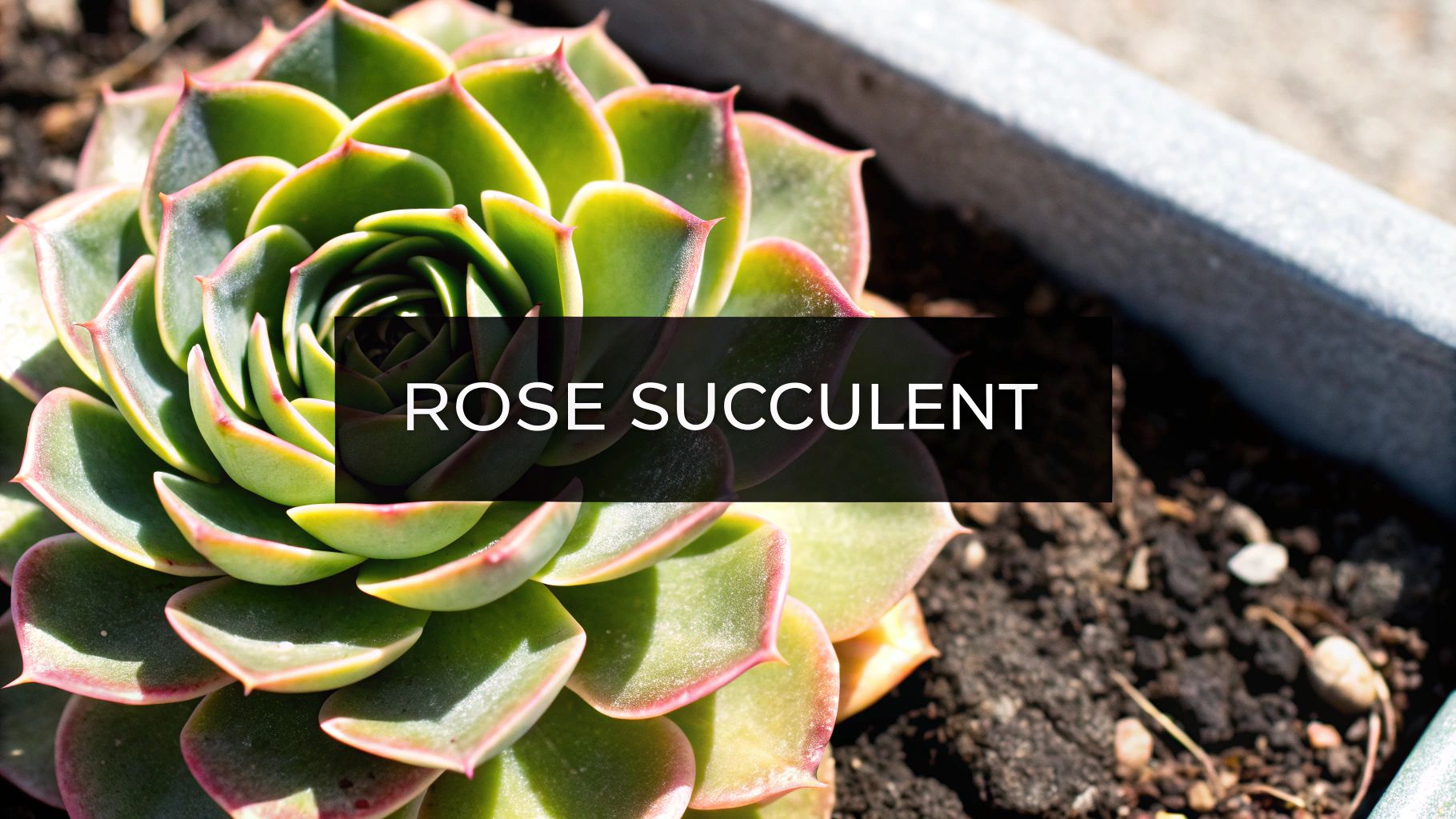

What if you could have a rose that never fades? That’s the real-life magic of the succulent plant that looks like a rose. This isn't one specific plant, but rather a stunning growth habit called a rosette. The leaves spiral out from a central stem, perfectly mimicking the look of a flower in full bloom. It's the best of both worlds: the classic beauty of a rose combined with the easy-going, long-lasting nature of a succulent.
The Enduring Allure of Rose Succulents
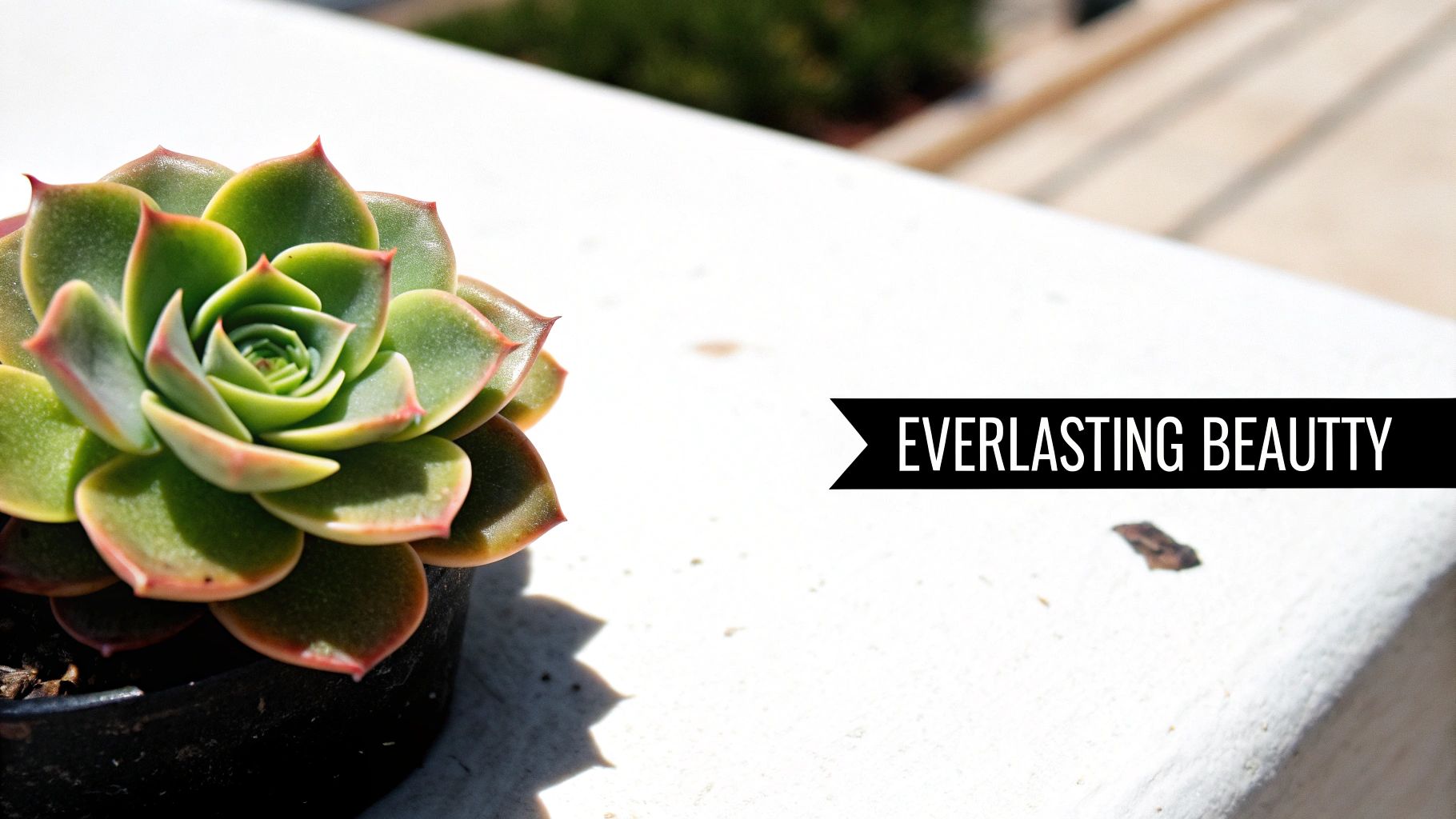
It’s easy to see why these plants have captivated everyone from seasoned gardeners to interior designers. They are true living sculptures, blending an intricate, delicate form with an incredibly tough spirit. A bouquet of roses might last a week if you’re lucky, but a rose-shaped succulent provides a lasting beauty that subtly changes with the seasons.
This unique mix of a fragile appearance and a hardy personality makes them unbelievably versatile. They fit in just about anywhere.
- Home Décor: They bring a touch of natural elegance to a sunny windowsill, a cluttered desk, or a minimalist shelf.
- Event Styling: Imagine stunning, living centerpieces or party favors for weddings that your guests can actually take home and grow.
- Thoughtful Gifts: It’s a beautiful way to give someone a living present that symbolizes strength, beauty, and growth.
A Trend Rooted in Beauty and Simplicity
The buzz around these plants is no fleeting fad. It taps into a much bigger desire for sustainable, beautiful, and low-effort greenery in our homes and offices. This global obsession has transformed rosette-forming succulents into a huge commercial market. In 2023, the succulent industry was valued at over $4.29 billion and is still growing, with North America alone accounting for about $1.5 billion in sales. Plant styling and minimalist décor trends on social media have only fueled the fire. For a deeper dive, you can explore more market growth insights about the succulent industry.
Think of a rose succulent not just as a plant, but as a piece of living art. Its geometric perfection is a testament to nature's design, offering a focal point that is both calming and fascinating.
Here at The Cactus Outlet, we're obsessed with finding the most vibrant and healthy specimens, from the iconic Echeveria to dozens of other incredible rosette varieties. This guide will walk you through everything you need to know about the succulent plant that looks like a rose, giving you the confidence to choose, care for, and style these little botanical marvels.
Understanding the Secret Behind Their Rose Shape
So, what’s the secret behind a succulent that looks so much like a rose? It’s not a happy accident—it’s a brilliant piece of botanical engineering. That iconic flower shape comes from a specific growth pattern called a rosette, where the leaves spiral out in a tight, circular pattern from a central point. It's almost a perfect replica of a blooming flower.
Think about what happens when a drop of rain lands on one of these plants. Instead of just rolling off, the overlapping leaves catch it and funnel it directly down to the roots. This structure basically turns the plant into its own little rainwater-harvesting system. For a plant from an arid climate, where every drop counts, that’s an incredible survival advantage.
This clever design isn’t just for show; it’s a strategy that nature has perfected over thousands of years. The radial pattern is a simple, elegant solution to a very complex problem.
More Than Just a Pretty Face
The rosette shape does more than just direct water. It's also a masterclass in managing sunlight. By spiraling outwards from the middle, the leaves are perfectly positioned to soak up as much light as possible without casting shadows on each other. Every leaf gets its moment in the sun, which fuels the photosynthesis the plant needs to live.
It's this dual-purpose design—for both sun and water—that makes the rosette form so incredibly successful. It's an evolutionary marvel that perfectly balances the need for energy with the critical need for hydration, especially in tough environments.
The rosette isn’t just a random arrangement; it’s a deliberate, highly functional design. Each leaf is placed with geometric precision, creating a living structure that is as beautiful as it is resilient.
The sheer elegance of this natural geometry has been inspiring artists and designers for centuries. For a fun example of how nature’s patterns show up in human design, check out this furniture designed to look like a blossom.
Built for Survival
There's one more trick up the rosette's sleeve. The tight packing of the leaves offers another layer of defense. This dense arrangement helps shield the tender growing point at the very center from scorching sun, drying winds, and even some pests. The outer leaves essentially act as a natural barrier, taking the brunt of the damage to protect the new, vulnerable growth inside.
What we see as a beautiful, rose-like shape is actually a tiny, living fortress built for survival. It's a perfect example of how form and function are woven together in the plant world, creating a living sculpture that’s as tough as it is delicate.
Meet the Most Popular Rose Succulent Varieties
Once you start looking for succulents that look like roses, you'll quickly realize you've stumbled upon a whole world of incredible plants. While they all share that beautiful, flower-like rosette, each group, or genus, has its own distinct personality. Let's get to know the superstars of the rosette world.
Echeveria: The Quintessential Rose
When you picture a succulent rose, chances are you're thinking of an Echeveria. They are, without a doubt, the queens of the rosette family. Their claim to fame is that classic, tightly-wound floral shape and an absolutely mind-boggling variety of colors, textures, and sizes.
First described way back in the 19th century, botanists now recognize over 150 species and countless more cultivated varieties. Their popularity is off the charts; Echeveria alone makes up about 26% of the entire global succulent market, leaving other rosette-formers in the dust.
Graptopetalum: The Pastel Dream
If Echeverias are the classic, elegant roses, then Graptopetalums are their whimsical, dreamy cousins. You'll often find them sporting delicate, powdery leaves in the softest pastel shades—think gentle pinks, lavenders, and minty greens. Their rosettes also tend to be a little looser and more open than the tightly-coiled Echeverias.
A fan favorite is Graptopetalum paraguayense, better known as the "Ghost Plant," for its otherworldly, pearlescent leaves. These are fantastic plants for beginners because they grow like crazy and are super easy to start new plants from a single leaf.
Pachyveria: The Charming Hybrid
So, what do you get when you cross the adorably chubby leaves of a Pachyphytum with the perfect rosette of an Echeveria? You get the delightful Pachyveria. This hybrid genus truly offers the best of both worlds, creating rosettes with thick, plump leaves that look almost good enough to eat.
Those chunky leaves are masters at storing water, which makes these plants incredibly forgiving if you forget to water them. That extra plumpness also gives them a soft, sculptural look that really makes them pop in an arrangement.
Each of these rosette-forming succulents offers a different take on the classic rose shape. From the perfect, tight spirals of an Echeveria to the chubby, huggable petals of a Pachyveria, there's a unique personality for every plant lover.
This simple diagram shows how that beautiful rosette is actually a brilliant piece of natural engineering, designed to capture every drop of sun and rain.
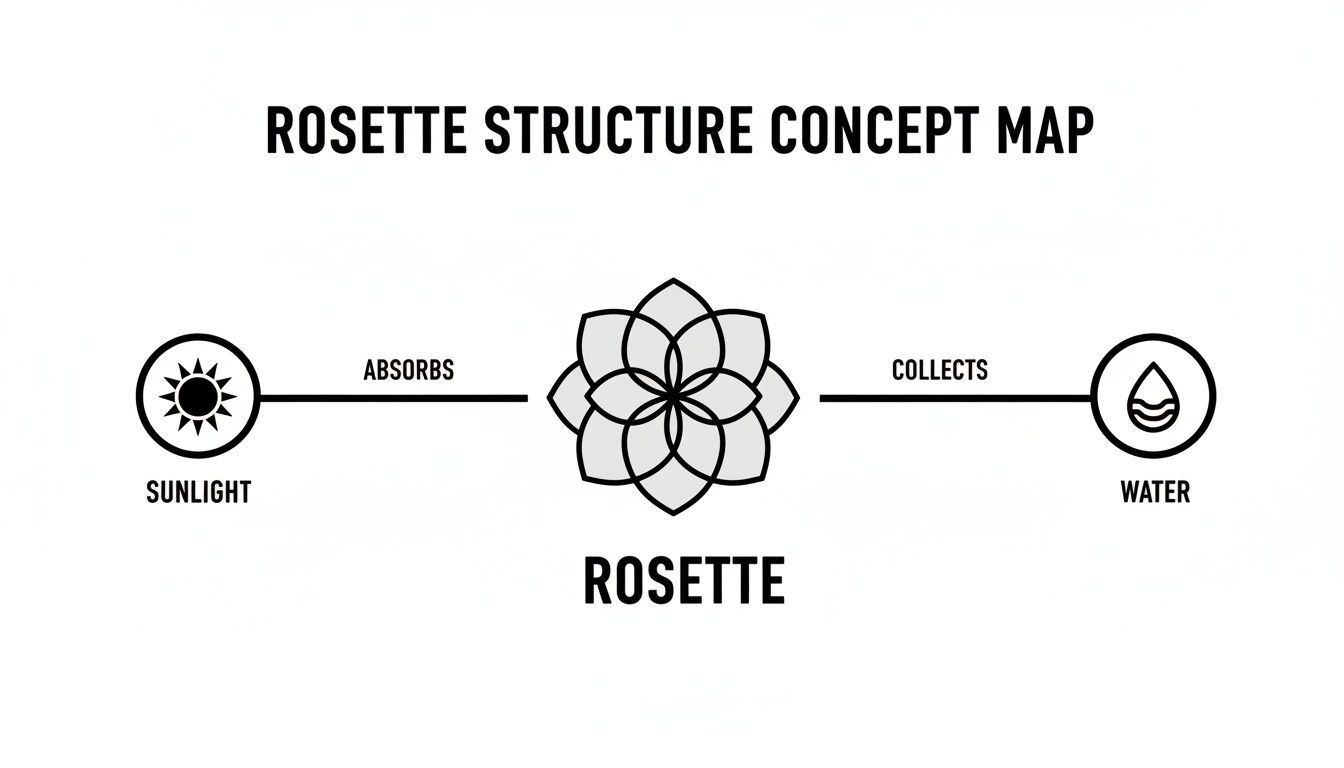
It’s a great reminder that the stunning form of a succulent rose is directly tied to its clever survival strategy.
Identifying Common Rose-Shaped Succulents
With so many gorgeous options, telling them apart can feel a bit tricky at first. This quick guide breaks down the key features of the most popular rose-like succulents to help you become a pro at spotting them.
| Genus | Key Feature | Common Colors | Best For |
|---|---|---|---|
| Echeveria | Tightly packed, classic rose shape | Greens, blues, purples, pinks, reds | The quintessential rose look |
| Graptopetalum | Looser rosettes, often with a powdery coating | Pastel pinks, lavenders, mints, pearly white | Soft, dreamy arrangements |
| Pachyveria | Thick, fleshy, and rounded leaves | Muted greens, pinks, blues, often with rosy tips | A unique, chubby, and sculptural vibe |
| Aeonium | Rosettes on the end of woody stems | Deep greens, vibrant yellows, near-black purples | Adding height and drama |
This table should help you start to recognize the subtle but important differences that give each plant its signature style.
Aeonium: The Dramatic Tree Rose
For a succulent that looks like a rose but brings a bit more drama and height to the party, you have to meet the Aeoniums. Unlike their ground-hugging cousins, Aeoniums grow their rosettes at the ends of woody, branching stems, looking like tiny, exotic trees.
Their rosettes can be absolutely breathtaking. Some varieties, like the famous Aeonium arboreum 'Zwartkop' (Black Rose), produce foliage so dark it’s nearly black, creating a stunning visual contrast in any collection. It's also worth noting that many succulents are most active in the summer, but Aeoniums are winter growers, which adds a fun twist to their care routine. If you want to dive deeper, you can explore our guide on the many types of succulents and cacti.
Mastering the Essentials of Rosette Succulent Care
Here's the good news: keeping your rose-like succulent healthy is worlds easier than tending to a fussy rosebush. Success really boils down to getting just three things right: light, water, and soil. Nail these, and you're set for a beautiful, thriving plant that will stick around for years.
These succulents aren't just a pretty face; they're also part of a huge trend toward low-maintenance plants. Between 2019 and 2023, the global market for succulents grew from under USD 4 billion to nearly USD 4.29 billion. Much of that demand comes from people looking for easy-care home decor and unique gifts. It makes sense—their drought-tolerant nature and compact shapes make them a perfect fit for modern living. You can learn more about the succulent plant market trends here.
The Three Pillars of Succulent Health
Think of succulent care as a simple recipe. Each ingredient is crucial, and getting the balance just right is the secret to avoiding the common pitfalls that trip up new owners.
- Light is Energy: Your rosette succulent craves lots of bright, indirect sunlight to keep its tight form and stunning colors. A spot near a south-facing window is usually perfect. If it doesn't get enough light, the plant will start to etiolate—a fancy word for stretching out. It will lose its beautiful rose shape as it desperately reaches for a light source.
- Water is Life (But Not Too Much): The single biggest mistake people make is overwatering. These plants are built to hold water in their leaves, which makes their roots extremely vulnerable to rot if they sit in wet soil. The best approach is the "soak and dry" method. When you water, drench the soil completely until water runs out the bottom, then let it dry out entirely before you even think about watering again.
- Soil is the Foundation: Regular old potting soil is a death sentence for most succulents because it holds on to way too much moisture. What you need is a gritty, well-draining mix. A high-quality cactus and succulent soil, like the blends we offer at The Cactus Outlet, gives you the perfect fast-draining foundation that mimics what these plants would find in their natural arid homes.
The golden rule of succulent care is simple: When in doubt, don't water. It is far easier to save an underwatered succulent (which will just look a bit wrinkled) than it is to rescue one suffering from root rot.
Troubleshooting Common Issues
Even with the best intentions, you might run into a hiccup or two. Don't worry. Most problems are easy to diagnose and fix once you know what to look for.
- Stretching (Etiolation): Is your plant looking tall and leggy, with big gaps between the leaves? It's literally screaming for more light. Move it to a sunnier spot, but do it gradually over a few days to avoid a nasty sunburn.
- Mushy, Yellow Leaves: This is the classic sign of too much water. The base of the plant might even be turning black. If you catch it early, stop watering right away and make absolutely sure the pot has good drainage.
- Pests: Mealybugs are the most common nuisance. They look like tiny, white, cottony specks, usually tucked into the crevices at the base of the leaves. You can get rid of them by dabbing each one with a cotton swab dipped in rubbing alcohol.
Getting these basics down will give you the confidence to not just keep your plants alive, but to help them truly flourish. For a deeper dive into any of these topics, be sure to check out our complete succulent plant care guide.
Creative Ideas for Styling Your Rose Succulents
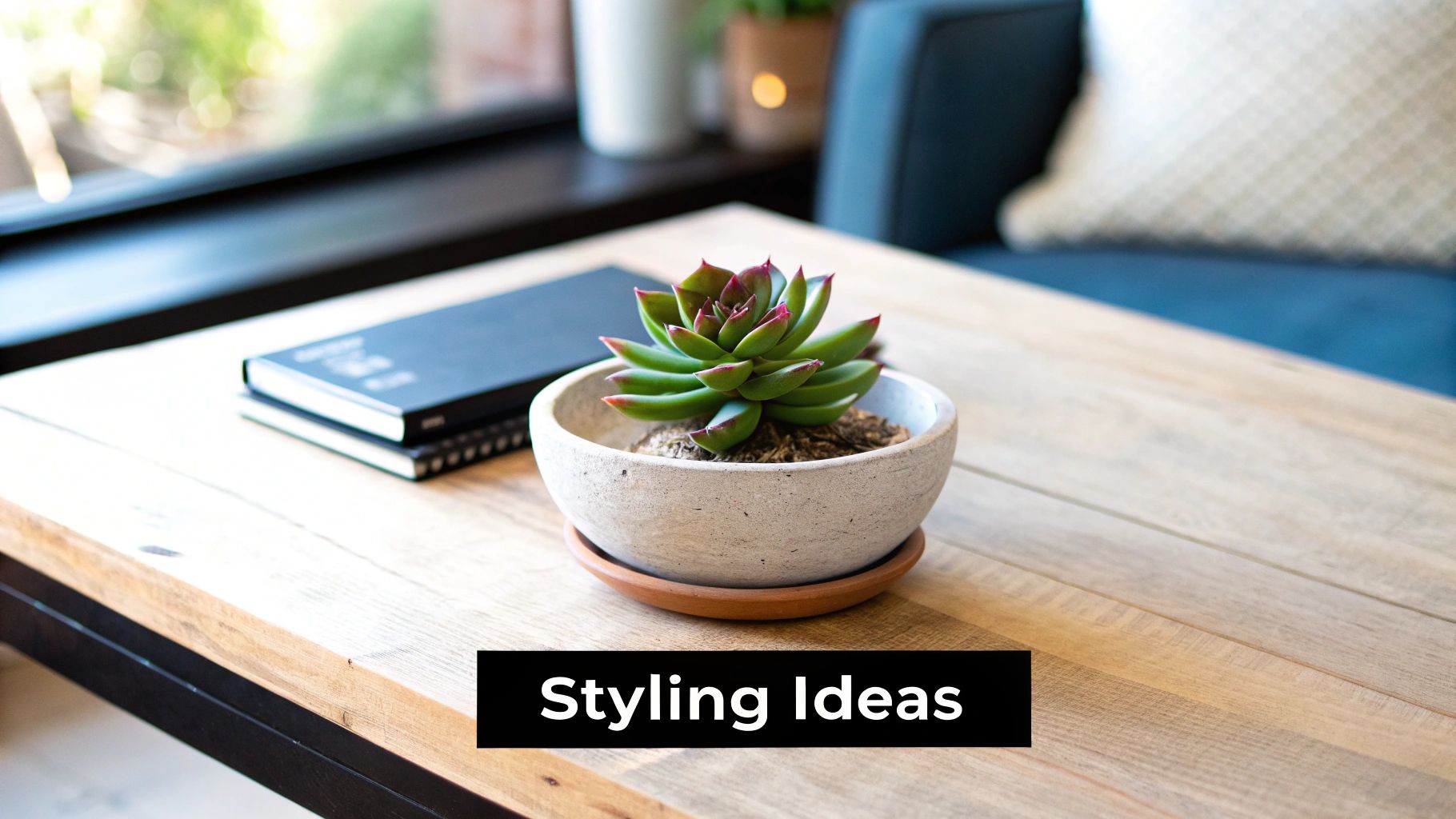
Alright, you’ve mastered the basics of keeping them alive. Now for the fun part: turning your rose succulents into living art. These plants are incredibly versatile, lending their floral beauty to all sorts of design ideas. Their compact size and sculptural shapes are perfect for transforming any space, from a minimalist office to a rambling garden path.
The secret is to think beyond just sticking them in a plain terracotta pot. The unique rosette shape of each succulent that looks like a rose is a natural focal point. This lets you create stunning arrangements that feel both deliberate and effortlessly beautiful.
Let's dig into some practical ways to really show them off.
Indoor Styling Inspirations
Inside, rose succulents can add a touch of sophisticated greenery without taking up much room. They shine in arrangements that highlight their unique forms and colors, becoming small but mighty design elements.
Even a single, striking Echeveria in a stylish ceramic pot on your desk can make a powerful minimalist statement. The pot's clean lines create a beautiful contrast with the organic, spiraling geometry of the plant’s leaves, making for a calming and elegant accessory.
For something a bit more dynamic, try grouping several different rosettes in a shallow bowl or a long, rectangular planter. You’re essentially creating a miniature succulent garden that showcases a whole tapestry of textures and colors.
- Shallow Bowl Gardens: Mix and match different rose succulent varieties with varying heights and colors to create a sense of depth. A top dressing of fine gravel or decorative sand gives it a polished, finished look.
- Minimalist Desk Accessory: Pick one perfect specimen—maybe a 'Perle von Nurnberg' with its dusty lavender leaves—and put it in a simple, modern pot. It’s an easy-care companion that instantly brings life to your workspace.
- Wedding and Event Favors: Small, individual succulents in tiny pots are unforgettable and sustainable wedding favors. Your guests will love taking home a living memento they can nurture.
By grouping different rosette succulents, you're not just planting them; you're composing a piece of art. The interplay between the tight spirals of an Echeveria and the looser form of a Graptopetalum creates a visual story that is both harmonious and captivating.
Beyond individual pots, think about weaving your rose succulents into larger designs. For some great ideas, you can explore different succulent arrangements.
Outdoor and Garden Uses
Out in the garden, these hardy plants can play a number of roles, from eye-catching container features to tough-as-nails ground cover. Their low water needs make them a fantastic choice for creating beautiful, eco-friendly landscapes that conserve resources.
In a modern rock garden, the soft, rounded forms of rose succulents provide a perfect counterpoint to the hard, angular lines of stones and boulders. Tuck them into crevices or plant them in clusters to soften the landscape and add unexpected pops of color.
They also make an elegant and drought-tolerant ground cover in sunny, well-drained spots. Over time, they'll slowly spread to form a dense, textured mat of rosettes. This approach not only looks stunning but also helps keep weeds at bay.
Your Rose Succulent Questions Answered
Even with the best care, you’re going to have questions as you get to know your plants. It’s just part of the fun. Think of this as your field guide for all those “is this supposed to happen?” moments. We’ll walk through the most common things people wonder about, so you can feel confident as your collection grows.
Let's dive into some of the practical stuff that’ll help you troubleshoot like a seasoned pro.
How Do I Propagate My Rose Succulent?
Making new plants for free is easily one of the coolest parts of growing succulents, and luckily, it's a breeze. Most of these rosette types can be grown from a single healthy leaf. It’s an amazing way to fill out your collection or share a piece of a favorite plant with a friend.
Here's the basic rundown:
- Get a clean break. Find a healthy, plump leaf near the bottom of the plant. Gently wiggle it side-to-side until it pops right off the stem. Getting a clean 'pop' is key—if part of the leaf tears and stays on the stem, it probably won't root.
- Let it heal. Just lay the leaf on a paper towel somewhere out of direct sun. Over the next few days, the little wound at the base will dry out and form a callus. This is a non-negotiable step; it prevents the leaf from rotting when it meets soil.
- Wait for the magic. Place the callused leaf right on top of some well-draining succulent mix. Before you know it, tiny pink roots and a miniature new plant will start sprouting from the callused end.
For a deeper dive, check out our guide on propagating succulents from cuttings, where we cover every detail.
Will My Rose Succulent Ever Flower?
Yes, they absolutely do! A lot of people think succulents are all about the leaves, but a flowering rosette is a sign of a mature, happy plant. When you’ve got the conditions just right, most of them will send up a long, skinny stalk from the center or side of the rosette.
At the end of that stalk, you'll get a cluster of small, delicate flowers, often shaped like little bells. They come in stunning shades of pink, orange, yellow, or fiery red. It's not just a pretty bonus—it's your plant telling you it’s thriving. Once the show is over and the flowers fade, you can just snip the stalk off at the base.
Why Are the Bottom Leaves Drying Up?
It can be a little jarring to see the bottom leaves on your perfect rosette turn brown and crispy. But don't panic! More often than not, this is completely normal. As your succulent pushes out fresh new leaves from its center, it sheds the oldest ones at the bottom to make room.
Think of it as recycling. The plant is simply pulling water and nutrients from its oldest leaves to fuel all that new growth up top.
You can gently tug the dried leaves off to keep things looking tidy. This is worlds away from a watering problem. Mushy, yellow leaves usually mean too much water, while wrinkly leaves all over the plant signal it's thirsty. A few crispy bottom leaves? That’s just business as usual.
Can I Keep My Rose Succulent Indoors?
You bet. These rose-like succulents make incredible houseplants, as long as you can give them the one thing they crave above all else: bright light. They can live their whole lives indoors, but where you put them will make or break their beautiful, compact shape.
Find the sunniest window you have—usually one that faces south. They need at least six hours of bright, indirect light every single day to stay colorful and tight. If your home is on the darker side, especially in winter, a simple grow light will be your best friend. Without enough light, they’ll start to stretch out, getting long and leggy, and you'll lose that iconic rose form.
At The Cactus Outlet, we're passionate about helping everyone grow these incredible living sculptures. Browse our curated collection of healthy, vibrant rosette succulents and find the perfect one to bring a touch of lasting beauty to your space. Your next favorite plant is waiting for you at https://www.cactusoutlet.com.