

Let's cut right to the chase: the number one rule for watering your cactus is to water it deeply, but not very often. You need to let the soil completely dry out between waterings.
For most cacti you keep indoors, this works out to a good soak once every 7 to 14 days during the spring and summer when they're actively growing. Once fall and winter roll around, their thirst drops off a cliff. You can scale back to watering just once every 3 to 4 weeks.
The Golden Rule of Cactus Watering
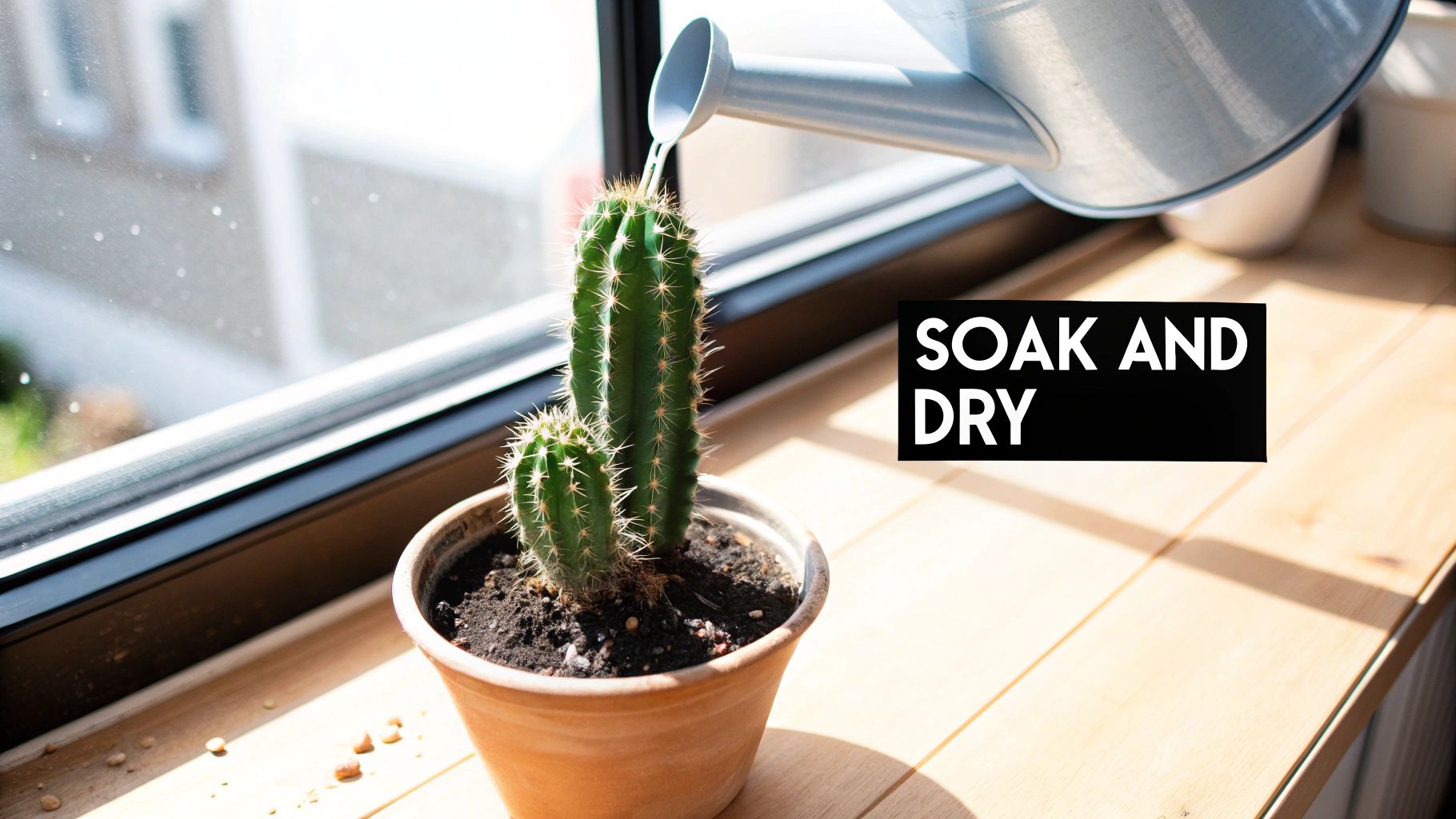
The most common mistake I see new cactus owners make is treating them like a typical fern or ficus. Giving them little sips of water every few days is the quickest way to kill them. It’s far better to think like mother nature. Imagine a rare, torrential desert downpour followed by a long, hot dry spell. That’s what we’re trying to copy.
This “soak and dry” method is crucial for a few reasons:
- It builds strong roots. When you drench the soil, you encourage the roots to grow deep into the pot, searching for that moisture. This creates a much more stable and healthy plant.
- It prevents root rot. Letting the soil go bone-dry between waterings gives the roots a chance to breathe. Constantly damp soil is a breeding ground for the fungus that causes rot, which is almost always a death sentence.
- It taps into their survival instincts. Cacti are built to store water in their stems to get through long droughts. Infrequent, deep watering plays right into this natural strength.
Ditching the Calendar for Your Senses
Schedules are a fantastic starting point, but the real goal is to learn to read your plant. Calendars don't account for a cloudy week or a sudden heatwave. Many desert cacti evolved to handle those intense, infrequent bursts of rain, not a scheduled sprinkle.
Here’s a simple table to give you a baseline. Think of it as a guide, not a rigid rule.
General Cactus Watering Frequency At a Glance
| Season | Growing Phase | Watering Frequency |
|---|---|---|
| Spring & Summer | Active Growth | Every 7–14 days (after soil is 100% dry) |
| Fall & Winter | Dormancy | Every 3–4 weeks (after soil is 100% dry) |
This general schedule is a solid foundation, but always trust what the soil and the plant are telling you over what the calendar says.
The most important takeaway is this: it is always better to underwater a cactus than to overwater it. They can bounce back from being thirsty far more easily than they can from sitting in a swamp.
So, forget about misting them or giving them tiny sips. When it’s actually time to water, commit to it. Drench the soil thoroughly until you see water pouring out of the drainage holes. This single, generous drink is exactly what your cactus needs to thrive.
Factors That Influence Your Watering Schedule
That general schedule is a fantastic starting point, but it's not the final word. Figuring out how often to water your cactus is less about sticking to a calendar and more about learning to read your plant and its environment.
Think of it this way: two identical cacti bought on the same day can end up with wildly different needs just a few weeks later. The key is to observe your unique conditions and adjust your approach.
Light and Temperature Create Thirst
Hands down, the amount of light and heat your cactus gets is the biggest driver of its thirst. A cactus basking in a bright, south-facing window for eight hours a day is working hard, photosynthesizing and using up its water stores much faster. In the summer, it might need a good soak every 10 days.
Now, take that same cactus and move it to a cooler, north-facing room with only indirect light. It’s basically in a state of semi-rest. Its metabolism is slower, and its soil will stay damp for much longer. This plant might only need water every three weeks, maybe even longer. Always assess the location first.
The Pot Itself Matters
The container your cactus lives in directly impacts how quickly the soil dries out. This is a detail many new owners overlook, and it's often the culprit behind accidental overwatering.
- Terracotta Pots: Honestly, these are usually the best choice. Unglazed clay is porous, which means moisture and air can move right through the walls. This helps the soil dry out evenly and quickly, dramatically cutting down the risk of root rot.
- Glazed Ceramic or Plastic Pots: These non-porous materials are moisture traps. While they can look great, you have to be much more careful. The soil in these pots dries from the top down, so the surface can feel bone-dry while the root ball is still saturated.
A common mistake is watering a cactus in a glazed pot on the same schedule as one in terracotta. The plant in the glazed pot might need water half as often. Always, always check the soil deeply before you even think about reaching for the watering can.
Soil Composition Is Everything
The dirt your cactus calls home is just as important. The right soil mix determines how much water hangs around the roots after you water. Standard potting soil is a death sentence; it holds way too much moisture and will quickly lead to disaster. A proper cactus mix is designed for one thing: sharp, rapid drainage that mimics its natural arid environment.
A gritty, well-aerated medium is non-negotiable for healthy roots. It ensures that after a deep drink, all the excess water flows away quickly, letting the roots breathe. If your soil feels heavy or stays damp for days on end, that’s a huge red flag.
For a deeper dive, check out our guide on the perfect cactus and succulent soil mix. Getting the soil right is the most important step in preventing the dreaded root rot.
How to Tell When Your Cactus Is Thirsty
Forget the rigid watering schedule. The best skill you can learn as a cactus owner is how to "read" your plant and its soil. Instead of guessing, let them give you the real answer. The most foolproof method, hands down, is checking the soil moisture.
For your smaller potted cacti, the classic finger test is all you need. Just stick your index finger about 2 inches into the soil. If you feel any coolness or dampness, it's not time yet. You want to feel nothing but dry, warm grit before you even think about reaching for the watering can.
Checking Deeper Pots
What about those big, deep containers? Your finger won't cut it. The top few inches of soil can be deceivingly dry while the root zone is still wet—a fast track to root rot.
This is where a simple, low-tech tool becomes your best friend. A plain wooden skewer or a disposable chopstick works perfectly.
- Carefully push it all the way to the bottom of the pot.
- Let it sit for about 10 seconds.
- Pull it straight out and look at it.
If it comes out completely clean and dry, it's go-time. Your cactus is ready for a thorough drink. But if it comes out with any damp soil clinging to it, there's still plenty of water down where the roots are. Hold off for a few more days and then test again. This little trick takes all the guesswork out of the equation.
This decision tree gives you a great visual for how environmental factors play into this.

As you can see, things like light, temperature, and even the pot itself can make your soil dry out faster or slower, which is why testing is so much better than just following a calendar.
Reading Your Cactus's Visual Cues
Your cactus will also give you physical clues. A thirsty plant often looks a little... deflated. You might notice some fine, shallow wrinkles appearing on its skin, or it might look like it's shrinking slightly. This is perfectly normal; it just means the cactus is starting to use up the water stored in its tissues.
An overwatered cactus, on the other hand, sends out much more alarming signals. These are the red flags you need to watch for.
This table breaks down the key differences to help you quickly diagnose the problem.
Signs of Overwatering vs Underwatering
| Symptom | Likely Overwatering | Likely Underwatering |
|---|---|---|
| Feel | Soft, mushy, or squishy base | Firm, but potentially shrunken |
| Color | Yellowing, browning, or translucent skin | Dull, faded green color |
| Appearance | Plump but discolored, may look "sickly" | Wrinkled, shriveled, or deflated look |
| Stability | Wobbly or unstable in the pot | Firmly rooted |
| Soil | Consistently damp, may have mold or smell sour | Bone-dry, may pull away from pot edges |
The signs of underwatering are subtle and almost always fixable with a good drink. But the signs of overwatering often signal root rot, which can be a death sentence.
When in doubt, don't water. A cactus can bounce back from being a little too dry far more easily than it can recover from having its roots rot away in soggy soil.
The Right Way to Water Your Cactus
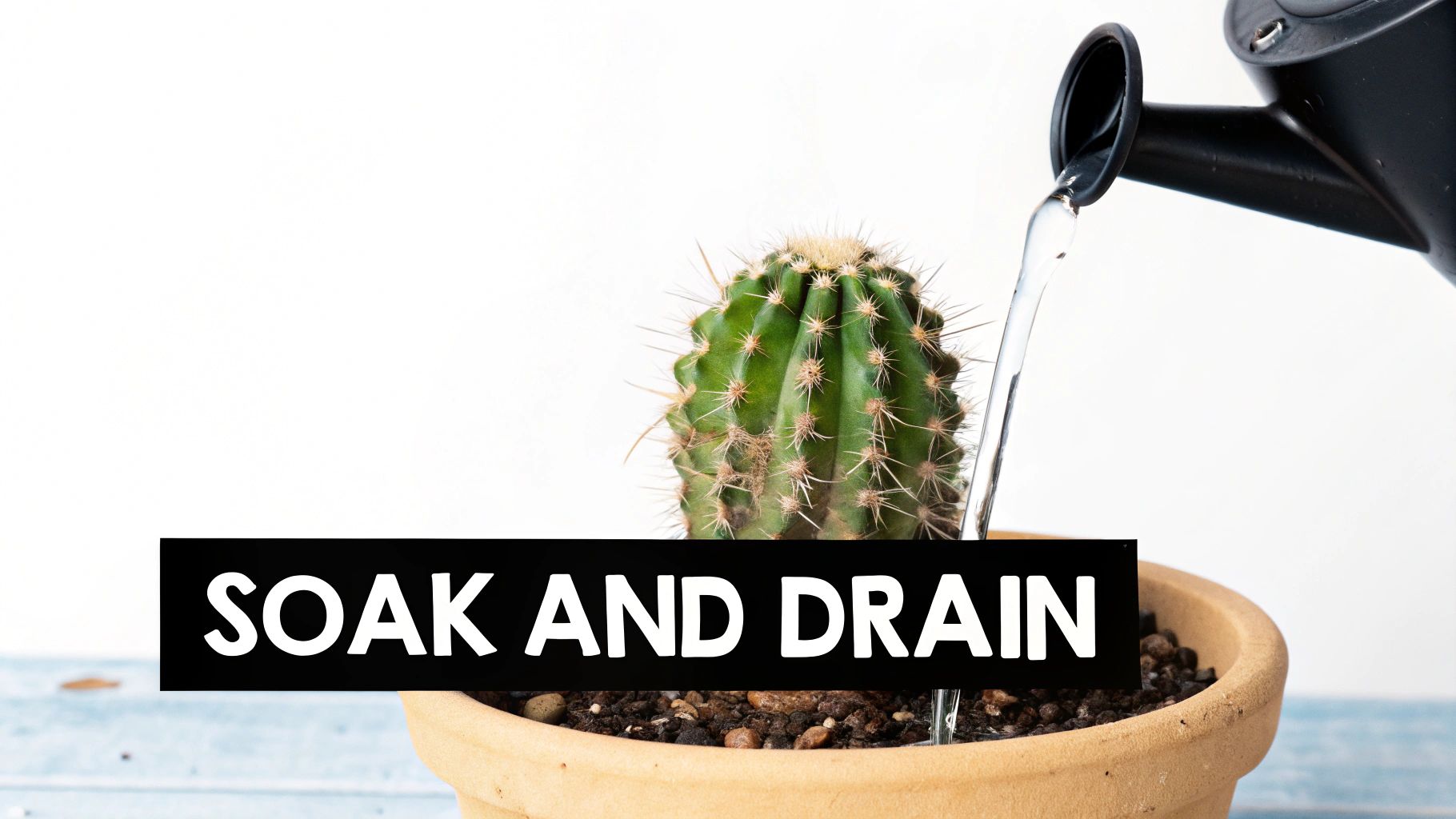
Knowing when to water is only half the story. How you water is just as important—maybe even more so. A perfect schedule won't save a cactus from a flawed watering technique. Let's get this right from the start with the one method that works every time: the “soak and dry” technique.
This approach is all about mimicking nature. In the desert, it doesn't drizzle; it pours. Cacti are built for these intense but rare downpours. We're not giving them a tiny sip; we're giving them a deep, thorough drink that rehydrates the entire root system, from top to bottom.
The Gold Standard: The Soak and Dry Method
When you've confirmed the soil is bone dry, it's time to water. I like to take my pots to the sink, but a saucer underneath works just fine. Pour water slowly and evenly across the entire soil surface. Keep going until you see it flowing freely from the drainage holes.
Don't stop at the first little trickle, either. Continue for another few seconds to be absolutely sure every last pocket of soil is saturated.
Why is this so critical? Small, shallow waterings are a common mistake. They only wet the top inch of soil, which encourages weak, shallow roots. A plant with a weak root system is never going to be truly healthy. A deep drench, on the other hand, encourages roots to grow deep and strong, creating a resilient anchor for your cactus.
This is exactly how they function in their natural habitat. Studies on cactus root systems have shown that while a light rain might only wet a fraction of the roots, a real downpour hydrates nearly the entire network. A complete soaking in a pot is our best shot at replicating that process. You can actually read more about these fascinating cactus root findings on JSTOR if you want to geek out on the science.
Now for the "dry" part, which is just as crucial. After soaking, let the pot drain completely for at least 10-15 minutes. Whatever you do, never let your cactus sit in a saucer full of water. That's the fastest way to invite root rot, the number one killer of cacti.
Key Takeaway: The goal is simple: completely saturate the soil, then let it dry out completely. Think desert downpour, not daily drizzle. Mastering this is probably the single most important thing you can do for your cactus.
Common Watering Mistakes to Avoid
A few bad habits can quickly undo all your good work. If you can steer clear of these common pitfalls, you’re well on your way to success.
- Stop Misting: Cacti come from arid environments, not tropical jungles. Misting is pointless for hydration and, worse, can encourage fungal spots and rot on the plant's skin, especially if you don't have great air circulation.
- Say No to Ice Cubes: This is a popular "hack" that does more harm than good. The extreme cold can shock the sensitive root system, and the slow melt often isn't enough water to penetrate deep into the soil where it's needed.
- Keep the Plant's Body Dry: When you water, aim for the soil, not the cactus itself. Water trapped in the crevices between the ribs or around the base can sit there and lead to soft spots and rot.
By sticking to the soak and dry method and avoiding these easy-to-make mistakes, you're setting your cactus up for a long, healthy life. For a deeper dive, check out our complete guide on cactus plant watering techniques.
Watering Different Cactus Species
While the "soak and dry" method works great as a general rule, you can really level up your cactus care by understanding your specific plant. Not all cacti are created equal when it comes to thirst, and the secret to helping them thrive often lies in mimicking their native environment.
It’s one of the biggest myths out there: that all cacti want to be bone-dry all the time. The reality is that their needs are incredibly diverse, reflecting whether they evolved in a sun-scorched desert or a humid tropical forest.
Desert Cacti vs. Tropical Cacti
True desert dwellers, like the iconic Saguaro or the Peruvian Apple Cactus, are built for survival. Their thick, fleshy bodies are basically giant water tanks, designed to get them through long, brutal droughts between rare, soaking rains. For these guys, you want to lean into a much less frequent watering schedule. Let the soil get completely dry and even stay that way for a bit before you water again, especially when they're dormant in the winter.
Then you have the epiphytic cacti, which are a whole different ballgame. You might know them as jungle or tropical cacti—think Christmas Cactus (Schlumbergera) or Rhipsalis. These plants don't grow in sandy deserts; they grow on trees in the humid forests of Brazil. Their care is the complete opposite of their desert cousins. They like their soil to stay more consistently moist (but not soggy!) and appreciate higher humidity. Letting them dry out completely is a big no-no.
A Christmas Cactus will go limp and start dropping its precious flower buds if the soil gets too dry. This is the perfect example of why just knowing the species can make all the difference.
Quick Tips for Popular Varieties
Even among desert cacti, there are subtle differences to keep in mind. A massive, mature columnar cactus can store way more water than a small, globular one. So, let’s get into the specifics for a few common varieties we carry.
Here are some pointers for a few favorites from The Cactus Outlet:
- Golden Barrel Cactus (Echinocactus grusonii): This classic desert globe is extremely drought-tolerant. In fact, it's incredibly prone to root rot from too much water, so when in doubt, don't water it. Let the soil dry out completely and then some before giving it another drink. For a deep dive, check out our Golden Barrel Cactus care guide.
- Peruvian Apple Cactus (Cereus repandus): Being a large, columnar species, this cactus has a massive water storage capacity. Give it a deep, thorough soaking during its growing season in spring and summer, but then let the soil dry out all the way to the bottom. Come winter, you can practically ignore it.
- Prickly Pear (Opuntia): These plants are tough, forgiving, and great communicators. The best time to water them is when you notice the pads look a little thin, soft, or even slightly wrinkled. They'll tell you exactly when they're thirsty. Otherwise, they do best when left alone.
Common Cactus Watering Questions Answered
Even with a solid routine, you're bound to run into situations that make you pause. That's perfectly normal. Over the years, we've heard just about every question there is, so let's walk through some of the most common ones.
Getting these details right is what really takes your cactus care to the next level. It’s less about a rigid schedule and more about learning to respond to what your plant and its environment are telling you.
Does My Cactus Need Less Water in Winter?
Yes, and this is a big one. Forgetting this is probably the number one mistake I see people make. Most cacti hit the brakes in the fall and go into dormancy for the winter. With shorter days and cooler temps, their growth grinds to a halt, which means they use a tiny fraction of the water they did in summer.
For most of my indoor cacti, this means I might only water them once every 3 to 6 weeks, sometimes even less. The key is to let the soil go bone dry and stay that way for a while before even thinking about watering again.
Overwatering during dormancy is the quickest way to kill a cactus, bar none. The plant isn't drinking, so the soil just sits there, cold and wet—a perfect recipe for deadly root rot. If you're not sure, just wait another week. Seriously.
Is Tap Water Okay for Cacti?
Most of the time, yes. Cacti are tough, and your average tap water is perfectly fine. They aren't nearly as fussy as some other houseplants.
That said, if your home has very hard water, you might start to see a crusty white buildup on the top of the soil or around the pot's drainage hole. This is just mineral salt residue. It’s usually not a huge deal, but if it bothers you or you have a particularly sensitive species, you've got options.
- Use filtered or rainwater. A simple charcoal filter pitcher does the trick, but rainwater is the gold standard—it's naturally soft and free!
- Let it sit overnight. The easiest fix is to fill your watering can and just leave it on the counter for 24 hours. This lets most of the chlorine evaporate before it ever touches your plant.
What Should I Do If I Overwatered My Cactus?
Okay, first, don't panic. But you do need to act fast.
The moment you realize what's happened, stop watering. Tip the pot over the sink to let any excess water drain out of the saucer and the bottom of the pot. Then, move it somewhere with better airflow to help speed up the drying process.
If the cactus itself still looks firm and healthy, just letting it dry out completely over the next few weeks might be enough. But if you see the classic signs of rot—a mushy, blackening base or yellow, see-through-looking skin—it's time for emergency surgery.
- Get it out of the pot. Carefully slide the cactus out and gently knock away all the wet, soggy soil.
- Inspect the roots. You're looking for firm, white or light tan roots. Anything black, slimy, or smelly is rotted and has to go.
- Cut away the rot. Take a clean, sharp knife and be ruthless. Slice away every bit of mushy, discolored tissue on the roots and the base of the plant until you see only clean, healthy, green flesh.
- Let it heal. Set the cactus aside in a dry place out of direct sun and let the cut wound dry and form a hard callus. This can take anywhere from a few days to a couple of weeks.
- Repot. Once it's fully callused over, plant it in a fresh pot with brand-new, completely dry cactus mix. Don't water it for at least another week to give it time to settle in.
How Is Watering Different for Cacti in the Ground?
It's a completely different world. A cactus planted in your yard has the freedom to send its roots deep and wide, tapping into moisture across a huge area of soil. The ground itself acts as a massive buffer against drought.
Once a cactus is established in the landscape (and you live in a suitable climate), it can often thrive on natural rainfall alone, needing almost no extra water from you.
A potted cactus, however, is living in a tiny, closed ecosystem. It is 100% dependent on you for every single drop. The soil in a pot dries out exponentially faster and holds far less moisture. You can't treat a potted plant like one in the ground—it's a surefire way to end up with a very thirsty, unhappy cactus.
Ready to find the perfect low-maintenance plant for your home? At The Cactus Outlet, we have a huge selection of beautiful, healthy cacti ready to ship directly to your door. Explore our collection and start your desert garden today at https://www.cactusoutlet.com.