

Few plants can command a space quite like the San Pedro cactus. Scientifically known as Echinopsis pachanoi, these aren't your typical small, potted succulents. We're talking about impressive, fast-growing columns of deep green to blue-green skin that create a powerful vertical statement in any garden or home.
Think of them as living sculptures. Their clean, multi-ribbed form provides an architectural element that transforms a space, growing and changing with you over the years.
A Plant With Deep Cultural Roots
But there's more to this cactus than just good looks. The San Pedro has a rich, fascinating history that stretches back thousands of years in its native Andean highlands of Peru, Ecuador, and Bolivia. It wasn't just another plant in the landscape; it was a cornerstone of ancient cultures.
In the indigenous Quechua language, this cactus is called 'Huachuma.' For millennia, it has been a central part of traditional healing, spiritual ceremonies, and even veterinary medicine—long before Spanish colonizers arrived and gave it the name San Pedro. You can dive deeper into its incredible backstory on Wikipedia.
Growing a San Pedro connects you to this incredible legacy, adding a layer of historical depth to your collection that few other plants can offer.
Why Choose San Pedro for Your Collection?
Whether you've been growing cacti for decades or are just getting your hands dirty, San Pedro is a uniquely rewarding choice. It's surprisingly low-maintenance and forgiving, making it perfect for growers at any skill level. With just a bit of straightforward care, it will flourish.
Here’s what makes the San Pedro cactus a standout:
- Incredible Growth Rate: This is not a plant that will test your patience. In the right conditions, a San Pedro can shoot up several inches, sometimes even a full foot, in a single growing season.
- Simple to Propagate: Want more plants? No problem. Taking cuttings from a San Pedro is exceptionally easy, allowing you to expand your own collection or share with friends.
- Modern, Sculptural Beauty: With its tall, columnar shape and often minimal spines, it has a clean, architectural look that fits beautifully with almost any design style, from desert modern to bohemian.
How to Identify San Pedro and Its Relatives
Learning to properly identify a San Pedro cactus is a skill every collector develops over time. Think of it like a rockhound learning how to identify minerals—at first, everything looks like a simple rock, but soon you start noticing the subtle clues in color, texture, and form. This is your guide to seeing those details in San Pedro and its closest look-alikes.
To the untrained eye, many columnar "torch" cacti can seem identical. They're all tall, green, and have those classic vertical ribs. But the real story is told in the finer points: the number of ribs, the color and length of the spines, and the specific hue of the cactus's skin.
Once you know what to look for, you can confidently identify what you have. This not only satisfies a collector's curiosity but also helps you give your plant the exact care it needs to thrive.
The Three Main Torch Cacti
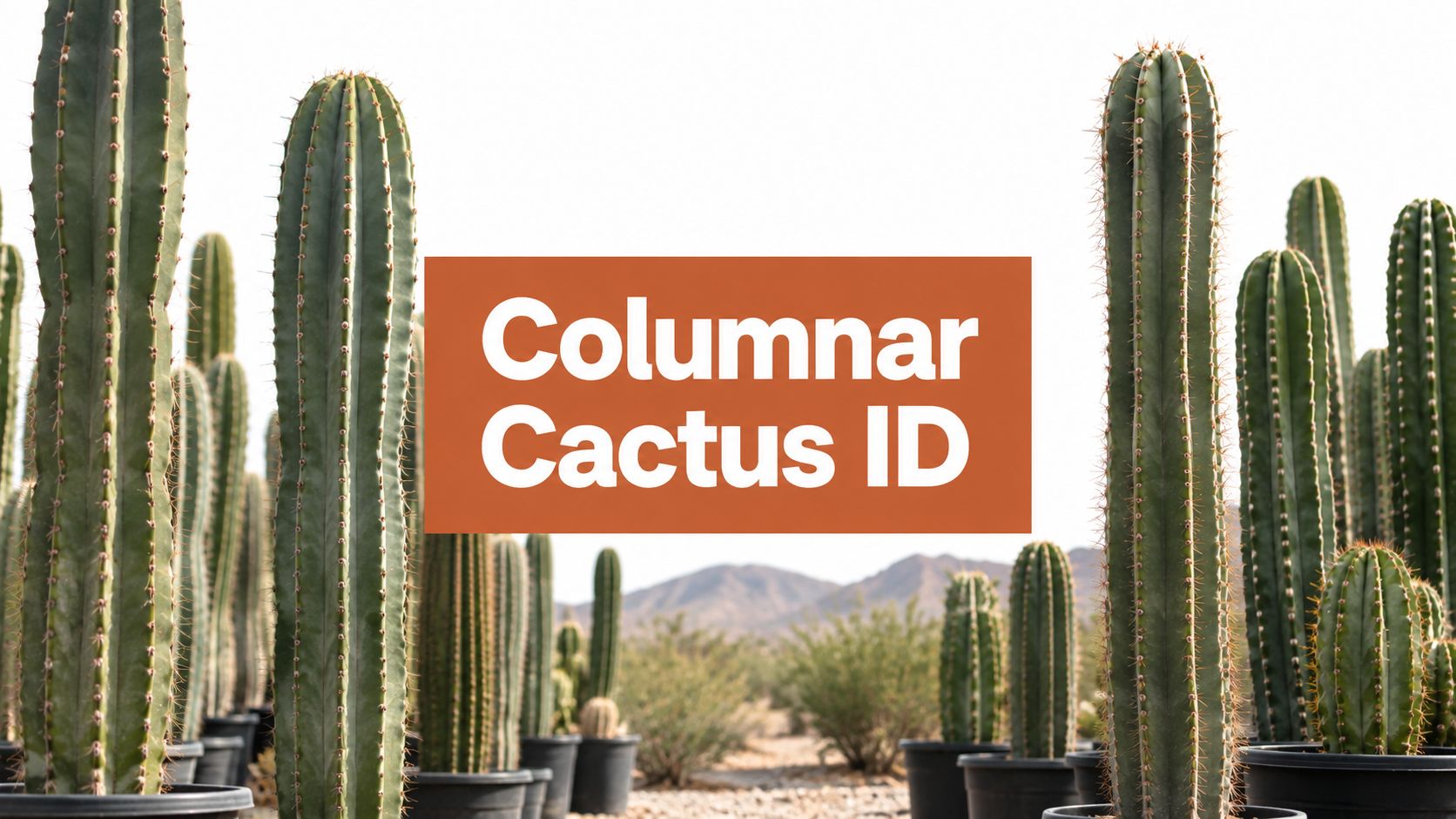
While the world of Echinopsis is vast, with countless hybrids and cultivars, most of the columnar cacti you'll encounter fall into three main species. Getting to know these "big three" is the perfect starting point for building your identification skills.
- Echinopsis pachanoi (San Pedro): This is the quintessential San Pedro. It usually has a rich green skin, though it can sometimes have a slightly bluish cast. Its most famous trait is its spines, which are often so small they’re barely there.
- Echinopsis peruviana (Peruvian Torch): This species is known for having a more pronounced, powdery blue-green color. It also sports much longer, more noticeable spines, which are typically a golden-brown or dark brown.
- Echinopsis lageniformis (Bolivian Torch): The Bolivian Torch often has a paler, almost grayish-green skin. Its spines are the most formidable of the three, growing long and sharp in shades of honey-gold to reddish-brown.
This handy flowchart can help you think about which cactus might be the right fit for your collection, garden, or home decor.

As you can see, your own goals—whether you're aiming for a certain aesthetic or are a dedicated species collector—can point you toward one variety over another.
A Closer Look at Key Features
Let’s put these three cacti side-by-side to make the differences pop. When you compare them directly, the unique characteristics of each become much clearer. For a deeper dive that covers even more species, be sure to check out our complete cactus identification guide.
The table below breaks down the most reliable features to look for when trying to tell these torch cacti apart.
Expert Tip: Never rely on just one feature to make an ID. Cacti show a lot of natural variation. Always look for a combination of traits—ribs, spines, and color—to be sure of what you have.
San Pedro vs. Related Torch Cacti
| Feature | San Pedro (E. pachanoi) | Peruvian Torch (E. peruviana) | Bolivian Torch (E. lageniformis) |
|---|---|---|---|
| Rib Count | Typically 6-8 rounded ribs | Usually 6-9 broader, flatter ribs | Fewer, 4-7 very prominent ribs |
| Spines | Very short to absent, tiny bumps | Long (1-2 inches), brown to yellow | Longest (up to 3 inches), honey-colored |
| Coloration | Deep green to blue-green | Glaucous blue-green, often powdery | Lighter, pale to gray-green |
| Areoles | Small, whitish, spaced apart | Larger, fluffy, often closer together | Prominent, widely spaced |
Using this table as a checklist, you can systematically compare a plant's features against the known characteristics of each species. This simple process of elimination takes the guesswork out of identification and builds your confidence as a grower.
Your Essential San Pedro Cactus Care Guide

Looking after a San Pedro is one of the most satisfying things you can do as a plant owner. They aren't shy about showing you when they're happy. It's less about following a rigid checklist and more about learning to read the cues your cactus gives you. Once you get the hang of it, caring for them becomes second nature.
This guide will cover the fundamentals every healthy San Pedro needs: light, soil, water, temperature, and fertilizer. Get these right, and you'll be rewarded with a stunning, thriving cactus for many years.
The Right Light for Strong Growth
When it comes to San Pedro, light is everything. These cacti are absolute sun-worshippers, using that energy to fuel their growth and maintain their vibrant green columns. If you're growing outdoors, find a spot where your plant can soak up at least six hours of direct sun each day.
Growing indoors? Placement is critical. A south-facing window is prime real estate, giving your cactus the brightest, most consistent light possible. A west-facing window is a solid backup plan.
A Crucial Acclimation Tip: One of the most common mistakes is taking a cactus from a dim spot and thrusting it into direct, intense sun. It's the plant equivalent of hitting the beach for a week with no sunscreen—you'll get a nasty sunburn. On a cactus, this shows up as ugly white or brown scarring on its skin that will never go away. To avoid this, acclimate your plant over a week or two by slowly increasing its time in the sun each day.
Creating the Perfect Soil Foundation
The right soil is completely non-negotiable, especially for a San Pedro. Their native home is on rocky, fast-draining mountain slopes, so their roots absolutely hate sitting in water. In fact, the number one killer of most cacti is root rot from soil that stays soggy for too long.
Your goal is to create a potting mix that drains almost as fast as you water it. Think of your pot as a colander, not a sponge. While you can start with a store-bought cactus and succulent mix, they almost always need a little help to be perfect.
A fantastic, simple DIY recipe for your San Pedro cactus plants is a 50/50 blend:
- 50% Potting Soil or Coco Coir: This provides the basic structure and nutrients.
- 50% Inorganic Material: This is the key to drainage. Use gritty stuff like pumice, perlite, or coarse sand to create air pockets and let water rush through.
This simple mix provides the perfect balance, holding just enough moisture for the roots to drink while letting the excess drain away immediately.
Mastering the "Drench and Dry" Watering Method
Watering is where most new growers get nervous, but it's simple once you embrace one core rule: the "drench and dry" method. This technique perfectly mimics the rainfall in their native Andes—infrequent, heavy downpours followed by long, dry periods.
Here's how you do it:
- Check the Soil First: Before you even pick up the watering can, stick your finger a couple of inches into the soil. If you feel any dampness at all, put the can down and walk away.
- When It's Dry, Drench It: Once the soil is bone dry, it's time to water. Be generous. Pour water over the entire soil surface until it streams out of the drainage holes at the bottom. This ensures every single root gets a chance to hydrate.
- Let It Dry Out Completely: This is the most important part of the cycle. You must let the soil dry out entirely before you even consider watering again. In the summer growing season, this might be every 2-4 weeks. During their winter dormancy, you might only water once a month or even less.
Remember, overwatering is a much bigger threat than underwatering. If you're ever in doubt, wait.
Ideal Temperature and Humidity
San Pedro cacti are tough customers, but they have their happy place. They truly thrive in the warm, dry conditions of their high-altitude home, preferring temperatures between 65°F and 85°F (18°C and 29°C).
While they can tolerate a quick, chilly dip, they are absolutely not frost-tolerant. A hard frost will cause major damage and can easily kill the plant. If your area experiences freezing winters (roughly USDA Zone 7 or colder), your San Pedro must be brought indoors.
As for humidity, you don't need to worry. These plants much prefer dry air. Good air circulation is always a plus, especially indoors, as it helps prevent any fungal problems from taking hold on the cactus's skin.
Fueling the Growth Spurt with Fertilizer
One of the coolest things about San Pedro is how fast it can grow, easily outpacing many of its cactus cousins. The San Pedro cactus, or Echinopsis pachanoi, is known for its remarkable growth rate. In ideal conditions, it’s not uncommon for it to shoot up 25-30 cm (10-12 inches) per year. To get a deeper dive into how different factors can influence this, you can find great information about San Pedro growth rates on Plantin.
To support this vigorous growth, a little bit of fertilizer during the spring and summer growing season goes a long way. Grab a balanced, low-nitrogen liquid fertilizer made for cacti. Dilute it to half the recommended strength and feed your plant about once a month during its active season. Once fall arrives, stop fertilizing completely to let the cactus slide into its natural winter rest.
How to Propagate and Multiply Your Cactus Collection

One of the real joys of growing San Pedro is just how easy it is to make more of them. You don't need a fancy greenhouse or a degree in botany to turn a single plant into an entire family. It’s a simple, rewarding process that lets you expand your garden, save a broken piece, or share your passion with friends.
You have three main routes to go: taking cuttings, separating "pups," or starting from seed. Let's walk through how each one works in the real world, so you can start multiplying your collection with confidence.
Propagating from Cuttings the Right Way
Taking a cutting is the fastest and most popular method for a reason—it lets you create a good-sized, new plant right away. You simply cut a section from a healthy "mother" plant, let it heal, and plant it. Famous horticulturist Ralph Moran from the San Diego Zoo had a great, simple mantra for it: "Chop, callus, plant."
While the process is straightforward, there's one step that absolutely cannot be skipped. Get this right, and you're golden.
The Power of the Callus: The single most critical step is allowing the cut end of your cactus to callous over. This just means you let the wet, fresh cut air-dry until it forms a firm, dry scab. This callous is like a shield, protecting the vulnerable flesh from rot-causing bacteria and fungus once it's in the soil.
Trust me, skipping this step is the #1 mistake new growers make. A little patience here makes all the difference.
A Step-by-Step Guide to Taking a Cutting
Ready to make a new cactus? Here’s the simple, proven process. For an even deeper dive, be sure to check out our complete guide on how to propagate cactus from cuttings.
- Make a Clean Cut: Pick a healthy, vibrant section of a San Pedro that's at least 6-8 inches long. Use a clean, sharp knife to make a swift, straight cut across the column.
- Let It Callous: Set the cutting in a dry spot with good air circulation, but keep it out of direct sun. This drying process can take anywhere from one to four weeks, depending on how thick the cutting is and the humidity in your area. The end should feel hard and totally dry to the touch.
- Plant the Cutting: Once it's calloused, push the cutting about 2-3 inches deep into a pot of fast-draining cactus soil. If your cutting is tall and wobbly, you can use a few bamboo stakes to help hold it upright.
- Wait to Water: This is important—don't water it right away! Let it sit dry for at least two weeks. This encourages the cutting to send out new roots in search of moisture instead of just sitting in wet soil and rotting.
Within a few weeks to a couple of months, roots should start forming. You can check by giving the cactus a very gentle wiggle. If you feel resistance, you've got roots!
Separating Pups for Easy Clones
An even simpler method is to harvest the "pups"—the small, new cacti that sprout from the base of the mother plant. These are perfect little clones, and removing them is a great way to start a new plant or just tidy up a crowded clump.
Wait until a pup is at least a few inches tall. Then, using a clean knife, carefully slice it off at the point where it connects to the main plant. Just like with a larger cutting, you'll want to let that small cut end callous over for a week or two before potting it up on its own.
Growing San Pedro Cactus Plants from Seed
If you've got patience, growing from seed is an amazing experience. It's definitely the slow road, but there’s nothing quite like watching those tiny green specks emerge and begin their journey.
To get started, sprinkle the tiny seeds across the surface of a sterile, fine-grain seedling mix. Your goal is to keep the soil consistently moist (think damp, not soaking wet) and give them bright, indirect light. Placing a clear plastic dome or some plastic wrap over the pot will create a humid environment that helps trigger germination, which usually happens in a few weeks.
Even the most seasoned growers run into issues now and then, but the good news is that San Pedro cacti are incredibly resilient. Most problems are straightforward to solve if you know what to look for. The trick is to catch things early.
Learning to read your plant is the most important skill you can develop. A slight color shift through the seasons is perfectly normal, but sudden spots, mushy spots at the base, or weird, skinny growth are all signs your cactus is asking for help.
Spotting and Stopping Common Pests
Honestly, pests are more of an annoyance than a real threat if you stay on top of things. The best defense is a good offense—get in the habit of really looking at your cactus every week or so. Pay close attention to the nooks and crannies between the ribs and around the tender new growth at the top.
Here’s a look at the usual suspects you might find:
- Mealybugs: These look like tiny, mobile bits of white cotton. They love to hide in clusters in the plant's crevices, sucking the sap and leaving behind a sticky residue called "honeydew," which can lead to sooty mold.
- Spider Mites: You'll probably see their handiwork before you see them. These critters are microscopic, but they spin fine, delicate webs across the cactus skin. Their feeding leaves a pattern of tiny yellowish or rusty-colored spots.
- Scale: These insects look like tiny, hard, oval-shaped bumps stuck firmly to the cactus. They can almost look like part of the plant itself. Just like mealybugs, they feed on plant juices and can weaken the cactus if left unchecked.
For a few isolated pests, the fix is simple. Dip a Q-tip in 70% isopropyl alcohol and just dab it directly onto the bugs. It kills them on contact. If you’re facing a larger infestation, a thorough spray-down with a good insecticidal soap or neem oil will get the job done.
Common Diseases and Growing Pains
More often than not, the most serious problems with San Pedro aren't pests, but mistakes in their environment. Almost every major issue boils down to too much water or the wrong kind of light.
Root Rot: The Number One Enemy
If there's one thing that can take down a cactus, it's root rot. This isn't just a disease; it's a condition caused by soil that stays wet for far too long. The roots literally drown and begin to decay, and the rot quickly spreads up into the base of the plant.
Your first clue is often a soft, mushy feeling at the base of the cactus. You might also see black or dark brown discoloration creeping up from the soil line. If you suspect rot, you have to perform surgery. Take the plant out of its pot, and use a clean, sharp knife to cut away every last bit of soft, discolored tissue. Let the healthy cutting dry and form a hard callus for a few weeks before you even think about replanting it in fresh, completely dry soil.
Light-Related Issues: Sunburn and Etiolation
These two problems are opposite sides of the same coin—getting the light wrong.
- Sunburn: This shows up as ugly white, yellow, or crusty brown scars on the side of the cactus getting the most intense sun. It happens when you move a plant from a shadier spot into direct, blazing sun too quickly. The damage is permanent, so always acclimate your plants to brighter light over a week or two.
- Etiolation: This is what happens when your cactus isn't getting enough light. It will start to stretch and grow thin, weak, and pale as it desperately reaches for a light source. This skinny new growth is a clear signal that your plant needs a much sunnier spot.
Tips for Buying Your First San Pedro Cactus
Alright, you're ready to pick out your first San Pedro. Buying online opens up a world of incredible variety, but it's a little different than picking one out in person. You have to learn how to judge a cactus by its picture, and I can tell you exactly what to look for.
When you're scrolling through photos, you want to see a cactus that looks full and firm. Think of it like picking out a cucumber at the store—you want something solid, not soft or wrinkled. A healthy San Pedro will have a rich, even color, whether that's a deep forest green or a cool, dusty blue-green. Minor scars are normal, but avoid anything with big, mushy-looking spots. The best sign of all? A burst of bright, lime-green growth at the very tip, which tells you the plant is actively growing and full of life.
Rooted Plants vs. Fresh Cuttings
You'll quickly notice two main options: fully rooted plants and fresh cuttings. There's no right or wrong answer here; it just comes down to what kind of experience you're after.
A rooted plant is basically ready to go. It’s already an established, independent plant that will settle in and start growing much faster. Think of it as getting a head start on your collection.
A cutting, on the other hand, is a piece of a larger cactus that doesn't have roots yet. You get the satisfaction of rooting it yourself, which is a really cool process, but it demands patience. Cuttings are often a bit cheaper and easier to ship, but you'll be waiting a while for roots to form before you see any new growth on top.
For beginners who want to see growth sooner rather than later, a rooted plant is a fantastic choice. If you're a hands-on type who loves watching the whole process unfold (and maybe wants to save a few bucks), a cutting is perfect.
What to Do When Your Cactus Arrives
That box on your doorstep has a plant inside that’s been in the dark for days. It's stressed and needs a gentle welcome to its new home. The absolute worst thing you can do is rip it open and stick it in direct, blazing sun. That's a recipe for a bad sunburn.
Instead, follow these simple steps to help it acclimate without the shock.
- Unpack Gently: Carefully get your plant out of the box and wrapping. Take a good look at it to make sure it didn't get banged up in transit.
- Find a Soft Landing Spot: For the first week or two, place your new San Pedro somewhere with bright, but indirect, light. Near a sunny window but shielded from the direct rays is ideal.
- Don't Water It Yet: This is crucial. If you got a rooted plant, wait at least a week before giving it any water. This lets any tiny roots that were damaged during shipping heal over. For a cutting, you won't water until after you've potted it and it has started to form its own roots.
By giving your cactus a chance to slowly adjust, you'll avoid stress and sunburn, setting it up for a long and healthy life. If you're ready to start browsing, you can check out the great selection of both cuttings and rooted San Pedro cactus plants for sale we have right here.
San Pedro Care: Your Questions Answered
Even with the best guide, questions always come up. It's just part of the process of getting to know your plant. Here, we'll walk through some of the most common queries we hear from fellow cactus lovers, clearing up the little details that make a big difference.
Let's dive into the specifics.
How Often Should I Repot My San Pedro?
These guys are fast growers, so you can expect to give them a new pot every 2-3 years. The tell-tale signs are pretty obvious: you'll either see roots peeking out of the bottom drainage holes, or the whole plant will start to look top-heavy and unstable in its current container.
When you do upgrade, resist the urge to go for a massive pot. Choose one that's only about 2 inches wider than the last. This simple step is crucial because it prevents a huge volume of soil from staying soggy, which is the number one cause of root rot. Always start fresh with a new bag of fast-draining cactus mix.
Will My San Pedro Cactus Flower Indoors?
Ah, the million-dollar question! Getting a San Pedro to bloom indoors is a rare and special event, but honestly, it’s quite a challenge. For starters, these cacti need to be mature—we're talking several years old and often several feet tall—before they even have the energy to produce flowers.
More importantly, they need the right environmental cues to trigger blooming.
To have any chance of seeing flowers, your cactus needs to experience a distinct seasonal cycle. This means a cool, dry winter dormancy period followed by the warmth, bright light, and regular watering of a simulated spring and summer. Even then, plants grown outdoors in the right climate have a much, much higher success rate.
Is It Legal to Grow San Pedro Cactus Plants?
Yes, it is perfectly legal to grow Echinopsis pachanoi in the United States and many other countries. You can buy, sell, and cultivate them as beautiful ornamental plants for your home and garden without any issue.
The important distinction here involves its chemical makeup. The cactus naturally contains the psychoactive alkaloid mescaline. Because of this, it is illegal to extract, prepare, or consume the plant for any psychoactive purpose. Grow it for its striking looks and enjoy it as the magnificent piece of nature it is.
What Are These Black or Orange Spots on My Cactus?
If you see small, hard orange or black specks on your cactus, don't panic. This is incredibly common on San Pedros and is often referred to as "humidity spotting." It's usually a purely cosmetic blemish caused by minor fluctuations in air moisture or watering and doesn't harm the plant's health.
The key is to feel the spots. If they are soft, mushy, or spreading quickly, you might be looking at a fungal infection or the beginning of rot. This requires immediate attention—improve air circulation, reduce watering, and carefully excise the affected tissue with a clean knife.
Ready to grow one of these incredible columns yourself? The Cactus Outlet has a hand-picked selection of healthy, vibrant San Pedro cactus plants ready for a new home. Come find the perfect one for your collection by visiting us at https://www.cactusoutlet.com.