

The San Pedro cactus, or Echinopsis pachanoi if you want to get scientific, is a fast-growing columnar cactus that originally hails from the high Andes Mountains. People are drawn to it for a few big reasons: its stunning looks and its incredibly deep history with humans. It's also surprisingly tough and grows quickly, which makes it a really satisfying plant to have, whether you're a seasoned gardener or just starting out.
Meet the Remarkable San Pedro Cactus
Let’s get to know the San Pedro. This isn't just another cactus; it's a living piece of history. With its tall, multi-ribbed columns and a deep, vibrant green skin, it’s the kind of plant that really makes a statement. You're not just adding a plant to your collection—you're bringing in a story, a connection to ancient traditions that speaks to the power of nature.
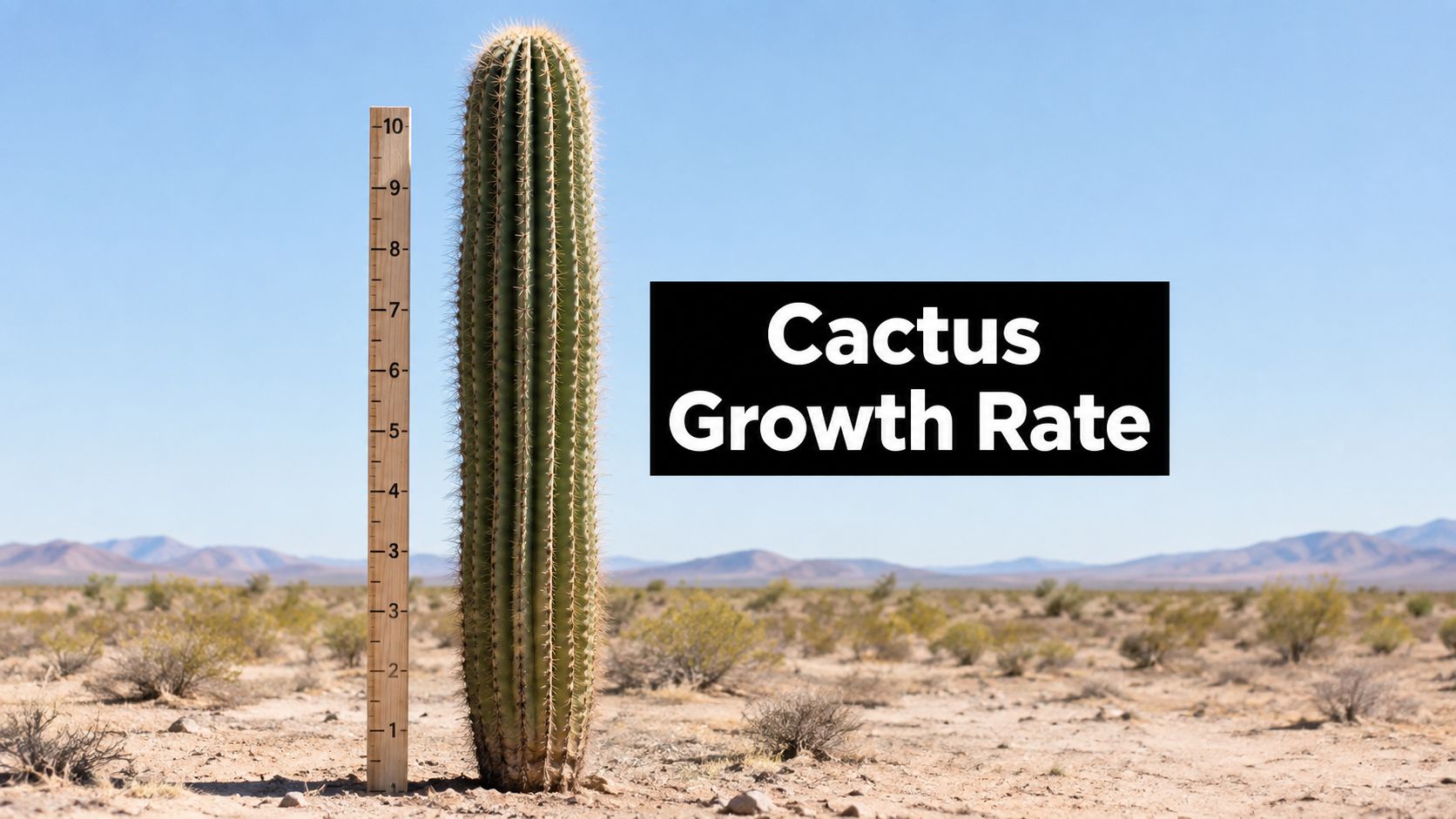
It's easy to see why San Pedro has become so popular with collectors today. It’s incredibly forgiving and resilient, making it a perfect starting point for anyone new to the world of cacti. And unlike so many of its desert relatives that seem to grow at a snail's pace, this one can shoot up as much as a foot per year when it's happy. That fast growth makes the whole experience feel so much more dynamic and rewarding.
A Legacy Thousands of Years Old
The story of the San Pedro is deeply woven into the history of South America. It's one of the most ancient sacred plants in the Americas, with a history that goes back thousands of years. This isn't some new trend; its importance is part of the cultural DNA of the Andes, where it was respected for its powerful spiritual and healing properties.
The bond between people and the San Pedro cactus is truly profound. It represents one of the longest-running relationships humans have ever had with a psychoactive plant. Its central role in ceremonies shows a deep, long-standing respect for how nature can shape our consciousness and well-being.
This isn’t just folklore; archaeology backs it up. In Peru's Guitarrero Cave, located in the Callejón de Huaylas valley, researchers found fossilized cactus remains dating from 6800-6200 BCE. This makes San Pedro one of the oldest psychoactive plants known to have been used by humans. Its use in spiritual practices began long before many other sacred plants we know today, showing just how fundamental it was to early shamanic traditions. You can dive deeper into its past by checking out this detailed overview of San Pedro's history.
Why Grow San Pedro Today
Beyond its incredible past, the San Pedro cactus is just a fantastic plant for any modern garden. It’s adaptable and doesn't ask for much, making it an easy way to get into growing large, impressive columnar cacti. Here are a few reasons why so many plant lovers are hooked:
- Rapid Growth: Seeing it grow so quickly gives you a real, tangible sense of accomplishment.
- Architectural Beauty: Those tall, ribbed columns bring a dramatic, structural vibe to any garden or indoor space.
- Ease of Propagation: Want more? It's incredibly simple to multiply your collection by taking cuttings.
This guide will walk you through everything you need to know, from its ancient origins to the hands-on skills for helping it thrive.
How to Identify the San Pedro Cactus
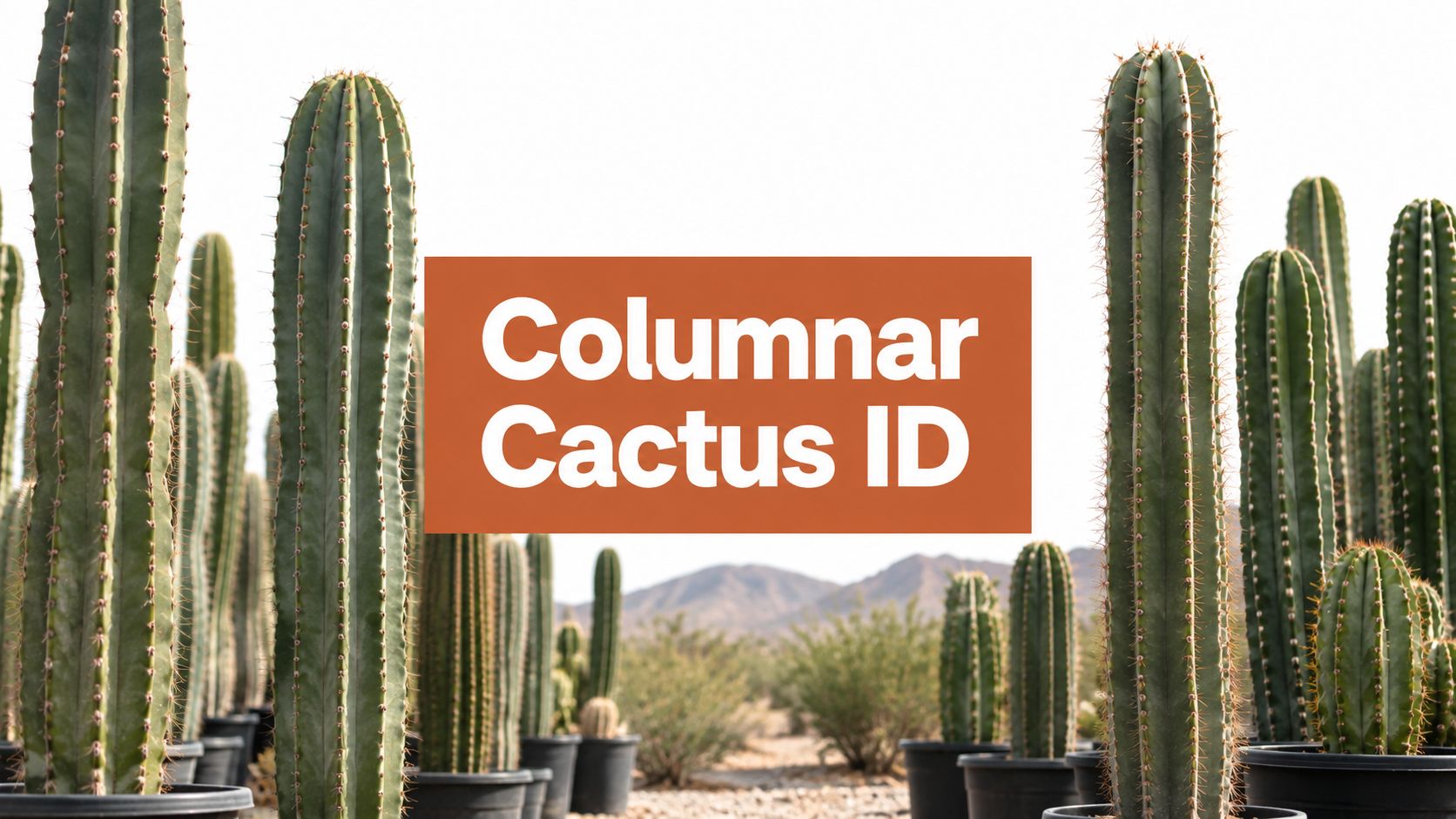
So, you think you can spot a true San Pedro cactus in a lineup? It's a classic for a reason, but a few close cousins can definitely throw you for a loop. Getting a handle on its key features is the first step for any serious grower, making sure you know exactly what you're adding to your collection.
Think of it like learning to recognize a bird species. At a glance, a lot of finches might look the same. But once you know to look for that specific wingbar, beak shape, or flash of color, you can pick them out instantly. The San Pedro (Echinopsis pachanoi) has its own set of unique "fingerprints" that help it stand apart.
Core Visual Characteristics
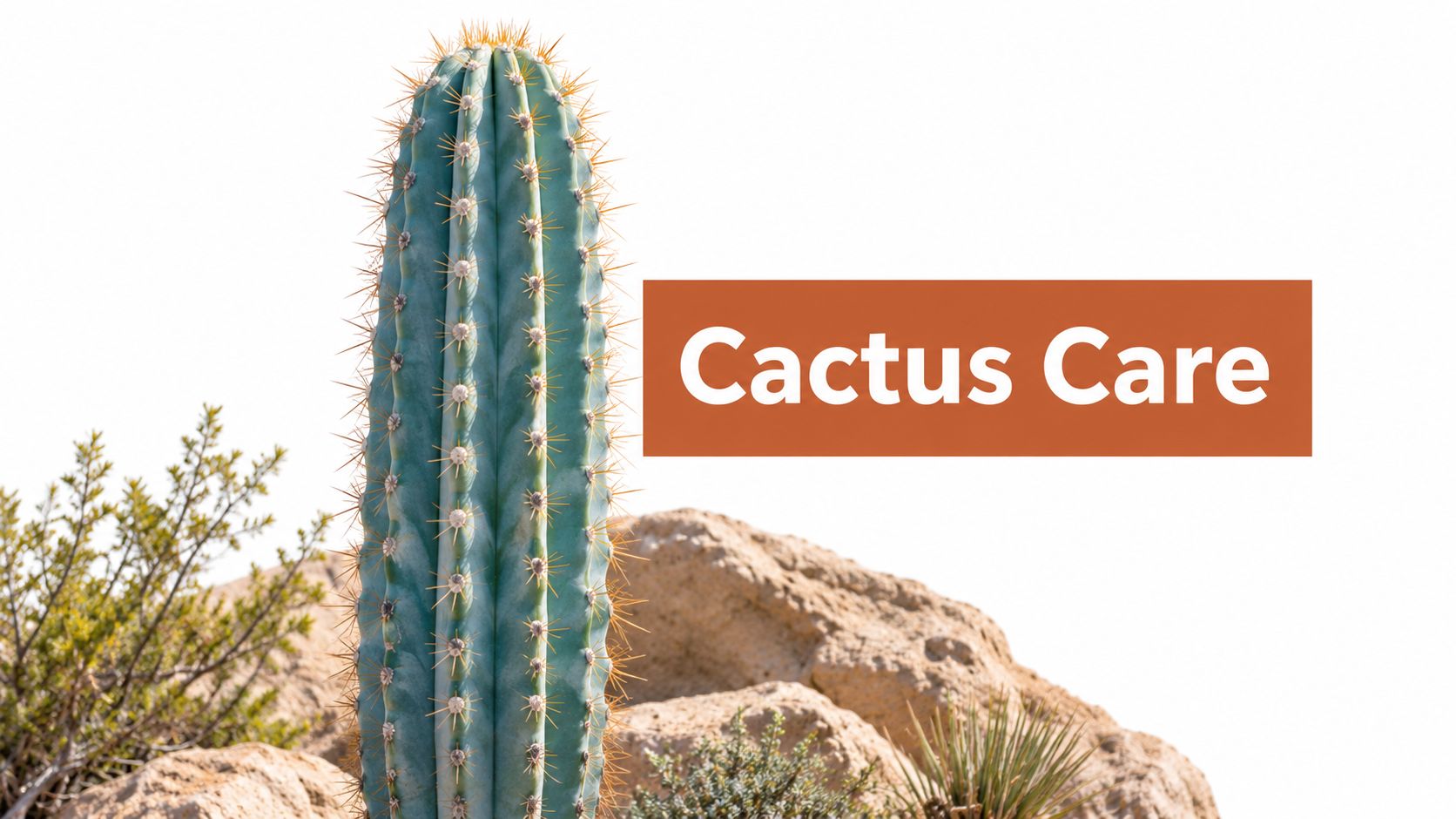
The real giveaways for a San Pedro are its color, ribs, and spines. The skin is usually a healthy, vibrant green, but it can often have a stunning bluish-green, almost powdery look. This is a waxy coating called a glaucous layer, which acts like natural sunscreen, protecting it from the harsh sun in its native Andean home.
Next, get a feel for its structure. A textbook San Pedro has between 6 to 8 ribs running vertically down its column. What's important is that these ribs are wide and rounded, not sharp or angular. They have a smooth, almost gentle profile that gives the whole cactus a plump, well-fed appearance.
Finally, check out the spines. They emerge from small, felt-like pads called areoles, which are typically whitish or tan. On a mature Echinopsis pachanoi, the spines are often an afterthought—you might find just a few short ones, or sometimes none at all. It's one of the friendlier columnar cacti you'll meet.
This map gives a great overview of the San Pedro cactus, from its biology and growth to its deep cultural roots.

You can see how its resilience and rapid growth are part of why it became so intertwined with human history in the Andes.
Distinguishing San Pedro From Its Cousins
This is where things can get a little tricky. The San Pedro has two very popular relatives that look quite similar: the Peruvian Torch and the Bolivian Torch. They all share that classic columnar form, but the differences are in the details. Don't worry, once you know what to look for, telling them apart becomes second nature.
For a collector, knowing the subtle differences between these Echinopsis species is everything. While they're all beautiful, their spine characteristics, growth habits, and even coloration vary quite a bit, which can really change their look and feel in your garden.
To simplify things, let's break down the key differences. It really all comes down to the ribs, spines, and overall color.
San Pedro vs. Other Torch Cacti
This table gives a quick side-by-side look at the main features that separate these three popular species.
| Feature | San Pedro (E. pachanoi) | Peruvian Torch (E. peruviana) | Bolivian Torch (E. bridgesii) |
|---|---|---|---|
| Ribs | 6-8, broad and rounded | 6-9, often less defined | 4-8, broad with V-shaped notches |
| Color | Green to blue-green | Glaucous, grayish-blue | Light to yellowish-green |
| Spines | Very short or absent, 1-3 per areole | Long, honey-colored to brown, 6-8 per areole | Long, straw-colored, 2-4 per areole |
By keeping an eye on these three areas—ribs, color, and spines—you’ll be able to confidently tell a San Pedro from its close relatives. This little bit of knowledge goes a long way, ensuring you're getting exactly the plant you want for your collection.
Your Essential San Pedro Cactus Care Guide
Taking care of a San Pedro cactus isn't about following a rigid set of rules; it's more like learning its natural rhythm. Just imagine you're welcoming a guest from high up in the Andes Mountains. Your main job is to make it feel at home by mimicking the bright, airy, and well-drained environment it’s used to. Once you get the hang of a few key things—light, soil, and water—your cactus won't just survive, it will absolutely flourish.

This plant is a famously fast grower. Under the right conditions, it can shoot up an impressive 12 inches (30 cm) per year. Hailing from high Andean elevations, it's also tougher than you might think and can handle a surprising amount of cold, down to about 20°F (-9°C). This resilience and rapid growth make raising one an incredibly rewarding experience.
Finding the Perfect Light Balance
Sunlight is the engine that drives your San Pedro's growth. It truly needs bright, direct light to power its fast-paced development. If you're growing it outdoors, find a spot where it can soak up at least six hours of direct sun each day. For those growing indoors, a south-facing or west-facing window is your best bet to give it the intensity it craves.
But be careful—too much of a good thing, too quickly, can be a problem. A cactus that's been living in lower light can get a nasty sunburn if you suddenly move it into the intense afternoon sun. You'll see this as unsightly white or brown bleached patches on its skin.
Pro Tip: Acclimatize your cactus like you would a person to a new climate—gradually. Start with just a couple of hours of direct morning sun, then slowly increase the exposure over a week or two. This simple step prevents the shock of sunburn and ensures a happy, healthy transition.
Crafting the Ideal Soil Mix
If there’s one golden rule for San Pedro soil, it’s this: excellent drainage. This cactus simply will not tolerate "wet feet." Soggy soil sitting around the roots is the quickest path to rot, which is a major killer of these plants. Back in the Andes, its home soil is gritty and rocky, a world away from the heavy, moisture-retaining potting soil you find in most stores.
Your goal is to recreate that gritty, loose texture. You can start with a pre-made cactus and succulent soil, but you'll get far better results by amending it yourself. The perfect mix is one that lets water rush through freely and allows the soil to dry out completely between waterings.
A fantastic starting recipe is to blend:
- 50% Inorganic Material: Things like pumice, perlite, or coarse sand are perfect. They create little air pockets and prevent the soil from ever getting waterlogged.
- 50% Organic Material: A base of standard cactus soil, coco coir, or peat moss provides the nutrients the plant needs to grow.
This 50/50 balance is key to preventing compaction and keeping the roots aerated and healthy. For a much deeper dive into creating the perfect growing medium, take a look at our detailed guide on the ideal cactus and succulent soil mix.
Mastering the Art of Watering
Watering is where many new growers stumble, but it's simple once you embrace the "soak and dry" method. Forget giving it little sips of water here and there. Instead, you want to drench the soil completely until you see water running out of the pot's drainage holes. After that, the crucial part is to let the soil dry out entirely before you even think about watering again.
So, how do you know when it's totally dry? Don't just check the top layer. The best way is to stick a wooden skewer or a chopstick deep into the soil, all the way to the bottom. If it comes out clean and dry, it’s time to water. If it has bits of moist soil clinging to it, give it a few more days. Your San Pedro will also give you hints; its ribs might look a little shrunken or less plump when it’s thirsty.
Remember that its needs change with the seasons:
- Growing Season (Spring/Summer): Water thoroughly whenever the soil is completely dry. This could be every 1-2 weeks, depending on the heat, humidity, and the size of your pot.
- Dormant Season (Fall/Winter): Back off on the water dramatically. A light watering just once a month (or even less in very cool climates) is usually enough to keep it from getting too dehydrated.
Fertilizing and Potting for Growth
During the active growing season in spring and summer, a little boost of nutrients can really kick your San Pedro's growth into high gear. A balanced, low-nitrogen liquid fertilizer made for cacti and succulents is your best friend here. Look for one with higher phosphorus and potassium content. Be sure to dilute it to half-strength and apply it about once a month when you water.
Because it grows so fast, your San Pedro will eventually need a bigger home. Plan on repotting it every two to three years, or whenever it looks like it's getting cramped and root-bound. When you do, choose a new pot that is only 1-2 inches wider in diameter. Picking a pot that’s way too big is a common mistake; the excess soil holds onto moisture for too long, raising the risk of root rot. Repotting is also the perfect time to give it a fresh batch of soil and check on the roots to make sure everything looks healthy. To get the most from your soil, it's helpful to understand its composition, which you can do by learning how to read soil test results.
A Step-by-Step Guide to Propagating Cuttings

One of the best parts about growing San Pedro is just how easy it is to make more of them. Taking cuttings lets you multiply your collection, save a piece of a damaged cactus, or share the hobby with friends. It’s a simple process that feels like you’re performing a bit of gardening magic.
With a few key steps, you can turn one healthy cactus column into a whole new family of plants. The real secret to success is patience, especially during one critical stage that prevents rot—the number one killer of fresh cuttings.
Making a Clean and Healthy Cut
First things first, you need to choose a healthy, vibrant section from the parent plant. Look for a column that feels firm, has no blemishes or soft spots, and looks like it's been growing well. For the best chance of success, aim for a cutting that’s at least 6-8 inches long. This ensures it has enough stored energy to push out new roots.
When you’re ready, grab a clean, sharp knife or a fine-toothed saw. Sterilizing your blade with some isopropyl alcohol is a crucial move; it keeps bacteria and fungus out of the fresh wound on both your new cutting and the parent plant. Make one clean, decisive cut. A tidy wound heals faster and is less prone to infection.
After making the cut, you have a choice: you can leave the end flat or gently bevel the edges. Some growers find that chamfering the ribs slightly can help prevent the base from splitting or rotting once it's planted.
The Crucial Callusing Period
Okay, this next part is the most important step of the entire process, and it’s non-negotiable. Before your cutting even thinks about touching soil, it has to callus. You can think of it like a scab forming over a cut. That raw, moist end needs to completely dry out and form a hard, protective seal.
Why is callusing so important? Sticking a fresh, wet cutting into soil is like sending an open invitation to every fungus and bacteria in the pot. Callusing creates a tough, dry barrier that keeps moisture out and prevents rot from setting in.
To let your cutting callus, just lay it on its side in a dry, shady spot with good air circulation. A garage, a covered patio, or a spare room works perfectly. Depending on how thick the cutting is and the humidity in your area, this can take anywhere from one to three weeks, sometimes even longer.
You'll know it's ready when the cut end is bone dry, hard to the touch, and looks a little shrunken or concave. Don't rush this—your patience here will make all the difference.
Planting and Rooting Your Cutting
Once the callus has fully formed, it's planting time. Get a pot ready with the same well-draining cactus mix you’d use for any mature San Pedro. Plant the callused end about 2-3 inches deep into the soil—just enough so it can stand up on its own. If it’s a bit wobbly, you can prop it up with a few small rocks or bamboo stakes.
Now for the hardest part: do not water it! This feels wrong, but the cutting has zero roots to absorb any water. Watering it now will only soak the soil and create the perfect conditions for rot. Let it sit in dry soil for at least two or three weeks before you even think about giving it a drink.
Roots can take anywhere from a few weeks to a couple of months to form. To check for progress, give the cutting a very gentle wiggle. If you feel resistance, it means roots are anchoring it in place. Success!
Once you know it's rooted, you can start watering it like a regular San Pedro, following the "soak and dry" method. For a deeper dive, check out our general guide on how to propagate cactus from cuttings.
Troubleshooting Common Pests and Growing Problems
Even with the best care, you’ll likely run into a few bumps in the road with your San Pedro. A strange patch of discoloration or a few unwanted bugs are usually just the plant's way of telling you it needs a small tweak in its environment.
Don't think of these as failures! Instead, see them as your cactus communicating its needs. Learning to read these signals is the real secret to keeping a happy, healthy plant for years. Luckily, most common issues are surprisingly easy to fix once you know what you’re looking at.
Identifying Common Growing Pains
The first clue that something is off is almost always a change in your cactus’s color or shape. These visual cues are your best friend for diagnosing the problem and setting things right.
-
Etiolation (Stretching): Is your cactus getting skinny, pale, and looking like it's stretching for the ceiling? It’s not getting enough sun. This lanky, weakened growth is a classic sign of insufficient light. Find it a much brighter spot, and you'll see it start to grow thick and healthy again.
-
Sunburn (Yellow or Brown Patches): On the flip side, if you notice bleached-out yellow, brown, or corky patches, your cactus is getting scorched. This is common when a plant is moved from a cozy indoor spot straight into intense, direct outdoor sun. Give it some protection from the harsh afternoon sun to prevent more damage.
-
Root Rot (Mushy Base): A soft, mushy, or discolored base is the one you really need to watch out for. This is a tell-tale sign of root rot, usually caused by overwatering or soil that doesn't drain well. If you catch it early, you can often save the plant by chopping off the healthy top part and re-rooting it as a new cutting.
The San Pedro cactus is an incredibly tough plant. Its ability to be cut and regrown is one of its most forgiving traits, giving you a second chance to save a plant even after a major issue like rot.
Dealing with Unwanted Pests
While San Pedro is hardy, it's not totally immune to pests. A quick inspection now and then will help you spot any invaders before they become a real problem. Pay close attention to the little nooks and crannies between the ribs and around the areoles—that’s where pests love to set up camp.
The usual suspects are scale and spider mites. Scale insects are easy to spot; they look like little brown, oval bumps stuck to the cactus skin. Spider mites are much tinier and harder to see, but they betray their presence with fine, delicate webbing.
Your first line of defense is simple and effective: 70% isopropyl alcohol.
- Dip a cotton swab in the alcohol.
- Gently dab it directly onto any pests you can see.
- For a bigger infestation, you can fill a spray bottle and lightly mist the affected areas.
The alcohol dries out the pests on contact without harming the cactus. If you’re dealing with a more stubborn infestation, a gentle insecticidal soap is another great option.
A Note on Sustainability
It's great to know that growing a San Pedro at home is a sustainable practice. Unlike peyote, which is threatened by overharvesting in its limited native range, San Pedro is incredibly resilient. It grows fast and is found all over the Andes, from Colombia down to Chile.
Because it's so widespread and easy to propagate, our home collections place virtually no strain on wild populations. In fact, one study found that 77.2% of consumers grow their own plants, which dramatically reduces market pressure. If you're interested, you can read more from the study of mescaline cacti consumers.
Answering Your San Pedro Cactus Questions
Even after covering the basics, a few practical questions always seem to come up. Let's dig into some of the most common things people ask when they start growing San Pedro cactus. Getting these details right can be the difference between a plant that just survives and one that truly thrives.
Think of this as the fine-tuning part of your cactus care routine—the little bits of wisdom that fill in the gaps and help you anticipate your plant's needs.
How Fast Does a San Pedro Cactus Grow?
This is where the San Pedro really shines, especially compared to its slower-growing cousins in the cactus world. It's known for putting on size at a pretty impressive clip. When it’s happy—getting plenty of sun, the right soil, and consistent water during the growing season—a healthy San Pedro can easily shoot up 12 inches (or 30 cm) in a single year.
This rapid growth is incredibly rewarding. You actually see the results of your good care, which makes it a fantastic plant for both beginners and seasoned growers. Just remember, this growth spurt happens during the spring and summer. Come winter, it will slow down or stop completely as it goes dormant, which is perfectly normal.
The San Pedro's fast growth is one of its most forgiving traits. If you ever have to prune a damaged section or take a cutting, the plant can often bounce back and regain that lost height in just one season.
Because it grows so vigorously, you do need to plan ahead. That small cutting you bought can turn into a big, multi-columned plant in just a few years, so make sure you've got the space for it to reach its full potential.
Can You Grow San Pedro Cactus Indoors?
Absolutely! Plenty of people grow beautiful San Pedro specimens indoors. The single biggest challenge, without a doubt, is giving it enough light. A San Pedro needs hours of bright, direct sun every day. Without it, you'll run into a problem called etiolation—the cactus will get pale, thin, and stretched out as it desperately reaches for light.
To keep an indoor San Pedro happy and growing strong, you'll need to focus on a few things:
- Pick the Best Window: A south-facing window is your best bet, as it gets the strongest, most direct light for the longest part of the day. A west-facing window is a decent second choice.
- Use a Grow Light: If your window situation isn't ideal, a full-spectrum grow light is non-negotiable. Hang it directly above the cactus and leave it on for 12-14 hours a day to simulate the intense sun it craves.
- Get the Air Moving: Stale, stagnant air is a breeding ground for fungal problems. A small fan in the room will do wonders for air circulation, keeping your cactus healthy, especially if your home is on the humid side.
With the right setup, an indoor San Pedro can be a showstopper. Just be relentless about meeting its light requirements.
How Do You Get a San Pedro Cactus to Flower?
Getting a San Pedro to bloom is a major milestone for any grower. The flowers are breathtaking—huge, pure white, and incredibly fragrant. But they're also fleeting, opening only at night and often wilting by the next morning. Triggering this event comes down to two things: maturity and the right environmental cues.
First off, you need patience. A San Pedro won't even think about flowering until it's several years old and at least a few feet tall. It needs to reach a certain level of maturity first.
Once your plant is old enough, the secret to encouraging blooms is to mimic its natural life cycle. The most crucial step is providing a distinct winter dormancy period. This means moving it somewhere cooler and drastically cutting back on water during the winter months. This cool, dry rest is the biological trigger that tells the plant, "Okay, rest is over, it's time to make flowers." A mature, well-fed plant that gets this seasonal rest is far more likely to reward you with its spectacular nighttime show come spring.
Finding Your Perfect San Pedro Cactus
You've explored its history, mastered its care, and learned how to bring new plants into the world. Now for the fun part: choosing the perfect San Pedro cactus to bring home. Picking a healthy, high-quality specimen is the final step to setting yourself up for a great growing experience. Knowing what to look for from the get-go ensures you start with a strong, vibrant plant that’s ready to thrive.
Think of it like picking out the best piece of fruit at the market—you’re looking for signs of health and vitality. A top-notch San Pedro should have a rich, deep green or even a beautiful bluish-green color. Steer clear of any with pale, yellowed, or brown patches, as these can be signs of stress, sunburn, or disease.
What to Look for When Buying
Give the cactus a gentle squeeze. It should feel firm and solid to the touch. A soft or mushy base is a huge red flag, often pointing to the early stages of root rot. Next, take a look at its overall form. You're looking for a strong, symmetrical column that’s growing straight and upright. While a few minor cosmetic scars from its life are perfectly normal, you’ll want to avoid plants with major damage or any signs of an active pest problem.
A healthy San Pedro will have these key traits:
- Vibrant Color: A deep, even green or blue-green hue is a fantastic sign of good health.
- Firm Flesh: The cactus column should be plump and solid, not soft, squishy, or shrunken.
- Symmetrical Shape: Look for well-defined, rounded ribs and an upright, proud growth habit.
- Pest-Free: Carefully inspect the crevices between the ribs for any unwanted guests like scale or spider mites.
Choosing a plant from a reputable grower makes all the difference in the world. Experienced sellers know how to cultivate strong, resilient cacti and can spot potential issues long before a plant is ever put up for sale. That expertise is your best guarantee for a healthy start.
Safe Shipping and Packaging
Ordering a cactus online might feel like a bit of a gamble, but expert growers have perfected the art of safe packaging and shipping. A reputable nursery knows that the journey from their greenhouse to your doorstep is a critical part of the process, and they take incredible care to make sure your San Pedro arrives in pristine condition.
This usually means the cactus is carefully wrapped in a protective material, like paper or bubble wrap, to cushion it from any bumps and bruises along the way. Most of the time, the plant is shipped bare-root (without soil) to prevent rot and keep shipping costs down. Don't worry, this is a standard and safe practice that actually minimizes stress on the plant. The cactus is then secured inside a sturdy box so it can’t shift around during its trip. When you finally unbox your plant, it should be clean, dry, and ready for its new pot.
For more insights on sourcing quality plants, check out our guide on finding San Pedro cactus plants for sale.
Ready to start your own San Pedro journey with a healthy, beautiful cactus? At The Cactus Outlet, we hand-select and expertly ship a wide variety of stunning specimens directly to your door. Explore our collection of San Pedro cacti today!