


If you're looking for a plant that makes a serious statement, you’ve found it. The Peruvian Apple Cactus, known botanically as Cereus repandus, is a magnificent, tree-like cactus famous for its towering blue-green columns, stunning night-blooming flowers, and surprisingly delicious fruit. It’s a favorite for good reason—it grows fast, it’s relatively easy to care for, and it brings a dramatic flair to any home or garden.
Welcome to the World of the Peruvian Apple Cactus

Think of this plant as part living sculpture, part garden-to-table treat. Often called an ‘architectural succulent,’ the Peruvian Apple Cactus commands attention with its strong, upright form. It’s not just another houseplant; it’s a centerpiece that adds structural beauty and a touch of the exotic wherever you put it.
This guide is your complete roadmap, starting from square one and building your confidence as a cactus owner. We’ll walk through everything you need to know, so let's jump in and get acquainted with this incredible plant.
An Introduction to Its Key Features
So, what makes this particular cactus so special? It’s a perfect storm of striking looks, impressive resilience, and a few delightful secrets. Getting to know these core traits is the first step to truly appreciating what you have.
Here are the defining characteristics we'll dive into:
- Iconic Blue-Green Stems: The tall, ribbed stems have a unique coloration that shifts between a powdery blue and a cool gray-green. It’s a beautiful, calming color that sets it apart from other cacti.
- Mesmerizing Night-Blooming Flowers: Here’s where the magic happens. This cactus produces enormous, fragrant white flowers that open only after the sun goes down and close by morning. It’s a fleeting, spectacular show put on for night-flying pollinators like moths and bats.
- Edible and Delicious Fruit: The "apple" in its name isn’t just for show. After a flower is pollinated, the plant grows a smooth, thornless red fruit. Known as a ‘pitaya,’ the flesh is white with crunchy black seeds, and the taste is often described as a refreshing mix of kiwi and dragon fruit.
The Peruvian Apple Cactus is a masterclass in adaptation. Its ability to thrive in arid conditions, combined with its dramatic form and edible fruit, makes it a triple threat in the plant world—beautiful, resilient, and useful.
To help you hit the ground running, we've put together a quick-care summary. This table gives you an at-a-glance look at the most important needs for keeping your Peruvian Apple Cactus happy and healthy.
Peruvian Apple Cactus Quick Care Summary
This handy table is your quick reference for the essential care your cactus needs to thrive.
| Care Aspect | Requirement |
|---|---|
| Light | Prefers at least 6 hours of bright, direct sunlight daily. An east-facing spot is ideal. |
| Water | Use the "soak and dry" method. Water thoroughly, then allow soil to dry out completely before watering again. |
| Soil | Requires a very fast-draining cactus or succulent mix to prevent root rot. |
| Temperature | Thrives in warm conditions (65–85°F / 18–29°C). Protect from frost, as it's not cold-hardy. |
| Fertilizer | Feed with a diluted, low-nitrogen cactus fertilizer every 4-6 weeks during the spring and summer growing season. |
| Potting | Ensure the pot has excellent drainage holes. Repot every 2-3 years or when it becomes root-bound. |
Keep these basics in mind, and you’ll have a simple but effective roadmap for success from day one.
How to Identify a Peruvian Apple Cactus

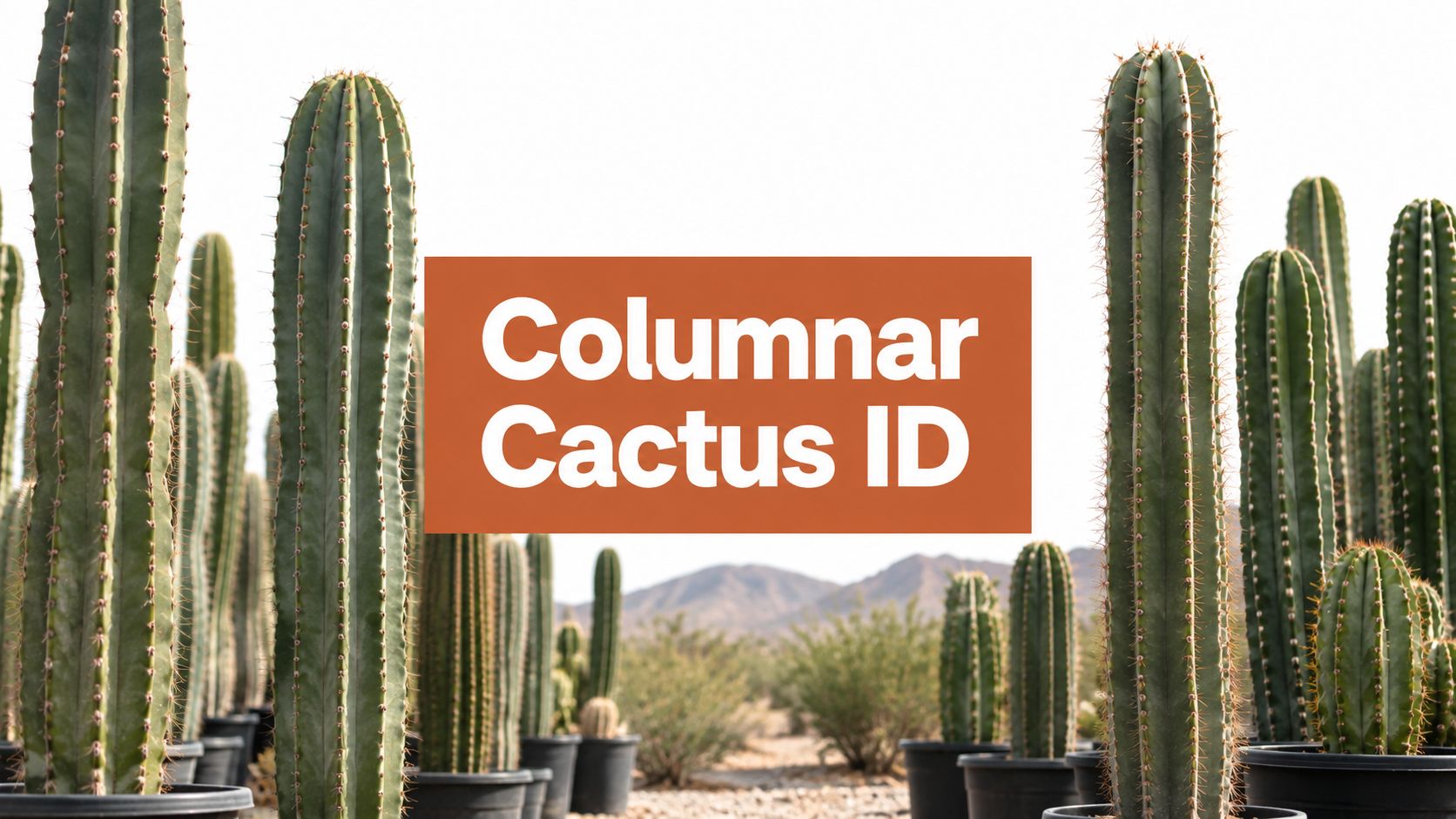
Think you can spot a true Peruvian Apple Cactus in a crowd? It’s easier than you might think. While plenty of columnar cacti share a similar look, Cereus repandus has a few dead giveaways that set it apart. Once you know what to look for, you’ll be able to identify one with confidence, whether you’re at a nursery or just admiring one in the wild.
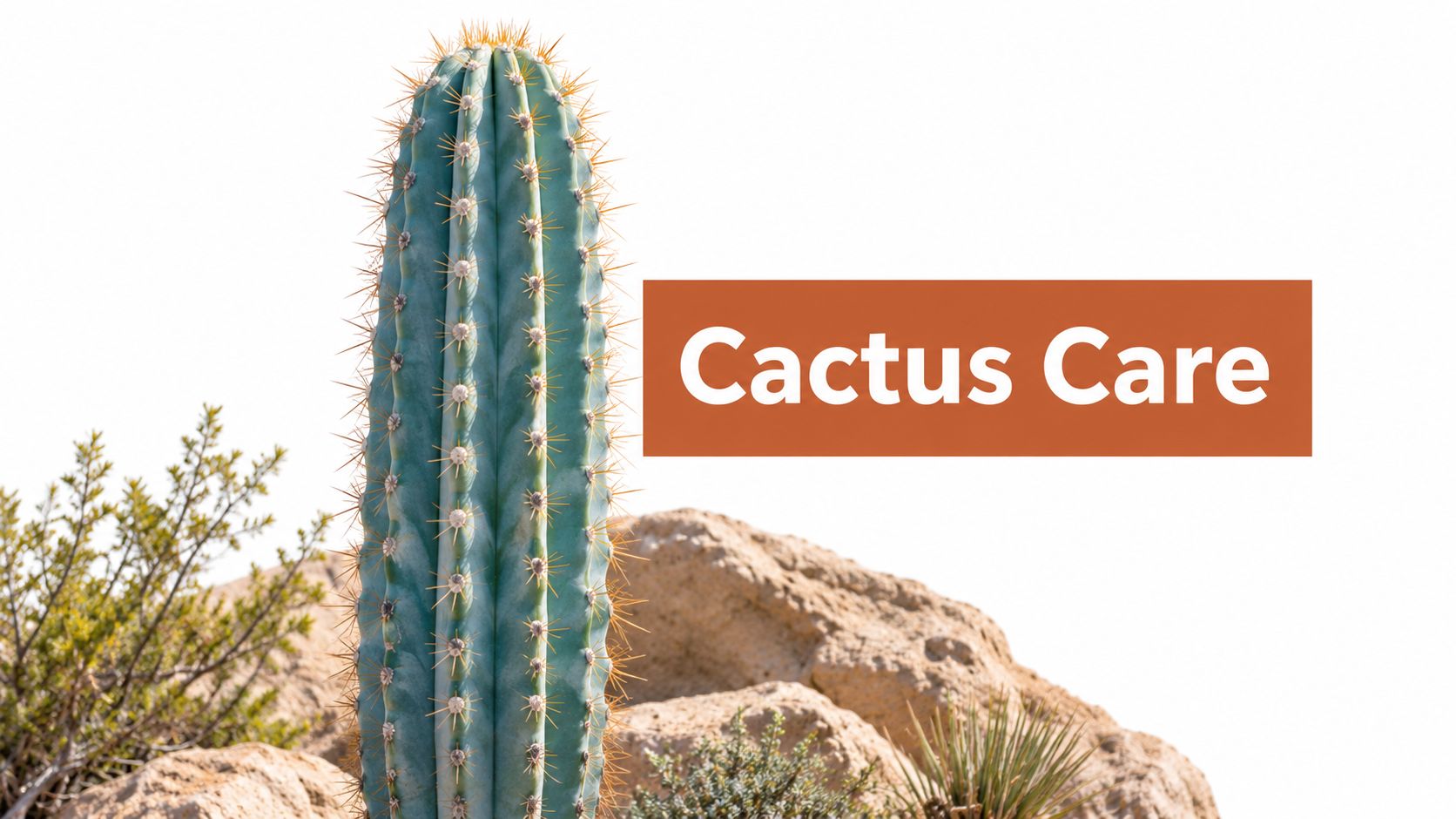
The first thing you’ll probably notice is its incredible stem. This cactus grows in a classic tree-like shape, with a strong central trunk and arms branching out as it matures. But the real showstopper is its skin color. It has a signature blue-green, sometimes almost gray-green, hue that looks like it’s been dusted with a fine powder. That waxy coating, called a farina, is basically the plant’s built-in sunscreen, protecting it from intense sunlight.
This cool, bluish tone is a world away from the standard green of many other cacti. When you see that color, you're on the right track. If you're ever stumped, our comprehensive cactus identification guide can help you tell the difference between this and other popular species.
Examining the Ribs and Spines
To be absolutely sure, you’ll want to get a little closer and look at the details. The vertical ridges running up the stem are called ribs, and on a mature Peruvian Apple Cactus, you’ll typically find between nine to ten of them. They’re usually nicely rounded and clearly defined.
Along these ribs, you’ll find the areoles—the fuzzy little spots where the spines grow. The spines themselves are another great clue. They’re generally short, needle-like, and yellowish to brown, clustered in small groups. They look tough, but they aren't nearly as long or dense as what you’d see on something like a Saguaro.
A Distinctive Growth Habit
Here’s where the Peruvian Apple Cactus really stands out: its growth speed. While many iconic cacti are notoriously slow growers, taking a lifetime to get tall, this species is in a different league entirely. It’s the perfect plant if you want to add some serious height and drama to your space without the decades-long wait.
The combination of its blue-green skin, specific number of ribs, and fast growth rate creates an unmistakable profile. When you see a tall, branching cactus with these features, you can be fairly certain you're looking at a Peruvian Apple Cactus.
Under the right conditions, this cactus can shoot up several feet in a single year. The stories from growers are pretty amazing. For example, one documented case in Arizona saw a single cutting explode into a 15-foot-tall plant with around 20 branches in just five years—and that was in tough clay soil! Down in Florida, others have watched tiny 2-inch cuttings become towering 18-foot specimens in the same five-year span. As you can see, it has earned its reputation as one of the fastest-growing cacti out there. You can find more incredible growth stories like this over on gardenia.net.
Look for the ‘Monstrosus’ Variety
Finally, always be on the lookout for a weird and wonderful version called Cereus repandus 'Monstrosus'. This is a natural mutation that collectors go crazy for. Instead of growing in a straight, predictable column, the 'Monstrosus' form is lumpy, bumpy, and beautifully chaotic.
Its ribs are broken and warped, giving it a knobby, sculptural look that some say resembles melting wax. If you find a cactus with that signature blue-green skin but a wild, contorted shape, you’ve probably stumbled upon this unique variety. It's a fantastic conversation piece and a real gem for any collection.
Mastering Light, Water, and Soil Needs
To get a Peruvian Apple Cactus to really thrive, you have to think like a desert. These plants are built for arid, sun-drenched environments where water is a rare but welcome event. Your goal is simply to recreate those conditions at home.
Once you nail the fundamentals of light, soil, and watering, this cactus becomes one of the easiest, most rewarding plants you can own. It's all about setting it up for success right from the start.
Finding the Perfect Light
Sunlight is the single most important ingredient for a happy Peruvian Apple Cactus. These are "full sun" plants, but that doesn't mean you can just stick them in the most intense, scorching spot you can find. The real goal is to provide at least six hours of bright, direct sun each day.
Be careful, though. The harsh afternoon sun, especially in hotter climates, can actually give your cactus a sunburn. You'll know it's happening if you see bleached, yellow, or scarred patches appearing on its beautiful blue-green skin.
- The Gold Standard: An east-facing window or patio is perfect. It provides plenty of direct morning and early afternoon sun, which is bright but not punishing.
- Indoor Placement: If your cactus lives inside, your best bet is an unobstructed south-facing window. This spot gets the strongest, most consistent light all day long.
- West-Facing Windows: A west-facing spot can work, but you'll need to be vigilant during summer heatwaves. The late-day sun is incredibly powerful, so you might need to pull the pot back a foot or two from the glass to prevent scorching.
If you see your cactus starting to stretch or lean dramatically towards the light, that's a classic sign of etiolation. It's basically crying out for more sun.
Building the Right Soil Foundation
If you ask any seasoned cactus grower what the number one mistake is, they'll all say overwatering. But dense, water-logged soil is what makes overwatering so deadly. The roots of a Peruvian Apple Cactus are quick to rot, so a gritty, fast-draining soil mix isn't just a suggestion—it's absolutely essential.
Never use standard potting soil by itself. It’s designed to hold moisture, which is the exact opposite of what your cactus needs. While you can buy pre-made cactus mixes, blending your own is easy and often gives you better control. We have a whole guide dedicated to making the perfect cactus and succulent soil if you want to dive deeper.
For a simple and effective DIY recipe, just combine these three ingredients in equal amounts:
- One part potting soil (for a nutrient base)
- One part coarse sand (to ensure water drains right through)
- One part perlite or pumice (to add airflow and keep roots from getting choked)
The finished mix should feel loose and gritty. When you grab a handful, it should fall apart easily. If you can squeeze it and it forms a solid clump, it's still too dense and needs more sand or perlite.
Mastering the Art of Watering
Forget about watering "once a week" or any other rigid schedule. The key to watering cacti is the "soak and dry" method. This technique perfectly mimics the infrequent, heavy downpours of their native desert habitat and is your best defense against root rot.
It’s as simple as it sounds: you completely drench the soil, then you wait for it to dry out completely before you even think about watering again. The real skill is knowing when it's truly dry.
The best tool for the job is your finger. Stick it about 2-3 inches deep into the soil. If you feel even a hint of coolness or moisture, put the watering can down and check again in a few days. When it feels dusty and totally dry, it's time to water.
When you do water, be generous. Pour water over the soil until you see it flowing freely out of the drainage holes at the bottom of the pot. This ensures the entire root ball gets hydrated and encourages roots to grow deep and strong. This is also why a pot without drainage holes is a dealbreaker for this plant.
Propagating and Repotting Your Cactus
Once your Peruvian Apple Cactus starts to really take off, you'll eventually face two exciting milestones: repotting it into a bigger home and propagating it to create brand-new plants. Don't let the size and spines intimidate you. With a few tricks of the trade, both of these tasks are surprisingly manageable.
Think of propagation as the ultimate reward—a way to create more of a plant you love, either for your own collection or to share with friends. Repotting, on the other hand, is just good plant parenting. It’s essential for keeping your cactus healthy and giving its roots the space they need to support that impressive growth.
A Step-by-Step Guide to Propagation
One of the best things about the Peruvian apple cactus plant is how simple it is to clone. Taking a cutting is a nearly foolproof way to multiply your collection, turning one plant into an endless supply.
Here’s the right way to do it:
- Take a Clean Cutting: Find a healthy arm on the main stem and, using a sharp, sterilized knife or saw, make a clean cut. An ideal cutting is at least 6-12 inches long. This is a great way to use pieces you’ve already pruned to manage the cactus's size.
- Let it Callus: This is the most important step, so don't rush it. Lay the cutting in a dry, shady spot for one to two weeks. You're waiting for the cut end to dry out and form a hard, light-colored scab called a callus.
- Plant the Cutting: After the callus has fully formed, you can plant it. Just push the callused end about 1-2 inches deep into a pot of fresh, dry cactus mix. If it’s wobbly, you can use a few stakes or rocks to prop it up until the roots take hold.
- Wait to Water: Whatever you do, resist the urge to water right away. Let it sit in the dry soil for at least two weeks before giving it its first, very light drink. It can take a few months for a strong root system to develop, so patience is everything.
Skipping the callusing step is the number one mistake people make when propagating cacti. If you plant a fresh, wet cutting, you’re basically inviting fungus and bacteria in. The base will almost certainly rot before it ever has a chance to sprout a single root.
When and How to Repot Your Cactus
Your cactus will eventually outgrow its pot. A good rule of thumb is to repot it every 2-3 years. This gives it fresh soil packed with nutrients and prevents it from becoming root-bound, which can seriously stunt its growth.
You’ll know it’s time when you spot roots sneaking out of the drainage holes or if the whole plant just seems top-heavy and unstable. The biggest hurdle, of course, is wrangling a giant, spiny plant without getting hurt.
Handling a Spiny Cactus Safely
- Protect Yourself: Always wear thick leather gloves, a long-sleeved shirt, and maybe even safety glasses.
- Create a Padded Grip: Here’s the pro-tip: use old, rolled-up towels, thick blankets, or even several layers of cardboard. Wrap them tightly around the cactus stems to create spine-free handles you can actually grab.
- Work as a Team: For any decent-sized cactus, this is a two-person job. Don't try to be a hero—get someone to help you lift and steady the plant.
With a secure grip, carefully tilt the pot on its side and gently work the cactus free. When you pick a new pot, choose one that’s only 1-2 inches wider in diameter. A pot that's too big will hold too much moisture, which is the fast track to root rot. After settling it into fresh cactus mix, wait at least a week before watering. This gives any roots that were bumped or bruised time to heal.
Using Your Cactus in Landscape and Interior Design
Think of the Peruvian Apple Cactus as more than just a plant—it's living architecture. With its strong vertical lines and sculptural presence, it has the power to completely transform a space. Whether you're working with a wide-open garden or a cozy living room, this cactus is a statement piece that beautifully blurs the line between nature and design.
Outdoors, you’ll often see landscape designers use this cactus as a dramatic focal point. A single mature specimen planted in an open area becomes an instant anchor for the entire yard, drawing the eye and creating a powerful sense of scale. Its cool, blue-green columns offer color and texture all year long, providing a stunning contrast to softer, more traditional garden foliage.
Creating Structure and Drama Outdoors
One of the best ways to use the Peruvian Apple Cactus is to build natural structure. Thanks to its fast, columnar growth, it’s a fantastic choice for creating living walls or privacy screens. Planting several in a row can define a property line or shield a patio from prying eyes far more dynamically than a boring old fence ever could.
These cacti are also the absolute backbone of any serious xeriscape or drought-tolerant garden. Once they’re established, they need very little water, making them an excellent, eco-friendly choice for dry climates.
- As a Focal Point: Position a large cactus where it’s visible from a main window or seating area. It will act as a breathtaking natural sculpture.
- For Privacy Screening: A row of these cacti creates a modern, dense, and low-maintenance barrier that adds wonderful vertical interest.
- In Rock Gardens: Their smooth, towering form stands in beautiful opposition to rugged boulders and low-growing succulents like agave and aloe.
More Than Just a Pretty Face
Beyond its striking looks, the Peruvian Apple Cactus is also earning a reputation for something else entirely: being a sustainable food source. This plant’s incredible ability to withstand drought is making it a game-changer in regions where water is scarce.
In places like Israel, for instance, some agricultural operations are beginning to replace traditional fruit orchards with groves of Peruvian Apple Cactus. While many fruit crops have a frustratingly short harvest window, this cactus can be harvested all year, giving farmers a much more consistent income. A typical plant might only give you a few fruits, but some peak performers have been known to produce 50 to 60 fruits in a single year.
Bringing the Cactus Indoors
Inside your home, the Peruvian Apple Cactus delivers a dose of organic modernism. Its clean, tall lines are perfect for rooms with high ceilings, where it can serve as a living pillar that draws your gaze upward and makes the space feel bigger.
It fits especially well with minimalist, contemporary, or modern styles. Just place it in a simple, elegant pot, and it instantly becomes a living sculpture that needs no frame. For more ways to feature your cactus as a standout element, you can find some great unique home decor ideas to help redefine your living space.
Once you fall in love with its look, you'll probably want more. Luckily, making new plants is incredibly straightforward.

As you can see, it really comes down to three simple phases: making a clean cut, letting it callus over, and then planting it to root. It's an easy way to multiply your favorite design element.
Whether you need a rugged sentinel for your garden or a sleek accent for your living room, this cactus delivers. Its ability to serve so many roles—aesthetic, practical, and even agricultural—makes it one of the most compelling and rewarding plants you can possibly grow.
Buying Your Peruvian Apple Cactus from The Cactus Outlet
Getting the right plant from the start makes all the difference, and that's really where we come in. Here at The Cactus Outlet, we don't just sell cacti; we grow them. We’ve put years into raising healthy, strong Peruvian Apple Cactus specimens, so you’re not just getting a plant, you're getting a great head start.
We've also learned a thing or two about getting these big, spiny beauties from our nursery to your home. Shipping a cactus isn't like shipping a book. We've perfected our packing method to make sure every plant arrives with its beautiful, waxy skin intact and without a single bent rib. It shows up at your door looking just as good as it did when it left us.
Your First Steps After Unboxing
When that box arrives, what you do in the first 48 hours sets the stage for success. Think of your new cactus like a traveler just stepping off a long flight—it needs a moment to adjust.
Here's a simple checklist to get it settled in:
- Give It a Once-Over: Carefully unpack your cactus and look it over. Our boxes are tough, but it never hurts to check for any dings from the journey.
- Find a Temporary Home: For now, place it somewhere with bright, indirect light. Direct, scorching sun right out of the box is too much of a shock.
- Hold Off on Watering: This is a big one. Resist the urge to water it immediately. The soil has enough moisture for the trip, and letting it dry out completely is the best way to prevent root rot.
The single most important thing you can do for a new cactus is to be patient. Let it hang out in its temporary spot for a week or two. This gives it time to get used to your home’s unique light, temperature, and humidity before you move it to its permanent, sunny location.
Once your plant is acclimated, you can start thinking about its final placement. These cacti make a stunning statement piece, and you can find great placement ideas everywhere, even in guides about decorating a child's room. Our job is to get you a healthy plant and the confidence to care for it.
Ready to see what we have in stock? You can take a look at our current plants and explore our Peruvian Apple Cactus selection right on our website.
Frequently Asked Questions
Still have a few questions about this incredible cactus? You're in good company. We get asked these all the time, so we’ve put together some quick, straightforward answers to help you feel confident as you get started.
Let's clear up some of the most common curiosities, from fruit edibility to keeping your furry friends safe.
Can You Really Eat the Fruit?
Yes, you absolutely can! The fruit of the Peruvian apple cactus plant—often called a cactus apple or pitaya—isn't just edible, it's genuinely delicious. When it's ripe, the skin turns a beautiful reddish-pink and is completely smooth and thornless.
People often say the flavor is a mild, refreshing mix of kiwi and dragon fruit. Inside, the flesh is white and dotted with tiny, crunchy black seeds, giving it a texture a lot like a kiwifruit. Just slice it in half and scoop out the flesh with a spoon. It's a fantastic, simple treat.
How Do You Get a Peruvian Apple Cactus to Flower?
Getting those famous, giant night-blooming flowers is the ultimate reward, and it's a sure sign of a happy, well-established plant. It really comes down to giving the cactus the right conditions to mature.
Here’s what to focus on:
- Maturity: First things first, the cactus has to be old enough. A young, small plant just won’t have the energy to bloom, so a little patience goes a long way. They typically start flowering once they're several feet tall and have a few years under their belt.
- Abundant Sunlight: This is a big one. They need to soak up at least six hours of bright, direct sun every day to store up the power needed for producing flowers.
- Proper Dormancy: Your cactus needs to rest in the winter. By cutting way back on water and stopping all fertilizer, you mimic its natural dry season. This cool, dormant "chill time" is a key trigger for blooms to form in the spring and summer.
- Correct Fertilizing: Once the growing season kicks off in spring, feed it a cactus fertilizer that's low in nitrogen but high in potassium. Potassium is the nutrient that really encourages flowering.
Don't get discouraged if you don't see flowers for the first few years. Consistent care is the most reliable path to seeing those spectacular, fragrant blooms that only open after the sun goes down.
Is the Peruvian Apple Cactus Safe for Pets?
This is a critical question for anyone with a four-legged family member. The good news is that the Peruvian Apple Cactus (Cereus repandus) is generally considered non-toxic to cats and dogs. If they were to nibble on the plant's flesh or fruit, it’s unlikely to cause any serious issues.
The real hazard, of course, is the spines. While they aren't the most aggressive spines in the cactus world, they are definitely sharp enough to cause painful pokes to a curious nose, mouth, or paw. It’s always wisest to place your cactus somewhere your pets can't easily get to it.
What Is the Difference Between a Peruvian Apple Cactus and a Dragon Fruit Cactus?
This is a very common mix-up, especially since both can produce a fruit called a "pitaya." Though they're related, they are two totally different plants with very different ways of growing.
| Feature | Peruvian Apple Cactus (Cereus repandus) | Dragon Fruit Cactus (Hylocereus spp.) |
|---|---|---|
| Growth Habit | A large, self-supporting columnar cactus that grows like a tree. | A vining, climbing cactus that needs a trellis or other support. |
| Stems | Thick, ribbed, blue-green columns. | Typically three-sided, green, and grows in segments. |
| Fruit | Smooth, thornless skin that's reddish-pink. | Can have "scales" or "fins" on the skin; color varies widely. |
Here’s an easy way to think about it: the Peruvian Apple Cactus stands up tall all on its own, like a tree. The Dragon Fruit Cactus is a climber that needs something to grab onto to grow. Both are wonderful, but you’ll need to plan for their very different structures in your home or garden.
Ready to bring this architectural marvel into your life? At The Cactus Outlet, we put years of care into every Peruvian Apple Cactus, ensuring it arrives at your door healthy, strong, and ready to thrive.