

Your aloe vera looks a little tired. The leaves aren't as full as they used to be, the color seems flatter, and the usual response is to feed it fast.
That's where a lot of aloe problems start.
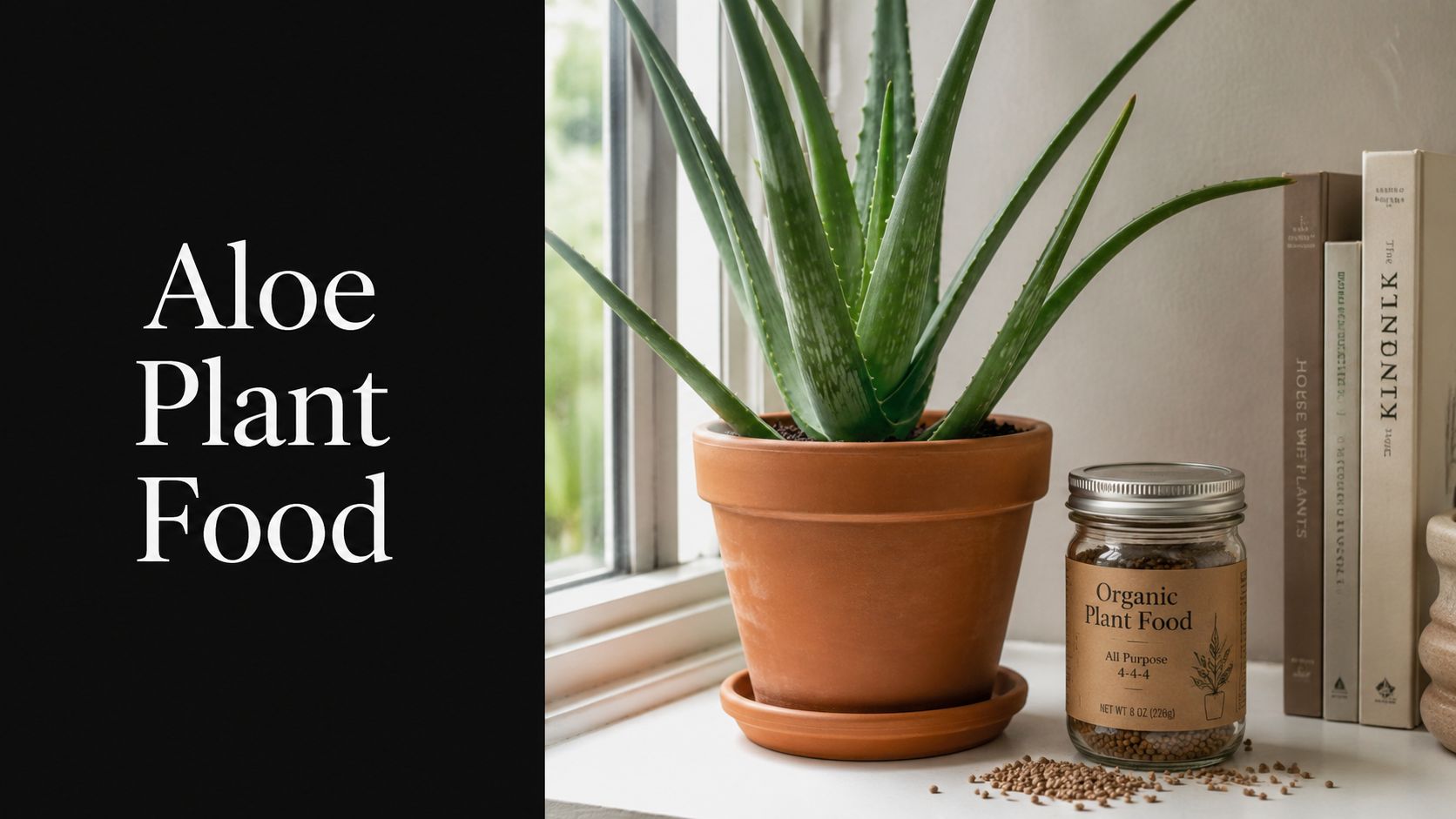
Aloe vera isn't a hungry foliage plant that wants constant fertilizer. It's a succulent with a slow, efficient growth habit. The right aloe vera plant food can help, but too much of it can weaken the plant, stress the roots, and create a bigger problem if you grow aloe for edible gel.
Why Feeding Your Aloe Vera Is a Balancing Act
Aloe vera stores a huge amount of moisture in its leaves, and that shapes how it should be fed. The plant is 99% water and contains over 200 nutritional substances, including vitamins, minerals, and enzymes, according to Darwin Nutrition's aloe vera overview. That makeup is one reason aloe behaves differently from leafy tropical houseplants.
When growers treat aloe like a pothos or peace lily, they usually overdo it. A fast-growing houseplant can often push through heavy feeding. Aloe usually won't. It grows best when nutrients act as a light supplement, not as a constant push.
Think supplement, not fuel
If your plant is pale, thin, or slow, fertilizer might help. It also might not. Aloe often declines because of poor light, stale soil, cold stress, or watering mistakes. Feeding won't fix any of those.
A better way to think about aloe vera plant food is this:
- Use it to support growth: Feed only when the plant is actively growing and otherwise healthy.
- Use it lightly: Aloe needs less than most common houseplants.
- Use it with a purpose: If you want edible gel, the fertilizer choice matters more than most care guides admit.
Feed an aloe that already has the basics right. Good light and correct watering do more for leaf quality than fertilizer alone.
What works in practice
Healthy aloe usually has firm leaves, steady color, and gradual new growth. It doesn't need to be pushed. In fact, plants that get forced with rich fertilizer often look worse over time. The leaves can become weak, stretched, or too soft.
If you're troubleshooting a sluggish plant first, start with a broader care check before opening the fertilizer bottle. A solid aloe routine matters more than any product label, and a good aloe vera care guide from The Cactus Outlet is a better starting point than a feeding schedule by itself.
Choosing the Right Aloe Vera Plant Food
Most fertilizer shelves are built for fast growth, dark green foliage, and frequent use. That's not what aloe wants. The best aloe vera plant food is usually mild, balanced, and easy to control in small doses.
If you harvest gel for internal use, you also need to think beyond growth. A 2023 NCCIH review highlighted a serious issue: improperly fertilized aloe plants intended for consumption may contain high concentrations of compounds that can damage DNA, a risk many care guides skip entirely, as noted by the NCCIH aloe vera review.
The short version of what to buy
For most home growers, three categories make sense:
- Balanced liquid fertilizer: A 1-1-1 or 2-1-1 style formula is usually the easiest to manage for potted aloe.
- Lower-nitrogen succulent formulas: These can work well when they avoid the lush-growth effect that comes from heavy nitrogen.
- Gentle organic inputs: Worm castings or kelp-based options are useful when you want a softer feeding approach.
What usually fails is a high-nitrogen fertilizer meant for lawn growth, foliage plants, or aggressive vegetative growth. Aloe doesn't respond well to being pushed that hard.
Aloe Vera Fertilizer Comparison
| Fertilizer Type | Typical N-P-K Ratio | Pros | Cons |
|---|---|---|---|
| Balanced liquid fertilizer | 1-1-1 | Easy to dilute, predictable, good for routine feeding | Easy to overapply if you mix too strong |
| Balanced liquid fertilizer | 2-1-1 | Supports steady growth without pushing soft foliage too hard | Still needs careful timing and dilution |
| Low-nitrogen succulent formula | Qualitatively lower nitrogen than general plant food | Better suited to compact succulent growth | Some products are still stronger than aloe needs |
| Organic options such as worm castings or kelp meal | Varies by product | Gentler feeding, slower release, often easier to use conservatively | Less precise, slower visible response |
What to avoid if the gel is for consumption
The edible-aloe angle changes the decision.
Many growers just look for anything labeled “succulent fertilizer.” That's too broad. If you plan to consume the gel, avoid pushing the plant with strong synthetic feeding, especially heavy nitrogen programs that encourage rapid, watery growth. The point isn't that every synthetic product is automatically wrong. The point is that you need control and restraint.
Practical rule: If a fertilizer promises rapid growth, huge leaves, or lush foliage, it's probably aimed at goals that don't match healthy aloe culture.
A balanced liquid product is often the safest middle ground because you can measure it, dilute it, and stop immediately if the plant shows stress. If you prefer organic feeding, light applications of worm castings or kelp-based products are often easier to keep gentle.
For broader succulent feeding guidance, this succulent fertilizer guide from The Cactus Outlet is worth reading alongside your aloe routine.
How to Dilute and Apply Fertilizer Correctly
Application matters as much as product choice. A suitable fertilizer used badly can still burn roots and set the plant back.
For home-grown aloe, one practical guideline is to use a balanced 1-1-1 or 2-1-1 fertilizer, diluted to half strength or even quarter strength, and apply it monthly during spring and summer while avoiding winter. The same guidance also stresses watering the soil 1 to 2 days before fertilizing to reduce root burn risk, and avoiding granular or high-phosphorus blends, as explained in this home aloe fertilizer guide.
Start with damp soil, not dry soil
Dry roots and fertilizer don't mix well. If the potting mix is bone dry, the solution hits stressed roots all at once. That's when growers see tip burn, stalled growth, or mushy root trouble later.
Aloe handles feeding best when the soil has a little moisture already. Not soggy. Just not dry and dusty.

Why the quarter-strength rule isn't universal
A lot of gardening advice repeats quarter-strength as if it were a law. It isn't. Product concentration varies. Pot size varies. Climate varies. A small aloe in a cool room doesn't need the same feeding approach as a large plant in active summer growth.
That's why I prefer a decision process instead of blind repetition:
- Check the label first: If it's a balanced liquid houseplant fertilizer, start weak.
- Look at the plant: A firm, slowly growing aloe needs less than one actively producing new leaves.
- Consider your conditions: Heat, evaporation, and fast-draining mixes change how the plant uses nutrients.
Recent commentary around aloe care has pointed out that generic monthly, heavily diluted advice often ignores climate and soil differences, particularly in arid conditions where nutrient uptake and salt buildup become more complicated, as discussed in this analysis of aloe plant food recommendations.
A clean application routine
Use this method:
- Dilute lightly: Mix the liquid fertilizer weaker than you would for a hungry foliage plant.
- Water ahead of time: Give the plant a light watering before feeding, following the approach above.
- Apply around the root zone: Pour onto the soil, not over the leaves.
- Stop if the plant reacts badly: Brown tips or soft tissue mean back off.
A practical demonstration helps if you're still unsure about technique.
If you want to tighten up your routine, this fertilizer application guide from The Cactus Outlet covers the mechanics that make the difference.
Your Year-Round Aloe Fertilizing Schedule
Aloe doesn't need a rigid feeding calendar taped to the wall. It needs timing that matches growth.
For home growers, that usually means feeding during active growth in spring and summer, then stopping when the plant slows down in fall and winter. A dormant aloe won't use fertilizer efficiently, and extra salts sitting in the soil are not helping anything.

A simple seasonal rhythm
Aloe usually responds well to a light touch:
- Spring: Resume feeding only when you see active growth.
- Summer: Continue light feeding if the plant is healthy and growing.
- Fall: Ease off as growth slows.
- Winter: Don't fertilize.
That schedule works better than feeding by habit. If the plant has just been repotted, is recovering from root problems, or looks stressed, skip fertilizer until it stabilizes.
What commercial growers do isn't your model
Field production has a different goal. For maximum commercial yield, growers may apply 150 kg of nitrogen per hectare, according to Wikifarmer's aloe nutrient guidance. That approach is designed for leaf production at scale, not for a potted houseplant on a windowsill.
That number matters mainly as a warning. Home aloe should not be fed like a crop plant.
Watch the plant more than the calendar. New growth, firm leaves, and stable color are better signals than the date alone.
If your aloe sits in lower light or stays cool indoors, it may need very little feeding even in the growing season. On the other hand, a large, established plant in bright conditions may appreciate an occasional light application.
Signs of Overfeeding and Underfeeding
Aloe tells you when the feeding program is wrong. The trick is reading the message correctly.
Most growers assume any weak-looking aloe needs more fertilizer. In practice, overfeeding is often the faster route to visible damage. Underfeeding tends to show up more slowly.
What overfeeding looks like
When aloe gets too much fertilizer, especially too often or in soil that's too dry, the symptoms usually show up as stress rather than vigorous growth.
Look for these signs:
- Brown or crispy tips: Often the first clue that salts are building up.
- Soft or collapsing leaves: The plant may be reacting to root stress.
- Stalled growth: Ironically, too much fertilizer can stop progress instead of improving it.
- Weak, stretched growth: Rich feeding can produce tissue that lacks the firm, compact look aloe should have.
The fix is simple, but growers often delay it. Stop feeding. Let the plant recover. If the soil seems overloaded, flush it with plain water over time and return to a lighter routine later.
What underfeeding looks like
Underfed aloe usually declines gradually:
- Paler leaves: The green looks washed out rather than rich.
- Slow growth: New leaves stay small or take a long time to form.
- Thin leaves: The plant loses some of its full, stocked look.
That said, underfeeding should be diagnosed carefully. Pale growth can also come from poor light or root trouble. Thin leaves are often a watering or root issue before they're a fertilizer issue.

How to correct course
Use the plant's appearance to decide what to do next:
| Problem | Most likely cause | Better response |
|---|---|---|
| Burnt tips | Fertilizer too strong or applied to dry soil | Stop feeding and resume later at a lighter dilution |
| Mushy or stressed leaves after feeding | Root stress from overapplication | Let soil normalize and avoid repeat applications |
| Pale, slow growth in active season | Mild nutrient shortage or other care issue | Check light and roots first, then feed lightly |
| Leggy, weak tissue | Too much rich fertilizer or poor light | Reduce feeding and improve growing conditions |
Aloe responds better to restraint than correction-by-overreaction. If you make one change, make it small.
DIY Fertilizers and Safe Edible Aloe Harvesting
DIY feeding can work well for aloe because it forces you to stay gentle. Worm castings are a good example. A light top-dressing or a mild casting tea gives the plant a soft nutrient boost without the hard push of a strong synthetic formula.
Kelp-based feeds can also fit this approach if used lightly. The goal isn't maximum growth. It's steady support without stressing the roots or compromising the quality of the gel.
Safe harvesting matters as much as feeding
If you plan to eat aloe gel, fertilizer choice is only half the safety story. The leaf also contains latex, and that part needs real caution.
The FDA banned over-the-counter products with aloe latex in 2002 because of safety concerns. Consuming 1 gram of aloe latex daily for several days can cause severe kidney damage, according to Healthline's review of edible aloe safety. Proper preparation means removing the gel cleanly and washing away all traces of the bitter yellow latex before use.
If you grow aloe for internal use, treat harvest prep as non-negotiable. A healthy plant is not the same thing as a safely prepared leaf.
A practical edible-aloe mindset
The safest home approach looks like this:
- Feed mildly: Avoid forcing rapid growth with aggressive fertilizer.
- Harvest only from healthy plants: Don't use stressed, chemically pushed leaves.
- Remove latex carefully: Separate the clear gel from the yellow sap and wash it thoroughly.
- Be selective about use: If you're building a broader food-growing space, this guide to edible gardens for homeowners is useful for thinking through edible landscaping with safety in mind.
Growing aloe for both plant health and personal use takes a little more discipline than most succulent care guides suggest. That extra care is worth it.
If you're looking for healthy, well-grown succulents and aloe varieties backed by practical growing knowledge, explore The Cactus Outlet for quality plants and care resources that help you grow with confidence.