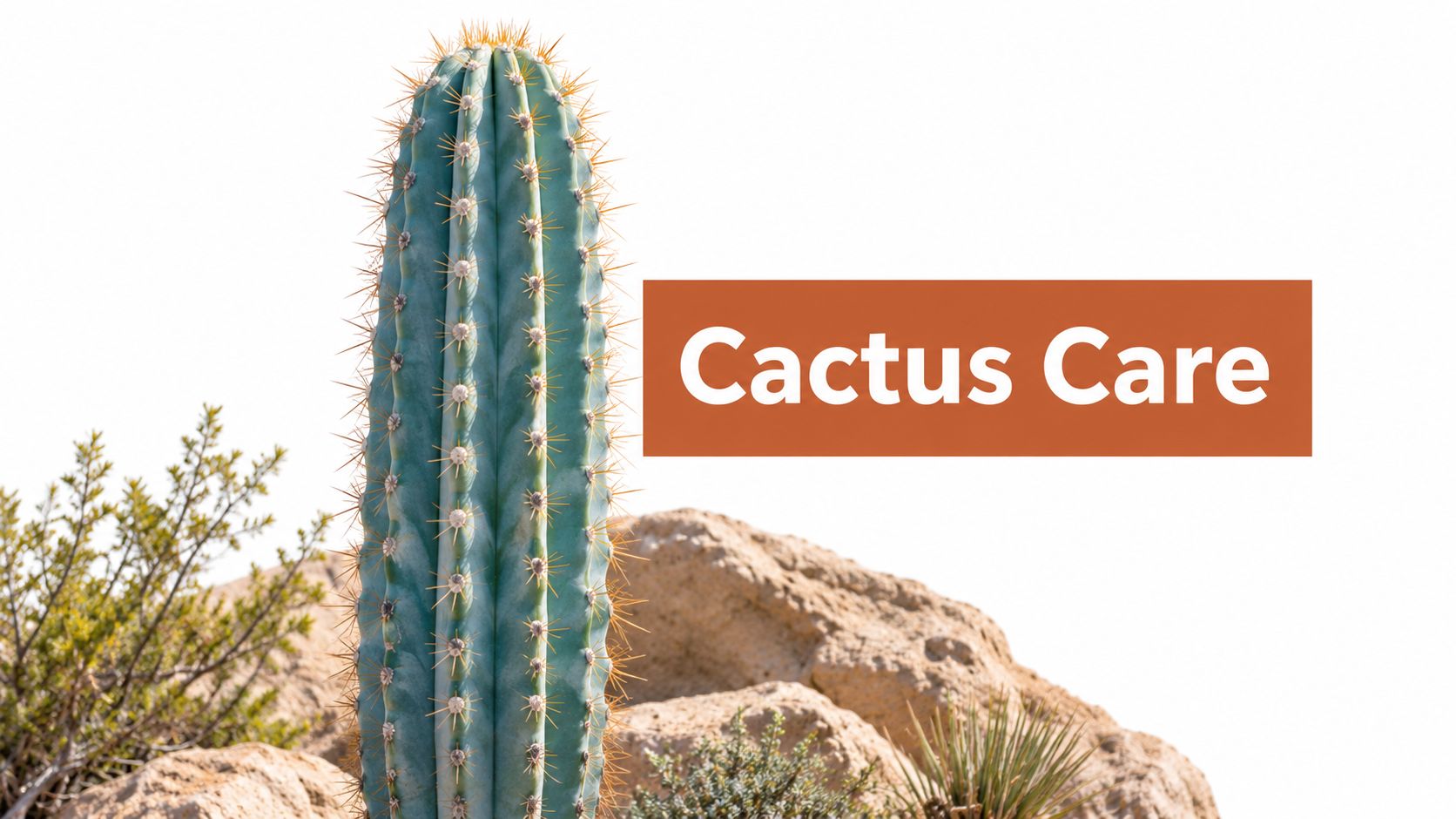



If you're looking for a cactus that makes a serious statement, you’ve found it. The Peruvian Apple Cactus, known in botanical circles as Cereus repandus, is a towering, tree-like giant prized for both its dramatic shape and its surprisingly tasty fruit. This is a fast-growing columnar cactus that brings a powerful architectural element to any landscape or large indoor space.
Meet the Magnificent Peruvian Apple Cactus

Think of this plant as a living sculpture that also happens to produce a delicious snack. With its tall, ribbed, blue-green stems, the Peruvian Apple Cactus brings a sense of grandeur wherever it grows. It’s become a favorite for gardeners and designers who want a showstopper without a ton of fussy care.
But here’s a fun fact about its name. Despite being called the "Peruvian" Apple Cactus, it isn't actually from Peru. Its roots are actually further east in South America, which gives us a huge clue about how to care for it. It's just one of the many fascinating cacti of South America that have mastered survival in tough climates.
Origins and Defining Features
This cactus really hails from the arid and semi-arid lands of Brazil, Uruguay, and Argentina. That background is precisely what makes it so resilient; it’s built to handle intense heat, long droughts, and even some cooler temperatures. This hardiness has helped it go global, with some cultivated giants reaching a mind-boggling 110 feet (34 meters) tall. You can dig deeper into its journey and global cultivation over at Specialty Produce.
Beyond its sheer size, a few other traits make this cactus truly special:
- Night-Blooming Flowers: One of its most magical displays is its enormous, fragrant white flowers. In a fleeting spectacle, these massive blooms open for just one night to attract nocturnal pollinators like bats and moths.
- Edible Fruit: After the flowers fade, the plant produces round, spineless fruits called "Peruvian Apples" or pitaya. The skin is a vibrant reddish-pink, and the sweet flesh inside is often compared to dragon fruit or a refreshing kiwi.
- Columnar Growth: It has that classic cactus silhouette, with thick, segmented stems that shoot straight up like the columns of a temple. This creates strong, beautiful vertical lines in a garden design.
The combination of architectural beauty, breathtaking night-blooming flowers, and an edible reward makes the Peruvian Apple Cactus a truly exceptional plant. It delivers a complete experience that few other cacti can offer.
Peruvian Apple Cactus at a Glance
To give you a quick summary, we've put together the key details in one place. This table highlights the core characteristics of the Peruvian Apple Cactus so you can see what makes it unique at a single glance.
| Attribute | Specification |
|---|---|
| Common Name | Peruvian Apple Cactus, Apple Cactus |
| Scientific Name | Cereus repandus |
| Origin | South America (not Peru) |
| Growth Habit | Tall, tree-like, columnar |
| Flowers | Large, white, nocturnal (night-blooming) |
| Fruit | Edible, spineless, reddish-pink skin |
| Stems | Ribbed, blue-green to gray-green |
This quick guide should give you a solid starting point for understanding this remarkable species. As we dive deeper into its care, you'll see how these features influence everything from watering to placement.
Setting Up Your Cactus for Success

If you want your Peruvian Apple Cactus to truly thrive, the best thing you can do is mimic its native home in South America. Think of it this way: get the light, soil, and watering right from the start, and you've already sidestepped almost every common problem people run into.
These three pieces are the foundation of good cactus care. Once you get a feel for how they work together, you’ll be able to give your plant everything it needs to flourish, whether it's a small pot on your desk or a giant specimen in your yard.
Getting the Light Just Right
Sunlight is pure energy for your Peruvian Apple Cactus. It needs lots of bright light to power its famously fast growth. As a rule of thumb, aim for at least six hours of direct sunlight every day. But be careful—"full sun" doesn't mean the most intense, scorching afternoon rays, which can easily sunburn the cactus, leaving ugly yellow or white scars on its skin.
It’s all about the quality of the light. The absolute sweet spot is an east-facing location. This gives the cactus plenty of bright, direct morning sun without the harshness of the late afternoon, which can cause real damage.
If your cactus lives indoors, a clear, unobstructed south-facing window is your best friend. It provides the strongest, most consistent light. A west-facing window also works, but keep an eye out for signs of heat stress in the summer. You might need to pull the pot a few feet back from the glass on the hottest days.
A cactus will always tell you when it's starved for light. You'll see it start to stretch and lean toward the window, a process called etiolation. That thin, pale, and weak new growth is a clear cry for help—it needs a brighter home.
The Right Soil: Your Cactus's Best Friend
If overwatering is public enemy number one for cacti, then dense, soggy soil is its getaway driver. The roots of a Peruvian Apple Cactus are incredibly prone to rot, so a gritty, fast-draining soil mix isn't just a suggestion; it's non-negotiable. Regular potting soil from the bag is a death sentence—it simply holds on to far too much water.
You’ve got two paths here: buy a pre-made cactus and succulent mix, or mix up your own. While the commercial bags are a decent start, I find they're always better with a little extra grit. For a simple, foolproof recipe that these cacti absolutely love, just mix equal parts of these three things:
- One part potting soil (for nutrients)
- One part coarse sand (for drainage)
- One part perlite or pumice (for aeration)
The final mix should feel gritty and loose in your hand. If you can squeeze it into a ball that stays together, it's still too dense and needs more perlite or sand. For a deeper dive, take a look at our complete guide on creating the perfect cactus and succulent soil mix.
Watering and Temperature: The Golden Rules
This is where most people get tripped up. The trick is to stop thinking about a schedule—like "water every Sunday"—and start using the "drench and dry" method. It’s the perfect way to copy the rare but heavy downpours these plants get in the wild, which helps them grow strong, deep roots.
When you do water, be generous. Soak the soil completely until water starts pouring out of the pot's drainage holes. Then comes the most important part: let the soil dry out completely before you even think about watering again. The best way to check is to stick your finger about two inches down into the soil. If you feel any moisture at all, wait.
Peruvian Apple Cacti love the heat and are happiest in temperatures between 65–85°F (18–29°C). They're tougher than you might think when it comes to cold, handling short dips down to around 21°F (-6°C). But a long, hard frost will kill it. If you live in a colder area (like USDA Zone 8 or below), your best bet is to plant it in a container you can move into a frost-free garage or shed for the winter. For plants in the ground, a simple frost cloth thrown over them on cold nights can make all the difference.
Fueling Growth Through Feeding and Repotting
If you want your Peruvian Apple to reach its full, towering potential, you need to give it two things: the right fuel and enough room to grow. Think of feeding as providing the raw materials for new growth, while repotting gives the foundation—the roots—the space it needs to support the structure.
Getting this simple cycle right is what separates a decent cactus from a truly magnificent specimen. One without the other just won't work; you need both to keep your plant thriving.
How to Feed Your Peruvian Apple Cactus
These cacti aren't what you’d call heavy feeders, but a little nutritional nudge during the right time of year makes a world of difference. It’s the secret to encouraging vigorous growth and even triggering those beautiful, night-blooming flowers.
The number one rule is simple: only fertilize during the spring and summer. This is the plant's active growing season, when it’s actually awake and ready to put those nutrients to use. Feeding in fall or winter, when the cactus is dormant, is a classic mistake. The plant is resting and can't absorb the fertilizer, which then builds up in the soil and can chemically burn the sensitive roots.
The type of fertilizer you choose is just as important.
- Choose a Cactus-Specific Formula: Always grab a fertilizer made specifically for cacti and succulents. These formulas have the low-nitrogen balance your Peruvian Apple needs.
- Avoid High-Nitrogen Fertilizers: Standard houseplant foods are packed with nitrogen. While great for leafy plants, this causes cacti to grow too fast, resulting in weak, soft growth that's a magnet for pests and diseases.
- Dilute for Safety: When it comes to feeding cacti, less is always more. A good rule of thumb is to dilute your liquid cactus fertilizer to half the strength recommended on the bottle. It's much easier to fix an underfed plant than an overfed one.
Apply your diluted mix once every 4-6 weeks during the spring and summer only. Here’s a pro tip: give your cactus a light watering the day before you plan to fertilize. Applying fertilizer to bone-dry soil can shock the root system, but pre-moistened soil helps it absorb the nutrients gently and effectively.
Think of fertilizer as a light snack, not a heavy meal. A gentle, consistent approach during the growing season is all a Peruvian Apple Cactus needs to thrive. Overdoing it is one of the fastest ways to harm an otherwise healthy plant.
Repotting Your Growing Cactus
As a fast grower, your cactus will inevitably need a bigger home. Plan on repotting it every 2-3 years, or as soon as you see the tell-tale signs that it’s getting cramped. A healthy root system is the hidden engine of a healthy cactus, and it needs room to run.
You'll know it's time for a bigger pot when you see these signals:
- Roots are starting to snake out of the drainage holes.
- The plant looks wobbly or top-heavy for its current container.
- Water rushes straight through the pot, which means it's packed with roots and not much soil.
- Growth seems to have stalled, even with good light and water.
Wrangling a large, spiny plant can feel a little intimidating, but the right technique keeps both you and your cactus safe. The goal is to protect your hands from the spines and the cactus’s waxy skin from getting bruised or scratched. For a complete walkthrough, check out our dedicated guide on how to repot cacti.
The process is fairly simple. Grab a new pot that is only 1-2 inches wider in diameter than the old one, some fresh cactus mix, and your protective gear. Choosing a pot that’s too big is a common error; the excess soil holds onto too much moisture, creating a perfect environment for root rot.
To safely handle the cactus, wrap the stems with thick, folded towels, a blanket, or even strips of cardboard to create a padded grip. Gently tilt the pot on its side and ease the cactus out. Place it in the new pot, making sure it sits at the same depth as before, and fill in the gaps with fresh, dry cactus soil.
Most importantly, do not water for at least a week after repotting. This gives any roots that were bruised or broken during the move a chance to heal and callus over, which is your best defense against rot.
Propagating Your Cactus From Cuttings and Seeds
One of the best parts about owning an Apple Peruvian Cactus is how easily you can turn one plant into a whole collection. For those with a lot of patience, growing from seed can be a fascinating journey. But if you want fast, reliable results, propagating from cuttings is the way to go.Taking cuttings is a fantastic way to clone your parent plant, creating genetically identical offshoots that will look and grow just like it. You can fill out a landscape, create denser groupings to encourage pollination, or simply share your cactus with friends.
The Art of Taking Cuttings
To get started, you'll need a healthy cutting. Think of this as minor surgery for your plant, so your most important tool is a sharp, sterilized knife or saw. A quick wipe with isopropyl alcohol before you cut is all it takes to prevent nasty bacteria from getting into the fresh wound.
Look for a healthy, mature arm that’s at least a few inches long and has no signs of damage or mushy spots. Make one clean, decisive slice where the arm connects to the main stem. You can do this on purpose or just use pieces that you've pruned off during routine maintenance.
This next part is absolutely crucial, and it’s where most people go wrong: you have to let the cutting callus. A fresh, wet cutting stuck in soil is a one-way ticket to rot.
Just lay the cutting somewhere dry and shady with good airflow. Depending on its thickness, this can take anywhere from one to two weeks, sometimes longer. You’ll know it’s ready when the cut end is completely dry and has formed a hard, light-colored scab. This protective seal is what guards it against fungus and bacteria in the soil.
Planting Your Calloused Cutting
Once that callus is nice and hard, it's time to plant. Grab a pot with great drainage and fill it with a dry, gritty cactus soil mix.
Gently push the calloused end about 1-2 inches deep into the soil—just enough to help it stand on its own. If you have a taller or heavier cutting, you might need to prop it up with some small stakes or rocks to keep it stable while it gets its footing. Any wobbling at this stage can break the fragile new roots as they try to form.
Now for the hard part: waiting. Don’t even think about watering your new cutting for at least two weeks. Watering too early undoes all that careful callousing and practically invites rot. After a couple of weeks have passed, you can start watering very lightly, following the same "drench and dry" method you use for your mature cacti.
This infographic simplifies the repotting process, a skill you'll use often when propagating or just giving an older plant a bigger home.

As you can see, the key is moving the plant from a tight spot to a new home with plenty of room to grow, whether it's a new cutting or an established cactus.
Growing From Seed: A Patient Endeavor
If you enjoy a good challenge and have time to spare, growing this cactus from seed is a deeply rewarding experience. You can easily harvest the tiny black seeds from a ripe fruit by scooping out the pulp.
For the best shot at germination, here’s what to do:
- Clean the Seeds: First, rinse them very well. Any leftover fruit pulp can stop them from sprouting and encourage mold.
- Sow the Seeds: Sprinkle the clean seeds right on top of a moist, sterile cactus mix in a shallow tray. Don't bury them—they need light to germinate.
- Create Humidity: Cover the pot or tray with a plastic dome or some plastic wrap. This creates a mini-greenhouse that keeps the soil consistently moist.
- Provide Warmth and Light: Put the tray in a warm place with bright, indirect sunlight. Germination can take a few weeks or even a few months, so be patient.
Once the seedlings are big enough to handle without crushing them, you can carefully move them into their own little pots. Just know that this is the long game—it will be several years before your seed-grown cactus reaches any significant size.
Troubleshooting Common Cactus Problems
Don't panic if your Apple Peruvian Cactus looks a little off. Even the toughest plants can have a bad day, and most of the time, it's just their way of telling you something in their environment needs a small tweak. Learning to read these signals is the real secret to keeping your cactus happy for years to come.
Almost every problem you’ll run into boils down to two things: water or pests. Once you know what to look for, you can step in quickly and get your plant back on track.
Diagnosing Watering Issues
Watering is where most new cactus parents get into trouble. It's a fine line, and tipping too far in either direction will cause visible stress.
An overwatered cactus is a sad sight. You’ll notice the base of the plant turning yellow and feeling soft or even mushy. This is a five-alarm fire, signaling root rot, a serious condition that can kill the plant if you don't act fast.
On the flip side, an underwatered cactus just looks plain thirsty. The stems will start to look thin, wrinkled, or shriveled as the plant burns through its water reserves. This is a much easier fix. A good, deep soak is usually all it takes to get it looking plump and happy again.
Root Rot Emergency: If you discover a mushy, brown base, it's time for surgery. Immediately unpot the cactus. Using a clean, sharp knife, cut away all rotted roots and any soft stem tissue until you see only healthy, green flesh. Let the cuts dry and form a callus for several days, then repot it in completely fresh, dry soil. Hold off on watering for at least a week to give it time to recover.
Handling Common Cactus Pests
While generally pest-resistant, a stressed Apple Peruvian Cactus can sometimes attract unwanted visitors like mealybugs and scale. Spotting these freeloaders early is key to getting rid of them easily.
- Mealybugs: These guys look like tiny bits of white, cottony fluff. They love to wedge themselves into the tight spaces between the cactus ribs.
- Scale: Scale is a bit stealthier. They appear as small, hard, brown bumps that look like a natural part of the plant, but they're firmly attached to the stems.
For a few isolated pests, the fix is simple. Dip a cotton swab in 70% isopropyl alcohol and dab it directly onto each bug. The alcohol instantly dissolves their waxy, protective coating, killing them on contact so you can wipe them away.
If you're dealing with a larger infestation, you can mix up a DIY insecticidal spray. Just combine equal parts water and isopropyl alcohol with a single drop of mild dish soap. Spray down all the affected areas, making sure to get into every nook and cranny. One important tip: keep the cactus out of direct sunlight until the spray has completely dried to avoid scorching its skin.
Here’s a quick cheat sheet to help you translate what your cactus is trying to tell you:
| Visual Symptom | Likely Cause | How to Fix It |
|---|---|---|
| Yellow or Bleached Spots | Sunburn | The sun is too intense. Move it to a spot with bright morning light but shade from the harsh afternoon sun. |
| Mushy or Brown Base | Root Rot | This is a watering problem. Follow the emergency steps above to trim rot and repot in dry soil immediately. |
| Wrinkled or Thinning Stems | Underwatering | Your cactus is thirsty. Give it a thorough soak, letting water run freely from the drainage holes. |
| Stretching or Leaning | Not Enough Light | It's literally reaching for more sun. Gradually move it to a brighter location where it gets at least six hours of direct light. |
Harvesting Night-Blooming Flowers and Edible Fruit

While the sheer architectural presence of a Peruvian Apple Cactus is a reward in itself, the real show starts when it decides to flower and fruit. This is when all your careful work pays off, and your living sculpture transforms into something truly special—a source of incredible beauty and a unique, delicious harvest.
The first step, of course, is encouraging it to bloom in the first place. For a mature cactus, it really comes down to mimicking the seasonal shifts of its native South American home. That means plenty of sun during the growing season, followed by a cool, dry rest period in the winter. This little trick signals to the plant that it's time to put its energy into reproducing.
The Magic of the Night Bloom
The flowering of a Peruvian Apple Cactus is an event you won't want to miss. Seriously, set an alarm for it. The plant produces these enormous, pure white, and intensely fragrant flowers that can reach up to 6 inches (15 cm) across. True to their name, these blooms only open after dark and will be closed for good by sunrise, putting on a spectacular show for just one night.
This fleeting, after-hours display is all part of a clever survival strategy. The powerful, sweet scent is designed to attract its primary pollinators—moths and bats—under the cover of darkness. Watching one of these giant flowers unfurl in the moonlight is one of the most rewarding experiences you can have as a cactus owner.
The Peruvian Apple Cactus is fascinating because it's both a stunning ornamental and a practical food source. It's one thing to admire its rugged beauty, but it's another thing entirely to slice into a sweet, juicy fruit that you grew yourself.
Harvesting Your Cactus Apples
Once a flower is successfully pollinated, you'll see its base begin to swell and slowly mature into the famous "Peruvian Apple" or pitaya. The fruit is completely smooth and thornless, ripening into a gorgeous reddish-pink or deep magenta that hangs from the cactus arms like an ornament.
So, what does it taste like? People often compare it to a delicate mix of kiwi and dragon fruit. It’s mildly sweet with a fantastic, refreshing quality. The inside is filled with white flesh and tiny, crunchy black seeds that give it a texture similar to a kiwifruit. Picking it at just the right moment is the key to getting the best flavor.
How to Know When the Fruit Is Ripe
- Deep Color: Look for a rich, uniform red or pink all over. If you see any green, it needs more time on the stem.
- Gentle Give: Press it lightly with your thumb. A ripe fruit will have a slight softness, much like a perfect peach. If it’s rock-hard, it’s not ready.
- Easy to Pick: A truly ripe fruit will twist off the cactus arm with almost no effort. If you find yourself pulling, give it a few more days.
This cactus is more than just a novelty; it's becoming a game-changer in arid regions like Israel. Farmers are using it to replace crops that demand a lot of water, providing a sustainable harvest that helps stabilize their income. You can learn more about its global agricultural importance in this comprehensive Cereus repandus care guide.
To enjoy your fruit, just slice it in half and scoop the flesh out with a spoon. Here’s a pro tip: chill it in the fridge for an hour before serving. The cool temperature really brings out its subtle sweetness, making it the perfect reward for a job well done.
Frequently Asked Questions About Apple Peruvian Cactus
It's totally normal to have a few questions as you get to know a plant, especially one as impressive as the Apple Peruvian Cactus. We get these questions all the time, so we've put together some straight-to-the-point answers to help you feel like an expert from day one.
How Fast Does It Grow?
One of the most exciting things about this cactus is its growth speed. When it’s happy, it really grows. In a warm climate with lots of sun, it's not unheard of for an established plant to shoot up 1-2 feet per year, sometimes even more!
Just remember that its growth is directly tied to its environment. Giving it plenty of sun and a good feeding schedule during the spring and summer will push it to its full, fast-growing potential.
Is the Apple Peruvian Cactus Poisonous to Pets?
Worried about your furry friends? You can breathe a sigh of relief. The Apple Peruvian Cactus (Cereus repandus) is widely considered non-toxic to cats and dogs.
Of course, munching on any houseplant can lead to an upset stomach, but there are no known toxins to worry about here. The real concern is the spines! It’s always best to place your cactus where curious paws and noses can't get poked.
Why Is My Cactus Not Producing Fruit?
Ah, the million-dollar question! If you're wondering where the "apple" in Apple Cactus is, there are usually a few key reasons why your plant might not be fruiting. It all comes down to the flowers being successfully pollinated.
- Patience is a Virtue: The plant simply might not be old enough yet. It takes several years for them to mature and start flowering.
- It Takes Two to Tango: These cacti are rarely self-fertile. For pollination to happen, you typically need two genetically different plants blooming around the same time.
- The Right Conditions: Your cactus needs enough sunlight and a cool, dry winter rest to get the signal that it's time to produce flowers. Without flowers, you won't get fruit.
Don't get discouraged if you don't see fruit right away. The best thing you can do is focus on giving it great care to encourage blooming. Adding a second plant to your collection is the surest way to boost your odds of a future harvest!
How Big Will It Get in a Pot?
If you're growing yours indoors or on a patio, you might be wondering just how big it'll get. While a potted cactus won't reach the massive heights it does in the wild, it will still become a showstopper.
Confined to a container, the Apple Peruvian Cactus can easily reach 6-10 feet tall over time. It becomes a fantastic, living sculpture and a true statement piece for any room or patio.
Now that you have the answers, you're ready to watch one of these magnificent cacti thrive in your own space. At The Cactus Outlet, we have healthy, happy Apple Peruvian Cactus specimens that are ready for a new home.