
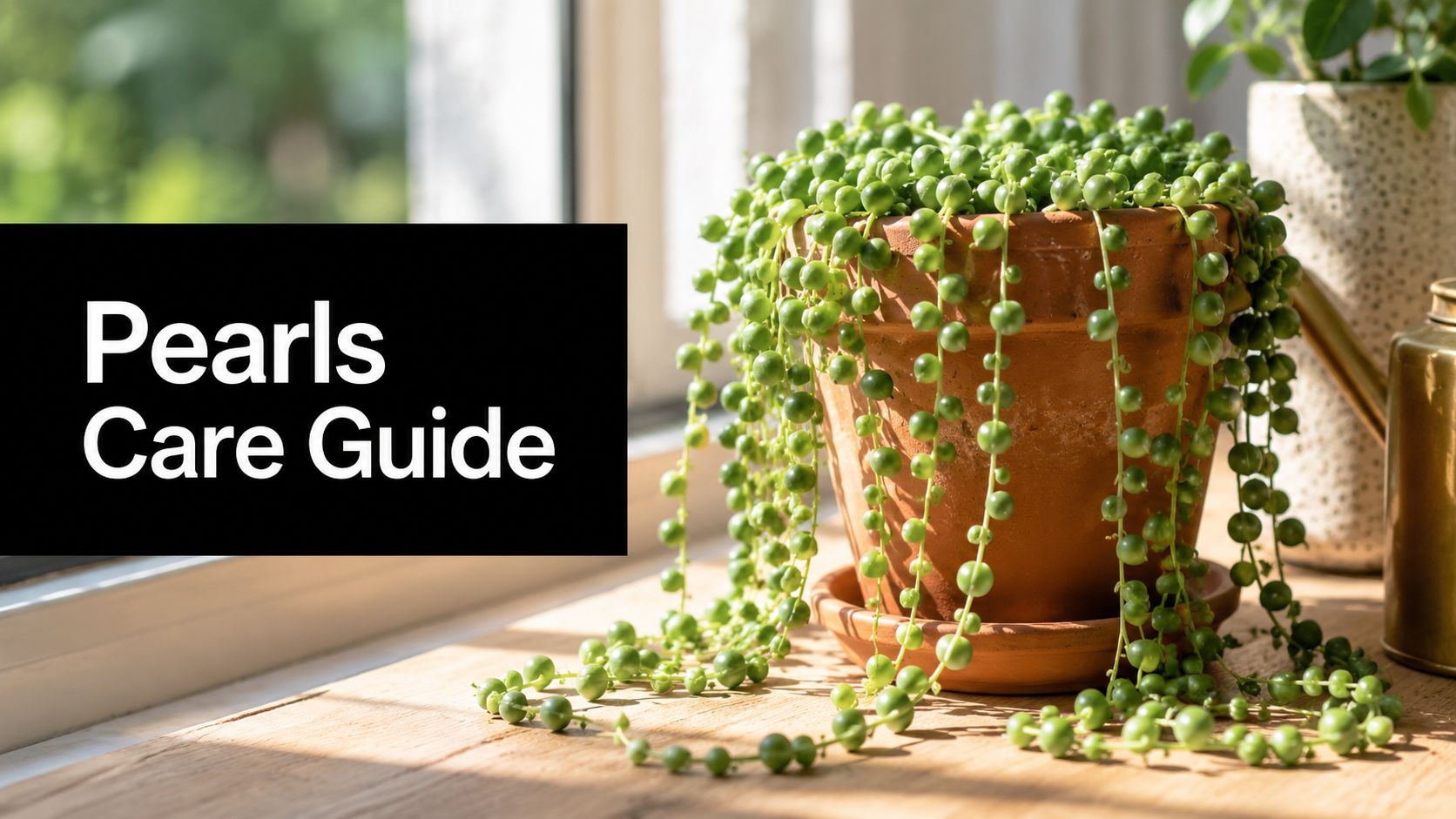

You're probably here because your String of Pearls looks fine one week, then suddenly starts wrinkling, thinning out, or going mushy at the crown. That pattern is common. This plant isn't impossible, but it does punish vague care.
Most advice fails because it stops at “water when dry.” That's not enough for this species. If you want to learn how to care for String of Pearls plant properly, you need to read the plant itself, then water in a way that reaches the whole root zone.
A healthy String of Pearls is the result of a few very specific choices. Strong light. Small pot. Fast-draining mix. Deep watering at the right moment. Not a schedule. Not misting. Not guesswork.
Light and Location: The Critical First Step
A String of Pearls often lands in the wrong spot on day one. It gets hung in a dim corner because the trailing vines look decorative there, then the crown starts thinning, the gaps between pearls widen, and the plant never really recovers its shape.
Fix placement before trying to fix symptoms. This plant needs strong light at the top of the pot so it can keep the crown dense and support the roots below. If the crown stays shaded while only the strands near the window get light, growth turns weak and sparse.

What bright light means in a real house
“Bright indirect light” is too vague to be useful. For String of Pearls, the best indoor spots usually fall into a narrow range:
- East window: Reliable and forgiving. Morning sun is strong enough to keep growth compact without scorching a plant that has been grown in lower light.
- West window: Excellent if you acclimate the plant. Afternoon sun can be stronger, but this species usually handles it well indoors.
- South-facing room: Often good if the plant sits close enough to get real intensity but not so tight against hot glass that it cooks in summer.
If you are unsure how your windows behave through the day, this guide on where to put a cactus in the house is a useful way to judge indoor succulent light.
A north window is rarely enough on its own. A shelf across the room from any window is almost never enough.
How to tell the spot is wrong
String of Pearls gives clear light warnings if you know where to look. The first sign is usually not color. It is shape.
Watch for these changes:
- Longer gaps between pearls
- Small, weak new pearls near the crown
- Bare soil showing at the top of the pot
- Trailing growth that looks longer but not fuller
- Strands that all seem to reach in one direction
That bald crown matters more than many growers realize. Once the top thins out, watering gets trickier because the plant has less active growth where it needs it most. People then blame watering alone, even though weak light started the decline.
Location mistakes that quietly cause problems
Light is the main issue, but placement has a few other traps. Warm, stale, humid rooms push this plant in the wrong direction. Bathrooms are a common mistake. So are spots near cold winter glass, heater vents, or drafty doors.
Use this quick check:
| Good placement | Bad placement |
|---|---|
| Near an east or west window | Deep interior shelf |
| Bright room with light hitting the crown | Hanging in a dim corner |
| Warm room with dry air | Steamy bathroom |
| Stable indoor temperatures | Cold draft near winter glass |
One practical trade-off matters here. A hanging basket may look better, but a plant set on a bright sill usually grows better because the crown gets direct exposure. If I am rehabbing a weak String of Pearls, I set it where the top of the pot gets the best light first. I worry about the styling later.
Mastering the Art of Watering Your String of Pearls
A String of Pearls often looks fine right up to the point it starts collapsing. The pearls stay green, the strands still hang, and the owner assumes the plant is thirsty. They add another splash of water. A week later, the crown softens, a few strands detach, and the roots are already in trouble.
That is the pattern I see most often. This plant usually dies from incorrect watering, not from being unusually difficult.

Read the plant before you read the soil
Dry soil alone is not a reliable watering cue for String of Pearls. The roots are shallow, the top of the mix can dry fast, and the lower root zone may still hold enough moisture. The better signal is the pearls themselves.
Watch for these thirst signs:
- A slight crease or translucent line at the little window on the pearl
- Less round, less firm beads
- Light wrinkling, especially on newer pearls near the crown
- Strands that feel a bit limp instead of springy
Those signs mean the plant has started using its stored water. That is the time to water.
If the pearls still look tight, glossy, and full, wait. New growers rot this plant by watering for reassurance instead of watering for need.
Stop using a fixed schedule
“Every Sunday” fails this plant. “Every two weeks” also fails it if you treat it like a rule.
A String of Pearls in strong light and warm air can dry much faster than one in a cooler room. A full plant in a small clay pot may need water sooner than a sparse plant in a plastic nursery pot. Seasonal shifts matter too. In winter, many plants need far less frequent watering even if the room temperature feels comfortable.
Use a schedule only as a reminder to check. Do not use it as the reason to water.
Soak the root ball fully, then let it dry properly
String of Pearls does poorly with timid watering. Small sips only wet part of the mix, leaving some roots dry and others sitting in stale damp patches near the surface. That weakens the plant and confuses the grower, because shriveled pearls can appear alongside early rot.
Give the plant a full drink instead:
- Wait for visible thirst signs.
- Water the entire surface of the pot slowly.
- Keep going until water runs freely from the drainage hole.
- Let the pot drain completely.
- Put it back in bright light and leave it alone until the next real thirst signal.
That deep soak matters. It rehydrates the whole root zone instead of only the top inch.
If you want a broader refresher on succulent technique, this article on how to water succulent plants is a useful companion.
The mistake that looks careful
Underwatering is common with this plant because people hear “succulent” and get scared of root rot. Then they dribble a little water around the crown once a week. The pearls keep shrinking, the roots never hydrate evenly, and the plant declines in slow motion.
Overwatering kills fast. Chronic shallow watering kills slowly. Both come from poor technique, not from using too much water in a single proper soaking.
I would rather see this plant watered thoroughly at the right time than lightly watered three times too early.
Habits that cause trouble
A few routines are especially hard on String of Pearls:
- Misting. It does not raise root moisture and can encourage rot around crowded growth.
- Watering only the center of the pot. Outer roots stay dry, and the root ball develops unevenly.
- Leaving runoff in a saucer or cachepot. The mix reabsorbs that water and stays wet too long.
- Watering because one strand looks soft. Check several strands and the crown before deciding.
This video shows the general care rhythm well:
The trade-off that actually matters
String of Pearls wants two things that can seem opposed. It wants the roots to dry. It also wants the root ball to be fully soaked when you do water. People often choose one and ignore the other.
Success comes from timing those two steps together. Wait for the pearls to ask. Then water thoroughly enough that the whole plant benefits. That is how you avoid the classic cycle of shriveling, panic watering, and root rot.
Perfecting the Potting and Soil Mix
A lot of watering problems are really pot and soil problems in disguise. You can read thirst signs correctly, wait for the right moment, and still lose the plant if the root zone stays wet for too long after a proper soak.
String of Pearls has a shallow, fine root system. It does best in a setup that dries from top to bottom at a reasonable pace, not in a deep reservoir of damp mix. If the pot is too large or the soil stays dense, the roots sit in moisture long after the pearls have plumped back up. That is how root rot starts.
Choose the pot for root health
Pick the pot to match the roots, not the trailing length.
A shallow pot with a drainage hole gives you a much wider margin for error than a tall decorative planter. The goal is even drying. In a deep pot, the bottom half often stays wet while the upper root zone looks dry, which tricks people into watering again too soon.
Use these pot rules:
- Drainage hole: Required.
- Modest size: Choose a pot only a little wider than the root ball.
- Shallow shape: Better for airflow and more even drying.
- Stable rim height: Keep the crown near the top so the pearls and stems are not pressed into soil.
That last point matters more than people realize. If the crown gets buried, moisture sits against the stems and the top of the plant starts to rot before the roots even complain.
Build a mix that dries fast and breathes fast
Regular indoor potting soil is usually too heavy for this plant. It holds water too long, compresses around the roots, and keeps the crown damp. String of Pearls wants a gritty mix that drains quickly, then pulls air back in soon after watering.
A good mix should be:
| Soil trait | Why it matters |
|---|---|
| Fast-draining | Keeps roots from sitting in prolonged moisture |
| Airy | Helps fine roots get oxygen after watering |
| Low in heavy organic matter | Reduces the soggy, compacted feel that causes rot |
| Gritty at the surface | Helps the crown and upper stems stay drier |
If you want a solid reference for texture and ingredients, this guide to cactus and succulent soil mix is useful.
I have seen struggling plants turn around without any change in schedule, just from moving them out of rich potting soil and into a sharper, airier mix. The watering technique stayed the same. The roots finally had a chance to dry between soakings.
Heavy soil causes a slow failure pattern. Pearls wrinkle, the grower waters again, and the crown gets weaker each round.
Repot only for a reason
String of Pearls does not enjoy frequent repotting. The roots are easy to disturb, and a healthy plant often grows better when left alone.
Repot when the mix has broken down, the pot stays wet too long, the crown is buried, or the plant is badly rootbound. Otherwise, leave it in place. When you do repot, keep the plant at the same height or slightly higher than before, handle the root ball gently, and wait a short stretch before the next full watering if any roots were damaged.
Setup mistakes that cause trouble later
A few choices make good watering habits much harder to pull off:
- Using a large pot for future growth: Extra soil holds extra moisture now.
- Planting in moisture-retentive houseplant mix: Fine for pothos. Risky for this succulent.
- Burying the crown under fresh soil: A common trigger for stem rot.
- Putting it in a humid bathroom or low-airflow corner: The mix dries slower, and the crown stays damp longer.
Get the pot and soil right, and the thirst signs from the previous section become much easier to trust. The plant asks for water more clearly, and a deep soak becomes much safer.
Encouraging Growth Pruning and Propagation
A String of Pearls can stay alive for months and still look tired. Bare soil at the top, one long trailing strand, and a crown that never thickens is a pruning problem more than a patience problem.
If the roots are healthy and watering is under control, fullness comes from cutting, rerooting, and resetting the top of the pot. Waiting on a stretched plant to fill itself almost never works.
Prune for branching at the crown
The best cuts are the ones that redirect growth where you need it most. Focus on the top of the pot first, because that is where a full plant is built.
Cut back:
- Yellow pearls that have fallen onto the soil or are starting to soften
- Shriveled or damaged sections that will not plump back up
- Long bare strands with wide gaps between pearls
- Weak tips that are thin, pale, or clearly stretching
Make each cut just above a node or healthy cluster of pearls. That is where new side growth is most likely to start.
Pruning also improves airflow around the crown. That matters more than many growers realize. A messy layer of dead pearls and tangled stems can hold moisture against the soil surface, which raises the risk of rot right where the plant is most vulnerable.

Use cuttings to refill the top
The fastest way to get a fuller pot is simple. Take healthy strands and root them back into the same container.
Lay each cutting on top of the soil instead of burying it. Press the stem anywhere it has nodes into light contact with the mix, then secure it with a bent floral pin, a paper clip, or a small stone. If the stem lifts off the surface, rooting slows down or fails.
A reliable method:
- Cut a healthy strand a few inches long.
- Remove a few pearls from the section that will touch the soil.
- Lay that bare stem directly on the surface of the mix.
- Pin it in place so the nodes stay in contact with the soil.
- Keep the plant in strong light and wait for fresh anchoring roots before handling it much.
Do not bury the stem too far. That is a common mistake, and it raises the odds of stem rot.
Single loose pearls are less useful than many social posts suggest. If a pearl still has a bit of viable stem or growth point attached, it may root. A clean stem cutting is far more dependable.
Feed only when the plant is actually growing
Fertilizer helps a healthy plant grow faster. It does not rescue a plant with weak roots, poor light, or a watering problem.
Use a light dose during active growth, usually in spring and summer, and skip feeding when the plant is stalled, recently repotted, or recovering from stress.
| Growth period | What to do |
|---|---|
| Active growth | Feed lightly with a balanced houseplant or cactus fertilizer |
| Slow winter growth | Reduce or skip feeding |
| After pruning and rerooting | Wait until you see new growth |
| If strands are wrinkling or yellowing | Fix the root or watering issue first |
Overfeeding shows up fast on this plant. Soft growth, salt buildup, and burned roots are harder to correct than slow growth.
Prune and propagate on the right schedule
Major pruning and propagation are easiest when the plant is actively growing. Spring into early summer gives cuttings the best chance to root quickly and replace what you removed.
Repotting is different. Do it only when the setup is causing trouble, and avoid combining a full repot, a hard prune, and heavy watering all at once. That stack of stress is how a salvageable plant turns into a rotting one.
A fuller String of Pearls usually comes from repeated light pruning and rerooting near the crown. That is the method that rebuilds density without gambling on long, leggy strands.
Troubleshooting Common String of Pearls Problems
You water, the pearls keep shrinking, and now the crown looks worse than it did before. That is the point where many growers drown this plant by guessing. String of Pearls usually declines in patterns. Read the pattern first, then act.

Symptom, cause, solution
| Symptom | Likely cause | What to do |
|---|---|---|
| Pearls look slightly indented or softer | Normal thirst | Water deeply and let excess drain |
| Pearls are mushy, translucent, or yellowing | Root trouble from excess moisture or poor drainage | Stop watering, inspect roots, reset in a gritty mix if needed |
| Strands are long with wide gaps | Not enough light | Move the plant to stronger light and prune weak growth |
| Top of the pot is balding | Crown isn't getting enough light | Reposition so light hits the top of the pot |
| Pearls stay flat and weak after watering | Damaged roots or dry pockets in the root ball | Check roots, then rewater correctly once the plant is able to take it up |
Wrinkled pearls need a second look
Wrinkling is a useful clue, but it is not a complete diagnosis. Slight indentation with firm strands usually means the plant is ready for a full drink. Severe shriveling with a soft base, yellow pearls, or a collapsing crown points to root failure.
That distinction matters because the fix is opposite.
If the pearls are lightly indented and the crown is firm, soak the mix fully and let all excess water drain. If the plant still looks thirsty a day or two later, suspect dry pockets or dead roots, not a need for more frequent watering. I see this often after someone has been giving small sips instead of wetting the entire root zone.
Shriveling plus a firm crown usually means thirst. Shriveling plus a soft crown usually means root trouble.
Yellowing and mushy growth
Soft, translucent, or yellow pearls usually trace back to roots that stayed wet too long. The mistake is rarely one bad watering by itself. More often, the plant is sitting in a mix that dries slowly, a pot that is too large, or a crown that never gets enough light to use water well.
Act fast here.
- Empty any cachepot or saucer holding water.
- Slide the plant out and check the base of the strands and roots.
- Cut away soft, rotting sections with a clean tool.
- Keep any healthy green strands for rerooting if the crown is failing.
- Repot only if the current mix is staying wet or the roots are clearly compromised.
Do not respond by watering less often in the same bad setup and hoping it sorts itself out. A soggy root ball in a dense mix stays risky even on a longer schedule.
Thin growth, bald crowns, and stalled recovery
A String of Pearls can stay alive in mediocre light for a long time. It will not look good there. Long gaps between pearls, weak strands, and a bare top usually mean the crown is not getting enough direct or very bright light.
That top-of-pot baldness fools people. The hanging strands may still look green, so the plant seems healthy from a distance. Up close, the growth point is starving.
Move the plant where the crown gets stronger light, then trim back the weakest growth. Recovery is much faster once the plant can support dense new growth. Fertilizer will not fix stretched structure.
Quick triage rule
Check the crown first. Then check pearl texture. Then check the root zone.
That order saves plants. It keeps you from treating every wrinkle like thirst and every yellow pearl like old age. On this plant, the watering mistake that kills fastest is adding more water to roots that already cannot use it.
Your Key to Success The Right Mindset
The best String of Pearls growers don't follow a rigid schedule. They observe. They notice how firm the pearls look, how fast the mix dries in that room, how much light hits the crown, and whether the pot setup supports quick drying.
That's the shift that matters most. If you want to know how to care for String of Pearls plant well, stop asking “How often should I water?” and start asking “What is the plant telling me today?”
This species rewards restraint, but not neglect. It wants strong light, a lean setup, and watering that is both patient and thorough. Wait for the visual thirst signs. Then soak the root zone completely. That combination prevents the two most common failures at the same time: chronic overwatering and incomplete watering.
Once you get that rhythm, String of Pearls stops feeling fussy. It starts behaving like what it is. A shallow-rooted trailing succulent with very clear preferences.
Learn those preferences and the plant gets much easier to keep, fuller to look at, and simpler to propagate when it's happy.
If you're ready to add another standout succulent to your space, browse the collection at The Cactus Outlet. They offer a wide range of cacti and succulents for collectors, home gardeners, and anyone building a stronger indoor plant setup.