


Caring for a monkey tail cactus really comes down to a few key things: give it bright, indirect sunlight, plant it in a fast-draining cactus mix, and only water when the soil has completely dried out. This plant is originally from Bolivia, where it grows on cliffsides, so if you can replicate that kind of environment, you'll have a happy—and stunning—houseplant that doesn't demand much from you.
Getting to Know the Monkey Tail Cactus
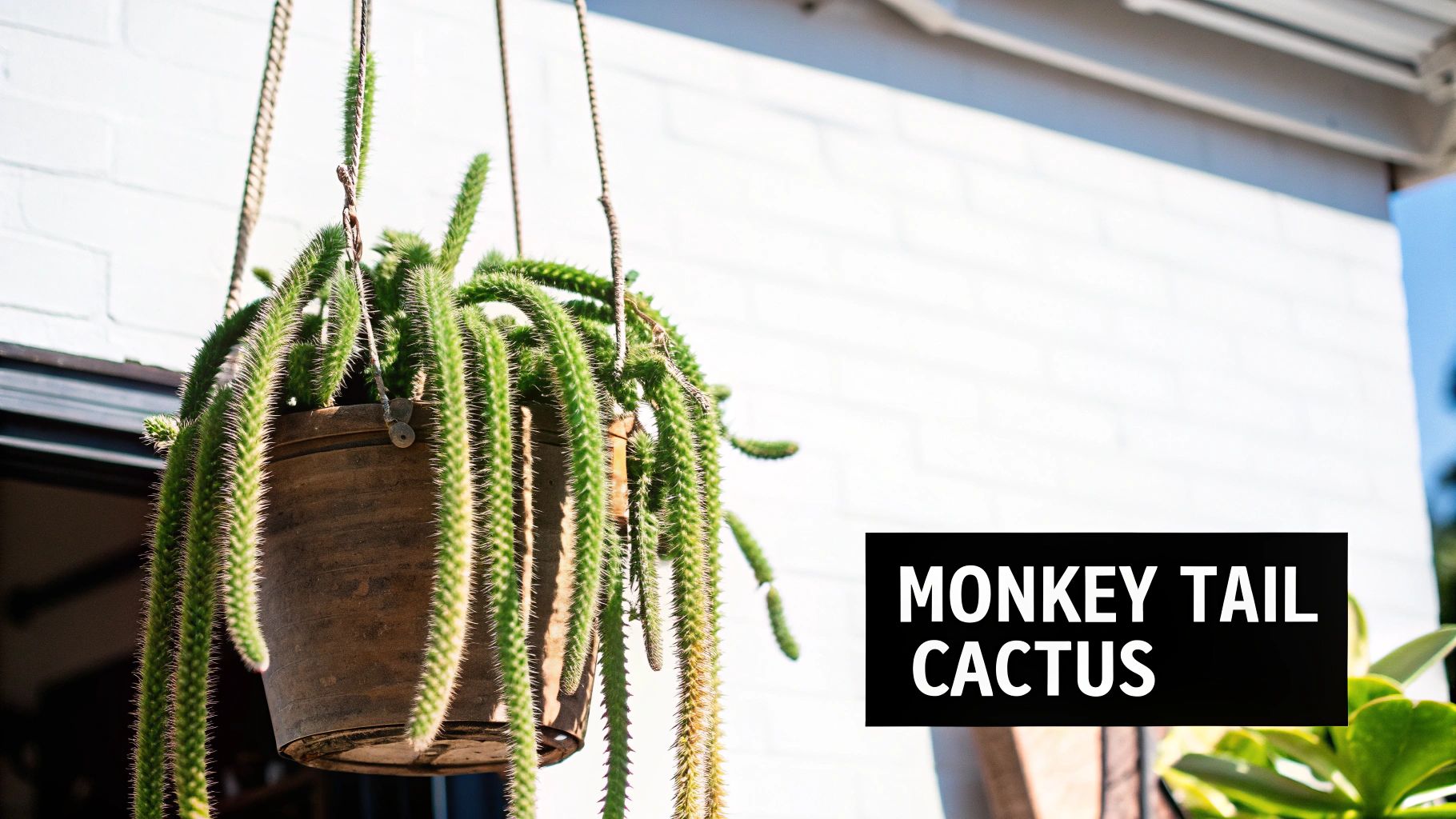
The Monkey Tail Cactus, or Hildewintera colademononis if you want to get scientific, is one of those plants that just stops you in your tracks. It’s not your typical prickly cactus. Instead, it grows these incredible, long, cascading stems covered in soft, white spines that look and feel more like hair, earning it that perfect "monkey's tail" name.
Because it’s native to the rocky cliffs of Bolivia, it has a natural trailing habit that makes it a showstopper in a hanging basket. Just give it some room to grow, and its stems can eventually reach several feet long, creating a spectacular living curtain. This unique draping growth is what really makes it stand out from the crowd of upright cacti.
What’s All the Fuss About?
The charm of the Monkey Tail Cactus isn't just its playful name or fuzzy stems. It’s a plant that delivers a huge visual impact without requiring a ton of effort, which is why everyone from first-time plant parents to serious collectors wants one.
So, why is it so sought-after?
- A Look All Its Own: Those long, flexible, hairy stems have a really cool, unique vibe that fits perfectly with modern or bohemian decor.
- Show-Stopping Flowers: Once it's mature, the plant produces gorgeous, bright reddish-orange or magenta flowers in the spring and summer. They are absolutely stunning.
- Born to Hang: Its cascading nature was made for hanging planters. It’s the best way to really show off those amazing "tails."
- Super Low-Maintenance: This is a drought-tolerant cactus, so if you forget to water it now and then, it’s no big deal. It thrives on a bit of neglect.
As you start thinking about where to put your new cactus, it helps to consider how it fits with your overall space. You can find some great inspiration on choosing trendy houseplants to complement furniture to really pull a room together.
Here’s a pro tip: This plant is an epilithic cactus. That’s a fancy way of saying that in the wild, it grows on or between rocks. Keeping that in mind is the secret to its care—it explains exactly why it needs fantastic drainage and hates wet feet.
It's a good reminder that while all cacti are succulents, not all succulents are cacti. The Monkey Tail is a classic example of a cactus that fits neatly into the wider succulent family. If you're curious, you can learn more about the different types of succulents and cacti. For now, let's dive into everything you need to know to help your new Monkey Tail Cactus thrive.
Finding the Perfect Light and Temperature
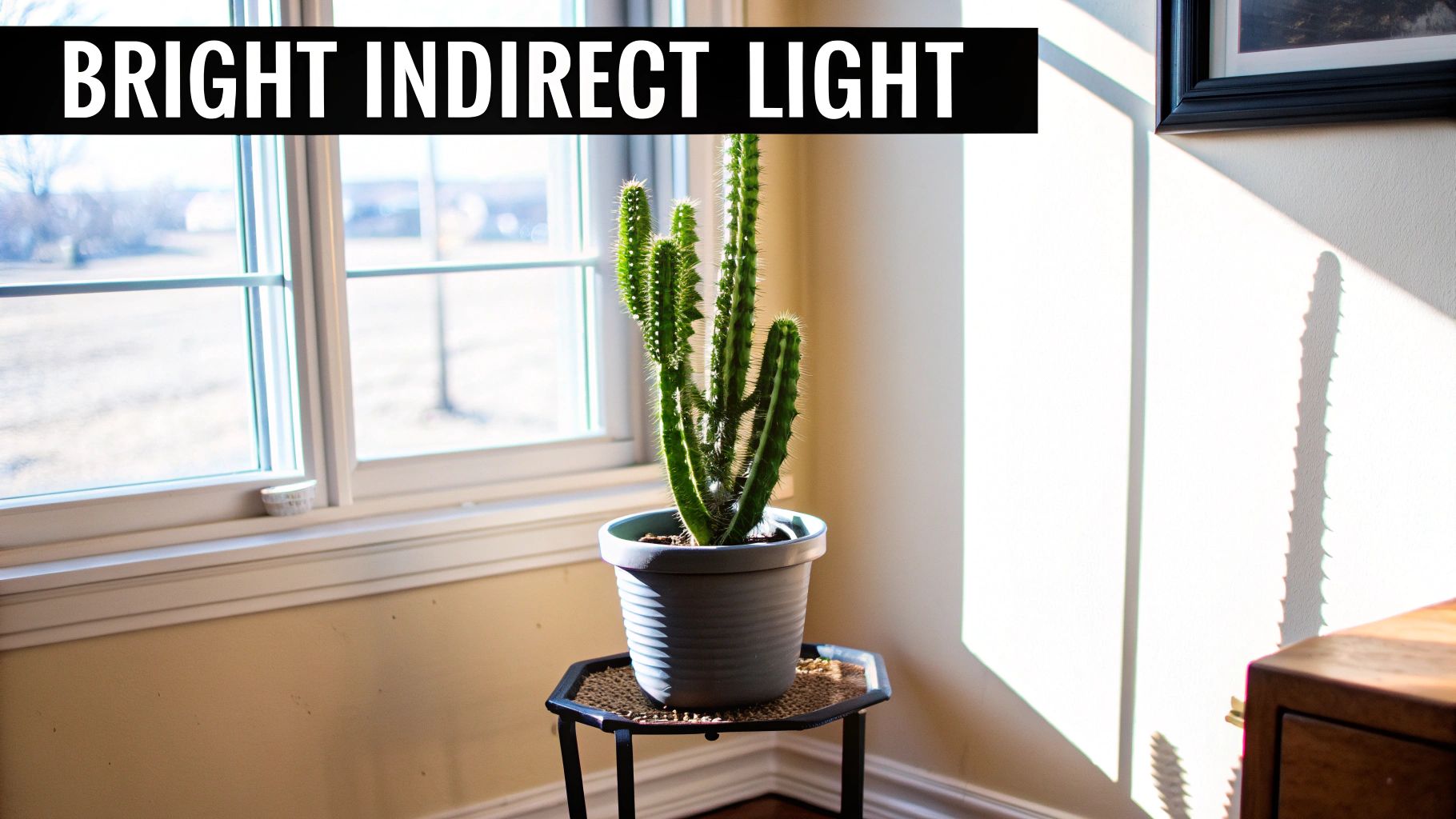
To really get your Hildewintera colademononis to flourish, you have to think like its native environment: the sunny, high-altitude cliffs of Bolivia. It all starts with light. A lot of people hear "cactus" and immediately think "blast it with sun," but that's a fast track to a sad, scorched plant.
The real key is bright, indirect light for most of the day. You're aiming for that sun-drenched feeling without the burn. Getting this balance right is probably the single most important thing you can do to encourage that lush, hairy growth and get those incredible seasonal blooms.
What “Bright, Indirect Light” Actually Looks Like
Let's get practical. "Bright, indirect" can feel a bit vague, so here are some real-world spots in your home that usually hit the mark.
- East-Facing Window: This is my personal favorite spot. Your cactus gets a few hours of gentle morning sun—the kind that energizes but doesn't scorch—and then spends the rest of the day in bright, ambient light. It's often the perfect setup.
- South-Facing Window (With a Catch): A south-facing window delivers the most intense light, which can easily be too much. The trick is to pull the plant back three to five feet from the glass or hang a sheer curtain to act as a diffuser.
- West-Facing Window: Much like a southern exposure, a west-facing window gets hit with harsh afternoon sun. You'll want to use the same strategy here and position your cactus a few feet away to prevent any damage.
If you're growing it outdoors, find a spot that gets morning sun but is shielded from the brutal afternoon heat. Under a covered patio or the dappled shade of a larger tree works great. It's a common myth that all cacti crave intense sun, and the reality is often more nuanced. For a deeper look, check out our guide on whether cacti need direct sunlight.
Reading the Signs Your Cactus is Giving You
Your plant will tell you exactly what it needs if you know its language. Keeping an eye on how it looks is the best way to dial in its care.
Is it getting too much sun? Look for:
- Yellowing Stems: The vibrant green starts to fade or look washed out. This is a classic sign of sun stress.
- Scorched Patches: You might see brown, crispy spots on the stems. That's a sunburn, and unfortunately, that damage is permanent. Move it right away!
Is it not getting enough light? Watch for:
- Stretching (Etiolation): The stems get long, thin, and pale as they desperately reach for more light. The new growth looks weak and spindly.
- Losing its "Fur": In low light, the plant won't waste energy producing its signature soft, white spines. It will start to look bare and less full.
My Two Cents: Don't underestimate the need for consistent, bright light. A stretched-out, bald-looking cactus is a common sight when it's kept in a dark corner, but it's an easy fix. Just find it a brighter home.
Creating the Ideal Temperature Zone
Once you have the light figured out, temperature is the next piece of the puzzle. These cacti come from the mountains, so while they're pretty adaptable, they do have their preferences.
They are happiest in typical household temperatures, somewhere between 60°F and 80°F (15°C to 27°C). This sweet spot makes them fantastic indoor plants since you don't need to do anything special to keep them comfortable.
What you do need to avoid are drastic temperature swings. Keep your Monkey Tail away from drafty windows, A/C vents, and heaters. Those sudden blasts of cold or hot air can really stress it out.
Come winter, they actually appreciate a cool-down period and can handle temps down to about 40°F (4°C). This cool, dry rest is the secret to encouraging a stunning display of flowers in the spring. It mimics their natural dormancy cycle and is absolutely essential for triggering blooms.
How to Water Your Monkey Tail Cactus Correctly
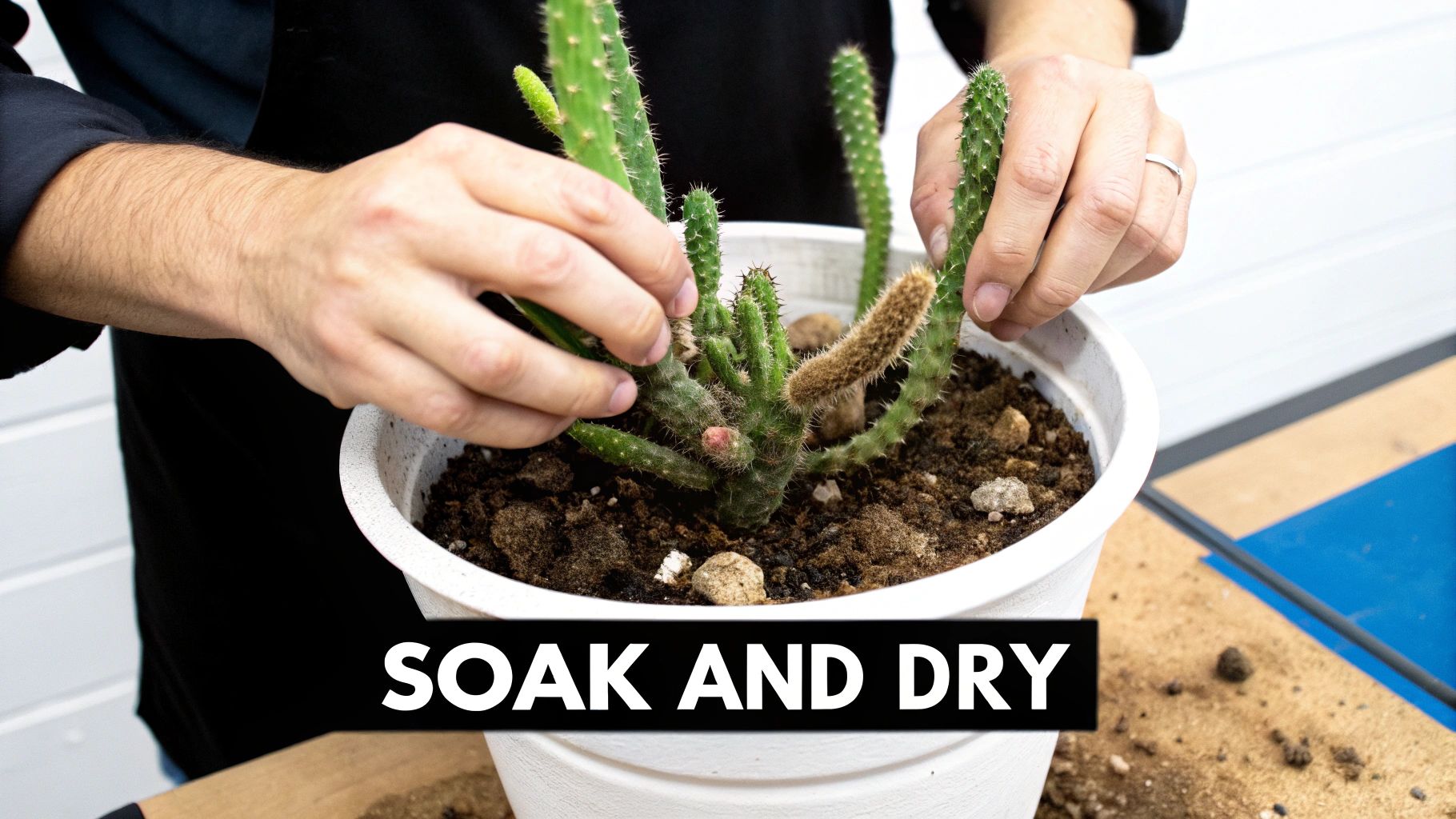
If there's one place where even the most loving plant owners stumble, it's with the watering can. The great news? Nailing the watering routine for a monkey tail cactus is surprisingly simple once you embrace one golden rule: the soak and dry method. This is your number one defense against root rot, the most common (and heartbreaking) way these cacti meet their end.
Forget about watering on a rigid schedule. Your cactus’s thirst will change with the seasons, the light it gets, and even the pot it lives in. The real goal is to get a feel for what your specific plant needs, and the soak and dry method is how you learn its language.
The technique itself is just what it sounds like. You give the soil a thorough drenching until water runs freely from the bottom of the pot. Then, you let it dry out completely—and I mean completely—before you even think about watering again. This perfectly mimics the cycle of heavy, infrequent downpours it would get in its native Bolivian habitat.
Mastering the Soak and Dry Method
So, what does this look like in the real world? It's a simple, two-part rhythm that gives your cactus a deep drink without ever letting it get "soggy feet."
Part 1: The Soak
When it’s watering day, don't be timid. Carry your cactus to a sink or tub and give it a good, long drink with room-temperature water. You're looking for a steady stream running out of the drainage holes. This deep watering encourages the roots to grow down and out, creating a strong, healthy foundation.
- For hanging baskets: Water until it’s dripping consistently from the bottom. Make sure you let it finish dripping before you hang it back up, so it's not sitting in a puddle.
- For potted plants: Water until the pot feels much heavier and you see liquid in the saucer. After about 15-20 minutes, dump out any and all excess water from the tray.
Crucial Tip: Never, ever let your monkey tail sit in a saucer of water. This is a one-way ticket to root rot. When roots are constantly submerged, they can't breathe and will quickly begin to rot away. Empty that tray every single time.
Part 2: The Dry
This part requires patience, but it's the most important step. After that deep soak, your job is to simply wait. The soil needs to become bone-dry before you water again. How long that takes can vary wildly—from a week in the summer heat to over a month in the middle of winter.
How to Know When It’s Time to Water
Ditch the calendar and let your plant tell you when it's thirsty. Here are a couple of foolproof ways to check.
The Finger Test
It’s the oldest trick in the book for a reason. Stick your finger deep into the soil, at least two or three inches down. If you feel even the slightest hint of dampness or coolness, hold off. It's not ready yet. Check again in a few days.
Visual and Physical Cues
Your cactus will also give you subtle hints.
- Stem Appearance: When the stems are happy and hydrated, they look plump and firm. If they start to look a little less turgid or even slightly puckered, your plant is getting thirsty.
- Pot Weight: This takes a little practice, but it's a great method. Pick up your pot right after watering to feel its "full" weight. When it feels significantly lighter, you know the water is gone and the soil is dry.
Adjusting Your Watering for the Seasons
A huge part of great monkey tail care is adapting to your plant's natural growth cycle. This isn't a "set it and forget it" plant; your watering frequency will absolutely change during the year.
In spring and summer, during the active growing season, your cactus is busy pushing out new growth and will use water much more quickly. You'll find yourself watering more frequently. But when fall and winter roll around, the plant goes into a dormant state and needs a major break.
Believe it or not, improper watering is the culprit behind an estimated 90% of problems new cactus owners face. During the growing season, a monkey tail might need water every week or as infrequently as every 6-8 weeks, depending entirely on its conditions. In winter, that schedule plummets to maybe once a month—or only when the stems start looking a bit shriveled. For a deeper dive, check out the information on cactus watering frequency on OurHouseplants.com.
Ultimately, your home's environment is the deciding factor. A plant in a small terracotta pot in a blazing hot window will dry out infinitely faster than one in a large, glazed pot in a cooler room. Always let the soil be your final guide.
Soil and Feeding: The Foundation for a Healthy Monkey Tail
Getting the soil right is probably the single most important thing you can do for your Monkey Tail cactus. Seriously. If you get this wrong, nothing else matters much. These plants are native to the rocky cliffs of Bolivia, and their roots are not built to sit in wet, dense dirt. Standard potting soil is a death sentence; it holds too much moisture and is the number one cause of root rot.
The whole idea is to create a gritty, airy mix that lets water rush right through. The roots get a quick drink on the way down, and then the soil dries out quickly, letting them breathe. This is key to preventing the rot that plagues so many cacti in cultivation.
Mixing the Perfect Potting Medium
You’ve got two paths here: buy a pre-made mix or blend your own. A quality commercial cactus and succulent soil is a decent starting point, but I've found most of them still benefit from adding extra grit to really nail that drainage. For a deeper dive into the science behind it, our guide on the perfect cactus and succulent soil mix is a great resource.
Personally, I prefer to mix my own. It's surprisingly easy and gives you total control over the environment you're creating for your plant's roots.
Expert Tip: Steer clear of fine play sand or beach sand. It seems like a good idea, but the fine particles actually compact over time and can make drainage worse. You want coarse horticultural sand with larger, irregular particles.
Here’s a simple, field-tested recipe that provides the perfect balance of aeration, drainage, and just enough organic matter to hold some nutrients.
Ideal Monkey Tail Cactus Soil Recipe
This table breaks down my go-to recipe. The ratios are flexible, but this is a fantastic starting point for creating a fast-draining mix that Monkey Tails love.
| Component | Ratio (Parts) | Purpose |
|---|---|---|
| Potting Soil | 3 | Provides the organic base and essential nutrients. |
| Coarse Sand/Gravel | 3 | Creates large air pockets for roots and allows water to flow through freely. |
| Perlite or Pumice | 2 | These lightweight volcanic rocks are champions of aeration and prevent soil compaction. |
This 3:3:2 ratio is a classic for a reason—it works. Blending these components gives you a substrate that mimics their natural habitat, setting your cactus up for success from the roots up.
How to Feed Your Monkey Tail Cactus
When it comes to fertilizer, think "less is more." Monkey Tail cacti are adapted to nutrient-poor environments, so they are not heavy feeders. Pushing too much fertilizer can easily burn their sensitive roots and cause more harm than good.
The golden rule is to only feed during the active growing season, which for most of us is spring through summer. As the days get shorter in fall, you need to stop. The plant is heading into dormancy, and feeding it during this rest period just confuses its natural cycle and can lead to weak, stretched-out growth.
- Look for a fertilizer specifically for cacti and succulents. It should be low in nitrogen. A high-nitrogen formula will encourage flimsy, leafy growth, not the strong stems and flowers we're after.
- A balanced NPK ratio like 5-10-5 is a great choice, prioritizing phosphorus for root and bloom development.
- Always dilute the fertilizer to half the strength recommended on the label. I can't stress this enough. Full-strength is too much for these guys.
- Apply this half-strength solution just once every 4-6 weeks while the plant is actively growing in spring and summer.
That’s it. By late August or early September, stop feeding altogether. This simple, lean feeding schedule is all your Monkey Tail needs to thrive.
Expanding Your Collection: A Practical Guide to Propagation and Repotting
One of the best parts of growing a Monkey Tail Cactus is realizing just how easy it is to make more of them. Whether you're creating new plants for friends or just giving your original plant a bigger home, propagation and repotting are skills you'll definitely want in your back pocket.
They might sound a little intimidating, but the process for both is surprisingly simple. Let’s walk through how to do it right.
Propagating Your Monkey Tail Cactus
The best time to take cuttings is during the spring or summer when the plant is actively growing. This timing gives the new cutting a huge head start in establishing roots before things slow down for winter dormancy.
Here's how I approach it:
- Take a healthy cutting. Find a nice, firm stem and, using a clean knife or sharp shears, snip off a piece that’s at least 4-6 inches long. A healthy cutting is key—avoid any stems that look limp or discolored.
- Let the cutting callous. This is the step you absolutely cannot skip. Just lay the cutting down in a dry spot away from direct sun for several days, maybe even a week. The cut end will dry out and form a hard scab, or callous. If you plant it while it's still fresh and "wet," it will almost certainly rot.
- Plant it. Once that end is dry to the touch, it's ready. Just push the calloused end about an inch or two into a pot of well-draining cactus mix. The same stuff you use for the mother plant is perfect.
- Be patient. Here’s another critical part: don't water it yet! Let it sit in the dry soil for a week or so to settle in. This encourages the cutting to send out roots in search of moisture. In a few weeks to a couple of months, you should have roots. You can test this by giving the stem a very gentle tug—if you feel resistance, you've got roots!
My Two Cents: If you want a full-looking plant from the get-go, you can stick several cuttings in the same pot. Just make sure to leave a little space between them for air to circulate, which helps ward off any funk while they're getting established.
When and How to Repot Your Cactus
Monkey Tail Cacti are pretty low-key and actually prefer to be a little bit snug in their pots. This means you won't be repotting constantly—maybe every two to three years, or when you see clear signs it's time.
So, how do you know it's time for a new home? Look for these clues:
- You see roots peeking out of the drainage holes.
- The plant has completely stopped growing during spring or summer.
- Water rushes straight through the pot when you water it (a sign there's more root than soil).
- The cactus looks top-heavy and seems like it could tip over.
When you're ready to repot, grab a new pot that’s only about 1-2 inches wider than the old one. I almost always recommend terracotta pots for cacti because they're porous and help the soil dry out evenly, which is a huge plus.
Gently slide the plant out of its old pot, and carefully knock away as much of the old, tired soil from the roots as you can. Place it in its new home, fill in the gaps with fresh cactus soil, and you're done. Just hold off on watering for about a week to let any roots that might have been bruised or broken during the move heal up.
Creating the right soil mix is half the battle. This simple recipe is all you need.
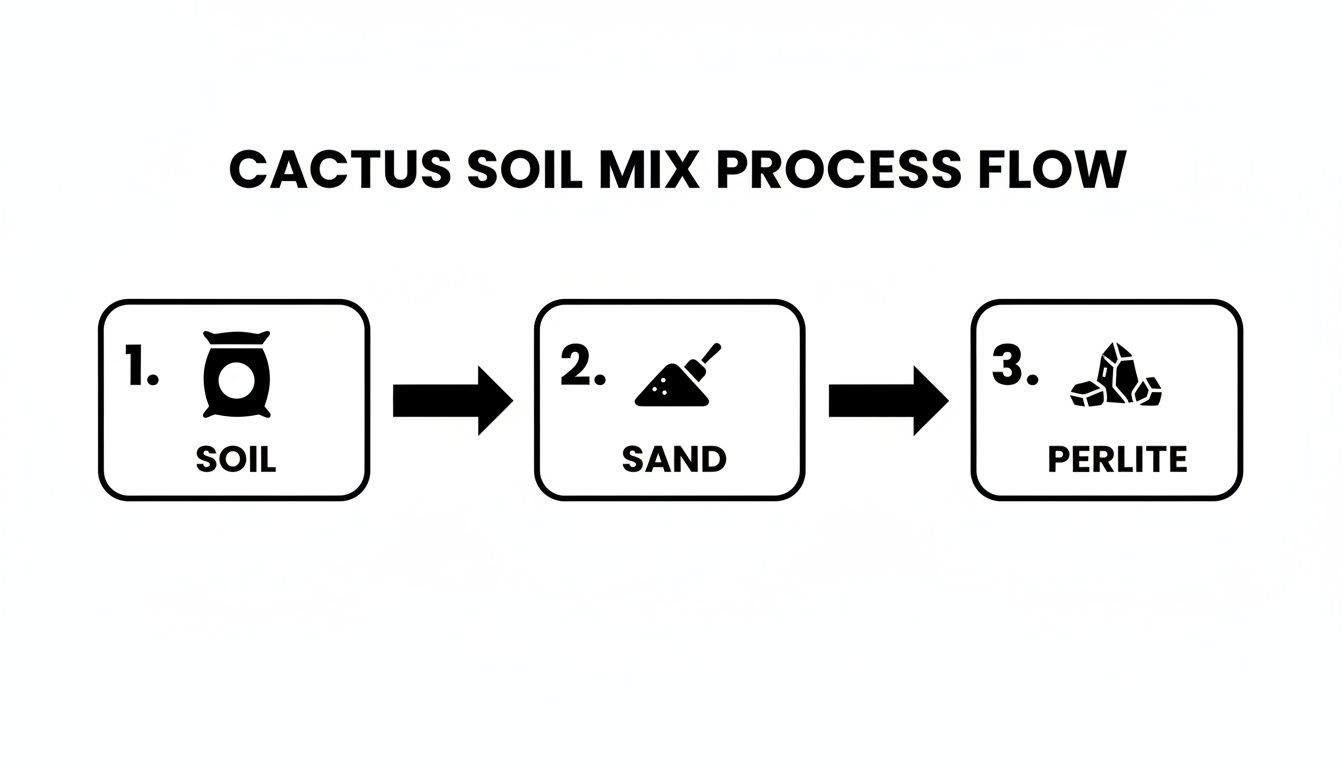
It all comes down to balancing a good soil base with materials like sand and perlite that keep the mix light and ensure water drains away quickly.
Answering Your Monkey Tail Cactus Questions
Even with the best intentions, things can sometimes go sideways with our plants. Don't worry, it happens to all of us! This little troubleshooting guide tackles the most common questions I hear from fellow Monkey Tail owners. Think of it as a quick chat over the garden fence to get you and your cactus back on track.
We'll cover everything from weird color changes to coaxing out those incredible flowers. Let's dive in.
Why Are My Monkey Tail Stems Turning Yellow or Brown?
Seeing your lush green cactus change color is definitely alarming, but it's usually the plant's way of telling you exactly what's wrong. The color and texture are your biggest clues.
If you see yellow, soft stems, my first guess is always overwatering. This is the classic sign of early-stage root rot, where the soil has stayed wet for too long and the roots can't breathe. Feel the soil immediately. If it's damp, hold off on watering until it's bone dry. If it’s truly soggy, you might need to perform an emergency repot into fresh, dry soil to have a shot at saving it.
On the other hand, brown, mushy spots mean the rot is more advanced and you need to act fast. But what if the spots are brown, dry, and crispy? That’s almost certainly sunburn from getting blasted with too much intense, direct sun. The scorched patch won't heal, but moving your cactus to a spot with bright, indirect light will stop any more damage in its tracks.
My Rule of Thumb: Yellow and mushy equals too much water. Brown and crispy means too much sun. Reacting quickly to what you see is the key to a healthy cactus.
How Can I Encourage My Cactus to Bloom?
Getting a Monkey Tail to show off its stunning magenta flowers is a huge win for any plant parent, but it rarely happens by chance. You need to convince the plant it's time to bloom by recreating the seasonal cues from its native habitat.
First off, your plant needs to be mature enough, which can take a couple of years. But age isn't everything. The real secret is giving it a cool, dry winter dormancy period. This rest is what triggers the flowering cycle.
Here’s how you do it:
- Cut Back on Water: Starting in late fall, water way, way less. I'm talking maybe a small splash once a month, if that.
- Find a Cool Spot: Move it somewhere that stays consistently cool, ideally around 50-60°F (10-15°C). An unheated garage or a cool, bright room works great.
- Wake It Up in Spring: As the days get longer, move it back to its sunny home and start watering and feeding as you normally would.
This "cold and dry" to "warm and bright" shift is the primary trigger that tells your Monkey Tail it's time to put on a spectacular floral show.
Are the Spines on a Monkey Tail Cactus Safe to Touch?
They're famous for being soft and fuzzy, but "safe" can be a tricky word. They won't pierce you like a typical cactus spine, but they can still be a real nuisance.
Those soft hairs are actually fine bristles called glochids. They detach at the slightest touch and can easily get stuck in your skin, causing a surprising amount of irritation. While a gentle brush is usually fine, I always recommend handling the plant carefully. When you're repotting or taking cuttings, do your hands a favor and use thick gloves or wrap the stems in a folded newspaper.
What Pests Should I Look Out For?
Monkey Tail Cacti are pretty tough, but a couple of common houseplant pests can still find their way in, especially in the dry air of our homes. Keep an eye out for mealybugs and spider mites.
- Mealybugs: You'll spot these as little white, cottony tufts, often tucked away in the joints where the stems meet.
- Spider Mites: These guys are tiny and hard to see. The first sign is usually their delicate, fine webbing, especially on new growth.
If you find pests, quarantine the plant immediately to protect your other green friends. For a few mealybugs, a cotton swab dipped in rubbing alcohol will do the trick. For a bigger infestation or for spider mites, a thorough spray-down with insecticidal soap or neem oil is your best bet. Make sure you get into all the nooks and crannies!
Ready to add one of these incredible trailing cacti to your collection or find the perfect pot for your current one? At The Cactus Outlet, we offer a wide selection of healthy, beautiful cacti and succulents shipped right to your door. Explore our full range of cacti and find your next statement plant at https://www.cactusoutlet.com