


A thriving cactus garden really comes down to getting three things right: plenty of sun (six to eight hours is the sweet spot), soil that drains like a sieve, and picking plants that actually want to live in your climate. Nail these basics, and you're well on your way to a stunning, low-maintenance desert display that will look incredible for years.
Your Blueprint for a Thriving Cactus Garden
Designing with cacti and succulents is a different kind of gardening. It's less about fleeting flowers and more about building a living sculpture. You're working with bold shapes, fascinating textures, and dramatic silhouettes to create a resilient little ecosystem that, once it's established, pretty much takes care of itself.
It's no wonder they've become so popular. As you get started, looking at some smart backyard xeriscape ideas can be a huge source of inspiration for a garden that’s both beautiful and water-wise. This isn't just about saving water; it's about creating a garden that works with nature, not against it, which means less work for you.
The numbers back this up, too. The global market for cactus plants hit $3,860.3 million in 2021 and is on track to reach an incredible $7,014.2 million by 2025. That's a massive 81.6% jump in just four years. Here in North America, we're expected to make up 39.71% of that market, which tells you just how many of us are falling in love with these spiky wonders.
Getting the Plan Right from the Start
Before you even touch a trowel or fall for that perfect-looking prickly pear at the nursery, you need a plan. So many garden problems—like mushy, rotted roots or scorched, unhappy plants—happen because this crucial first step was rushed. A great cactus garden starts on paper, not in the dirt.
The real secret to a "low-maintenance" garden isn't just about the plants you choose. It's about creating an environment so perfect for them that they can't help but thrive. A cactus in the right spot with the right soil is a happy, self-sufficient plant.
The planning process really boils down to a few key decisions. This simple checklist covers the absolute must-dos before you start digging.
Cactus Garden Quick Start Checklist
| Planning Stage | Key Action | Why It's Critical |
|---|---|---|
| Site Selection | Find the sunniest, warmest spot in your yard with 6-8 hours of direct sunlight. | Cacti are sun-worshippers. Not enough light leads to weak, stretched-out growth and poor health. |
| Drainage Test | Dig a hole and fill it with water. If it doesn't drain within an hour, you have work to do. | Standing water is the #1 killer. Cacti roots will rot quickly in soggy, waterlogged soil. |
| Soil Amendment | Mix native soil with 50% inorganic material like pumice, gravel, or coarse sand. | This creates the fast-draining, airy soil structure that mimics their natural desert habitat. |
Think of these as the non-negotiables. Getting these fundamentals right at the beginning saves you countless headaches down the road and sets your garden up for success.
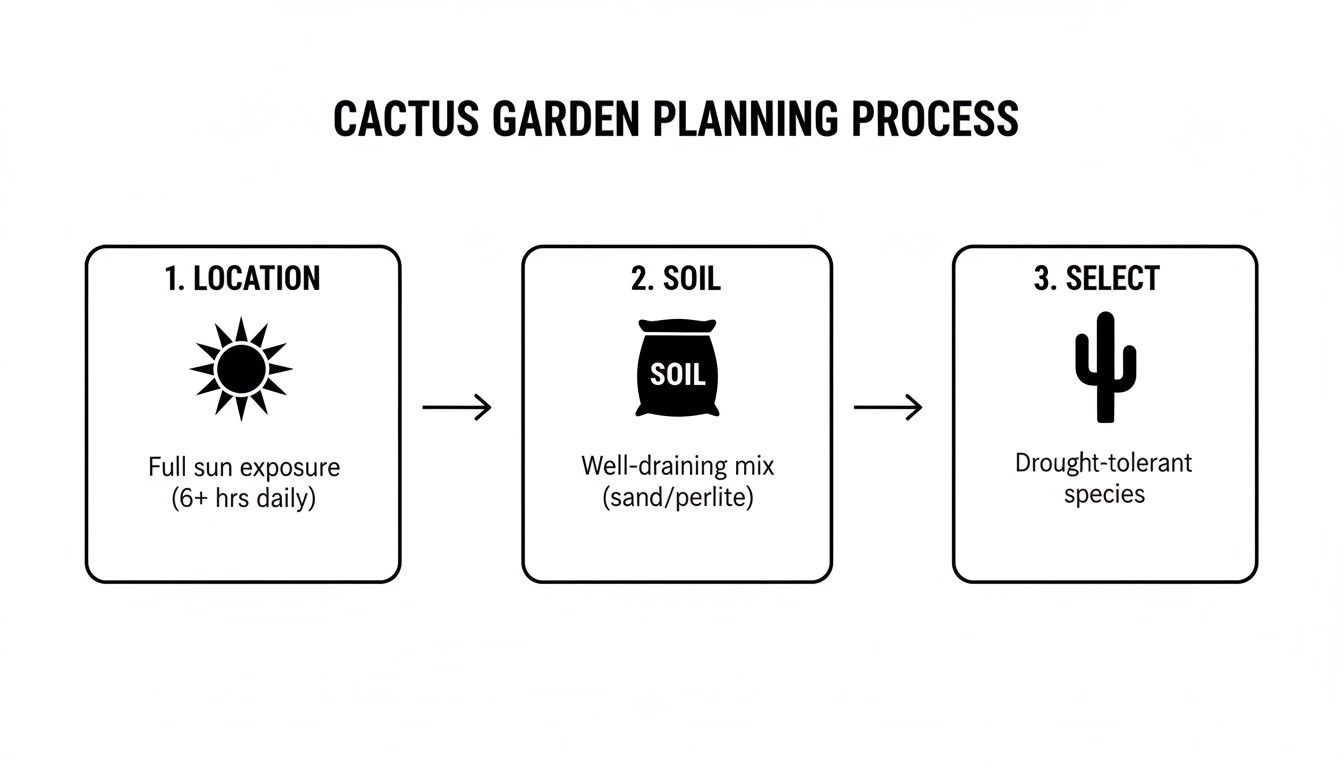
This little roadmap really drives it home: location, soil, and plant choice are the foundation of everything. Each step directly influences the next, creating a complete system that supports the unique needs of these incredible plants. If you get these three things right, everything else becomes so much easier. Now, let's dig into each of these areas so you can start building your own desert oasis with confidence.
Building the Perfect Foundation for Your Cacti
If there’s one secret to a thriving cactus garden, it has nothing to do with fancy fertilizers or a magic watering can. It all comes down to the soil. Get the foundation right, and your cacti will flourish; get it wrong, and you'll be fighting an uphill battle against root rot.
For a cactus, soggy soil is the enemy. These plants evolved in places where rain is a fleeting event and the ground is gritty and lean. Their roots are built to grab water fast and then dry out almost immediately. Your goal is to mimic that environment.
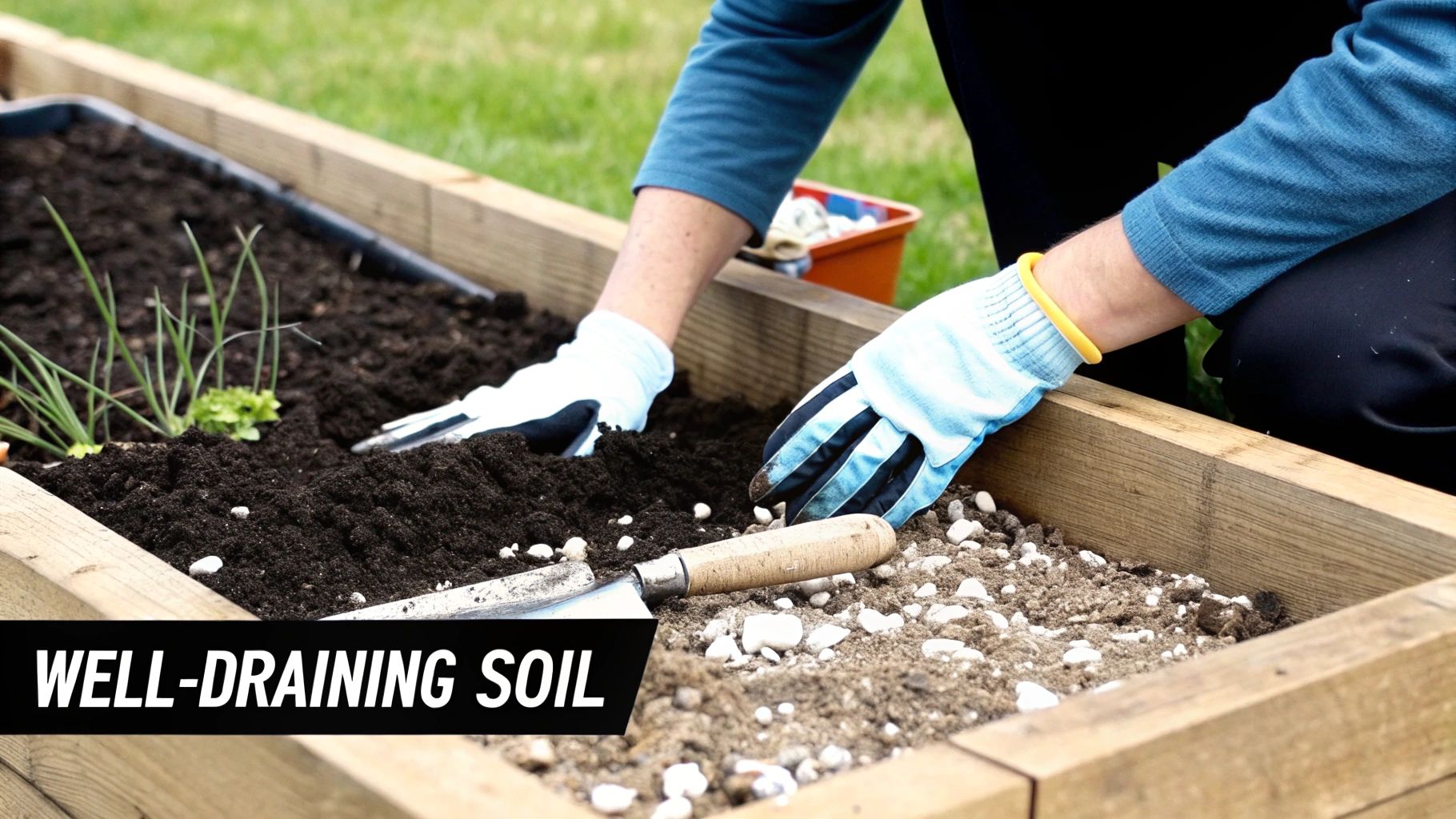
The Perfect DIY Cactus Soil Recipe
Standard potting soil right out of the bag is a death sentence. It’s too heavy and holds onto water for far too long. You need to create a custom blend that lets water rush right through.
A tried-and-true recipe is a simple 50/50 mix of organic to inorganic materials.
- Organic Matter (50%): This is your base. You can use a standard potting mix or a bit of compost to provide a touch of structure and nutrients.
- Inorganic Grit (50%): Here's where the magic happens. This is the stuff that ensures drainage. I like to use a combination of coarse sand, perlite (those little white volcanic glass bits), and pumice.
This mix creates a lightweight, gritty medium that won't turn into a muddy swamp. There are tons of variations on this, and you can learn more about finding the right blend from these great tips on how to make cactus soil.
Amending Heavy Garden Soil
So, what if you're planting directly into the ground? If your yard is full of heavy clay soil, you’ve got some work to do. Clay particles are tiny and compact easily, holding water like a sponge.
You’ll need to dig out the entire garden bed area, going at least a foot deep. From there, you'll mix in a massive amount of your inorganic grit—sand, pumice, gravel—to physically break up that dense clay and create channels for water to escape. To ensure your newly amended bed doesn't just turn back into a pit over time, it's worth looking into some practical soil stabilization techniques.
Pro Tip: Run a Percolation Test. Dig a hole about 12 inches deep and 12 inches wide. Fill it with water and let it drain completely. Fill it a second time and see how long it takes to empty. If it takes more than an hour, your drainage is poor and needs serious improvement.
Why Raised Beds Are a Game-Changer
Frankly, if you live in a rainy climate or have stubbornly dense soil, amending the ground might not be enough. This is where raised beds or simple soil mounds become your secret weapon.
By elevating the planting area 12-18 inches above the ground, you create a self-contained ecosystem with perfect drainage. You lift the sensitive root crowns of your cacti far away from any surrounding soggy soil, which is the most reliable way to prevent rot.
Building up has some major perks:
- Complete Control: You fill the bed with your perfect cactus mix, no more fighting with native soil.
- Better Aeration: The soil stays looser, allowing more oxygen to get to the roots.
- Quicker Warm-Up: Raised beds warm up faster in the spring, giving your plants a head start.
Whether you use stone, steel, or just a simple mound of soil, elevating your cactus garden is one of the smartest moves you can make for its long-term health.
Choosing Cacti and Drought-Tolerant Companions
Now for the fun part. With your garden bed ready and waiting, it's time to choose the living sculptures that will bring your desert landscape to life. Curating a cactus garden is a lot like painting with texture and form, only your medium grows and changes with the seasons.
The secret to a stunning design isn't just picking pretty plants; it's about creating variety and structure. A classic design trick I’ve relied on for years is the "thrillers, fillers, and spillers" method. It’s a simple but incredibly effective way to ensure your garden has depth, height, and visual appeal from every angle.
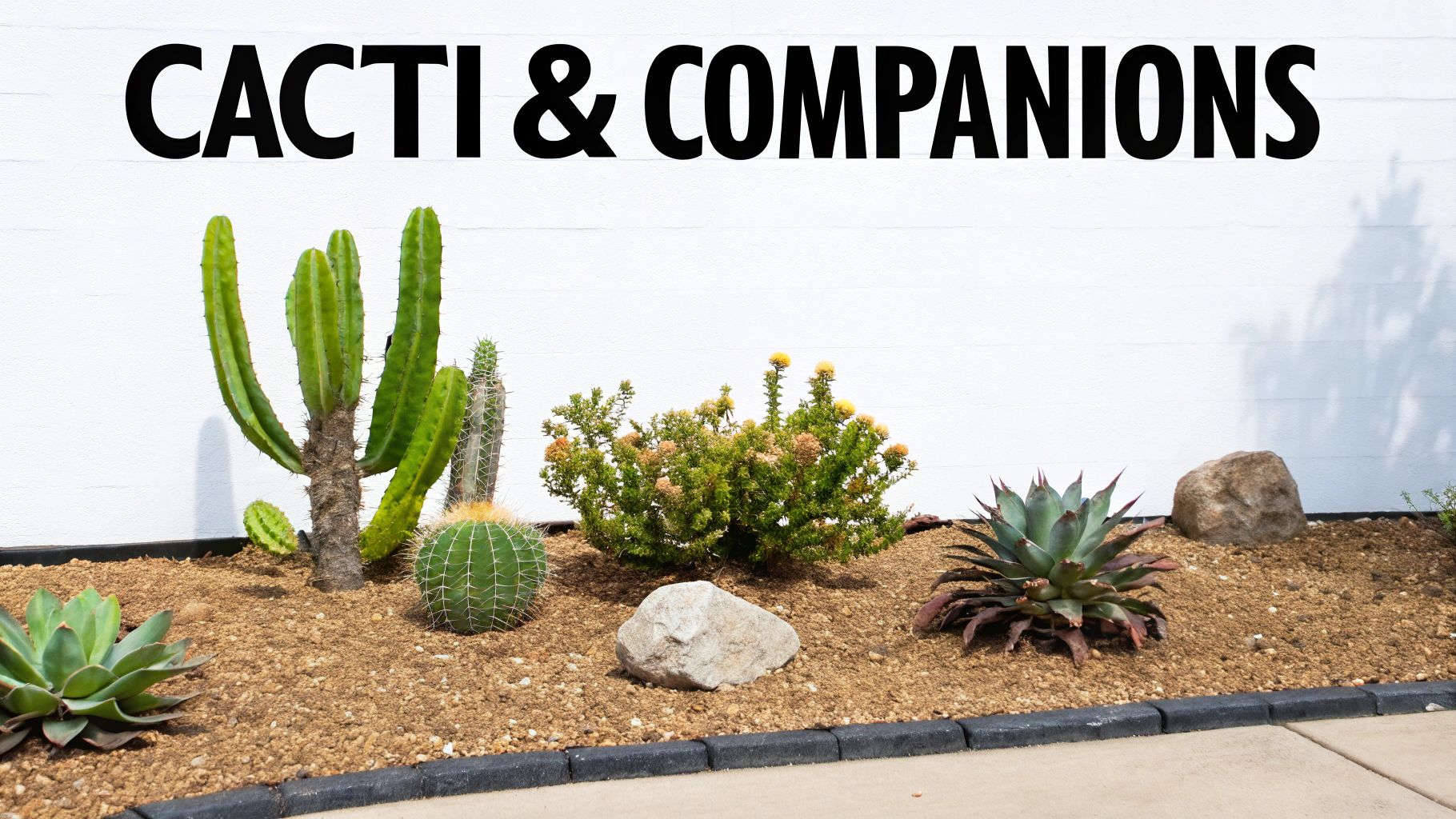
Building Layers with Thrillers, Fillers, and Spillers
Think of this concept as a foolproof recipe for a balanced garden. Each plant category plays a specific role, working together to create something truly special.
- Thrillers: These are your showstoppers. The tall, architectural plants that provide vertical drama and a clear focal point. Picture a stately Saguaro (in the right climate, of course), a columnar Totem Pole cactus, or a sharp, spiky Yucca.
- Fillers: These are the mid-sized, mounding plants that nestle around your thrillers, filling in the gaps. They add bulk and texture, making the garden feel complete. Golden Barrel cacti, clumps of Agave, and sprawling Aloes are perfect for this role.
- Spillers: These are the low-growing plants that soften the hard edges, trailing over rocks or cascading down the side of a container. Trailing succulents like String of Pearls or certain types of Sedum are brilliant choices for adding a gentle, flowing element.
When you combine these three types, your garden just works. The interplay between the upright thrillers, rounded fillers, and flowing spillers creates a natural rhythm that’s pleasing to the eye.
To help you visualize this, here’s a quick guide to some popular choices and the roles they can play in your garden layout.
Cactus Selection Guide by Garden Role
| Plant Type | Example Species | Mature Size | Key Feature |
|---|---|---|---|
| Thrillers | Mexican Fence Post (Pachycereus marginatus) | Up to 15 ft tall | Tall, clean, columnar form |
| Thrillers | Totem Pole Cactus (Lophocereus schottii monstrosus) | 10-12 ft tall | Unique, bumpy, spineless stems |
| Fillers | Golden Barrel Cactus (Echinocactus grusonii) | Up to 3 ft wide | Classic round shape, golden spines |
| Fillers | Century Plant (Agave americana) | 6 ft tall, 10 ft wide | Bold, architectural rosette shape |
| Spillers | String of Pearls (Senecio rowleyanus) | 2-3 ft long | Delicate, cascading bead-like leaves |
| Spillers | Trailing Jade (Senecio jacobsenii) | Up to 4 ft long | Fleshy leaves that trail beautifully |
This is just a starting point, of course. The real joy comes from finding the unique combinations that speak to your personal style.
Choosing Plants for Your Climate
Not all cacti can handle the same conditions. This is a non-negotiable part of the planning process: you have to choose species that can survive your local climate, especially your winter lows.
If you live in a hot, arid place like Arizona or Southern California, your options are seemingly endless. You can grow the iconic giants and heat-loving succulents without much fuss. But if you’re gardening in a colder zone, you'll need to be much more selective, focusing on cold-hardy varieties.
It surprises many gardeners to learn that plenty of cacti can survive snow and freezing temperatures. Certain species of Opuntia (Prickly Pear) and high-altitude Agaves have adapted to the cold, but only if they have impeccable drainage. Their roots can't sit in icy water.
Building a thriving garden also means thinking about diversity. You can combine structural giants like an Agave, which can grow up to 10 feet wide, with spiky Euphorbias for added texture. Remember to stick to your south-facing spots with soil pH between 6.0-7.5. Amending your soil with about 30% pumice is a critical step for drainage, helping you avoid the root rot that can plague 20-30% of newly planted cactus gardens.
Smart Companion Planting for a Resilient Garden
A truly great cactus garden is rarely just cacti. Pairing them with other drought-tolerant companions adds layers of color and texture, creating a more diverse and resilient little ecosystem. The trick is to select plants that share the same sun and water needs, so they complement each other instead of competing.
Some fantastic companions for cacti include:
- Agaves and Yuccas: Their bold, rosette forms provide a wonderful structural contrast to the columnar or round shapes of most cacti.
- Desert Marigold (Baileya multiradiata): This cheerful wildflower brings a splash of bright yellow and a softer texture to the landscape.
- Red Yucca (Hesperaloe parviflora): With its grassy leaves and tall spikes of coral flowers, it attracts hummingbirds and adds a sense of movement.
These companion plants also help cover the ground, which shades the soil, keeps roots cooler, and slows down water evaporation. When you're ready to dive deeper, check out our guide on the best drought-tolerant plants to find even more perfect additions for your landscape. Thoughtful pairing is what takes a garden from good to unforgettable.
Getting Your Cacti in the Ground
Alright, your garden bed is prepped and your new plants are waiting. Now comes the fun part—planting. But let's be honest, handling these spiny characters requires a bit more care than your average marigold. The trick is to get them settled into their new home without stressing their roots or, more importantly, getting a handful of needles.
A good planting technique is the foundation for a healthy, thriving cactus for years to come.
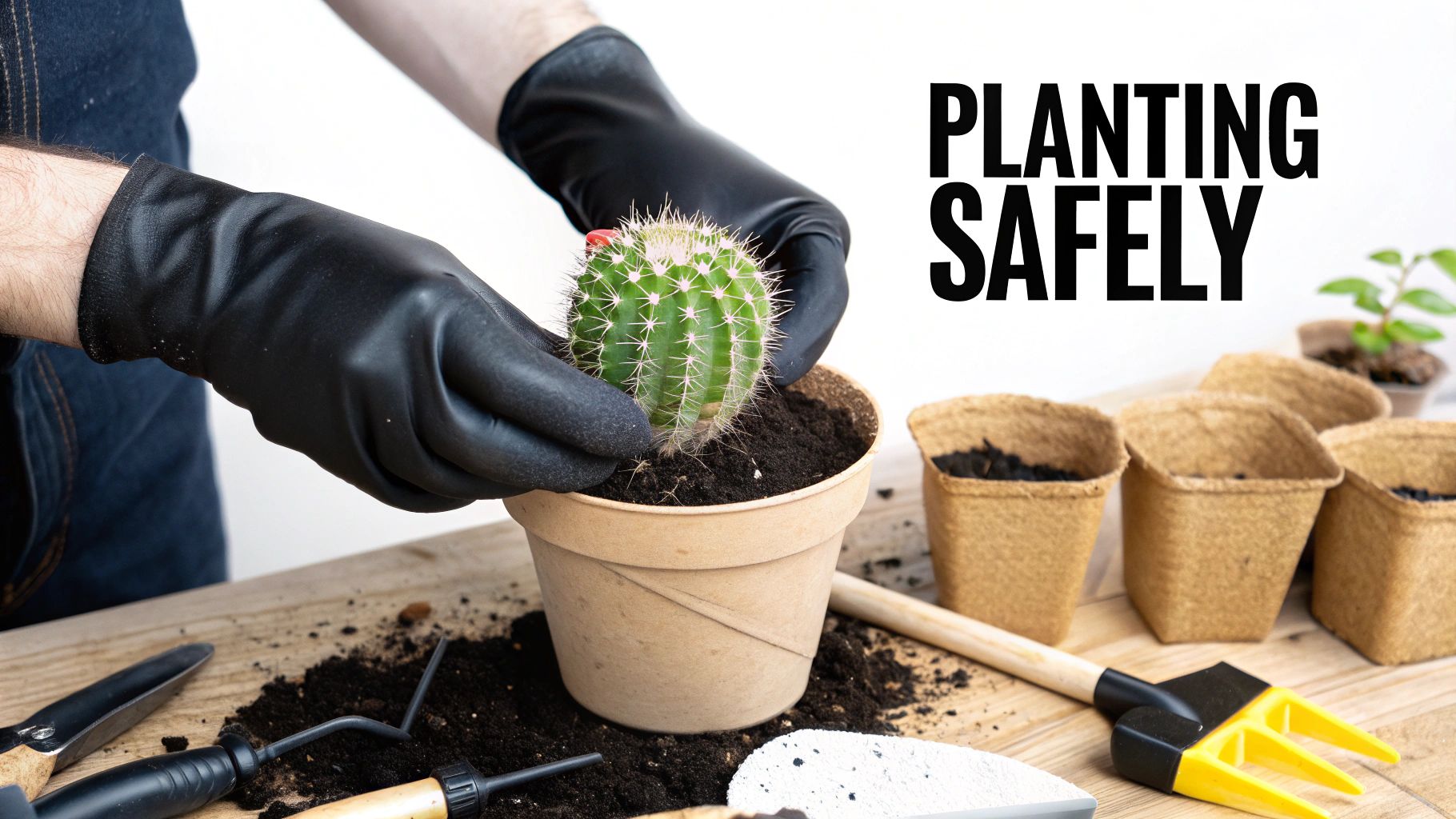
Handling Cacti Without the "Ouch"
First things first: your standard gardening gloves won't cut it. Most cactus spines will go right through thin canvas. You need to upgrade your gear to make this a pain-free process.
- Heavy-Duty Gloves: Invest in a pair of thick leather work gloves or specialty rose-pruning gauntlets. They're your best defense.
- Kitchen Tongs: For smaller cacti, a set of long-handled kitchen tongs gives you a fantastic, safe grip without ever touching the plant.
- The Newspaper Trick: Got a larger, heavier cactus? My favorite trick is to fold a newspaper into a thick, multi-layered strip or use a piece of cardboard. Wrap it around the body of the cactus to create a temporary "handle" for lifting and positioning it.
With these simple tools, you can handle just about any cactus with confidence.
The Planting Process
Once you're properly equipped, the actual planting is pretty simple. The main thing to remember is to be gentle, especially with the root system.
Start by digging a hole that’s slightly wider than the cactus's nursery pot but no deeper. Gently slide the cactus out of its container—a few taps on the side usually helps loosen it.
Set the cactus in the middle of the hole, making sure the point where the roots meet the stem is level with the surrounding soil. A common beginner mistake is planting it too deep, which buries part of the stem and becomes an open invitation for rot. Backfill the hole with your fast-draining soil mix and gently firm it down to get rid of any big air pockets.
Now for the most important—and most counterintuitive—tip: Do not water your cactus right after planting. Its roots are delicate and almost always sustain tiny tears during the move. Watering now introduces moisture to those wounds, which is a fast track to rot.
Let your newly planted cactus sit in dry soil for at least a week. This gives any damaged roots time to heal and form a callus, protecting them from fungus and bacteria. It's a simple step that makes a huge difference in long-term survival. For a deeper dive, check out these extra tips on planting succulents outdoors.
Arranging and Finishing Touches
With your cacti safely in the ground, it's time to add the finishing touches that pull the whole look together. This is where your garden’s personality really comes to life.
Try planting in small groups of three or five. Using odd numbers tends to look more natural and less staged. Create visual interest by mixing and matching different heights, shapes, and textures within these clusters. A tall, columnar cactus can act as a stunning focal point, with round Golden Barrels or low-profile succulents creating a second layer around its base.
Finally, spread a layer of top dressing like pea gravel, crushed granite, or decorative rock over the soil. This isn't just for looks; it serves a few key purposes:
- Keeps the Crown Dry: It prevents moisture from sitting against the base of the cactus, which is the most common spot for rot to start.
- Stops Weeds: A 2 to 3-inch layer of rock mulch makes it tough for weeds to find sunlight and sprout.
- Regulates Temperature: The rock layer acts as insulation, protecting roots from scorching summer heat and winter cold.
This final step is what elevates your project from a simple planting to a cohesive, beautifully designed cactus garden.
Long-Term Care for a Thriving Desert Garden
Alright, your cactus garden is in the ground and looking fantastic. The real heavy lifting is over, but this is where the long-term relationship with your new desert landscape begins. The good news? The "low-maintenance" reputation of these plants is absolutely earned, as long as you get a handle on a couple of key things—mostly watering and feeding.
I've seen it time and time again: the most common mistake new cactus gardeners make is killing their plants with kindness. That kindness usually comes in the form of too much water. Cacti are built for a feast-or-famine world, and our watering habits need to respect that.
Mastering the Art of Watering Cacti
First things first: throw any rigid weekly schedule out the window. Watering cacti is all about observation. You have to adapt to the season, your specific climate, and how your plants are behaving. The golden rule here is the "soak and dry" method.
When it's time to water, don't be shy. Give them a deep, thorough soaking that completely saturates the root zone. Then—and this is the important part—let the soil dry out completely before you even think about watering again.
This approach mimics what happens in the desert: a massive, infrequent monsoon rain followed by a long, hot dry spell. A light sprinkle every few days is the absolute worst thing you can do. It only encourages weak, shallow roots and creates a constantly damp environment that’s a perfect invitation for rot.
Here’s a rough seasonal guide to get you started:
- Summer (Active Growth): During the hottest months, your cacti are putting on new growth. You’ll likely need to water deeply every two to four weeks. The exact timing depends on how brutal the sun is and how fast your soil drains.
- Winter (Dormancy): When things cool down, most cacti hit the snooze button and go dormant. Their water needs plummet. You can scale back to watering as little as once a month or even less. Honestly, in many climates, natural rainfall is more than enough to get them through.
Want the single best way to know if it's time to water? Use your finger. Stick it a few inches into the soil next to the plant. If you feel even a hint of moisture, walk away. When in doubt, it’s always better to wait another week.
A Minimalist Approach to Fertilizing
Just like with water, less is definitely more when it comes to feeding your cactus garden. These plants have evolved to pull what they need from lean, nutrient-poor soils. Pumping them full of fertilizer often leads to weak, unnatural growth and can seriously burn their sensitive roots.
For most gardens, a single feeding during their active growing season—usually late spring—is all they need for the entire year.
When you do buy fertilizer, look for one made specifically for cacti and succulents. You want something low in nitrogen and higher in phosphorus and potassium. A ratio like 5-10-10 is a great target. Too much nitrogen just encourages soft, fleshy growth that’s a magnet for pests, disease, and frost damage.
Routine Garden Upkeep and Pest Patrol
Beyond the basics of water and food, a little bit of routine maintenance will keep your desert garden looking sharp and help you catch small problems before they become big ones.
Weeding and Pruning
Weeds are thieves, stealing water and nutrients from your prized plants, so pull them as soon as they appear. A nice, thick layer of rock mulch is your best friend for weed suppression, but you can bet a few determined ones will always find a way through.
Pruning is rarely necessary. The main reason you’d grab the clippers is to remove any parts of a cactus that are obviously rotting, diseased, or badly damaged. If you have prickly pears (Opuntia), you might eventually need to prune pads that are getting too big for their spot. Always use clean, sharp tools and make your cuts right at the joints between the pads.
Common Cactus Pests
Even these tough-as-nails plants can get bugged by pests. Checking on your plants regularly is the best defense.
- Mealybugs: Look for little white, cotton-like masses, especially tucked into the joints and crevices. For a small-scale invasion, you can just dab them with a cotton swab dipped in 70% isopropyl alcohol. It gets rid of them instantly.
- Scale Insects: These look like small, hard brown bumps stuck to the stems and pads. You can often just scrape them off with a fingernail, or for a bigger problem, treat them with horticultural oil.
- Spider Mites: These guys are tiny and hard to see, but they leave behind fine webbing and cause bleached-out, discolored spots on the plant. A strong blast of water from the hose is often enough to knock them off.
Catching these pests early makes them incredibly easy to manage. A healthy, properly watered cactus is also far more resilient and can often fight off an infestation on its own. If you stick to these simple long-term care habits, your cactus garden won't just survive—it will truly thrive, becoming more impressive with each passing year.
Your Top Cactus Garden Questions Answered
Even the most seasoned gardeners have questions when they venture into the world of cacti. It's totally normal. Getting these common concerns sorted out from the start will save you a ton of trial and error down the road.
Let's dive into some of the questions I hear most often from people building their own little desert oasis.
Can I Really Grow a Cactus Garden in a Cold Climate?
You bet. It’s one of the biggest myths that cacti only grow in hot, dry places. The secret isn't about avoiding cold—it's about defeating wetness. Many incredible cactus species come from high-altitude deserts where they get snowed on every winter.
The trick is picking the right plants. You'll need to focus on cold-hardy species. Think about certain varieties of Opuntia (Prickly Pear) or high-elevation Agaves that are specifically rated for your USDA hardiness zone. These guys are tough enough for the cold, but they absolutely will not tolerate "wet feet."
Your #1 enemy in a cold-climate cactus garden isn't the frost; it's wet, frozen soil. Cacti can handle the temperature dip, but their roots will rot in a heartbeat if they're sitting in icy mush.
To set your plants up for success, try these proven strategies:
- Embrace the Slope: Planting on a natural or man-made slope is a brilliant way to let gravity pull excess water away from the roots.
- Build Up: Using raised beds is probably the most foolproof method for guaranteeing the sharp drainage these plants crave.
- Give a Little Shelter: For those really brutal cold snaps, especially with younger plants, a simple frost cloth can make all the difference.
What Kind of Rocks Should I Use?
Choosing the right rocks is equal parts art and science. Functionally, you want an inorganic top dressing that won't hold moisture or break down, which helps keep the base of your plants dry and rot-free.
Crushed granite, pea gravel, river rock, and volcanic rock are all fantastic options. Spreading a 2 to 3-inch layer does so much more than just look sharp—it acts as a perfect mulch. It helps keep weeds down, slows moisture evaporation from the soil, and stops mud from splashing up on your beautiful plants when it rains.
The one thing to steer clear of? Wood mulch. It's great in other parts of the yard, but around cacti, it’s a moisture sponge. It's practically an invitation for fungal problems and rot.
How Do I Deal With Pests on My Cacti?
Honestly, the best pest control is simply paying attention. If you make a habit of looking over your plants regularly, you’ll catch any troublemakers before they can throw a real party. I always check the tender new growth and the little crevices where stems join.
Here’s a quick rundown of the usual suspects and how to handle them:
- Mealybugs: They show up as fuzzy, white, cotton-like specks. For a small breakout, just dip a cotton swab in 70% isopropyl alcohol and dab them directly. It dissolves their waxy coating and they're gone. Easy.
- Scale Insects: These look like tiny, hard brown bumps glued to the plant. You can often just scrape them off with your fingernail. If they've really moved in, a spritz of horticultural oil in the evening (so the sun doesn't scorch the plant) works wonders.
- Spider Mites: These guys are tough to see, but you'll notice their calling card: fine, silky webbing and a dusty, discolored look on the plant's skin. Often, a strong spray of water from the hose is enough to knock them off.
Here’s a pro tip: quarantine every new plant you bring home for a couple of weeks. Keep it separate from your main garden. This one simple habit has saved my collection from pests more times than I can count.
Ready to start your own stunning desert landscape? At The Cactus Outlet, we offer an incredible selection of healthy, beautiful cacti and succulents to bring your vision to life. From towering focal points to unique companion plants, find everything you need at our online store.