
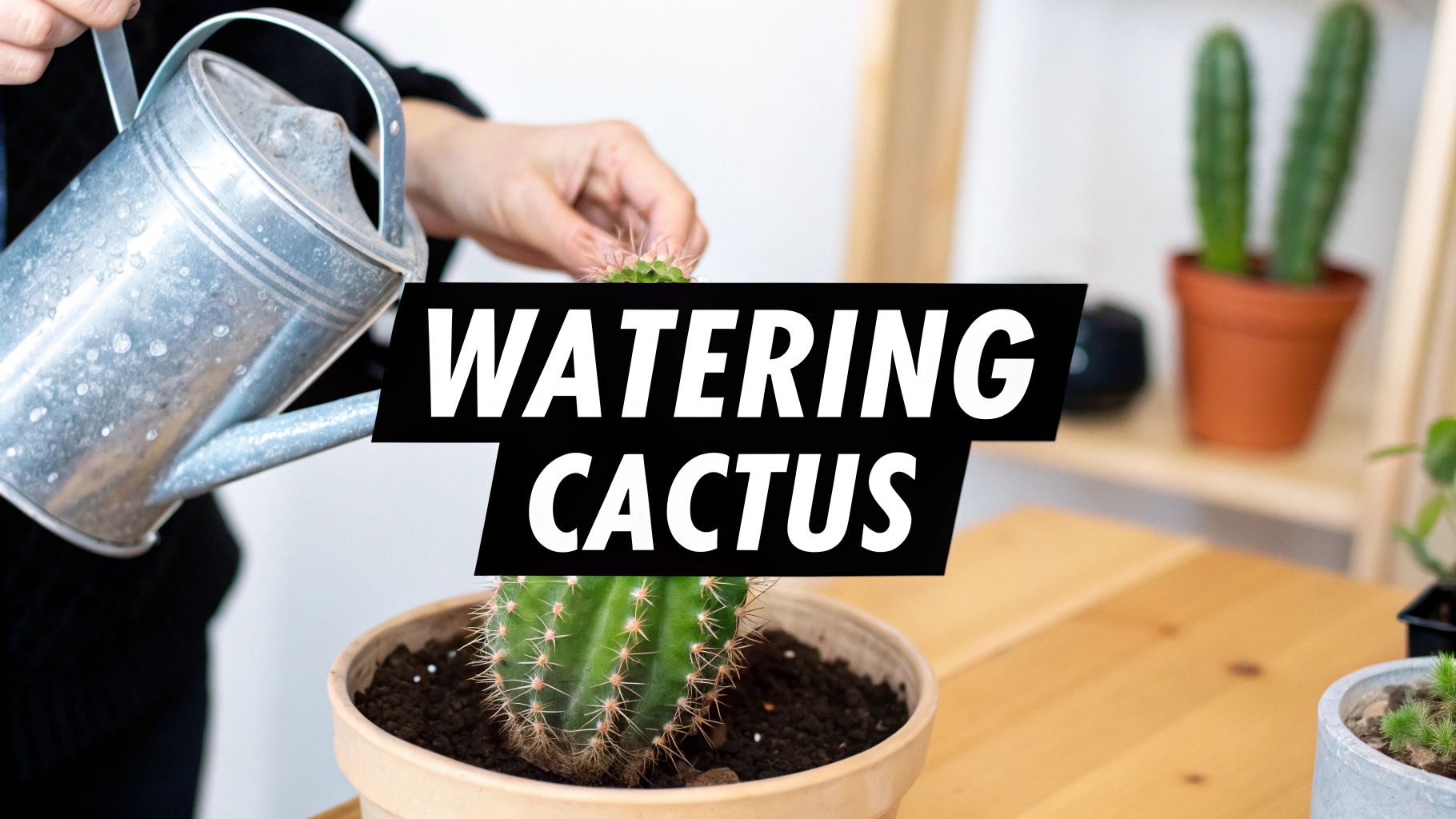

Watering a cactus seems like it should be the easiest part of owning one, but it’s actually where most new enthusiasts get tripped up. The secret isn't in a complicated schedule; it's about copying what happens in the desert. Think intense, infrequent rainstorms—a thorough drenching, then a long, bone-dry spell. This "soak-and-dry" approach is the cornerstone of a healthy cactus.
Why Proper Cactus Watering Confuses So Many
If you're used to leafy houseplants, everything about watering a cactus feels wrong. It's a completely different ballgame. We’re so trained to think "plant care" means keeping the soil consistently moist, but for a cactus, that's a death sentence.
These plants are masterpieces of water conservation, designed from the ground up to handle extreme drought. Their chunky stems are basically living water tanks. But their roots? They're often fine and shallow, built to slurp up a sudden downpour and then wait out the dry spell. Let them sit in wet soil, and you’re asking for trouble.
The Myth of a Fixed Schedule
One of the worst things you can do is water your cactus every Saturday just because it's Saturday. A cactus's thirst changes dramatically with its surroundings. Sticking to a rigid calendar completely ignores the very things that tell you it’s actually time to water.
Instead of looking at the calendar, you need to start looking at the plant and its environment.
Here's a quick rundown of the major variables that will change your watering routine.
Before grabbing that watering can, it's crucial to assess a few key conditions. These factors directly influence how quickly your cactus uses water and when it will be ready for its next drink. The table below breaks down the most important variables to consider.
Key Factors That Change Your Cactus Watering Schedule
| Influencing Factor | Impact on Watering Frequency | Practical Example |
|---|---|---|
| Light Exposure | More light = more frequent watering | A cactus in a bright, south-facing window might need water every 2-3 weeks in summer. The same plant in a dimmer, north-facing spot might only need it every 4-6 weeks. |
| Temperature | Higher temps = more frequent watering | During a summer heatwave, soil dries out fast. In a cool, dormant winter period, you might not water for 2 months or more. |
| Pot Material | Porous pots = more frequent watering | An unglazed terracotta pot breathes, pulling moisture from the soil. A plastic or glazed ceramic pot holds moisture much longer, so you'll need to water less often. |
| Soil Composition | Gritty, fast-draining soil = more frequent watering | Proper cactus mix with lots of pumice or perlite drains instantly. Standard potting soil acts like a sponge and can stay wet for weeks, leading to rot. |
Think of this table as your pre-watering checklist. A quick scan of these factors will give you a much more accurate sense of your cactus's needs than any calendar ever could.
The core philosophy is simple: It is always safer to underwater a cactus than to overwater it. They are far more resilient to thirst than they are to drowning.
Understanding the Dangers of Overwatering
There’s a good reason cactus experts are always warning against overwatering—it’s the number one killer of these plants in homes. When roots are trapped in soggy soil, they can't breathe. They start to suffocate and decay, leading to root rot.
The worst part is that all this damage happens underground, completely out of sight. You often won't see the mushy base or yellowing stem until it’s far too late.
In fact, the problem is so common that market data shows 70-80% of cactus plant failures in home settings are a direct result of root rot from too much water or bad drainage. You can discover more insights about the cactus plants market and its care trends for yourself. This statistic really drives home why mastering the soak-and-dry method isn't just a good idea—it’s the key to keeping your plant alive.
Putting The Soak-and-Dry Method Into Practice
Alright, let's move from theory to the real world. The "soak-and-dry" method isn't some rigid scientific formula; it’s more of an art form that mimics how cacti get water in the desert. The idea is brilliantly simple: give your cactus a massive, deep drink, and then let its soil get completely bone-dry before you even think about watering it again.
This approach is the complete opposite of the number one cactus-killing mistake: giving little, frequent sips of water. That just wets the top inch of soil, which only encourages weak, shallow roots and leaves the important deeper roots thirsty. A real, thorough soak gets water to the entire root system, which is exactly what we want.
How To Tell When The Soil Is Actually Dry
Before you grab that watering can, you have to be absolutely sure the soil is dry all the way through. Guessing is a recipe for disaster.
The easiest tool is right at your fingertips. Stick your finger at least two inches deep into the soil. If you feel even a hint of coolness or moisture, put the water down and walk away. It's not time yet.
For bigger, deeper pots where your finger won't cut it, a simple wooden skewer or a chopstick becomes your best friend. I use this trick all the time.
- Insert the Skewer: Gently push it all the way to the bottom of the pot, trying your best to avoid any major roots.
- Let It Sit: Leave it there for a minute or so. This gives it time to absorb any moisture hiding deep down.
- The Big Reveal: Pull it out and look closely. Does it have dark, damp soil clinging to it? Does it feel cool to the touch? If so, there's still water in there. You need to wait.
Your cactus is only ready for a drink when that skewer comes out perfectly clean and dry. This little test takes all the anxiety out of the equation and is the single best way to prevent the dreaded root rot.
This cycle is all about replicating a desert downpour followed by a long, dry spell.

As you can see, the real magic isn't just in the watering—it's in the long, sunny break that follows. That’s when the roots do their best work.
Executing The Perfect Soak
Once you’ve confirmed the soil is completely dry, it’s time to drench it. Always use room-temperature water; icy cold water can seriously shock the root system.
Start pouring the water slowly and evenly across the entire soil surface, making sure to get it all, not just one spot. Keep going until you see water flowing freely out of the drainage holes at the bottom. That's your cue that the entire pot of soil is saturated.
Now, let it drain for a good 10-15 minutes in a sink or a drip tray. The absolute worst thing you can do is let your cactus sit in a saucer full of water. That will keep the roots soggy and completely defeats the purpose of letting it dry out.
Pro Tip: Try to avoid splashing water all over the body of the cactus. A few drops won't hurt, but if water pools in the crevices or around the base, it just sits there against the plant's skin—creating a perfect little incubator for rot.
The Bottom-Watering Alternative
For smaller cacti, you might want to give bottom-watering a try. It’s a fantastic technique where the soil wicks water up from the bottom, which encourages roots to grow downward and ensures a perfectly even soak without getting the plant itself wet.
It’s incredibly simple to do:
- Find a tray or basin and fill it with an inch or two of room-temperature water.
- Set your cactus pot right in the water. Make sure the water level is well below the rim of the pot.
- Just let it sit for 15-30 minutes. You'll know it's done when you can see the top layer of soil has become damp.
- Lift the pot out, let all the excess water drain away completely, and then you can put it back in its spot.
While bottom-watering is a great method, it’s honestly not very practical for the large, heavy specimens we specialize in here at The Cactus Outlet. It really works best for plants in pots smaller than six inches. The core ideas are the same for most drought-loving plants. If you're curious, we cover similar techniques in our guide on how to water succulent plants, as there's a lot of overlap.
Adjusting Your Watering for Every Season
One of the biggest mistakes I see new cactus owners make is treating their plants like a piece of furniture. They set a rigid watering schedule and stick to it, no matter what. But your cactus is a living thing, and it's deeply connected to the rhythm of the seasons. Its water needs change dramatically throughout the year, and learning to adapt is the real secret to its long-term health.
A cactus in July is a completely different beast than it is in January. The amount of daylight, the intensity of the sun, and the ambient temperature are all powerful signals that tell your plant when to grow and when to rest. If you ignore these natural cues and just keep watering on a "once-a-month" schedule, you're setting yourself up for big problems—especially root rot.
Spring and Summer: The Active Growing Season
When spring arrives, your cactus starts to wake up. As the days get longer and the weather warms, it kicks into its active growing season. This is prime time for new growth, whether it's fresh pads popping up on an Opuntia or your Peruvian Apple Cactus shooting up in height.
All that growth takes energy, and water is the fuel. During this period, your cactus is at its thirstiest.
- Water More Often: You’ll probably find yourself watering every two to four weeks. Of course, the exact timing depends on all the usual factors we've discussed, like pot size, sunlight, and airflow.
- Watch the Weather: Stay responsive. During a blistering heatwave, the soil will dry out much faster. On the flip side, if you get a cool, overcast week, you might want to hold off on watering.
- Look for Growth: Keep an eye out for signs of new, vibrant green growth. This is the best confirmation that your plant is in its active phase and is actually using the water you're giving it.
A crucial reminder: "more frequent" doesn't mean keeping the soil constantly damp. The soak-and-dry method is still king. You must let the soil become bone-dry all the way through before you even think about giving it another deep drenching, even in the middle of summer.
Fall and Winter: The Dormant Period
As autumn rolls in and the days get shorter, your cactus gets the hint to slow down and prepare for a long rest, which we call dormancy. Growth basically grinds to a halt as its metabolism slows way down. Just think of it as a long nap to conserve energy for the next big growth spurt.
During this dormant period, its water needs absolutely plummet. This is where so many people go wrong. Continuing to water on a summer schedule is the most common way to kill a cactus in the winter. The plant simply isn't using the water, leaving it to stagnate in the cold soil—a perfect recipe for devastating root rot.
A Seasonal Watering Comparison
Here’s a quick breakdown of how things change:
| Season | Plant Activity Level | Watering Frequency (Approx.) | Key Objective |
|---|---|---|---|
| Spring/Summer | High - Active Growth | Every 2-4 weeks | Fuel new growth and support photosynthesis. |
| Fall/Winter | Low - Dormancy/Rest | Every 6-8+ weeks | Prevent dehydration while avoiding root rot. |
This dramatic shift isn't just about survival; it's essential for the plant's life cycle. For many species, a cool, dry winter rest is the trigger they need to produce those incredible flowers come spring.
The rising popularity of these plants isn’t a coincidence; it reflects a bigger trend toward sustainable gardening. The global market for cactus products was valued at around USD 5.18 billion in 2023 and is expected to keep growing as people embrace their unique beauty and low water needs. You can learn more about the cactus products market trends to see just how popular they’ve become. This growth is being driven by gardeners looking for resilient plants that fit a more eco-conscious lifestyle, which makes knowing how to care for them seasonally more important than ever. When you adjust your watering, you’re not just keeping a plant alive—you’re participating in a movement toward smarter, more attuned gardening.
Spotting the Signs of Watering Trouble
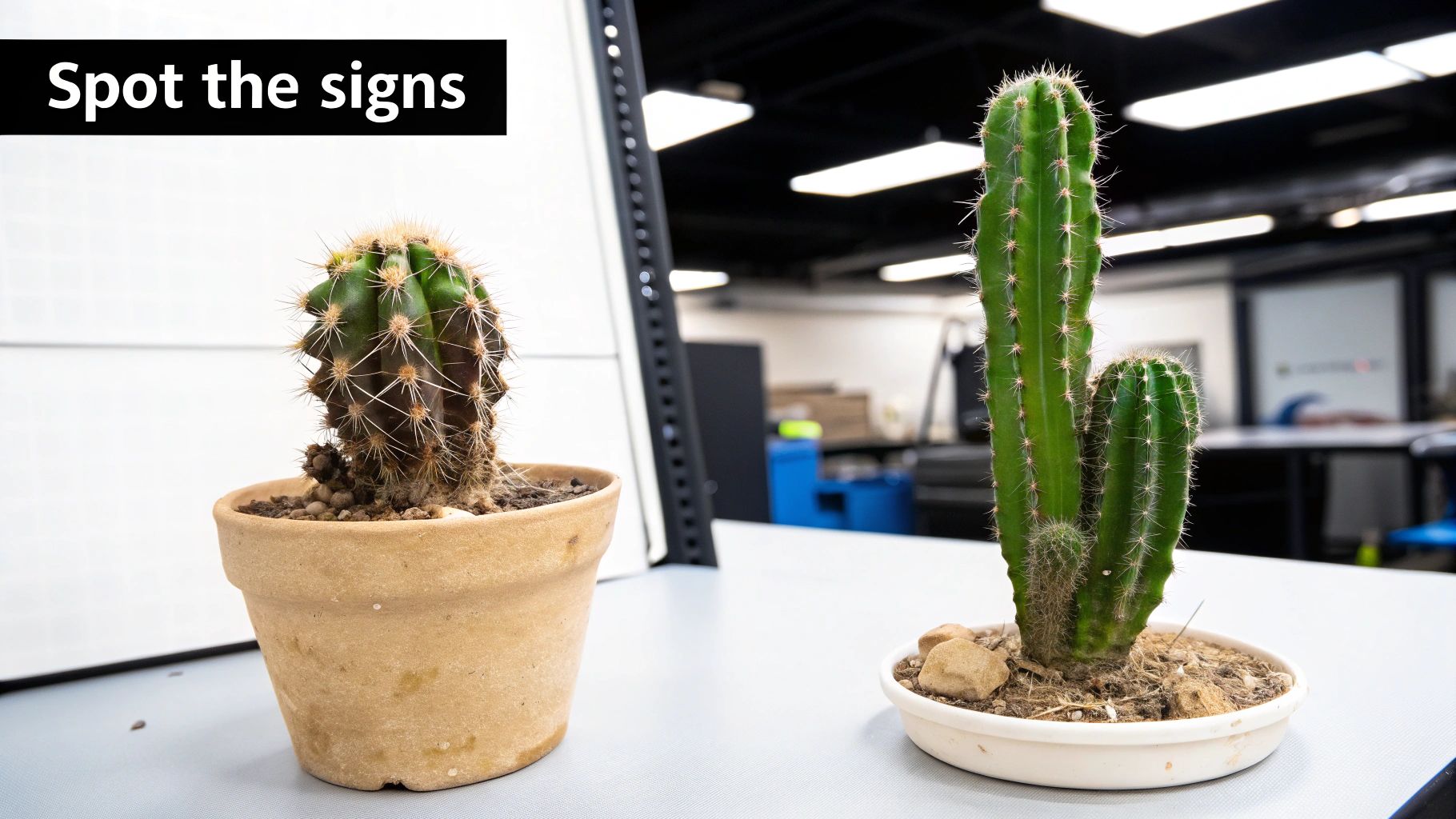
Even with the best intentions, it's easy to get the watering schedule a little off. But don't worry—your cactus will tell you when something's wrong. Learning to read its signals is the most important skill you can develop to catch problems before they become serious.
By a long shot, overwatering is the biggest killer of cacti. When the soil stays wet for too long, the roots can't breathe. They start to rot, and that decay quickly spreads through the entire plant.
Underwatering, on the other hand, is less of an emergency. It still stresses the plant and can stunt its growth, but it's much easier to fix. Let's break down exactly what to look for so you can tell the difference between a thirsty cactus and a drowning one.
The Telltale Signs of an Overwatered Cactus
An overwatered cactus often looks sick in a way that feels a little backward—it gets soft and mushy. All that extra water literally causes the plant's cells to burst, turning its normally rigid body into a fragile, waterlogged mess.
Here are the key symptoms to watch for, especially around the base of the plant where trouble usually begins:
- A Mushy or Soft Base: Give the base of your cactus a gentle squeeze. It should feel solid and firm. If it’s spongy or squishy, that’s a huge red flag for root rot.
- Yellowing or Pale Skin: The plant’s color might fade from a healthy green to a sickly yellow. In advanced cases, the skin can even look translucent as the internal tissue breaks down.
- Dropping Arms or Pads: For cacti like Prickly Pears (Opuntia), you might find entire pads becoming heavy with water and just falling off.
- Wobbling in the Pot: If the cactus feels unstable, it often means the roots have rotted away and can no longer anchor it properly.
If you spot these signs, you need to act fast. This is not a "wait and see" situation. Root rot travels up the plant's core, and once that's gone, the cactus is often impossible to save.
Your Emergency Action Plan for Overwatering
Saving an overwatered cactus is a rescue mission. The goal is simple: get it out of that soggy soil and give the healthy roots a chance to dry out and heal.
- Unpot the Cactus: Carefully slide the plant out of its pot. The soil will probably be a heavy, damp mess.
- Inspect the Roots: Gently knock off the wet soil. Healthy roots are typically white or light-tan and feel firm. Rotted roots will be black, mushy, and might even have a swampy smell.
- Perform Root Surgery: Grab a clean pair of scissors and trim off all the rotted roots. You have to be aggressive here—any infected tissue left behind will just keep spreading.
- Let It Air-Dry: Lay the cactus on its side on some newspaper in a shady, airy spot for a few days. This lets the cuts on the roots form a callous, which is essential to prevent a new infection when you repot.
Once the roots have calloused over, repot your cactus in a fresh, bone-dry, fast-draining cactus mix. For a step-by-step walkthrough, check out our guide on how to repot cacti. And this is critical: do not water it for at least a week after repotting. Give it time to settle in.
Reading the Signs of an Underwatered Cactus
On the flip side, we have the thirsty cactus. While these plants are drought masters, they can't live on air forever. Thankfully, the signs of underwatering are far less alarming and much simpler to fix.
When a cactus is thirsty, it’s just tapping into its internal water reserves. You’ll notice:
- Shriveling or Wrinkling: The skin loses its plumpness and starts to look puckered, kind of like a grape turning into a raisin.
- A Deflated Look: The whole plant might seem to shrink or look a bit saggy as it uses up the water it has stored.
- No New Growth: During the spring and summer, a healthy cactus should be growing. If yours is completely dormant, it might not have enough water to fuel that new growth.
Fixing this is easy. Just give the plant a deep, thorough watering using the soak-and-dry method we talked about earlier. In a day or two, you should see it plump right back up. Just be careful not to overcorrect by watering again too soon—that's how you end up swinging back toward the much bigger problem of overwatering.
Overwatering vs Underwatering Symptoms at a Glance
Sometimes the signs can be confusing. This table should help you quickly diagnose the issue based on what you see and feel.
| Symptom | Likely Cause Overwatering | Likely Cause Underwatering |
|---|---|---|
| Feel | Soft, mushy, or squishy, especially at the base | Firm but wrinkled or shriveled |
| Color | Yellowing, pale, or translucent skin | Dull or faded green, may look dusty |
| Shape | Swollen and bloated, may look stretched | Deflated, shrunken, or leaning |
| Roots | Dark, slimy, and rotting (if unpotted) | Dry, brittle, and shrunken |
Keep this handy as a quick reference. Catching the problem early is the best way to ensure your cactus stays healthy for years to come.
How Soil and Pots Make or Break Your Watering
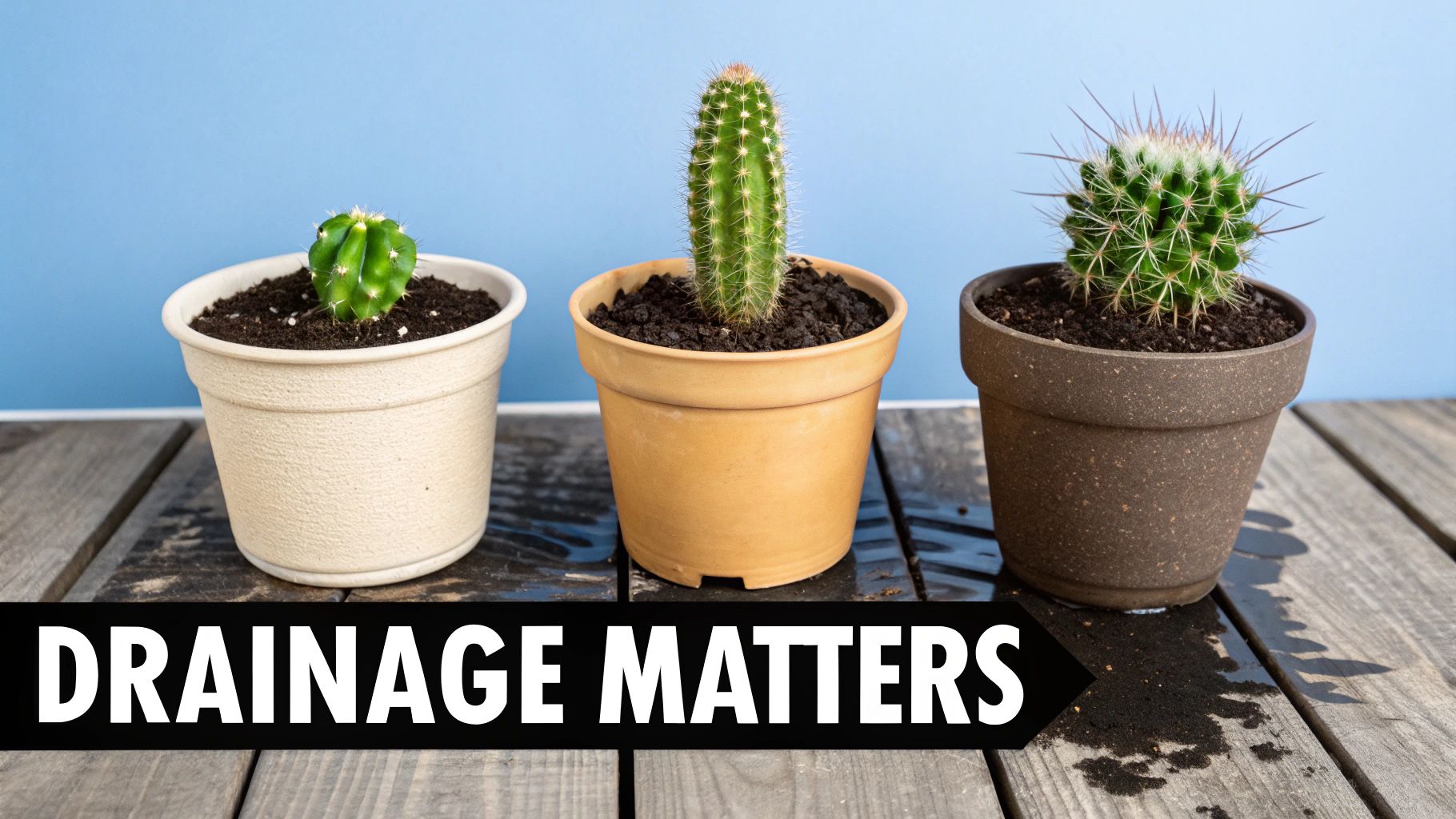
You can follow the best watering advice in the world, but if your setup is wrong, you're fighting a losing battle. I've seen it time and time again: the health of a cactus is often decided long before it gets its first drink in a new home. The two things that truly matter most are the soil it’s planted in and the pot that holds it. Get these right, and you’ve won half the battle against root rot.
Using a bag of standard, all-purpose potting mix is probably the fastest way to kill a cactus. That stuff is literally engineered to do the exact opposite of what your cactus needs—it's designed to retain moisture. For a desert plant, that dense, sponge-like soil is a death sentence. It suffocates the sensitive roots in a wet bog, putting them on a fast track to decay.
Building the Perfect Cactus Soil
The secret to happy cactus roots isn't just about "dirt." It's about creating a gritty, airy, and incredibly fast-draining substrate. You want to think less like a garden bed and more like a loose pile of gravel and sand. This kind of structure lets water rush through, giving the roots a quick drink without ever letting them sit in a puddle.
A great cactus mix is all about creating air pockets. We do this by adding plenty of inorganic, gritty materials that won't break down or hold onto water.
- Pumice or Perlite: These are your best friends for aeration. They're super lightweight volcanic rocks full of tiny pores that keep the soil from compacting, giving roots room to breathe.
- Coarse Sand or Grit: This adds some weight and stability while boosting drainage even more. Just be sure to avoid fine play sand, which can clump together when wet and actually make things worse.
- A Little Organic Matter: A small amount of something like coco coir can be beneficial for nutrients, but it should always be a minor ingredient, never the main event.
When you get this blend right, you can water deeply and confidently, knowing the excess will drain away almost immediately. If you're ready to mix your own, we've put together a complete guide on how to make cactus soil with all the right ingredients and ratios.
The Non-Negotiable Need for Drainage Holes
Let me be perfectly clear: your pot must have a drainage hole. This isn't a suggestion; it's the golden rule of cactus care. No exceptions.
A pot without drainage creates what I call the "bathtub effect." No matter how carefully you water, any excess liquid has nowhere to escape. It just pools at the bottom, turning the lower layer of soil into a swamp. Those roots will inevitably start to rot, and by the time you see the damage on the plant itself, it's often too late.
Choosing a beautiful pot with no drainage is choosing aesthetics over the life of your plant. If you fall in love with a decorative pot that lacks a hole, use it as a cachepot—simply place a plain nursery pot with proper drainage inside it.
Choosing the Right Pot Material
Beyond just having a hole, the material of the pot itself plays a huge role in your watering routine. Different materials handle moisture in completely different ways, which can either help you or hurt you.
| Pot Material | Moisture Management | Best For |
|---|---|---|
| Terracotta | Porous and breathable; wicks moisture from the soil, helping it dry out quickly and evenly. | Beginners or anyone prone to overwatering. The pot itself helps prevent soggy soil. |
| Glazed Ceramic | Non-porous; holds moisture for a much longer period. | Experienced growers who are confident in their watering schedule and soil mix. |
| Plastic | Non-porous and lightweight; retains moisture and is slower to dry out than terracotta. | Those who tend to underwater, as it provides a buffer. Requires a very well-draining soil. |
For most cactus growers, especially if you're just starting out, unglazed terracotta is the safest and best choice. Its porous nature acts like a safety net, actively pulling excess moisture away from the roots and letting air circulate. This "breathing" process gives you a valuable margin of error, making it much harder to overwater. It's the pot that works with you to keep your cactus healthy.
Common Questions About Watering a Cactus
Even after you've got the basics down, you're bound to run into some specific questions. Honestly, getting these little details right is what really makes a difference between a cactus that’s just hanging on and one that's truly thriving. Let's tackle some of the most common questions we hear from our customers.
Think of this as the troubleshooting guide you can turn to when you're second-guessing yourself. Nailing these finer points will give you the confidence to adjust your routine and give your cacti exactly what they need, right when they need it.
Should I Mist My Cactus?
Let’s clear this one up right away: for almost every cactus we sell, the answer is a hard no. Misting is a leftover habit from caring for tropical plants and it's a huge mistake for desert dwellers. Cacti are built for dry, arid air, not a humid spa day.
When you spray a cactus, you’re just wetting its skin. In a typical home with less-than-perfect airflow, that moisture just sits there, creating an open invitation for fungal diseases and rot to set in. The spines aren't there to catch dew; the roots are in the soil for a reason. Always water the soil, not the plant itself.
The only time you might even consider it is for a few specific epiphytic cacti, like a Rhipsalis (Mistletoe Cactus), which grows on trees in humid forests. Even then, you’d need amazing air circulation. For 99% of the cacti you'll find at The Cactus Outlet, just put the spray bottle away.
What Kind of Water Is Best for Cacti?
You'd be surprised how much water quality can affect your plant's health over time. The absolute best you can give them is rainwater or distilled water. Why? Because they're free of the minerals that build up from regular tap water.
If you've ever seen a white, crusty film on your soil or around the drainage hole of a terracotta pot, that's mineral buildup. This can eventually "burn" the cactus's sensitive roots, making it harder for them to absorb water and nutrients. It’s a slow process, but it can definitely stunt your plant's growth.
If tap water is your only option, here's a simple trick: fill a watering can and let it sit out, uncovered, for at least 24 hours. This gives the chlorine a chance to evaporate, making it a bit kinder to your plant's roots.
How Soon Should I Water a Newly Repotted Cactus?
This one feels counterintuitive, but it's crucial: hold off on watering. After you repot a cactus, you need to wait at least a full week—sometimes even two—before giving it a drink.
Repotting is a bit traumatic for a plant. No matter how careful you are, some of the tiny, delicate root hairs will get bruised or broken. If you drench them in water right away, you're essentially opening the door for rot-causing bacteria and fungi to move in.
By letting the cactus rest in dry soil, you give those little wounds time to heal over and form calluses. This is what makes the roots strong and ready to absorb water safely. Rushing this step is probably one of the most common ways people accidentally kill a freshly repotted cactus.
Does Pot Size Affect Watering Frequency?
It absolutely does. Pot size is one of the biggest factors in determining how often you'll need to water. It’s simple, really: a larger pot holds more soil, and more soil holds more water for a longer time.
Think about it this way: a tiny two-inch pot with a small succulent might completely dry out in just a few hot summer days. Meanwhile, a huge 15-gallon container with a massive Peruvian Apple Cactus could stay moist for weeks, even in the exact same conditions.
This is exactly why following a rigid watering schedule like "water every Sunday" just doesn't work. You have to be a detective. Get in the habit of checking the soil moisture yourself instead of just looking at the calendar.
Ready to find the perfect cactus that thrives with this simple care routine? At The Cactus Outlet, we offer a stunning collection of healthy, nursery-grown cacti ready to bring desert beauty to your home. Explore our collection and start your journey today. Find your next plant at https://www.cactusoutlet.com.