

You're probably looking at a century plant for sale listing and wondering whether the plant on the screen is a bargain, a future headache, or exactly the dramatic specimen your outdoor space needs.
That's the right question.
At a nursery, the biggest mistakes don't happen after planting. They happen at the buying stage. Someone orders the wrong variety, underestimates the mature spread, places a spiny agave beside a walkway, or gets surprised by shipping because a large succulent doesn't travel like a small houseplant. Agave americana is one of the most recognizable agaves in the trade, but it isn't a casual purchase. It's a long-term outdoor design decision.
A good century plant should arrive healthy, fit the space you have, and be planted where you won't regret it later. That's how we look at it from the nursery side, and that's how you should shop for one.
Choosing Your Agave A Guide to Varieties and Sizes
A customer sends us a photo of a front bed, picks a 5-gallon century plant for sale, and asks one question: “Will this fit?” That is the right place to start, because the wrong agave usually becomes a placement problem long before it becomes a care problem.
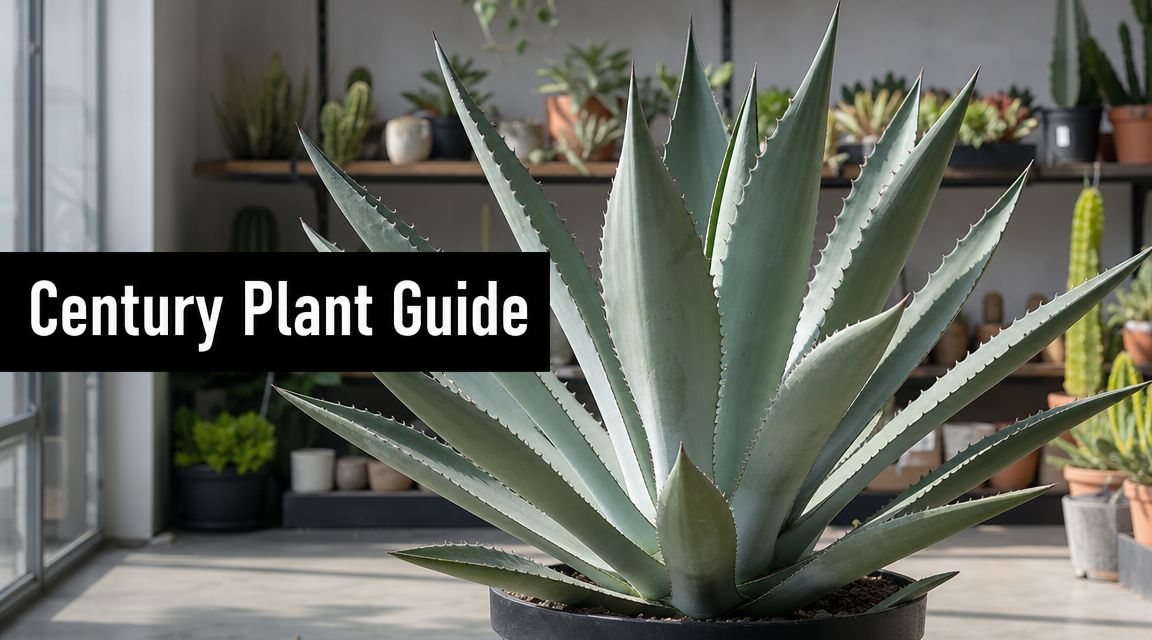
In nursery sales, century plant usually means Agave americana. The name confuses buyers. It does not wait a hundred years to bloom, and each rosette flowers once at the end of its life. What matters at the buying stage is simpler. You are choosing a plant with a long garden life, a broad mature spread, and enough presence to dominate the space around it.
What buyers usually mean by century plant
At The Cactus Outlet, buyers asking for a century plant usually want one of three forms:
- Standard green Agave americana for a classic, large-scale planting
- ‘Marginata’ for yellow-edged variegation and stronger contrast
- ‘Mediopicta Alba’ for white-centered striping and a more collector-driven look
Each one fills a different role. Green plants tend to hide minor cosmetic wear better and often look more natural in large desert or Mediterranean plantings. Variegated plants draw the eye faster, but they also show shipping scars, sun stress, and uneven form more clearly. If the planting area is visible from the street or framed by hardscape, buyers usually notice those details.
If you are still comparing agave types before you settle on americana, our guide to different agave forms and growth habits will help you sort out the broader group.
Common Century Plant Varieties at a Glance
| Variety | Key Feature | Mature Size (H x W) | Hardiness (USDA Zone) |
|---|---|---|---|
| Agave americana | Blue-green to green architectural rosette | Large, broad rosette with substantial height and spread at maturity | 8 through 11 |
| Agave americana ‘Marginata' | Yellow-edged leaves, bold variegation | Similar overall landscape scale to the species | 8 through 11 |
| Agave americana ‘Mediopicta Alba' | White central striping, collector look | Broad rosette habit, often grown as a specimen plant | 8 through 11 |
Size is where online buyers make the costliest mistake. They shop by container size, then plant by the front walk, under a low window, or too close to a driveway edge. A young agave in a nursery pot can look manageable. The mature plant is a different decision.
Buy for clearance first. Color and cultivar come second.
How to read a listing like a nursery buyer
A useful listing answers four practical questions:
- What is the exact botanical name? “Century plant” is a common name, not a precise ID.
- Is it the green species or a named variegated form? That affects appearance, price, and how much cosmetic damage will show.
- What is the sale size right now? Pot size helps you judge handling and shipping, but it does not tell you the mature footprint.
- Is the plant suited to your climate and planting spot? Cold tolerance, sun exposure, and final spread matter more than the photo angle.
I tell buyers to match the plant to the space they have, not the dramatic look they saw in a mature garden photo. If your site is tight, start by measuring distance to paths, doors, pool coping, and parked cars. A large Agave americana works best where it has room to read as a specimen instead of an obstacle.
The Smart Buyer's Checklist for Plant Health
A healthy agave looks solid before you ever touch it. The leaves should read as firm, balanced, and well-rooted in the container, not stressed and collapsing outward. If I'm evaluating a century plant in person or from listing photos, I do a quick pre-flight check before I think about price.

What to inspect first
Start at the base. Rot often shows up there before the rest of the plant makes it obvious. You want a plant that sits upright, without a mushy crown or soft tissue around the lower leaves.
Then inspect the center. Damage in the core is more serious than cosmetic scarring on outer leaves. If the newest leaves are distorted, loose, or wilting, ask questions before buying.
Use this checklist:
- Base firmness: The plant should feel anchored, not wobbly in wet media.
- Leaf condition: Look for firm leaves, not floppy tissue or collapse.
- Pest signs: Check deep between leaves and around the crown for cottony residue, webbing, or unusual spotting.
- Root condition: If the seller can show roots, they should look established rather than blackened or slimy.
- Potting mix: A gritty, fast-draining mix is a better sign than dense, water-holding soil.
A few old scars on outer leaves are common. A soft center is not.
For online shopping, ask for close photos of the crown, base, and the plant out of decorative staging. Styled photos sell the silhouette. Detail photos tell you whether the plant is worth shipping.
If you're comparing online sources, where to buy cactus online gives a useful framework for evaluating specialty sellers, plant photos, and shipping practices before you place an order.
Potted versus bare-root
This decision affects both cost and how much work you'll need to do on arrival.
Potted plants are usually easier for newer buyers. The root system stays undisturbed, and the plant often settles in faster once planted. The trade-off is shipping. A large potted agave is heavier, bulkier, and more expensive to pack safely.
Bare-root plants are more economical to ship and often make sense for experienced buyers who plan to plant quickly. But you need to inspect roots on arrival, let any damaged areas dry if needed, and be more careful with the first watering cycle.
Here's the practical distinction:
- Choose potted if you want less handling and a smoother transplant process.
- Choose bare-root if shipping cost matters most and you're comfortable staging the plant before installation.
A healthy century plant can be sold either way. The difference isn't quality by itself. It's whether the plant was prepared and packed correctly for the trip.
Budgeting Your Purchase Pricing and Shipping Explained
The list price on a century plant rarely tells the full story. With Agave americana, the final cost is shaped by plant size, whether you're buying the standard species or a variegated form, and how the seller plans to ship something large, rigid, and spiny.
What drives the price
Nurseries don't price agaves randomly. The cost usually rises with growing time, container size, labor to handle the plant, and how much bench or yard space that specimen has occupied. A small juvenile is easier to produce, easier to pack, and easier to replace. A broad, symmetrical specimen ties up more space and more labor.
Variegated forms also tend to command more attention from buyers because the visual effect is stronger. Even without quoting price ranges, it's fair to expect a clean, well-grown variegated plant to cost more than a similar-sized green form.
For buyers, the useful way to think about budget is this:
- Small plants cost less up front but ask for more patience
- Mid-size plants often strike the best balance between impact and manageable shipping
- Specimen plants shift the purchase into logistics planning, not just plant shopping
Why shipping changes everything
Shipping a century plant is not like shipping a trailing succulent in a nursery sleeve. The leaves are rigid, the terminal spine can puncture packaging, and the mature form doesn't compress well. Good sellers build the shipment around plant protection first, appearance second.
That usually means:
- Wrapping leaves to reduce movement
- Securing the root area so soil doesn't explode in transit
- Using a box or crate that keeps the crown from being crushed
- Adjusting the method based on whether the plant ships potted or bare-root
If you're buying from a specialty succulent retailer, ask how they handle large agaves specifically. At The Cactus Outlet, for example, large cactus and succulent orders are sold online with packaging intended to keep plants intact during transit, which is exactly the kind of operational detail you want confirmed before ordering.
What buyers often miss
The expensive part isn't always the plant. It's the combination of size, handling, and delivery method.
A few practical questions save a lot of frustration:
- Will the plant ship parcel or freight? Very large specimens may need special handling.
- Does the plant ship in its pot or bare-root?
- Will there be cosmetic scarring from packing? Minor leaf marks can happen on spiny plants.
- Can someone safely receive it on delivery day? A large agave left on a porch in poor weather is asking for trouble.
If the seller can't explain how the plant is packed, they probably haven't shipped many large agaves.
When you budget for a century plant, budget for the whole acquisition. Plant, packing, shipping, unloading, and installation all count.
Successful Planting and Ideal Placement
The usual planting mistake happens before the shovel hits the ground. A buyer sets a young agave near a walkway, patio chair, or front entry because the plant still looks manageable in the pot. Two or three years later, the same plant owns the space.

I tell customers to make the placement decision as if the agave has already reached mature size. Century plants develop a broad, heavily armed rosette, and they do not forgive tight siting. The plant may look right beside a drive, gate, or pool deck on delivery day. Later, those same leaves can snag clothing, block foot traffic, and turn routine maintenance into a chore.
Handle the plant accordingly. Use thick gloves, long sleeves, and control it from the container or root ball rather than the leaves. For larger specimens, two people usually make the job safer. Pick the exact planting spot before you remove it from the pot.
Give the plant real clearance
Placement should be based on how people will move around it, not just how it looks from the street.
Use this filter before planting:
- Walkways: Keep enough distance that no one brushes the spines during normal foot traffic
- Driveways: Leave space for doors opening and people stepping out
- Entry areas: Avoid spots where guests, delivery drivers, or kids will cut close to the plant
- Pool zones: Keep it out of narrow deck edges and active play areas
- Small enclosed spaces: Choose a container or a smaller agave if the rosette will crowd the area
If you're building a dry planting scheme around agaves, it also helps to explore water-saving lawn options so the surrounding yard uses water at a similar rate.
For a broader guide to bed preparation and drainage, our article on planting succulents outside covers the same site-selection principles that matter here.
Plant for drainage first
Agave americana tolerates neglect better than wet soil. Poor drainage causes more failed plantings than underwatering.
In containers, use a fast-draining cactus or succulent mix. In the ground, pay attention to what your soil does after irrigation or rain. If water sits around the planting area, fix that first by choosing a better spot, planting on a mound, or modifying the soil structure enough to improve drainage. Dropping an agave into a low, soggy pocket usually ends badly, no matter how healthy the plant looked when it arrived.
A planting routine that works well looks like this:
- Choose full sun and quick drainage. Site conditions matter more than visual symmetry.
- Dig wider than the root ball, but not much deeper. Keep the plant close to its original soil level.
- Set the crown slightly high if your soil is slow. Buried crown tissue is a common starting point for rot.
- Backfill firmly without packing the soil hard. The plant should sit stable, not buried.
- Water once to settle everything in. After that, let the soil dry appropriately before watering again.
For a quick visual reference, this short planting video is a useful companion before installation:
Gravel or stone around the base usually works better than organic mulch that holds moisture against the crown.
The best placement feels almost boring on day one. Open sun, dry ground, and enough clearance that the plant never has to be cut back or moved later. That is usually the difference between an agave that settles in for years and one that becomes a problem after the first growth spurt.
Long-Term Care for Your Architectural Agave
Once a century plant is planted well, the job becomes simpler. This is not a plant that wants constant correction. Most problems come from too much water, too much fussing, or a site that never should have been chosen in the first place.
Water less, watch more
Newly planted agaves need monitoring while they establish, but they still want restraint. Water thoroughly, then allow the soil to dry appropriately before watering again. If the ground stays wet for long stretches, fix the drainage problem rather than adding more care on top of it.
The leaves tell you a lot. A firm plant with stable color and a solid crown usually doesn't need intervention. A plant sitting in damp soil for too long often declines from the base inward.
Sun and feeding
Agave americana performs best in strong light. Full sun supports the compact, architectural form buyers usually want. Plants grown in insufficient light can lose that crisp presence and become less satisfying as garden focal points.
Feeding should stay light. In most outdoor settings, this isn't a heavy-feeding plant. If you fertilize at all, keep it modest and avoid turning a structural succulent into soft, overpushed growth.
Routine maintenance that actually helps
Century plants don't ask for pruning in the way shrubs do. Maintenance is mostly about safety and cleanliness.
Useful tasks include:
- Removing old lower leaves: Take off dead or badly damaged leaves to tidy the plant and improve access around the base.
- Watching the crown after storms or cold snaps: Trapped moisture and hidden damage are easier to catch early.
- Checking surrounding plants: Don't let neighboring growth crowd into the agave's spines.
- Reassessing clearance over time: The plant may outgrow what looked like a comfortable gap at planting.
A good agave care routine is mostly observation. If you're constantly trying to fix it, something is off in the site or watering pattern.
In containers, the same low-intervention principle applies, but drainage matters even more. If the mix breaks down and starts holding water too long, repotting into a sharper, faster-draining medium is usually more effective than changing every other part of the routine.
The payoff for restraint is simple. A healthy century plant develops into the kind of specimen that anchors a bed, gravel court, or xeric border without asking for weekly attention.
The Full Lifecycle Hazards, Rules, and the Final Bloom
A lot of buyers focus on cold tolerance or watering, then run into the problem that matters more after year three. The plant is too large and too armed for the space they chose.

Agave americana matures into a broad rosette with stiff leaves, sharp margins, and a strong terminal spine. From a nursery standpoint, that matters as much as color or size at checkout. Buyers who succeed with large agaves usually decide on placement before they buy, not after the box arrives.
I tell customers to judge the plant by the space people use every day. If a leaf can grow into a walkway, brushing path, gate swing, seating area, or utility access route, the site is wrong. This is one of the few plants that can look impressive and still be a poor choice for the spot.
Common trouble areas include:
- Narrow side yards
- Paths to the front door
- Areas near gates, meters, or mailboxes
- Patio edges where chairs slide back
- Spots close to play areas or dog runs
The trade-off is simple. A large agave gives strong structure and low water use, but it asks for permanent clearance. Children, pets, delivery drivers, and houseguests will not treat it with the same caution as the person who planted it.
Local rules can matter too. Some HOAs and municipalities restrict spiny plants near sidewalks, shared paths, or street-facing planting beds. Check before planting, especially if the agave will sit near property lines or public access. If your yard borders open ground or a natural corridor, the Vanish Pest Control Inc. wildlife guide is a useful reference for thinking through humane wildlife movement and deterrence around dense, hazardous plantings.
The other long-term issue is the bloom cycle. Century plants do not live forever as a single rosette. After years of vegetative growth, a mature plant sends up a tall flower stalk, then the parent rosette declines and dies.
That surprises first-time buyers, especially online buyers who are comparing photos and pot sizes but have never owned a mature agave. From the nursery side, this is not a defect or a sign that the plant failed. It is the normal end of that rosette's life.
What matters is what comes next on your property. Once the bloom is finished, you are dealing with a large, heavy plant with spines, a spent stalk, and often offsets around the base. Removal is manageable if the agave was planted with access in mind. It is difficult, slow, and sometimes expensive if it was wedged beside a wall, under eaves, or tight against a busy path.
That is why I treat lifecycle planning as part of the buying process. A large Agave should be bought with its mature footprint, its hazards, and its eventual removal in mind.
If you want a bold specimen with strong structure and you have real room for it, a century plant is a smart purchase. If the only open space is next to an entry walk or a patio chair line, choose a different agave before you place the order.
If you're ready to buy a century plant with the mature size, shipping method, and planting site in mind, browse the current agave selection at The Cactus Outlet. Pick the specimen that fits your space now and still makes sense years from now.