

You've probably done this already. You saw a packet of cactus seeds online, noticed the low price, loved the idea of growing something rare from scratch, and then paused. Are these worth buying? Will they sprout? Will they turn into anything that looks like the plant in the photo before you lose interest?
That hesitation is healthy.
I've watched plenty of first-time buyers jump into cacti seeds for sale listings because seeds look simple. Sometimes they are. Sometimes they're the slowest route to a plant collection you could possibly choose. The good news is that once you understand how sellers package cactus seed, how to read a listing, and how to germinate them properly, the whole process gets much less mysterious.
The Seed vs Plant Decision Is Growing from Seed for You
Buying cactus seed makes sense for some people right away. It doesn't make sense for everyone.
If you're the kind of grower who enjoys the process as much as the finished plant, seed can be satisfying. You get access to more variety, including unusual species that may be hard to find as established plants. You also get the pleasure of seeing the whole life cycle, from dust-like seed to tiny green seedling to a real specimen with character.
If, on the other hand, you want a cactus for a windowsill this month or an outdoor plant that already has presence, seeds may frustrate you.
The real tradeoff
The point most seed listings skip is simple. Seed-grown cacti are slow and variable. The Royal Horticultural Society notes that many cacti may take years to become saleable-sized plants, which makes seed propagation a better fit for collectors seeking rare species or larger volumes, not instant results, as summarized on Rare Exotic Seeds' cactus seed page.
That single fact should drive the whole decision.
Here's how I explain it to customers at a nursery counter:
- Choose seeds if you enjoy experimentation, want species variety, and don't mind waiting.
- Choose plants if you want immediate visual impact, predictable form, or a giftable result.
- Choose offsets when available if you want a middle path. They're often faster than seed and still feel hands-on.
Practical rule: Buy seed for curiosity and collection-building. Buy plants for décor, landscaping, and quick gratification.
What beginners often get wrong
Many new growers assume seed is always the cheaper route. It can be cheaper at the start, but not always cheaper in outcome. You'll spend time on trays, clean media, humidity control, and months or years of care before you have a plant with presence. Some seedlings won't thrive. Some mixed packs won't produce the exact look you imagined.
That doesn't make seeds a bad buy. It just means the reward comes later.
A good seed buyer usually says something like, “I want to try several kinds and I'm okay learning as I go.” A poor fit usually says, “I need a large cactus for this corner by spring.”
A quick self-check
Ask yourself these questions before you buy:
- Do you enjoy slow projects? Cactus seed growing rewards patience more than speed.
- Do you want rarity or certainty? Seed gives you broader access. Plants give you clearer expectations.
- Do you have a clean place to germinate? A shelf, bright room, and simple propagation setup matter.
- Will you still care in a few months? Seedlings need attention after the excitement of ordering wears off.
If you answered yes to most of those, seed is probably a good fit. If not, there's no shame in skipping straight to established plants. In many cases, that's the smarter purchase.
Where to Find Reliable Cacti Seeds for Sale
The cactus seed market is broader than many people expect. It isn't limited to tiny collector swaps or obscure forums anymore. You'll find everything from bulk mixed packets to carefully labeled species lots.

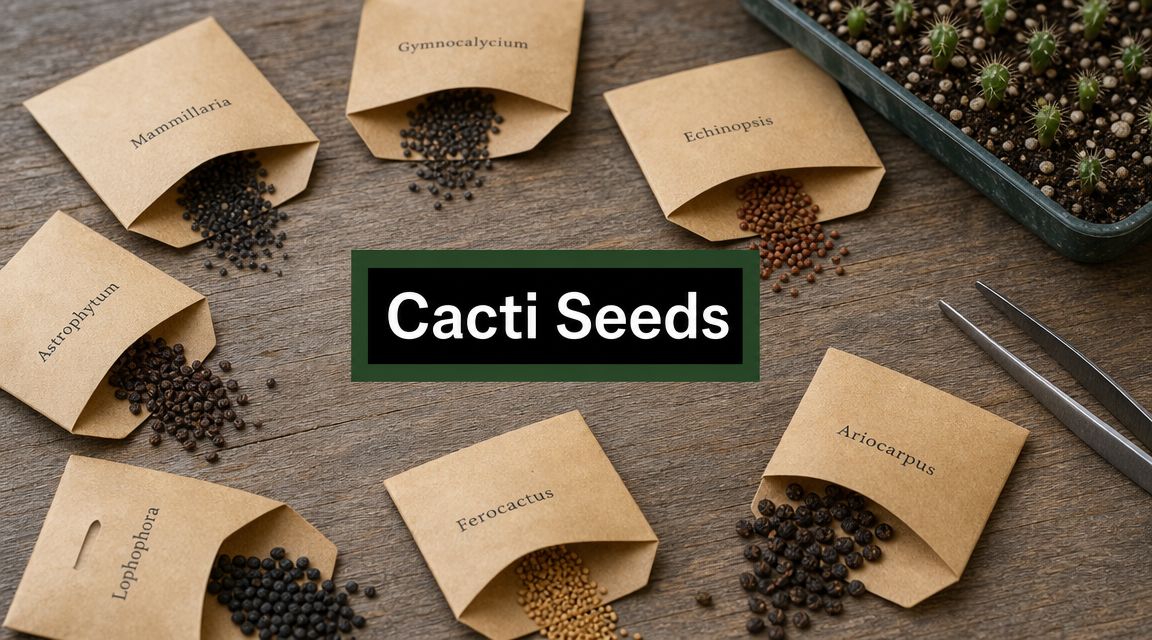
One reason shoppers get overwhelmed is the range of pack sizes. The commercial trade often uses high-volume formats. Major sellers market mixes in packets of 1,000 or 2,000 seeds, and some listings offer 100+ mixed cactus seeds with genera such as Cereus, Parodia, and Opuntia, according to Outsidepride's cactus seed listings. That tells you two things. First, seed is often sold with propagation in mind, not one-seed novelty buying. Second, sellers are serving both hobbyists and starter growers.
Specialist seed vendors
Specialist cactus or succulent seed sellers are usually the cleanest starting point if you want specific species names and at least some taxonomic care in the listing. They tend to suit collectors, repeat growers, and buyers who already know what they want.
The upside is better labeling and often a stronger focus on cactus as a category. The downside is that availability can be uneven. Rare species may appear briefly and sell out.
If you're comparing broader plant sellers as part of your search, a useful reference point is this roundup of the best online cactus store options, which helps you separate plant-focused retailers from general seed marketplaces.
Marketplaces and mixed packs
Etsy, eBay, and similar marketplaces are where many beginners start. That's not always a mistake. These sites can be a practical place to buy mixed seed lots, especially if your goal is to practice germination rather than build a carefully identified collection.
Still, marketplace buying requires more skepticism. Seller photos may show mature specimens from several species while the seed packet itself is a generic mix. That's fine if you understand what you're buying. It's disappointing if you thought you were ordering one exact type.
Consider marketplaces when you want:
- A low-risk practice batch for learning how cactus seed behaves
- Mixed genera for variety and experimentation
- Small purchases that let you test a seller before buying again
Hobby exchanges and collector circles
Botanical garden exchanges, club seed lists, and hobby forums can be excellent sources, especially if you care about provenance or uncommon material. The challenge is consistency. Listings may be less polished, ordering may be slower, and shipping policies may be informal.
Buy from people who sound like growers, not just sellers. The best listings usually reflect someone who has actually handled, sown, and labeled the seed themselves.
The right source depends on your goal. If you want dependable practice, mixed packs from established sellers are fine. If you want named species and a collection you can track over time, lean toward specialists and serious hobby growers.
Decoding the Listing How to Evaluate Cacti Seeds
A cactus seed listing can look simple. Name, photo, quantity, buy button. But the details matter more here than they do with many garden seeds. Good buyers slow down and read the listing like they're inspecting a label at a nursery bench.

One of the biggest sources of confusion is that “cactus seed” can mean wildly different plants. Retail listings often mix genera such as Cereus, barrel cacti, and Opuntia, so buyers need to check whether a pack is aimed at indoor pots or outdoor landscaping. Those packs are also commonly sold in formats such as 50 seeds or 100+ seeds, which helps when planning trays and spacing, as seen in this mixed cactus seed listing on Etsy.
Start with the plant identity
Common names are useful for browsing. They're not enough for buying.
If a listing says only “mixed cactus” or “desert cactus assortment,” assume you're buying for variety, not precision. If a listing gives a scientific name, that's a better sign. If it lists several genera, make sure that mix matches your goal. A small ornamental indoor tray and a future outdoor xeriscape project are not the same purchase.
Ask yourself: what am I trying to grow, and where will it live later?
Read quantity in practical terms
Seed count matters because cactus seeds are tiny and often sown in groups. Fifty seeds may be a reasonable batch for a beginner. A much larger packet might be a bargain, or it might be more seed than you can handle before storage and labeling become sloppy.
Don't judge a listing only by price. Judge it by whether the quantity fits your setup, your patience, and your record-keeping habits.
Look for clues about freshness and handling
Many listings won't provide harvest details. That's frustrating, but it's common. When a seller does mention recent seed collection, lot information, or storage practices, that's useful. If they say nothing, the next best clues are how carefully the listing is written and whether the shop consistently sells seed as a category rather than as a random add-on.
A tidy listing doesn't prove viability. But vague descriptions, mismatched photos, and no species detail should lower your confidence.
If the listing is careless, expect the packet to be careless too.
Use seller reputation the right way
Reviews help, but they need interpretation. Cactus seeds are slow, and many buyers leave feedback before they've even sown the packet. A five-star review that says “arrived fast” tells you something about shipping, not much about seed quality.
Better review signals include comments about labeling, communication, clear packaging, and whether repeat buyers return for additional lots.
Here's a checklist you can keep beside your screen.
| Evaluation Criterion | What to Look For | Red Flag |
|---|---|---|
| Plant name | Scientific name or clearly described mix | Only vague common names |
| Intended use | Indoor ornamental, specimen growing, or landscape clues | No hint of growth habit or final use |
| Quantity | A count that matches your tray space and goals | Huge quantity with no plan for sowing or storage |
| Seller photos | Images that match the stated species or honest mixed-pack photos | Glamour shots that don't match the listing |
| Listing detail | Notes on lot, collection, or handling | Thin description with copied-looking text |
| Reviews | Feedback mentioning labeling and seed experience | Reviews focused only on delivery speed |
Questions worth asking before you buy
A short pre-purchase message can save you a bad order. You don't need to interrogate the seller. You just need a few practical answers.
- Ask about identification if the species name matters to you.
- Ask about pack quantity if the count is vague.
- Ask about intended use if it's a mixed lot and you're unsure whether it suits containers or outdoor planting starts.
- Ask how the seeds are packaged if you're ordering during hot or wet weather.
The strongest buyers don't chase the prettiest listing. They buy the clearest one.
Understanding Shipping and Legal Considerations
Shipping is where many seed buyers get blindsided. The listing looks straightforward, the checkout works, and then the order stalls in customs, gets rejected by local rules, or arrives without the paperwork your country expects.

This isn't only an international problem, but that's where it becomes most serious. Some cactus species face tighter regulation than others. Some countries treat seed differently from live plants. Others still require documentation for seed imports. A seller can be honest and still ship you something that your local authority won't admit.
Know the rules before checkout
Start with your own location, not the seller's promises. Check whether your country or state restricts plant seed imports, requires permits, or expects inspection paperwork.
Two terms come up often:
- Phytosanitary certificate. This is documentation used in plant trade to show a shipment meets plant health requirements.
- CITES-related restrictions. Some cactus species fall under trade controls that can affect cross-border movement.
If you're new to the paperwork side, this guide for shipping live plants and seeds gives a practical overview of USDA compliance, documentation, and what can delay a shipment.
Ask sellers specific questions
A vague message like “Do you ship to my country?” isn't enough. Ask questions that produce usable answers.
- Can you provide any required plant health paperwork if my destination needs it?
- How are seeds packed to stay dry and correctly labeled?
- Will the customs declaration identify the contents clearly?
- Are there any species in this order that may face additional restrictions?
You don't need to be paranoid. You do need to be organized.
Match the source to the risk
Domestic buying is often the easiest route for beginners because it removes much of the legal complexity. International orders make more sense when you want a species or seller you cannot find locally.
If your interest leans toward iconic desert species, it also helps to compare the seed route with legal, established-plant buying. For example, shoppers considering larger specimen pathways sometimes start with guides on where to buy saguaro cactus, which can clarify when a plant purchase is more practical than a seed import.
A cheap seed packet becomes expensive the moment it gets held, returned, or confiscated.
Packaging matters too. Seeds should arrive dry, clearly labeled, and protected from crushing. If a seller can't explain how they pack seed, I'd think twice before ordering anything rare or hard to replace.
A Beginners Guide to Germinating Cacti Seeds
Once your seeds arrive, your job changes. Buying was about judgment. Germinating is about cleanliness, moisture control, and restraint.
A simple covered-container approach works well for beginners because it creates a stable, humid environment without expensive equipment.

A practical grower protocol recommends sowing cactus seeds densely in a warm, humid, low-light setup with sterile media. One method suggests 50 to 100 seeds per small propagation tub, which shows that even a modest packet can be operationally useful for a real germination run, as described in this takeaway tek cactus seed guide.
A beginner-friendly setup
Use a shallow plastic tub with a clear lid or loose transparent cover. Fill it with a fine cactus mix that has been sifted so seedlings aren't landing on bark chunks and cavities. The goal is an even surface that stays lightly moist, not soggy.
Scatter the seed across the surface. Don't bury it too much. Most cactus seed is too small for heavy covering, and beginners often lose good seed by planting too deep.
Before you continue, it helps to see the process in action:
The core conditions that matter
Cactus seed doesn't need dramatic treatment. It needs consistency.
- Use clean media so fungi and algae don't take over first.
- Keep the mix damp, not wet because stale wet soil invites trouble.
- Cover the container to hold humidity around the seed.
- Give bright but indirect light rather than hot direct sun.
- Avoid constant fiddling once the setup is stable.
If contamination worries you, these expert contamination avoidance tips are useful reading. They come from a different cultivation context, but the cleanliness habits translate well to seed starting.
What beginners usually overdo
They water too much. They uncover too often. They put the tub in harsh sun. Or they panic when nothing happens immediately.
Cactus seedlings don't reward impatience. They reward stable conditions.
A good germination area is bright, warm, and protected from sharp temperature swings. Once seedlings are established, you can slowly increase airflow and light. If your long-term goal includes species such as saguaro, this practical guide on how to grow saguaro cactus is a helpful next step after germination.
Keep your first batch simple. One container, one seed mix, one light location. Complexity is where beginners create preventable failures.
Storing Seeds for Future Growing Success
Those who buy cactus seed often end up with more than they can sow at once. That's not poor planning. It's normal. Once you discover how many species are available, especially in small, countable packets, it's easy to build a backlog.
The online cactus seed trade now gives buyers access to globally distributed genetics in small lots. Specialty sellers even offer uncommon species such as Cleistocactus winteri and Pilosocereus azureus in 10-seed increments, which makes it practical to build a collection slowly and deliberately, as shown on Epic Gardening's mixed cacti seed product page.
The three storage rules
Seed storage is simple in principle. Keep seeds:
- Cool
- Dark
- Dry
That combination slows down the things that shorten viability. I store seed in clearly labeled packets inside an airtight container, with a moisture-absorbing packet if available, and keep that container in a cool spot. Many hobbyists use a refrigerator for longer storage, as long as the container stays sealed against humidity.
How to stay organized
The biggest risk isn't always age. It's confusion.
Label each packet with the species name as sold, the seller, and the purchase date. If you split packets into smaller envelopes, carry that information onto every envelope. Don't trust yourself to remember later. You won't.
A simple notebook or spreadsheet also helps. Record what you've sown, what's still in storage, and what you want to germinate next season. That turns random buying into an actual seed library.
When to avoid bulk buying
If you're still learning germination, don't buy huge lots just because the price looks attractive. Small, well-labeled packets are easier to manage, easier to test, and easier to store properly. Build your own seed bank slowly. That approach usually produces better habits and fewer mystery packets.
Common Questions About Growing Cacti from Seed
A few questions come up in almost every conversation about cactus seed. They're practical questions, and the answers are usually less dramatic than people expect.
How long until they look like real cacti
Longer than most beginners think.
You'll usually see tiny seedlings long before you see anything that resembles the mature plant pictured on a listing. Early growth can be subtle. Seedlings may stay small for quite a while, and different species mature at different rates. If your mental picture is “packet in, decorative cactus out,” you'll be disappointed. If your mental picture is “slow project with visible milestones,” you'll enjoy it more.
Many people can germinate cactus seed. Fewer people enjoy growing the seedlings long enough to appreciate what they become.
Can you collect seeds from your own cacti
Sometimes, yes. But it depends on whether your plant flowers, whether pollination happens, and whether the species can set seed under your growing conditions. Some growers hand-pollinate. Others rely on natural pollinators where conditions allow.
The practical challenge is less about the idea and more about plant maturity and patience. A cactus has to reach flowering stage first, and that may take a long time. Seed saving can become a rewarding side of the hobby, but it usually comes after you've already learned basic cultivation.
What are the easiest seeds for a first try
For a first sowing, I'd favor clearly labeled, common species or a straightforward mixed packet from a seller who accurately presents the mix. That gives you room to practice with germination technique without attaching all your hopes to one rare species.
Good first-batch traits include:
- Clear labeling so you can track what you planted
- Enough seeds to practice without feeling precious about every one
- An intended use that matches your setup, such as indoor ornamental growing rather than eventual outdoor landscaping
- A seller who answers questions clearly
I'd avoid starting with expensive rarity, mystery listings, or a huge assortment you can't keep organized.
Is buying seed actually the right move for most people
Not always.
For collectors, experimental growers, and people who enjoy propagation, seed is a smart and satisfying route. For decorators, gift shoppers, and anyone wanting immediate impact, established plants are usually the better purchase. The mistake isn't buying seed. The mistake is buying seed while expecting plant-level speed.
If you go in with the right expectations, cactus seed can be one of the most interesting corners of the hobby.
If you're deciding between starting from seed or buying established specimens, The Cactus Outlet is one place to compare options. The site focuses on cacti and succulents, with product details and care information that can help you choose whether your next purchase should be a packet of seed or a plant that already has some size.