
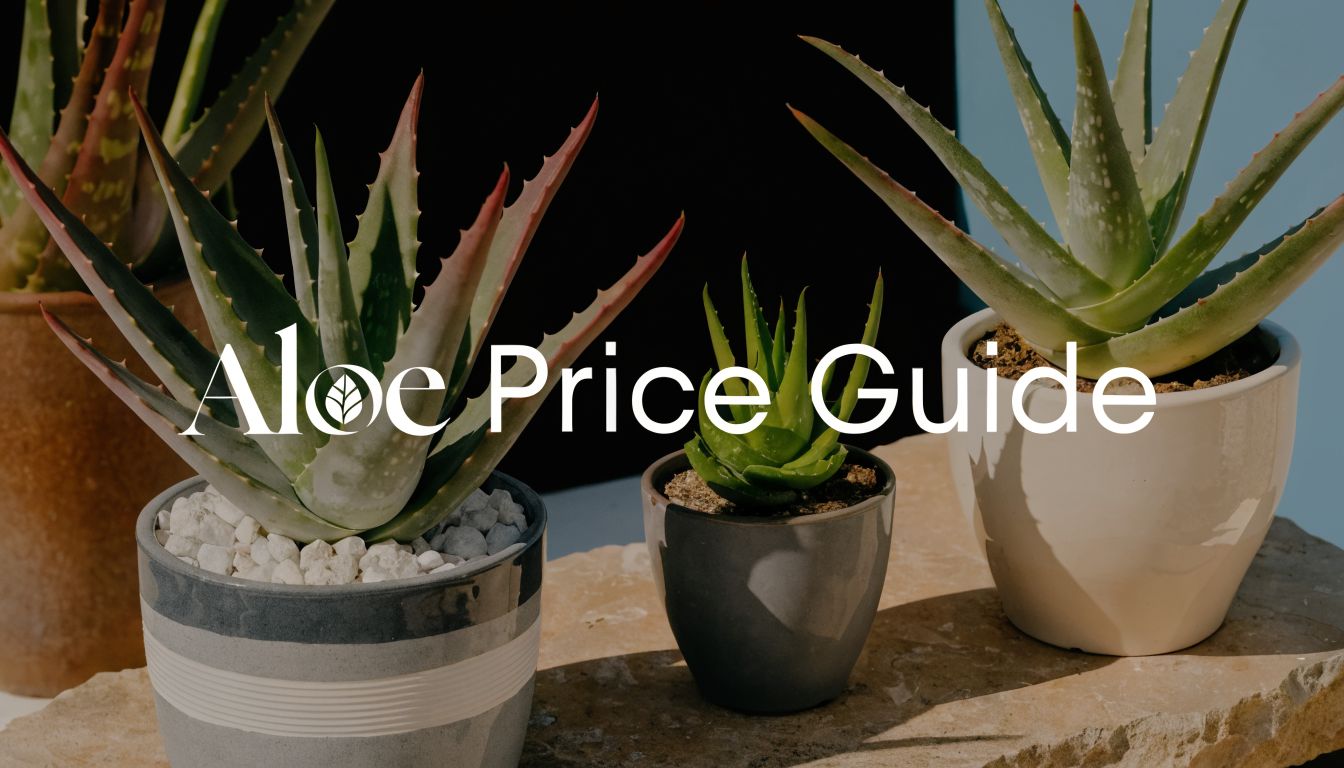

Aloe vera plants price usually falls between $5 and $30 for a typical retail plant, with small starters often under $10, medium 5 to 6 inch pots commonly at $10 to $18, and larger mature plants reaching $18 to $30 or more. If you're staring at one aloe for a few dollars and another for far more, the gap usually comes down to plant size, age, pot, shipping, and how much risk the seller is taking to get it to you in good condition.
Most shoppers run into the same confusion. A small aloe at a big-box store looks cheap. A larger one online looks expensive. Then you notice one comes in a plain nursery pot, another includes a heavier planter, and a third may not show shipping until checkout.
That's where people make the wrong comparison. They compare sticker prices instead of comparing what arrives at the door, how established the root system is, how much soil and pot you're paying for, and whether the plant is likely to settle in without problems. For aloe vera plants price shopping, that difference matters more than expected.
Why Aloe Vera Prices Seem So Inconsistent
You see a $7 aloe at a big-box store, then open an online listing for $22 plus shipping and wonder how both can belong to the same plant category. In nursery sales, that happens because the sticker price is only one part of the cost.
What you are really buying is the total package: the age of the plant, the strength of the root system, the pot size, the amount of soil, the labor behind growing it, and the risk the seller takes getting it to you in good condition. I see shoppers compare a small local pickup plant to a shipped, established aloe in a heavier pot, and those are two different products even before shipping enters the equation.
Similar plant, different landed cost
Aloe prices swing for a few practical reasons:
- Starter plant versus established specimen: A younger aloe costs less upfront because the grower has less bench space, water, and time invested in it.
- Nursery pot versus decorative container: A plain plastic pot is cheaper to produce and cheaper to ship. Ceramic or styled planters raise both the item price and the freight cost.
- Store pickup versus shipped plant: Shipping adds packing materials, labor, box size, and some level of loss risk if the plant gets bruised, chilled, or delayed.
- Mass retail versus specialist grower: A chain may sell a basic aloe cheaply, while a specialist may charge more for stronger roots, cleaner stock, or better packing.
That last part matters more online than many buyers expect.
A low list price can still turn into a poor deal if the plant arrives small for the pot, poorly rooted, or stressed from transit. A slightly higher-priced aloe can be the better buy if it arrives established, packed correctly, and ready to grow without a recovery period. That is the actual value question.
The same pricing logic shows up across succulents in general. If you want the grower-side explanation, why large cacti and succulents cost more breaks down the labor, time, and shipping pressure behind bigger plants.
Aloe Vera Price Benchmarks You Can Expect
A customer sees a $7 aloe at a chain store, then finds a similar-looking one online for $19 and assumes the online seller is overcharging. After freight, heat packs, and a sturdier box, that online plant may land at $30 or more. The chain-store plant may still be the better deal, or it may be undersized, poorly rooted, and due for repotting the same week. That is why I start with price benchmarks, then adjust for what the buyer is receiving.
Typical retail price ranges
For a plain aloe vera in a standard nursery pot, these ranges are a useful starting point:
| Plant Size / Pot Diameter | Typical Price Range |
|---|---|
| Starter plants under 4 inches | Under $10 |
| Medium plants in 5 to 6 inch pots | $10 to $18 |
| Large or mature plants in 7+ inch pots | $18 to $30 or more |
Use those numbers as shelf-price benchmarks, not final cost benchmarks.
Aloe vera stays affordable in the common houseplant sizes. Prices usually climb once the plant is fuller, better established, sold in a nicer container, or packed for shipment instead of local pickup.
What different retail channels tend to look like
Retail channel changes the price range as much as plant size does.
- Big-box stores: Usually the lowest sticker price for small, basic aloe in plastic nursery pots.
- Local nurseries: Often higher than chains because the plants are better rooted, better maintained, and not left on dry retail benches for long stretches.
- Online specialty sellers: Commonly higher upfront because the listing has to cover packing labor, shipping materials, and the risk of transit damage.
This is the part many first-time buyers miss. Two aloes can measure the same across, sit in the same pot size, and still represent very different value. One may be a fresh offset that was potted recently. The other may be established, symmetrical, and ready to keep growing without a setback.
A practical way to read the benchmark
I tell customers to sort aloe pricing into three buckets. Cheap, fair, and expensive for the size.
If a small aloe is priced low and looks healthy, that is usually fine for local pickup. If a medium or large aloe is priced above the usual range, check what is included before dismissing it. The seller may be charging for a heavier pot, fuller plant, cleaner presentation, or shipping protection that keeps the aloe from arriving loose in dry soil.
Buying benchmark: Compare aloe by size first, then by root development, fullness, pot type, and delivered cost. That order keeps you from treating a weak bargain plant and a strong established plant as if they were the same item.
Large specimen aloe is its own category. Once the plant is sold as patio stock, decor, or outdoor planting material, pricing gets less predictable because freight, container size, and handling start to dominate the bill.
The 4 Key Factors That Determine Aloe Price
Aloe pricing gets easier to judge when you stop asking, “Why is this one more?” and start asking, “What cost did the seller absorb before I ever saw the listing?”

Size and growing time
This is the biggest driver by far. A larger aloe isn't just a small one with extra leaves. It represents more months or years of bench space, potting soil, watering, repotting, cleanup, and loss risk.
Examples from online nursery listings make that clear. A 6-inch pot aloe vera was listed at $40.95, a 5-gallon aloe vera at $38.75, and a full-size 6 to 8 ft aloe vera at $155 in these specimen-size aloe listings. The exact progression doesn't move in a neat straight line because plant form, fullness, and presentation change with the container and seller. But the broad pattern is obvious. Bigger plants demand higher prices because they require more space and a longer growing cycle.
Pot, soil, and presentation
A plain nursery container is functional and cheap. A decorative ceramic pot is heavier, more breakable, and more expensive to ship. Better cactus or succulent mix also raises cost.
Some listings make the plant look expensive when part of what you're buying is the presentation package. If your goal is to grow aloe, a basic pot often gives better value. If your goal is gifting or staging a room, the dressed-up version may still make sense.
Seller model and overhead
A big-box chain can price differently from a specialty nursery because it buys in volume and expects some losses. A local nursery may charge more because staff have already sorted, watered, and culled weaker stock. An online seller prices in labor for packing, insulation, and live-arrival risk.
Here's the practical difference:
- Chain retail: Lower entry price, less individual attention.
- Independent nursery: Better chance to inspect quality before purchase.
- Online specialty shop: More selection, but shipping execution becomes part of the value.
Plant maturity and intended use
A small aloe is a houseplant purchase. A large aloe can become a design asset. That's why mature plants often feel disproportionately expensive. Buyers aren't just paying for biomass. They're paying for a finished look they don't want to wait years to achieve.
If you need instant visual impact, you're paying for time already invested. If you can wait, you can save money by buying small.
How to Evaluate Value Beyond The Price Tag
A low sticker price can be the most expensive way to buy a plant. That sounds backward until you look at total landed cost, which means the actual cost of getting a healthy aloe to your home in usable condition.

The number on the product page is only the start
A small 3.5-inch potted aloe at Walmart might be listed around $14.97, while other sellers list larger or more established plants at higher prices. But as noted in this discussion of online aloe value and shipping, the final value is hard to judge without comparing shipping fees, plant quality, and seller guarantees.
That's the right way to think about aloe vera plants price online. Don't ask only, “What does it cost?” Ask, “What will I have spent when it's in my hands, and what condition is it likely to be in?”
What actually creates value
I tell buyers to look at five things together:
- Plant size for the listed pot: Some plants are nicely filled out. Others are undersized for the container.
- Root establishment: A rooted aloe settles in faster than a plant that was recently potted up to look bigger.
- Shipping method: Good packing materials cost money, but crushed leaves and broken pots cost more.
- Seller guarantee: A replacement policy lowers your risk.
- Pot and soil weight: Heavy decorative setups can inflate freight cost fast.
Practical rule: Compare the delivered offer, not the advertised number.
A simple way to compare listings
Use this short checklist before you buy:
- Read the pot size carefully. A “large” aloe may only mean wider foliage, not a significantly bigger root ball.
- Check if shipping is included. Some sellers build it into the price. Others add it at checkout.
- Study the product photos. You want a plant that looks stable, rooted, and proportionate to the pot.
- Look for arrival and return details. If the listing is vague, your risk is higher.
- Ask what your goal is. Cheap starter, gift plant, decor piece, or garden filler are four different purchases.
A $10 plant that arrives stressed, loose in the pot, or badly packed isn't a deal. A more expensive plant that arrives healthy, rooted, and ready to grow often is.
Smart Strategies for Saving Money on Aloe Plants
If your goal is value, not just the lowest upfront cost, there are a few buying habits that work well every time.

Buy smaller if you have patience
This is the simplest money-saving move. Buyers often ask why a bigger aloe costs so much more than a small one. One useful benchmark answer is that mature, display-ready plants can cost 10 to 15 times more than smaller ones because they reflect years of growth and higher handling costs, as discussed in this aloe pricing FAQ focused on maturity and value.
If you don't need instant impact, starter plants are usually the better deal. You're trading time for savings.
Match the plant to the job
Aloe purchases usually fall into one of these buckets:
- Windowsill grower: Buy a smaller, healthy starter in a plain nursery pot.
- Gift plant: Spend more for a fuller plant and cleaner presentation.
- Room styling or entryway decor: Consider a larger specimen because appearance matters immediately.
- Outdoor accent planting: Look for strong root systems over fancy containers.
If you're styling an entryway or patio, it also helps to browse front porch design concepts so you choose a plant size that fits the space instead of overbuying on impulse.
Look for ways to cut transport cost
Shipping often punishes bulky pots more than healthy plants. A few practical ways to save:
- Choose nursery pots over decorative containers: You can repot at home.
- Consider bare-root options when appropriate: Less soil and pot weight can reduce shipping pressure.
- Bundle purchases: Ordering multiple plants at once can make freight more efficient than separate small orders.
- Buy from a seller that explains plant handling clearly: For example, guidance on propagating and growing aloe can help you decide whether starting smaller makes sense for your situation.
A patient gardener should almost always buy the smaller aloe and grow into the larger look.
What doesn't work
Chasing the absolute lowest advertised price usually backfires when the plant is weak, recently potted up, or poorly packed. Paying for a decorative pot you don't even want also wastes budget. And buying a giant statement aloe for a space that only needs a compact plant is one of the easiest ways to overspend.
Ensuring Your Online Purchase Arrives Healthy
Online aloe shopping isn't just about price. It's about reducing the odds of disappointment. A healthy plant packed properly is worth more than a cheaper plant that arrives torn up, overwatered, or loose in a pot.
Wholesale markets remind us that aloe pricing isn't static. Tridge reported U.S. wholesale fresh aloe vera rising from $1.16 to $1.71 per kg in 2023 to $1.27 to $2.85 per kg in 2024 in this U.S. aloe vera wholesale pricing report. For retail buyers, the practical takeaway is simple. Sellers who source carefully and pack consistently are managing real cost pressure behind the scenes.
What good online plant shipping looks like
A reliable plant seller usually does a few visible things well:
- Clear shipping windows: You know roughly when the plant will leave and arrive.
- Protective packaging: The pot is stabilized, the foliage is secured, and excess soil movement is controlled.
- Weather awareness: The seller delays or adjusts shipments when conditions are rough.
- Transparent policies: Damage, delay, and live-arrival terms are easy to find.
Check before you order
Before you add an aloe to your cart, look for these details:
- Return or replacement policy
- Recent product photos that match the listing style
- Plant size description with pot reference
- Any note about shipping the plant dry or semi-dry
- A reputation for shipping live plants, not generic merchandise
If you're comparing specialty shops, a guide to what to look for in an online cactus and succulent seller is useful because the same shipping standards apply to aloe.
Buy from sellers who tell you how they ship. Silence on packing usually means you're the one taking the risk.
When the plant arrives, unpack it promptly, let it rest in bright indirect light, and don't rush to water if the soil is still moist. Aloe handles a short dry spell better than soggy recovery conditions.
If you want to compare aloe options from a specialist succulent retailer, The Cactus Outlet offers aloe plants alongside detailed product listings and care information, which makes it easier to judge plant size, form, and intended use before you buy.