

Most advice about succulents starts with the same bad shortcut: put them in the hottest, sunniest place you have and let them bake.
That works for some species. It fails for many others.
If you've got a north-facing room, an east window, a covered porch, or a patio that only gets gentle morning light, you are not shut out of growing succulents. You just need the right kind. Shade succulent plants are real, useful, and much more varied than most beginner guides admit. The catch is that “shade” does not mean darkness, and low light changes the way these plants grow, drink, and color up.
That trade-off matters. A Haworthia may stay handsome in filtered light. A colorful Echeveria may survive there, but lose the tones that made you buy it in the first place. Knowing the difference saves a lot of disappointment.
Busting the Myth of Sun-Loving Succulents
The old idea says all succulents want desert sun all day. That's too blunt to be useful.
Many gardeners hear “succulent” and think of blazing patios, gravel beds, and reflective heat. Then they look at their apartment, shaded courtyard, or protected entryway and assume succulents aren't an option. In practice, that's where a lot of people give up too early.

Shade tolerant is the key phrase
Most succulents grown for lower-light spaces are better described as shade tolerant, not deep-shade plants. Gardeners' World notes that most cacti and succulents are “shade tolerant,” and expert collections such as Debra Lee Baldwin's gallery include 80+ varieties suited to limited direct sun in climate-challenged gardens, which shows this is an established category rather than a rare exception (Gardeners' World on shade-tolerant succulents).
That wording clears up a common confusion. These plants don't want a dark hallway. They want good light without harsh exposure.
A useful reset: many succulents don't need punishment-level sun. They need the kind of light their species can actually use without scorching.
Why the myth persists
A lot of popular succulents are sold at their brightest color. Red edges, purple tones, tight rosettes, and heavy bloom all photograph well. Those traits often show best in brighter conditions, so shoppers start to think color equals health and sun equals success.
But succulent growing is more like choosing shoes than choosing paint. One pair is made for trail running. Another is made for office floors. You can wear either in the wrong place, but one will always perform better.
For beginners, that's good news. If your space gets filtered light, morning sun, or bright indirect light all day, you've got more options than the myth suggests.
What Shade Really Means for a Succulent
For succulents, light works like food. The plant uses it to build tissue, hold shape, and regulate water use. When people say “shade,” they often mean anything from a bright east window to the dim corner behind a sofa. To a succulent, those are completely different meals.
Four light situations that gardeners mix up
Here's the practical breakdown:
| Light type | What it looks like | Good for shade succulent plants |
|---|---|---|
| Deep shade | Very dim, little sky view, weak indoor corner | Poor for nearly all succulents |
| Bright indirect light | Strong ambient light, no sunbeam hitting leaves | Good for many indoor species |
| Dappled light | Flecks of sun through branches or lattice | Good for many outdoor shade-tolerant species |
| Morning sun with afternoon shade | Gentle direct light early, protection later | Excellent for many tender succulents |
Gardenia defines full sun as at least 6 hours of direct, unfiltered sunlight per day, and notes that some succulents such as Haworthia and Snake Plants do better in partial shade or filtered light. It also gives growers a useful benchmark that full-sun varieties generally need 5+ hours of direct sun, while others thrive in less (Gardenia on succulent sun needs).
That's why “low light” and “no light” can't be used interchangeably. A shade succulent can handle less direct sun. It still needs a quality light source.
A simple way to read the room
You don't need a meter to make a first decision. Use a hand-shadow check.
- Sharp dark shadow: the space is getting direct sun.
- Soft blurry shadow: the plant is in bright indirect or filtered light.
- Barely any shadow: the space is probably too dim for most succulents long term.
This isn't laboratory precision, but it's good enough to stop the most common mistake, which is treating a dark shelf like a plant spot just because it's near a window.
The beginner mistake
People often place a succulent where it “looks nice” instead of where it can feed itself. Then the plant stretches, pales out, and stays wet too long.
Deep shade is a starvation diet for a succulent. Bright indirect light is a modest, steady meal.
If you remember only one thing, remember this: shade succulent plants still need brightness. They just don't want the harshest version of it.
12 Thriving Succulents for Shadier Spots
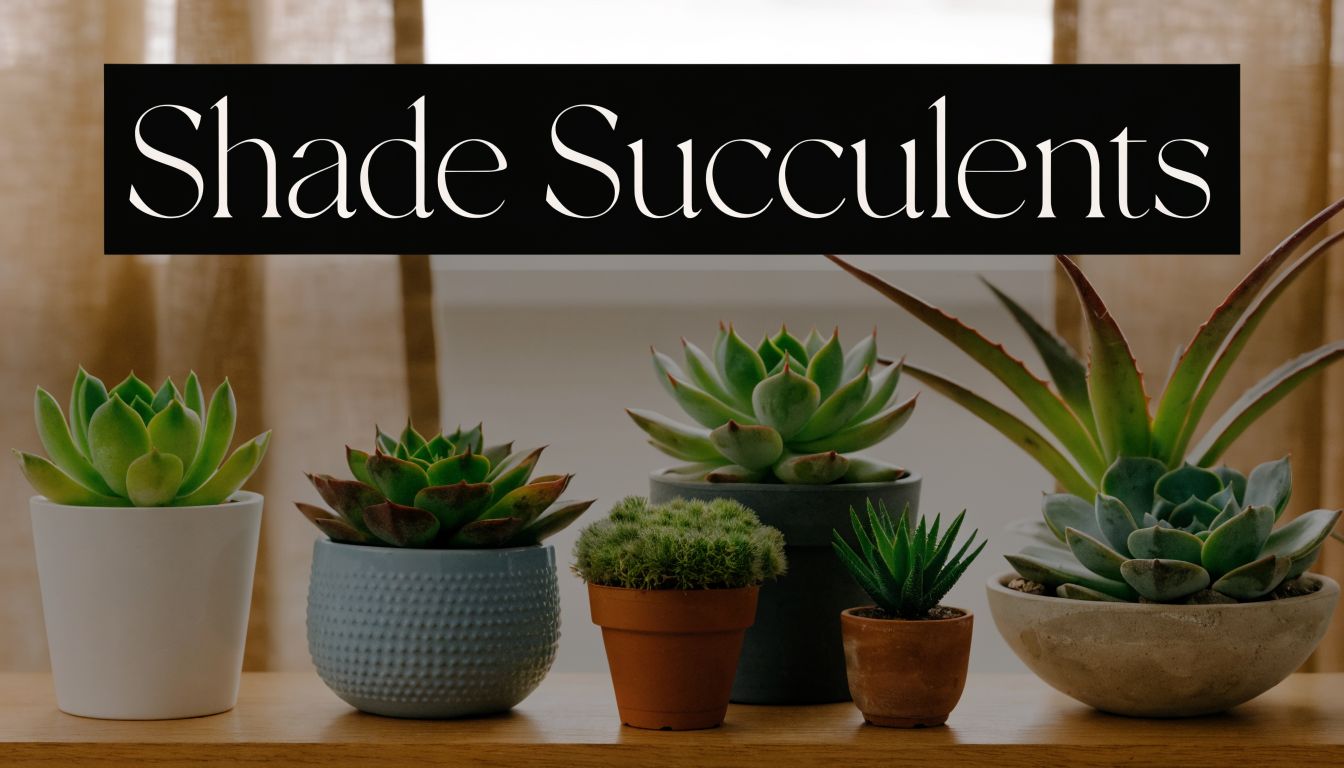
The fun part is choosing plants that already match your conditions. Shade-capable succulents are not oddballs. They're a broad group, and that's why collectors can build whole plantings around filtered light and protected exposure.

Strong choices for homes and patios
- Snake Plant One of the easiest entries into shade succulent plants. It handles lower light better than anticipated. Let the soil dry well between waterings.
-
ZZ Plant
Grown for glossy foliage and patience. It tolerates dimmer indoor conditions than many succulents, though growth will slow. Don't keep it constantly wet. -
Gasteria
Thick, tongue-shaped leaves and a forgiving nature make this a favorite for filtered light. It often looks better out of direct harsh sun than in it. -
Haworthia
Compact, architectural, and ideal for desks, shelves near windows, and small pots. It prefers bright indirect light over punishing afternoon exposure. -
Christmas Cactus
This is a forest-type cactus, so it already breaks the desert stereotype. It likes bright indirect light and rewards stable conditions. -
Rhipsalis
Another jungle-type cactus with trailing stems. It feels more at home in airy, filtered conditions than in hot direct sun.
Plants that can work with the right expectations
-
Sedum morganianum, Burro's Tail
It can manage partial shade, especially where light is bright but indirect. Handle it gently, because leaves drop easily. -
String of Pearls
Best where there's strong brightness without fierce afternoon sun. Hanging placement near a bright window often works well. -
String of Hearts
Lovely in baskets and on shelves, but light affects color. Keep it bright if you want stronger contrast in the leaves. -
Kalanchoe blossfeldiana
A useful option for bright indoor spots and protected patios. For flowering performance, give it the brightest indirect light you can. -
Echeveria, selected varieties
Some lighter-colored or greener forms adapt better than highly stressed pastel or red-edged types. Don't expect the same compact shape you'd get in stronger sun. -
Jade Plant
It adapts better to indoor life than many rosette succulents. In lower light it stays alive, but in brighter conditions it usually grows tighter and sturdier.
Which ones are most forgiving
If you're buying your first shade succulent plant, start with the species that still look good when they're not under stress color.
- Most forgiving indoors: Snake Plant, ZZ Plant, Haworthia, Gasteria
- Best for filtered outdoor spots: Aloe, Kalanchoe, Rhipsalis, some Jade plants
- More demanding about appearance: String of Hearts, String of Pearls, many Echeverias
Debra Lee Baldwin also points out that species selection matters more than the generic “shade-tolerant” label, especially for smooth-leaved, non-desert succulents such as aloes and kalanchoes in dappled conditions. If you want more indoor-friendly options, this guide to best succulents for indoors is a useful companion.
A quick reality check on labels
Retail tags often flatten everything into “sun” or “shade.” That's not enough. A Haworthia in bright indirect light can look perfectly at home. An Echeveria in the same place may survive, but become looser and greener.
Choose for the room you have, not the photo on the tag.
Placing Your Shade Succulents for Optimal Growth
Placement is where most successes are won. The plant itself may be right, the pot may be right, and the soil may be right. But if it sits three feet too far from useful light, it won't show you its best form.

Indoors where light is gentler
An east-facing window is often the easiest place to start. Morning sun is milder, and many shade-tolerant succulents appreciate that pattern.
A bright north-facing room can also work if the plant sits close to the window rather than buried in the room. Think of windows as campfires. You feel the effect most when you're near them.
For south-facing windows, distance matters. Glass can intensify heat, especially in warm climates. A plant that likes filtered light may do better a little back from the pane, or with sheer curtain protection during the hottest part of the day.
Outdoors where sun is broken up
Protected outdoor spots are often better than people think.
- Under eaves: useful where midday sun is blocked
- Near a wall with morning exposure: good for gentle direct light and afternoon relief
- Beneath open tree canopy: ideal for dappled light, as long as airflow stays decent
- Covered patios: good for Haworthia, Gasteria, Aloe, and similar plants if the space is still bright
In hot climates, a technical benchmark for protection is 35% to 70% shade cloth, with stronger shading reserved for harsher summer conditions. Gradual change matters just as much as the final spot, because sudden shifts in light can stress succulent tissue (summer succulent care and shade cloth guidance).
Acclimation is not optional
A nursery-grown plant may arrive from brighter conditions than your home. If you move it straight into a dim corner, it can stall. The reverse is even riskier. A plant grown in softer light can scorch fast if placed into direct hot sun.
Practical rule: move succulents the way you'd adjust your eyes entering daylight. Gradually, not all at once.
A short visual walkthrough can help with placement decisions:
A small placement checklist
Before you set the pot down for good, ask:
- Can this spot see bright sky for much of the day?
- Does the plant get morning light, filtered light, or only gloom?
- Will hot glass or reflected heat turn a gentle spot into a harsh one?
- Am I changing the plant's light level slowly enough?
Those questions prevent more trouble than fancy gear does.
Why Your Shade Succulent Is Losing Its Color
This is the complaint many growers don't expect. The plant is alive. It may even be growing. But the red edge disappears, the purple flush fades, or the patterned contrast gets weaker.
That doesn't always mean the plant is sick. It often means the light level changed the way the plant presents itself.

Why fading happens
In lower light, many succulents lean harder on green chlorophyll. That helps them gather what light they can. The result is often a greener, softer-looking plant.
Epic Gardening gives a simple example with String of Hearts, whose normally dark leaves can fade to pale, light green without enough light. That issue is common across colorful succulents, yet many care guides barely mention it (Epic Gardening on shade succulents and color fading).
Which plants disappoint most in shade
Some succulents are sold on color first and form second. These are the ones most likely to frustrate buyers in low-light settings.
| Plant type | What often changes in shade |
|---|---|
| Colorful Echeverias | Less edge color, looser rosette |
| String of Hearts | Faded leaf contrast |
| Some Aloes and variegated forms | Reduced intensity in markings |
| Green Haworthias and Gasterias | Often stay attractive with less dramatic change |
That last line is important. Not every succulent is supposed to look sun-stressed and dramatic. Some are naturally handsome in green.
What to do about it
If you want some color retention without scorch, aim for the brightest filtered conditions you can provide. Morning sun plus afternoon protection is often the sweet spot.
If the plant has already faded, don't panic. First improve light modestly, then wait for new growth to show the change. Avoid swinging from dim shade to hard sun in one jump.
If yellowing, soft tissue, or collapse is part of the problem, light may not be the only issue. Watering trouble can overlap with low-light stress, and this guide on why a cactus turns yellow can help sort those symptoms.
Buy green-patterned succulents for shaded spaces. Buy stress-colored succulents only if you can offer brighter conditions.
Watering, Soil, and Container Tips for Shade
Lower light changes everything about watering. When a succulent gets less light, it usually grows more slowly and uses moisture more slowly too. The plant isn't lazy. It just has a smaller energy budget.
That's why overwatering is so common with shade succulent plants. People keep the same schedule they'd use on a sunny sill, but the pot stays wet longer.
Water less often, not just a little less
The fix isn't tiny sips on schedule. It's full watering followed by real drying time.
Use this pattern instead:
- Water thoroughly: soak the root zone so all the soil gets moisture.
- Let the mix dry: wait until the potting mix has dried appropriately before watering again.
- Adjust by season and placement: a bright porch and a dim office will not dry at the same pace.
A succulent in shade can sit in damp soil longer than it should, and roots hate stale moisture. If you're always unsure about potting media, this guide to soil for succulent plants is worth keeping handy.
Soil should be sharper in lower light
In shade, I lean toward a faster-draining setup, not a richer one. Rich soil holds more moisture than many succulents can use in lower light.
A good shade-friendly succulent setup usually includes:
- Fast drainage: gritty succulent mix rather than dense houseplant soil
- Air around roots: particles that don't compact quickly
- A pot with a drainage hole: essential for beginners
Container choice matters more than people think
Terracotta earns its keep with shade-grown succulents because it breathes. That extra airflow can help offset slower drying. Glazed pots and plastic pots can work too, but they usually hold moisture longer, so you have less margin for error.
Here's a simple comparison:
| Container | How it behaves in shade |
|---|---|
| Terracotta | Dries faster, more forgiving |
| Glazed ceramic | Holds moisture longer |
| Plastic | Light and practical, but can stay wet longer |
Read the plant, not the calendar
A thirsty succulent in shade often shows it more subtly than one in full sun. Leaves may lose a bit of firmness. The pot may feel much lighter. Growth may pause.
What you don't want is constantly damp soil, translucent leaves, or a base that starts softening. Those signs point to excess moisture, especially when light is limited.
How to Choose a Healthy Shade Succulent
Buying the right plant is easier when you stop shopping by label alone. “Low light” can be stretched pretty far in retail language, and a plant that survives low light is not always a plant that stays attractive there.
A better shopping checklist
- Look for compact growth: stretched stems and widely spaced leaves usually mean the plant already wanted more light.
- Choose species that suit filtered conditions: smooth-leaved, non-desert succulents such as aeoniums, aloes, and kalanchoes are better adapted to bright, dappled shade than many cold-hardy sedums and sempervivums, which can decline in summer heat without shade (Debra Lee Baldwin on late-summer succulent care).
- Examine the foliage: if the plant is meant to be green, even green color is fine. If you're buying it for pink, red, or purple stress color, make sure your space can support that look.
- Inspect crowded centers and leaf joints: pests hide there.
- Match the plant to the brightest realistic place you have: not the place you wish you had.
A good shade succulent doesn't need to be dramatic to be successful. It needs to fit your light, your watering habits, and your expectations.
If you're choosing shade succulent plants for a window, patio, or protected outdoor area, The Cactus Outlet offers cactus and succulent plants with care information that can help you match species to real growing conditions, not just the label on the pot.