
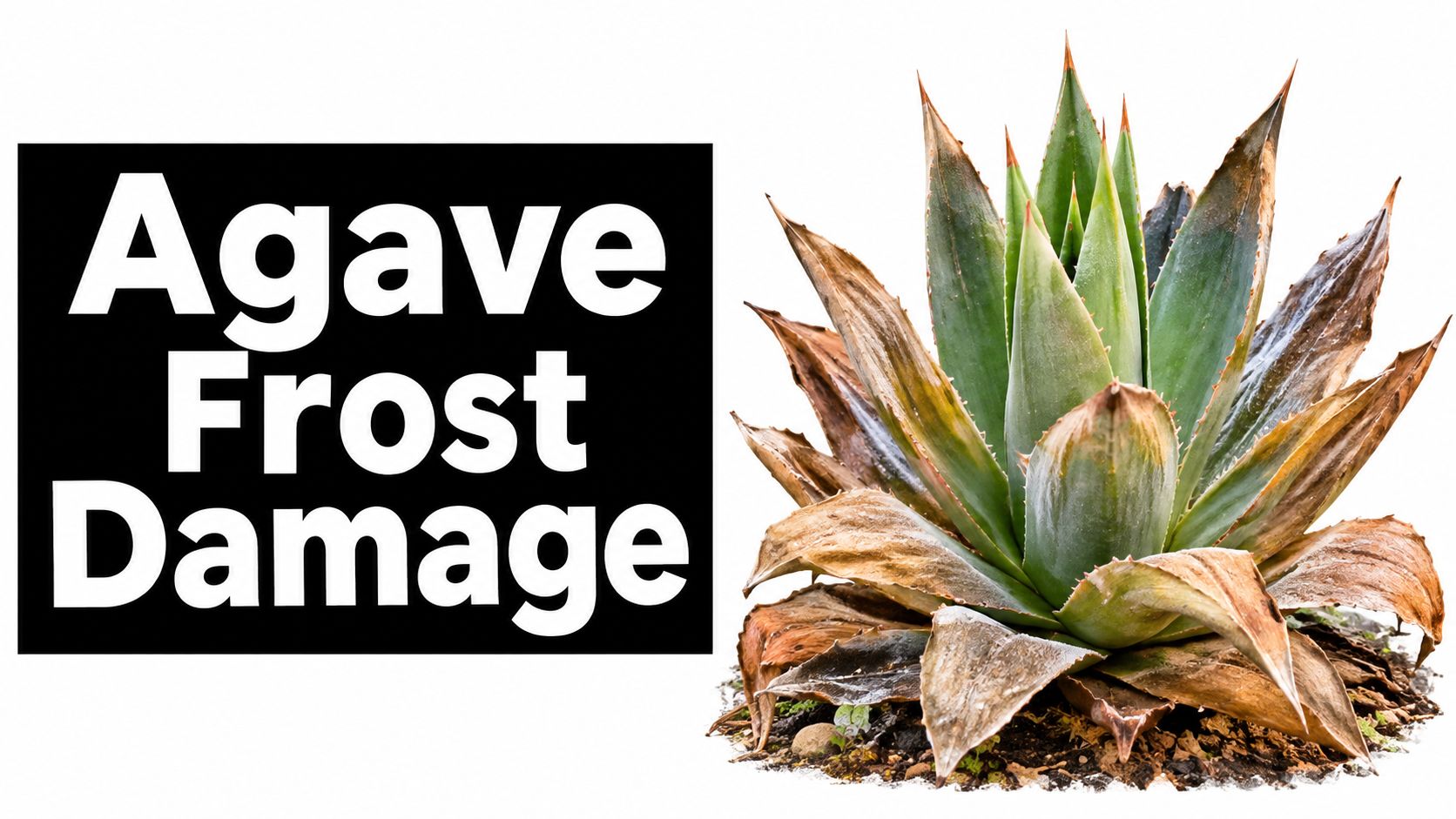

The coldest night of the year has usually happened by the time anyone notices agave frost damage. You walk out at sunrise, the thermometer reads 26°F, and the agave that shrugged off 115°F in July now has leaves that look wet where they should be matte and dark where they used to be blue.
The tag said Zone 8, or 15°F, or whatever number the grower printed. None of that tells you whether the plant in front of you will push a new center in spring or turn to mush in three weeks.
What decides the outcome is duller than a hardiness number. It's how long the tissue sat below freezing, whether the plant went into the freeze wet, and where on the rosette the injury sits. A dry crown with crisp outer leaves and a soft leaf base are two completely different diagnoses, and they call for opposite responses.
Frost Damage Signs and What Each One Means
Frost injury doesn't spread evenly across a rosette, so the fastest way to read severity is to sort what you're looking at. Start with the youngest leaves in the center and the ones facing the sky and the prevailing wind, because those take the radiation loss and the ice first. Then work outward and downward.
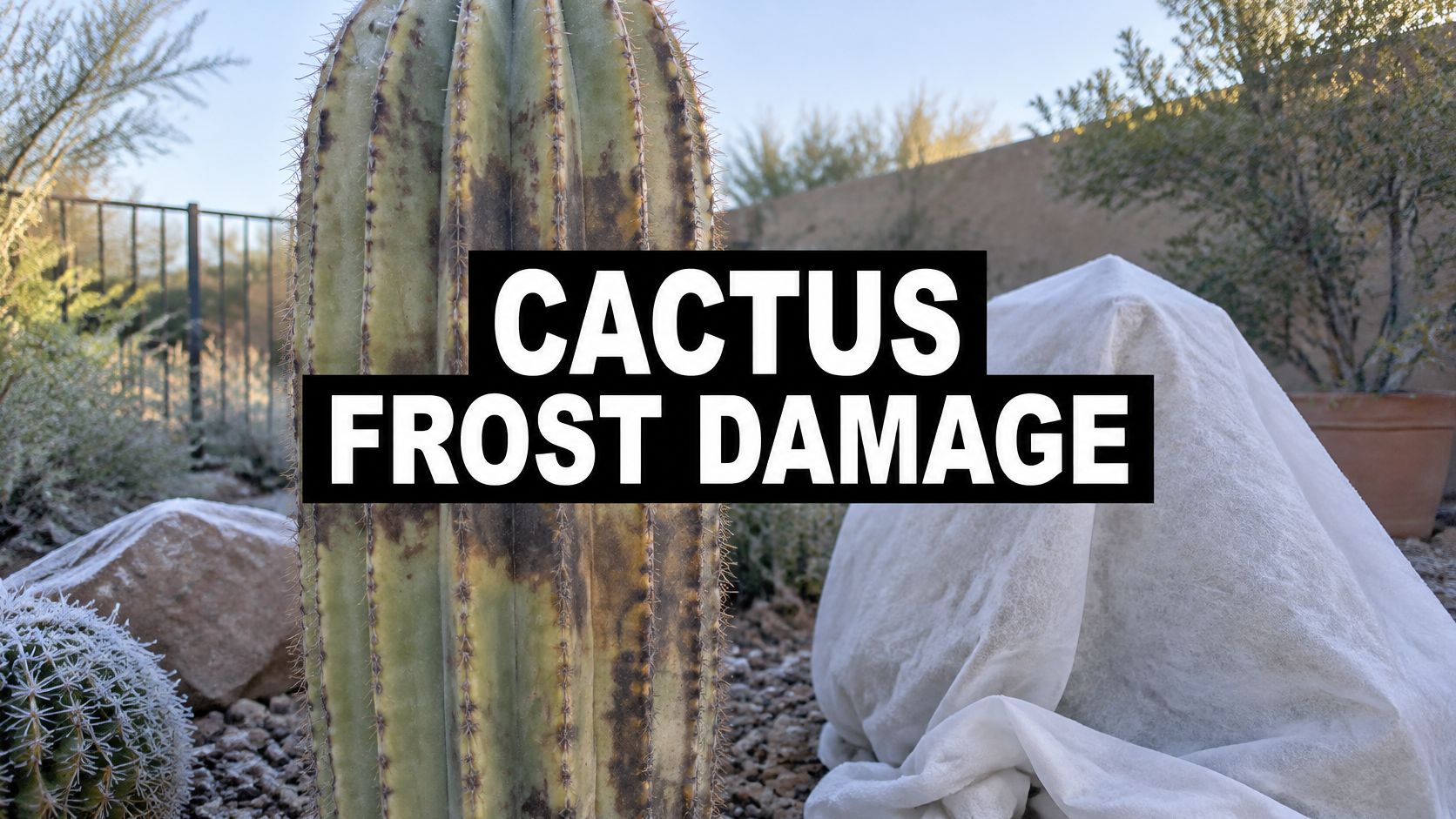
The first honest signal is usually a change in translucency rather than color. Healthy agave tissue is opaque and matte. Frozen tissue looks glassy and water-soaked in morning sun, then browns over the following week as ruptured cells dry. University of Arizona Extension guidance notes that injury may initially appear black before turning dry and crisp, and that damage climbs as temperatures drop lower, exposure runs longer, and the drop itself happens faster (University of Arizona Extension).
That last point is why one bad night and one bad week produce completely different plants. The same guidance frames the threshold in hours: agaves take freeze damage when temperatures stay below freezing for several hours, not when they touch 31°F for twenty minutes. A single dark leaf tip on a sheltered patio plant is a cosmetic event. Soft tissue at the crown after five wet nights is not.
Sort the visible signs by urgency before you touch anything.
| Visible sign | What it usually means | Urgency |
|---|---|---|
| Crisp, dry brown outer leaves | Tissue dead on the outside; crown may be intact | Low; reassess after spring growth |
| Dark tips that stay firm | Surface freeze injury on exposed leaves | Low; firm leaves shield the lower foliage |
| Translucent, water-soaked leaf tissue | Early freeze injury; cell walls ruptured | Moderate; tissue may still brown |
| Soft, wet leaves at the base | Rot may be moving toward the crown | High; act within days |
| Collapsing or mushy central spear | Growing point may be damaged | High; possible fatal injury |
| Foul odor at the crown | Rot following cold injury | High; remove decayed tissue once the boundary is clear |
One habit pays for itself immediately. Photograph the plant the morning after the freeze and write down the low temperature, how many hours it stayed below freezing, and whether the plant was wet. Those leaves will look different in four days, and the photo is your only reliable baseline for judging how far the damage moved.
Triage Steps for a Frost-Damaged Agave
Frost injury inside an agave starts as intracellular ice. Water in the leaf expands as it freezes, cell walls rupture, and tissue that felt solid in October reads as wet and translucent days later (UC Marin Master Gardeners frost guidance). None of that is reversible. What you can influence is whether a survivable injury turns into rot, and the order you work in matters more than the tools you own.
The sequence below is what I'd follow on any damaged agave, in the ground or in a pot.
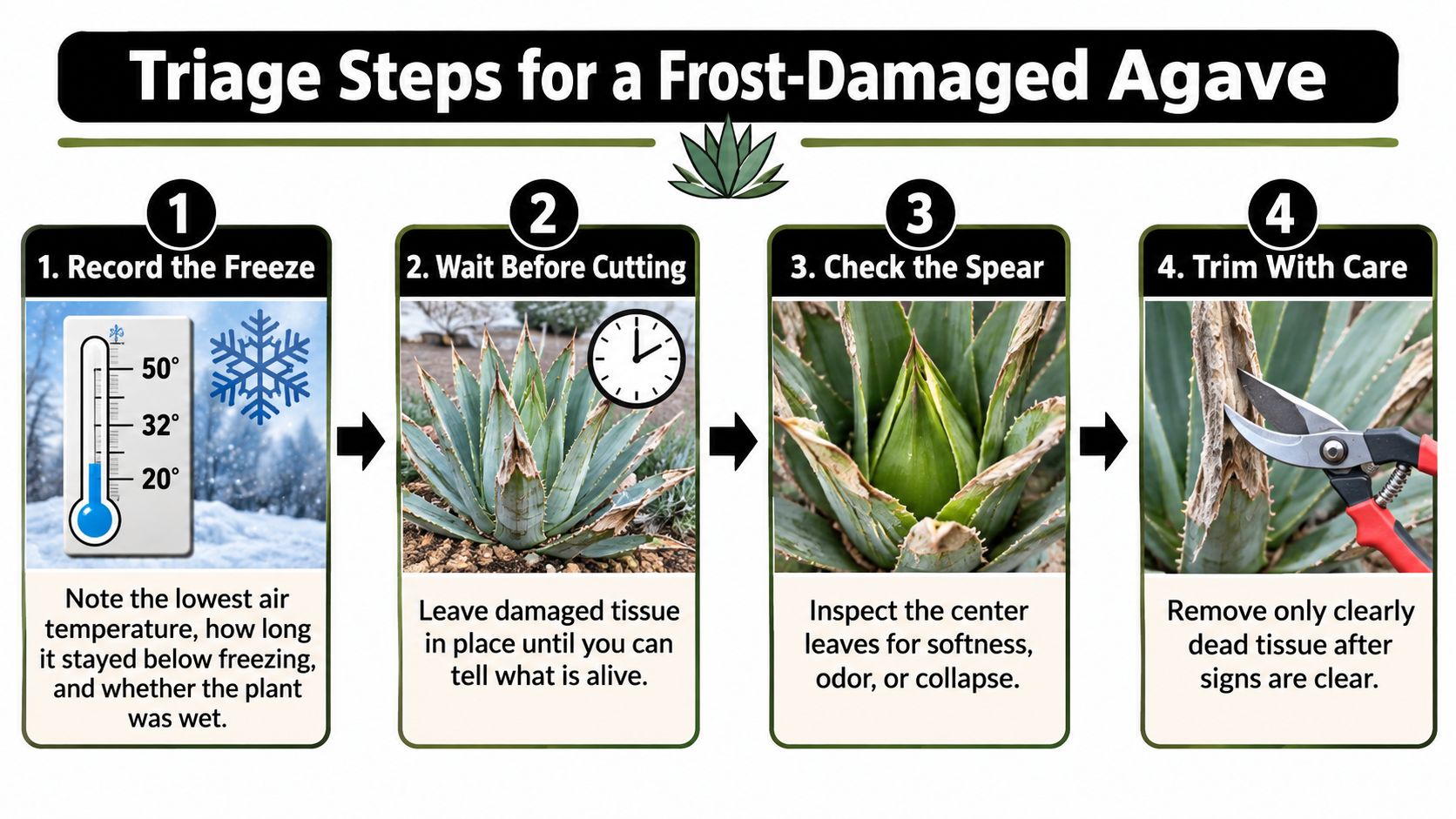
The Six Steps in Order
- Record the freeze before you do anything else. Write down the lowest air temperature you saw, how long it stayed below freezing, and whether the plant was wet at the time. Those three numbers tell you how serious the event was, and they're the only context you'll have when you decide in March whether to keep the plant.
- Work from the outside in. Inspect the youngest and most exposed leaves first, then move inward and down toward the crown. The oldest outer leaves are the least informative, because they die back on their own anyway.
- Press the center. Thumb pressure on the central spear and the crown is the single most useful test you can run in the first week. A firm spear that's merely discolored is a very different plant from one that gives under light pressure.
- Keep it dry and sheltered from any further freeze. Hold off on watering and fertilizing while tissue is damaged. Cold, wet roots and a wet crown decline faster than dry ones, and nitrogen pushes soft growth the plant can't afford to carry into another cold night.
- Leave firm, discolored leaves in place. The Marin protocol is specific on this: don't strip leaves that are discolored but firm, because they protect the lower foliage, and remove tissue promptly only when it's wet, soft, decaying, or holding moisture against the crown. The common slip is cutting everything brown on the first warm weekend, which exposes the crown to the next freeze.
- Delay the prune. Wait until frost danger has passed and the line between living and dead tissue is unmistakable. Cutting into ambiguous tissue in January leaves an open wound in the coldest, wettest part of the year.
The test that matters: a firm crown with reasonable color is a plant to watch, not a plant to dig.
Species and Site Factors That Set Real Risk
A browned agave isn't automatically a lost agave, but species and site decide how much margin you had going in. A large specimen with a wide rosette and a sheltered, fast-draining position can come back from a night that kills a smaller plant in a wet low corner.
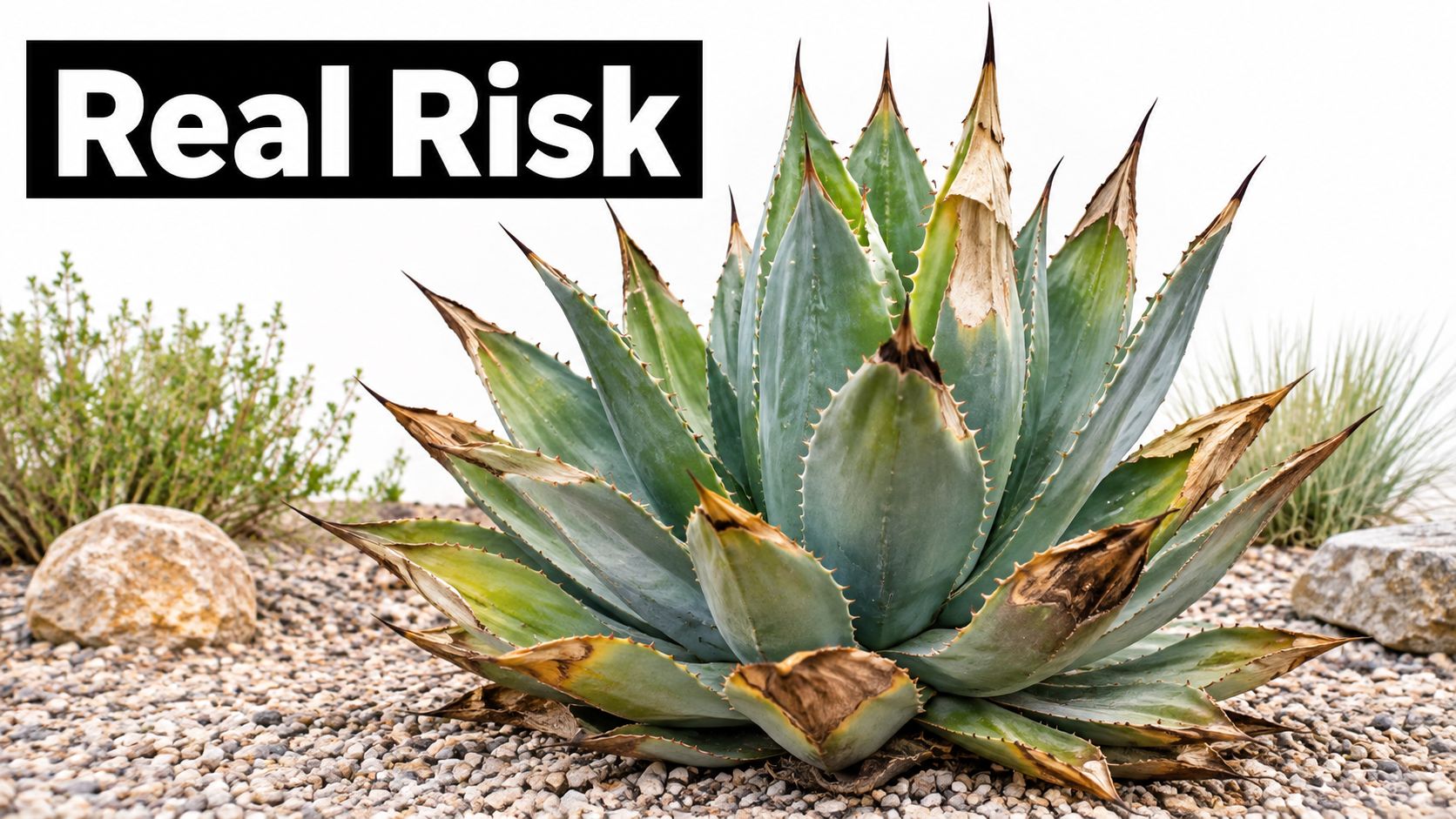
Published figures for the two species most common in landscaping show how wide the spread runs. A peer-reviewed review of Agave americana reports photosynthesis at night temperatures down to −3°C (26.6°F), tissue damage generally starting below about −9°C (15.8°F), and a listed minimum tolerance near −10°C (14°F). Agave parryi has been reported tolerating temperatures as low as −20°C (−4°F) (review of low-temperature tolerance in Agave).
| Species | Reported cold limit | Practical note |
|---|---|---|
| Agave americana | Tissue damage generally below about -9°C (15.8°F); listed minimum about -10°C (14°F) | Freeze damage reported when temperatures fall into the teens F |
| Agave parryi | Reported tolerance as low as -20°C (-4°F) | Still shows freeze damage in the teens F, so the rating alone doesn't settle it |
Why the Site Outranks the Label
The UC Davis Agave Catalog warns that many agave species are vulnerable to low temperatures and recommends selecting frost-tolerant varieties anywhere frost or freezing soil occurs. Its data sorts sensitivity into separate categories below 24°F, below 26°F and below 28°F, which is a useful reminder that "cold hardy" isn't one threshold. The catalog also notes that the same species can show different tolerances depending on where it was grown, and suggests trialing small numbers of several species before committing a whole planting to one variety.
Then the site factors shift the number in either direction:
- Low pockets. Cold air drains and pools. A bed at the bottom of a slope can run several degrees colder than the same plant four feet higher.
- Drainage. Saturated soil holds cold against the roots and crown long after the air warms.
- Recent irrigation. A plant going into a freeze full of water has less margin than one that dried out over a mild week.
- Wind and exposure. Wind strips heat from leaf surfaces and accelerates the drop.
- Containers. Roots in a pot cool faster than roots in the ground, with far less soil mass to buffer them.
That's why an unlucky site can lose a plant rated well inside your zone while a good site carries a marginal one through. If you want the species ordered by cold tolerance rather than by looks, start with our cold-hardy agaves comparison, then judge your own drainage before you buy.
Telling Cosmetic Damage From Fatal Rot Over Time
The hardest question with agave frost damage is whether the plant is still alive, and the answer often takes months rather than days. Extension guidance is blunt that freeze damage can't be repaired and may end up cosmetic, and that plants often grow out of the injury unless the freeze was exceptionally severe (Ask Extension). That means patience isn't a virtue here, it's the diagnostic tool.
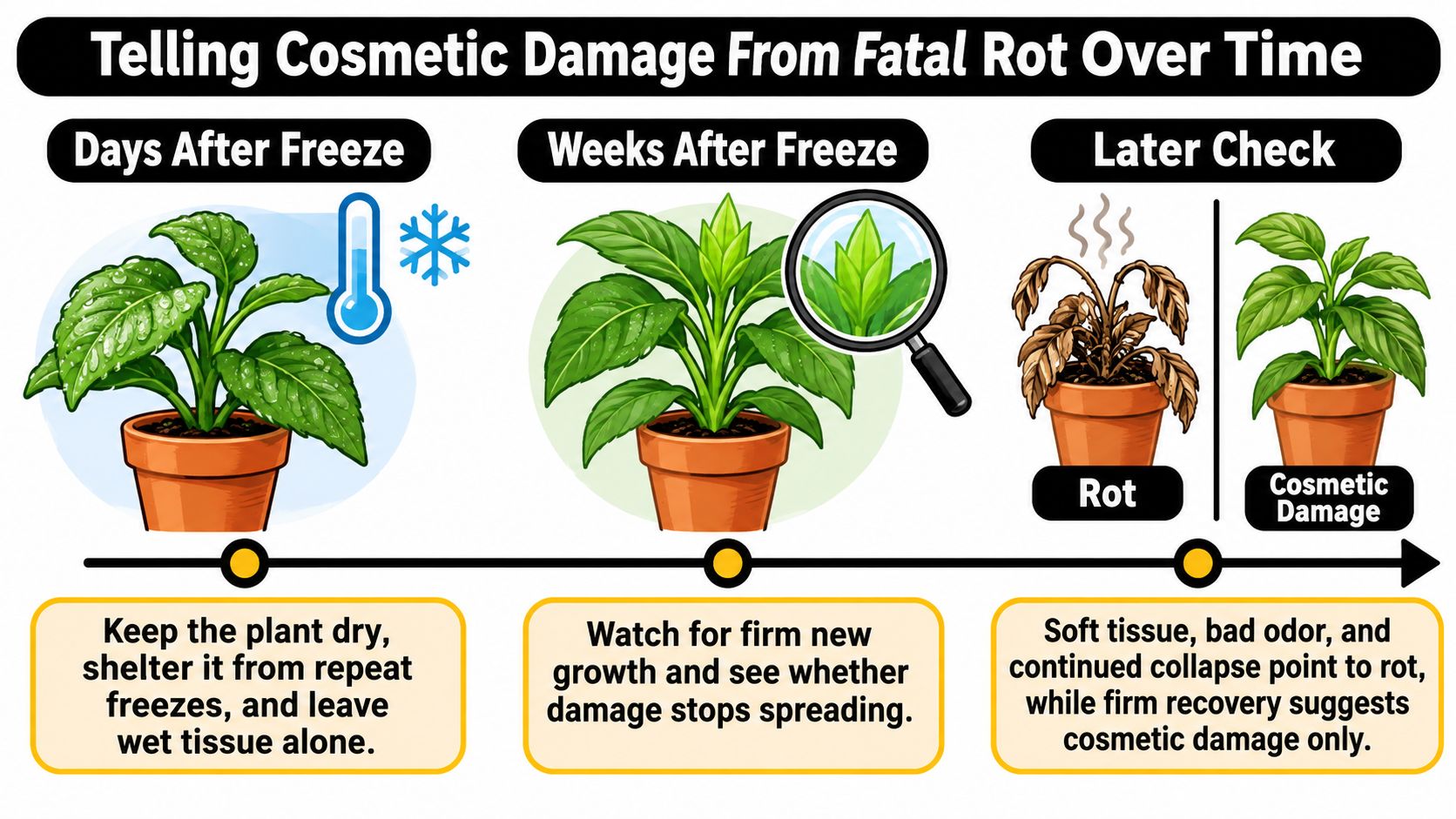
Days after the freeze. Keep the plant dry, shelter it from any repeat freeze, and leave wet tissue alone. Anything you cut now is a wound you can't evaluate, and you still can't tell living tissue from dead by eye.
Two to six weeks out. Watch the crown and the central spear rather than the outer leaves. Firm tissue that's only discolored is usually cosmetic and will be grown past. A spear that softens, collapses, or develops an odor means rot is heading for the growing point, and that's the scenario where the plant is at risk.
Once temperatures stabilize. Look for new growth pushing from the center. Nothing else is as clear a signal that the plant survived, and it usually shows before the damaged leaves have finished drying.
When the boundary is clear. Cut back to firm tissue and stop there. Then, with nights mild again, return to soak-and-dry watering: a thorough soak, then let the soil dry before the next one, with the interval set by pot size, soil mix, drainage and season rather than a calendar.
If the dark tissue keeps spreading and the crown stays soft, you're dealing with rot rather than cold alone, and the response is the same one that applies to agave root rot: dry soil, no fertilizer, and a hard look at the root zone before you spend another season on it.
A clear boundary between dead and living tissue, plus new growth from the center, is a plant worth keeping. Dark tissue advancing into the crown is not.
Protecting In-Ground and Container Agaves Before a Freeze
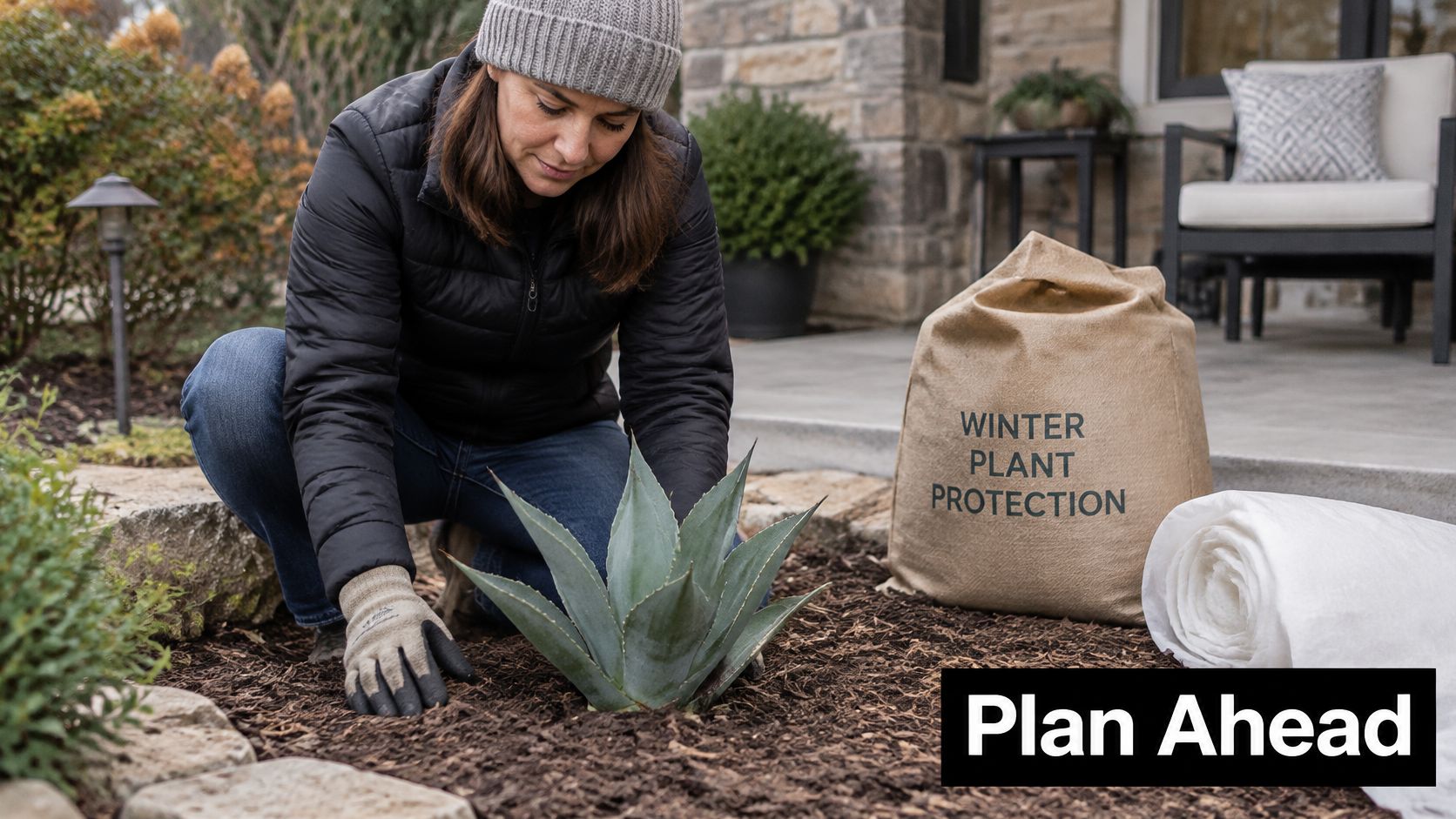
If a freeze is forecast, cover the agave before dusk and uncover it the next morning. How much protection it needs depends on how cold it gets, how long the cold lasts, and whether the plant is wet. A cover can help, but it cannot make every exposure safe.
Use frost cloth, a sheet, or a blanket, keeping the material from pressing on the leaves. Plastic should not touch the plant. In the morning, remove the cover so the agave is not left wrapped through the day.
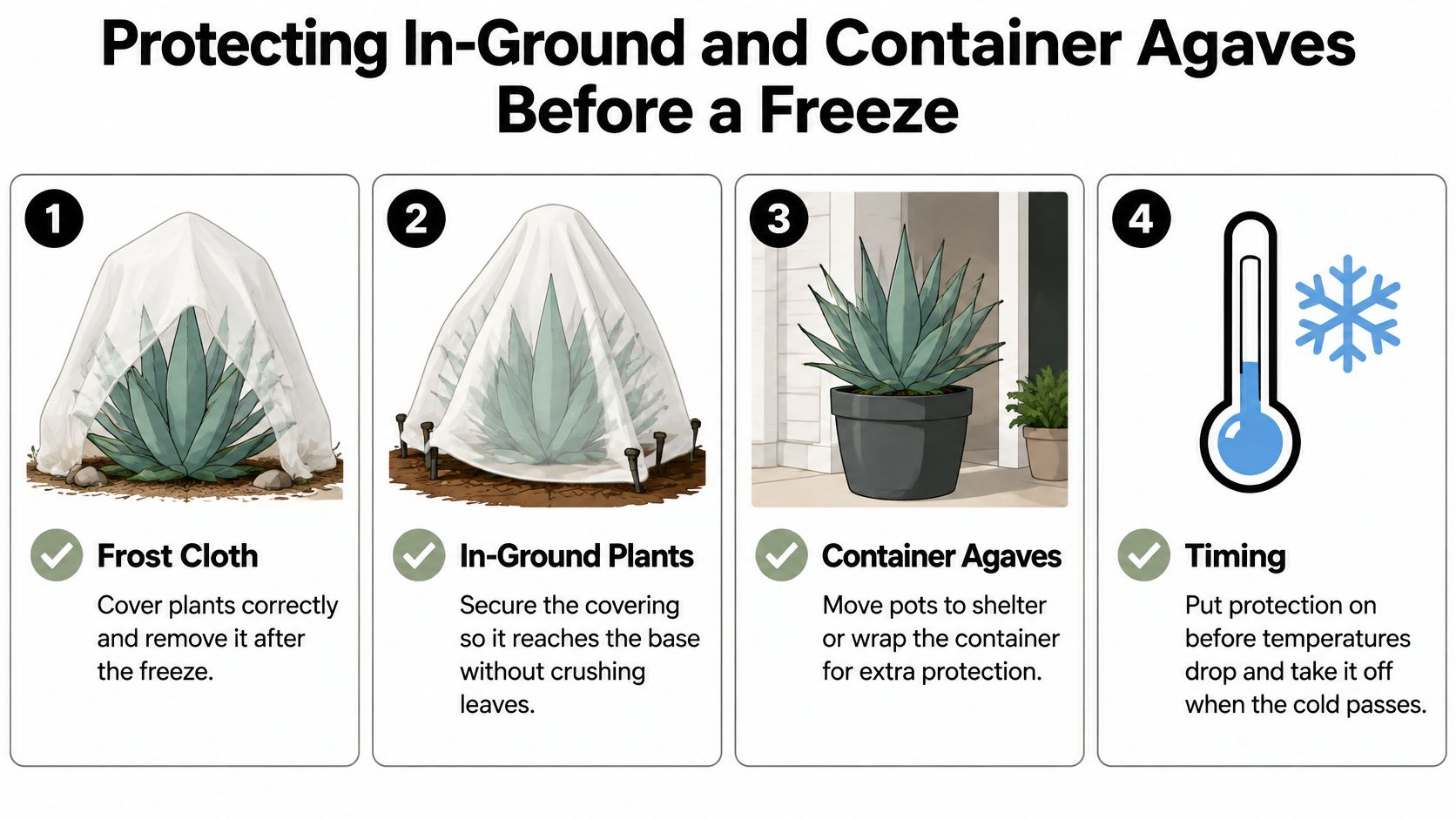
What Actually Helps Each Type of Planting
- In-ground agaves. Drape the cloth to the ground to hold warmth from the soil, without pressing it onto the leaf tips. Keep the soil from being soaked just before a freeze.
- Container agaves. Move the pot beside a sheltered wall or under an eave. This shields the root zone, while a wall that receives afternoon sun may release some stored warmth overnight.
- New arrivals. Give a plant time to settle and root before exposing it to a hard freeze. If it arrives during a cold spell, keep it in a protected spot and plant after the forecast clears.
- Timing. Check the forecast, set the cover in place before dusk, and remove it in the morning.
For exposed beds, review the Agave parryi care guide before choosing a planting site.
Practical rule: Cover before dusk and uncover in the morning. A cover left on through the day can trap warmth and moisture around the plant.
Choosing Placement and Species Before Next Winter
A sheltered planting site can give an agave more winter margin than a warmer-rated species in an exposed bed. Judge risk by how long the cold lasts, whether the plant and soil are wet, and where injury is likely to occur, not by a hardiness number alone.
Agave americana can grow to roughly 5 to 7 feet tall and 8 to 12 feet wide, so leave room between its leaf tips and paths, sidewalks, or delivery routes (University of Arizona Extension agave guide). The same guide notes that Agave americana and Agave parryi can suffer freeze damage in the teens Fahrenheit. Even when the plants survive, damaged leaves may remain unattractive after temperatures rise. Choose a location with both mature size and visible winter scarring in mind.
Map the plant's mature footprint against paths before buying. Best free garden design software can help lay out the bed and show where a large rosette may crowd a walkway.
For a container, consider whether you can move the pot to shelter and reach the plant with a frost cloth. Agave ‘Blue Glow' is priced from $99.00 at The Cactus Outlet. Its eventual size and the shelter available at your site matter more than choosing by price or a single cold-limit figure. The Cactus Outlet offers Lifetime Grower Support, with real Arizona cactus growers available to help you choose a species and cold protection before you buy.
Before winter, record your coldest known night and identify the protection you can realistically provide. Compare that exposure with the species' published cold limit, while allowing for the effects of exposure duration, moisture, and planting location.
If you're replacing an agave lost to frost, choose a species and site that fit your actual winter conditions. The Cactus Outlet packages its plants well so they arrive healthy and intact. Visit The Cactus Outlet to browse its agave collection.