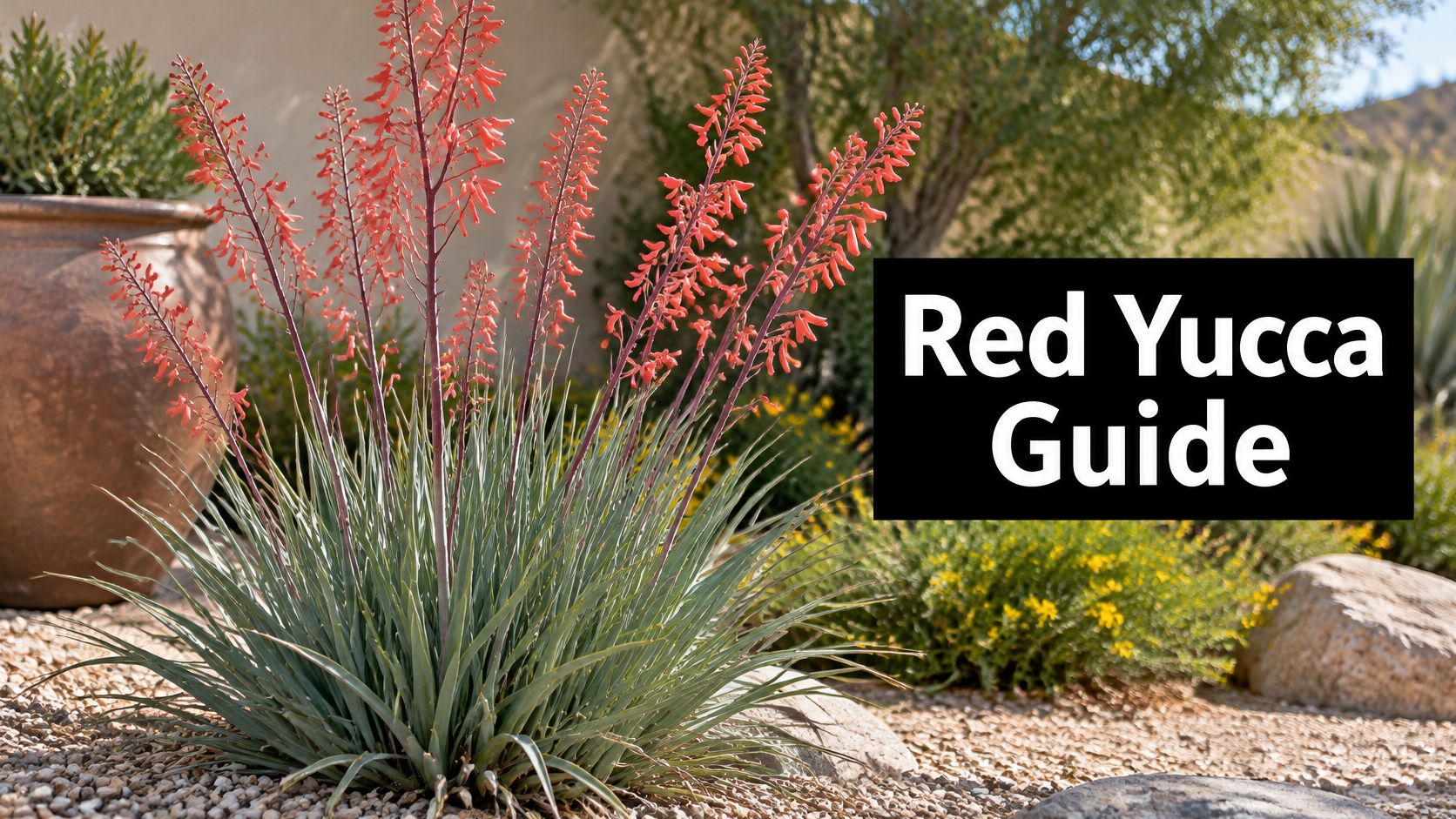

The most popular advice for a red yucca plant, plant it and forget it, skips the stage when homeowners can do the most damage. Drought tolerance isn't the same as needing no water from the day it arrives. A newly planted specimen needs help establishing roots, but keeping those roots constantly wet can turn a resilient garden plant into a failing one.
The practical approach is to choose a site that drains, water according to the plant's growth stage, and check the soil rather than obeying a calendar. Get those decisions right, and red yucca offers evergreen structure and seasonal flowers without the irrigation demands of a thirsty ornamental bed.
Red Yucca Size, Bloom and Hardiness at a Glance
| Trait | Typical range | Note |
|---|---|---|
| Height | 3-6 ft (0.9-1.8 m) | Stemless evergreen clump, no trunk |
| Width | 3-6 ft (0.9-1.8 m) | Clumping rosette that spreads over time |
| Leaf length | About 2-3 ft | Narrow, blue-green, with threadlike fibers on the margins |
| Flower stalk height | 4-6 ft above foliage | Some references record taller stalks, up to 8-10 ft |
| Bloom season | Late spring through midsummer, sometimes early fall | Tubular flowers open from bottom to top |
| Hardiness | USDA Zone 5, Oregon State University | Confirm against local winter lows and drainage |
The Lady Bird Johnson Wildflower Center's plant account supports the reference values of 3-6 feet in height and width, leaves about 2-3 feet long, and flowering from late spring through midsummer, sometimes extending into early fall. Flowers are typically coral, red, or pink, with yellow forms also occurring.
Despite its common name, red yucca is Hesperaloe parviflora, not a true Yucca. It belongs to the asparagus family, Asparagaceae, and grows as an evergreen, stemless clump rather than developing a conventional trunk.
Read the measurements carefully
Botanical accounts don't describe flower height identically. North Carolina State Extension describes flowering scapes commonly reaching 4-6 feet, with some reaching 8-10 feet, and gives a hardiness range of approximately USDA Zones 6-10. That's more conservative than Oregon State's rating, and stalk height measured from the ground isn't interchangeable with height above the foliage.
Treat these figures as planning ranges, not guarantees. Width matters most for spacing, flower-stalk clearance matters beside walkways, and hardiness matters only when considered alongside winter moisture and drainage. A small plant at planting time shouldn't persuade you to squeeze a mature clump into a narrow gap.
Where Red Yucca Fits and How to Handle Its Flower Stalks
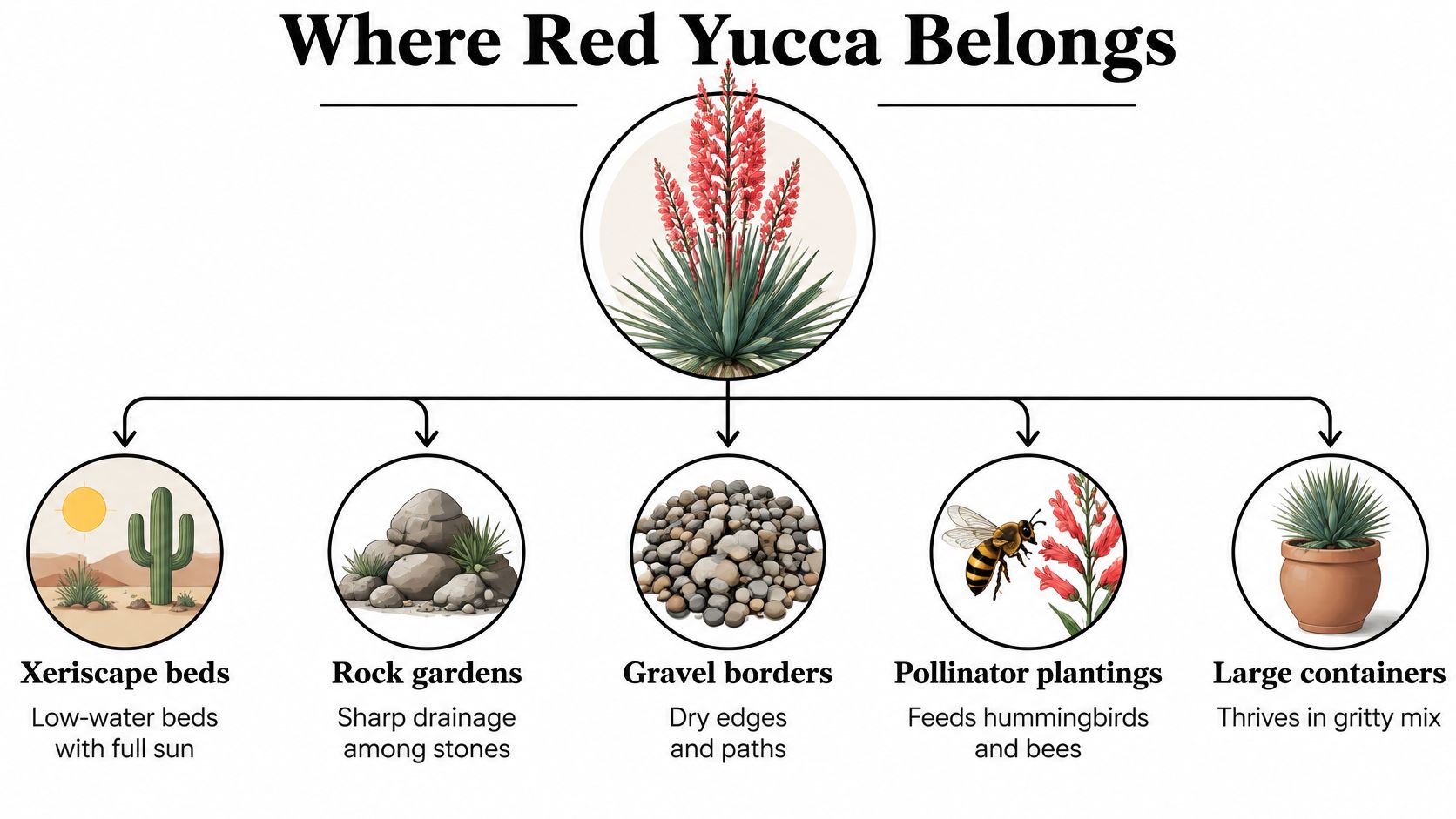
Red yucca earns its space in xeriscape beds, rock gardens, gravel borders, pollinator plantings, and large containers. Each setting works only when the placement allows the plant to keep its natural form.
Consider a gravel bed beside a south-facing wall. With open space around the clump and flower stalks clear of a walkway, red yucca provides an evergreen anchor without needing constant clipping. Put the same plant beside a narrow side passage, and you'll spend its flowering season managing an avoidable obstruction.
Match the setting to the maintenance
- Xeriscape beds and rock gardens: Keep the crown out of runoff pockets. Stones around a plant don't compensate for saturated soil beneath it.
- Gravel borders: Position the mature foliage inside the bed, not over the walking surface.
- Pollinator plantings: Leave room for flowering stems to arch naturally.
- Large containers: Choose a stable position where the flowering plant won't interfere with chairs, doors, or circulation.
The University of North Florida botanical garden identifies hummingbirds as the principal pollinators, with bats possibly contributing. Tubular flowers open progressively upward along branched stalks, so don't remove an entire flowering stem just because its lowest flowers have finished.
Keep useful stalks in quiet beds. Remove obstructing stalks where people need access.
Retaining spent stalks can provide habitat, but access takes priority beside seating and paths. Use clean bypass pruners to remove an unwanted stalk near its base; remove older leaves selectively when they're dead, damaged, or crowding a neighbor.
Oregon State University's landscape plant account lists red yucca as hardy to USDA Zone 5 and describes its clumping growth habit. That rating doesn't make a wet planting pocket suitable.
For broader layout decisions, combine our drought-tolerant landscape design guidance with Modern Yard's water-saving yard ideas for Austin homeowners. Before committing, confirm full sun, fast drainage, and room for the mature spread.
Receiving and Acclimating a Bare-Root Red Yucca
A bare-root red yucca may arrive with its roots exposed instead of set in a nursery pot. Open the carton promptly. The bigger risk after shipping is usually trapped moisture around the crown and roots, followed by a well meant rescue soaking that starts rot before the plant ever reaches the ground.
Inspect before you plant. Look for broken roots, soft tissue, or unusual discoloration, and photograph damage while the packaging is still available. Do not stand the roots in a bucket of water as a default recovery move.
From unpacking to planting
- Prepare a draining holding option. Have the bed ready, or use a temporary container with a fast-draining mix, before roots sit exposed.
- Check the root system. Handle roots gently and use clean pruners only where broken tissue needs attention. If soft tissue is extensive, contact The Cactus Outlet's grower support before proceeding.
- Keep the crown high. Use the old soil mark if it is visible, and keep leaf bases out of the soil when you set the plant.
- Adjust the light gradually. Start bright and sheltered if prior light is unknown, then increase direct exposure as the plant steadies.
Do not leave a bare-root plant lying outside while you wait for it to acclimate. A temporary pot protects the roots and lets you control exposure without committing to a poor site.
Arrival priority: Protect the roots, keep the crown high, and resist compensating for shipping with extra water.
During establishment, check moisture at the root zone rather than the surface. Water by growth stage and container type, not a fixed calendar, and investigate drainage or depth first when a plant declines.
Planting Red Yucca in Beds and Containers
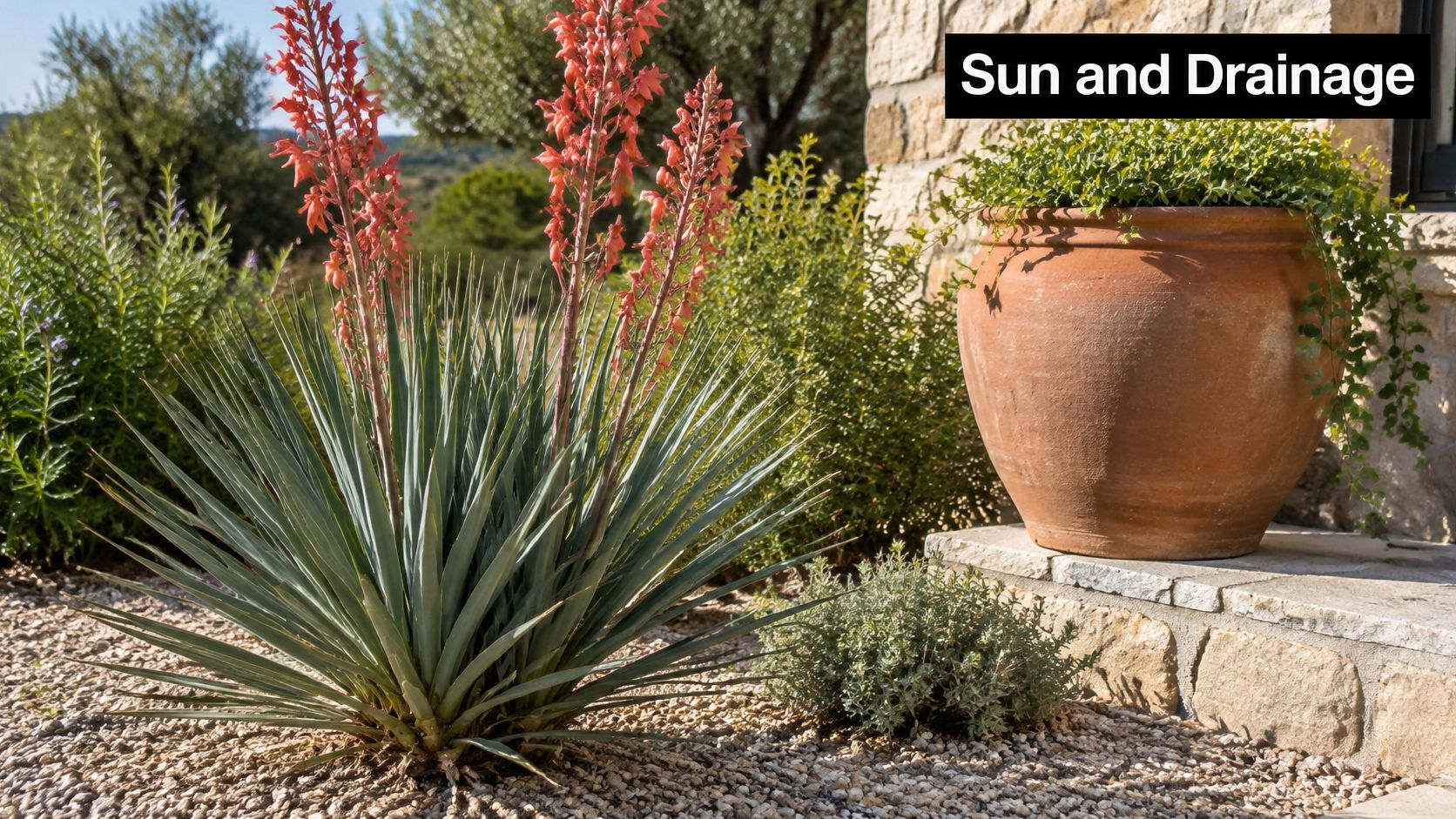
Choose the drainage before choosing the display position. A beautiful location isn't a good planting site if water collects around the crown after irrigation or rain.
- Choose a sunny, open position. Allow the mature clump and its flowering stems to remain clear of paths.
- Test the soil before planting. If water lingers, relocate the plant or create a broadly raised planting area with an outlet for runoff.
- Dig for the roots you have. Make the hole wide enough to arrange bare roots naturally without folding them into a tight bundle.
- Keep the original planting depth. Support the plant while backfilling so it doesn't settle with the crown buried.
- Backfill and settle the soil. Use suitable native soil or a fast-draining mix, then water gently enough to settle soil around the roots without leaving a flooded basin.
Test the whole planting area
Dig a test hole, fill it with water, and observe whether it empties readily or remains wet long afterward. Check again after rain, because runoff from paving or a downspout can make an otherwise promising bed unsuitable.
The University of Arizona arboretum describes red yucca as heat- and drought-tolerant across different soils provided they drain well. The important distinction is between soil texture and actual drainage: a gravel surface can conceal compacted, water-holding soil.
Don't try to fix a poorly drained site by making a small pocket of gritty soil inside heavy clay. Water still needs somewhere to go. I would choose a raised bed or a container before relying on a heavily amended hole in a wet depression.
Container rules that prevent trouble
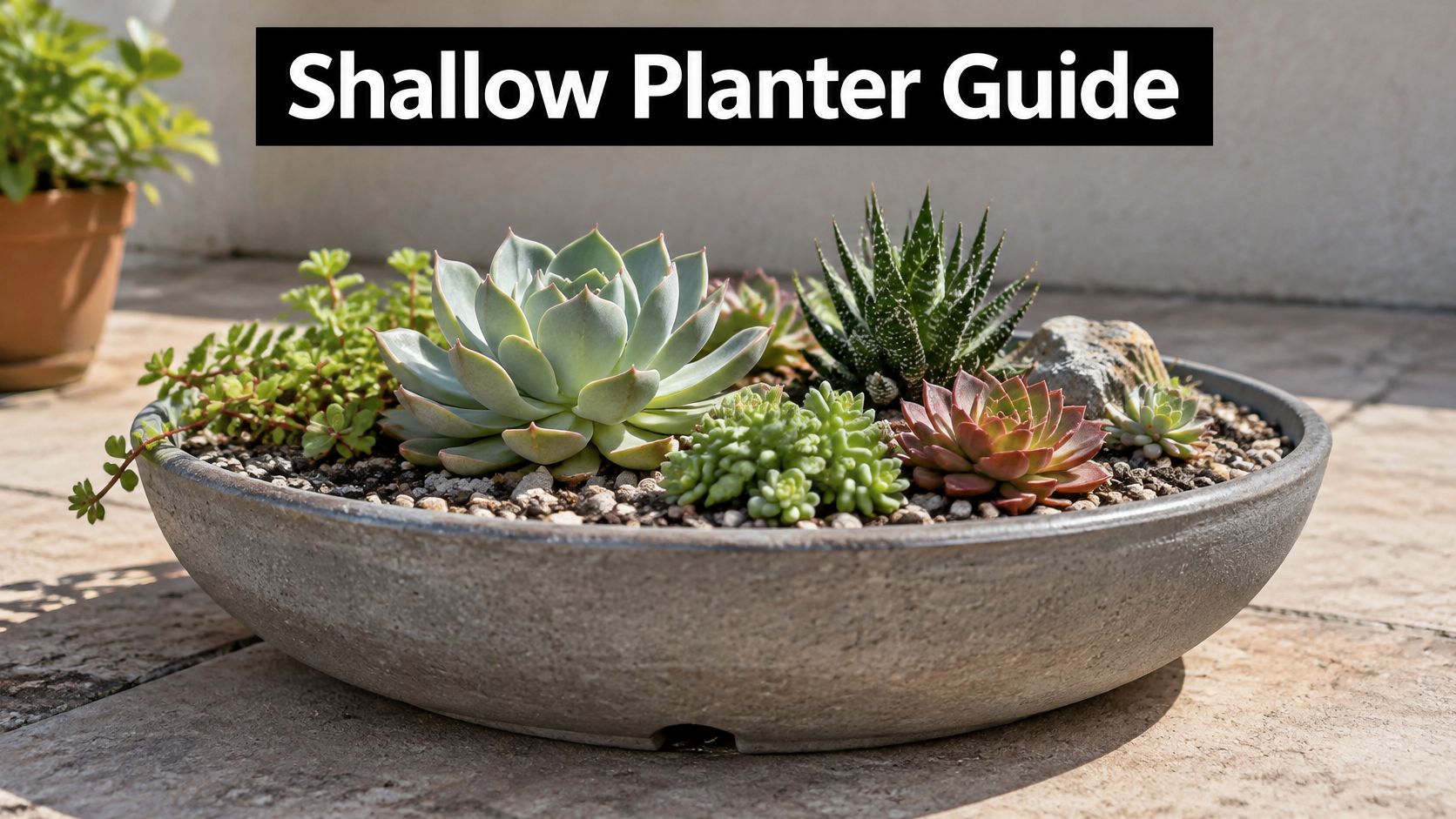
- Drainage holes are essential. Keep them unobstructed and don't let the pot stand in collected water.
- Match the pot to the roots. Allow growing room without surrounding a small root system with a large volume of persistently damp mix.
- Use a mineral-rich cactus or succulent mix. Pumice or similar coarse mineral material can improve a mix that holds too much water.
- Check decorative cachepots. Remove trapped water rather than assuming the inner pot has drained safely.
Finish by checking the placement from the path: the crown should remain above standing water, the foliage should have clearance, and the plant should receive unobstructed sunlight.
How Much Water Red Yucca Needs at Each Stage
Use soak-and-dry watering set by growth stage and container type, not a fixed calendar. Red yucca failures trace back to persistent moisture far more often than to thirst, and a specimen planted last month needs entirely different handling from a mature clump.
| Stage or setting | Watering approach |
|---|---|
| First summer after planting | Let the soil dry about 5-6 in (13-15 cm) deep between waterings |
| Rest of the first year | Keep the whole root zone from drying out completely; never keep it saturated |
| Established in-ground plant | Deep, infrequent watering about every 3-4 weeks; adjust for temperature and soil |
| Established, no added water | Survives without supplemental irrigation where conditions suit it; extra water from late spring to early fall improves growth and flowering |
| Containers | Pots dry faster than beds; check the mix several inches down before watering |
| Prolonged wet weather | Pause irrigation until the soil dries back to the target depth |
UC Agriculture and Natural Resources' Hesperaloe guidance recommends allowing the soil to dry completely to approximately 5-6 inches deep during the first summer, with roughly monthly watering potentially supporting established growth and flowering. University of Arizona Extension's red yucca care sheet supports deep, infrequent watering approximately every 3-4 weeks in some climates for established plants.
Understand what should dry
The apparent disagreement between letting soil dry and never allowing complete drying comes down to depth and establishment. A dry upper layer isn't the same as a desiccated root zone. On a new planting the roots are still confined to the original root ball, so let the upper soil lose moisture while keeping that limited zone from prolonged, severe drying.
Use a trowel or soil probe beside the roots to check moisture below the surface. Dry gravel tells you nothing about the soil underneath, and a pale surface alone isn't a reason to water.
The failures sit at opposite extremes. Daily shallow watering keeps the upper roots and crown wet. Abrupt neglect before roots extend into the surrounding soil starves a plant that hasn't earned its drought tolerance yet. An established clump can handle lean irrigation; a specimen that went in last season cannot.
Adjust for the container and the weather
A small pot in full sun can dry within days, while a large container in cool weather stays damp much longer, so check the actual mix rather than the calendar. During extended rain, hold off entirely until the soil drains back to the target depth for that stage.
The same soil-checking approach applies to cacti and other succulents, as our guide to watering cacti and succulents explains. Wet the root zone thoroughly, let it dry to the right depth, then reassess before watering again.
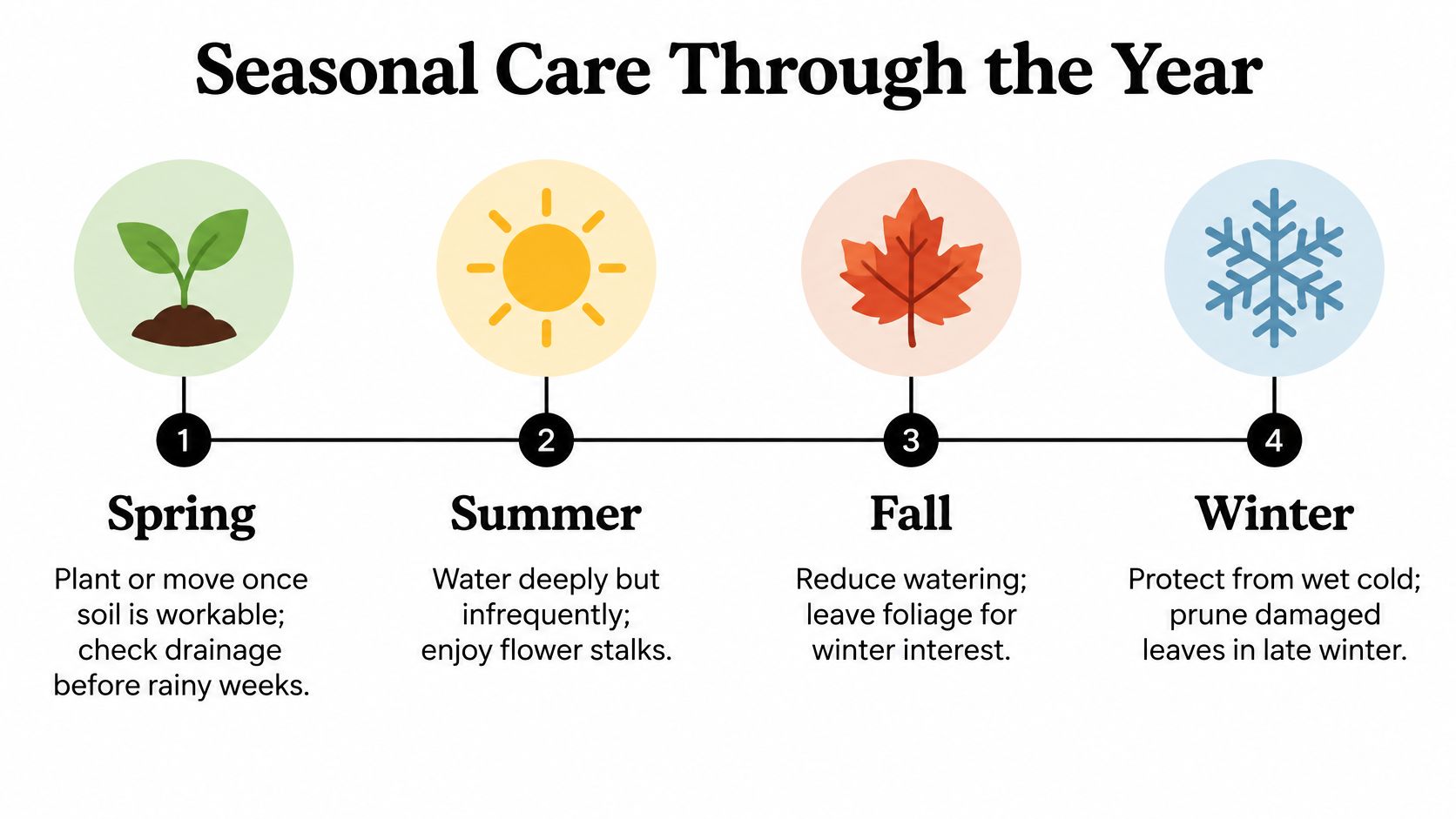
Seasonal Care Through the Year
Seasonal care works best as a set of inspections, not recurring appointments with the hose. Watch how quickly the soil dries as sunlight, rainfall, and temperature change.
Spring and summer
Spring: Plant or move a specimen when the soil is workable and local conditions allow roots to establish. Check that runoff hasn't redirected into the bed, and clear blocked container drainage holes before rainy weather.
Summer: Inspect newly planted specimens more closely than established clumps. Check container moisture beneath the surface, and keep irrigation directed toward the root area rather than repeatedly wetting the crown.
- For flowering plants: Watch where stems lean as they develop, especially beside furniture.
- For new plantings: Look for stable anchorage and fresh growth before treating the plant as established.
- For irrigated beds: Check nearby emitters so a thirsty neighboring plant isn't keeping the red yucca's soil wet.
Fall and winter
As conditions cool, reduce supplemental irrigation according to soil moisture. Remove obstructing spent stalks, but don't shear healthy evergreen foliage just because the flowering season has ended.
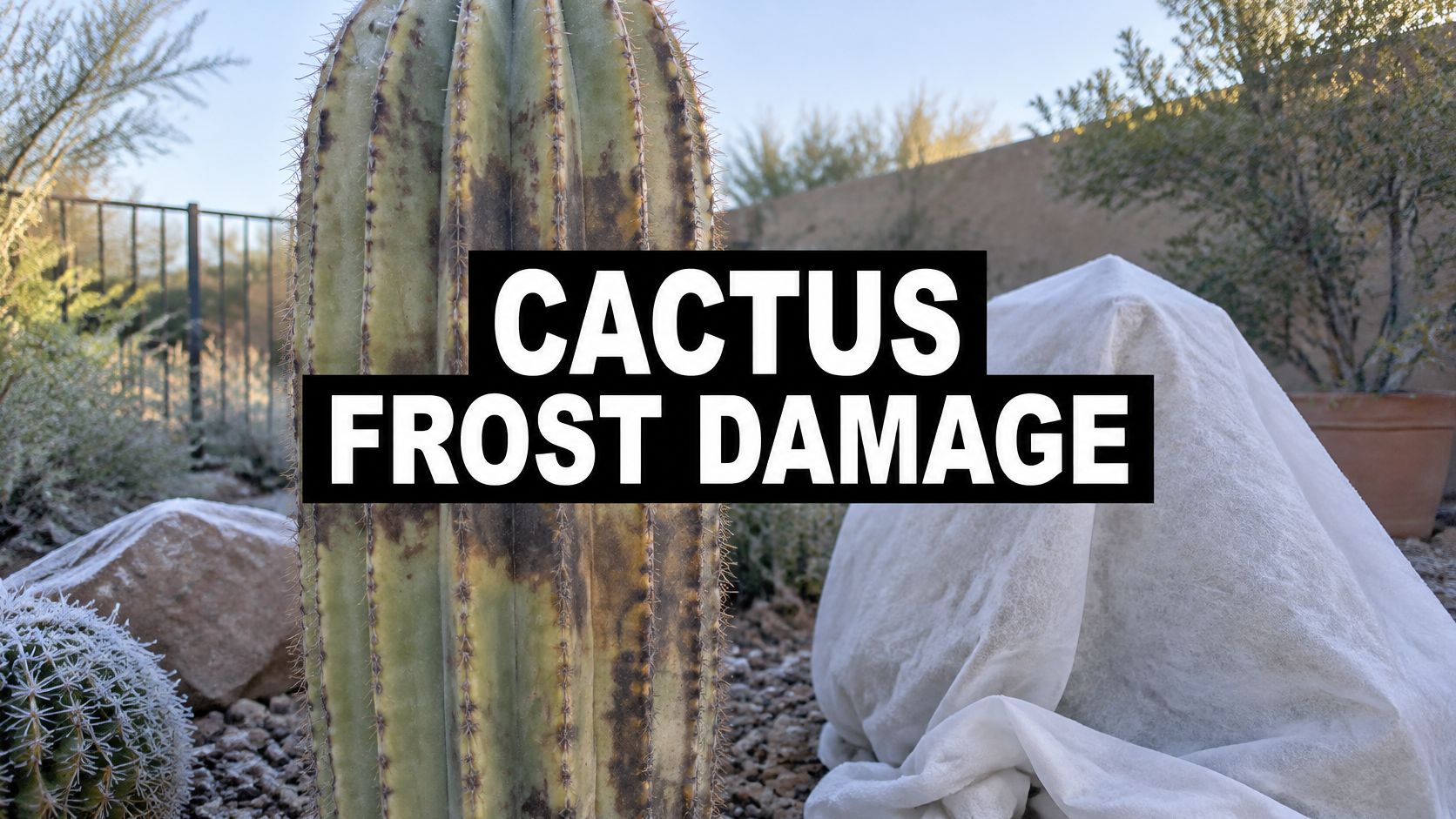
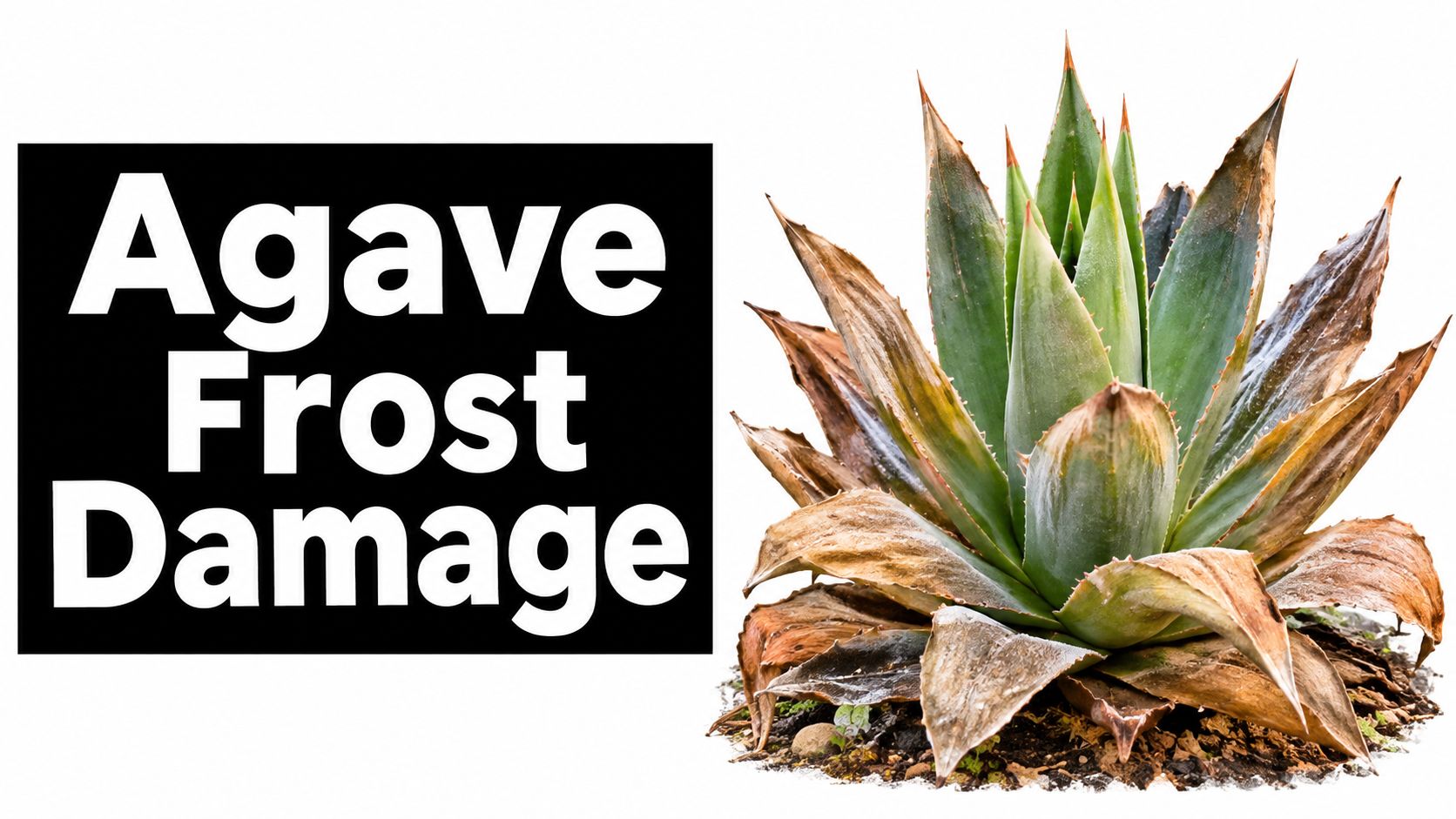
Winter protection should address wet soil as well as cold exposure. University of Arizona Extension's cactus and succulent guidance recommends breathable protection such as cotton sheets when protection is necessary, advises against plastic directly against plants, and describes moving containers to a bright, dry indoor location during freezing weather. This is general succulent protection guidance, not evidence that an established red yucca needs covering whenever frost occurs.
For a wetter-climate perspective on seasonal planning, Premier Gardens' advice to keep your Dublin garden thriving can help organize garden tasks. Apply red yucca's own drainage requirements rather than borrowing another region's watering routine.
At each seasonal change, ask whether the root area is drying appropriately, whether drainage still works, and whether unexpected cold requires action.
Confirm the Right Plant Before You Plan Your Garden
Choose a red yucca plant when the design calls for a clumping evergreen accent with airy flowering stems. Pass on any site that needs constant pruning to keep a walkway clear, or where the only available irrigation also serves a thirsty planting bed you cannot water separately.
The decision rests on mature width, actual drainage, and regional winter conditions. A favorable hardiness rating can't correct a saturated site, and a draining container can't make an unsuitable plant hardy outdoors. Give drainage the first check: establishment failures trace back to wet roots far more often than to cold or underwatering, and drought tolerance never means the plant wants zero water while it roots in.
Compare plants by habit, not common name
Red yucca and true yuccas aren't interchangeable. Our guide to yuccas of the Southwest helps distinguish the forms before you design around one.
For a different architectural effect, compare our agave and aloe collections with the true yucca options. Yucca Rostrata is on sale from $249.00, so confirm current availability and exact plant sizes on the relevant product page before planning a bed around it. These alternatives need their own species-specific hardiness and placement checks, even when they share a preference for draining soil.
Our plants are grown in Arizona, and Lifetime Grower Support gives customers access to real Arizona cactus growers. Use that support to settle questions about your site or a newly arrived plant instead of guessing at extra irrigation.
Before choosing, write down:
- Sun exposure: Record the direct sun hours at the actual planting position, since a bed can sit in afternoon shade even in an open yard.
- Drainage: Fill a test hole, watch how fast it empties, and note what the same spot looks like after rain.
- Available width: Measure the unobstructed bed, excluding walking space.
- Winter conditions: Record your typical winter low and whether the site stays wet while temperatures drop.
Match that site record to the plant's mature form and care requirements. If the fit isn't convincing, change the location or the plant before you dig.
The Cactus Outlet offers Arizona-grown cacti and succulents and Lifetime Grower Support for customers planning outdoor beds and containers. Visit The Cactus Outlet to compare available plants and sizes, then bring your sun, drainage, space, and winter notes to our growers before choosing your garden specimen.