
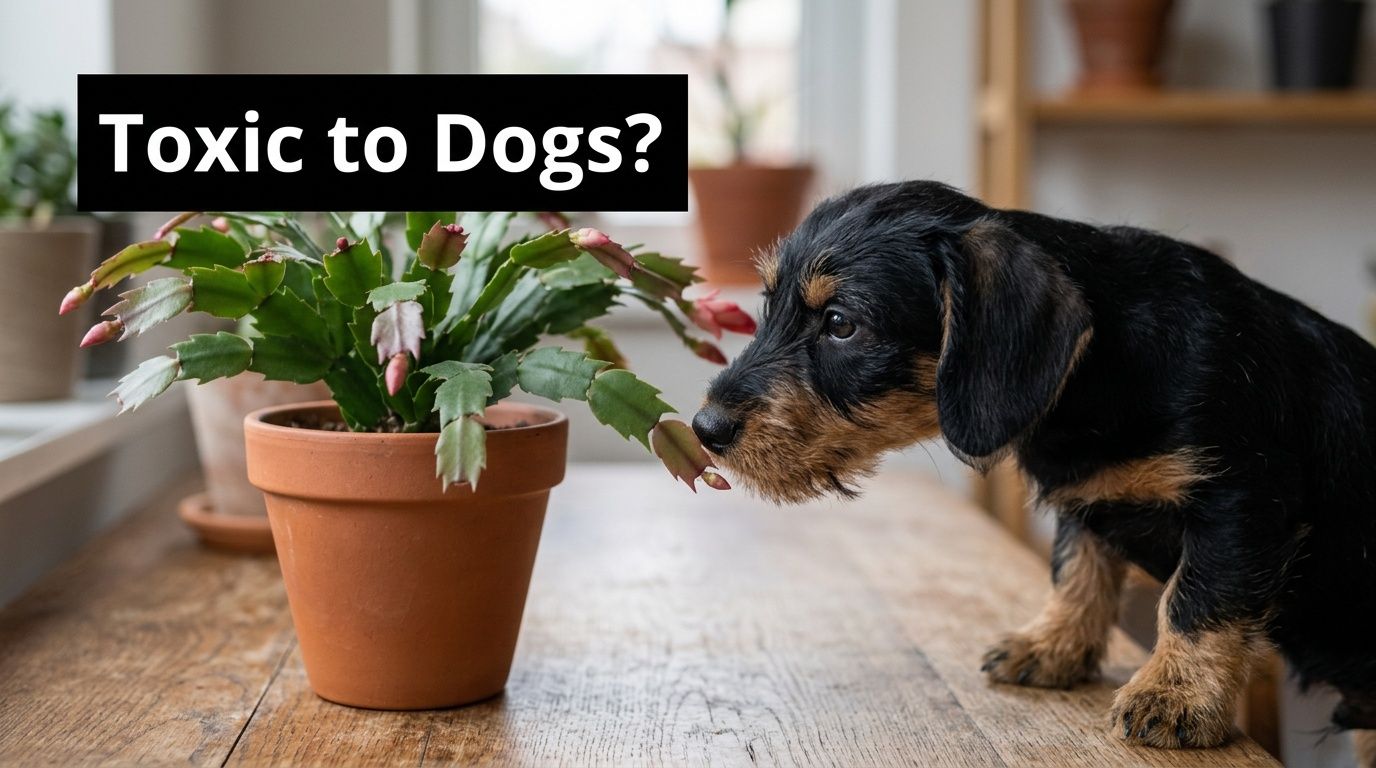

Christmas cactus (Schlumbergera) is non-toxic to dogs according to the ASPCA, so it doesn't cause toxic poisoning or organ failure. If your dog chewed some, the usual concern is mild gastrointestinal upset, such as mild vomiting or mild diarrhea, rather than true toxicity.
That moment still feels awful. You walk into the room, see a few flat green segments on the floor, notice damp bite marks on the plant, and your dog is standing nearby looking far too pleased with themselves. Most pet owners immediately wonder the same thing: Is Christmas cactus toxic to dogs, and do I need emergency help right now?
In most cases, the answer is reassuring. A nibble from the plant itself is unlikely to cause a dangerous reaction. The part that often gets missed is the stuff around the plant, especially the potting mix, fertilizer, perlite, or moldy soil. That's where a "safe plant" situation can become less simple.
Your Dog and the Christmas Cactus A Common Holiday Scene
A lot of holiday plant scares start the same way. The decorations are up, guests are coming over, and your dog suddenly takes an interest in the one plant you thought was harmless because it looked nothing like a prickly desert cactus.
Christmas cactus is especially tempting to curious dogs. The hanging stems move. The flowers draw attention. If it's sitting on a low table or windowsill, it's easy to reach. One quick chomp later, you're searching "Christmas cactus toxic to dogs" with your heart racing.
What usually helps most in that moment is separating poisoning from stomach irritation. Those aren't the same thing. With some plants, chewing even a small amount can create a serious toxic emergency. With Christmas cactus, the bigger concern is usually that the plant material is fibrous and irritating.
What pet owners often notice first
- Chewed leaf segments on the floor or in the dog's bed
- A little gagging or lip smacking soon after nibbling
- Mild stomach upset later, especially if your dog swallowed more than a tiny bite
- Soil scattered around the pot, which can matter as much as the plant itself
Most dogs who sample a Christmas cactus don't have a poisoning crisis. They have an irritated mouth or stomach and need monitoring.
If your dog seems bright, alert, and only took a small nibble, panic usually isn't necessary. But it is smart to check the whole setup, not just the plant. Look at the potting mix, the surface of the soil, and whether there were any fertilizer pellets, moss, or signs of mold involved.
The Official Verdict on Christmas Cactus Toxicity
The clearest answer comes from the ASPCA. In its toxic and non-toxic plants database, Christmas cactus (Schlumbergera bridgesii, family Cactaceae) is listed as non-toxic to dogs, cats, and horses in the ASPCA's 2026 database, which means eating the leaves or stems doesn't cause toxic chemical reactions or organ failure in dogs, according to the ASPCA Christmas cactus plant listing.

What non-toxic actually means
When vets say a plant is non-toxic, we mean it doesn't contain a poison that attacks organs, blood cells, nerves, or kidneys in the way dangerous plants do.
That matters because many owners hear "my dog threw up after eating it" and assume the plant must be poisonous. Not necessarily. Dogs can vomit after eating grass, mulch, paper towels, or too many treats. Vomiting alone doesn't prove toxicity.
Here's the practical distinction:
| Plant situation | Main concern |
|---|---|
| Christmas cactus | Mechanical irritation from plant material |
| Jerusalem cherry | Can cause death |
| Autumn crocus | Can cause kidney failure |
| Poinsettia | Mild mouth and stomach irritation |
| Calla lilies | Intense oral irritation from insoluble calcium oxalate crystals |
That puts Christmas cactus among the safer holiday plants to keep at home. If you're checking other decorative plants too, a practical companion read is are rose petals safe for dogs, since pet owners often assume all ornamental plants carry the same level of risk.
Why context matters
A "safe" label doesn't mean "eat freely." It means the plant itself isn't expected to poison your dog. A dog that tears through a whole plant can still end up with an irritated mouth, an upset stomach, or a mess in the pot that creates separate problems.
Practical rule: Non-toxic doesn't mean symptom-free. It means the symptoms usually come from irritation, not poison.
That's why Christmas cactus and toxic holiday plants shouldn't be discussed as if they're equivalent. One typically calls for observation and common sense. The others may require urgent veterinary care.
What Really Happens When a Dog Eats Christmas Cactus
A common holiday scenario goes like this. You turn around, see a chewed stem on the floor, and your dog is licking their lips beside the pot. The good news is that Christmas cactus usually acts more like an irritant than a poison.
What happens next depends on what your dog swallowed.
If your dog chewed a piece of the plant, the main problem is mechanical irritation. The fleshy segments and stringy plant fibers can bother the mouth, throat, and stomach lining. A dog's digestive tract handles food well. It handles plant chunks much less gracefully, especially if they were gulped instead of chewed.
That is why some dogs vomit, drool, pass loose stool, or seem a little off after eating it. The body is trying to clear material that does not belong there, much like it would after eating grass, mulch, or a mouthful of leaves.
Large amounts can cause more than a mild upset. Repeated vomiting, diarrhea, or a tired, withdrawn attitude can happen after a dog tears through a substantial part of the plant. Those signs still do not point to the Christmas cactus acting like a dangerous toxin in the way hazardous plants do. For comparison, grape toxicity in dogs is a very different problem because grapes can trigger organ damage rather than simple irritation.
The part pet owners often miss is the pot.
In practice, I worry as much about the stuff around the Christmas cactus as the plant itself. Potting mix can contain fertilizer pellets, liquid fertilizer residue, perlite, cocoa hulls, decorative moss, and old damp soil that has started to grow mold. A dog that digs, licks, or eats the soil may end up with a more complicated exposure than a dog that only nibbled one stem.
Here is how to read the scene:
- Chewed stem, no disturbed soil: Usually points to simple plant irritation.
- Soil on the muzzle or paws: Raises concern for potting mix ingestion.
- Missing fertilizer spikes or pellets: Worth a call to your veterinarian or a pet poison service.
- Moldy, sour, or heavily damp soil: Can add another reason for stomach upset.
- Decorative topping eaten too: Stones, bark, and moss can irritate the gut or become a choking risk.
Perlite deserves a quick mention because many owners do not recognize it. Those little white bits in potting soil are used to keep the mix light and airy. Small amounts often pass without major trouble, but they are still not food. The same goes for fertilizer. Even products sold for houseplants can upset the stomach and, depending on the ingredient, may need more than home monitoring.
This is also why a “pet-safe plant” label can create false reassurance. The plant may be low risk while the container setup is not. If you keep other succulents or unusual houseplants nearby, it also helps to know that risk can vary sharply by species. A plant like firestick is a very different case, as covered in this guide to whether firestick plant is toxic.
So what really happens when a dog eats Christmas cactus? In many cases, they get an irritated mouth or an upset stomach and recover with observation. If they ate the potting mix, fertilizer, moldy soil, or a large amount of plant material, the situation deserves a closer look and sometimes a same-day phone call.
Symptoms to Watch For and Immediate First Aid
You walk into the living room and see a few Christmas cactus segments on the floor, a bit of soil on your dog's nose, and your dog acting completely normal. That scene often feels more alarming than it turns out to be. The plant itself is usually a low-risk irritant, but the pot contents can change the picture fast.

Signs that usually fit mild irritation
A small nibble often leads to a simple stomach protest. You may see drooling, lip licking, one episode of vomiting, a soft stool later in the day, or a dog who skips one meal and then perks back up.
Watch for:
- Drooling or repeated lip licking
- One or two episodes of mild vomiting
- Soft stool or mild diarrhea
- Temporary drop in appetite
- Mild tiredness that improves with rest
Those signs suggest irritation, not severe poisoning. The stomach and intestines react the way they might after eating grass, table scraps, or another plant that does not agree with them.
First aid you can start at home
Start with three checks. Check your dog, check the plant, then check the pot.
- Remove the plant and any fallen pieces. A second snack is common if the first one was interesting.
- Look in the mouth if your dog will allow it safely. Gently remove loose plant bits you can easily see.
- Offer fresh water. Small drinks help rinse the mouth and keep your dog hydrated.
- Wipe away soil from the muzzle and paws. Dogs often lick it off later.
- Save the pot label or take a photo of the soil and additives. That helps if you need to call for advice.
Do not induce vomiting unless a veterinarian or poison expert tells you to. With plants and potting materials, home vomiting attempts can create more problems than they solve.
When a "safe" plant still deserves a call
This is the part many pet owners miss. Christmas cactus is usually the mildest part of the situation. Fertilizer pellets, moldy soil, cocoa mulch, decorative stones, and large amounts of perlite can cause more irritation than the plant itself.
Call your veterinarian or a pet poison service the same day if your dog:
- Vomits more than once
- Has repeated diarrhea or any blood in vomit or stool
- Seems weak, shaky, painful, or unusually quiet
- Is a puppy, very small dog, senior dog, or has a medical condition
- May have eaten fertilizer, moldy potting mix, moss, bark, or decorative topping
- Shows coughing, gagging, or trouble swallowing, which can point to a choking issue rather than stomach upset
A good rule is simple. If the symptoms are lasting, worsening, or involve more than the plant itself, get help.
If you want a comparison, this differs from grape toxicity in dogs, where even a small amount can be much more concerning. Plant risk can also vary sharply by species. A very different example is this guide on whether firestick plant is toxic.
Who to contact
The Pet Poison Helpline® can be reached at 1-855-764-7661 and charges an $85 incidence fee. They are especially helpful when you are unsure whether your dog ate only the Christmas cactus or also got into the potting mix.
Most dogs recover well with simple care and monitoring. Some need anti-nausea medicine, fluids, or a quick exam to settle the stomach and rule out problems from the pot contents.
How to Create a Pet-Safe Plant Environment
A dog-safe home doesn't require giving up houseplants. It usually requires better plant placement and a little habit training.

Make the plant harder to reach
The simplest fix is often the best one. Put trailing plants in hanging planters, on high shelves, or on a plant stand that's stable and out of nose range.
A Christmas cactus that sits low on a coffee table is almost an invitation. The same plant in a hanging basket is usually ignored because it no longer moves at face level and doesn't release easy-to-grab segments.
Make the pot less risky
Focus on the container, not just the plant name.
- Skip visible fertilizer spikes when pets have access
- Clean fallen segments promptly so your dog doesn't snack on the floor
- Replace moldy soil if the surface looks damp and stale
- Use simple top dressings carefully and avoid decorative materials your dog might mouth
A pet-safe plant area is really a pet-safe plant-and-soil system.
Teach one useful cue
If your dog investigates plants often, teach "leave it." You don't need perfect obedience. You need a reliable interruption cue that gives you time to redirect.
Plant safety also fits into the bigger picture of household hazards. Many owners who carefully choose non-toxic plants still keep risky foods in easy reach, so it's worth reviewing common dangers like onion toxicity in dogs. And if you want your holiday cactus to stay healthy while living safely out of reach, this guide on caring for Christmas cactus plants is a helpful reference.
Enjoying Peace of Mind with Pet-Friendly Plants
You notice a chewed stem on the floor, your dog looks fine, and the question shifts from panic to judgment. Do you watch, clean up, or call your veterinarian?
For a Christmas cactus, the answer is usually simple. Stay calm, check what your dog reached, and focus on the whole setup, not just the plant label. A nibble from the plant often leads to mild stomach upset at most. A mouthful of damp soil, fertilizer granules, or moldy potting mix deserves more caution because those extras can irritate the gut more and sometimes cause a bigger problem than the cactus itself.

A good rule is to treat plant mishaps the way you would treat a spilled pantry item. The name matters, but the amount eaten, the mess around it, and how your dog acts over the next few hours matter more. Call your vet sooner if your dog is very small, keeps vomiting, seems painful, acts unusually tired, or may have eaten anything mixed into the pot.
That approach lets you enjoy houseplants without second-guessing every leaf. If you want to expand your collection, this guide to the best succulents for indoors is a practical next step for choosing plants that fit your home.
If you're building a beautiful plant collection and want more options for your home, The Cactus Outlet offers a wide range of cacti and succulents along with care information to help you choose plants that fit your space and lifestyle.