


If you're looking to buy a San Pedro cactus, you've come to the right place. These aren't just any cacti; they're fast-growing, columnar giants with a rich history rooted in the Andes Mountains. Their striking presence makes them a favorite for everyone from serious collectors to landscape designers.
This guide is designed to be your expert companion, helping you navigate the market and find the perfect plant with total confidence.
Your Guide to Buying the Perfect San Pedro Cactus
The interest in San Pedro is exploding, and it’s easy to see why. These plants can shoot up several feet in a single season, offering a rewarding experience that many slower desert cacti just can't match. You get to watch them visibly change and mature, making them a dynamic addition to any garden or indoor space.
But jumping into the market can feel a bit like the Wild West. You’ll see different species, a huge range of sizes—from small cuttings to massive, established specimens—and prices that are all over the map. How can you be sure you're getting a healthy, vibrant plant? What makes one cactus worth more than another?
Think of this guide as your personal roadmap. We'll break down everything you need to know, step-by-step, so you can go from just browsing to buying with total assurance.
What You Will Learn
This buyer’s guide is all about giving you practical, real-world knowledge. By the time you're done reading, you'll have the know-how to:
- Distinguish Different Varieties: Learn the tell-tale signs to identify key species like Echinopsis pachanoi and its close relatives.
- Spot a Healthy, Thriving Plant: Know exactly what to look for in a vigorous cactus and, just as importantly, the red flags that signal trouble.
- Understand What Drives Pricing: Get the inside scoop on why prices differ based on size, species, and whether you’re buying a cutting or a fully rooted plant.
- Source Your Plant Confidently: Feel empowered to pick out a beautiful San Pedro from a trusted, specialized nursery.
Our goal is simple: to give you the tools you need to find incredible San Pedro cactus plants for sale. We want you to bring home a new addition that will flourish under your care for years. If you're curious about where San Pedro fits in the broader world of cacti, check out our general guide to cactus for sale.
Identifying the Right San Pedro Variety for You
When you first start looking at San Pedro cactus plants for sale, you'll realize it's not as simple as picking just one type. Think of it like learning about different kinds of oak trees—each has its own distinct look, growth style, and overall character. Getting a handle on these differences is the first step to choosing a plant you'll truly love.
The name "San Pedro" is most often tied to Echinopsis pachanoi, the classic, vibrant green cactus with famously small spines. But that’s just the beginning. It's part of a whole family of fascinating, closely-related cacti, and each one is sought after for its own unique traits.
This infographic lays out a simple roadmap for your buying journey, showing how variety, health, and price all connect.
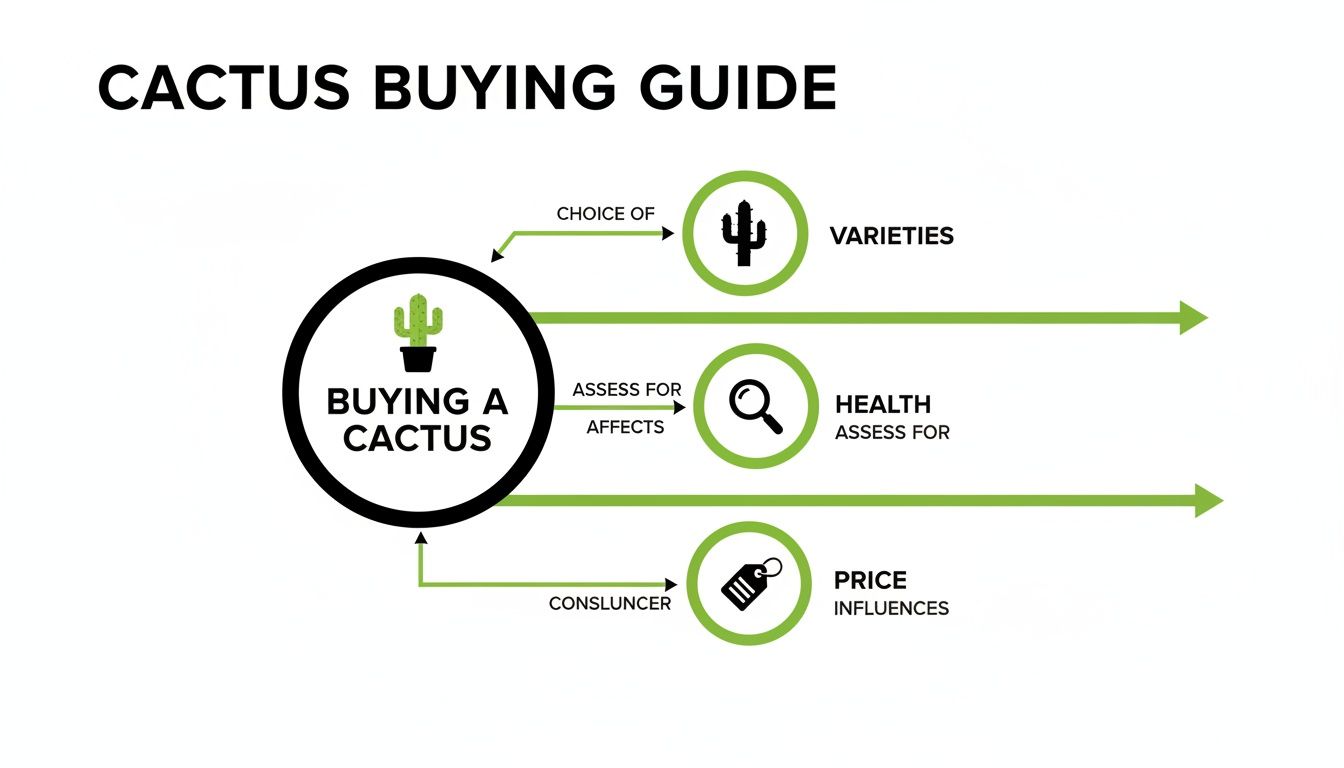
As you can see, figuring out which variety you want is the foundation. It sets the stage for how you'll check a plant's health and what you can expect to pay.
The Three Main Species to Know
To get you started, let's zero in on the three main species you’ll see most often. They all share that classic columnar shape, but the magic is in the details. Learning to spot these differences is a really satisfying skill for any cactus enthusiast.
- Echinopsis pachanoi (Classic San Pedro): This is the one most people picture. It’s known for its 6-8 smooth, rounded ribs and tiny spines that are sometimes barely there. Its color is a rich, healthy green, and it tends to be a pretty fast grower.
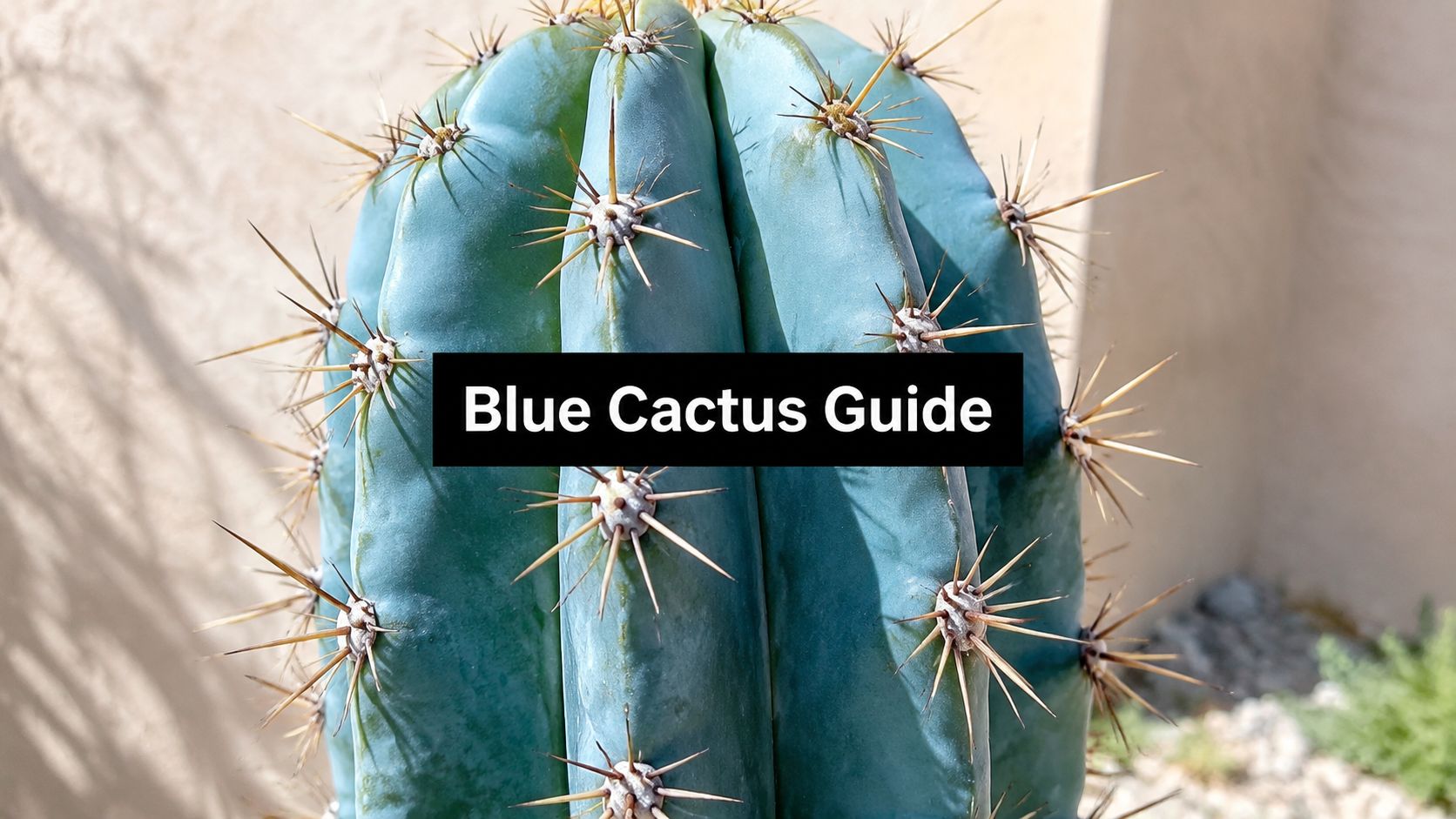
- Echinopsis peruviana (Peruvian Torch): This one brings a bit more drama. It stands out with its beautiful blue-green, almost powdery-looking skin and much longer, more intimidating spines. The ribs are usually wider and fewer, typically between 5-7.
- Echinopsis bridgesii (Bolivian Torch): You can often spot a Bolivian Torch by its striking golden-yellow spines. These cacti can be a bit slimmer than their cousins and usually have 4-6 ribs, which can give the stem a cool, star-like shape when you look at it from above.
As Ralph Moran, a horticulturalist at the San Diego Zoo, puts it, the process is simple: "Chop, callus, plant." He adds, "Neglect them, water whenever, and they'll give you a nice, tall, columnar cactus." This really speaks to how tough and forgiving these plants are, making them a great fit for beginners and seasoned collectors alike.
A Quick Comparison Guide
To make identifying them even easier, here’s a quick-reference table that breaks down their key features. Keep this handy when you’re browsing different San Pedro cactus plants for sale.
San Pedro Species Comparison Guide
| Feature | Echinopsis pachanoi (San Pedro) | Echinopsis peruviana (Peruvian Torch) | Echinopsis bridgesii (Bolivian Torch) |
|---|---|---|---|
| Color | Deep to light green | Glaucous blue-green | Bright to lime green |
| Spines | Very short or absent | Long and prominent, often brown/gray | Long and golden-yellow |
| Rib Count | Typically 6-8 | Usually 5-7 | Typically 4-6 |
| Overall Shape | Thick, rounded columns | Stout, wide columns | Often slimmer, more angular columns |
This table helps you quickly see the most obvious visual cues, so you can tell at a glance what you're looking at.
Beyond Species: Named Clones and Cultivars
Once you get hooked, you'll discover a whole world beyond these three main species. For decades, serious growers have been identifying and propagating specific plants with exceptional qualities. These are called "named clones."
They aren't technically new species. Instead, they are unique genetic individuals that are reproduced from cuttings to ensure their special traits—like wild spine patterns, unusual colors, or monstrous, mutated growth—are perfectly preserved.
You’ll start seeing names like 'Lumberjack', 'Ogunbodede', or 'SS02' on listings. These are the celebrities of the cactus world, sought after by collectors for their distinct looks.
The community around these premium clones is huge and passionate. The 'Trichocereus and Echinopsis Growers Worldwide' Facebook group, for example, has swelled to over 30,000 members. On specialized auction sites, bidding for rare genetics can get intense. To give you an idea, some clones like T. peruvianus 'Sharxx Blue' have sold for top dollar per centimeter. Others, like the rare crested form T. bridgesii 'CSD', initially sold for more than double the price of common clones until more became available. You can dive deeper into these fascinating San Pedro cactus market trends to see how the market shifts.
Whether you go for a classic species or a prized named clone, knowing what's out there is the key to finding the perfect cactus for your collection.
How to Choose a Healthy San Pedro Cactus Specimen
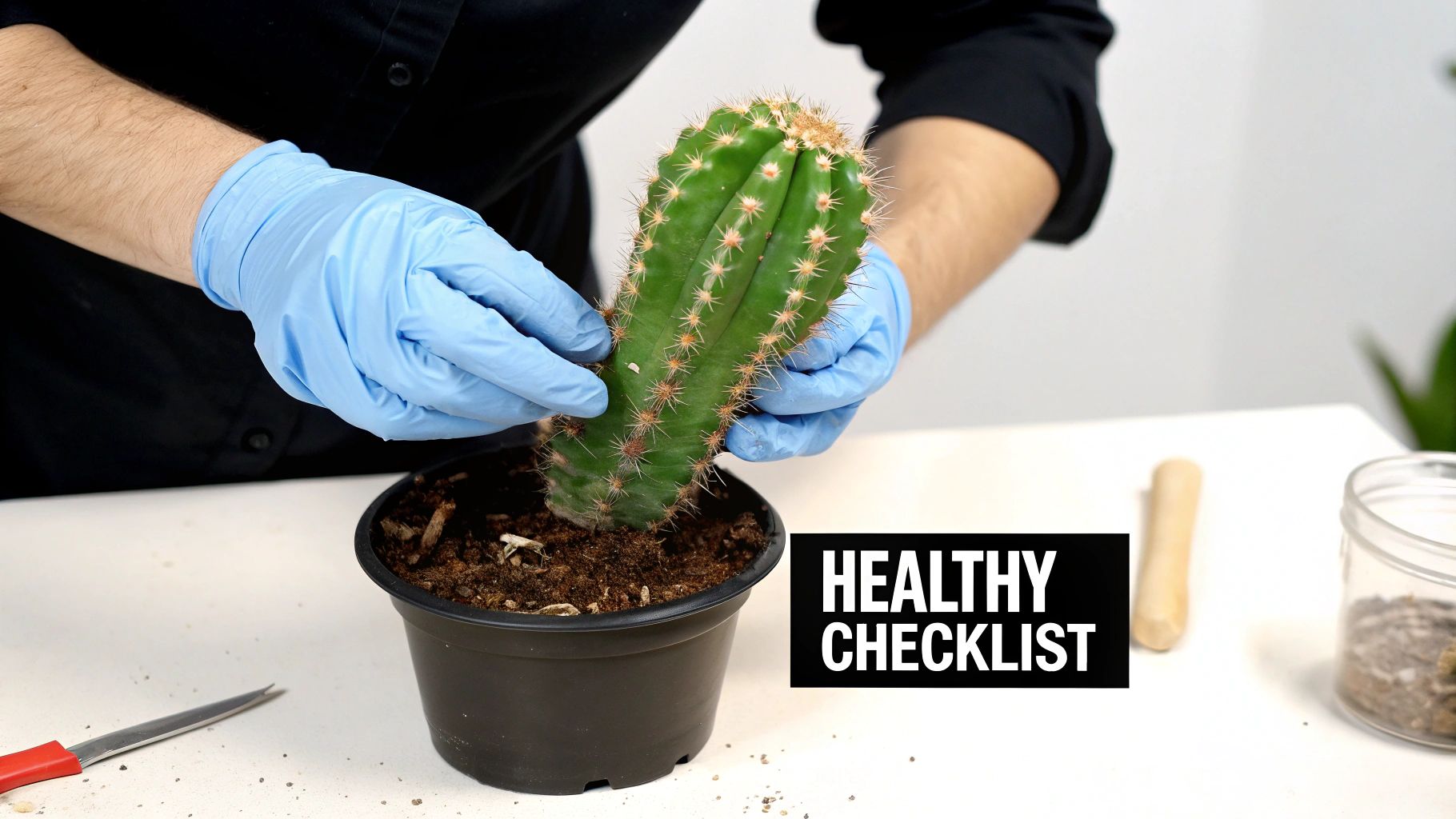
Picking a healthy plant is the single most important thing you'll do when looking at San Pedro cactus plants for sale. Get this right, and everything else—potting, watering, and growth—becomes infinitely easier. Think of it as a quick health check before you commit. A few minutes of inspection now can save you a whole lot of headaches later and set your new cactus up for success from the moment it arrives.
Whether you're holding a cactus in your hands or just looking at photos online, the rules of the game are the same. You’re trying to spot the signs of a happy, well-cared-for plant while keeping an eye out for any red flags that hint at disease or neglect. A strong, healthy specimen will settle into its new home much faster and reward you with years of beautiful growth.
The Green Flags of a Healthy Cactus
When you look at a San Pedro, you're really just looking for evidence that it’s been growing in good conditions. Once you know what to look for, these positive signs are pretty obvious. A vibrant cactus practically glows with health.
Here’s what you want to see:
- Vibrant, Consistent Color: The body of the cactus should be a deep, even green or blue-green, depending on the variety. Some minor blemishes or color shifts are totally normal, but the overall tone should look rich and full of life, not pale or washed-out.
- Firm Flesh: If you can, give the cactus a gentle squeeze. It should feel firm to the touch, like a fresh cucumber. That firmness, or turgidity, is a great sign that it's well-hydrated and structurally sound.
- Fresh Apical Growth: Check the very top of the cactus—its growing point, known as the apical meristem. A healthy, active San Pedro will often have a lighter green, new growth at the tip. That's the best sign that it's in a growth phase.
- Clean Areoles: The areoles are those little fuzzy spots where the spines grow from. They should be clean and free of any weird growths or sticky stuff that might signal pests like mealybugs.
A healthy San Pedro is like a well-inflated tire—firm, uniform, and ready for the road ahead. Any soft spots or discoloration are immediate signs that something is wrong under the surface, warranting a closer look before you decide to buy.
The Red Flags to Avoid
Knowing what to avoid is just as critical as knowing what to look for. Some problems are incredibly difficult, if not impossible, to fix once they take hold. Spotting these issues early lets you pass on a problematic plant and find a much better one.
Keep a sharp eye out for these warning signs:
- Soft Spots or Mushiness: This is the big one. If any part of the cactus feels soft, squishy, or water-logged, it’s almost certainly rot. Rot spreads fast and is often a death sentence, so steer clear of these plants entirely.
- Etiolation: This happens when a cactus doesn't get enough sunlight and starts stretching toward the light, growing thin, pale, and weak. Look for skinny, tapered sections, especially near the top. The plant can recover with better light, but that stretched, weakened growth is permanent.
- Discoloration: Watch for big yellow or brown patches, which can be a sign of sunburn or a nutrient issue. Funky black or orange spots often point to a fungal infection. A healthy plant should be a nice, consistent color.
- Visible Pests: Get up close and inspect the ribs and crevices. Look for scale insects (which look like tiny brown bumps) or mealybugs (white, cottony fluff). An infestation is a pain to deal with and can easily spread to your other plants.
Now, don't sweat the small stuff. Healed scars or "corking"—a natural, bark-like hardening you often see at the base of older cacti—are perfectly fine. They're just signs of a life well-lived. What you’re looking for are active, spreading problems. Taking a moment to do this quick visual check is the best way to make sure you bring home a strong, thriving San Pedro.
Understanding San Pedro Cactus Pricing
Ever looked at two San Pedro cacti and wondered why one is $20 and the other is $200? It can be a little confusing at first, but the price of a San Pedro almost always boils down to a few straightforward factors. Once you get a handle on them, you'll be able to spot a great value and find the perfect plant for your budget.
I like to think of it like buying furniture. A small, unrooted cutting is like a flat-pack bookcase from IKEA. It's affordable and full of potential, but it's on you to put in the work to build it into something great. A large, established cactus, on the other hand, is like a solid oak dining table—it’s an instant centerpiece that took years to craft, and the price tag reflects all that time and effort.
What Determines the Price Tag
A few key things influence what you'll pay for a San Pedro. It's never just about one single factor; it's the combination of size, origin, and overall condition that sets the final price.
- Size (Height and Girth): This is the most obvious one. Taller and thicker cacti simply take longer to grow, so they cost more. A stout, 12-inch cactus is often more valuable than a skinny 18-inch one because that thickness—or "girth"—is a sign of powerful, healthy growth.
- Rooted vs. Unrooted Cuttings: An unrooted cutting is a piece taken from a mature plant that you'll need to root yourself. It’s a fantastic, budget-friendly way to start, but it does require some patience. A fully rooted plant is ready to grow the moment it arrives, and its higher price reflects the time and care the nursery has already invested to get it established.
- Species and Named Clones: As we've touched on, a rare species like a striking blue Echinopsis peruviana or a prized named clone with unique, documented genetics will always be more of an investment than a more common Echinopsis pachanoi.
The price of a cactus is a direct reflection of the time and resources invested in its growth. A multi-foot, field-grown specimen might be a decade old, representing a significant long-term commitment from the nursery. You can learn more about the factors that make larger cacti more expensive by exploring our detailed guide on why large cacti and succulents cost more.
A Guide to Typical Price Ranges
To help you plan your purchase, I've put together a quick guide on what you can generally expect to pay for different types of San Pedro. Prices will naturally vary between sellers, but this table gives you a solid starting point.
Typical San Pedro Cactus Price Ranges
| Plant Type & Size | Typical Price Range | Best For |
|---|---|---|
| Small Unrooted Cutting (6-12 inches) | $15 - $40 | Budget-conscious beginners and DIY growers who enjoy the rooting process. |
| Small Rooted Plant (up to 1 foot) | $30 - $75 | New collectors wanting a plant that’s ready to pot and grow immediately. |
| Medium Established Plant (1-3 feet) | $75 - $200+ | Enthusiasts looking for a more developed specimen to add to their collection. |
| Large Landscaping Specimen (3+ feet) | $200 - $600+ | Homeowners and landscapers seeking an instant, dramatic focal point for a garden. |
| Rare Named Clone Cutting (any size) | $50 - $300+ | Serious collectors who are looking for specific, verifiable genetics and unique traits. |
Whether you're starting small with a cutting or investing in a mature centerpiece, understanding these tiers will help you find the right San Pedro for both your collection and your wallet.
Where Your Cactus Comes From Matters More Than You Think
When you're on the hunt for a San Pedro, it's easy to get caught up in the details—which species, how big, and what's the price tag? But there's a huge, often invisible, factor that makes all the difference: where that plant actually came from. This isn't just about getting a quality cactus; it’s about participating in a global conservation effort.
These incredible cacti are facing some serious pressure back home in the Andes. As their popularity has exploded worldwide, it’s unfortunately led to a massive amount of overharvesting from the wild. We're not talking about a few plants here and there. This is a problem that threatens entire ecosystems and the deep cultural heritage connected to these cacti.
So, when you decide where to buy your San Pedro, you're doing more than just making a purchase. You're casting a vote with your wallet for a sustainable future for these amazing plants.
The Real Problem with Wild Harvesting
The sheer scale of demand has put wild San Pedro populations under immense strain. In their natural habitat, these cacti grow slowly, acting as pillars of their ecosystem. When they're ripped out faster than they can grow back, the whole natural balance gets thrown out of whack.
This is a critical issue in certain parts of the Andes. In fact, experts in Peru have classified all native San Pedro species as 'endangered in the wild' or 'threatened' for over 15 years. Just to give you a sense of the scale, Peruvian authorities reported that over 40 tons of harvested and dried San Pedro were legally exported between 2009 and 2013 alone. That’s a staggering number, and it doesn't even touch the illegal trade.
The result is devastating. In heavily harvested areas, mature cacti are often chopped down to the stump, crippling their ability to regrow and causing local populations to vanish. If you'd like to dive deeper, you can learn more about the challenges facing San Pedro in the wild and the efforts to protect them.
How You Can Be Part of the Solution
This is where your choice makes a real impact. By opting for a nursery-grown cactus, you're directly supporting a system that keeps wild plants safe where they belong. Growers like us at The Cactus Outlet cultivate our plants from seeds and cuttings in carefully managed environments, completely separate from their vulnerable native habitats.
Taking this route does a few really important things:
- It takes the pressure off wild populations. Every cultivated cactus sold is one that doesn't need to be pulled from the wild, giving native stands a fighting chance to recover.
- It supports responsible growers. You're putting your money toward businesses that are passionate about growing healthy, beautiful cacti the right way.
- You get a better plant. Let's be honest—nursery-grown specimens are almost always healthier, free of pests, and far better suited to life in a pot than a plant pulled from the wild.
Think of it this way: choosing a cultivated San Pedro is an act of conservation. It helps ensure these plants will continue to tower over their native landscapes for generations, while you get to enjoy a gorgeous, healthy specimen grown with care and expertise.
Ultimately, your decision sends a clear message. By supporting ethical sellers, you help build a market that prioritizes conservation over exploitation. You make sure your new plant is more than just a beautiful addition to your home—it's a positive step toward protecting one of nature’s most iconic cacti.
Caring for Your Newly Arrived San Pedro Cactus
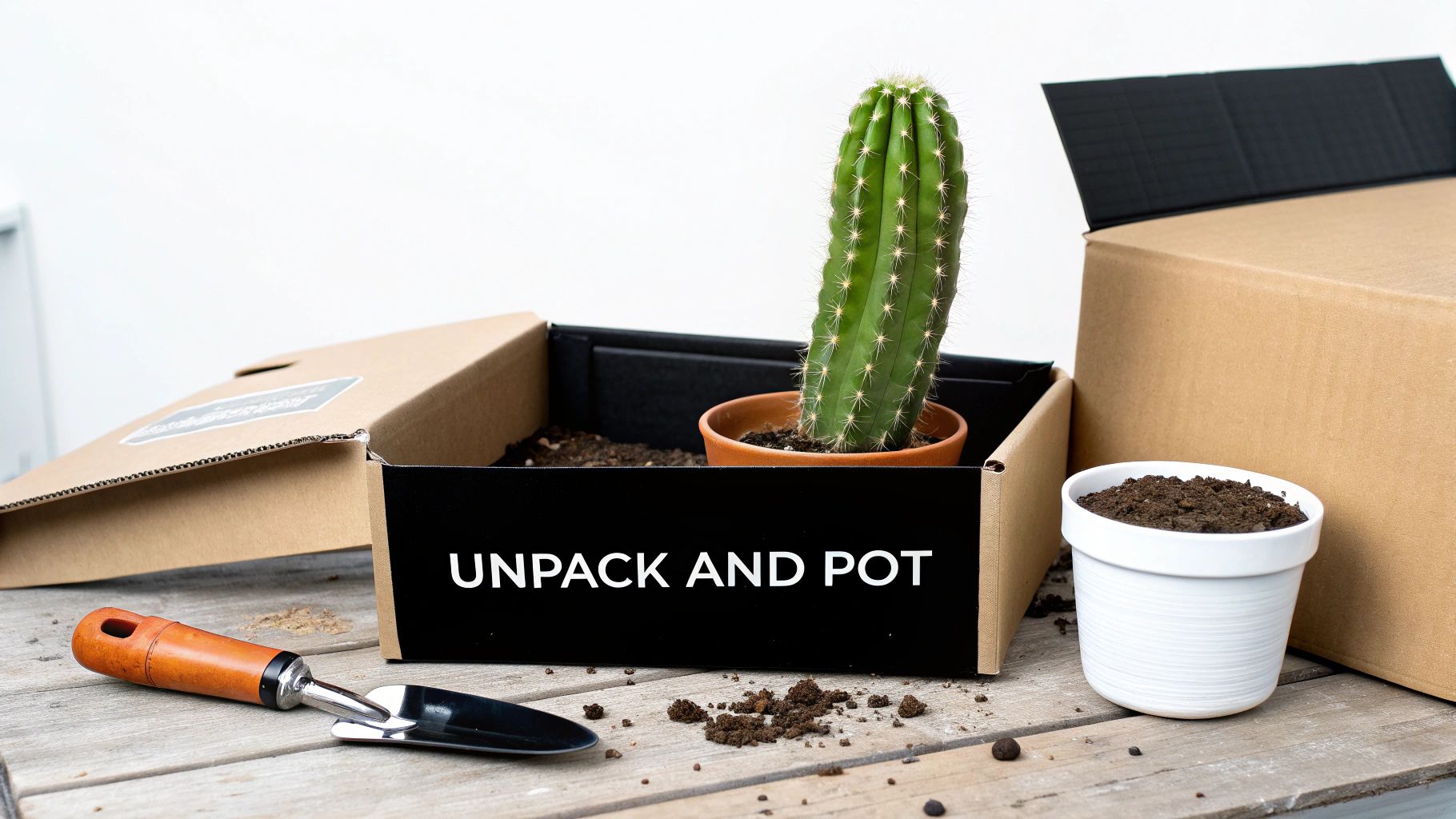
It’s always a great day when your cactus arrives. But what you do in these first few moments is critical for setting your new San Pedro up for a long, healthy life. This isn't just a houseplant; it’s a living thing that has just traveled across the country in a dark box. A little patience right now will pay off big time.
Think of your new cactus like a traveler stepping off a long flight. It needs a moment to stretch, get its bearings, and adjust to the new environment. Rushing the process can cause unnecessary stress.
The condition of your plant upon arrival says a lot about its journey. Understanding the best practices for shipping fragile items can give you an appreciation for the care taken to get it to you safely.
The First 48 Hours: Unboxing and Acclimation
Once you've carefully unpacked your San Pedro, fight the urge to pot it up and drench it with water immediately. That's one of the most common mistakes new owners make, and it’s a fast track to rot. Instead, let’s give it a chance to breathe.
First, give your cactus a gentle but thorough look-over. Check for any dings or bruises from shipping. The flesh should feel firm, and the color should be a healthy green. If you received an unrooted cutting, the cut end should be completely dry and hard. We call this being callused, and this natural seal is absolutely essential for preventing infection when it's planted.
Next, find a good resting spot. You're looking for a place with bright, indirect light—think a covered porch, or near a window that doesn't get blasted by the afternoon sun. Direct sunlight at this stage is way too much for a stressed plant and can easily cause sunburn. Just let it sit there for a couple of days to recover from the shock of travel.
This brief "decompression" period is non-negotiable. It allows the plant to stabilize and adjust to your home's unique temperature and humidity before you introduce the stress of potting.
Potting Your San Pedro for Success
After a couple of days of rest, your cactus is ready for its new home. Getting the pot and soil right from the start is the foundation for a thriving San Pedro.
1. Choose the Right Container: Grab a pot that’s only 1-2 inches wider in diameter than the cactus itself. A pot that's too big will hold onto way too much water, which is the number one killer of cacti. Make sure it has at least one good-sized drainage hole at the bottom.
2. Create the Perfect Soil Mix: San Pedro cacti are native to the Andes, where the soil is gritty and drains in a flash. Your goal is to replicate that. You can buy a bag of commercial cactus mix, but honestly, making your own is better. A simple, effective recipe is:
- 50% Inorganic Material: Use pumice, perlite, or coarse builder's sand.
- 50% Organic Material: Use a basic potting soil or coco coir.
3. Plant with Care: Fill your pot with the new soil mix. If you have a cutting, plant it just deep enough so it can stand on its own—usually about 2-3 inches. For a rooted cactus, set it at the same soil depth it had in its original nursery pot. Gently backfill with soil to secure it.
Once it's potted, put it right back in that same spot with bright, indirect light. For a deeper dive into their long-term needs, check out our complete San Pedro cactus care guide.
Now for the hardest part: wait. Do not water your newly potted cactus for at least one to two weeks. This gives any tiny roots that may have been damaged during potting a chance to heal over. Watering too soon invites rot. A little patience now is rewarded with a strong, happy cactus later.
Your Top Questions About Buying San Pedro Cactus
When you're looking to buy a San Pedro, a few final questions often pop up. Whether this is your first cactus or you're adding to a growing collection, getting clear answers is key to buying with confidence. We've gathered the most common queries we get right here to give you that last bit of clarity.
Think of this as our final chat over the potting bench before you pick out your plant. We’ll touch on everything from legality to care, making sure you're set up for success from day one.
Is It Legal to Buy San Pedro Cactus?
Yes, it is completely legal to buy, sell, and grow San Pedro cactus (Echinopsis pachanoi and its relatives) in the United States. They're sold all the time as beautiful ornamental plants for gardens and homes.
Where the law gets specific is around the plant's natural mescaline content. It's illegal to extract or consume mescaline under federal law. So, as long as you're growing your San Pedro for its stunning appearance and horticultural value, you are well within your legal rights.
How Fast Do San Pedro Cacti Grow?
This is one of the best parts about San Pedro—it grows fast! Compared to iconic desert dwellers like the Saguaro, its growth rate is truly impressive. With the right conditions like plenty of sunshine, warmth, and good watering habits during its growing season, a San Pedro can easily shoot up 12 inches or more in a single year.
This makes it an incredibly satisfying plant to own. You’ll see real, noticeable progress season after season, watching a small cutting transform into a towering specimen in just a few years.
What Is the Best Time of Year to Buy?
While you can buy a San Pedro any time, the ideal window is during its active growing season from spring through early fall. There are some real perks to buying during this time:
- Roots Take Hold Faster: Cuttings establish their root systems much more quickly in the warm soil.
- Easier Adjustment: A plant bought in spring has all summer to get comfortable in its new home.
- Instant Gratification: You'll likely see new growth right away once the plant settles in.
Of course, buying in the winter is perfectly fine too. Your cactus will probably be dormant, so you'll just need to give it a cool, dry spot to rest until spring wakes it up.
The rise in cultivated San Pedro is great news for wild populations. A global study highlighted San Pedro as the most popular mescaline cactus, with 54.7% of users choosing it for its ready availability. The important part? Less than 7% took plants from the wild, while 31.9% bought from websites, proving a significant move toward sustainable, nursery-grown sources. You can dive deeper into these consumer trends and their conservation impacts.
Can I Grow San Pedro Cactus Indoors?
You bet. San Pedro thrives outdoors in warmer climates (think USDA Zones 8b-10), but it also makes a fantastic houseplant as long as it gets enough light.
Your best bet is to find the sunniest window in your house, usually a south-facing one that gets at least six hours of direct sun daily. If your home is a bit on the darker side, a simple grow light can make all the difference, keeping your cactus healthy and preventing it from getting leggy.
Ready to choose the perfect San Pedro for your home or garden? At The Cactus Outlet, we take pride in our selection of healthy, beautiful, nursery-grown specimens. Come take a look at our San Pedro cactus plants today.