
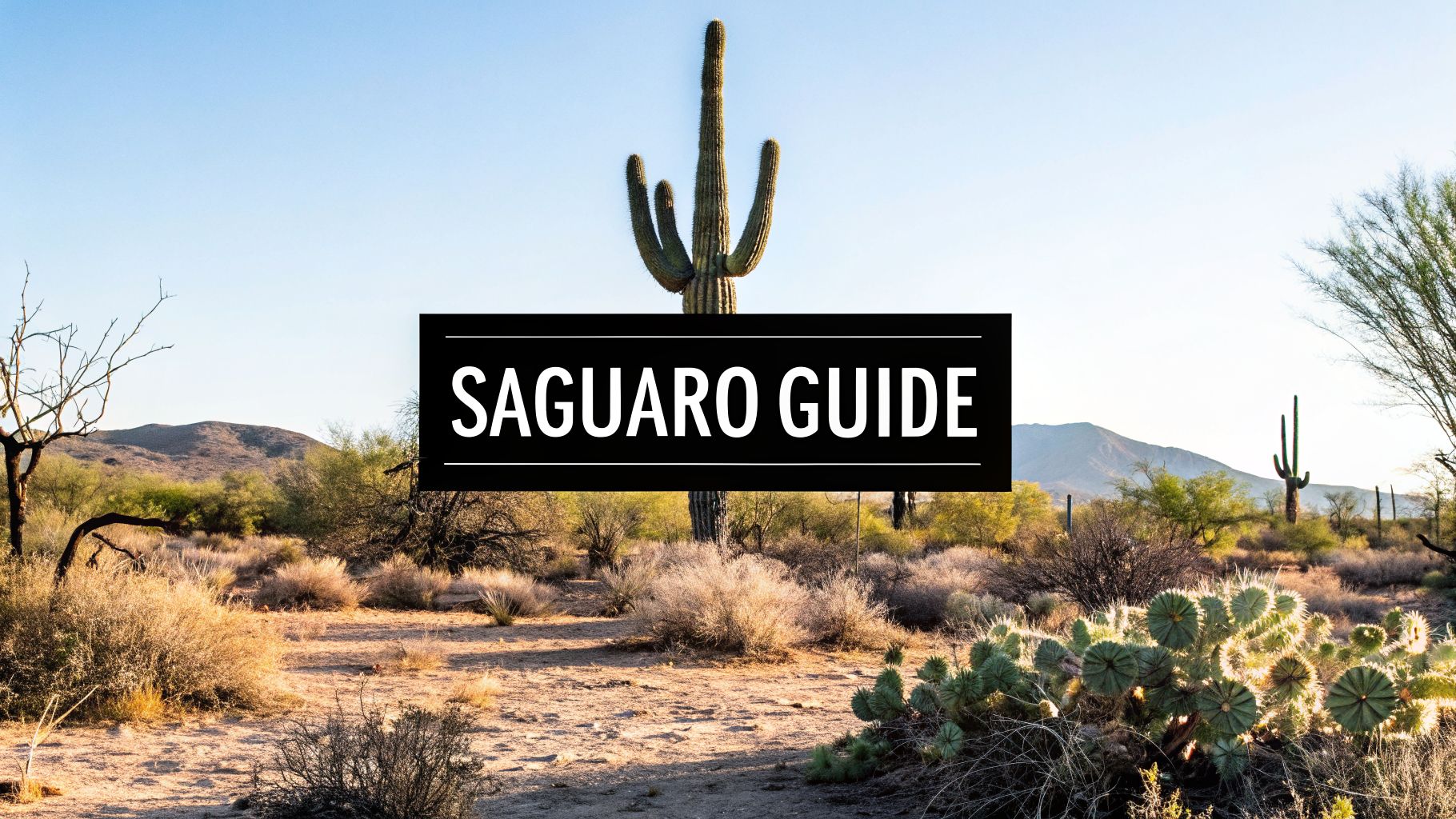

When you picture the American Southwest, what comes to mind? For most of us, it’s the unmistakable silhouette of a saguaro cactus, its arms raised against a fiery desert sunset. This magnificent, tree-like giant is more than just an icon—it’s a living pillar of the Sonoran Desert ecosystem.
Meet the Iconic Saguaro Cactus
Think of the saguaro cactus (Carnegia gigantea) as a living sculpture, a sentinel that has stood watch over the sun-drenched landscape for generations. While its famous shape is instantly recognizable from movies and art, the real story of the saguaro is one of incredible resilience, patience, and deep connection to its environment.
This isn't just any plant; it's a cornerstone species. The saguaro is a provider, offering food and shelter to a whole host of desert wildlife. It also holds profound cultural importance, especially for the Tohono O'odham people, who have revered the cactus for centuries, harvesting its fruit and weaving its story into their traditions.
Owning a saguaro isn't just about adding a plant to your collection; it's about becoming a custodian of a piece of living history. Each one carries the legacy of the desert within its slow, patient growth.
Why the Saguaro Captivates
So, what is it about the saguaro that captures our imagination so completely? It’s a powerful combination of its sheer scale, its astonishing lifespan, and its vital role in the desert.
- A Living Timeline: A saguaro can live for well over 150 years. It grows at a glacial pace, often not even beginning to sprout its first arm until it's 70 years old. Each new arm is a testament to decades of survival.
- An Ecological Hub: The saguaro is a bustling apartment complex and diner for the desert. Gila woodpeckers carve out nests in its flesh, bees flock to its crown of white flowers, and countless other creatures rely on it for survival.
- Cultural Significance: More than just a plant, the saguaro is a powerful symbol of strength, endurance, and the untamed spirit of the Southwest.
This guide is your starting point for a journey with this desert giant. We'll go beyond the postcard image to explore everything you need to know to successfully care for a saguaro of your own. To get a better sense of its native world, you can also explore our guide to other fascinating cacti of the Sonoran Desert.
From Tiny Seed to Towering Giant: The Saguaro Life Cycle
To truly understand a saguaro is to appreciate its sense of time. These aren't plants that you watch grow over a season or two; their story unfolds across decades, even centuries. The journey from a single, vulnerable seed to a majestic desert icon is a masterclass in patience and resilience.
It’s hard to wrap your head around just how slow they start. A saguaro that’s been growing for 10 years might be no bigger than your thumb—maybe an inch and a half tall. In these early years, they are incredibly fragile. Most successful seedlings sprout under the protective shade of a "nurse plant," like a palo verde or mesquite tree, which shields them from the scorching sun and hides them from hungry wildlife.
This sheltered start is absolutely critical for a young saguaro to survive its first, most perilous, years.

Hitting the Growth Milestones
For the first few decades, nearly all a saguaro's energy goes into what’s happening underground. It focuses on establishing a massive, sprawling root system to anchor itself and capture every last drop of precious desert water. Above-ground growth is almost unnoticeable.
The table below outlines the major milestones in a saguaro's life. It puts into perspective just how long it takes for these cacti to develop their iconic features.
Saguaro Cactus Growth Milestones
| Age | Approximate Height | Key Milestone |
|---|---|---|
| 10 years | 1.5 inches | Still a tiny seedling, often hidden under a nurse plant. |
| 35 years | ~3 feet | Begins to flower for the first time. |
| 50 years | ~7 feet | Established and flowering reliably. |
| 70+ years | ~15 feet | Starts growing its first arm. |
| 200 years | 40-50 feet | Reaches full maturity, a true giant of the desert. |
As you can see, the "cactus" shape we all recognize doesn't even begin to form until the plant has been growing for the better part of a century.
The Age of Flowers and Arms
Things start getting interesting around age 35, when the cactus is finally mature enough to produce its first incredible white blossoms. By age 50, it might be about seven feet tall, but its most famous features are still a long way off. This slow and steady development is a hallmark of the species. For a deeper dive into what to expect year by year, you can explore the typical saguaro cactus growth rate.
The appearance of the first arm is a monumental event in a saguaro's life, and it usually doesn't happen until the cactus is between 70 and 100 years old. Some saguaros never grow any arms at all, while ancient ones might boast more than 25. There's no predicting it; each one is unique.
A saguaro will continue to grow, flower, and produce fruit for well over a century. By the time it reaches 200 years old, it can be a true giant, towering 40–50 feet high.
When you look at a large saguaro in the wild, you're not just looking at a plant. You're looking at a living timeline that has stood watch over the desert for generations. Caring for a young saguaro is a special responsibility—you’re nurturing a living legacy.
How to Plant and Nurture Your Saguaro
Bringing a saguaro into your home or garden is a special kind of commitment. Whether it's a small seedling for a pot or a more established specimen for your landscape, getting the initial setup right is everything. The whole game is about mimicking the conditions of its Sonoran Desert home.
Success really boils down to three things: sun, soil, and water. Get these right, and you're not just helping a cactus survive—you're cultivating a living sculpture that will become a dramatic focal point for decades.

Finding the Perfect Location
Sunlight is a saguaro’s lifeblood. These icons of the desert are engineered for intense sun, so you need to give them as much direct light as possible.
For an outdoor spot, look for a location that gets a solid 6-8 hours of direct, unfiltered sun every day. A south- or west-facing exposure is almost always your best bet. Think about the future, too. That small saguaro will eventually become a giant, so give it plenty of room to grow without hitting power lines, buildings, or other large plants.
Thinking about how your saguaro fits into the bigger picture is smart. A good guide can help you choose the right plants for your Arizona landscape design so your new addition complements its neighbors beautifully.
If you're keeping your saguaro indoors, the same rule applies, but it's even more critical. A large, unobstructed, south-facing window is non-negotiable. Without that powerful, direct light, the cactus will etiolate—stretching unnaturally towards the light—and become weak and pale.
Mastering Soil and Planting Depth
If there’s one thing that will kill a saguaro faster than anything else, it’s “wet feet.” Roots sitting in soggy, dense soil are a death sentence, leading to root rot that’s nearly impossible to reverse. The soil you use must drain quickly, just like the coarse, sandy ground of the Sonoran Desert.
For saguaros in pots, forget about standard potting soil. It just holds too much water. You need a specialty cactus and succulent mix, and even then, I recommend improving it further.
Your Ideal Saguaro Soil Mix:
- 50% Cactus/Succulent Soil: This forms a decent base.
- 25% Pumice or Perlite: These lightweight volcanic rocks create air pockets for roots and prevent the soil from compacting.
- 25% Coarse Sand or Fine Gravel: This is the key to fast drainage, letting water rush through instead of lingering.
Planting depth is just as important. You want to set the saguaro at the exact same depth it was growing in its nursery container. Burying it too deep will invite rot at the base, while planting it too high can leave it wobbly and unstable. A good rule of thumb is to dig a hole twice as wide as the root ball, but only just as deep.
After settling the cactus into the hole, backfill with your gritty soil mix. There's no need to tamp it down hard; just gently firm the soil around the base to hold it steady.
Watering Like a Desert Monsoon
The most common mistake I see new saguaro owners make is loving their plant to death with too much water. The trick is to think like the desert: long, dry spells followed by a deep, thorough drenching. This pattern encourages the roots to grow deep and strong in search of moisture.
After you first plant your saguaro, hold off on watering for a week or two. This gives any roots that might have been bruised or broken during planting a chance to heal and form a callus, which prevents them from rotting when you do water.
Watering Schedule Guidelines:
- Summer (Active Growth): Water deeply, but only every 2-4 weeks. Let the soil dry out completely between waterings. The best test? Stick your finger a couple of inches into the soil. If you feel even a hint of moisture, wait longer.
- Spring & Fall (Transition Seasons): As the weather cools, the plant's metabolism slows down. You can stretch the time between waterings even further.
- Winter (Dormancy): Water becomes a rare event. You might only water once every 6-8 weeks, or even less. For outdoor plants, natural winter rain is often more than enough.
When it's time to water, be generous. For a potted saguaro, soak the soil until water pours out of the drainage holes. For one in the ground, let a hose trickle slowly at its base for a while. This deep soak mimics a powerful monsoon rain, saturating the entire root zone far more effectively than a quick sprinkle.
Protecting Your Saguaro from Common Threats
Even a desert giant like the saguaro has its weak spots. While they’re incredibly tough, these cacti aren't invincible. The real secret to keeping your saguaro healthy for the long haul is learning to recognize the early signs of trouble.
Think of it like being a plant detective—subtle changes in color, soft spots, or strange growths are all clues that something isn’t quite right. Catching these problems early gives you the best shot at fixing them before they become serious. Implementing effective plant health care practices is the foundation for protecting your saguaro from the most common threats it might face.

Decoding Common Saguaro Ailments
The number one enemy for any saguaro owner is rot. You’ll usually spot it as dark, mushy patches on the cactus’s skin. This is a classic sign of bacterial necrosis, a condition almost always caused by overwatering or soil that doesn't drain well. When roots stay soggy for too long, they create the perfect breeding ground for harmful bacteria.
This isn't a new problem. In fact, this devastating rot was the very reason Saguaro National Park was established. As early as the 1940s, scientists were studying bacterial necrosis and its impact on the wild saguaro population. You can read more about this work in the National Park Service historical records.
Discoloration is another red flag. If your saguaro is turning yellow, it could be a case of sunburn, which is common in young plants or cacti moved too quickly into intense sun. On the other hand, a pale, stretched-out look usually means it’s desperate for more light.
Identifying and Managing Pests
While saguaros have tough skin, they aren't completely immune to pests. A few specific insects can cause real damage if left unchecked.
- Saguaro Cactus Grub: This is the larva of the Moneilema gigas beetle. It can bore right into the base of the cactus, causing major internal damage that can weaken or even kill the plant over time.
- Mealybugs and Scale Insects: These tiny sap-suckers look like fuzzy white dots or small brown bumps. They love to hide in the crevices and new growth, slowly draining the life from the plant.
For small-scale infestations like mealybugs, you can often get rid of them by dabbing each pest with a cotton swab dipped in 70% isopropyl alcohol. If the problem is more widespread, a gentle spray of insecticidal soap can work well. Just be sure to test it on a small spot first to make sure your cactus doesn't have a bad reaction.
A healthy saguaro is your best defense against pests. Proper watering, adequate sunlight, and good soil create a plant that is naturally more resilient to infestations.
Protecting from Environmental Stress
Sometimes the biggest threat isn’t a disease or a bug—it’s the environment itself. Saguaros are desert specialists, but even they have their limits, especially when they’re young or planted outside their native habitat.
Frost Damage: Young saguaros are particularly sensitive to a hard freeze. When temperatures dip below 20°F (or -6°C), the water inside the cactus's cells can freeze and burst, causing permanent damage. If a freeze is in the forecast, cover smaller outdoor saguaros with burlap or a frost cloth. For potted plants, the best move is to bring them into a garage or onto a covered patio.
Sunburn: A saguaro that isn’t used to intense, direct sun can get ugly yellowish or whitish scars on its skin. If you need to move your cactus to a sunnier spot, do it gradually over a few weeks to let it acclimate. For very young plants, a bit of afternoon shade from a shade cloth can prevent scorching during the peak of summer.
The Saguaro's Rich Cultural Story
Long before Hollywood Westerns turned it into an icon, the saguaro was the lifeblood of the Sonoran Desert's first people. For Indigenous communities, especially the Tohono O'odham, this towering cactus is far more than a plant. It’s a respected relative, a living calendar, and the absolute cornerstone of their culture.
The saguaro’s rhythm dictates the rhythm of life. For centuries, the Tohono O'odham have marked their new year with the saguaro fruit harvest, a joyous, communal event that traditionally signals the coming of the summer monsoon rains. It’s a time for renewal and deep gratitude for the desert's bounty.
A Pillar of Indigenous Life
The bond between the Tohono O'odham and the saguaro is a beautiful, reciprocal relationship. The cactus provides, and in return, it is honored and treated with profound respect. Nothing goes to waste; every part of the saguaro has a purpose.
- The Fruit: The juicy, red fruit is knocked from the tops of the cacti using long poles (called a kuipad) crafted from saguaro ribs. It's a critical food source, eaten fresh, dried into a sweet paste for the winter, or fermented into a ceremonial wine for the new year's rain-making ceremony.
- The Seeds: Thousands of tiny black seeds are collected from the fruit and ground into a highly nutritious flour.
- The Ribs: Once a saguaro dies and decomposes, its woody internal skeleton is gathered and used to build everything from shelters and fences to everyday tools.
This practical connection is inseparable from a deep spiritual one. In the O'odham worldview, saguaros aren't just plants; they are seen as another tribe of people, standing watch over the desert floor. This belief transforms the landscape from an empty expanse into a vibrant community of living beings.
"We often discuss the disparities between Indigenous and Western views on environmentalism, with Indigenous approaches centering multi-generational communication through storytelling, spirituality, and practical application."
Just how vital was this harvest? It’s hard to overstate, but records from a single harvest in 1929 show that just 600 families gathered an incredible 45,000 kg (99,000 lbs) of fruit. You can learn more about this rich history and the traditions surrounding the saguaro's cultural legacy on Wikipedia.
From Native Icon to American Symbol
While the saguaro’s roots in Indigenous culture run millennia-deep, its journey into the mainstream American imagination is much more recent. The Western world only "discovered" what the desert people had known for eons in the 1850s, when botanist George Engelmann first gave it the scientific name Cereus giganteus.
The saguaro’s official crowning moment came on March 16, 1931, when its beautiful, waxy blossom was designated the state flower of Arizona. This act officially launched the saguaro cactus from a regional botanical wonder to the enduring symbol of the American Southwest we know today.
So, when you look at a saguaro, you’re really seeing two histories intertwined. One is an ancient story of survival, community, and spiritual connection. The other is a more modern tale of exploration and symbolic identity. To care for a saguaro is to become a small part of both of these powerful narratives.
A Buyer's Guide to Your First Saguaro
Bringing home your first saguaro cactus is a big moment. It's exciting, but it’s also perfectly normal to feel a little nervous, especially when you’re clicking "buy" online. How can you be sure you’re getting a healthy plant? And how on earth does something that big and spiny actually get to your front door?
Don't worry, we're here to walk you through it. Reputable online nurseries have shipping cacti down to a science. They’ve figured out how to tackle the unique challenges and have developed solid methods to make sure your saguaro arrives safe, sound, and ready for its new home.
Finding the Right Seller
Your first, and most important, job is to find a trustworthy source. Think of a good nursery as more than just a store—they are caretakers of these amazing plants and take real pride in sending healthy specimens out into the world. A great seller sets you up for success from day one.
Here’s a quick checklist to help you spot a quality nursery:
- Honest Photos and Details: Look for listings with clear, high-quality pictures of the plant you’ll be getting, or one that’s a very close match. The description should give you its approximate age, height, and point out any special features or healed scars.
- Proof of Legal Sourcing: This is non-negotiable. Ethical sellers are upfront about their plants being nursery-grown and legally obtained. They will never sell saguaros that have been illegally poached from the desert.
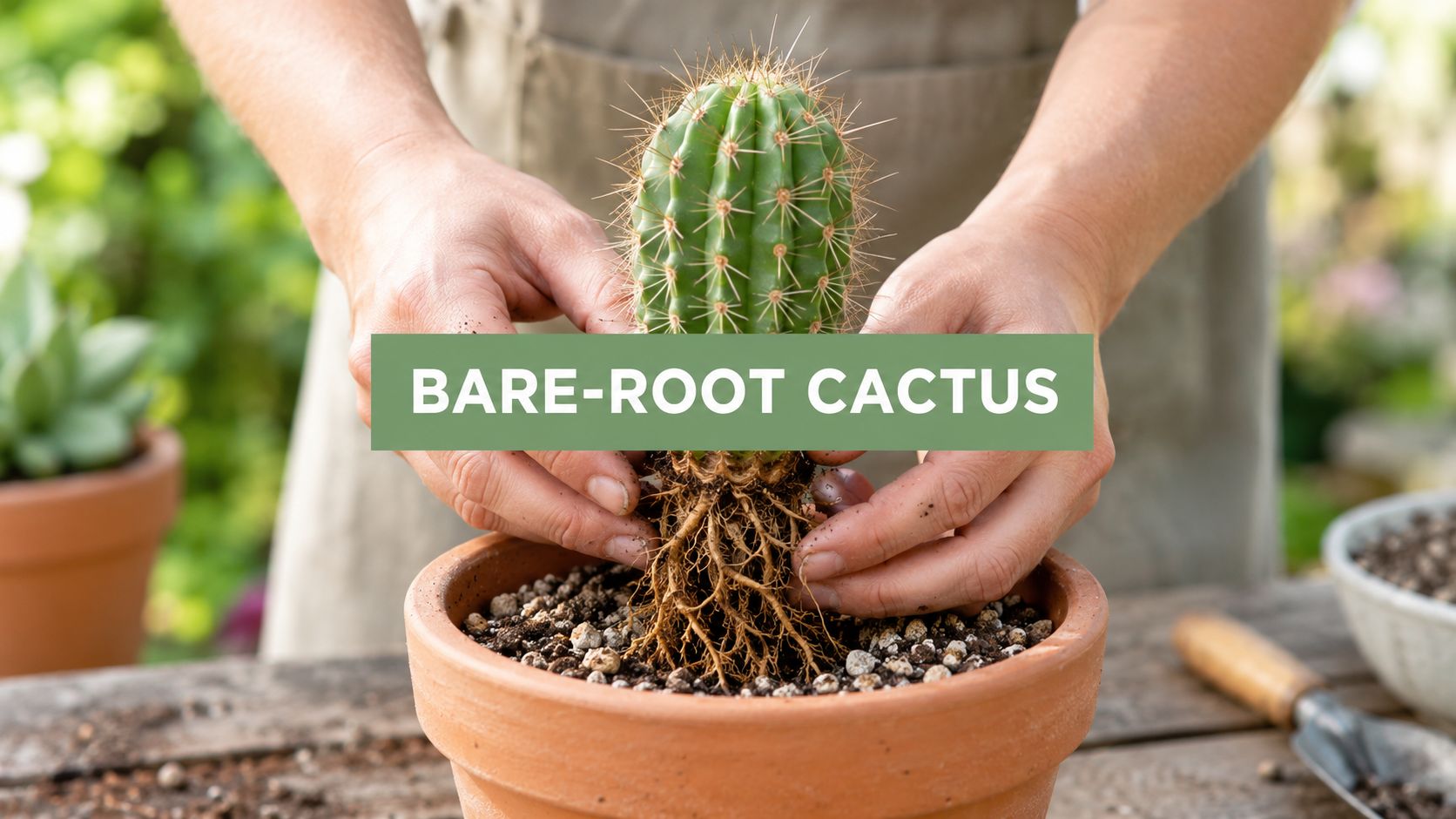
- Clear Shipping Methods: A good seller will walk you through their shipping process. Most ship saguaros "bare-root" (without any soil), which is the best way to prevent rot and keep shipping costs down. They should also give you a clear timeline for when to expect your plant.
- Happy Customers: Check the reviews. What are other buyers saying? Look for comments specifically about how the plant looked on arrival, the quality of the packaging, and how helpful the customer service was.
It helps to think of buying a saguaro like adopting a pet. You want a source that has obviously cared for the plant and gives you all the information you need for a smooth transition.
Your Saguaro's Arrival and Health Check
When the box finally arrives, it’s time for a quick inspection. Before you panic, remember that a bare-root saguaro that’s been in a dark box for a few days will look a little stressed. That's totally normal.
Carefully unpack your new cactus—and please, wear thick leather gloves!—and give it a gentle once-over.
What to Look For in a Healthy Saguaro:
- Firmness: Give the cactus a gentle squeeze. It should feel firm all over, almost like a ripe melon. Any soft, mushy, or squishy areas are a major red flag for rot.
- Color: The skin should be a vibrant, healthy green. A few minor surface blemishes or scars are just part of its character. What you don't want to see are large patches of yellow, black, or a bleached-out white color.
- Roots: Since it was likely shipped bare-root, the roots will be dry and might even seem a bit brittle. This is done on purpose. You're just checking for a decent root ball without any signs of black, slimy decay.
- Pests: Look closely in the ribs and crevices for unwanted hitchhikers. Keep an eye out for the fuzzy white tufts of mealybugs or the small brown bumps of scale insects.
If anything seems off, take photos right away and reach out to the seller. A reputable company will always stand by their plants and help you figure it out. For an even deeper dive, our guide on how to buy a saguaro cactus has more great tips to help you purchase with confidence.
Once your plant passes the inspection, just let it rest in a dry, shady spot for a few days before you even think about planting. This little "nap" helps it acclimate and recover from its long journey.
Common Questions About Saguaro Care
Even after you've got the basics down, a few questions always seem to surface when you're getting to know your new saguaro. It's totally normal. Let's tackle some of the most common ones that come up, so you can feel completely confident.
Can I Grow a Saguaro Cactus Indoors?
Absolutely, as long as it's a young saguaro and you can give it one crucial thing: a ton of direct sunlight. A prime spot right in front of a south-facing window is non-negotiable. It needs to soak up at least 6-8 hours of bright, direct sun every day to be happy.
Their incredibly slow growth is a huge advantage here. A small saguaro can live in a pot for many years—even decades—before it starts to feel cramped. Just make sure you’re using a gritty, fast-draining cactus mix and a pot with plenty of drainage holes. While it might eventually get too big for your house, you'll get to enjoy it as a stunning indoor sculpture for a very long time.
How Often Should I Water My Saguaro?
Your goal is to copy the desert’s natural cycle of long droughts followed by deep, soaking monsoons. In the summer when it’s actively growing, a deep watering every 2-4 weeks is about right. The golden rule, though, is to let the soil become bone-dry all the way through before watering again.
When things cool down in the spring and fall, you’ll water even less. And in the winter, the cactus is dormant and barely needs any water at all—maybe once every month or two if it's indoors. Always remember, overwatering is the number one killer of saguaros. If you’re ever in doubt, wait.
Think of it this way: a saguaro is built to handle thirst, but it has no natural defense against sitting in soggy soil. Let it dry out completely before you even consider giving it another drink.
Is It Legal to Own a Saguaro Cactus?
Yes, it is perfectly legal to own a saguaro, but there’s a huge catch: it must be ethically and legally sourced. It is a serious crime to dig up a saguaro from the wild. States like Arizona have what are called "Native Plant Laws" with stiff penalties to protect these icons from poaching.
This is exactly why you must buy your saguaro from a reputable nursery or a trusted online seller. Legitimate growers either propagate their own plants or get them from permitted salvage operations. Buying from a good source ensures you get a healthy cactus and helps protect the wild saguaro populations for generations to come.
How Can I Protect My Saguaro from Frost?
Young saguaros are the most susceptible to frost damage. A hard freeze, especially when temperatures dip below 20°F (-6°C), is the real danger. The water stored inside the cactus can freeze, expand, and rupture the plant’s cells, causing permanent, mushy damage.
Fortunately, protecting them isn't difficult if a cold snap is on the way.
- Cover It Up: Simply draping your outdoor saguaro with a frost cloth, burlap sack, or even an old blanket overnight can make a big difference. The cover traps heat radiating up from the ground.
- Bring It In: If your saguaro is in a pot, the easiest fix is to just move it. A covered porch, garage, or a spot indoors will keep it safe until the temperatures rise again.
Just don’t forget to uncover it in the morning! It needs to breathe and get back to soaking up that essential sunlight.
Ready to bring a piece of the desert into your life? At The Cactus Outlet, we offer a stunning selection of healthy, nursery-grown saguaros for every space and budget. Browse our collection today and find your perfect desert giant at https://www.cactusoutlet.com.