
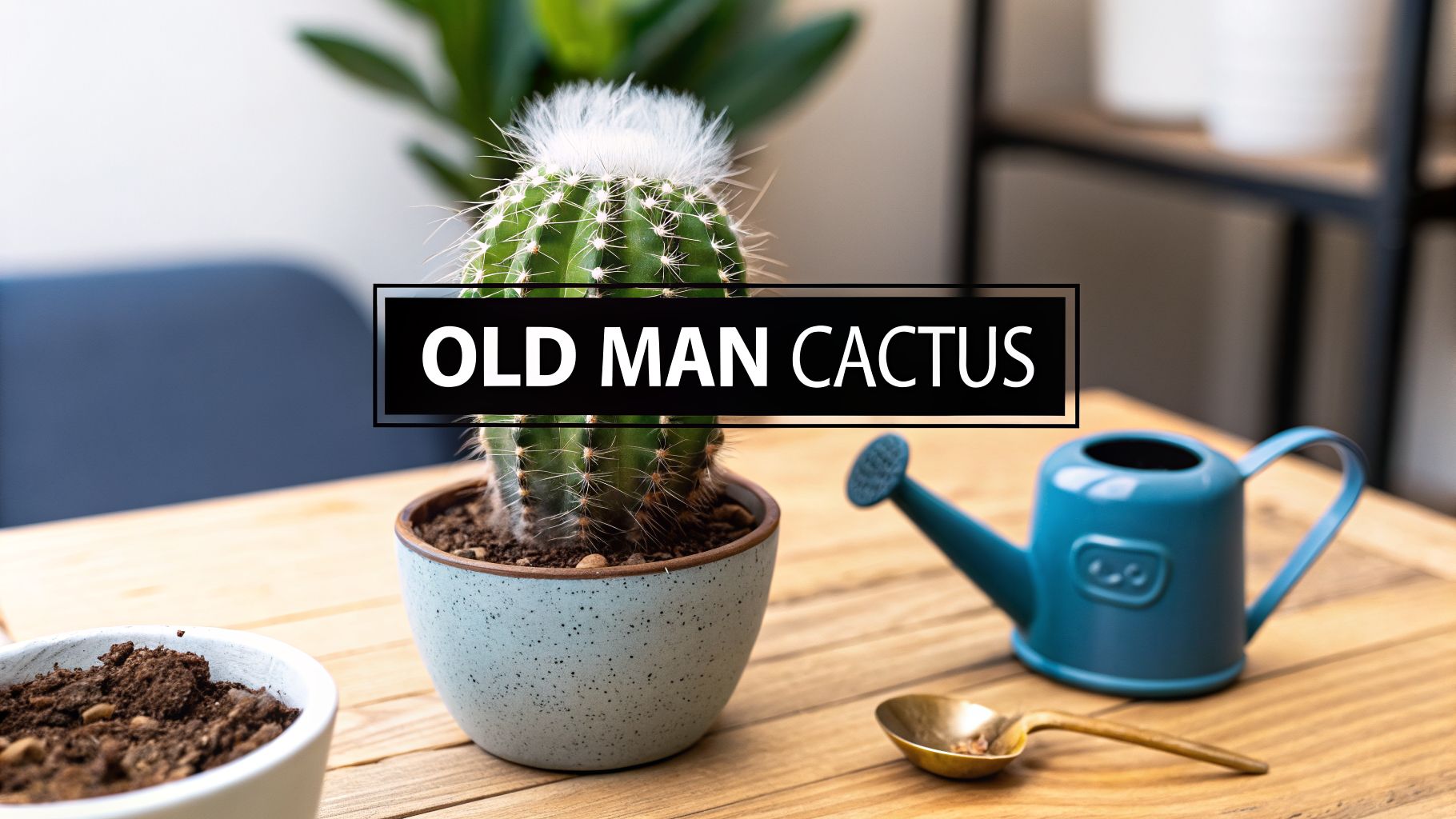

The Old Man Cactus (Cephalocereus senilis) is instantly recognizable. You can't miss its signature shaggy coat of long, white hair that looks just like a wise old man's beard. But this iconic feature isn't just for show—it's a brilliant evolutionary trick that shields the plant from brutal sun and surprisingly cold desert nights.
Meet the Wise and Woolly Old Man Cactus

There are some plants you just can't help but smile at, and the Old Man Cactus is one of them. It’s more than just a prickly succulent; it's a living sculpture with a personality that’s impossible to ignore. That fuzzy, snow-covered appearance makes it an immediate focal point in any room or garden.
But the real magic of this plant goes beyond its quirky looks. It’s a symbol of resilience and patience. Its incredibly slow growth means it won't suddenly take over its pot, making it a companion you can enjoy watching for years, and even decades.
From High-Altitude Slopes to Your Home
This fascinating cactus, known to botanists as Cephalocereus senilis, originally hails from the high-altitude limestone slopes of Hidalgo and Veracruz in central Mexico. In its natural habitat, this plant is a true giant, capable of reaching heights between 16 and 50 feet (5 to 15 meters).
When they’re young, the entire column is almost completely hidden by that dense, silvery-white fuzz. This "hair" is a masterful adaptation. It acts like a natural sunscreen, reflecting the harsh sun and trapping a layer of air to insulate the cactus against the cold mountain nights. You can learn more about its native environment over at Wikipedia.org.
This built-in toughness is exactly what makes it such a great plant for our homes, bringing a touch of rugged desert elegance to any space.
Why Choose This Fuzzy Cactus?
The Old Man Cactus is a long-standing favorite for so many reasons, perfectly blending a standout appearance with surprisingly simple care. Its unique look adds a layer of texture and visual interest that you just don't get with most other succulents.
Here’s why it really stands out from the crowd:
- Totally Unique Look: That dense, woolly hair gives it a soft, fuzzy appearance that beautifully contrasts with the sharp spines hiding underneath.
- Incredibly Slow Growth: It’s the perfect plant for containers. It grows so slowly and predictably that it will stay a manageable size for many, many years.
- Very Forgiving: Like most cacti, it thrives on a bit of neglect. It needs very little water, which is great for busy plant owners or anyone new to the hobby.
- A Living Work of Art: As it ages, it develops even more character, becoming a treasured and evolving piece of your home’s decor.
This guide will walk you through everything you need to know to confidently grow a healthy and happy Cephalocereus senilis. Let's turn this quirky little plant into a stunning statement piece you can be proud of.
Getting the Environment Just Right
Your Old Man Cactus won't tell you when it's unhappy, but it will definitely show you. A thriving cactus comes down to one thing: mimicking the high-altitude desert conditions it evolved in. Think of yourself as an architect for its own tiny ecosystem. Getting the light, water, soil, and temperature right is the secret, and it's easier than you might think.
Let There Be Light (But Not Too Much)
Light is probably the single most important factor for a happy Old Man Cactus. These guys are built for sunshine, but their famous white hair is like a natural sunshade—it filters the harsh rays, but it can't block a full-on scorcher.
You're aiming for at least six hours of bright, indirect sunlight every day. In a typical home, this looks like:
- The Sweet Spot: An east-facing window is often perfect. It gets that bright, cheerful morning sun that isn't intense enough to cause a sunburn.
- A Great Alternative: A spot a few feet back from a south or west-facing window also works beautifully. This gives it plenty of brightness without the direct, blistering heat of the afternoon.
If you see your cactus starting to lean towards the window, or if new growth looks skinny and stretched out (a condition called etiolation), it's screaming for more light. That stretched-out shape is permanent, so it's best to move it as soon as you notice the change.
The 'Soak and Dry' Watering Mantra
Overwatering is the number one killer of cacti, period. Their whole system is designed to handle drought by storing water in their stems. Their roots, on the other hand, absolutely hate sitting in soggy soil and will quickly rot. To avoid disaster, just follow the "soak and dry" method.
It's beautifully simple. When it's time to water, give it a thorough drenching until water runs freely out of the pot's drainage hole. Then, and this is the important part, let the soil become completely dry before you even think about watering it again. Don't just test the surface; you need to be sure the soil is dry all the way to the bottom. A wooden skewer or a cheap moisture meter can tell you for sure.
During the growing season in spring and summer, this might work out to watering every two or three weeks. When the cactus goes dormant in the fall and winter, you'll want to pull way back to once a month or even less.
Key Takeaway: When in doubt, wait. An underwatered Old Man Cactus will bounce back just fine. An overwatered one often won't. A firm, upright stem is your sign of a perfectly hydrated plant.
The Foundation: Gritty, Fast-Draining Soil
The right soil is completely non-negotiable. Standard potting mix from the store is a death sentence for an Old Man Cactus—it's far too dense and holds on to moisture for way too long. It's like trying to breathe with a wet blanket over your head.
Your cactus needs a soil mix that provides incredible drainage and allows air to get to the roots. Water should flow through it almost immediately.
You have a couple of options here:
- Buy a Pre-Made Mix: The easiest route is to grab a bag of commercial cactus and succulent soil. They're specifically formulated with the gritty texture your plant needs.
- Mix Your Own: For the best results, you can make your own blend. A fantastic, simple recipe is one part potting soil, one part perlite or pumice, and one part coarse sand.
This type of gritty, loose soil makes it nearly impossible for water to pool around the sensitive roots. If you want to get into the nitty-gritty, you can learn more about how to make cactus soil in our guide. And it should go without saying, but always use a pot with a drainage hole!
The Ideal Temperature Range
Hailing from the mountains of Mexico, the Old Man Cactus is used to warm days followed by cool nights. Luckily, it thrives in typical household temperatures, which makes it a phenomenal indoor plant.
During its growing season in spring and summer, try to keep it in a range of 65°F to 80°F (18°C to 27°C). It can handle even warmer temps as long as it has good air circulation.
A cool, dry winter rest is a critical part of its natural cycle and essential for its long-term health. Over the winter, aim for cooler temperatures, somewhere between 50°F and 60°F (10°C to 15°C) is perfect. This "chill-out" period helps reset the plant for vigorous growth in the spring. Just be sure to protect it from frost at all costs—freezing temperatures will cause permanent damage.
Mastering Long-Term Cactus Care and Growth
Taking care of an Old Man Cactus is really a long-term relationship built on patience. It’s not a demanding plant day-to-day, but its long-term health comes down to understanding its slow, steady pace. The two biggest things you’ll need to handle over the years are giving it a little food now and then, and a bigger pot when it’s ready.
A Light Touch With Fertilizer
Think of fertilizer as a gentle vitamin boost, not a three-course meal. These cacti come from places with poor soil, so they aren't used to a rich diet. In fact, over-fertilizing is one of the worst things you can do—it can cause weak, stretched-out growth and even burn the delicate roots. Less is definitely more here.
The trick is to only feed it during its active growing season in spring and summer. During these months, you can give it a specialized cactus and succulent fertilizer diluted to half-strength about once a month. Once fall rolls around, cut off all feeding. This signals the plant to slow down and get ready for its winter rest.
Giving Your Cactus a New Home
Repotting an Old Man Cactus can seem like a tricky job with all that fuzzy hair and the spines hiding underneath, but it’s a crucial step every few years. Eventually, your cactus will become "root-bound," meaning the roots have filled up the entire pot. When that happens, growth slows way down, and the plant struggles to get the water and nutrients it needs.
You’ll know it’s time when you see roots starting to poke out of the pot's drainage hole. The best time for the move is late spring or early summer, right when the cactus is kicking into its growth phase and will bounce back the fastest.
Here’s how to make the transition smooth and safe:
- Get Your Gear Ready: You'll need a new pot that's only 1-2 inches wider than the old one, some fresh cactus soil, and a pair of thick gardening gloves. A great trick is to wrap the cactus in a folded-up towel or some newspaper to protect both your hands and the plant's fuzzy coat.
- Ease It Out: Carefully turn the pot on its side and try to slide the cactus out. If it’s a bit stuck, a few firm taps on the bottom of the pot usually does the trick.
- Check the Roots: Gently tease apart any tightly wound roots at the bottom. Keep an eye out for any that look dark and mushy—that’s root rot. If you see any, snip them off with a clean knife.
- Settle It In: Place the cactus in its new pot, making sure it’s sitting at the same soil level as before. Backfill around it with your fresh, well-draining cactus mix.
- Hold Off on the Water: This is a big one: Do not water it right away. Give the cactus about a week to sit dry. This lets any roots that were bruised or broken during the move heal over, which is your best defense against root rot. For more details, check out our guide to watering cactus plants.
This infographic breaks down the core cycle of care, zeroing in on the essentials of light, water, and soil.

Get these three pillars right—plenty of light, the right watering technique, and the perfect soil—and you've built the foundation for a healthy, long-lived cactus.
Keeping Your Old Man Cactus Healthy: A Troubleshooting Guide

Even the toughest cacti run into trouble now and then. The good news is that the Old Man Cactus is pretty communicative—if you know what to look for. Most issues are simple to fix when you catch them early. Think of it like being a plant detective; the clues are always there.
The trick is to make a habit of checking in on your cactus. A quick look once a week is usually all it takes to spot something off before it becomes a real crisis. This isn't about being paranoid; it's about being proactive and staying ahead of any potential problems.
Root Rot: The Silent Killer
If there's one mortal enemy of the Old Man Cactus, it's root rot. This is almost always a self-inflicted wound, caused by overwatering or soil that holds onto moisture for too long. When the roots are stuck in damp, boggy soil, they can't breathe. They start to suffocate and decay, which is like rolling out the welcome mat for aggressive fungi.
Once rot sets in, it travels up the plant, turning the base of your cactus soft, brown, and squishy. You might even notice a sour, swampy smell coming from the pot. By the time you see these signs, it’s often too late.
Crucial Insight: The best way to deal with root rot is to never let it start. Stick to a gritty, fast-draining soil mix, always use a pot with a drainage hole, and let the soil become bone-dry between waterings. If you're ever unsure whether to water, just wait another week.
Uninvited Guests: Pests in the Hair
That beautiful, woolly hair that gives the Old Man Cactus its name is, unfortunately, a five-star hotel for common pests. They can be tough to spot until you have a full-blown infestation, so you’ll need to look closely.
- Mealybugs: These are public enemy number one. They look like tiny specks of white fluff, almost like cotton, hiding deep in the cactus's hair or near the base. They feed on the plant's sap, leading to yellowing and stunted growth.
- Scale Insects: These little pests look like small, tan, or brown bumps stuck firmly to the cactus stem. Much like mealybugs, they suck the life out of the plant, weakening it over time.
- Spider Mites: While less common, these tiny arachnids create very fine, silky webbing, usually near the top of the cactus. They are incredibly small, and their feeding can cause the cactus skin to look faded or stippled.
For a few stray pests, just dip a cotton swab in 70% isopropyl alcohol and dab them directly. The alcohol dissolves their protective coating and kills them on contact. For a bigger problem, a gentle spray of insecticidal soap or neem oil will do the trick. Just be sure to test it on a small, hidden spot first to make sure your plant doesn't have a bad reaction.
What Is Your Cactus Trying to Tell You?
Sometimes, the first sign of trouble is a change in color. Learning to read these signals is key to a quick and effective fix. Below is a quick guide to help you figure out what's wrong.
Common Old Man Cactus Issues and Solutions
| Symptom | Potential Cause | Recommended Solution |
|---|---|---|
| Yellow or bleached-looking spots | Sunburn | Move to a spot with bright, indirect light. The burn marks are permanent, but new growth will be healthy. |
| Soft, mushy, brown/black base | Root Rot | Repot immediately into dry soil if caught early; discard the plant if the rot is advanced to prevent spread. |
| Thin, pale, stretched-out top | Etiolation (not enough light) | Move to a much sunnier location. The stretched growth won't change, but new growth will be compact. |
| White, cottony specks in hair | Mealybugs | Dab pests with 70% isopropyl alcohol on a cotton swab or spray with neem oil for larger infestations. |
| Small, hard brown bumps on stem | Scale Insects | Scrape them off gently with a fingernail or use isopropyl alcohol to remove them. |
Sorting out what’s a pest and what's just the cactus’s natural fuzz can be tricky. For a more detailed breakdown, check out our guide on what to do about that confusing white fuzz on a cactus to help you tell the difference.
Styling and Displaying Your Hairy Cactus

An Old Man Cactus isn't just another houseplant; it's a living sculpture. With its striking white hair and tall, column-like shape, it’s a natural conversation starter. The secret is to treat it like a piece of art, giving it a stage where its incredible texture can be the star of the show.
Forget just sticking it on a crowded windowsill. This cactus has enough personality to stand on its own. Imagine it as a solitary statement piece on a minimalist bookshelf or a modern side table. It instantly adds a surprising pop of organic texture and character to any space.
Choosing the Perfect Pot
The right container can make all the difference. Think of the pot as the frame for your cactus—it should enhance the plant, not steal the spotlight. Your choice helps set the entire mood, whether you’re going for a rustic, desert vibe or a clean, modern look.
Pay attention to how different materials and colors play off the cactus’s silvery-white hair:
- Terracotta Pots: You can't go wrong with this classic. The warm, earthy tones of terracotta create a beautiful contrast with the white hair, giving it an authentic, desert-inspired feel.
- Modern Ceramic Planters: To lean into a more contemporary style, look for a sleek ceramic pot. A solid, neutral color like matte black, charcoal gray, or crisp white creates a minimalist backdrop that makes the cactus's unique form and texture pop.
- Textured or Patterned Pots: A pot with a subtle geometric pattern or a rough, stone-like finish can add another layer of visual interest. This creates a cool dynamic between the container's texture and the plant's soft, fuzzy hair.
Pro Tip: Whatever style you pick, make sure the pot is the right size. A container that’s too big will dwarf the plant and can hold too much water. One that’s too small will look cramped and can stunt its growth.
Creating a Miniature Desert Scene
If you want to create something truly special, try grouping your Old Man Cactus with other succulents to design a miniature desert landscape. This works beautifully in wide, shallow bowl planters where you have room to play with arrangement. The key is to pick companions that need similar light and water but offer different shapes and textures.
Pair your tall, columnar Old Man Cactus with low-growing, rosette-shaped succulents like Echeverias or the cascading "String of Pearls" for a display full of contrast and life. Finishing it off with a top dressing of decorative gravel or sand completes the desert look and also helps keep the base of the cactus dry.
For those lucky enough to live in warmer climates (USDA Zones 9-11), you can apply this same idea outdoors. It makes a fantastic, low-maintenance feature in a rock garden or xeriscape, standing tall as a resilient and eye-catching focal point.
Got a Question About Your Old Man Cactus?
Even the most seasoned plant parents run into questions. When it comes to a unique specimen like the Old Man Cactus, a little troubleshooting is perfectly normal. Let's tackle some of the most common head-scratchers so you can keep your fuzzy friend happy and healthy.
Think of this as your go-to guide for those "what's happening with my cactus?" moments. We'll cover everything from bad hair days to its famously shy flowering habits.
Why Is My Old Man Cactus Going Bald?
It’s pretty unsettling to see your cactus losing its signature fluffy hair, but don't panic. A bit of hair loss around the base is just part of the aging process as the lower stem gets tougher and more bark-like. If you're seeing widespread or sudden balding, though, it's time to play detective.
The number one cause is almost always overwatering. Soggy soil leads straight to root rot, and a sick root system can't support the rest of the plant, causing its woolly coat to thin out. Pests are another possibility; mealybugs love to burrow deep into the fuzz and can cause damage. Finally, super-intense, direct sun can literally scorch the delicate hairs, making them brittle and causing them to break off.
Your 3-Step Health Check:
- Feel the soil. Is it still damp from the last watering?
- Look closer. Do you see any tiny, cotton-like specks hiding in the wool?
- Check its spot. Is it getting blasted by the harsh afternoon sun?
Pinpointing the issue and adjusting your care routine is usually all it takes to stop the hair loss and encourage fresh, fuzzy growth on top.
How Do I Clean My Cactus's White Hair?
Over time, that beautiful white mane can start looking a little dingy as it collects dust. The most important rule for cleaning it is simple: no water. Getting the hair wet can cause it to mat down against the cactus stem, trapping moisture and creating a perfect environment for rot.
Your best bet is a dry-cleaning approach. Grab a soft, clean paintbrush or a fluffy makeup brush and gently sweep away any dust or debris. If you need a bit more power, a can of compressed air (the kind you use for electronics) works like a charm. Just keep it a safe distance from the cactus so you don't damage the delicate strands. A light dusting every now and then is all it needs to stay looking sharp.
Will My Old Man Cactus Ever Flower Indoors?
Ah, the million-dollar question! Seeing an Old Man Cactus bloom is the holy grail for collectors, but let's be realistic: for an indoor plant, it's incredibly rare. Out in the wild, these guys need to be quite old and tall before they're ready to flower, often taking over 15 years to produce their gorgeous, night-blooming pink or white blossoms.
While it’s a long shot, it's not completely impossible if you have a very mature specimen. Your best chance is to mimic its native conditions as closely as you can. That means giving it the maximum amount of sunlight possible during spring and summer, followed by a very distinct cool, dry rest period in the winter. For many cacti, that chilly winter dormancy is the key trigger that tells them it's time to bloom.
Ready to bring one of these wise, woolly characters into your home? At The Cactus Outlet, we've got healthy, beautifully grown cacti that are ready to start their new life with you.