


Your box just arrived. You cut the tape, lift the flaps, and there it is. A tangle of flat pads, trailing stems, or odd green segments that look nothing like the cactus you expected. If you bought a jungle cactus plant online, that first moment often comes with the same question: did this plant travel well, and what do I do with it now?
The good news is that jungle cacti usually settle in well when you treat them like rainforest plants instead of desert survivors. That single shift fixes most early mistakes. They don't want blasting sun, bone-dry soil, or a gritty mineral mix that suits a barrel cactus. They want filtered light, airflow, moisture around the roots without stagnation, and a little patience after shipping.
A shipped plant also needs a short reset period. Resist the urge to repot immediately unless the soil is clearly unsuitable or the pot arrived damaged. Let the plant rest, inspect the stems, and give it a bright spot out of harsh direct sun. Most shipping stress looks worse than it is. Slight wrinkling, a few cosmetic blemishes, or a dropped segment can all be normal.
Welcome to the World of Jungle Cacti
The biggest misconception about jungle cacti is in the name. People hear “cactus” and think scorching sun, gravel, and long dry spells. Jungle cacti come from a different world. They're mostly epiphytic or lithophytic, which means they grow on trees or rocks in humid forests rather than in arid ground.
That growth habit explains almost everything about their care. Their roots are adapted to grab moisture and nutrients from rain, decomposing organic matter, and humid air. They're built for fast drainage paired with regular moisture, not for sitting in dense wet soil and not for surviving months of neglect.
What makes them different
A jungle cactus plant usually has softer-looking growth, fewer obvious spines, and stems that may trail, flatten, branch, or arch. Instead of looking armored, many species look almost leafy from a distance. That's why people often mistake them for succulents, tropical hanging plants, or even holiday decor plants first, cacti second.
Practical rule: If your care plan sounds right for a saguaro, it's probably wrong for a jungle cactus.
Their natural history is just as unusual as their appearance. While most cacti are native to the Americas, Rhipsalis is the standout exception. It occurs in rainforests across Central and South America, Africa, and Sri Lanka, making it the only cactus genus with a natural intercontinental presence, as noted in this overview of Rhipsalis distribution.
What to do right after unboxing
Start with a calm inspection rather than a rescue mission.
- Check the stems first. Firm stems are a good sign, even if they're slightly creased from transit.
- Look at the potting mix. If it feels lightly dry, that's usually safer than arriving soggy.
- Hold off on feeding. A stressed plant doesn't need fertilizer on day one.
- Give it recovery light. Bright, indirect light helps it settle without pushing soft growth.
If a segment broke off in the box, save it. Many jungle cacti root readily from cuttings when handled properly, so a shipping casualty can turn into a bonus plant later.
The right mindset
Think canopy, not desert. Think hanging basket, not rock garden. A jungle cactus plant is one of the most forgiving tropical-leaning houseplants once you understand that it wants balance. Not constant wetness. Not intense drought. Not deep shade. Not hot glass and midday scorch.
That's what makes them rewarding. They look unusual, adapt well indoors, and often become more attractive with age as stems branch, trail, and bloom.
Identifying Your Jungle Cactus Plant
Correct care starts with correct identification. Most buyers are dealing with one of a few common groups, and each has a distinct look once you know what to watch for. Stem shape tells you more than the label in many cases.

The three groups most growers see
Some jungle cacti hang. Some arch. Some make flattened chains of segments. Once you notice the pattern, they're much easier to sort.
| Common Name | Genus | Key Identifying Features |
|---|---|---|
| Mistletoe Cactus | Rhipsalis | Slender or branching stems, often trailing; stems may be pencil-like, threadlike, or angular depending on species |
| Holiday Cactus | Schlumbergera | Flattened segmented stems with noticeable joints and often toothed or notched edges |
| Orchid Cactus | Epiphyllum | Broad, flattened strap-like stems; larger, dramatic flowers on mature plants |
For a broader side-by-side reference, this cactus identification guide can help if your plant sits somewhere between categories.
Rhipsalis
Rhipsalis confuses people because it often doesn't look like a cactus at all. Many forms have thin, cascading stems that resemble green coral, bundles of pencils, or fine succulent twigs. It's ideal for hanging pots and high shelves because the habit is naturally loose and draping.
Flowers are usually small and understated compared with larger flowering jungle cactus relatives. The appeal is the form. A mature Rhipsalis can soften a room in the same way a trailing fern or hoya does, but with a more sculptural texture.
Don't judge a Rhipsalis by flowers alone. Its main ornamental value is often the branching habit.
Schlumbergera
Schlumbergera is the plant many people already know, even if they don't recognize the genus name. This is the classic holiday cactus group. The stems are made of flattened segments that connect like little chains, and the edges often have points or shallow notches.
It stays more mounded than Rhipsalis when young, then becomes arching with age. When in bloom, the flowers hang from the tips and give the plant its seasonal reputation. If your jungle cactus plant has obvious pad-like segments rather than round stems, this group is a strong possibility.
Epiphyllum
Epiphyllum and related orchid cactus types are bolder. The stems are often long, flat, and strap-like, sometimes with gently scalloped margins. They can look sparse when immature, but mature plants become impressive specimens, especially when grown in bright filtered light with room to arch outward.
This is the group people chase for dramatic flowers. Even when not blooming, the stems have a strong architectural quality that works well in simple pots and wall-mounted displays.
A quick visual checklist
Use this when the tag is missing or too vague:
- Thin and branching usually points to Rhipsalis
- Flattened jointed pads usually point to Schlumbergera
- Long broad flat stems usually point to Epiphyllum
Hatiora also appears in collections and can overlap visually with holiday cacti, especially before flowering. If your plant has smaller club-like or bottle-like segments, it may sit in that direction rather than the three groups above.
The Essentials of Light Water and Humidity
Placement matters more than is commonly realized. A jungle cactus plant can survive in a poor spot for a while, but it won't look settled, balanced, or bloom-ready there. Good placement fixes stretching, dull color, and weak growth before you ever adjust fertilizer.

Light that mimics a canopy
The best indoor light is bright but softened. An east window is often ideal. A south or west exposure can also work if the plant sits back from the glass or gets filtered light through a sheer curtain.
The visual cue is simple. You want enough light to keep growth compact and healthy, but not so much that stems bleach, redden excessively, or scorch. Harsh direct afternoon sun is where trouble starts.
A few reliable placements work in real homes:
- Near an east-facing window for gentle morning light
- A little back from a brighter window where sun doesn't hit the plant hard for long
- In a bright bathroom or kitchen if the light is good and the air stays a bit more humid
Watering without guesswork
Forget rigid calendars. Jungle cacti don't read schedules. Water based on how the mix feels.
Use a drench-and-dry approach. Water thoroughly until the mix is evenly moistened and excess drains out. Then wait until the upper portion of the mix has dried before watering again. That rhythm keeps the roots supplied with moisture while still giving them air.
If you tend to overwater, this detailed guide to how to water succulent plants is useful for building a better checking habit, even though jungle cacti need more moisture than desert species.
A jungle cactus wants to be watered deeply, then allowed to breathe.
After shipping, be extra careful. Plants fresh from a box may use water more slowly for a short time while they readjust to light and airflow in your home. If the soil still feels cool and damp, wait.
Humidity that helps without fuss
These plants appreciate moisture in the air, but you don't need to turn your home into a greenhouse. Start with the easy wins. Grouping plants together, keeping them away from heating vents, and placing them in naturally more humid rooms can make a noticeable difference.
Watch the stems. If they look limp even though the potting mix seems appropriate, dry air may be part of the problem. If they look mushy, humidity isn't the issue. Waterlogged roots are.
A simple routine works well:
- Morning check for light and airflow
- Finger test before watering
- Occasional rotation so growth stays balanced
- Seasonal adjustment because winter rooms often dry out faster from indoor heating
The common mistake is trying to compensate for low humidity by watering more. That usually backfires. Raise humidity if needed, but keep watering tied to the condition of the mix.
Proper Potting Soil and Feeding
Most jungle cactus failures start below the surface. The stems get blamed, but the roots were struggling first. If you want a strong, dependable jungle cactus plant, the potting mix has to be airy, chunky, and quick to drain.

The soil recipe that works
There's a clear benchmark for this group. To prevent root rot, which is implicated in 70 to 80 percent of cultivation failures, jungle cacti need a mix that dries out by 50 to 70 percent within 3 to 5 days. A proven formula is 30 percent potting soil, 50 percent coarse orchid bark, and 20 percent perlite, according to this jungle cactus soil guidance.
That recipe works because it behaves like the loose debris pockets these plants grow in naturally. Bark creates structure. Perlite opens the mix. Potting soil provides some moisture retention and body. The roots stay moist enough, but they don't sit in a stagnant mass.
If fungus gnats or other unwanted soil visitors show up, cultural fixes matter as much as treatment. This article on improving soil to prevent local pests offers useful context on why soil condition and drainage affect pest pressure.
Repotting without setting the plant back
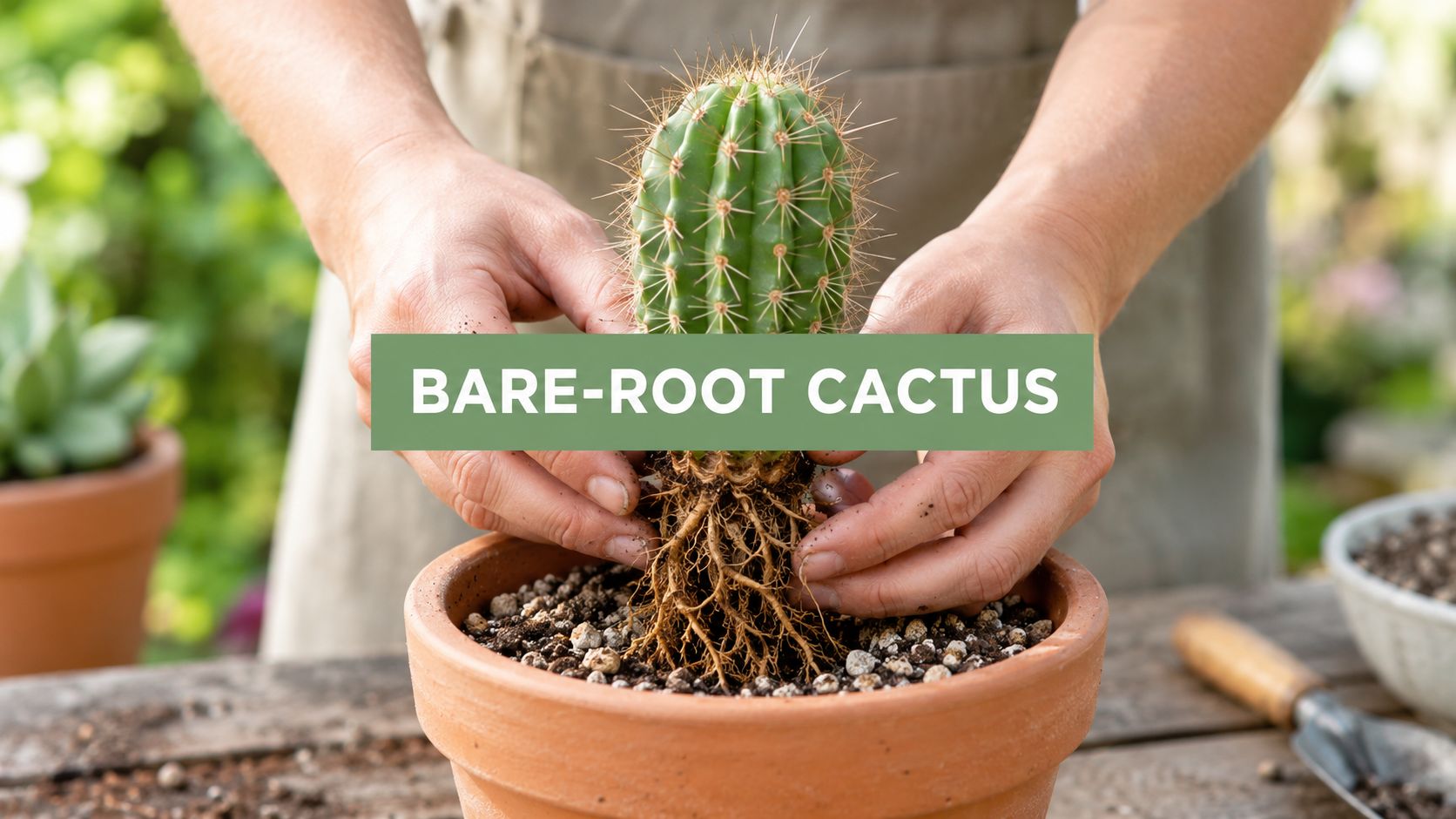
Repot after blooming when possible, especially if the mix is tired, compacted, or obviously too dense. Don't jump to a huge pot. Jungle cacti generally prefer a snug root zone over a large volume of wet mix.
A simple repotting sequence is enough:
- Choose a pot with drainage. No exceptions.
- Go only slightly larger. Too much extra soil stays wet too long.
- Loosen only what's necessary. Healthy roots don't need aggressive teasing.
- Set the plant at the same depth. Don't bury stems deeper than they were before.
- Wait briefly before soaking. A light settle-in watering is safer than flooding a freshly disturbed root ball.
If you're mixing your own substrate regularly, this cactus and succulent soil mix reference is a useful comparison point for component choices.
Feeding for steady growth
Feeding doesn't need to be complicated. Use a diluted balanced fertilizer during active growth, and stop pushing the plant when it naturally slows down. More fertilizer won't compensate for weak light or poor soil. It usually just salts up the pot.
I prefer restraint here. A jungle cactus plant grown in a proper airy mix with good light responds better to light, consistent feeding than to occasional heavy doses. If the stems are healthy green, firm, and extending naturally, you're already on the right track.
Healthy roots make almost every other care decision easier.
What doesn't work
Dense peat-heavy mixes hold too much water for too long. Decorative cachepots with no drainage invite trouble if you water carelessly. Oversized pots seem generous, but they often keep the root zone wet and cold.
When people say jungle cacti are difficult, it's usually because they were potted like foliage plants or treated like desert cacti. They're neither.
Propagation and Common Troubleshooting
One of the pleasures of owning a jungle cactus plant is how easy it is to multiply when the parent plant is healthy. You don't need complicated equipment. You do need to respect polarity, drying time, and the difference between moist and wet.

How to propagate cuttings successfully
Stem cuttings are the easiest route. Propagation from stem cuttings has a 90 to 95 percent success rate. For best results, take a 2 to 4 node segment, let it air-dry for 24 to 48 hours to form a callus, which reduces rot risk by 70 percent, and plant it in an airy mix. Roots usually emerge in 4 to 6 weeks, according to this propagation reference from NYBG.
The often-missed detail is orientation. Keep the cutting in its original top-and-bottom direction. If you flip many jungle cactus cuttings upside down, they may fail instead of rooting. That matters most with segmented and trailing forms where polarity isn't always obvious at a glance.
Use this workflow:
- Take a mature segment from a healthy plant
- Mark the bottom if there's any chance you'll forget orientation
- Let the cut end callus
- Insert it into a coarse airy mix
- Keep it in bright indirect light
- Moisten lightly, don't drench repeatedly
If a cutting collapses, the usual cause is excess moisture before roots formed. If it wrinkles a little at first, that's not automatically failure.
Solving the problems growers see most
Yellowing, shriveling, and stalled growth are usually environmental clues.
- Yellowing with softness often suggests the roots are staying too wet
- Wrinkling with a bone-dry mix usually points to underwatering or roots that never established well
- Long weak growth usually means the plant wants stronger filtered light
- Dropped segments after arrival can be simple shipping stress
For persistent soil insect issues, this guide on bugs in plant soil is a practical companion to better watering and mix management.
If symptoms seem contradictory, check the roots before changing three other things.
A plant can look thirsty because damaged roots can't take up water. That's why watering more doesn't always solve limp growth.
Why it won't bloom
Blooming is where many growers get frustrated. The plant looks healthy enough, but flowers never come. In practice, the usual missing pieces are light quality, seasonal cues, or patience.
Jungle cacti often flower better when they have a clear change in conditions. Brighter indirect light helps. Many also respond to cooler nights and longer uninterrupted dark periods. A plant kept in warm, artificially lit conditions every evening may keep growing but skip bud formation.
This short video is a helpful visual companion if you want to compare growth habits and care cues while troubleshooting:
If your plant is mature, roots are healthy, and light is good, try giving it a more seasonal routine rather than extra fertilizer. That usually moves the needle more than feeding ever will.
Styling and Buying Tips for Your Home
Jungle cacti earn their place by doing two jobs at once. They're easy to live with once established, and they style beautifully in real rooms. The trick is matching the display to the plant's growth habit rather than forcing every specimen into the same tabletop role.
Where they look best
Trailing forms such as Rhipsalis belong up high. Hanging baskets, wall brackets, and shelf edges let the stems fall naturally. You get movement, shadow, and shape without needing a large footprint.
Schlumbergera fits well on plant stands, side tables near windows, and shallow decorative pots where the segmented habit stays visible. Epiphyllum usually deserves more room. It looks best where the broad stems can arch outward instead of being crammed into a tight corner.
A few practical placements work especially well:
- Hanging baskets for trailing and branching types
- Open shelving near bright windows for compact forms
- Simple matte pots that don't compete with unusual stem shapes
- Bathrooms or kitchens with good light for growers who struggle with dry indoor air
What to look for when buying online
A healthy jungle cactus plant doesn't need to be perfect. Minor surface marks from handling are far less important than stem firmness, stable color, and a potting setup that isn't waterlogged.
Good signs include plump segments, clean growth tips, and a pot that feels appropriately rooted rather than loose and freshly stuck in heavy wet soil. Be cautious of plants with blackened bases, mushy segments, or a sour smell from the mix.
How to acclimate a shipped plant
When your plant arrives, don't rush to “fix” it. Unbox it promptly, remove packing gently, and place it in bright indirect light. Let it rest before repotting or feeding. If the mix is dry, water carefully. If it's still damp, wait.
Acclimation is mostly about restraint. A jungle cactus plant fresh from shipment is adjusting to light, temperature, and airflow all at once. Give it a stable spot and avoid constant repositioning. Once you see fresh growth or the stems regain their normal posture, you can treat it like an established part of the collection.
The payoff is worth it. These plants soften a room, reward close observation, and often become heirloom houseplants when cared for with a little consistency.
If you're ready to add a healthy, well-packed cactus or succulent to your collection, browse The Cactus Outlet. You'll find a wide range of standout plants, along with the kind of selection that makes it easier to choose the right fit for your space and growing style.