

You've either got a fresh cutting in your hand or a nursery pot on the counter, and the same question follows both situations. How do you start this plant without killing it in the first month?
Christmas cactus is forgiving once it's established. The tricky part is the beginning. Most beginners don't lose these plants because they lack light or fertilizer. They lose them because the base stays too wet, the cutting never seals properly, and rot gets there first. If you learn that one lesson early, you're already ahead.
Getting Ready for Holiday Blooms
A Christmas cactus can be started in two practical ways. You can root a cutting, which is the fastest and most satisfying route, or you can settle in a store-bought plant and focus on keeping it stable while it adapts to your home. Both paths work. Both fail for the same reason when they go wrong. Too much moisture around unestablished roots.

The plant's needs are simple. It wants an airy mix, a pot that drains well, and bright but filtered light. If you're unsure where to place it, this guide to Christmas cactus light needs indoors is a useful starting point.
The mistake that causes most early losses
The first impulse is usually to water generously so the plant “gets comfortable.” That's what causes trouble. Overwatering during the initial rooting phase is a major cause of failure in 30 to 40% of novice attempts, and the soil should stay lightly moist, not wet, according to the Royal Horticultural Society's Christmas cactus growing advice.
Practical rule: If a new cutting or newly repotted plant is sitting in soggy soil, it's not being cared for. It's being smothered.
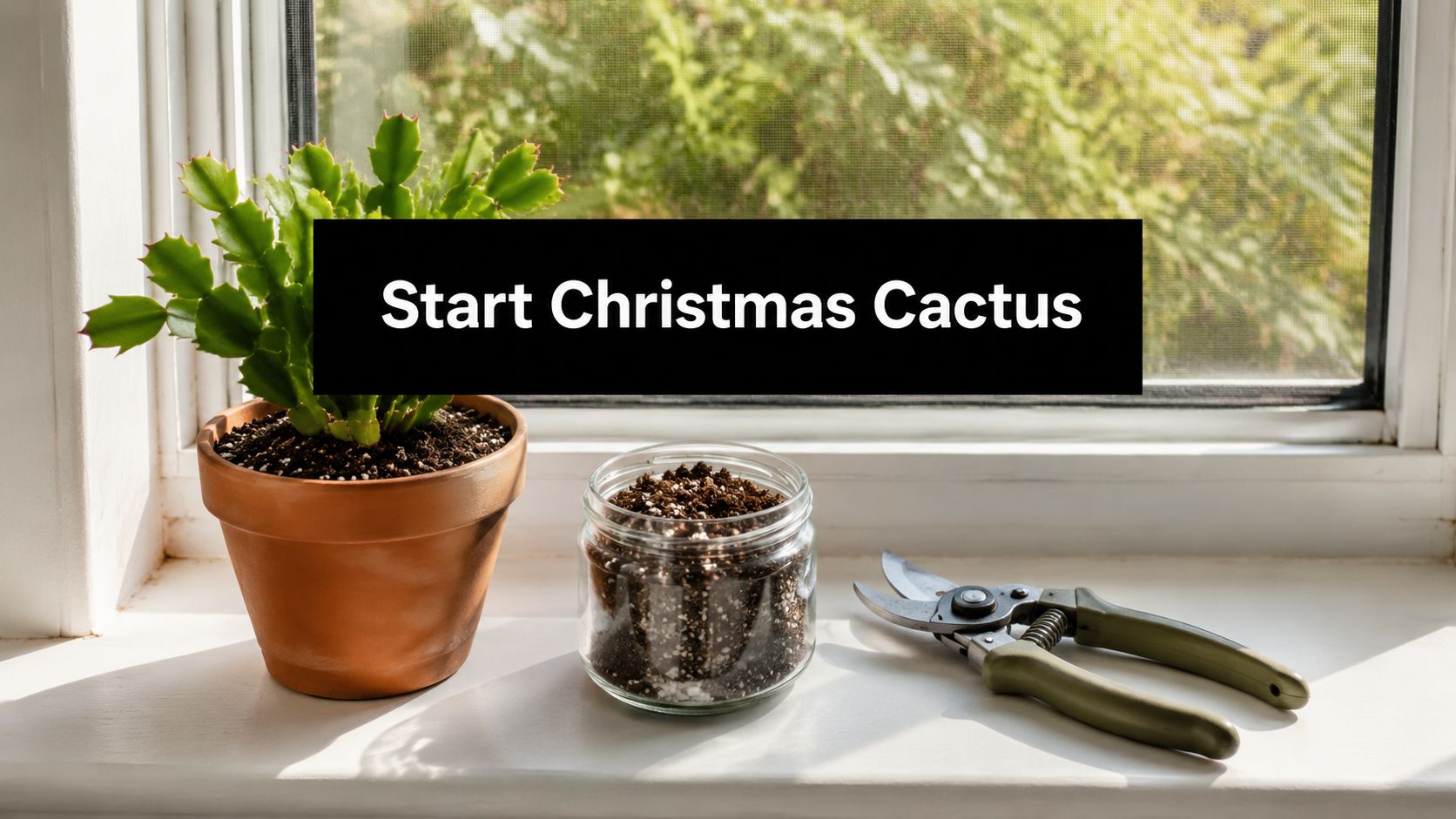
What to prepare before you start
Set everything out first so you don't rush.
- A small pot with drainage. Small pots dry more evenly and are easier to manage.
- A fast-draining mix. Use potting soil amended with perlite or sand, or a cactus and succulent mix.
- Clean hands or clean snips. A healthy cutting starts with a clean break.
- A bright spot out of harsh sun. Filtered light helps the plant settle without stress.
That's the heart of how to start a Christmas cactus. Keep the setup modest, keep the mix airy, and don't confuse wet soil with good care.
Propagating Cuttings The Right Way
One grower brings me a firm, healthy segment and asks why it collapsed in a week. The answer is usually rot. Christmas cactus cuttings fail at the base long before they fail anywhere else, and the mistake almost always happens in the first few days.

Choose the right cutting
Start with a healthy piece from a mature plant. The best cuttings are usually 2 to 3 segments long because they have enough stored energy to root well without being top-heavy. Skip anything soft, bruised, wrinkled, or yellowing.
Twist the cutting off cleanly at the joint, or use clean snips if the plant is crowded. A neat break heals faster and gives you a cleaner base to plant.
If you want a broader primer on handling cactus cuttings, this article on how to propagate cactus from cuttings complements the process well.
Don't rush the callousing step
This is the part beginners tend to gloss over, and it matters more than people think.
A fresh cutting has an open wound. If that wound goes straight into damp mix, it can soften and rot before roots have a chance to form. I get better results by setting the cutting aside in a warm room with bright, indirect light until the cut end feels dry and slightly firm. For most homes, that takes 2 to 3 days. In a humid room, give it a little longer. In a very dry house, it may be ready sooner.
A dry tray, saucer, or paper towel is fine. Keep it out of direct sun and away from cold drafts. Plant only after the cut end no longer looks wet or glossy.
That short wait saves a surprising number of cuttings.
Two reliable rooting methods
After the base has calloused, root the cutting in soil or water.
| Method | Pros | Cons | Best For |
|---|---|---|---|
| Soil propagation | Roots form in place, no transplant step, lower disturbance once growth starts | You cannot watch root development | Growers who want the simplest long-term setup |
| Water propagation | Easy to monitor, useful if you like visible progress | Water roots still need to adapt after potting | Growers who feel more confident seeing roots first |
For soil rooting, insert the base about 1 inch deep in a light mix and firm it just enough to keep it upright. Then leave it alone. Keep the mix barely moist, not wet, and check for rooting by giving the cutting a very gentle tug after a couple of weeks. Slight resistance means it has started.
For water rooting, place only the bottom of the cutting in shallow water so the segments above stay dry. Change the water if it turns cloudy. Once the roots are about an inch long, move the cutting to soil before those water roots get too long and delicate.
Here's a useful visual walkthrough:
What works and what doesn't
What works is a clean cutting, a dry calloused base, shallow planting, and restraint with water.
What causes trouble is planting the same day you take the cutting, burying it too deep, or keeping the mix constantly wet. Indoor growers run into this more often because pots dry slowly on windowsills and shelves. If you get the callousing step right, you remove the most common reason a promising cutting turns to mush before it ever gets started.
Potting and Repotting Your New Plant
A lot of beginners lose a healthy young Christmas cactus at this stage. The cutting rooted, the plant looked fine, and then a roomy pot or soggy mix kept the root zone wet long enough to start rot.
A store-bought plant can have the same problem. Many nursery mixes are made to survive shipping and retail benches, not a dim shelf or cool windowsill at home. If the plant is firm, stable, and in bud, let it settle in before you disturb the roots. If the soil stays wet for too long, or the pot has poor drainage, repoting is the safer choice.

Pick a pot that doesn't invite trouble
Use a pot only slightly larger than the root ball. Extra soil holds extra moisture, and that is where new plants get into trouble fast indoors.
For newly rooted cuttings, a small starter pot is enough. A 4-inch pot works well for most single cuttings or small groups. Keep the planting depth shallow, just deep enough to anchor the base without burying multiple segments. Deep planting slows drying around the stem and raises the risk of rot.
If you are unsure whether to repot now or wait, this guide on when to repot a Christmas cactus will help you judge the timing.
A potting mix that dries predictably
The best mix is not the fastest-draining mix on paper. It is the one that dries at a steady, reliable pace in your house.
In my nursery, I want a mix that sheds excess water quickly but still holds enough moisture for short, even uptake by the roots. Indoors, that usually means avoiding heavy peat-packed blends that stay cold and damp in the center of the pot.
Good options include:
- Standard potting soil plus perlite for a reliable everyday indoor mix
- Potting soil plus coarse sand if your room runs cool or the pot dries slowly
- A cactus or succulent mix if it feels open and airy rather than dense and spongy
Terracotta helps the mix dry faster. Plastic holds moisture longer. Neither is wrong. The right choice depends on your light, temperature, and watering habits.
Repot with a light hand
Christmas cactus roots do not need rough teasing or aggressive cleanup. A careful move causes less setback.
- Slide the plant out gently and support the crown.
- Brush off only the soil that comes away easily if the old mix is stale or compacted.
- Set the plant at the same soil line it had before.
- Fill around the root ball lightly so the mix settles without being packed hard.
- Water just enough to settle the soil and then let the upper layer dry as usual.
If roots were damaged during the move, wait a bit longer before the next watering. That small pause helps cut surfaces dry instead of sitting wet, which is one of the simplest ways to prevent rot after repotting.
A tidy pot, a modest amount of soil, and restraint with water will carry a new plant much farther than frequent fussing.
Essential First Year Care and Watering
A first-year Christmas cactus is easiest to lose right after it seems established. The cutting has rooted, the plant looks fine from the top, and then one generous watering keeps the mix wet too long. That is how rot gets started indoors.

Water by the root zone, not by the calendar
The first year is mostly a matter of restraint. Water only after the upper layer of mix has dried and the pot feels lighter in your hand. In a bright room, that may be every several days. In a cooler room or a plastic pot, it can take much longer.
New growers often give small drinks too often. I see that mistake more than underwatering. A proper watering, followed by time for the mix to dry partway, builds healthier roots than constant surface moisture.
For newly rooted cuttings, keep the soil lightly moist at first, not soaked. If you are unsure, wait another day and check again. A slight delay is usually safer than watering too soon.
Indoor conditions decide how fast the plant dries
Christmas cactus care changes indoors because drying slows down fast. Light may be weaker than it looks. Air may stay still. Cachepots and saucers can hold extra water where you do not notice it.
That is why the callousing step matters so much at the start, especially for indoor gardeners. A well-calloused cutting has a better margin for error, but it still needs a careful watering rhythm once potted. Callousing prevents one common rot entry point. Overwatering creates the next one.
Watch for these indoor risk factors:
- Low light slows water use and keeps the mix damp longer
- Cool rooms reduce drying speed
- Decorative outer pots can trap runoff around the nursery pot
- Crowded corners with little airflow keep moisture lingering near the stem base
If a plant seems thirsty every day, check the roots, the pot, and the light before adding more water.
Build a routine that prevents rot
Set the plant in bright, indirect light, ideally where it gets gentle morning sun and protection from hot afternoon exposure. Then keep the routine simple. Check the soil with a finger, lift the pot, and water thoroughly only when both suggest it is time.
Do not let the pot sit in runoff.
That one habit prevents a lot of beginner losses.
Moderate household humidity is fine, but humidity does not replace drainage. Christmas cactus is not a desert cactus, yet it still resents stale, wet soil around the roots. Firm segments usually mean the plant is in a good groove. Limp growth, dull color, or segments that soften at the base point to a root-zone problem first, not a need for more water.
During active growth, a light feeding program can help, but first-year success comes more from correct drying and correct light than from fertilizer. Get those two right and the plant has a strong start.
Encouraging Blooms with Seasonal Care
A lot of first-time growers get this far with a healthy green plant, then stall out at bloom time. The cactus looks fine, the roots are fine, and the watering is finally under control, but winter comes and nothing happens. In my experience, the issue is usually not plant age or fertilizer. It is the lack of a clear seasonal signal.
Christmas cactus blooms on cues. If those cues are weak or inconsistent, the plant keeps growing and skips bud set.
The bloom trigger that matters
The two signals that matter most are longer nights and cooler conditions in fall. Give the plant several weeks of uninterrupted dark nights and keep it on the cool side, and bud set becomes much more reliable. Break that dark period with lamp light, TV light, or a room that stays warm late into the evening, and the plant often delays or drops the process.
Indoor growers run into this all the time because the plant may be sitting in a perfectly bright, comfortable living room that never really gets dark.
A spare bedroom, cool office, enclosed porch, or lightly heated window area often works better than the spot where the plant spent summer.
A simple seasonal rhythm
Treat the year as three clear phases.
Spring and summer growth
After flowering ends, the plant shifts back into growth. This is the time to feed lightly, keep it in bright indirect light, and let it build strength. Healthy growth during these months gives you better flowering later.
Good summer care helps bloom set. It does not replace the fall trigger.
Fall bud setting
Early fall is when to get stricter. Keep the plant in a spot with long, dark nights and steady cool temperatures. Avoid moving it back and forth between rooms. Consistency matters more than perfection here.
If a grower asks me why a strong plant never bloomed, I usually ask one question first. Was it near lamps or late-night household light in autumn? That single detail explains a lot of failures.
Holiday flowering and aftercare
Once buds appear, leave the plant alone as much as possible. Sudden changes in temperature, light, or watering can cause bud drop, even on an otherwise healthy specimen. Pick a good spot and keep conditions steady until flowering finishes.
After bloom, return to the normal growing routine and give the plant time to recover before expecting another heavy show.
A well-kept Christmas cactus can flower for many years. That payoff comes from reading the seasons correctly, not from pushing the plant harder.
Troubleshooting Common Starting Problems
Most early problems look mysterious until you trace them back to moisture, root health, or sudden change. Start there before assuming the plant needs fertilizer or a bigger pot.
Mushy black base on a cutting
That's usually rot, not bad luck. The cutting was likely planted before the wound had sealed, or it sat in wet mix too long. Discard the rotted part, take a fresh healthy segment if available, let it callous fully, and restart in a smaller pot with a lighter hand on water.
Limp or wrinkled segments
Beginners often assume this always means thirst. Sometimes it does. Sometimes the roots are damaged and can't take up water at all. Slide the plant out and inspect the base. Healthy roots point to underwatering or dry conditions. A brown, soft, or sour-smelling root system points to excess moisture.
Yellowing segments
Yellowing usually means the plant is staying too wet or sitting in poor light. Let the mix dry more between waterings, improve drainage, and make sure the plant gets bright, indirect light. If it's in a decorative sleeve or outer pot, empty any trapped water.
Bud drop after bringing a plant home
This is common with newly purchased blooming plants. A change in light, temperature, or watering can make buds fall before they open. Don't chase the problem by repotting, fertilizing, and moving it from room to room. Pick one good location and let the plant settle.
Starting well is mostly about avoiding preventable mistakes. If you keep rot in check, use a fast-draining mix, and stay patient, you'll find that Christmas cactus is much easier than its reputation suggests.
If you're ready to add more cacti and succulents to your collection, browse the carefully selected plants at The Cactus Outlet. Their catalog includes a wide range of specimen cacti and succulents for growers who want healthy plants, clear care information, and dependable shipping.