
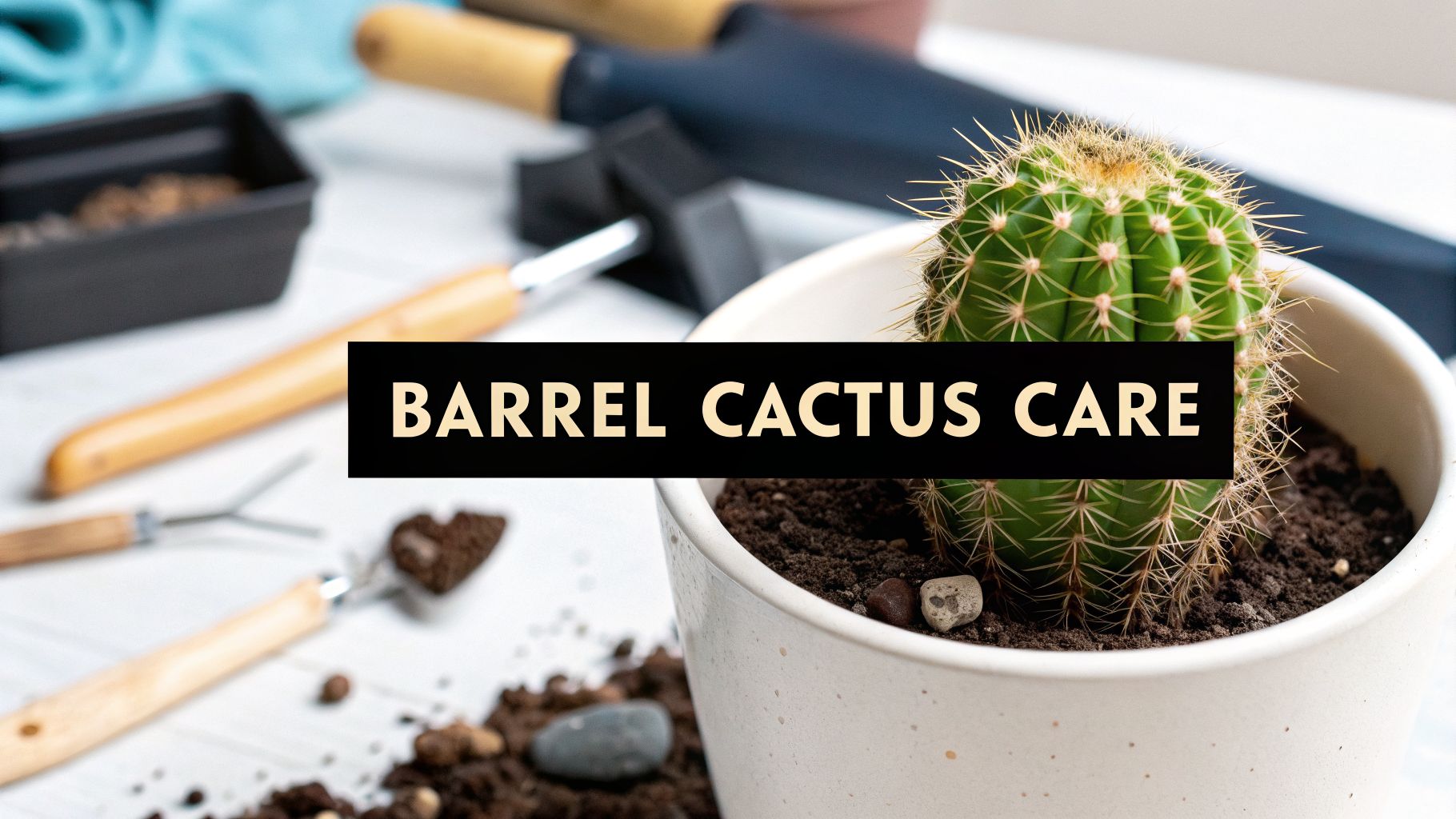

It's hard to miss a barrel cactus. That classic, rounded shape is a living sculpture straight out of the desert, and it brings a bold, architectural feel to any space. It’s more than just a tough succulent; it’s a statement.
Discover the World of Barrel Cacti
Think of a plant that’s a living fortress, a master of survival. That’s the barrel cactus. It has spent millennia perfecting a design to store precious water within its ribbed, spiny walls. This iconic, rounded form isn’t just for looks—it’s a brilliant piece of evolutionary engineering.
What I love about these plants is their slow, deliberate nature. A barrel cactus isn’t some fleeting trend; it’s a companion that can grow with you for decades, sometimes even outliving its owner. This unhurried growth makes it a fantastic low-maintenance choice, as you won't be constantly repotting it or worrying that it's taking over your garden.
The Two Major Families
When you start looking at barrel cacti, you'll quickly notice they fall into two main groups, or genera: Ferocactus and Echinocactus. Think of them as two distinct clans. They share a family resemblance, but each has defining traits that are easy to spot once you know what to look for.
- Ferocactus: The name literally means "fierce cactus," and it’s all about the spines. These are the classic fishhook barrels, with formidable spines that curve dramatically at the tip. They often grow as solitary plants and show a huge variety in size and spine color.
- Echinocactus: This name means "spiny cactus," but the real giveaway is their straight, non-hooked spines. This group includes the world-famous Golden Barrel. Their spines are often more uniform and dense, creating a stunning, almost glowing halo effect.
Here's the simple trick I teach everyone: If the spines curve like a fishhook, you’re almost certainly looking at a Ferocactus. If they're straight and neatly arranged, it's likely an Echinocactus.
From Desert Survivor to Garden Star
While dozens of species exist, two in particular tell the story of the barrel cactus's journey from a wild survivor to a garden superstar. The most popular one by far is the golden barrel cactus (Echinocactus grusonii), beloved for its perfect globe shape and brilliant yellow spines.
What's really fascinating is how its popularity has become a conservation story. The golden barrel is actually endangered in its native habitat in Mexico. Yet, its incredible appeal in modern landscaping has led to massive commercial cultivation. This demand ensures its survival in gardens and homes worldwide, making it one of the most recognizable cacti for xeriscaping. Historically, the candy barrel cactus (Echinocactus platyacanthus) was also incredibly important in central Mexico, showing just how deep the genus's roots run. You can read more about the history and cultivation of these native Mexican plants in this detailed overview from Opuntiads.
This journey from a rugged desert dweller to a prized ornamental highlights the timeless appeal of the barrel cactus. It’s that perfect mix of raw, natural toughness and clean, geometric beauty that makes it such an amazing choice for anyone wanting to add structure and a touch of the wild to their home or garden.
Ready to put a name to that spiky orb in your garden? Learning to identify specific barrel cacti can feel a bit daunting at first—after all, so many of them share that classic round or barrel-like shape. But once you know what to look for, you'll start seeing the subtle but distinct details that set each species apart.
The secret is all in the spines. Think of it as the cactus's fingerprint. Take a close look: are the spines fiercely hooked at the tip, or are they straight as a needle? Answering that one question is your first and most important step. It's the key that unlocks which family you're dealing with.
This simple chart is a great visual for remembering the fundamental difference between the two main barrel cactus groups.

As you can see, those menacing, hooked spines are the calling card of the Ferocactus genus. On the other hand, perfectly straight spines point you toward the Echinocactus group. It's that simple.
Barrel Cactus Species Comparison
To help you get started, here's a quick-reference table comparing some of the most popular barrel cacti you'll encounter. It's a great way to quickly check the key features of each plant at a glance.
| Species Name | Common Name | Key Identifying Feature | Mature Size (H x W) | Flower Color |
|---|---|---|---|---|
| Echinocactus grusonii | Golden Barrel | Dense, straight, bright yellow spines | 3 ft x 3 ft | Yellow |
| Ferocactus wislizeni | Fishhook Barrel | Thick, reddish central spines with a dramatic hook | Up to 6 ft x 2.5 ft | Orange/Yellow |
| Echinocactus platyacanthus | Candy Barrel | Bluish-green body, thick reddish-brown spines | 8 ft x 5 ft | Yellow |
| Ferocactus glaucescens | Blue Barrel | Glaucous blue-green skin, forms clumps | 1.5 ft x 1.5 ft | Lemon Yellow |
| Ferocactus gracilis | Fire Barrel | Striking, bright red spines | 5 ft x 1 ft | Orange-Red |
With this chart, you can quickly narrow down the possibilities when you're out in the field or browsing for a new addition to your collection.
The Famous Golden Barrel
Let's start with the rockstar of the barrel world: the Golden Barrel Cactus (Echinocactus grusonii). This is the one most people picture when they hear "barrel cactus," and for good reason. Its almost perfect spherical shape and brilliant coat of straight, golden-yellow spines make it a true showstopper.
It’s even earned the nickname "Mother-in-Law's Cushion," which gives you a pretty good idea of its densely packed, prickly nature. When they're young, they are perfect little globes, but they slowly stretch into a more classic barrel shape over many years. The deeply pronounced ribs give it a clean, geometric look that designers love.
The Fierce Fishhook Barrel
Next up, meet the rugged and wild Fishhook Barrel Cactus (Ferocactus wislizeni). As you might guess, its name says it all. The defining feature here is the set of central spines—they're long, thick, and end in a dramatic hook that looks like it means business.
Unlike the perfectly symmetrical Golden Barrel, the Fishhook often develops a distinct lean, usually toward the south or southwest. It does this to angle itself perfectly for maximum sun exposure in its native desert habitat. This natural lean gives each plant a unique character.
Other Notable Barrels Worth Knowing
Of course, the world of barrel cacti goes far beyond just those two. The diversity is incredible, with each species offering a unique twist on color, size, and spine patterns.
Here are a few other fascinating varieties to keep an eye out for:
- Candy Barrel Cactus (Echinocactus platyacanthus): Famous in Mexico as the source for traditional cactus candy (dulce de biznaga), this giant has a striking grayish-blue body and thick, straight, reddish-brown spines.
- Blue Barrel Cactus (Ferocactus glaucescens): Its name is no gimmick—this cactus has a stunning, powdery blue-green skin that truly stands out. It tends to form beautiful clusters over time, producing bright, lemon-yellow flowers from the crown.
- Fire Barrel Cactus (Ferocactus gracilis): This is a personal favorite for its absolutely spectacular spines. They are a vibrant, fiery red that seems to glow, especially when backlit by the sun, creating an amazing contrast with its deep green body.
Getting to know these key players will not only help you pick the right cactus but also deepen your appreciation for their tough, sculptural beauty. If you're hooked and want to learn even more, our comprehensive cactus identification guide can help you identify a wider range of amazing succulents.
Your Essential Barrel Cactus Care Routine

So, you've picked out your perfect barrel cactus. Now comes the fun part: giving it a home where it will truly flourish. The secret to keeping these desert survivors happy isn't a complicated set of rules. It’s all about understanding and recreating their natural habitat.
We're going to focus on the big four: Light, Water, Soil, and Temperature. Get these right, and you’ll have a stunning cactus for decades to come. Think of it as mimicking their native home—intense sun, rare but deep rainfall, and gritty, fast-draining earth.
Light: Give Them the Sun They Crave
Barrel cacti are absolute sun-worshippers. To keep that classic round shape and rich color, they need at least six hours of direct, bright sunlight every single day. Sunlight is the fuel that powers their slow, steady growth.
But "full sun" can be a bit of a shock. A young cactus raised in a greenhouse can get a nasty sunburn if you toss it straight into the intense afternoon heat. You have to ease it in, just like you would on your first day at the beach.
Start it off in a spot with bright morning sun and some afternoon shade. After a couple of weeks, you can move it to its permanent, sun-drenched location. This simple step prevents ugly, permanent scorch marks on its skin.
If you're keeping your barrel cactus indoors, find the sunniest window in your house, which is usually one that faces south. You'll know it's happy if it stays compact. If you see it starting to stretch or lean dramatically toward the glass, that's your cactus telling you it needs more light.
Water: The "Soak and Dry" Secret
If there’s one mistake that new cactus owners make, it’s overwatering. These plants are built for drought, and their roots absolutely hate sitting in wet soil. Root rot is the number one killer of a happy barrel cactus.
To prevent this, we swear by the "soak and dry" method. It’s designed to perfectly imitate a desert downpour followed by a long dry spell.
- Check the Soil First: Before you even reach for the watering can, check that the soil is completely bone-dry. Don't just feel the top inch; it needs to be dry all the way down.
- Soak It Good: When it's time, water generously. Let water run through the pot until it pours out of the drainage holes. This ensures every last root gets a good, deep drink.
- Let It Dry Out Completely: This is the most crucial step. Do not water again until the soil has totally dried out. Depending on your home's climate and the pot size, this might mean watering every two weeks in summer, or as little as once a month or two in the winter.
A great little trick is to use a simple wooden skewer or chopstick. Push it all the way into the soil near the pot's edge. If it comes out clean and dry, it's watering time. If any damp soil sticks to it, give it more time.
Soil: It's All About the Grit
Your standard, off-the-shelf potting mix is a death sentence for a barrel cactus. It’s made to hold moisture, which is the exact opposite of what you need. Your cactus requires a soil that drains as fast as you can pour water on it, letting the roots breathe.
You can buy specialty cactus mixes, but honestly, making your own is super easy and gives you better results. Here’s a tried-and-true recipe for a happy cactus:
- 1 part Potting Soil: This gives it a touch of organic matter.
- 1 part Perlite or Pumice: These are your secret weapons. These volcanic rocks create air pockets and ensure drainage is incredibly sharp.
- 1 part Coarse Sand: Be sure to use horticultural sand, not fine playground sand. This adds grit and stops the soil from compacting.
Mix these three together, and you've got the perfect, gritty foundation for healthy roots. Water will flow right through, preventing it from ever getting "wet feet." For a wider perspective on plant health that covers more than just cacti, you can find good advice on general tree and plant care.
Temperature: Hot Is Good, Cold Is Not
Barrel cacti are tough characters, but they have their preferences. They love hot, dry weather and can easily handle summer temperatures soaring above 90°F (32°C).
Cold is another story. While a big, established barrel in the ground might survive a brief, light frost, they are not frost-tolerant plants. If you see temperatures dipping below 40°F (4°C), it's time to bring your potted cacti inside or cover them with a frost cloth.
During the winter, your cactus will go into dormancy. This is its natural rest period where growth slows to a crawl. It will need even less water and zero fertilizer. Letting your cactus have this cool, dry rest is vital for its long-term health and is often the trigger that encourages that beautiful crown of flowers to appear in the spring.
Potting, Repotting, and Making More Cacti

Giving your barrel cactus the right home is probably the single most important thing you can do to help it thrive. Let's get our hands dirty and walk through everything you need to know about potting, moving your cactus to a new home, and even creating new plants from your original.
We'll cover everything from picking the perfect pot to handling those formidable spines like a seasoned pro.
How To Choose The Right Pot
When you're picking out a pot for a barrel cactus, two things matter more than anything else: drainage and material. The roots of a cactus need to breathe, and they absolutely cannot stand sitting in water.
If there's one rule you never break, it's this: your pot must have at least one good-sized drainage hole. Terracotta or unglazed clay pots are the best choice for a reason. They're porous, which means air and moisture can pass through the walls, helping the soil dry out evenly and keeping root rot at bay.
As for size, don't go too big. Choose a pot that’s only 1-2 inches wider than the cactus itself. A pot that's too large holds onto extra soil and moisture, creating the exact soggy conditions you want to avoid.
Repotting a Barrel Cactus Without Getting Poked
Eventually, every cactus needs a bigger pot. You'll know it's time when you spot roots sneaking out of the drainage hole, or if the plant itself starts looking top-heavy and wobbly. The perfect time for this task is in the spring, right as your cactus is waking up for its growing season.
Don't be intimidated by the spines! You don't need fancy gear; a few common household items work just fine for protecting your hands.
- Get Your Supplies Ready: You’ll need your new pot, some fresh cactus soil, and something to get a good grip on the plant. A thick towel folded over a few times, sturdy leather gloves, or even a pair of kitchen tongs are all great options.
- Ease It Out: Gently tip the pot on its side. Using your towel or tongs, get a firm but gentle hold on the cactus. With your free hand, give the bottom of the pot a few firm taps until the entire root ball slides out.
- Check the Roots: Take a quick look at the root system. Healthy roots are firm and usually off-white. You can gently break up any old, compacted soil from around the root ball.
- Settle It In: Add a layer of fresh soil to the new pot. Set the cactus in the center, making sure it’s at the same depth it was in its old pot. Fill in the gaps around the sides with more soil, lightly patting it down to get rid of any air pockets.
Don't water it yet! Wait at least a week before giving your newly repotted cactus a drink. This gives any roots that might have been bumped or broken a chance to heal and callus over, which is your best defense against root rot.
Speaking of soil, getting the mix right is crucial. For a deep dive, check out our guide on how to create the perfect cactus and succulent soil mix.
How to Propagate a Barrel Cactus from Pups
Here's where the real fun begins. One of the best parts of growing barrel cacti is getting free plants! Many species, especially the popular Golden Barrel (Echinocactus grusonii), will grow small offsets, or "pups," around their base. Harvesting these is a surprisingly simple way to multiply your collection.
Wait until a pup is a decent size—at least an inch or two across is a good rule of thumb. Take a clean, sharp knife and carefully slice the pup off the parent plant, getting as close to the main stem as you can.
Now, just set the pup aside in a dry, shaded spot for several days to a week. You're waiting for the cut to dry out and form a callus. Once it's callused over, you can plant it in a small pot with some fresh cactus mix. Before you know it, it will grow its own roots and start life as a brand-new cactus.
Troubleshooting Common Barrel Cactus Issues
Even the toughest desert dwellers can hit a rough patch. When something seems off with your barrel cactus, spotting the problem early is your best bet for a quick recovery. The key is to think like a plant detective—your cactus is giving you clues, and all you have to do is learn how to read them.
Instead of just guessing, let's decode the most common issues based on what you’re actually seeing. From a mushy base to weird spots, knowing what these signals mean will help you step in with confidence and keep your barrel thriving for decades.
Decoding Common Cactus Symptoms
Let’s get straight to it. Here are the visual red flags your barrel might be waving and what they almost always mean. Acting fast can be the difference between a simple fix and a lost plant.
Symptom: The Base Feels Soft or Mushy
This is the big one—the most urgent warning a barrel cactus can give. A soft, squishy base is the classic sign of root rot, which is almost always a result of overwatering. The roots have been suffocating in soggy soil, started to decay, and now that decay is creeping up into the body of the plant.
- First, Stop Watering. Don't even think about it. If only a small part feels soft, letting the soil dry out completely and giving it better airflow might be enough to halt the damage.
- For more serious rot, it's surgery time. You have to unpot the cactus. Gently brush off all the soil and take a hard look at the roots. Any that are black, mushy, or smell bad need to go. Use a clean, sharp knife to trim them away.
- Let it heal. After surgery, let the cactus sit out in a dry, shady spot for several days. You're waiting for the cut areas to form a callus, like a scab. Once callused, repot it in a fresh, bone-dry cactus mix and wait at least a week before giving it its first, very light drink.
Symptom: The Cactus is Turning Yellow
Yellowing is a bit trickier because it can point to a few different things. Where the yellowing appears is your best clue.
If you see yellow patches on the side that gets hammered by the sun all day, it's probably sunburn. The cactus is literally getting scorched. The fix is easy: move it somewhere with bright, but indirect, light, or a spot that gets some shade during the intense afternoon hours.
If the yellowing starts at the base and the plant also feels soft, you're looking at overwatering and root rot again. But if the whole plant is fading to a pale, uniform yellow and still feels firm, it might be asking for food. This often points to a nutrient deficiency. Try giving it a balanced cactus fertilizer during its next watering. For a deeper dive, check out our guide on why your cactus is turning yellow.
A core truth for every cactus owner: most problems come from too much kindness, specifically too much water. When in doubt, don't water. A thirsty barrel cactus will bounce back, but a rotting one is often a goner.
Dealing with Unwanted Pests
Even these spiny fortresses aren't immune to pests. The good news is that on a barrel's smooth green skin, intruders are usually easy to spot.
Symptom: You See White, Fuzzy Spots
If you notice little cotton-like tufts tucked between the ribs or near the base of the spines, you've got mealybugs. These tiny insects feed on the cactus's sap and can spread quickly if you don't intervene.
- Quarantine! The first thing you should always do is move the infested cactus away from your other plants. Mealybugs love to travel.
- Get rid of them manually. Grab a cotton swab and some 70% isopropyl alcohol. Just dab the alcohol directly onto each white, fuzzy spot. It instantly dissolves their protective waxy coating and kills them.
- Stay vigilant. Keep checking the plant every few days for a couple of weeks to catch any stragglers or newly hatched bugs.
By learning to read these signs, you can tackle most barrel cactus issues before they spiral out of control. A little observation is the best tool you have to ensure a long, healthy life for your desert gem.
Barrel Cactus Frequently Asked Questions
Even the most seasoned plant owners run into questions. We hear them all the time from fellow enthusiasts at The Cactus Outlet, so we've put together answers to the queries that pop up most often.
Think of this as your go-to spot for those little "what-if" moments.
When Will My Barrel Cactus Flower?
This is the big one—the question we get more than any other. Seeing that iconic crown of flowers is a huge reward, but it’s one that requires some serious patience. Barrel cacti only bloom once they're mature, and for many species, that can mean waiting 15 to 20 years.
When they're ready, the flowers usually appear in late spring or summer, forming a brilliant ring right around the top of the plant. To give your cactus the best chance of blooming, it really boils down to two things:
- Tons of Sun: Think at least six hours of direct, bright sunlight every day during the growing season. This is the fuel it needs to produce flowers.
- A Solid Winter Rest: A cool, dry dormancy period in winter is the secret trigger. You'll want to cut way back on water and make sure it's protected from frost. This quiet period tells the cactus that spring is on its way and it's time to get ready to flower.
Is a Barrel Cactus Safe for Pets and Kids?
This is a really important one for any family home. The good news is that the barrel cactus itself is not toxic if eaten. The real issue, of course, is the spines. They are incredibly sharp and rigid, and can easily cause a painful puncture that's tough to deal with.
Because of this, placement is everything. We always advise keeping your barrel cactus somewhere that curious kids and pets can't accidentally bump into it. A high shelf, a sturdy plant stand in a low-traffic corner, or a dedicated sunroom are all great ways to enjoy the plant without the worry.
Why Is My Barrel Cactus Leaning?
Seeing your perfectly round cactus start to tilt can be alarming, but it's usually just reaching for sunlight. This natural behavior is called phototropism, and it's the most common reason for a lean.
A leaning barrel is often just trying to get a better seat in the sun. It's a completely natural instinct you can easily work with to keep your plant looking its best.
The fix is as simple as it gets: just rotate the pot a quarter turn every week or two. This gives all sides a chance to soak up the sun and encourages straight, even growth. The only time to worry is if the lean comes with a soft, mushy spot at the base. If you see that, investigate for root rot immediately.
How Fast Does a Barrel Cactus Grow?
If you're looking for a plant with explosive growth, this isn't it. Barrel cacti are famous for taking their sweet time. That small Golden Barrel you just brought home might only widen by an inch or so each year, even in perfect conditions.
Honestly, this slow-and-steady pace is one of its best features. It means your cactus won't constantly outgrow its pot or its spot in your home. It’s an incredibly low-maintenance plant that stays true to its space for years, making it a perfect living sculpture for any room or landscape. A happy barrel is a slow-growing barrel.
Ready to find the perfect architectural centerpiece for your home or garden? At The Cactus Outlet, we have a fantastic selection of healthy, established barrel cacti and other unique succulents, all ready to be shipped directly to you. Explore our collection and bring home a living sculpture today at https://www.cactusoutlet.com.