


You've seen that iconic, arm-waving cactus silhouette and thought, "I want that for my yard." But the legendary Saguaro of the Sonoran Desert is a notoriously slow grower and incredibly picky about its climate. This is where a fantastic alternative comes into play: the Argentine Saguaro.
Let's clear one thing up right away: the Argentine Saguaro isn't a true Saguaro. It’s the common name for a completely different species, Trichocereus terscheckii. While it shares that same majestic, columnar look, it’s a much more practical choice for most home gardeners.
A Faster and Hardier Alternative to The Saguaro
Think of the true Saguaro as a long-term, multi-generational commitment. It can take a human lifetime just to see one reach a decent height. The Argentine Saguaro, on the other hand, is the athletic, more adaptable cousin that gets you that stunning desert vibe without the decades-long wait.
It delivers the same awe-inspiring vertical presence but grows much faster and isn't nearly as sensitive to a little cold, opening up possibilities for gardeners well outside the Sonoran Desert's narrow geographic limits.
Why Gardeners Choose This Cactus
The buzz around the Argentine Saguaro is about more than just looks; it's about what this plant can do. Its popularity comes down to its remarkably tough and vigorous nature, making it a far more forgiving and rewarding plant for a wider range of people.
We see people flock to it for a few key reasons:
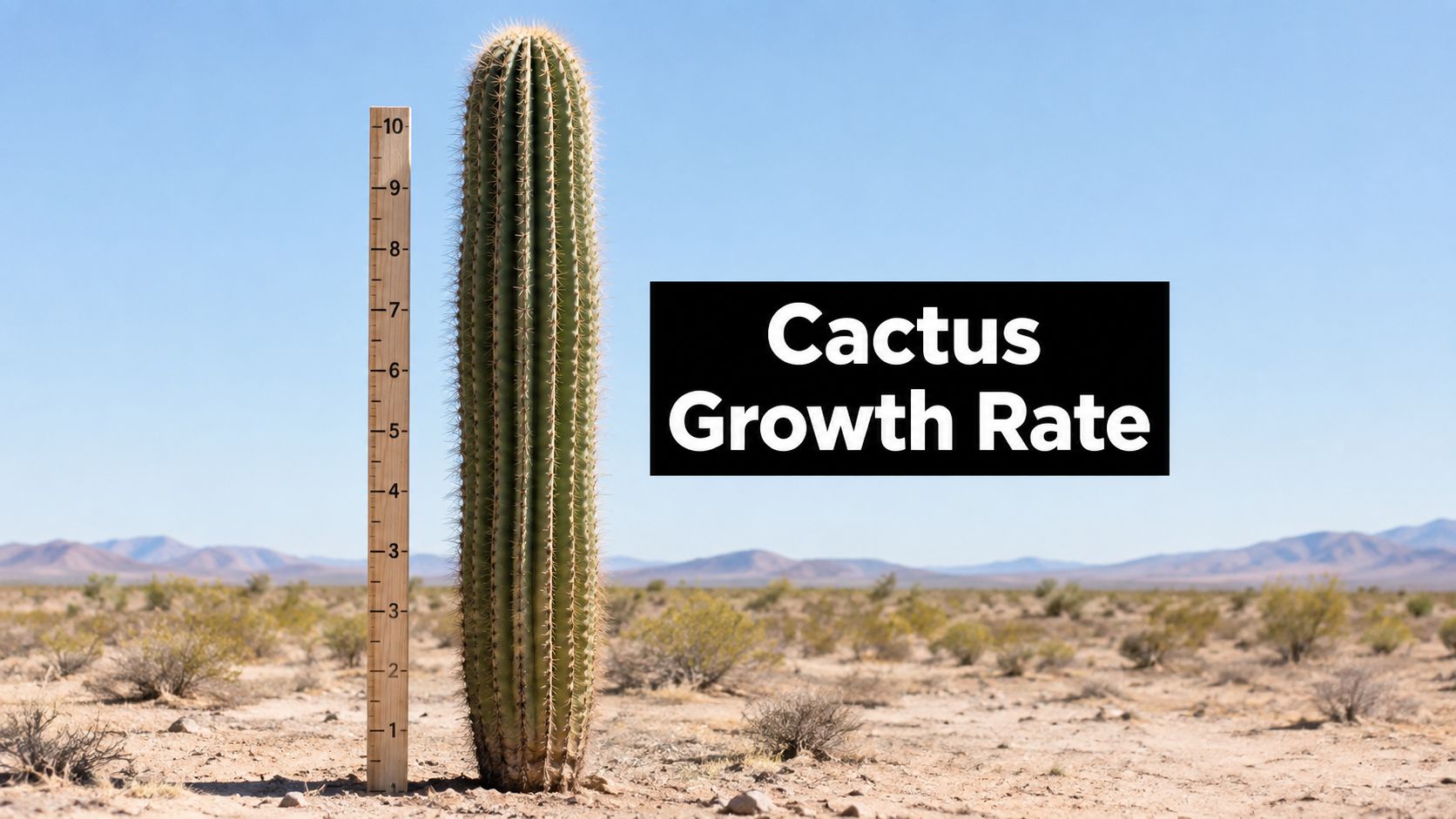
- Fast Growth: You can expect this cactus to shoot up several inches a year, sometimes more. You'll actually see noticeable progress season after season.
- Cold Tolerance: Unlike a true Saguaro, which can be damaged by a light frost, the Argentine Saguaro can handle brief temperature drops, making it viable in more regions.
- Versatility: It thrives planted in the landscape but also does surprisingly well in large containers, giving you a ton of flexibility for patios, courtyards, and entryways.
The image below sums up the main attractions of this impressive cactus.

These qualities—especially its growth rate and hardiness—show why it’s become such a go-to for creating dramatic desertscapes.
Argentine Saguaro (T. terscheckii) vs True Saguaro (C. gigantea)
To really understand the difference, it helps to see the two side-by-side. While they might look similar from a distance, their stats tell a very different story for anyone planning a landscape.
This table breaks down the key distinctions:
| Feature | Argentine Saguaro (Trichocereus terscheckii) | True Saguaro (Carnegiea gigantea) |
|---|---|---|
| Growth Rate | Fast; 8-12 inches per year | Extremely slow; about 1 inch per year for the first decade |
| Cold Hardiness | Hardy to 10-15°F (-12°C) | Sensitive; damaged by frost below 32°F (0°C) |
| Time to Arm | Branches can appear in 10-15 years | Often takes 50-75 years to grow its first arm |
| Native Origin | High-altitude regions of Argentina and Bolivia | Sonoran Desert (Arizona, California, Mexico) |
| Mature Size | Up to 40 feet tall | Up to 50-60 feet tall |
| Spines | Long, golden-yellow to brown spines | Grayish spines, more numerous when young |
Seeing the numbers laid out like this makes it obvious why the Argentine Saguaro is the more practical choice for achieving that classic cactus look in a reasonable amount of time.
A Closer Look at Its Identity
The Argentine Saguaro, or Trichocereus terscheckii, gets its toughness from its native home high in the Andes Mountains. Growing at high elevations has made it one of the most cold-hardy columnar cacti you can find.
It’s known to withstand temperatures down to a bracing 10°F (-12°C) for short periods and puts on growth of 8 to 12 inches (20-30 cm) in a single year under good conditions. You can get an even deeper dive into its background by exploring the Argentine Saguaro's native habitat and its impressive resilience.
It's this blend of rapid growth and durability that really sets T. terscheckii apart. It allows gardeners to build striking desert gardens in places previously thought impossible for large cacti, turning a decades-long dream into a project you can see come to life in just a few short years.
How To Identify An Argentine Saguaro
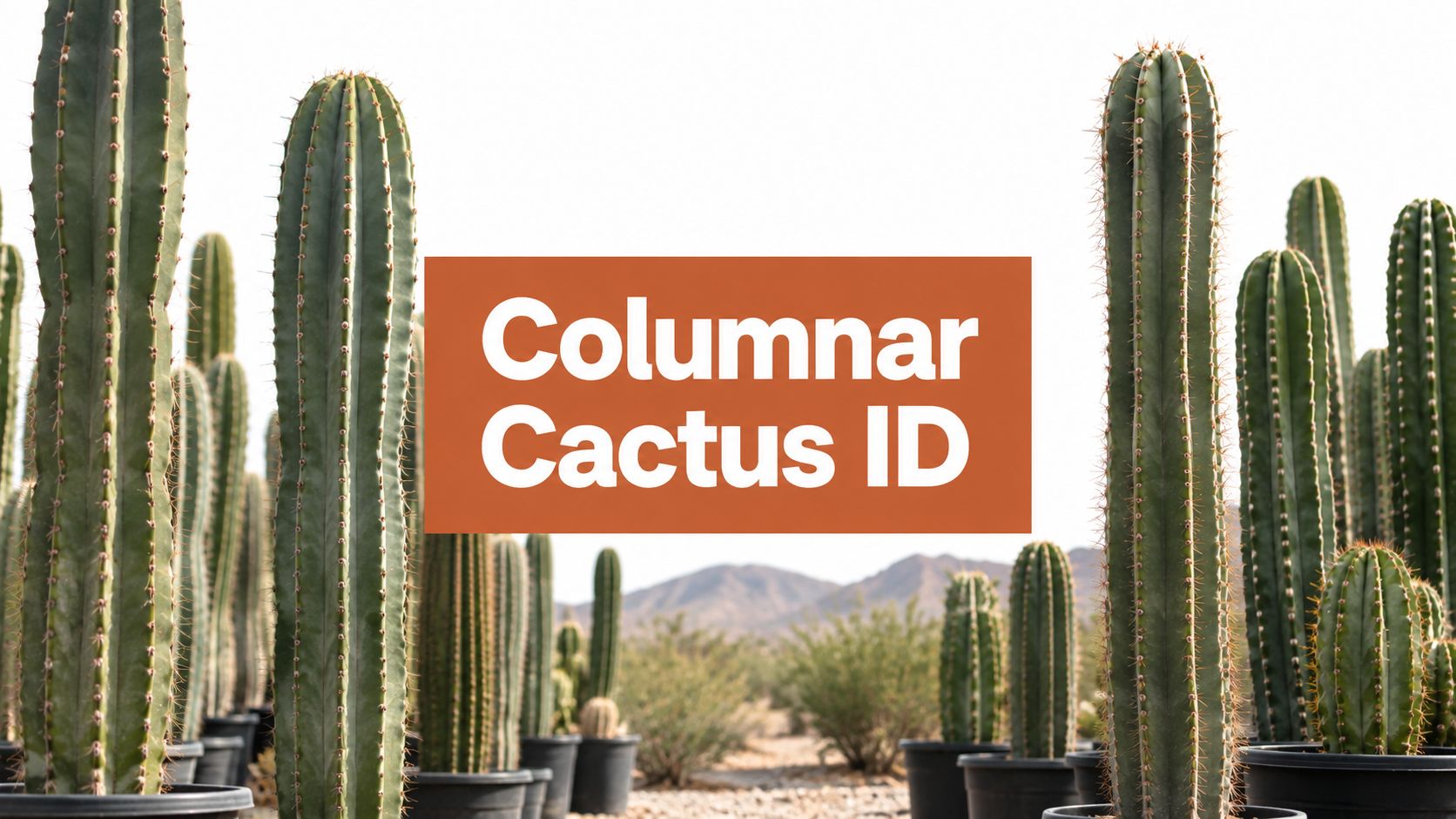
Getting to know a cactus is a lot like getting to know a person—you have to look past the first impression to see what makes them unique. When you’re trying to spot a true Argentine Saguaro, or Trichocereus terscheckii, you need to know a few key traits. It’s about more than just finding a tall, green cactus.
Learning to confidently identify a T. terscheckii ensures you’re bringing home a healthy, authentic plant, whether you're at a local nursery or shopping online. Here’s what I look for.
The Body And Ribs
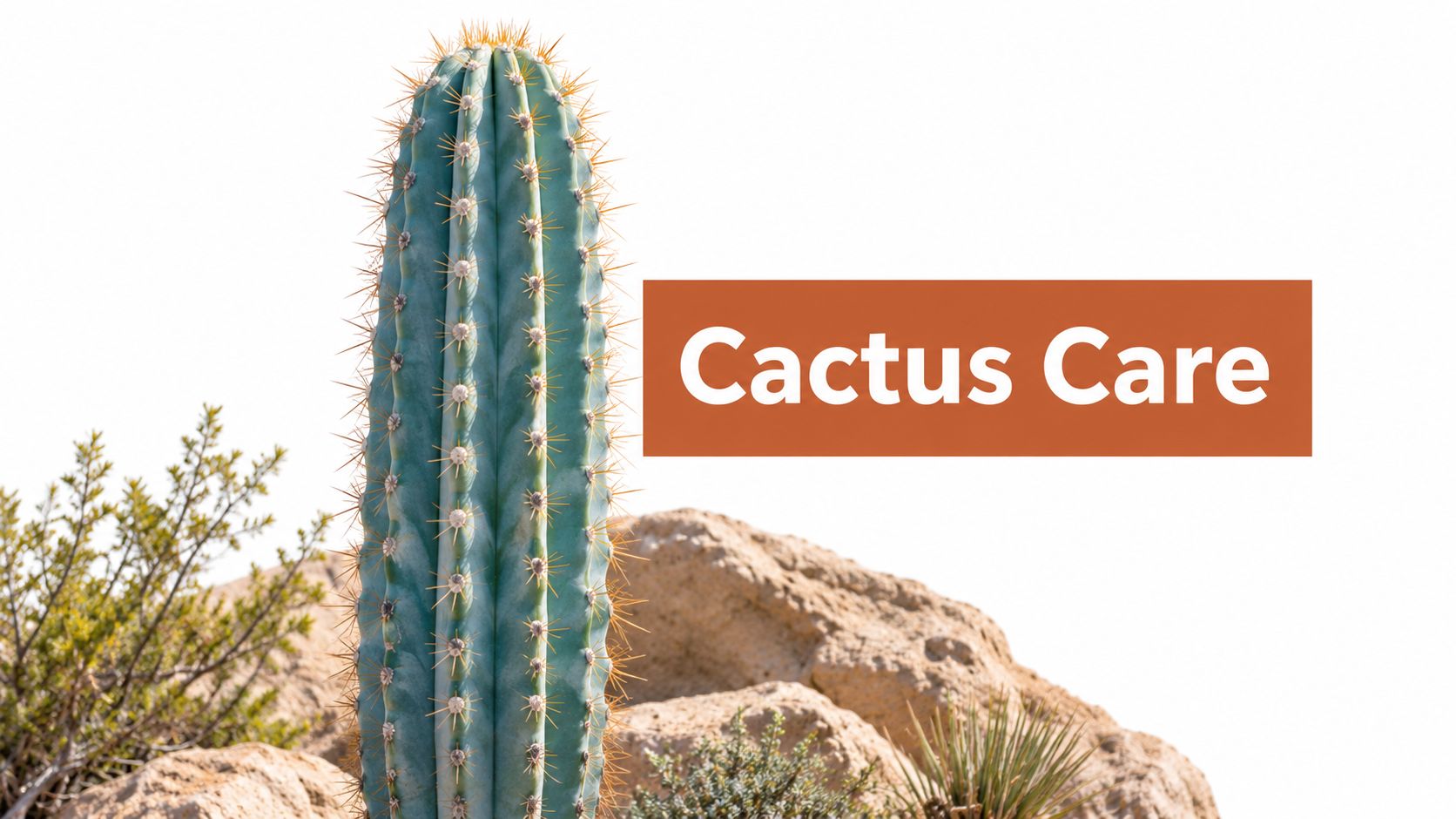
The first thing you’ll notice is its sheer presence. An Argentine Saguaro has a thick, beefy stem with a gorgeous blue-green to deep green color. That color isn't just for looks; it often deepens with plenty of sunlight, a trait from its high-altitude home.
This cactus is all about structure. It has very prominent, well-defined ribs running down its length—typically between 8 and 14 on a mature plant. These aren't just gentle waves; they're deep and rounded, creating a dramatic, scalloped silhouette that’s impossible to miss.
Spines That Tell A Story
Now, let's talk about the spines. On a young plant, the new spines poking out of the fuzzy areoles often have a yellowish tint. But as the cactus gets older and soaks up more sun, they transform into a brilliant golden-yellow, sometimes even a rich amber. These spines are straight, sharp, and can get up to 2-3 inches (5-8 cm) long.
A vibrant, golden glow on the spines of an established plant is a fantastic sign. It tells you the cactus is happy, healthy, and getting all the sunlight it craves. It’s one of the best ways to distinguish it from other columnar cacti that might have duller, grayish, or brown spines.
If you're looking to become a pro at telling different species apart, our comprehensive cactus identification guide has even more tips.
Fuzzy Areoles And Branching Habits
Take a closer look at the crest of each rib. You’ll find small, fuzzy tufts of white or tan wool spaced evenly along the top. These are the areoles, the magical little spots where all the action happens—new spines, flowers, and eventually, new arms all emerge from here. On a T. terscheckii, the areoles are noticeably large and woolly, a feature that really stands out as the plant ages.
While it does take a while, the Argentine Saguaro will eventually branch out, creating that classic "saguaro" look. But here's the cool part: unlike a true Saguaro that might take 50 years to grow its first arm, a healthy T. terscheckii can start branching from its base or mid-section in as little as 10-15 years.
Your Guide To Cultivation And Care

Growing a spectacular Argentine saguaro really comes down to one thing: recreating a little piece of its native home. There are no magic tricks involved. If you get the fundamentals of soil, sunlight, water, and temperature right, your cactus will thrive.
Think of it as setting the stage for a great performance. Our job is just to provide the right conditions, and the plant will do the rest. Let's walk through exactly what that looks like, focusing on the practical steps that make all the difference.
The Right Soil Mix
If you only get one thing right, make it the soil. This is non-negotiable. Argentine saguaros come from arid, rocky environments where rainwater disappears in a flash. Leaving them in dense, soggy soil is the fastest way to invite root rot, which is often a point of no return.
The roots need to breathe. The goal is to create a mix so porous that water flows straight through, giving the roots a quick drink before the soil dries out again.
A good commercial cactus and succulent mix is a decent start, but on its own, it’s not enough. You need to up the grit. I always recommend a blend of about:
- 50% Cactus Mix: This gives it a base of nutrients and organic matter.
- 50% Gritty Material: Pumice is my top choice, but perlite or coarse sand also work wonders. This is what creates the essential air pockets and guarantees sharp drainage.
This simple recipe is your best insurance against a waterlogged disaster.
Sunlight: The Fuel For Growth
Sunlight is what powers your cactus. It’s what gives the plant its energy and brings out that signature golden glow on its spines. Your Argentine saguaro is a sun-worshipper, so you’ll want to give it at least 6-8 hours of direct sun every day.
Be careful, though—a cactus can get a nasty sunburn, especially if it's new to your yard or has been living in a shadier spot. You have to acclimate it. Ease it into the full sun over a week or two, starting with just the gentler morning light and gradually increasing its exposure. This prevents ugly, permanent scorch marks on its skin.
You can tell a sun-happy Argentine Saguaro at a glance. It will grow straight and strong, and its spines will have a rich, golden color. A cactus starved for light often looks pale, stretched, or skinny as it reaches desperately for the sun.
Watering: Deeply But Infrequently
When it comes to watering, you have to completely change your mindset from typical houseplants. The Argentine saguaro is built for a life of "feast or famine." During the growing season (spring and summer), the key is to water deeply, but only when the soil is bone dry.
Stick your finger a few inches into the soil. If you feel even a hint of coolness or moisture, step away from the hose. When it is time to water, give it a thorough soaking until water pours from the drainage holes. This encourages the roots to grow deep and strong.
Once fall arrives, the plant enters dormancy. You’ll need to back off the watering schedule dramatically—maybe once a month, or even less if you're in a cooler climate. Overwatering in winter is the most common mistake people make.
For a broader look at plant care in dry climates, it’s worth reading up on drought tolerant plants in general. And if you're wondering how these techniques compare to its more famous cousin, our Saguaro cactus care guide is a great resource.
Propagating Your Cactus Successfully

One of the best parts of growing an Argentine saguaro is turning one plant into many. Watching a new cactus take root from a piece of your original is incredibly satisfying. Thankfully, propagating these cacti is pretty straightforward, and you have two main options: taking cuttings or growing from seed.
Propagating from a cutting is by far the faster and more popular route, especially if your cactus has grown arms. This method essentially creates a perfect clone of the parent plant, guaranteeing the new cactus will have the same look and resilience.
Taking a Cactus Cutting
You'll just need a sharp, sterile knife and a good pair of thick gloves to get started. The key to success is being precise and patient to prevent rot and give your new cutting the best chance.
- Select a Healthy Arm: Look for a sturdy, healthy-looking arm that’s at least a few inches long. A vigorous arm from a strong parent plant will root much more reliably.
- Make a Clean Cut: With your sterilized knife, slice the arm off cleanly at the joint where it meets the main stem. A single, clean cut minimizes tissue damage and helps the wound heal quickly on both the parent and the cutting.
- Let It Callus: This is the step you absolutely cannot skip. Lay the cutting on its side in a dry, shady spot with good air circulation for a few weeks. You're waiting for the cut end to completely dry out and form a firm, hard callus. Rushing this will cause the cutting to rot as soon as it touches moist soil.
- Plant the Cutting: Once the end is fully calloused, it's ready for soil. Plant the cutting about 2-3 inches deep in a pot of well-draining cactus mix. It will likely be top-heavy, so use some rocks or stakes to prop it upright until it grows roots and can support itself.
Do not water the cutting for the first few weeks! This feels wrong, but it's crucial. You want to encourage the plant to send out new roots in search of water. Watering too soon will suffocate any delicate new roots and almost certainly lead to rot.
Growing from Seed
If you're in it for the long haul and love a good challenge, growing an Argentine saguaro from seed is an incredibly rewarding journey. It's a true test of patience, but you get to watch the entire life cycle unfold from a tiny speck.
First, get a shallow tray and fill it with a fine, sterile cactus potting mix. Lightly moisten the soil, then sprinkle the seeds over the surface. Don't cover them with soil—they need light to germinate. To keep things humid, cover the tray with a clear plastic dome or plastic wrap. Place it somewhere warm with bright, indirect light.
Germination can take anywhere from a couple of weeks to a few months, so don't give up on them. Once you see tiny green seedlings pop up, you can start acclimating them to drier air by propping the lid open for a little longer each day. Just be prepared for them to grow very, very slowly at first.
Using Argentine Saguaros In Your Landscape
The Argentine saguaro is far more than just another cactus—it's a living sculpture that brings serious vertical drama to a garden. Its clean, columnar shape acts like an exclamation point in the landscape, instantly drawing the eye upward and creating a sense of grandeur.
Think of it as the natural centerpiece for a low-water garden. A single, thoughtfully placed specimen can anchor an entire xeriscape design, providing a bold statement. Its commanding height and classic form offer a fantastic contrast when set against lower-growing, softer plants.
Designing With Vertical Accents
If you're aiming for a modern or minimalist aesthetic, planting several Argentine saguaros in a row creates a powerful visual rhythm. This is a great way to form a natural privacy screen that feels alive and organic, and it's certainly more interesting than a plain wooden fence. The cacti create a permeable wall, giving you seclusion without the heavy, boxed-in feeling.
The real magic of the Argentine saguaro cactus in landscaping is its ability to add instant height and structure. While other plants might take decades to provide that vertical element, this cactus makes an immediate impact, transforming a flat yard into a dynamic, multi-layered environment.
This fast growth and impressive scale are a huge advantage for designers and homeowners. It means you can create a mature-looking desert-scape in a fraction of the time it would take with its slower-growing cousins.
Smart Companion Plantings
Pairing your Argentine saguaro with the right companion plants is what will truly elevate your design. The key is to select plants that complement its strong, vertical form without competing for attention. A good pairing is all about creating a beautiful interplay of texture, color, and shape.
For a balanced and visually interesting look, consider these options:
- Low-Growing Agaves: The tight rosette shape of an Agave parryi or the stunning Agave 'Blue Glow' looks incredible at the base of a tall, slender cactus.
- Mounding Grasses: The soft, airy texture of Pink Muhly or Mexican Feather Grass helps soften the cactus's hard lines and introduces gentle movement into the garden.
- Colorful Succulents: Sprawling groundcovers like ice plant or vibrant echeverias can form a living carpet around the base, adding splashes of color that make the cactus’s green stem pop.
Whether you use it as a single giant in a large patio container or group several together to define an outdoor space, the Argentine saguaro offers amazing versatility. Its blend of rapid growth, sculptural beauty, and surprising cold hardiness makes it a fantastic choice for anyone wanting to create a dramatic and sustainable landscape.
How To Buy A Healthy Argentine Saguaro

The secret to a beautiful, long-lived cactus starts the day you buy it. Bringing home a healthy plant from the get-go is half the battle won. When you’re ready to add an Argentine saguaro to your landscape, a quick inspection can save you a world of trouble down the road.
Think of it like picking out the best piece of fruit. You want to give the cactus a gentle squeeze (carefully, of course!). A healthy specimen should feel firm and solid, not squishy. Look for a nice, rich green or blue-green color across the entire body. Steer clear of any with soft spots, mushy areas, or weird discolorations, as those are red flags for rot or disease.
Key Inspection Points
Next, check out the spines. A vigorous Argentine saguaro will have strong, unbroken spines. On more mature plants, you'll often see them glowing with a beautiful golden hue. They shouldn't look brittle or be falling off.
If the cactus is already potted, give the base a gentle wiggle. It should feel securely anchored in the soil. A wobbly plant is a sign of a weak or underdeveloped root system, which means it will struggle to establish itself in your garden.
Of course, buying from a specialist nursery is the easiest way to avoid all this guesswork. Reputable growers, like us here at The Cactus Outlet, live and breathe cacti. Our reputation depends on selling only top-quality, healthy plants.
Choosing a trusted expert means you get more than just a cactus; you get the peace of mind that comes with professional selection and handling.
When you buy from a pro, you can trust that your cactus has been expertly cared for. We also know how to package and ship even a massive, spiny plant so it arrives at your home undamaged and ready for its new life. If you're looking to add more statement pieces to your garden, our guide on where to buy Saguaro cactus has some great tips.
A Few Common Questions
Even the most detailed guide can leave you with a couple of lingering questions. Over the years, we've heard just about everything, so we've put together answers to the most common things people ask about the Argentine saguaro.
How Fast Does An Argentine Saguaro Actually Grow?
This is where the Argentine saguaro really shines. In the right conditions—plenty of sun and good summer watering—this cactus can put on an impressive 8-12 inches (20-30 cm) of growth per year.
That kind of speed is a world away from the famously slow-growing true Saguaro. It means you'll get to enjoy a towering, architectural cactus in your yard in just a few years, not a few decades. You can literally watch it change from one season to the next.
Can I Grow An Argentine Saguaro In A Pot?
You absolutely can. They do wonderfully in containers for years, which makes them a great option for a patio, a balcony, or for anyone living in a climate colder than USDA Zone 8. Keeping it in a pot gives you total control over its soil and lets you bring it inside for winter protection.
A quick pro-tip for potting: go with a heavy, substantial container. As these cacti get tall, a flimsy pot can make them top-heavy and easy to knock over. And, of course, always use a quality cactus and succulent mix for that sharp drainage they need.
What Are The White, Fluffy Spots On My Cactus?
If you're seeing fuzzy white tufts on your cactus, don't panic! Those are areoles, and they're a perfectly normal, healthy part of the plant. It's not a pest or a disease.
Think of them as the cactus's growth centers. It’s from these exact spots that all new spines, flowers, and eventually, those sought-after arms will emerge.
When Will My Argentine Saguaro Flower?
Getting these guys to bloom requires a bit of patience. An Argentine Saguaro usually needs to be mature before it starts flowering, which typically takes around 10-15 years. Once it hits that milestone, you'll be rewarded with huge, stunning white flowers that open up at night during the summer—a truly spectacular sight.
Ready to add this magnificent, fast-growing specimen to your collection? The Cactus Outlet offers a curated selection of healthy, robust Argentine Saguaro cacti, professionally packaged to arrive safely at your door.