

You're usually looking at this plant in one of two moments. It's either sitting at the nursery in a pot, glowing at the edges and making every plain green succulent around it look dull. Or it's already in your yard or on your patio, and the gold has started to fade, the center is filling in too dark, and you're wondering what changed.
That's where agave desmettiana variegata separates itself from generic agave advice.
This plant isn't hard to grow, but it is easy to grow badly. The difference shows up in the margins. When the light, soil, and watering are right, the leaves hold that clean green-and-gold contrast that makes the plant worth buying in the first place. When the care is off, it can stay alive and still lose much of its visual punch.
Meet the Variegated Smooth Agave
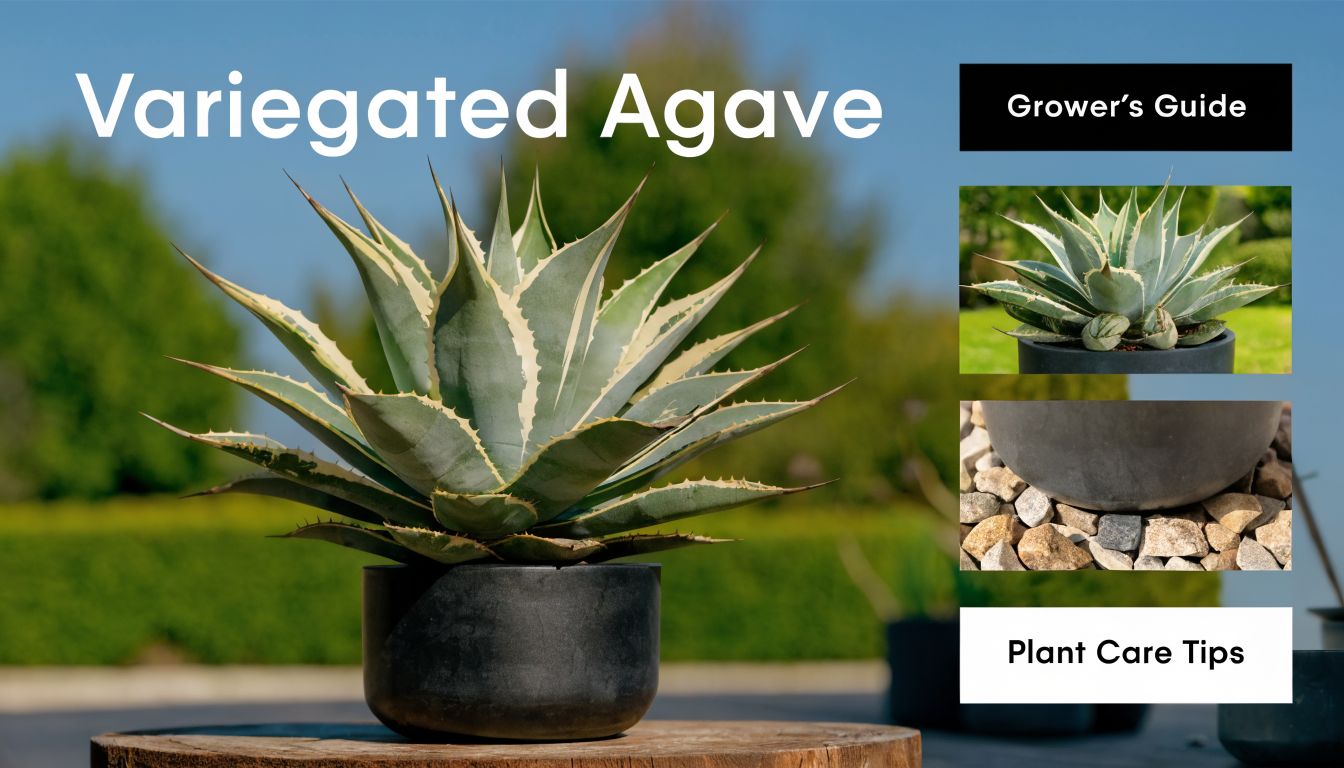
A good specimen stops people because it looks lit from within. The leaves arch instead of jutting stiffly, and the yellow margins catch morning and late-day sun in a way that feels almost polished. In a simple container, it reads modern. In gravel, it softens hardscape without turning floppy or messy.

What makes people bring it home is usually the same thing that makes them struggle with it later. They buy the color first. They assume any succulent routine will keep that color. It won't.
Why it earns space fast
This isn't one of those agaves that demands a giant bed and years of patience before it looks intentional. Agave desmettiana 'Variegata' stays compact, develops a graceful rosette, and works in places where larger century plants would overpower everything nearby.
It also has a softer visual style than many agaves. The leaves are smoother, the overall shape is more relaxed, and the plant looks composed rather than aggressive. That matters if you want structure without the harsh feel some agaves bring to a small courtyard or entry.
Practical rule: Buy this plant for its margins, but place it for its shape. The best gardens use both.
Where it fits naturally
I like it in three situations:
- Front-of-bed focal points where a broad, variegated rosette can break up mounding shrubs or low groundcovers.
- Statement pots near a doorway, especially in terracotta or plain matte ceramic where the leaf color does the work.
- Modern dry gardens where you want a sculptural plant that doesn't feel rigid or oversized.
It's one of the few agaves that can look refined instead of severe. That's a big reason collectors keep it around and exterior design clients ask for it again after seeing a clean specimen installed well.
What Makes This Variegated Agave Unique
Some agaves look armored. This one looks fluent. If Agave americana is the broad-shouldered bruiser in the family, agave desmettiana variegata is the one with movement. The leaves arc outward and down with more ease, which gives the rosette a fuller, more elegant silhouette.

The word variegata matters here. It means the foliage isn't a flat, single green. This cultivar carries bright green leaves edged in golden-yellow margins, and those margins are the feature buyers are paying for. According to Gardenia's plant profile for Agave desmettiana 'Variegata', it shows its best golden-yellow variegation in slightly acidic, sandy, and well-drained soils. The same source notes that overwatering can reduce the intensity of the yellow margins, while controlled drought stress enhances the color contrast.
The traits to look for before you buy
Not every plant on a bench is a strong specimen. When I'm choosing one, I want to see these signs:
- Clear margin definition. The yellow edge should look deliberate and even, not washed out or muddied.
- An open, symmetrical rosette. Crowded or twisted growth can stay awkward for a long time.
- Firm leaves with no mushy base. This plant forgives some neglect. It doesn't forgive soggy roots for long.
- Clean foliage. Cosmetic scarring happens, but heavy spotting or collapsed lower leaves usually means stress.
How it compares to other variegated agaves
A lot of gardeners first meet variegated agaves through larger, stiffer types. If you've grown or admired Agave americana variegata, the contrast is useful. Americana reads bold and massive. Desmettiana variegata reads nimble, smoother, and easier to place close to paths, patios, and smaller architecture.
Here's the simplest comparison:
| Plant quality | Agave desmettiana variegata | Larger variegated agaves |
|---|---|---|
| Overall form | Arching and softer | More rigid and heavy |
| Visual feel | Graceful and bright | Dramatic and imposing |
| Best use | Pots, courtyards, smaller beds | Large landscape statements |
The mistake I see most often is treating all variegated agaves as interchangeable. They aren't. This one needs placement that lets the leaf color read clearly and the rosette keep its shape.
The biggest selling point isn't just that it's variegated. It's that the variegation works with the form. The gold outlines every leaf, so the whole rosette stays readable from a distance. That's why this plant can carry a corner by itself.
Your Blueprint for a Thriving Plant
You don't need a complicated routine for agave desmettiana variegata. You need a disciplined one. The fastest way to flatten the color and ruin the roots is to keep “helping” it with moisture and rich soil.
Start with the core care checklist below.

Start with placement
This agave is hardy in USDA zones 9 to 11 and tolerates temperatures down to about 20°F (-6.7°C) according to Mountain States Wholesale Nursery. The same source notes a mature size of 2 to 3 feet tall and 3 to 4 feet wide, which is why it works so well in containers and smaller planting areas.
In most warm regions, give it full sun. In punishing desert exposure, especially where afternoon light bounces off walls or paving, a little filtered relief can keep the foliage from looking stressed. Too much shade, though, usually means looser growth and less vivid margins.
Build the right root zone
This plant wants air around its roots. That's more important than any fertilizer schedule.
Use a mix that drains fast and doesn't stay cool and wet for long. In the ground, I want sandy or gravelly conditions rather than rich amended beds. In pots, a gritty succulent blend works better than standard potting soil because standard mixes often hold moisture where the crown meets the roots.
If you're trying to preserve the yellow edge, think like a root rot pessimist. Every soil choice should move water out quickly.
Watering that actually works
The rule is simple. Water thoroughly, then wait until the soil is dry.
What doesn't work is frequent light watering. That keeps the upper root zone damp, encourages weak rooting, and often leads to a plant that looks alive but dull. A proper soak-and-dry cycle gives the roots water, then oxygen, and that balance keeps the plant tighter and cleaner.
Here's the practical rhythm I recommend:
- Check the soil first. Don't water by calendar if the mix still feels damp below the surface.
- Soak fully. Wet the root ball instead of splashing the top inch.
- Let it dry completely. That dry interval is part of the care, not neglect.
- Adjust by season. Warm active weather speeds drying. Cool weather slows everything down.
Fertilizer and maintenance
Go light. This isn't a plant that needs pushing. Heavy feeding often gives you soft, fast growth that doesn't improve the look.
A modest feed during active growing weather is enough if the plant is in a container for a long stretch. In the ground, many specimens do perfectly well with no regular fertilizer at all if the soil drains properly and the light is right.
A few quick care decisions make a real difference:
- Choose a pot with drainage holes. Decorative cachepots are where many agaves fail.
- Keep mulch and debris off the crown. Trapped moisture around the base is asking for trouble.
- Rotate container plants occasionally if one side gets all the light. That helps keep the rosette balanced.
Understanding Its Lifecycle from Pup to Bloom
This agave is often prized for its foliage over its flowers. That's fair, because the rosette is the long performance. But part of the fascination of agaves is that they build toward one final bloom instead of flowering over and over.

Agave desmettiana 'Variegata' is monocarpic, which means each rosette flowers once and then dies. According to Planet Desert's listing for Agave desmettiana 'Variegata', it flowers after 8 to 10 years, sends up a flower spike up to 8 feet tall, and carries yellow blooms. That same source notes that before the main rosette dies, it produces a generous number of offsets at the base.
What the grand finale looks like
The flower stalk changes the entire scale of the plant. A compact rosette suddenly throws energy upward into a vertical structure that towers above the foliage. It's dramatic, and if you've never seen an agave prepare to bloom, the speed of that change can be surprising.
Some growers dread this stage because they know the original rosette won't stay. I think that's the wrong way to read it. The bloom is the plant completing its cycle, not failing.
A flowering agave isn't collapsing. It's finishing exactly as it was built to finish.
What happens after flowering
The part that reassures most gardeners is the base. Before the mother rosette declines, it produces offsets, often called pups. Those younger rosettes are the continuity plan.
That matters in design as much as in propagation. If you've placed the plant as a feature, you don't necessarily lose the whole presence of the planting after bloom. You often gain the next generation right at the base, and those can be grown on or repositioned.
A simple lifecycle view helps:
| Stage | What you'll notice |
|---|---|
| Young plant | Color and form develop, rosette fills out |
| Mature plant | Strong architectural presence, stable shape |
| Bloom stage | Tall stalk with yellow flowers, dramatic change |
| Post-bloom | Mother rosette declines, offsets carry the planting forward |
This lifecycle is one reason collectors stay attached to agaves. Even the ending creates more plants.
How to Multiply Your Agave Collection
Most plant tags stop at “produces pups.” That's not enough if you want to turn one agave into several healthy ones. The timing and handling matter more than people think.
As noted by Horticulture Unlimited's discussion of Agave desmettiana, many guides mention offsets but don't give enough practical detail on propagation, even though knowing when to harvest pups and how to root them is critical for reliable multiplication.
When a pup is worth removing
Don't rush the first tiny offsets just because you see them. A pup that's still very small and tightly attached usually has less margin for error. I wait until it has enough body to handle separation and enough firmness to stand on its own once potted.
What doesn't work well is removing weak, fresh pups during cool, damp weather and then watering them like established plants. That's a common path to rot.
A simple removal routine
Use a narrow shovel, a hori hori knife, or a clean sharp knife, depending on how crowded the base is. Gloves help, even with smoother agaves.
Follow this sequence:
- Expose the attachment point by moving away soil or top dressing around the pup.
- Find the connection between the offset and the mother plant.
- Cut cleanly rather than tearing it free.
- Set the pup aside to dry so the cut surface can callous before planting.
- Pot into a fast-draining mix and keep it in bright conditions without drenching it.
For general hands-on propagation technique, a useful companion read is this guide to propagating succulents from cuttings.
Rooting without overdoing it
Fresh offsets don't need pampering. They need restraint.
A newly separated pup should go into a gritty mix and stay on the dry side until it begins settling in. If you keep the medium wet because you're trying to “help it root,” you can lose it before it ever gets going. Bright light is helpful, but harsh exposure right after cutting can stress a soft new offset.
Newly removed pups fail more often from kindness than neglect.
If you're multiplying plants for your own garden, be patient and selective. Keep the strongest offsets, discard anything damaged or mushy, and don't crowd them into oversized pots. Tight root conditions in a sharply draining mix usually produce better young plants than a lot of empty wet soil.
Using Variegated Agave in Your Space
This is a plant for people who want one specimen to do visible work. It doesn't disappear into a mixed bed, and it doesn't need flowers around it to feel finished. The leaf color is already the accent.
In a front entry pot, it reads formal without looking stiff. In a dry border, it becomes the bright pause between darker shrubs, stone, and gravel. I like it best where sunlight can skim the margins early or late in the day, because that's when the gold looks cleanest.
Best design roles
For containers, choose simple shapes. Terracotta works because it warms the yellow margin. Matte black, charcoal, or off-white ceramic works because it sharpens the contrast and lets the rosette read as sculpture.
In planting beds, use it where there's visual breathing room. A variegated agave crammed into a busy mix of variegated grasses, silver shrubs, and flowering annuals usually feels noisy. It looks stronger against restraint.
A few combinations that consistently work:
- Rock garden anchor with gravel, boulders, and low companion succulents.
- Walkway punctuation where repeating rosettes create rhythm without becoming a hedge.
- Poolside accent in a raised bed or wide container where the form reflects well and stays tidy.
- Dry lawn alternative plantings paired with eco-friendly grass alternatives if you're rethinking thirsty turf areas.
Companion planting that helps rather than competes
The easiest mistake is choosing neighbors that fight the plant. Fine, grassy texture can work. Broad, floppy foliage often doesn't. Intense flower colors can either make the gold margins pop or make the whole bed look overworked.
I lean toward companions that support the rosette without stealing the scene:
| Design goal | Companion direction |
|---|---|
| Sharpen the architecture | Use low mounding succulents or clean gravel |
| Soften the form | Add airy grasses or sparse upright accents |
| Keep the palette calm | Stay with green, blue-green, stone, and muted bloom colors |
For broader layout ideas, this collection of succulent garden design ideas is a good reference point if you're building around structure rather than flowers.
The best use of agave desmettiana variegata is rarely complicated. One healthy plant, enough room, and the right backdrop will do more than a crowded “collector” arrangement ever will.
Your First Steps and Common Questions
When you buy this plant, don't focus only on size. Focus on clarity. The best specimen is the one with crisp variegation, balanced form, and a solid base. A slightly smaller plant with better color and cleaner growth often outperforms a larger one that's been pushed too hard.
If your plant arrives bare-root, don't panic and don't rush. Let it settle, inspect the roots, and pot it into a sharply draining mix rather than burying it in moisture-retentive soil. Keep the crown high enough that water won't sit against the base.
What to do the first day
A clean start prevents most long-term problems.
- Inspect the center for firm growth and check that the crown feels dry and intact.
- Trim only what's necessary. Remove fully dead tissue, but don't over-groom the plant.
- Use the right container. A pot with drainage matters more than a fancy finish.
- Wait before watering heavily if the plant has been recently handled, shipped, or repotted.
Problems that show up most often
Most issues come from cultural mistakes, not from the plant being fussy.
Fading variegation usually points back to care. If the margins are losing punch, look first at watering habits, sluggish soil, and poor placement. This agave can stay healthy enough in those conditions, but it won't look its best.
Soft lower leaves or a collapsing base often mean too much moisture around the roots or crown. In that situation, act fast. Unpot container plants, inspect the root zone, remove compromised material if needed, and reset the plant in a drier, faster-draining mix.
Sudden collapse can also raise concern about serious pest problems, including agave snout weevil. If an agave goes from stable to failing quickly, don't assume it just got thirsty. Inspect the base and the core carefully.
Buy for color, pot for drainage, and water with restraint. Most agave problems start when one of those three gets ignored.
A few questions I hear often
Can it grow in a container long term?
Yes. Its compact habit makes it one of the better agaves for pot culture, as long as drainage stays excellent.
Should you remove damaged leaf tips?
Only if they bother you visually or create a safety issue. Don't over-prune healthy leaves just to make the plant look tidy.
Will the color stay strong indoors?
Usually not as well as it does outside in strong light. If you keep it indoors for stretches, give it the brightest conditions you can.
If you want to add a strong specimen to your collection, browse the agaves and desert plants available at The Cactus Outlet. It's a solid place to find plants for containers, collector displays, and larger arid garden projects, with selection that suits both home gardeners and trade buyers.